
解説 / Description
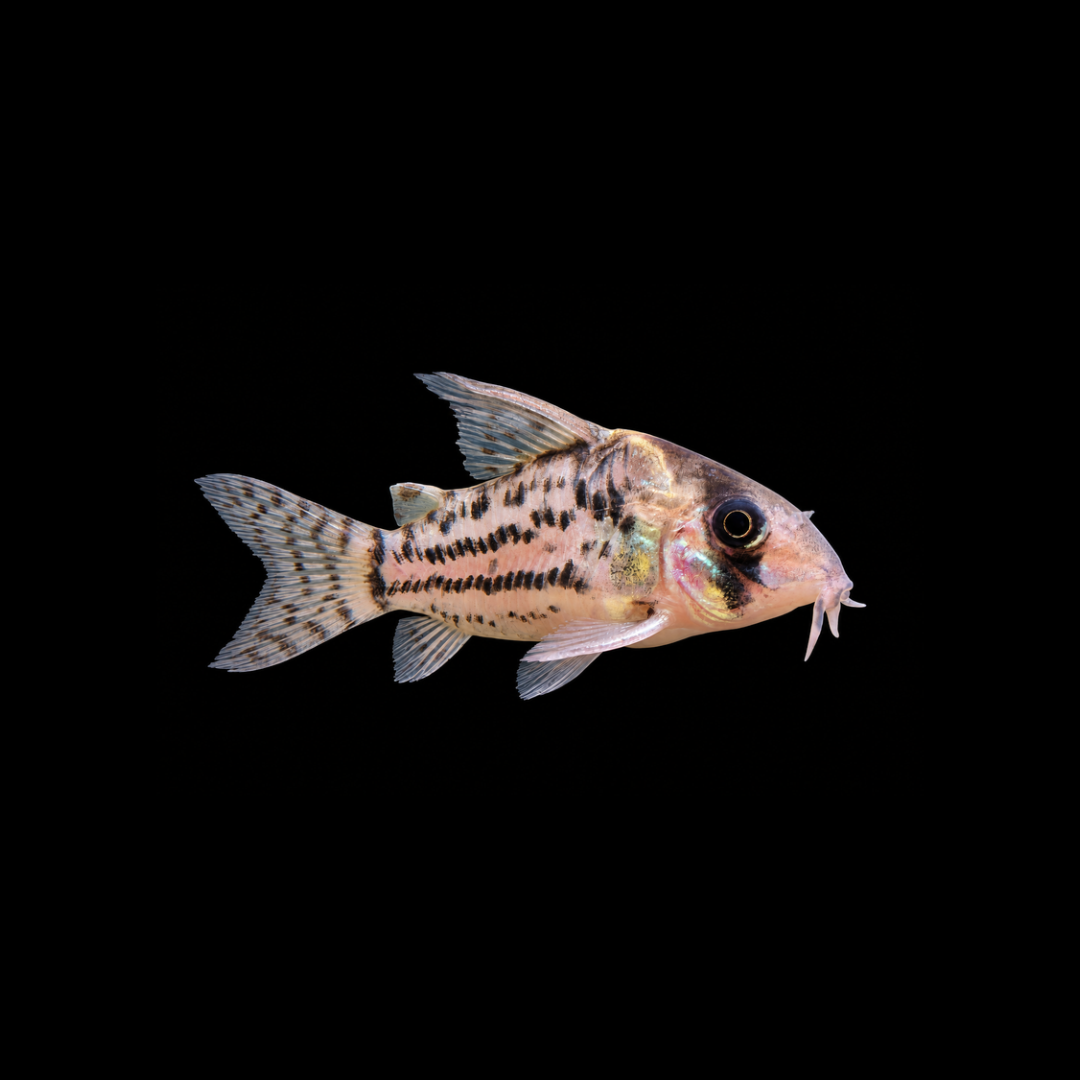
ホプリソマ・シュワルツィは、ブラジルのプルス川流域に分布する小型の底生ナマズです。乳白色から淡い灰色の体に、目を横切る黒い帯と、体側に列をつくる黒い斑点がよく映えます。丸みのある頭とがっしりした体つきも特徴で、仲間と一緒に砂底を探りながら餌を食べる姿には、眺めていたくなる愛らしさがあります。長く「コリドラス・シュワルツィ」の名で親しまれてきましたが、2024年に公表された分類の見直しを受け、現在はホプリソマ属に置かれています。性格は温和で、条件の合う小型魚との混泳も楽しめます。清潔な底床と十分な酸素、そして一匹ずつに行き渡る食事を用意することが、落ち着いた暮らしを支える基本です。 Hoplisoma schwartzi is a small bottom-dwelling catfish from the Purus River basin in Brazil. Its creamy white to pale gray body is marked with a dark band across the eyes and rows of black spots along the flanks. A rounded head and sturdy body add to its appeal, especially when a group explores the sand together in search of food. Long known as Corydoras schwartzi, it is now placed in Hoplisoma following a taxonomic revision first published in 2024. Its peaceful temperament makes it suitable for a community of small fish with compatible requirements. Clean substrate, ample oxygen, and food that reliably reaches every individual are the foundations of good care.
基本情報 / Basic Information
| 学名 / Scientific Name | Hoplisoma schwartzi (Rössel, 1963) |
|---|---|
| 通称 / Common Name | ホプリソマ・シュワルツィ、コリドラス・シュワルツィ、シュワルツィSchwartz’s cory, Schwartz’s corydoras |
| 分類 / Family | ナマズ目・カリクティス科・コリドラス亜科・ホプリソマ属Order Siluriformes; family Callichthyidae; subfamily Corydoradinae; genus Hoplisoma |
| 英名 / English Name | Schwartz’s Corydoras, Schwartz’s Catfish |
| 分布 / Distribution | 南米ブラジルのプルス川流域。プルス川はアマゾン川水系の支流で、本種はその流域の淡水域に生息します。The Purus River basin in Brazil, South America. The Purus is a tributary within the Amazon drainage, and this species inhabits freshwater environments in its basin. |
| 最大体長 / Max Size | 成魚の大きさは約5cmが飼育上の目安です。尾びれを含めない標準体長では3.9cmの記録がありますが、この記録が本種の成長の上限を示すわけではありません。「スーパーシュワルツィ」などの名で流通する大型の近似魚とは区別して考えます。Around 5 cm is a practical guideline for adult size. A standard length of 3.9 cm, excluding the caudal fin, has been recorded, but this measurement does not establish the species’ ultimate growth limit. Larger lookalikes sold under names such as “Super Schwartzi” should be considered separately. |
| 寿命 / Lifespan | 本種に限った正確な平均寿命は明らかではありません。導入時の年齢や飼育環境によって差があるため、数年単位の長期飼育を見据え、安定した水質と栄養状態を維持しましょう。A reliable species-specific average lifespan has not been established. Age at purchase and husbandry conditions affect longevity, so plan for care over several years and maintain stable water quality and good nutrition. |
飼育環境 / Aquarium Environment
| 水槽サイズ / Tank Size | 同種6匹程度の群れには、60cm規格水槽(60×30×36cm、満水容量約65L、実水量の目安約50〜60L)以上を用意します。底面積に余裕のある60cmワイド水槽(60×45×45cm、満水容量約120L)や90cm規格水槽(90×45×45cm、満水容量約180L)なら、砂を探る場所と休息場所を分けやすくなります。混泳魚の数も含めて収容数を調整し、底面を流木や石で埋め尽くさないようにしましょう。For a group of around six, use at least a Japanese standard 60 cm aquarium measuring 60 × 30 × 36 cm, with a nominal capacity of about 65 L and typically around 50–60 L of actual water. A wide 60 cm tank measuring 60 × 45 × 45 cm, approximately 120 L nominal, or a standard 90 cm tank measuring 90 × 45 × 45 cm, approximately 180 L nominal, provides more room for separate feeding and resting areas. Adjust stocking to include all tank mates, and leave plenty of usable floor space between decorations. |
|---|---|
| 水温 / Temperature | 22〜26℃を飼育の目安とし、急な変化を避けます。夏は室温だけでなく水温も確認し、必要に応じて冷却ファンや水槽用クーラーを使用してください。水温が高いときは、エアレーションなどによる酸素供給にも気を配りましょう。 Use 22–26°C as a general husbandry guideline and avoid abrupt changes. Monitor the water temperature during warm weather, using a cooling fan or aquarium chiller when necessary. Pay particular attention to aeration and oxygen availability as temperatures rise. |
| 水質 / Water Quality | pH6.0〜7.5の弱酸性〜弱アルカリ性、総硬度2〜15°dGH程度を飼育上の参考範囲とします。導入時には購入店の飼育水と自宅の水槽の水質差を確認し、急な変化を避けることが大切です。アンモニアと亜硝酸は検出されない状態を維持し、硝酸塩の蓄積にも注意します。週1回、全水量の1/4〜1/3程度の換水を目安に始め、魚数・給餌量・測定値に応じて調整してください。新しい水はカルキを抜き、水温を合わせてから使用します。A practical reference range is pH 6.0–7.5, from mildly acidic to mildly alkaline, with a general hardness of around 2–15°dGH. Before introduction, check the difference between the retailer’s water and the home aquarium, and avoid abrupt changes. Keep ammonia and nitrite undetectable and monitor nitrate accumulation. Begin with weekly water changes of roughly one-quarter to one-third of the volume, adjusting them to stocking, feeding, and test results. Dechlorinate replacement water and match its temperature before use. |
| レイアウト / Layout | 田砂などの角が丸い細かな砂を1〜2cmほど薄く敷き、餌を探せる開けた場所を残します。流木や水草で陰になる休息場所をつくると、落ち着いて過ごしやすくなります。ろ過を十分に機能させ、底面にも穏やかに水が巡るようにしますが、魚が常に流れに逆らうほどの強い水流は避けてください。水面で空気を取り込めるよう、浮草や器具で上への通り道をふさがないことも大切です。Use a shallow layer, around 1–2 cm, of fine, smooth aquarium sand and leave open areas for foraging. Driftwood and plants can provide shaded resting places. Maintain effective filtration and gentle circulation near the bottom, while avoiding a current that forces the fish to swim against it continuously. Keep a clear route to the surface so floating plants and equipment do not prevent access to air. |
| 注意点 / Precautions | 導入前にろ過を十分に立ち上げ、購入時には口ひげや腹部の状態、呼吸、餌を食べているかを確認します。背びれと胸びれには硬い棘があるため、素手でつかまず、移動には水ごとすくえる容器を使うと扱いやすくなります。網に棘が絡んだ場合も、無理に引き抜かないでください。輸送時は過密な梱包や長時間の振動を避けます。袋の水が急に白濁し、魚も弱っている場合は、その水での水合わせを長引かせず、水温や水質の差に配慮しながら、清浄で十分に酸素を含む飼育水へ速やかに移します。飛び出し防止のふたを設け、水面上には空気のある空間を残しましょう。Establish biological filtration before introduction, and check the barbels, body condition, breathing, and feeding response when choosing fish. The dorsal and pectoral fins have hard spines, so avoid gripping the fish with bare hands; a container that lifts it together with water is often easier to use. Never pull forcibly if a spine becomes caught in a net. Avoid crowded transport bags and prolonged vibration. If transport water suddenly turns milky and the fish becomes weak, do not prolong acclimation in that water. Move it promptly into clean, well-oxygenated aquarium water while accounting for differences in temperature and water chemistry. Fit a secure lid while leaving an air space above the water. |
餌と給餌 / Feeding
| 餌の種類 / Diet | 底生の小動物を中心に食べる雑食性です。飼育下では、栄養バランスの整ったコリドラス用の沈下性顆粒やタブレットを主食にします。冷凍アカムシやブラインシュリンプなどは、食欲や体格を見ながら補助として取り入れられます。水槽内の残り餌やコケだけに頼らず、本種のための食事を用意してください。An omnivore that feeds mainly on small bottom-dwelling animals. In captivity, use a nutritionally complete sinking pellet or tablet formulated for cory-type catfish as the staple diet. Frozen bloodworms and brine shrimp can be offered as supplements according to appetite and body condition. Provide deliberate meals for these fish rather than relying on incidental leftovers or algae. |
|---|---|
| 給餌のポイント / Feeding Tips | 1日1〜2回を目安に、すべての個体が食べられる量を複数の場所へ分けて与えます。中層の魚に餌を奪われる場合は、沈みやすい餌を選び、照明を落とした時間帯の給餌も試してみましょう。餌が底へ届いたことに加え、シュワルツィ自身が口にしているかまで確認することが大切です。長く残る餌は取り除きます。腹部がへこんでいないか、痩せていないかを観察するとともに、餌の与え過ぎで水を汚さないよう、給餌量を調整しましょう。Feed once or twice daily as a starting point, dividing the food among several locations so every individual can eat. If midwater fish intercept it, choose food that sinks promptly and try feeding under dimmer lighting. Check both that the food reaches the bottom and that the corys actually consume it. Remove persistent leftovers. Adjust portions by watching for a hollow abdomen or weight loss while also avoiding water pollution from excessive feeding. |
性格と混泳 / Temperament and Tank Mates
| 性格 / Temperament | 温和で、同種の仲間とまとまって過ごす傾向があります。できれば6匹以上の同種グループを基本にし、隠れ場所と広い砂地を両方用意しましょう。導入直後は物陰に隠れがちでも、環境に慣れると昼間にも餌を探す姿が見られます。別種のコリドラス類を加える場合も、本種同士のまとまりを確保することを優先します。Peaceful and inclined to associate with its own species. A group of at least six is preferable, with both shelter and open sand available. Newly introduced fish may hide at first, but settled individuals can also be seen foraging during daylight. When keeping several kinds of cory-type catfish, prioritize an adequate group of this species rather than treating other species as equivalent companions. |
|---|---|
| 混泳の相性 / Compatibility | 水温や水質の条件が合うネオンテトラなどの小型カラシン、小型のラスボラ類、温和な底生魚などが候補になります。混泳では餌の競争と底面の混雑に注意してください。大型肉食魚、ひれをかじる魚、縄張り意識の強い底生魚、ザリガニなどとの組み合わせは避けます。小型シクリッドも繁殖期には底層に縄張りをつくり、ほかの魚を追い払うことがあるため、十分な距離と退避場所が必要です。稚エビや魚卵は食べられる可能性があり、それらの育成を優先する水槽には向きません。Possible companions include small tetras such as neon tetras, small rasboras, and peaceful bottom dwellers with matching temperature and water requirements. Watch for food competition and crowding on the aquarium floor. Avoid large predators, fin-nipping fish, strongly territorial bottom dwellers, and crayfish. Even dwarf cichlids may establish bottom territories and chase other fish away while breeding, so they require ample separation and escape routes. Tiny shrimp and fish eggs may be eaten, making this species unsuitable when their survival is the main priority. |
病気と対策 / Diseases and Prevention
| かかりやすい病気 / Common Diseases | 導入時には白点病などの外部寄生虫による病気、飼育環境が悪化したときには口ひげや口周りの傷に伴う細菌感染、ひれの傷みなどに注意します。野生採集個体では、寄生虫や輸送後の消耗が問題になる場合もあります。食欲低下や痩せ、体をこすりつける動作、呼吸の速さは不調に気づく手がかりですが、見た目だけで原因を断定することはできません。口ひげが短くなる場合も、底床による傷と水の汚れなど、複数の要因が重なっていることがあります。Watch newly introduced fish for external parasites such as freshwater ich. Poor conditions can contribute to bacterial infections around injured barbels or the mouth, as well as fin damage. Wild-caught fish may also arrive with parasites or depleted condition after transport. Reduced appetite, weight loss, rubbing, and rapid breathing are useful warning signs, but appearance alone does not establish a diagnosis. Shortened barbels may involve several contributing factors, including physical injury and unsuitable environmental conditions. |
|---|---|
| 対策と予防 / Prevention | 新しく迎える魚は、可能なら別水槽で食欲や体表の状態を確認してから混泳させます。底床表面の汚れや食べ残しをこまめに取り除き、過密飼育と急な水温変化を避けましょう。不調が見られたら、水温、アンモニア、亜硝酸、酸素供給をまず確認します。白点などがある場合は同居魚の状態も観察し、原因に応じた対処を行ってください。薬剤はナマズ類への適否と製品の用法・用量を確認し、実際の水量に合わせて使用します。原因が分からないまま薬や塩浴を重ねず、症状が続く場合は魚の診療に対応する獣医師などに相談しましょう。Whenever possible, observe new fish in a separate aquarium and confirm normal feeding and body condition before adding them to a community. Remove surface debris and uneaten food regularly, and avoid overcrowding and abrupt temperature changes. When a fish becomes unwell, first check temperature, ammonia, nitrite, and oxygen supply. If white spots or similar signs appear, inspect the tank mates as well and address the identified cause. Confirm that any medication is suitable for catfish, follow its directions, and calculate the dose from the actual water volume. Avoid combining treatments or salt baths without a clear reason; persistent symptoms warrant advice from a veterinarian experienced with fish. |
増やし方(繁殖) / Breeding
| 雌雄の判別 / Sexing | 十分に成熟した個体では、メスはオスより大きく、上から見ると腹部が幅広く丸みを帯びる傾向があります。オスは比較的細身です。ただし、幼魚や痩せた個体では判別が難しく、食後の膨らみを抱卵と見間違えることもあります。一度見ただけで判断せず、成長とともに体形の変化を観察すると分かりやすくなります。Fully mature females tend to be larger and noticeably broader around the abdomen when viewed from above, while males are usually slimmer. Juveniles and thin individuals can be difficult to sex, and a full stomach can be mistaken for egg development. Repeated observation of body shape as the fish mature is more reliable than a single assessment. |
|---|---|
| 繁殖形態 / Reproduction | 卵生で、粘着性のある卵を水草や水槽のガラス面などに産み付けます。産卵時には、メスの口先がオスの腹部付近に向かい、2匹がT字状になる「Tポジション」と呼ばれる姿勢をとります。メスは腹びれで少数の卵を保持し、産卵場所へ移して付着させる動作を繰り返します。親魚による卵や稚魚の保護は期待できず、食卵も起こります。An egg-laying species that attaches adhesive eggs to plants, aquarium glass, and other suitable surfaces. During spawning, the female positions her mouth near the male’s underside in the characteristic T-position. She holds a small number of eggs between her pelvic fins and transfers them to a chosen surface, repeating the sequence. The parents do not provide protective care, and eggs may be eaten. |
| 繁殖のポイント / Breeding Tips | 飼育下での繁殖は可能ですが、産卵を促すのが難しい場合があります。まずは同種の親魚を十分に成熟させ、主食と補助食を適量与えて、痩せのない状態に整えます。落ち着いた繁殖用水槽に産卵場所となる水草などを入れ、スポンジフィルターなどで穏やかなろ過と酸素供給を保ちます。コリドラス類では、水槽より少し低い温度の水を使った換水が産卵のきっかけになることがありますが、本種も必ず反応するわけではありません。急冷や大幅な水質変化を避け、親魚の状態を優先してください。卵は親魚から隔離し、弱い水の動きを保ちながら、白濁して発生が止まった卵や水カビの生じた卵を取り除きます。孵化後は、卵黄の吸収が進んで稚魚が餌を探し始めたら、口に入る微細な稚魚用飼料や孵化直後のブラインシュリンプを少量ずつ与え、実際に食べているかを確認します。食べ残しを除去し、水質を急変させない少量換水を続けることが育成の基本です。Captive breeding is possible, although inducing spawning can be difficult. Begin with fully mature fish of the same species and build good body condition with appropriate portions of a staple diet and supplementary foods. Provide plants or other spawning surfaces in a quiet breeding aquarium, with gentle filtration and aeration, such as a sponge filter. Water changes using water slightly cooler than the aquarium can stimulate spawning in some cory-type catfish, but this species may not respond. Avoid abrupt cooling or major changes in water chemistry, and prioritize the parents’ condition. Separate the eggs from the adults, maintain gentle water movement, and remove eggs that become opaque and stop developing or grow water mold. After hatching, as yolk absorption progresses and the fry begin searching for food, offer small amounts of suitably fine fry food or newly hatched brine shrimp and check that they are actually eating. Remove leftovers and use small water changes that preserve stable conditions. |
雑学と豆知識 / Trivia and Fun Facts
| 1. 「コリドラス」から「ホプリソマ」へ / 1. From Corydoras to Hoplisoma | シュワルツィの属名が変わった背景には、魚同士の進化的な関係を調べる研究の進歩があります。従来のコリドラス属には多くの種類がまとめられていましたが、DNAと体の構造を合わせて調べることで、いくつもの異なるまとまりが見えてきました。2024年に公表された再分類で本種が移されたホプリソマは、そのとき初めて作られた名前ではなく、1838年に提唱された属名の復活です。昔からの名前が、新しい研究によって再び分類に使われるようになったのです。観賞魚の流通では「コリドラス・シュワルツィ」という呼び名も引き続き使われています。学名が変わっても、長く親しまれてきた同じ魚を指しています。The change in this fish’s genus reflects progress in understanding evolutionary relationships. Many species were once grouped together in Corydoras, but comparisons of DNA and anatomical features revealed several distinct groups. The revision first published in 2024 transferred this species to Hoplisoma, a name originally proposed in 1838 and subsequently revived. An old name thus returned to use through modern research. The aquarium trade still uses “Corydoras schwartzi.” Although the scientific classification has changed, the familiar name refers to the same species. |
|---|---|
| 2. シュワルツ氏の名を受け継ぐ魚 / 2. A Fish Named for Schwartz | 学名の後半に当たる種小名「schwartzi」は、ブラジルのマナウスで観賞魚の輸出に携わったハンス・ヴィリー・シュワルツ氏への献名です。シュワルツ氏は、本種の学名の基準となる標本の採集に協力しました。そして1963年、魚類学者レッセルによって、この魚はコリドラス・シュワルツィとして記載されました。学名には色や模様を表すものも多いのですが、本種には魚と研究者をつないだ人物の名前が残されています。普段何気なく呼んでいる「シュワルツィ」という響きにも、アマゾンの魚を採集し、その存在を学問の世界へ伝えた人々の歩みが込められているのです。The specific epithet schwartzi, the second part of the scientific name, honors Hans-Willi Schwartz, an ornamental-fish exporter based in Manaus, Brazil. Schwartz helped collect the specimen that became the name-bearing reference for the species. In 1963, the ichthyologist Rössel described it as Corydoras schwartzi. While many scientific names refer to color or markings, this one preserves the name of a person who helped connect a living Amazonian fish with scientific study. The familiar name therefore carries a small piece of the history of fish collecting and taxonomy. |
| 3. 水面へのひと泳ぎは、もう一つの呼吸 / 3. A Quick Trip to the Surface for Air | 砂底で休んでいたシュワルツィが、突然水面まで泳ぎ上がり、空気を飲み込んですぐに戻ってくることがあります。コリドラス類は腸を使って空気中の酸素を取り込むことができ、本種でも空気呼吸を行うことが確認されています。水中の酸素が少ないときに、呼吸を補える仕組みです。ただし、腸呼吸ができても清潔な水と十分な酸素供給は必要です。普段の水面への往復の頻度を知っておくと、急に回数が増えたり、呼吸が荒くなったりしたときに、飼育環境の変化に気づきやすくなります。A resting Schwartz’s cory may suddenly dash to the surface, swallow air, and immediately return to the bottom. Cory-type catfish can absorb oxygen from ingested air through the intestine, and aerial respiration has been demonstrated in this species. This mechanism can supplement respiration when oxygen levels in the water are low. It does not remove the need for clean water and adequate oxygenation. Becoming familiar with a group’s normal surfacing behavior makes it easier to notice a sudden increase in trips or unusually rapid breathing. |
| 4. 「鎧の体」と、身を守るための仕組み / 4. An Armored Body and Its Defenses | 属名のホプリソマは、ギリシャ語の「盾・鎧」と「体」に由来し、体側を覆う硬い骨板を表しています。丸みのある小さな体をよく見ると、骨板が並び、背びれや胸びれには硬い棘が備わっています。温和な性格と、捕食者から身を守る備えは、同じ魚の中に共存しているのです。ホプリソマの仲間では、胸びれの棘に伴う毒腺や、胸びれの付け根付近にある分泌腺「腋窩腺」も研究されています。また、一部のコリドラス類では、輸送中に自ら放出した分泌物が原因とみられる衰弱が報告されています。自らの分泌物で魚自身が影響を受けることから、こうした現象は「自家中毒」と呼ばれます。ただし、シュワルツィの分泌物の毒性や、自家中毒が起こる頻度は十分に明らかではありません。移動時は強いストレスをかけないよう、追い回す時間を短くし、魚を圧迫したり、狭い容器に多数を入れたりしないことが大切です。Hoplisoma combines Greek words meaning “shield or armor” and “body,” referring to the hard bony plates along the flanks. A closer look reveals both this armor and the rigid dorsal and pectoral spines: peaceful behavior coexists with physical defenses against predators. Studies of related Hoplisoma have also examined glands associated with the pectoral spines and separate axillary glands near the fin bases. In some cory-type catfish, weakening during transport has been reported and attributed to substances released by the fish themselves. This is often called self-poisoning because the fish’s own secretions are thought to affect it adversely. The toxicity of these secretions and the frequency of such events in H. schwartzi remain insufficiently established. Minimize transport stress through gentle capture, brief handling, and uncrowded containers. |
| 5. スーパーシュワルツィと識別番号の世界 / 5. Super Schwartzi and Identification Codes | 「スーパーシュワルツィ」や「ウルトラシュワルツィ」は流通名で、ホプリソマ・シュワルツィの改良品種を意味するとは限りません。こうした名前で扱われる魚には、分類が確定していない近似魚も含まれます。たとえば、スーパーシュワルツィとして知られるCW028は、本種とは別に扱われる、まだ正式に記載されていない魚です。CナンバーやCWナンバーは、名前が定まっていない魚などを区別して情報を共有するための識別番号であり、それ自体が正式な学名ではありません。よく似た模様でも、成魚の大きさや背びれの形が異なることがあります。購入時に流通名だけでなく、識別番号や採集地も確かめると、目の前の魚を理解する手がかりが増えていきます。“Super Schwartzi” and “Ultra Schwartzi” are trade names and do not necessarily denote selectively bred varieties of Hoplisoma schwartzi. Fish sold under these names may include distinct, unresolved lookalikes. CW028, commonly associated with Super Schwartzi, is treated separately from H. schwartzi and has not been formally described. C-numbers and CW-numbers help people distinguish and exchange information about fish whose identities or names are not yet fully resolved; they are not formal scientific names. Similar markings can conceal differences in adult size or fin shape. Checking identification codes and collection localities alongside a trade name can therefore provide a fuller picture of the fish being purchased. |
| 6. 似た模様が語る、仲間たちの進化 / 6. Similar Patterns and Evolution | コリドラスの仲間を見比べると、異なる種類なのに、目の黒い帯や体側の模様がよく似ていることがあります。同じ場所に暮らす魚同士に似た模様が見られる理由の一つとして、捕食者に共通の警告を伝える働きが研究されています。毒や棘などで身を守る異なる種類が、似た警告模様を共有する関係は、ミューラー擬態と呼ばれます。捕食者がその模様を覚えて避けるようになれば、同じ模様をもつ種類がそれぞれ襲われにくくなる、という仕組みです。ただし、コリドラス類の防御の仕組みは種類によって異なり、模様の似方をすべて同じ仕組みで説明できるわけではありません。シュワルツィのアイバンドの役割も、一つに断定することはできません。見慣れた白と黒の模様にも、捕食者との関係や、ほかの魚と暮らす長い歴史を考える余地が残されています。Different cory-type catfish can share strikingly similar eye bands and body markings. One explanation being studied is that species living together may benefit from presenting a shared warning to predators. When different species with defenses such as toxins or spines share similar warning patterns, the relationship is called Müllerian mimicry. If predators learn to avoid that pattern, each of the defended species sharing it can benefit. However, defensive mechanisms vary among these catfish, so not every similar pattern can be explained in the same way, nor can a single function be assigned confidently to the eye band of H. schwartzi. Its familiar black-and-white markings invite questions about predators, neighboring species, and evolutionary history. |
| 7. 繁殖を考えるなら、成熟を待つ時間も大切 / 7. Breeding Begins with Time to Mature | シュワルツィは、魚の卵巣がどのように発達するかを調べる研究でも扱われています。ある飼育条件では、受精から約540日後に性成熟し、産卵できる状態になったことが確かめられました。この日数は、その飼育条件で観察された結果であり、すべての個体に当てはまる成熟時期を示すものではありません。繁殖を目指すときは、換水などで産卵を促すことを急がず、十分に成熟した親魚を落ち着いた環境で維持することが大切です。日々の食事や行動を見守りながら成長を待つ時間も、繁殖を目指す飼育の一部になります。Schwartz’s cory has also been used in research on ovarian development. Under one set of captive conditions, sexual maturity and the ability to spawn were observed approximately 540 days after fertilization. This result describes the fish observed under those conditions and does not establish a universal age of maturity. When attempting to breed the species, maintain well-matured adults in a calm, stable environment and avoid rushing efforts to trigger spawning through water changes or other stimuli. Watching their feeding, behavior, and gradual development is an important part of preparing for breeding. |
まとめ / Conclusion
ホプリソマ・シュワルツィの飼育では、清潔な細砂、同種の仲間、各個体に行き渡る食事を整えることが大切です。水質や呼吸の様子、口ひげと腹部の状態を観察し、落ち着いて餌を探せる環境を保ちましょう。穏やかな流れの中で仲間と砂をついばむ姿は、水槽の底に静かな動きを添えてくれます。 Caring for Hoplisoma schwartzi begins with clean, fine sand, companions of its own species, and food that reaches every individual. Observe water quality, breathing, barbels, and body condition, and maintain an environment where the group can forage without disturbance. Watching these fish explore the sand together brings a quiet sense of activity to the aquarium floor.
白と黒の落ち着いた体色の中にも、斑点の並びや背びれの模様には一匹ずつ違いがあります。口ひげを動かして砂を探る仕草や、仲間のそばで休む様子を見守るうちに、それぞれの魚が身近に感じられるようになります。こうした日々の小さな発見を楽しめることも、シュワルツィの魅力です。 Within their understated black-and-white appearance, individual fish differ in the arrangement of their spots and dorsal-fin markings. Watching them move their barbels through the sand or rest beside companions gradually makes each one familiar. These small, everyday discoveries are part of the lasting appeal of Schwartz’s cory.
気になる道具や飼い方を見つけてみませんか?
 アイのアクアグッズ案内水草の肥料の選び方|底床用・液肥・メネデールの使い分け道具の特徴や使い方、選ぶときのポイントをアイが紹介します。記事はコチラ →
 アイのアクアグッズ案内小型カラシンの群れを楽しむ|餌と水換えから考える飼育用品ガイド小型カラシンの群れを眺める時間を、もっと楽しく。泳ぐ余白、餌の食べ方、続けやすい水換えを軸に、日本で揃えやすい用品の選び方を紹介します。記事はコチラ →
さまざまな飼育テーマをご紹介。リンク先の記事には広告・商品紹介が含まれます。
案内・紹介記事一覧へ →分布マップ
ホプリソマ・シュワルツィ(Hoplisoma schwartzi)は、南米ブラジルのプルス川流域に分布します。プルス川はアマゾン川水系の支流です。
地図は分布地域の位置関係を示す概略で、正確な分布境界を表すものではありません。表示範囲には分布域の周辺地域も含まれます。マーカーはプルス川流域の代表地点(ラブレア付近)であり、実際の採集地点や生息確認地点を示すものではありません。
参考文献
分類・分布・生息環境
-
Dias, A. C. et al.(2025;オンライン公開2024). Phylogenomic analyses in the complex Neotropical subfamily Corydoradinae (Siluriformes: Callichthyidae) with a new classification based on morphological and molecular data. Zoological Journal of the Linnean Society, 203(3), zlae053.
分子・形態データに基づくコリドラス亜科の分類再検討と、ホプリソマ属の復活。
-
Fricke, R., Eschmeyer, W. N. & Van der Laan, R.(編)(2026). Eschmeyer’s Catalog of Fishes: Genera, Species, References — schwartzi, Corydoras. California Academy of Sciences. 2026年10月21日閲覧。
本種の原記載、現在の有効名、所属分類、タイプ産地、ブラジルのプルス川水系における分布。
-
Matsuo, A. Y. & Val, A. L.(2002). Low pH and calcium effects on net Na+ and K+ fluxes in two catfish species from the Amazon River (Corydoras: Callichthyidae). Brazilian Journal of Medical and Biological Research, 35(3), 361–367. DOI: 10.1590/S0100-879X2002000300012.
本種の生息水域の水質と、低pH・カルシウム濃度が体内のイオン収支に及ぼす影響を扱う比較研究。
飼育条件・繁殖
-
Froese, R. & Pauly, D.(編). FishBase: Hoplisoma schwartzi (Rössel, 1963). Species summary. 2026年10月21日閲覧。
既刊文献に基づく水温・pH・硬度の参考範囲、底生性、空気呼吸、卵の産着に関する種情報。
-
Mazzoni, T. S. & Quagio Grassiotto, I.(2017). Ovary Differentiation and Activity in Teleostei Fish. Payan-Carreira, R.(編), Theriogenology, 第7章, 129–156. InTech.
本種を飼育下で繁殖させ、卵巣の分化と性成熟までの発達を追跡した研究。
空気呼吸・防御・擬態
-
Souza-Bastos, L. R., Val, A. L. & Wood, C. M.(2017). Are Amazonian fish more sensitive to ammonia? Toxicity of ammonia to eleven native species. Hydrobiologia, 789, 143–155.
本種を含むアマゾン産魚類のアンモニア毒性と、本種の空気呼吸・水面へのアクセスを調べた実験研究。
-
Kiehl, E., Rieger, C. & Greven, H.(2006). Axillary gland secretions contribute to the stress-induced discharge of a bactericidal substance in Corydoras sterbai (Callichthyidae, Siluriformes). Verhandlungen der Gesellschaft für Ichthyologie, 5, 111–115.
近縁種ステルバイを対象とした、輸送ストレス時の分泌物と腋窩腺に関する研究。ハインリヒ・ハイネ大学公開PDF。
-
Jiménez-Vergara, C. R., Thomaz, A. T., Garzón-Restrepo, A. J., Malabarba, L. R. & Monroy, M.(2026). Morphological diversification of defensive glands in Corydoradinae catfishes indicates a mixed Müllerian-Batesian mimicry system. Neotropical Ichthyology, 24, e260051.
コリドラス亜科7属の腋窩腺・胸びれの棘に伴う腺を比較し、防御機構の違いと擬態の関係を検討した研究。
病気・予防・取り扱い
-
Francis-Floyd, R., Stilwell, N. K. & Yanong, R. P. E.(2025年改訂). Introduction to Fish Health Management. University of Florida, UF/IFAS Extension, CIR921.
魚類全般の水質・栄養・衛生管理、傷からの細菌感染、症状の観察と原因の診断に関する解説。
-
Francis-Floyd, R., Yanong, R. P. E. & Pouder, D. B.(2026年改訂). Ichthyophthirius multifiliis (White Spot) Infections in Fish. University of Florida, UF/IFAS Extension, CIR920.
淡水魚の白点病の診断・生活環・導入時の隔離と、魚種や水質に応じた薬剤・塩の使用を扱う解説。



コメント