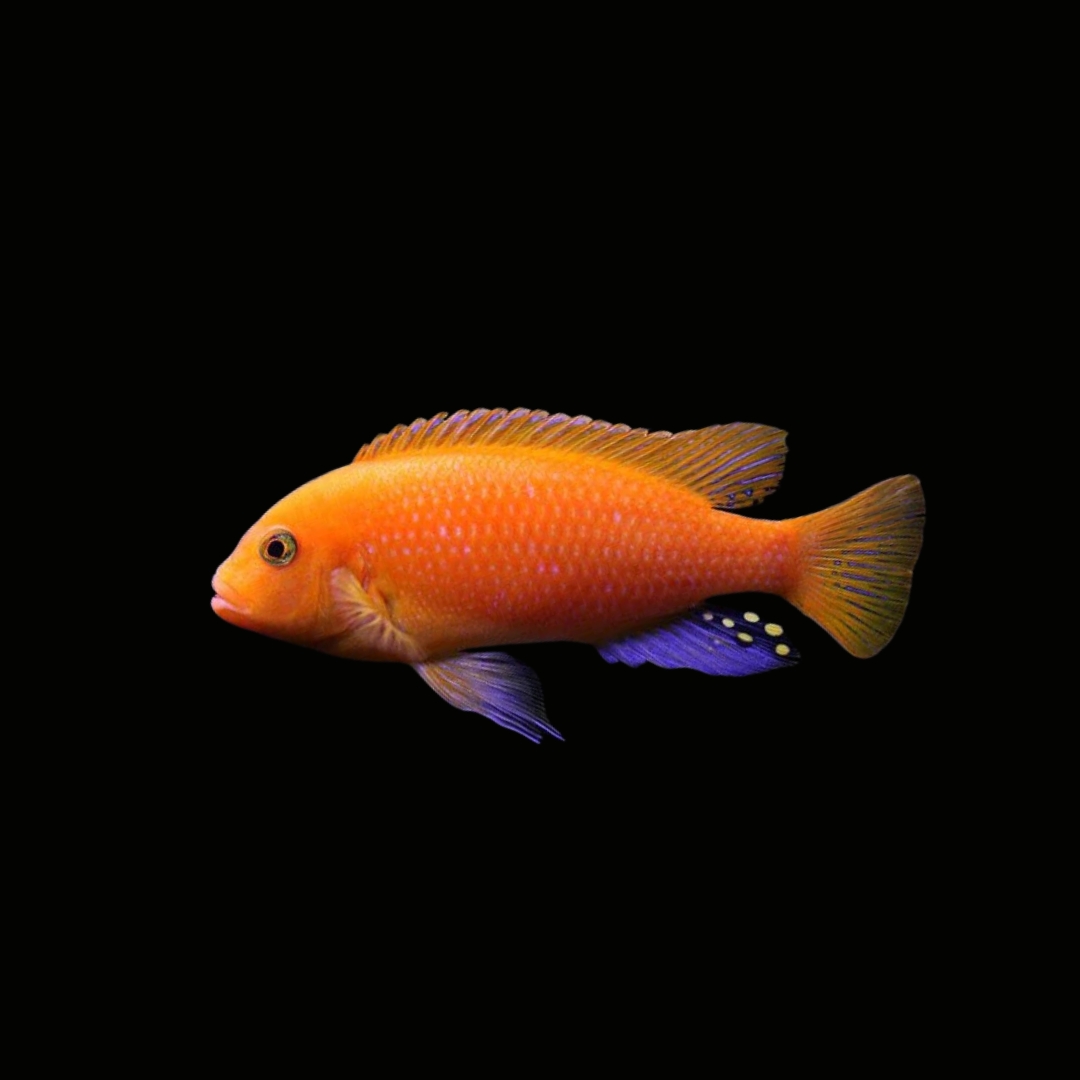
レッドゼブラシクリッドは、アフリカのマラウイ湖に生息する岩礁性シクリッド、いわゆるムブナの代表的な観賞魚です。日本では「オレンジゼブラシクリッド」の名で流通することも多く、鮮やかなオレンジ色のブリード個体が特に親しまれています。一方で、野生下ではオスが青系、メスが褐色・オレンジ系・斑入りになるなど、流通個体とは印象が異なる場合があります。性格は活発で縄張り意識が強いため、飼育では硬くアルカリ性寄りの水質、岩組み主体のレイアウト、植物質を中心にした餌、そして混泳相手と飼育密度の管理が大切です。分類名については Maylandia estherae を有効名として扱う資料が多いものの、Metriaclima estherae という表記も文献や観賞魚業界で広く使われているため、本記事では両名を併記します。The Red Zebra Cichlid is a rock-dwelling Lake Malawi cichlid, one of the well-known mbuna in the aquarium hobby. In Japan it is also commonly traded as the Orange Zebra Cichlid, especially as bright orange captive-bred strains. In the wild, however, males are often bluish while females may be brown, orange, or blotched, so wild fish can look quite different from common aquarium strains. This is an active and territorial species, and successful care depends on hard, alkaline water, a rock-based layout, a largely vegetable diet, and careful control of tank mates and stocking density. Many references currently treat Maylandia estherae as the valid name, while Metriaclima estherae remains widely used in literature and the aquarium trade; both names are therefore shown here.
シクリッド科、プセウドクレニラブルス亜科、ハプロクロミス系のマラウイ湖産ムブナFamily Cichlidae, subfamily Pseudocrenilabrinae; a haplochromine mbuna from Lake Malawi
英名 / English Name
Red Zebra Cichlid, Red Zebra Mbuna, Esther Grant’s Zebra
分布 / Distribution
アフリカ・マラウイ湖の固有種で、主に湖東岸のモザンビーク側沿岸域に分布するとされます。代表的な産地として Minos Reef 周辺が知られ、産地や個体群によって体色や模様に違いが見られます。Endemic to Lake Malawi in Africa, mainly reported from the eastern shoreline on the Mozambique side. Minos Reef is one of the best-known localities, and colour pattern can vary among local populations.
最大体長 / Max Size
野生下ではおおむね8〜10cm前後とされますが、飼育下ではオスが12〜15cm前後、条件によってはそれ以上に育つことがあります。Wild fish are often around 8–10 cm, while aquarium males commonly reach about 12–15 cm and may grow larger under favourable conditions.
寿命 / Lifespan
一般的には5〜8年程度が目安です。適切な水質、食事、混泳管理ができていれば、より長く飼育できる場合もあります。A typical lifespan is about 5–8 years. With stable water quality, suitable diet, and careful social management, some individuals may live longer.
飼育環境 / Aquarium Environment
水槽サイズ / Tank Size
単独またはごく少数なら60cm規格水槽でも一時的な飼育は可能ですが、性格と成長後のサイズを考えると、長期飼育は90cm規格水槽以上が安心です。複数飼育やマラウイ湖産シクリッドの混泳水槽では、90cm規格水槽から120cm規格水槽以上を推奨します。A standard 60 cm tank may work only temporarily for a single fish or a very small setup, but for long-term care a standard 90 cm tank or larger is safer. For groups or Lake Malawi cichlid communities, use at least a 90 cm tank and preferably a 120 cm tank or larger.
水温 / Temperature
24〜28℃が目安で、25〜26℃前後に安定させると管理しやすくなります。急な水温変化は白点病や消化不良のきっかけになるため避けます。Keep the temperature around 24–28°C, with 25–26°C being easy to manage. Avoid sudden temperature changes, as they can trigger stress, ich, or digestive problems.
水質 / Water Quality
硬度のある弱アルカリ性からアルカリ性の水を好みます。目安はpH 7.5〜8.5前後です。日本の水道水は地域によって軟水寄りになりやすいため、サンゴ砂、貝殻系ろ材、マラウイ湖産シクリッド用のミネラル添加剤などで安定させると管理しやすくなります。This species prefers hard, slightly alkaline to alkaline water, roughly around pH 7.5–8.5. Because tap water in many areas of Japan can be relatively soft, crushed coral, shell-based media, or Lake Malawi cichlid mineral supplements can help stabilise hardness and alkalinity.
レイアウト / Layout
岩場にすむムブナらしく、石を組んで洞窟や視線を遮る場所を多く作ると落ち着きます。底砂を掘るため、岩は砂の上に置かず、水槽底面に安定して設置してから砂を入れると安全です。水草は掘り返しや食害を受けやすいため、使う場合はアヌビアス類など丈夫な活着性のものに限定するとよいでしょう。As a rock-dwelling mbuna, it does best with rockwork that provides caves and visual barriers. Because it digs, place rocks securely on the tank bottom before adding sand, rather than balancing them on the substrate. Plants may be uprooted or grazed, so hardy attached plants such as Anubias are the safer choice if plants are used at all.
注意点 / Precautions
縄張り争い、水質悪化、動物性タンパク質に偏った餌が大きなトラブル要因になります。強いろ過、定期的な換水、岩組みの安全確認を徹底してください。導入直後は攻撃を受ける個体がいないか観察し、いじめが集中する場合はレイアウト変更や隔離を検討します。Major risks include territorial fighting, water quality decline, and an overly animal-protein-rich diet. Use strong filtration, perform regular water changes, and check that rockwork is stable. After introduction, watch for individuals being singled out for aggression; if bullying persists, rearrange the rockwork or isolate the fish if needed.
餌と給餌 / Feeding
餌の種類 / Diet
自然下では岩に付着する藻類や微小生物を含む付着生物をついばむ、植物食性の強い雑食性です。飼育下ではスピルリナ配合フレーク、アフリカンシクリッド用ペレット、植物質主体の人工飼料を主食にします。補助的に野菜系フードや少量の冷凍飼料を使うことはありますが、赤虫や高脂質な餌を主食にするのは避けます。In nature it grazes aufwuchs, a mixture of algae and small organisms growing on rocks, so it is best treated as a strongly herbivorous omnivore. In aquaria, feed spirulina flakes, Lake Malawi cichlid pellets, and other vegetable-rich prepared foods as staples. Vegetable-based supplements and small amounts of frozen food can be used, but bloodworms and fatty animal foods should not be staples.
給餌のポイント / Feeding Tips
1日1〜2回、数十秒から1〜2分で食べ切れる量を与えます。食べ残しは水質悪化と腹部膨満の原因になるため控えめが基本です。体を大きくしたいからといって動物性タンパク質を増やしすぎると、腹水病、いわゆるマラウイ・ブロートのリスクが高まると考えられているため、植物質中心のメニューを維持してください。Feed once or twice daily, only as much as the fish can finish within a few dozen seconds to about two minutes. Uneaten food can quickly worsen water quality and contribute to bloating, so moderate feeding is important. Increasing animal protein to force growth is thought to raise the risk of Malawi bloat, so keep the diet vegetable-focused.
性格と混泳 / Temperament and Tank Mates
性格 / Temperament
活発で、好奇心が強く、縄張り意識も強い魚です。とくに成熟したオスは同種、同属、体色や体形が似た魚に対して攻撃的になることがあります。単に「丈夫な魚」と考えるのではなく、社会性を管理する魚として飼う意識が重要です。This is an active, curious, and territorial fish. Mature males can be aggressive toward their own species, related mbuna, and fish with similar colour or body shape. It should not be treated merely as a hardy fish; it is a species whose social behaviour must be actively managed.
混泳の相性 / Compatibility
混泳は、同じような水質を好むマラウイ湖産シクリッド同士が基本です。イエローラブなど、体色や形が明確に異なる種を選ぶと衝突を抑えやすくなります。近縁で外見が似た種との混泳は、激しい争いだけでなく交雑のリスクもあるため、繁殖を考える水槽では避けた方が安全です。オス1匹に対してメスを複数入れるハーレム形式や、強いろ過を前提に攻撃を分散させるやや高密度の飼育が用いられることがあります。Tank mates should generally be other Lake Malawi cichlids that prefer similar water conditions. Species with clearly different colour and shape, such as Yellow Labs, are often easier to manage. Avoid closely related and similar-looking species in breeding setups, as they can trigger severe fights and may hybridise. A harem structure with one male and several females, or moderately dense stocking with strong filtration to disperse aggression, is often used.
病気と対策 / Diseases and Prevention
かかりやすい病気 / Common Diseases
不安定な水質や導入時のストレスでは白点病、ヒレの傷み、細菌性疾患が起こることがあります。特に注意したいのは、腹部が膨れる腹水病、通称マラウイ・ブロートです。これは単一の原因だけで起こる病気というより、餌の偏り、水質悪化、ストレス、腸内環境の乱れが重なって発症しやすくなる状態として扱うとよいでしょう。Unstable water quality and introduction stress can lead to ich, fin damage, and bacterial infections. The condition of greatest concern is abdominal swelling commonly called Malawi bloat. It is best regarded not as a disease with one single cause, but as a syndrome that can be promoted by unsuitable diet, poor water quality, stress, and digestive imbalance.
対策と予防 / Prevention
予防の中心は、アルカリ性で安定した水質、強めのろ過、定期換水、植物質中心の餌、攻撃を集中させないレイアウトです。腹部膨満や食欲低下が見られたら、まず給餌を止めて水質を確認し、必要に応じて隔離します。薬浴や薬餌は症状や薬剤の適応を確認したうえで慎重に行い、ろ過バクテリアへの影響にも注意してください。重症化した個体では回復が難しいこともあるため、早期発見と予防が最も重要です。Prevention centres on stable alkaline water, strong filtration, regular water changes, a vegetable-rich diet, and a layout that prevents aggression from focusing on one fish. If swelling or loss of appetite appears, stop feeding first, check water quality, and isolate the fish if necessary. Medicated baths or medicated food should be used carefully according to the symptoms and the medication’s indications, with attention to possible effects on beneficial filter bacteria. Advanced cases can be difficult to reverse, so prevention and early detection are most important.
増やし方(繁殖) / Breeding
雌雄の判別 / Sexing
成熟したオスは体が大きくなりやすく、背びれ・尻びれが伸び、尻びれのエッグスポットが目立つ傾向があります。ただし、日本で流通するオレンジ系ブリード個体では雌雄とも似た色になる場合があり、体色だけでの判別は確実ではありません。行動、体格、産卵管の形、繁殖行動を総合して判断します。Mature males tend to be larger, with more extended dorsal and anal fins and more prominent egg spots. However, in orange captive-bred strains sold in Japan, both sexes may look similar in colour, so colour alone is not reliable. Judge sex by combining behaviour, body shape, vent shape, and breeding behaviour.
繁殖形態 / Reproduction
母親が卵と稚魚を口の中で守る、母系マウスブルーダーです。メスは産卵後に卵を口にくわえ、約3週間前後、口内で保護します。この期間はほとんど餌を食べないため、メスの体力を落とさない管理が重要です。This is a maternal mouthbrooder. After spawning, the female holds eggs and fry in her mouth for roughly three weeks. During this period she eats little or nothing, so careful management is needed to prevent excessive loss of condition.
繁殖のポイント / Breeding Tips
オス1匹に対してメスを複数入れると、求愛や追い回しが1匹に集中しにくくなります。抱卵中のメスを隔離する場合は、急な移動で卵を吐き出すことがあるため、落ち着いたタイミングで慎重に行います。稚魚はヨークサックを吸収後、細かく砕いた植物質主体の人工飼料や稚魚用フードを与えます。近縁種との混泳水槽では交雑の可能性があるため、系統を残したい場合は種単独で繁殖させます。Keeping one male with several females helps prevent courtship pressure from focusing on a single female. If a brooding female is isolated, move her calmly and carefully, as sudden stress can cause her to spit the eggs or fry. After the fry absorb their yolk sacs, feed finely crushed vegetable-rich prepared food or fry food. If you want to maintain a clean line, breed the species in a species-only setup because related mbuna may hybridise.
雑学と豆知識 / Trivia and Fun Facts
1. 学名をめぐる二つの名前 / 1. Two scientific names in use
この魚を調べると、Maylandia estherae と Metriaclima estherae の二つの学名に出会います。これは単なる表記ゆれではなく、属名 Maylandia の記載が命名規約上十分だったかどうかをめぐる長い議論に由来します。現在は Maylandia を有効名として扱うデータベースが多い一方で、Metriaclima を使う研究者や専門誌もあります。どちらの名前でも同じ魚を指しているので、資料や販売情報を探す際は両方を知っておくと便利です。When researching this fish, you will encounter two names: Maylandia estherae and Metriaclima estherae. This is not just a spelling variation, but the result of a long debate over whether the original description of the genus Maylandia was sufficient under zoological nomenclature rules. Many databases currently treat Maylandia as valid, while some researchers and hobby publications still use Metriaclima. Both names refer to the same fish, so knowing both is useful when searching for information or shop listings.
2. 「レッドゼブラ」なのに野生のオスは青いことがある / 2. A red zebra whose wild males can be blue
日本の店頭で見る個体はオレンジ色の印象が強いですが、野生個体群ではオスが青系、メスが褐色・オレンジ・斑入りになる組み合わせが知られています。観賞魚として人気のある赤系・オレンジ系の個体は、長い選別繁殖によって水槽向けに固定されてきた系統が多いと考えられます。つまり、店頭の「オレンジゼブラ」は野生の姿をそのまま切り取ったものというより、人の好みとブリード技術が重なって作られたアクアリウム文化の産物でもあります。In Japanese shops this fish is strongly associated with orange colour, but wild populations can show blue males and brown, orange, or blotched females. The red or orange aquarium strains are thought to have been shaped by long-term selective breeding. In that sense, the common Orange Zebra is not simply a direct snapshot of the wild form, but also a product of aquarium culture and breeder selection.
3. 色彩多型と性決定の研究モデル / 3. Colour polymorphism and sex determination
レッドゼブラシクリッドのオレンジ斑や斑入り模様は、マラウイ湖産シクリッドの進化研究でも注目されてきました。研究では、色素細胞の形成に関わる pax7a などの遺伝子領域と、性決定に関わる染色体領域との関連が示されており、色と性が完全に独立しているわけではない可能性が語られています。ただし、観賞魚として流通するブリード個体では選別繁殖や系統差が加わるため、「オレンジなら必ずメス」と単純に判断するのは危険です。学術的な面白さと、実際の飼育での見分け方は分けて考える必要があります。The orange and blotched patterns of this species and related Lake Malawi cichlids have attracted attention in evolutionary biology. Studies have linked these patterns with genetic regions including pax7a, which is involved in pigment-cell development, and with sex-determination regions. This suggests that colour and sex are not always completely independent. However, captive-bred aquarium strains have also been shaped by selection and line differences, so it is unsafe to assume that every orange fish is female. The scientific story and practical sexing in the aquarium should be considered separately.
4. 岩場の「土木工事」を楽しむ魚 / 4. A fish that remodels its rocky home
ムブナの魅力は色だけではありません。レッドゼブラシクリッドは底砂を掘り、石の隙間を使い、自分の縄張りを作り変えるような行動を見せます。これは飼育者にとってはレイアウト崩れの原因にもなりますが、魚にとっては自然な行動の一部です。岩をしっかり固定しておけば、その「土木工事」は水槽内でマラウイ湖の岩礁生活を感じられる見どころになります。The appeal of mbuna is not colour alone. Red Zebra Cichlids dig sand, use gaps between rocks, and remodel their territories. For the aquarist this can cause layout collapse, but for the fish it is part of normal behaviour. If the rocks are securely placed, this construction work becomes one of the most engaging ways to observe Lake Malawi rock-dwelling behaviour in the aquarium.
まとめ / Conclusion
レッドゼブラシクリッドは、鮮やかな体色、活発な行動、口内保育という繁殖様式を楽しめる、マラウイ湖産シクリッドらしい魅力に満ちた魚です。ただし、丈夫で入手しやすい一方で、弱アルカリ性からアルカリ性の硬い水、岩組み中心の環境、植物質中心の給餌、強いろ過が必要です。The Red Zebra Cichlid offers many classic Lake Malawi cichlid attractions: vivid colour, active behaviour, and maternal mouthbrooding. Although hardy and readily available, it still requires hard alkaline water, a rock-based environment, a vegetable-rich diet, and strong filtration.
とくに注意したいのは、同種や似た魚への攻撃性と、餌の偏りによる腹部膨満です。90cm規格水槽以上を基本に、岩で視線を切り、混泳相手を慎重に選べば、本種らしい力強い泳ぎと美しい発色を長く楽しめます。学名や色彩多型には研究上の議論も残るため、図鑑としては Maylandia estherae を基本にしつつ、Metriaclima estherae という表記も併せて覚えておくと理解が深まります。The main points to watch are aggression toward similar fish and abdominal swelling related to unsuitable feeding. With a 90 cm tank or larger, rockwork that breaks lines of sight, and carefully chosen tank mates, this species can display its powerful swimming and bright colours for many years. Because its name and colour polymorphism still involve scientific discussion, it is best to remember Maylandia estherae as the primary name while also recognising the widely used name Metriaclima estherae.
Konings, A. F. 1995. Description of Pseudotropheus estherae sp. nov., the well-known red zebra cichlid from Lake Malawi. Tropical Fish Hobbyist 43(9): 206–210.主な確認範囲:原記載、タイプ産地、形態的特徴、分布、生息環境、色彩型、繁殖行動の基礎情報。California Academy of Sciences の書誌情報
Fricke, R., Eschmeyer, W. N. & Van der Laan, R. eds. Eschmeyer’s Catalog of Fishes: Maylandia estherae. 主な確認範囲:現在有効とされる学名、シノニム、分類上の扱い、原記載情報、東アフリカ・マラウイ湖産であること。Catalog of Fishes の種ページ
Froese, R. & Pauly, D. eds. FishBase: Maylandia estherae, Red zebra. 主な確認範囲:分類、分布、最大サイズ、岩礁域に生息すること、藻類食、オスの縄張り性、複数メスでの飼育、120cm以上の水槽目安、IUCN評価の概要。FishBase の種ページ
Roberts, R. B., Moore, E. C. & Kocher, T. D. 2017. An allelic series at pax7a is associated with colour polymorphism diversity in Lake Malawi cichlid fish. Molecular Ecology 26: 2625–2639. doi:10.1111/mec.13975主な確認範囲:OB・O系を含む色彩多型、pax7a 関連アレル、マラウイ湖産シクリッドにおける色彩多型の遺伝的背景。記事中では、観賞魚系統への単純な当てはめを避けるための補助資料として使用。PubMed / PMC全文
MSD Veterinary Manual. Routine Health Care of Fish. 主な確認範囲:魚病予防における水質、栄養、衛生管理、隔離・検疫の重要性。飼育条件と病気予防の一般原則の根拠。MSD Veterinary Manual
Merck Veterinary Manual. Disorders and Diseases of Fish. 主な確認範囲:観賞魚で問題となる感染症、ストレス、水質悪化、栄養不良などの病因整理。腹部膨満、細菌感染、二次感染への注意を説明するための獣医学的背景。Merck Veterinary Manual
Dixon, B. A., Straub, D. & Truscott, J. 1997. Isolation of Clostridium difficile from the African cichlid, Nimbochromis venustus, with “Malawi bloat”. Journal of Aquariculture and Aquatic Sciences 8(2): 35–38.主な確認範囲:アフリカンシクリッドで報告される “Malawi bloat” と腸管内細菌の関連。記事中では、腹水病・腹部膨満を単一原因として断定しないための補助資料として使用。論文抄録・書誌情報



 アイのアクアグッズ案内グッピー・プラティ・モーリーを親子で楽しむ飼育用品|水槽・稚魚保護・ろ過・餌・水草道具の特徴や使い方、選ぶときのポイントをアイが紹介します。記事はコチラ →
 アイのアクアグッズ案内水草用ライトの選び方|緑の絨毯と赤い水草を楽しむ照明・植栽用品道具の特徴や使い方、選ぶときのポイントをアイが紹介します。記事はコチラ →
 アイのアクアグッズ案内お魚を撮ったのに、ボクが写ってる! スマホで楽しむ水槽撮影と便利な道具道具の特徴や使い方、選ぶときのポイントをアイが紹介します。記事はコチラ →
 アイのアクアグッズ案内水草トリミングの道具とやり方|ハサミ・ピンセットを水草に合わせて選ぼう伸びすぎた水草は切っていい? 有茎草の差し戻し、前景草の絨毯、流木のモスを整える場面から、水草用ハサミ・ピンセット・ゴミ取りネットの選び方と片付けを紹介します。記事はコチラ →



コメント