

解説 / Description
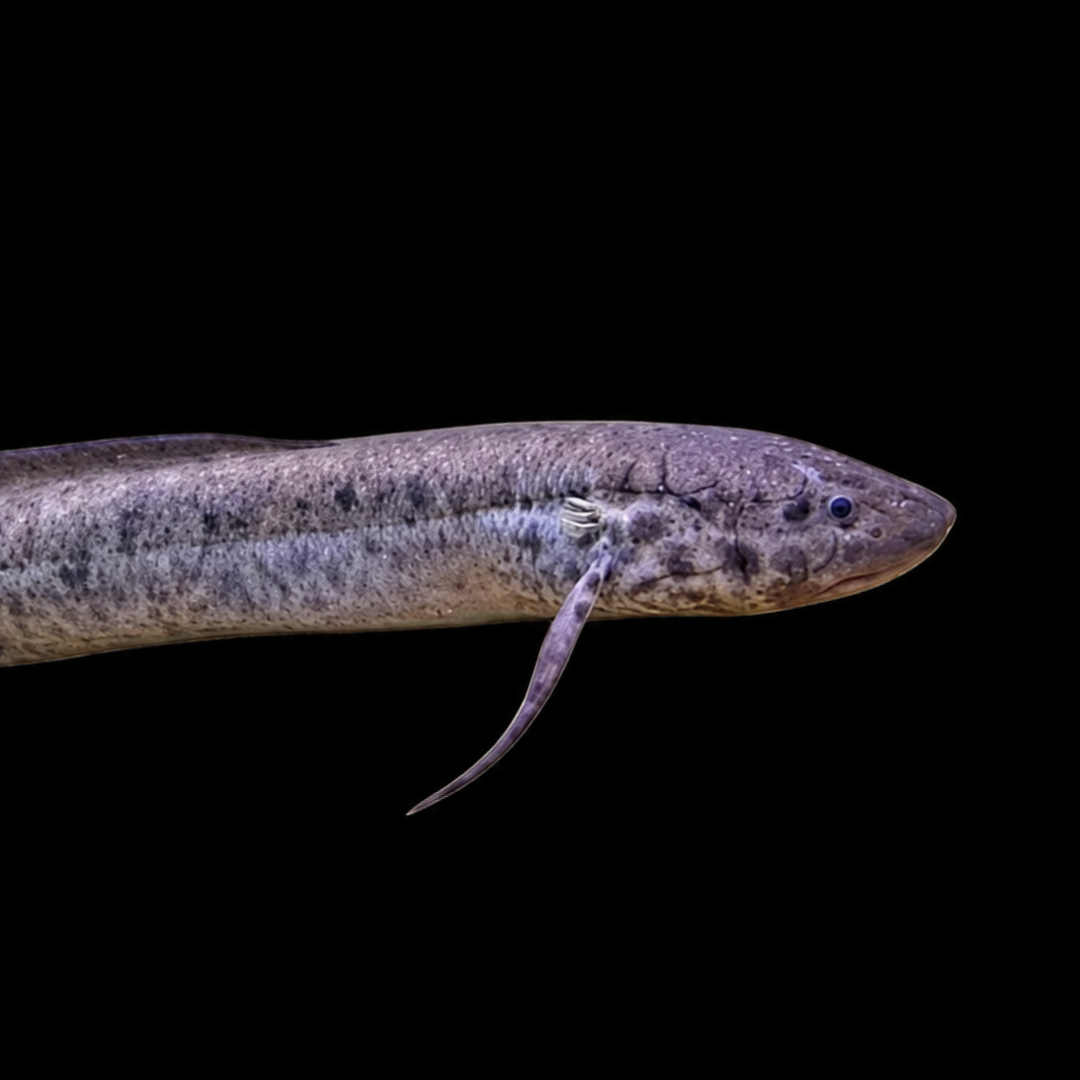
プロトプテルス・アネクテンスは、西アフリカを中心に分布するアフリカ肺魚の一種です。ウナギのように細長い体と、糸のように伸びる胸鰭・腹鰭を持ち、魚でありながら肺を使って空気呼吸を行います。乾季には泥の中で粘液の繭を作って夏眠し、長期間の乾燥をしのぐという驚くべき生態でも知られています。古代魚らしい独特の姿に加え、組織再生や歩行様の運動など、脊椎動物の進化を考えるうえでも非常に興味深い存在です。飼育下では丈夫で人工飼料にも慣れやすい一方、強い顎、飛び出し、器具への噛みつき、長い寿命を考えた設備づくりが欠かせません。 Protopterus annectens is an African lungfish found mainly in West Africa. It has an elongated, eel-like body and slender, filament-like paired fins, and unlike most fishes it relies heavily on lungs for breathing atmospheric air. During the dry season it can burrow into mud, form a mucus cocoon, and enter aestivation for an extended period. Its ancient appearance, remarkable regenerative ability, and bottom-walking behavior also make it an important species for understanding vertebrate evolution. In captivity it is hardy and usually accepts prepared foods, but its powerful jaws, tendency to escape, habit of biting equipment, and long lifespan require careful long-term planning.
基本情報 / Basic Information
| 学名 / Scientific Name | Protopterus annectens |
|---|---|
| 通称 / Common Name | プロトプテルス・アネクテンス、アフリカハイギョの一種West African lungfish, African lungfish |
| 分類 / Family | 肉鰭亜綱・肺魚類・プロトプテルス科・プロトプテルス属Sarcopterygii, lungfishes, family Protopteridae, genus Protopterus |
| 英名 / English Name | West African lungfish |
| 分布 / Distribution | 西アフリカを中心に広く分布します。基亜種 P. a. annectens は西アフリカからナイル川上流域にかけて、P. a. brieni はザンベジ川中下流域からリンポポ川周辺に分布するとされています。Widely distributed in Africa, especially in West Africa. The nominate subspecies P. a. annectens occurs from West Africa toward the upper Nile region, while P. a. brieni is reported from the middle and lower Zambezi region toward the Limpopo basin. |
| 最大体長 / Max Size | 約100cm。飼育下では50〜80cm前後で成長が緩やかになる個体も見られます。About 100 cm. In captivity, many individuals grow more slowly and may remain around 50–80 cm. |
| 寿命 / Lifespan | 10〜20年程度、またはそれ以上生きる可能性があります。長期飼育を前提に迎える必要があります。Approximately 10–20 years, potentially longer. It should be kept only with a long-term care plan. |
飼育環境 / Aquarium Environment
| 水槽サイズ / Tank Size | 成長後は90cm規格水槽クラスを最低限の目安とし、個体の成長や体格に応じて、より奥行きのある90cmワイド水槽や120cmクラスの水槽を用意すると管理しやすくなります。体は柔軟ですが、終生飼育を見据えて余裕のある床面積を確保してください。For adults, a standard 90 cm aquarium should be regarded as a minimum guideline. A deeper 90 cm-wide tank or a 120 cm-class aquarium is easier to manage for larger individuals. Although the body is flexible, generous floor space is preferable for lifelong care. |
|---|---|
| 水温 / Temperature | 25〜30℃を目安に安定させます。 Maintain a stable temperature of approximately 25–30°C. |
| 水質 / Water Quality | 中性から弱アルカリ性を中心に、極端な酸性を避けた安定した水質が向いています。大食で排泄量も多いため、強力な物理濾過・生物濾過と定期的な換水が重要です。強い水流は好まないため、排水方向を調整して穏やかな流れを作ります。Stable water around neutral to slightly alkaline conditions is suitable, while strongly acidic water should be avoided. Because this species eats heavily and produces substantial waste, strong mechanical and biological filtration plus regular water changes are important. Keep the current gentle by diffusing or redirecting filter outflow. |
| レイアウト / Layout | 遊泳スペースを広く取り、尖った石や複雑な装飾は避けたシンプルなレイアウトが適しています。視力が弱く、体をくねらせて移動するため、擦り傷を作りにくい構成が安心です。空気呼吸のため、水面へ確実に到達できる空間を残してください。A simple layout with ample open space is recommended. Avoid sharp rocks and complicated decorations because the fish has poor eyesight and moves by flexing its body. Always leave unobstructed access to the water surface for air breathing. |
| 注意点 / Precautions | 最重要なのは飛び出し防止です。肺呼吸のため勢いよく水面へ上がり、蓋を押し開けることがあるため、強固な蓋を確実に固定します。また、硬い貝殻を砕けるほど顎が強く、ヒーターコードや樹脂製パーツを噛む危険があります。ヒーターは保護カバーを使用するか、可能であれば濾過槽へ隔離してください。水面を完全に塞いで空気呼吸を妨げないことも重要です。Escape prevention is the most important precaution. The fish may surge to the surface to breathe and can push open a loose lid, so the cover must be securely fixed. Its jaws are strong enough to crush hard-shelled prey, and it may bite heater cords or plastic equipment. Use a protective heater guard or place the heater in a separate filtration chamber when possible. Never block access to atmospheric air. |
餌と給餌 / Feeding
| 餌の種類 / Diet | 沈下性の大型肉食魚用人工飼料を主食にしやすく、管理面でも扱いやすい魚です。補助的にドジョウ、エビ類、貝類などを与えることもできます。自然下では軟体動物、魚類、カエル、甲殻類、水草の根など幅広いものを食べます。Sinking prepared foods for large carnivorous fishes are suitable as a staple and are convenient for routine care. Loaches, shrimp, and mollusks may be offered as supplementary foods. In the wild, the diet is broad and includes mollusks, fishes, frogs, crustaceans, and plant material such as roots. |
|---|---|
| 給餌のポイント / Feeding Tips | 視力よりも嗅覚や水流の感覚に頼って餌を探し、近づいた餌を周囲の水ごと吸い込むように捕食します。食欲が強いからと過剰に与えると水質悪化につながるため、食べ切れる量を観察しながら調整します。人工飼料を中心にすると栄養管理と水質管理がしやすくなります。It locates food mainly through smell and water movement rather than vision, then takes prey with a forceful suction-like bite. Its strong appetite can easily lead to overfeeding and poor water quality, so portion size should be adjusted to what the fish consumes readily. Prepared foods simplify both nutritional control and aquarium maintenance. |
性格と混泳 / Temperament and Tank Mates
| 性格 / Temperament | 普段は底付近でゆったりしていることが多い一方、口に入るものや動くものへ強く噛みつくことがあります。細い胸鰭・腹鰭は繊細に見えますが、顎と歯板は非常に強力です。It often appears calm while resting near the bottom, but it may bite strongly at moving objects or potential food. Its thread-like paired fins look delicate, yet its jaws and tooth plates are extremely powerful. |
|---|---|
| 混泳の相性 / Compatibility | 原則として単独飼育を推奨します。同種・他種を問わず、ヒレや体を噛む事故が起こりやすく、サイズが近い大型魚でも安全とは限りません。輸入時に胸鰭や腹鰭が欠損している個体でも、単独飼育と良好な水質管理によって時間をかけて再生することがあります。Solitary keeping is strongly recommended. It may bite the fins or bodies of both conspecifics and other fishes, and even similarly sized large tank mates are not necessarily safe. Individuals imported with damaged paired fins may gradually regenerate them when kept alone under clean, stable conditions. |
病気と対策 / Diseases and Prevention
| かかりやすい病気 / Common Diseases | 丈夫な魚ですが、水質悪化や輸送直後のストレスをきっかけに、白点病や水カビ病などを発症することがあります。噛み傷や擦り傷の部位に二次感染が起こる場合もあります。Although generally hardy, it may develop conditions such as white spot disease or saprolegniasis following poor water quality or transport stress. Secondary infections can also develop around bite wounds and abrasions. |
|---|---|
| 対策と予防 / Prevention | 予防の基本は、過密を避けた単独飼育、十分な濾過、定期換水、安定した水温です。外傷を防ぐため、尖った装飾や噛み合いが起こる混泳を避けます。異常が見られた場合は水質を確認し、必要に応じて隔離したうえで、観賞魚用治療薬を製品表示に従って使用します。薬浴時は用量を厳守し、水質、とくに極端な酸性化を避けながら魚体の反応を慎重に観察してください。Prevention begins with solitary housing, adequate filtration, regular water changes, and stable temperature. Avoid sharp decorations and tank mates that may cause injuries. When symptoms appear, first check water quality and isolate the fish if necessary, then use aquarium medications strictly according to the product label. During treatment, never exceed the stated dose and carefully monitor the fish, especially if the water has become strongly acidic. |
増やし方(繁殖) / Breeding
| 雌雄の判別 / Sexing | 外見だけで確実に雌雄を判別する方法は一般的ではなく、通常の観賞魚飼育では見分けにくい魚です。野外調査では成熟サイズの目安として、メス約29.6cm、オス約30.4cm前後という報告があります。Reliable external sexing is not generally practical in aquarium keeping. Field studies have reported approximate sizes at first maturity of about 29.6 cm for females and 30.4 cm for males. |
|---|---|
| 繁殖形態 / Reproduction | 雨季に繁殖し、オスが泥中に大きな巣穴を掘ります。複数のメスが産卵し、体外受精が行われた後、オスが卵と稚魚を守ります。卵は約8日で孵化し、オスは稚魚が巣立つまで保護を続けるとされています。Breeding is associated with the rainy season. The male excavates a large burrow in the substrate, females deposit eggs, and fertilization is external. The male remains to guard the eggs and young. Hatching occurs after roughly eight days, and parental care continues until the juveniles leave the nest. |
| 繁殖のポイント / Breeding Tips | 家庭の水槽内での繁殖は極めて困難です。大規模な泥底の繁殖場、季節変化の再現、成魚同士を安全に扱える広い空間が必要になるため、一般的な個人飼育では現実的ではありません。Breeding in a home aquarium is extremely difficult. It would require a large mud-based breeding area, seasonal environmental cues, and enough space to manage adult fish safely, making routine hobbyist breeding impractical. |
雑学と豆知識 / Trivia and Fun Facts
| 1. 水から陸への進化を考える重要な仲間 / 1. A key lineage for understanding the move onto land | 肺魚類は、四肢動物に近縁な現生の肉鰭類として、脊椎動物が水中生活から陸上生活へ移行した過程を考えるうえで重要な存在です。プロトプテルス・アネクテンスの細長い姿だけを見ると古典的な「四肢につながる魚」のイメージとは少し違いますが、肺呼吸、循環器の構造、ヒレの運動制御などには、陸上脊椎動物との進化的なつながりを感じさせる特徴が残っています。Lungfishes are living sarcopterygians closely related to tetrapods and are therefore important for studying the evolutionary transition from water to land. Protopterus annectens may not resemble the classic image of a limb-like lobe-finned fish, but its air-breathing system, circulation, and fin control retain features that illuminate the evolutionary background of terrestrial vertebrates. |
|---|---|
| 2. 魚なのに「空気を吸えないと溺れる」 / 2. A fish that can drown without access to air | プロトプテルス属は肺呼吸への依存度が高い絶対的空気呼吸魚です。水中に酸素があっても、水面へ上がって肺の空気を入れ替えられない状態が続けば生存できません。飼育では「蓋をしっかり閉めること」と「空気呼吸を妨げないこと」という、一見矛盾する二つの条件を同時に満たす必要があります。Protopterus species are obligate air breathers and depend heavily on atmospheric oxygen. Even in oxygenated water, they cannot survive indefinitely if prevented from reaching the surface to ventilate their lungs. Aquarium care therefore requires two seemingly opposite precautions at once: a securely closed lid and guaranteed access to air. |
| 3. 約40Gbに達する巨大ゲノム / 3. A genome of roughly 40 gigabases | 本種のゲノムは約40Gbとされ、ヒトを大きく上回る巨大さです。その膨張にはLINE-1などの転移因子の増幅が深く関わっていると考えられています。巨大なゲノムを持ちながら必要な遺伝子を機能的に発現できる点も興味深く、肺魚のゲノム進化は「大きいほど単純に不利」という見方では説明しきれない複雑さを示しています。The genome of this species is about 40 Gb, far larger than the human genome. Much of this expansion is thought to be associated with the proliferation of transposable elements such as LINE-1. Its ability to maintain functional gene expression despite such an enormous genome makes lungfish genome evolution a particularly intriguing field of study. |
| 4. 切れたヒレや尾を再生する力 / 4. Remarkable fin and tail regeneration | 外傷を受けると、傷口の下に再生芽と呼ばれる細胞集団を作り、筋肉、骨格、神経を含む複雑な組織を再構築できます。この再生に関わるShh、Bmp、Wnt、Fgfなどのシグナルは両生類の再生とも共通点があり、複雑な器官を再生する能力が肉鰭類の古い進化的基盤に由来する可能性を示しています。輸入個体の糸状のヒレが欠けていても、良好な環境で徐々に伸び直すことがあるのは、この能力の身近な表れです。After injury, the fish can form a blastema beneath the wound and rebuild complex tissues including muscle, skeletal structures, and nerves. Signaling pathways such as Shh, Bmp, Wnt, and Fgf show similarities to regenerative programs in amphibians, suggesting an ancient sarcopterygian basis for complex tissue regeneration. In the aquarium trade, gradual regrowth of damaged filamentous fins is a visible example of this ability. |
| 5. 乾季を越える「夏眠」という生存戦略 / 5. Aestivation as a dry-season survival strategy | 水が失われる乾季には泥へ潜り、体表の粘液から繭を作って代謝を大きく落とします。水中生活では主にアンモニアとして排出していた窒素を、夏眠中には尿素へ変換して体内へ蓄える方向へ切り替えることが知られています。呼吸、代謝、浸透圧調節、神経内分泌まで全身をまとめて「低消費モード」へ切り替えるこの仕組みは、肺魚の強靭さを象徴する生理現象です。During the dry season, the fish burrows into mud, forms a cocoon from mucus, and greatly suppresses metabolism. In water it primarily excretes nitrogen as ammonia, but during aestivation nitrogen metabolism shifts toward urea production and retention. This coordinated change in respiration, metabolism, osmoregulation, and neuroendocrine activity is one of the most striking examples of physiological survival adaptation in vertebrates. |
| 6. 繭は単なる乾いた粘液ではない / 6. The cocoon is more than dried mucus | 夏眠時の繭には免疫細胞が動員され、細胞外トラップと呼ばれるDNAを主体とした網状構造が形成されることが報告されています。これは周囲から侵入する細菌を捕捉する防御機構として働くと考えられており、肺魚は活動を極端に落としている間も、体の外側に免疫的な防衛線を作っていることになります。乾燥への適応と感染防御が一体化した、非常に珍しい仕組みです。Studies have reported that immune cells migrate into the aestivation cocoon and form DNA-based extracellular traps. These structures are thought to help capture invading bacteria, meaning the fish maintains an external immune barrier even while its overall activity is strongly reduced. It is an unusual integration of desiccation resistance and pathogen defense. |
| 7. 細い腹鰭で「歩く」魚 / 7. A fish that “walks” with slender pelvic fins | 水底では、糸のような腹鰭を交互に使って体を支えながら前進する歩行様の運動や、左右を同時に使う跳躍様の運動が観察されています。見た目には華奢なヒレですが、筋肉の使い分けによって複数方向の動きを作り出します。四肢が完成する以前から、左右の付属肢を交互に動かして基質上を進む運動制御が成立していた可能性を考えさせる行動です。On the bottom, the fish can use its thread-like pelvic fins alternately in a walking-like gait or together in a bounding-like movement. Although the fins look delicate, differential muscle activation allows them to move in several directions. This behavior suggests that alternating appendage-based locomotor control may have existed before fully developed tetrapod limbs evolved. |
| 8. 歯ではなく「歯板」で硬い餌を砕く / 8. Tooth plates built for crushing hard prey | 口の中には一般的な魚のような細かな歯列ではなく、顎と一体化した頑丈な歯板があります。自然界ではこれを使って貝類などを砕き、噛みつぶすように食べます。飼育中のコードや樹脂部品を破損させることがあるのも、この強力な口器があるためです。ユーモラスな顔つきに反して、口元は大型魚らしい注意が必要な部分です。Instead of rows of small fish-like teeth, the jaws carry robust tooth plates adapted for crushing hard prey such as mollusks. The same powerful feeding apparatus can damage cords and plastic aquarium parts. Its expression may look comical, but the mouth deserves the same respect given to other large, strong-jawed fishes. |
| 9. オスが巣を守る献身的な繁殖行動 / 9. Intensive paternal care | 自然界ではオスが泥の中に大きな繁殖巣を作り、産卵後もその場に残って卵と稚魚を守ります。体やヒレを動かして水流を作り、新鮮な水を送り続ける行動も見られます。普段の単独性や強い捕食性からは想像しにくいほど、繁殖期のオスは次世代を守る役割を担います。In the wild, the male builds a large breeding burrow in mud and remains after spawning to guard eggs and juveniles. By moving its body and fins, it can help circulate fresh water through the nest. This intensive paternal care contrasts strikingly with the solitary and strongly predatory behavior seen outside the breeding context. |
まとめ / Conclusion
プロトプテルス・アネクテンスは、古代魚らしい風格と、肺呼吸、夏眠、再生能力、歩行様行動という独特の生態を一匹の中に備えた、とても個性的な魚です。派手に泳ぎ回るタイプではありませんが、水底で静かに過ごし、ときおり水面へ呼吸に上がる姿には、ほかの熱帯魚とはまったく異なる存在感があります。 Protopterus annectens combines an unmistakably ancient appearance with unusual traits such as air breathing, aestivation, regeneration, and walking-like locomotion. It is not a constantly active display fish, but its quiet bottom-dwelling behavior and regular trips to the surface for air create a presence unlike that of almost any conventional tropical fish.
一方で、長く付き合うためには、強固な蓋、噛み壊されにくい設備、十分な濾過、余裕のある水槽、そして原則単独飼育という基本を守ることが大切です。10年以上の時間をともにする可能性を持つ魚だからこそ、成長後の姿まで見据えて環境を整えれば、その不思議な呼吸や仕草、少しずつ変化していく体つきを長い年月にわたって楽しめるでしょう。 Successful long-term care depends on a secure lid, bite-resistant equipment, strong filtration, adequate tank space, and generally solitary housing. Because this fish may live with its keeper for well over a decade, planning for the adult stage from the beginning allows its unusual breathing, subtle behaviors, and gradual growth to be appreciated for many years.
分布マップ
アフリカに広く分布し、基亜種は西アフリカからナイル川上流域にかけて、別亜種はザンベジ川中下流域からリンポポ川周辺に分布するとされています。地図では記事内容を基に、二つの地域を大まかな範囲として示しています。
この地図は記事の分布記述を視覚化した概略表示です。色付きの範囲とマーカーは、実際の採集地点、個体の確認地点、厳密な生息範囲、分布境界を示すものではありません。
参考文献・根拠資料
プロトプテルス・アネクテンスの分類、分布、生息環境、飼育条件、繁殖、疾病予防および安全上の注意を確認するために用いた資料です。学術論文、専門書、公的・学術機関のデータベース、大学の飼育手順書、獣医学資料に限定し、店舗、通販サイト、個人ブログ、まとめサイトは含めていません。
根拠の範囲と読み方
分類体系の上位階級や目名は、採用する分類体系によって表記が異なる場合があります。学名 Protopterus annectens とプロトプテルス科への所属は、現行の主要資料間で一致しています。
記事中の「150cm以上を出発点とし、可能なら180cm級」という水槽サイズは、最大体長約1m、単独管理、脱走防止、空気呼吸に必要な水面上の空間などを踏まえた安全側の飼育提案です。査読論文や公的基準が定めた普遍的な最低水槽長ではありません。
疾病に関する資料は、淡水観賞魚・飼育魚全般の診断と予防を扱う獣医学資料です。本種が白点病、水カビ症、細菌感染症などに特にかかりやすいことを示す十分な種特異的データは確認できないため、症状の断定や自己判断での投薬ではなく、水質改善、隔離、顕微鏡検査、魚類診療に詳しい獣医師への相談を優先する根拠として掲載しています。
分類・分布・生息環境
-
Fricke, R., Eschmeyer, W. N. & Van der Laan, R. (eds.). Eschmeyer’s Catalog of Fishes: Genera, Species, References. California Academy of Sciences. “Protopterus annectens” species record.主に支える記述:有効学名、原記載者、科、亜種を含む分布域、淡水性。California Academy of Sciencesの種記録
-
Nelson, J. S., Grande, T. C. & Wilson, M. V. H. (2016). Fishes of the World, 5th ed. Wiley.主に支える記述:肉鰭類、肺魚類およびプロトプテルス科の上位分類を確認するための専門書。DOI: 10.1002/9781119174844
-
Froese, R. & Pauly, D. (eds.). FishBase. “Protopterus annectens” species summary.主に支える記述:分布、最大体長・体重、水温の目安、湿地や河川後背水域での生息、絶対的空気呼吸、食性、夏眠、巣と雄による保護行動。FishBaseの種情報
-
Diouf, K., Snoeks, J., Lalèyè, P. & Contreras MacBeath, T. (2020). Protopterus annectens. The IUCN Red List of Threatened Species 2020: e.T169408A135027770.主に支える記述:広域分布、生息地域、生態・生息地の概要、および保全状況。DOI: 10.2305/IUCN.UK.2020-2.RLTS.T169408A135027770.en
-
Greenwood, P. H. (1986). The natural history of African lungfishes. Journal of Morphology, 190(S1), 163–179.主に支える記述:アフリカ肺魚の自然史、生息環境、夏眠、空気呼吸、繁殖巣および親による保護の背景。DOI: 10.1002/jmor.1051900412
飼育条件・安全上の注意
-
University of Guelph, Hagen Aqualab. (2005). African Lungfish, Protopterus sp.: Standard Operating Procedures.主に支える記述:個体ごとの分離飼育、蓋と排水口カバーによる脱走防止、水面上の空気空間の確保、28±2℃の研究施設管理例、濾過、pH・アンモニア・亜硝酸・硝酸塩の監視、残餌除去、毎日の観察、異常時の獣医学的相談。研究施設でプロトプテルス属を管理するための手順書であり、一般家庭向けの水槽寸法や唯一の飼育方法を定める資料ではありません。University of Guelph公開PDF
繁殖
-
Lederoun, D., Vandewalle, P. & Lalèyè, P. A. (2020). Reproductive Biology of the African Lungfish Protopterus annectens annectens (Owen, 1839) in the Mono River Basin of Benin, West Africa. Journal of Fisheries and Environment, 44(3), 19–31.主に支える記述:モノ川流域個体群における雌雄比、50%成熟全長、分割産卵の可能性、絶対抱卵数。成熟全長29.6cm・30.4cmなどの数値は、この地域個体群の調査結果として扱います。論文掲載ページ
病気・健康管理
-
Merck Veterinary Manual. “Parasitic Diseases of Fish.”主に支える記述:淡水魚の白点病を引き起こすウオノカイセンチュウ、皮膚・鰓への寄生、器具を介した伝播、顕微鏡診断、温度に応じた生活環と治療間隔。Merck Veterinary Manual
-
Merck Veterinary Manual. “Disorders and Diseases of Fish.”主に支える記述:外傷による皮膚バリアの損傷、綿状に見える水カビ症、過密・有機物蓄積・不衛生な環境と疾病リスク、薬剤表示の遵守、魚類医療の専門家に相談する重要性。Merck Veterinary Manual
オンライン資料の最終確認日:2026年7月28日。データベースやオンラインマニュアルは更新されるため、再利用時にはリンク先の最新版も確認してください。




コメント