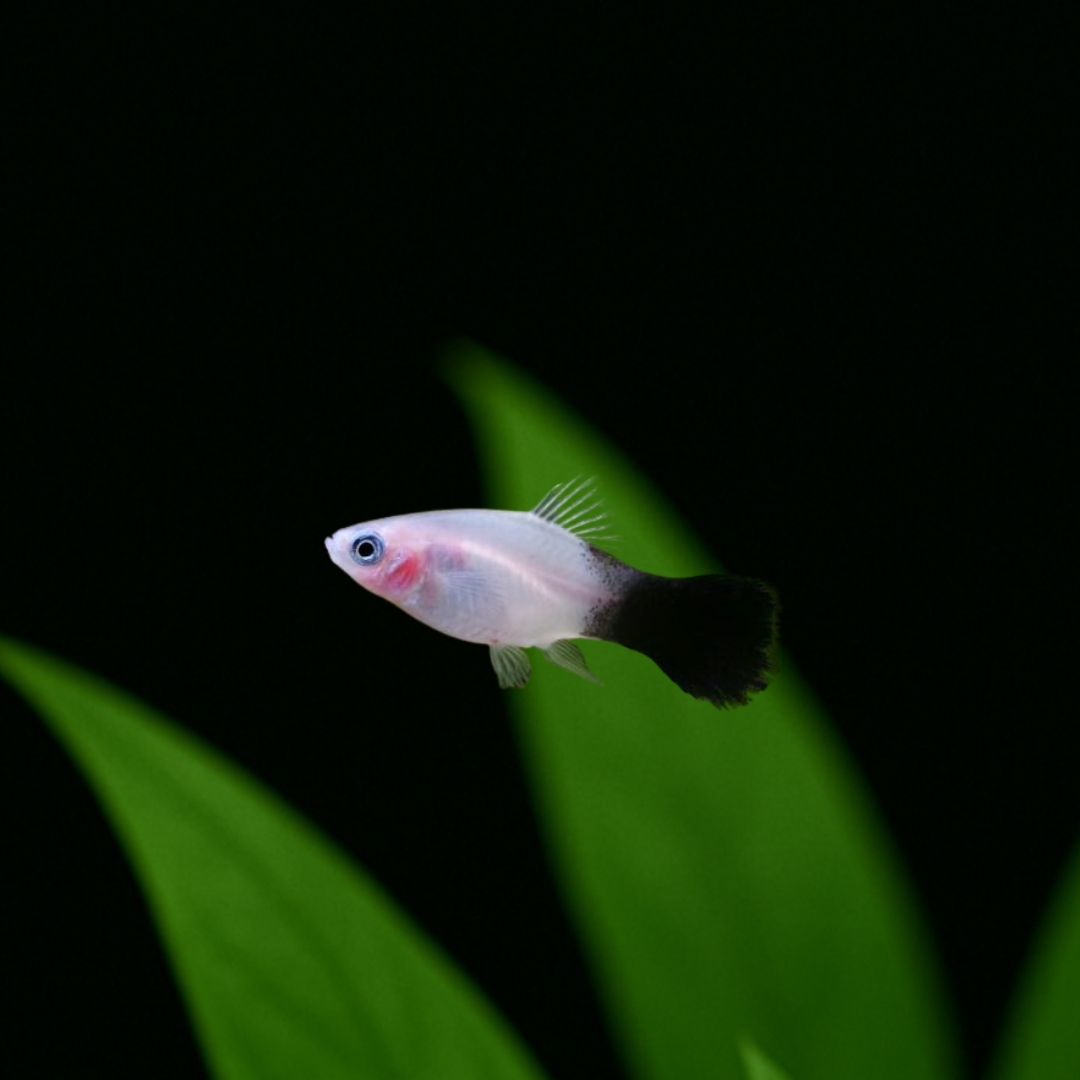
パンダ・プラティは、白っぽい体に黒い斑が入るプラティの改良品種です。名前の通り、白と黒のコントラストがジャイアントパンダを思わせることから親しまれており、明るい水草水槽でも落ち着いたレイアウトでもよく映える小型熱帯魚です。プラティらしい丈夫さと繁殖しやすさを持つ一方で、きれいなパンダ模様は個体差が大きく、成長や血統によって黒斑の入り方が変わることがあります。The Panda Platy is a selectively bred color variety of platy with a pale body and black markings. Its contrasting black-and-white pattern gives it a charming appearance reminiscent of a giant panda. Like other platies, it is hardy and easy to breed, but the quality and placement of the panda pattern can vary greatly among individuals and may change as the fish grows.
基本情報 / Basic Information
学名 / Scientific Name
Xiphophorus maculatus
通称 / Common Name
パンダ・プラティ、パンダプラティPanda Platy
分類 / Family
カダヤシ目 カダヤシ科 ソードテール属Order Cyprinodontiformes, family Poeciliidae, genus Xiphophorus
英名 / English Name
Panda Platy, Southern Platyfish
分布 / Distribution
原種のプラティは、メキシコの大西洋岸側からベリーズ、グアテマラ、ホンジュラス周辺にかけて分布するとされています。パンダ・プラティは観賞魚として作出・維持される改良品種で、自然分布を持つ野生型そのものではありません。The wild southern platyfish is reported from the Atlantic coastal region of Mexico, Belize, Guatemala, and Honduras. The Panda Platy is a captive-maintained ornamental variety and does not represent a naturally distributed wild form.
最大体長 / Max Size
オスは約4cm前後、メスは約5〜6cm前後。メスのほうがやや大きく、腹部に丸みが出ます。Males usually reach around 4 cm, while females may reach about 5 to 6 cm. Females are generally larger and rounder-bodied.
寿命 / Lifespan
一般的には約2〜3年程度です。水質の安定、過密の回避、過剰給餌を控えることが長期飼育の鍵になります。Typically about 2 to 3 years. Stable water quality, avoiding overcrowding, and preventing overfeeding are important for longevity.
飼育環境 / Aquarium Environment
水槽サイズ / Tank Size
ごく少数なら30cmキューブ水槽でも飼育できますが、プラティはよく泳ぎ、繁殖で数が増えやすい魚です。長期飼育や群れでの管理を考えるなら45cm水槽以上、余裕を持つなら60cm規格水槽を基本にすると安定しやすくなります。A 30 cm cube aquarium can keep a very small group, but platies are active fish and can increase in number quickly through breeding. For long-term keeping or group management, a 45 cm tank or larger is preferable, and a standard 60 cm aquarium provides a more stable setup.
水温 / Temperature
22〜26℃前後を中心に管理します。許容範囲は比較的広いものの、低温や急な温度変化が続くと体調を崩しやすくなります。冬場はヒーターで安定させると安心です。Maintain the temperature around 22 to 26°C. Although platies tolerate a fairly broad range, prolonged cold conditions or sudden temperature changes can weaken them, so a heater is recommended in winter.
水質 / Water Quality
中性から弱アルカリ性、やや硬度のある水を好みます。目安はpH7.0〜8.2前後です。日本の水道水は地域によって軟水寄りの場合があるため、調子が上がらないときはサンゴ砂やカキ殻、大磯砂などで硬度とpHの急低下を補う方法が有効です。ただし、急激な水質変更は避け、少量ずつ様子を見ることが大切です。They prefer neutral to slightly alkaline water with moderate hardness, roughly around pH 7.0 to 8.2. In areas with very soft tap water, coral sand, oyster shell, or similar mineral sources can help prevent pH drops and support better condition. However, sudden water chemistry changes should be avoided, and adjustments should be made gradually.
レイアウト / Layout
水草を植えつつ、前面や中央に遊泳スペースを残すレイアウトが向いています。マツモ、アナカリス、ウィローモス、浮き草の根などは稚魚の隠れ家にもなります。流木を大量に入れて水を酸性に傾けすぎるより、明るく開けた環境を意識すると扱いやすい魚です。A planted layout with open swimming space works well. Hornwort, anacharis, Java moss, and floating plant roots also provide refuge for fry. Rather than using a large amount of driftwood that may push the water acidic, a bright and open setup is easier to manage.
注意点 / Precautions
丈夫な魚ですが、水質悪化には無頓着でよいわけではありません。繁殖で数が増えやすく、給餌量も増えがちなため、過密、水換え不足、底床の汚れには注意が必要です。また、白黒模様は個体差が大きく、成長後に黒斑が増えたり薄くなったりすることがあります。Although hardy, they should not be kept in neglected water. Because they breed readily and are eager feeders, overcrowding, insufficient water changes, and dirty substrate can quickly become problems. Their black-and-white markings also vary by individual and may change with growth.
餌と給餌 / Feeding
餌の種類 / Diet
人工飼料をよく食べる雑食性です。フレークフードや小型魚用顆粒を主食にし、スピルリナ配合飼料や植物質を含む餌を組み合わせると健康的に育てやすくなります。冷凍赤虫、ブラインシュリンプ、ミジンコなども食べますが、動物質に偏りすぎないようにします。They are omnivorous and readily accept prepared foods. Use quality flakes or small granules as the staple, supplemented with spirulina-based or plant-rich foods. Frozen bloodworms, brine shrimp, and daphnia are also accepted, but the diet should not rely too heavily on animal protein.
給餌のポイント / Feeding Tips
1日1〜2回、数分で食べきれる量を与えます。プラティは人を見ると餌をねだるように集まりますが、過剰給餌は水質悪化と肥満の原因になります。繁殖水槽では稚魚にも餌が行き渡るよう、細かく砕いた人工飼料を少量ずつ与えるとよいでしょう。Feed once or twice daily, only as much as they can finish within a few minutes. Platies often beg for food, but overfeeding can lead to poor water quality and obesity. In breeding tanks, finely crushed prepared food can be offered in small amounts so fry can feed as well.
性格と混泳 / Temperament and Tank Mates
性格 / Temperament
温和で活動的な性格です。水槽の中層から上層をよく泳ぎ、同種同士でゆるい群れを作ります。オスはメスを追いかけることがあるため、雌雄を混ぜる場合はメスを多めにするか、隠れ家を多めに用意すると負担を分散できます。They are peaceful and active, usually swimming in the middle to upper areas of the aquarium. Males may persistently chase females, so keeping more females than males and providing cover helps reduce stress.
混泳の相性 / Compatibility
同程度のサイズで温和な魚と相性がよく、コリドラス、オトシンクルス、小型カラシン、ラスボラ、温和な小型グラミーなどと混泳しやすいです。ヒレをかじる魚、大型魚、攻撃的なシクリッド、大型のザリガニ類との混泳は避けます。ソードテール類とは交雑する可能性があるため、品種維持を重視する場合は別水槽で飼育することが重要です。They mix well with similarly sized peaceful species such as Corydoras, Otocinclus, small tetras, rasboras, and gentle small gouramis. Avoid fin nippers, large predatory fish, aggressive cichlids, and large crayfish. Swordtails can hybridize with platies, so separate tanks are important if strain purity is a priority.
病気と対策 / Diseases and Prevention
かかりやすい病気 / Common Diseases
白点病、尾ぐされ病、カラムナリス症、水質悪化に伴う体調不良などに注意します。導入直後の個体は、輸送ストレスでヒレをたたむ、体表が白く濁る、底でじっとするなどの症状が出ることがあります。黒い斑の部分が盛り上がるような変化は、すべてが感染症とは限らず、色素細胞由来の変化が関係する可能性もあるため、安易に一つの病名へ決めつけないことが大切です。Watch for ich, fin rot, columnaris, and stress-related illness caused by poor water quality. Newly introduced fish may clamp fins, show cloudy patches, or remain near the bottom due to transport or acclimation stress. Raised changes in black pigment areas are not always simple infections and may involve pigment-cell-related changes, so they should not be hastily assigned to a single disease name.
対策と予防 / Prevention
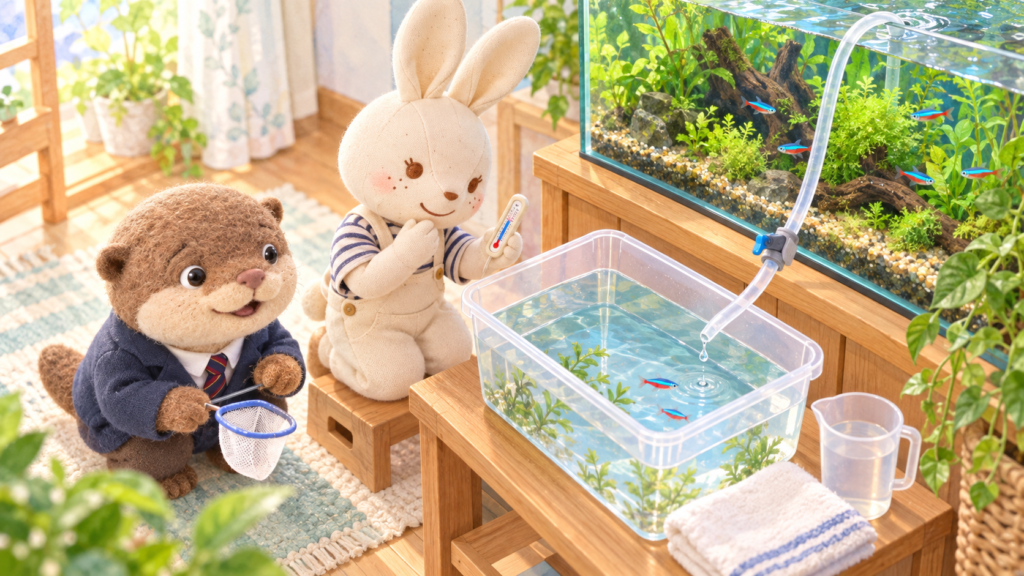
予防の基本は、安定した水質、適切な硬度、過密を避けた飼育です。新しく迎えた個体はすぐ本水槽へ入れず、状態を見ながら慎重に水合わせします。軽い不調では隔離して清潔な水で休ませることが有効で、塩水浴を行う場合は魚の状態と同居生体への影響を確認し、濃度や期間を慎重に管理する必要があります。Prevention depends on stable water quality, appropriate hardness, and avoiding overcrowding. Newly acquired fish should be acclimated carefully and monitored before joining the main tank. Mild problems often improve with isolation in clean water, and salt baths should be used carefully with attention to concentration, duration, and the tolerance of other livestock.
増やし方(繁殖) / Breeding
雌雄の判別 / Sexing
オスは尻ビレが棒状のゴノポディウムに変化し、体型はやや細身です。メスは尻ビレが扇状で、成長するとオスより大きく丸みのある体型になります。妊娠したメスは腹部が大きく張り、品種や体色によっては妊娠斑が見えることがあります。Males have a rod-like gonopodium formed from the anal fin and are usually slimmer. Females have a fan-shaped anal fin and become larger and rounder as they mature. Pregnant females develop a swollen abdomen, and a gravid spot may be visible depending on body color and pattern.
繁殖形態 / Reproduction
卵胎生です。メスの体内で受精卵が発生し、すでに泳げる状態の稚魚を産みます。妊娠期間は水温や個体の状態によって前後しますが、おおむね1か月前後が目安で、1回の出産で20〜80匹ほどの稚魚が生まれることがあります。They are livebearers. The embryos develop inside the female, and she gives birth to free-swimming fry. The gestation period varies with temperature and condition but is roughly about one month, and a brood may contain around 20 to 80 fry.
繁殖のポイント / Breeding Tips
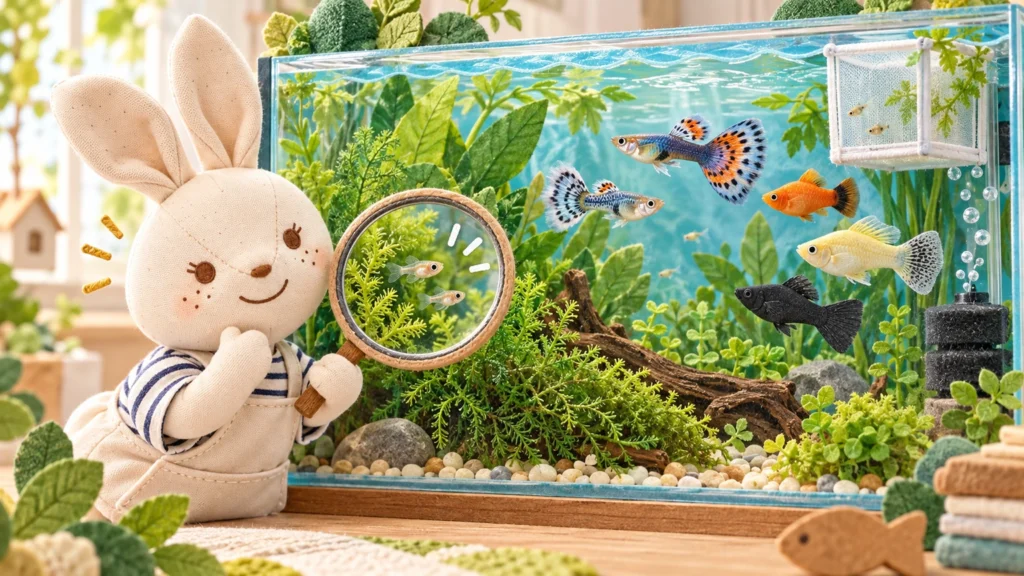
繁殖自体は容易ですが、親魚が稚魚を食べることがあります。稚魚を多く残したい場合は、マツモやウィローモスなどを多めに入れるか、出産前のメスを隔離ケースに移します。ただし隔離ケースはメスにストレスを与えることもあるため、長期間入れっぱなしにしないことが大切です。パンダ模様を保ちたい場合は、白地がきれいで黒斑の位置が整った個体を選んで繁殖に使う必要があります。Breeding is easy, but adults may eat the fry. To save more young, provide dense plants such as hornwort or Java moss, or move a near-term female to a breeding box. However, breeding boxes can stress females, so they should not be used for too long. To maintain the panda pattern, choose breeders with a clean pale body and well-placed black markings.
雑学と豆知識 / Trivia and Fun Facts
1. パンダ模様は固定されていても個体差が出やすい / 1. The panda pattern varies among individuals
パンダ・プラティの魅力は、白っぽい体と黒い斑がつくる愛嬌のある模様にあります。ただし、黒斑の位置や濃さは一匹ごとに違い、頭部に強く出る個体、尾柄部にまとまる個体、体側に細かな黒点が散る個体など幅があります。これは欠点というより、改良品種としての面白さでもあります。美しい白黒のコントラストを次世代に残したい場合は、偶然に任せるだけでなく、親魚の選び方が重要になります。The appeal of the Panda Platy lies in its charming contrast between a pale body and black markings. However, the position and intensity of the black areas differ from fish to fish. Some show strong head markings, some have a distinct black caudal peduncle, and others develop scattered speckles. This variability is part of the fascination of the strain, but careful breeder selection is needed if the pattern is to be maintained.
2. プラティは遺伝学研究でも知られる魚 / 2. Platies are also known in genetics research
プラティを含むXiphophorus属は、観賞魚としてだけでなく、色素細胞やメラノーマ研究のモデルとしても扱われてきました。特に、近縁種間の特定の交雑では、黒色色素に関わる遺伝的要素と腫瘍形成の関係が研究されています。ただし、これは主に研究系統や交雑モデルで扱われる話であり、家庭で飼育するパンダ・プラティが直ちに危険という意味ではありません。白黒模様の裏側には、観賞魚の品種改良と生物学が交差する奥行きがある、という理解にとどめるのが自然です。The genus Xiphophorus, which includes platies, has long been used not only in the aquarium hobby but also as a model for pigment-cell and melanoma research. In particular, certain interspecific hybrid systems have been studied for links between black-pigment genetics and tumor formation. This mainly concerns research strains and hybrid models, and does not mean that household Panda Platies are inherently dangerous. It is best understood as an example of how ornamental breeding and biology intersect behind the black-and-white pattern.
3. 卵胎生だからこそ繁殖の観察がしやすい / 3. Livebearing makes breeding easy to observe
パンダ・プラティは卵を産みつける魚ではなく、メスが体内で稚魚を育ててから産みます。生まれた稚魚はすぐに泳ぎ出し、細かく砕いた人工飼料も食べられるため、熱帯魚の繁殖を初めて体験する魚としても向いています。一方で、気づいたら水槽内の数が増えていたということも珍しくありません。かわいらしさと同時に、増えた後の飼育スペースまで考えておくことが大切です。Panda Platies do not lay eggs on surfaces; females give birth to developed, free-swimming fry. The young can swim immediately and accept finely crushed prepared food, making platies excellent fish for observing livebearing reproduction. At the same time, the population can increase before the aquarist realizes it, so future tank space should be considered before breeding begins.
4. 日本の水道水では酸性化に注意したい / 4. Acidification can be an issue in Japanese tap water
日本の水道水は地域差があるものの、軟水寄りの地域では、プラティが好むやや硬度のある水とは少し性質が異なることがあります。飼い始めは元気でも、ろ過が進み、硝酸塩がたまり、pHがじわじわ下がると、プラティはヒレをたたんだり体調を崩したりしやすくなります。サンゴ砂やカキ殻を少量使って緩衝力を補う管理は、日本の飼育環境に合わせた実用的な工夫です。Although tap water varies by region, areas with softer water can differ from the moderately hard conditions platies prefer. Even if the fish look healthy at first, gradual nitrate accumulation and pH decline can lead to clamped fins and poor condition. Using a small amount of coral sand or oyster shell to support buffering capacity is a practical adaptation for Japanese aquariums.
5. 屋外飼育は季節を選べば楽しめる / 5. Seasonal outdoor keeping can be enjoyable
プラティは熱帯魚ですが、春から秋の安定した時期であれば、地域や気温管理に注意しながら屋外の睡蓮鉢やプラ舟で楽しめることもあります。太陽光の下では行動が活発になり、自然発生する微小な餌や藻類をついばむ姿も観察できます。ただし低温期の屋外越冬は基本的に向かないため、秋以降は室内水槽へ戻す計画を立てておく必要があります。Although platies are tropical fish, they can sometimes be enjoyed outdoors in tubs or patio ponds during stable warm seasons, depending on local climate and temperature control. Under sunlight, they become active and graze on natural microorganisms and algae. However, outdoor overwintering is generally unsuitable in colder periods, so they should be moved indoors before temperatures fall.
まとめ / Conclusion
パンダ・プラティは、白黒の愛らしい模様と丈夫な性質をあわせ持つ、初心者にも親しみやすい小型熱帯魚です。中性から弱アルカリ性寄りの水質、適度な硬度、清潔な飼育環境を意識すれば、家庭の水槽でも元気に育てやすい魚です。The Panda Platy is a beginner-friendly small tropical fish with both charming black-and-white markings and hardy nature. With neutral to slightly alkaline water, moderate hardness, and clean aquarium conditions, it can thrive in a home aquarium.
繁殖しやすく、模様の出方にも個体差があるため、飼い込むほどに観察の楽しみが増していきます。混泳水槽の明るいアクセントとして楽しむだけでなく、親魚を選びながら次世代の模様を見守る楽しさも味わえる、奥行きのある改良プラティです。Because it breeds readily and shows individual variation in pattern, it becomes more interesting the longer it is kept. It can be enjoyed as a lively accent in a community aquarium, while also offering the deeper pleasure of selecting breeders and observing how the next generation develops.
Schartl, M. et al. (2013). The genome of the platyfish, Xiphophorus maculatus, provides insights into evolutionary adaptation and several complex traits. Nature Genetics, 45, 567–572. https://www.nature.com/articles/ng.2604 プラティのゲノム、卵胎生、色素・複雑形質研究に関する背景情報の確認に使用。
Schartl, M. et al. (2013). The genome of the platyfish, Xiphophorus maculatus, provides insights into evolutionary adaptation and several complex traits. PubMed Central full text. https://pmc.ncbi.nlm.nih.gov/articles/PMC3677569/ 上記論文の本文確認用。卵胎生関連遺伝子やXiphophorus属の研究上の位置づけの確認に使用。








コメント