

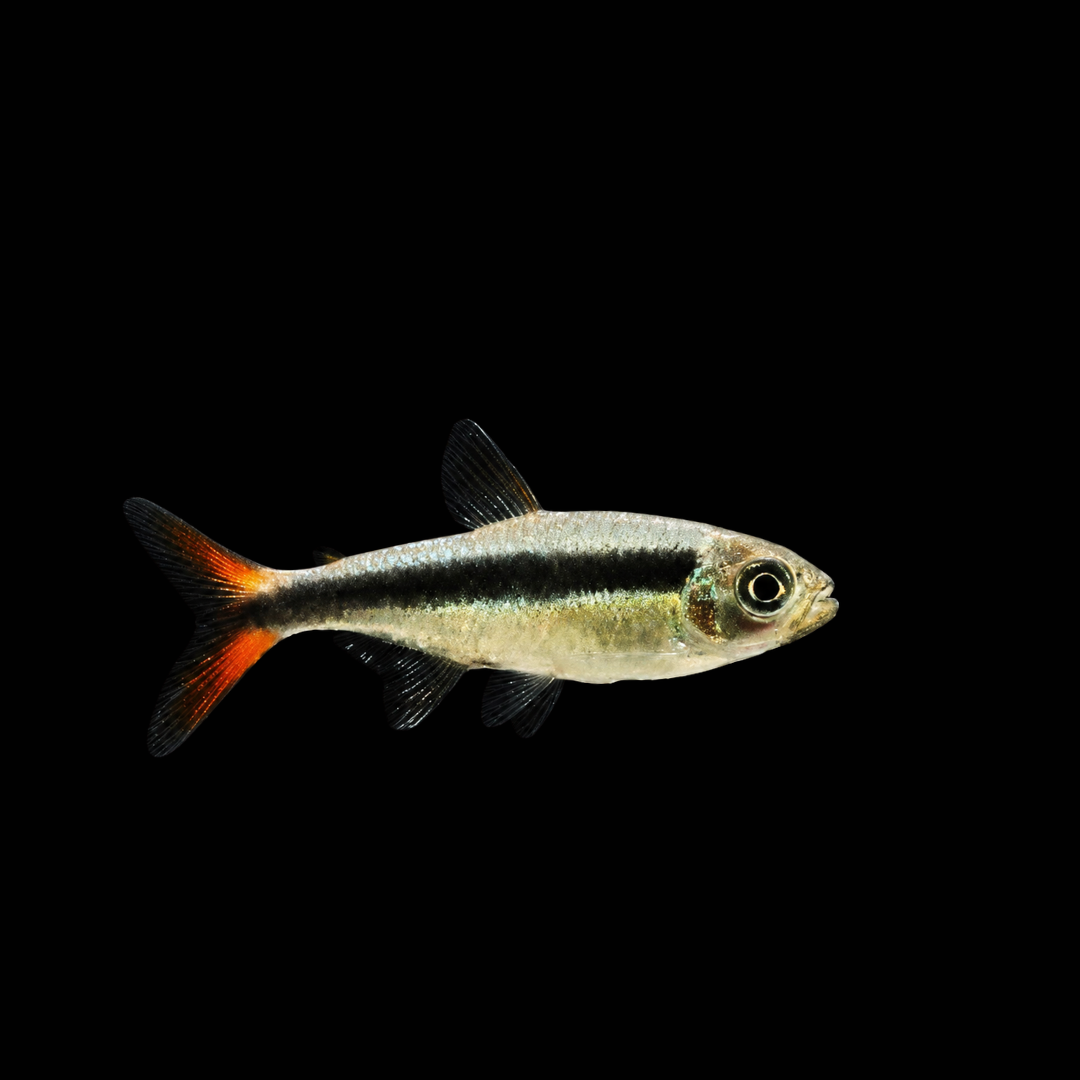
解説 / Description
レッドフィンペンギンテトラは、アクアリウムの世界で Thayeria sp. “Red Fin” または Thayeria sp. “Red Tail Teles Pires” などの名で流通する、タエリア属の未記載小型カラシンです。銀色の体に黒いラインが走り、尾ビレや背ビレ、腹ビレ、尻ビレに赤みがのる姿が大きな魅力です。正式な種記載はまだなく、産地や系統については流通名と観察情報に基づく部分が残りますが、ブリード個体の流通によって群泳飼育を楽しみやすくなってきた注目種です。 The Red Fin Penguin Tetra is an undescribed small characin in the genus Thayeria, distributed in the aquarium trade as Thayeria sp. “Red Fin” or Thayeria sp. “Red Tail Teles Pires.” Its appeal lies in the silvery body, black lateral stripe, and reddish coloration on the caudal, dorsal, pelvic, and anal fins. Because it has not yet been formally described, its exact taxonomic status and collection locality should be treated with some caution, but the increasing availability of captive-bred fish has made it a very attractive schooling species for planted aquariums.
基本情報 / Basic Information
| 学名 / Scientific Name | Thayeria sp. “Red Fin” / Thayeria sp. “Red Tail Teles Pires” |
|---|---|
| 通称 / Common Name | レッドフィンペンギンテトラ、レッドフィンペンギン、レッドテール・テレスピレス・ペンギンテトラRed Fin Penguin Tetra, Red Tail Penguin Tetra, Red Tail Teles Pires Penguin Tetra |
| 分類 / Family | カラシン目 アセストロランプス科 タエリア属。旧来の資料や一部の流通情報ではカラシン科として扱われることもあります。Order Characiformes, family Acestrorhamphidae, genus Thayeria. Some older references and trade materials may still place it in Characidae. |
| 英名 / English Name | Red Fin Penguin Tetra / Red Tail Teles Pires Penguin Tetra |
| 分布 / Distribution | ブラジルのテレス・ピレス川水系に由来する魚として流通しています。ただし、正式な学術記載や標本情報によって産地が確定しているわけではなく、「テレス・ピレス」は流通上の産地表記です。It is traded as a fish associated with Brazil’s Rio Teles Pires drainage. However, its locality has not been confirmed by a formal species description or documented type material; Teles Pires remains a locality label used in the trade. |
| 最大体長 / Max Size | 約4〜6cm。近縁のペンギンテトラ類と同じく、小型カラシンとしてはやや存在感のあるサイズになります。Approximately 4–6 cm. Like other penguin tetras, it is a small characin with a noticeable presence in a community tank. |
| 寿命 / Lifespan | 目安は3〜5年ほど。水温と水質を安定させ、痩せさせない給餌を続けることで長期飼育しやすくなります。A practical estimate is around 3–5 years. Stable temperature, stable water quality, and regular feeding that prevents the fish from becoming thin help support long-term care. |
飼育環境 / Aquarium Environment
| 水槽サイズ / Tank Size | 本種は群れで泳がせてこそ魅力が出る魚です。少数の一時飼育なら30cm規格水槽でも管理できますが、6匹以上で落ち着かせるなら60cm規格水槽以上が安心です。10匹前後の群泳を見せたい場合は、60cm規格水槽から75〜90L程度の余裕ある水量を確保すると、泳ぎの美しさと水質の安定を両立しやすくなります。This fish is most attractive when kept in a group. A small number can be managed temporarily in a standard 30 cm aquarium, but a standard 60 cm tank or larger is safer for a group of six or more. For a group of around ten, a 60 cm tank with roughly 75–90 liters of water provides better swimming room and water stability. |
|---|---|
| 水温 / Temperature | 22〜28℃前後が扱いやすい範囲です。国内ショップでは23〜28℃程度で案内されることも多く、急変を避けて安定させることが大切です。 A practical range is around 22–28°C. Many aquarium shops recommend about 23–28°C, and stability is more important than chasing a single exact number. |
| 水質 / Water Quality | 弱酸性から中性付近が基本です。目安はpH6.0〜7.5、軟水から中硬水程度で、ブリード個体は日本のカルキ抜きした水道水にも順応しやすい傾向があります。赤い発色を重視する場合も、急にpHを下げるのではなく、換水や底床、流木などでゆるやかに整えると安全です。Slightly acidic to neutral water is suitable, roughly pH 6.0–7.5 with soft to moderately hard water. Captive-bred specimens tend to adapt well to dechlorinated tap water. If slightly acidic conditions are desired for coloration, adjust the aquarium gradually through water changes, substrate choice, driftwood, and stable husbandry rather than sudden pH shifts. |
| レイアウト / Layout | 暗めの底床、流木、水草を組み合わせると、黒いラインと赤いヒレのコントラストが引き立ちます。中層から上層を活発に使うため、前面や中央には遊泳スペースを残し、背面や側面に水草をまとめる構成が向いています。薄く色づいたブラックウォーター風の水景にもよく合いますが、強い水質変化を伴う調整は避けます。A darker substrate, driftwood, and aquatic plants enhance the contrast of the black stripe and red fins. Because it actively uses the middle and upper levels, leave open swimming space in the front and center while planting more densely toward the back and sides. It also suits a lightly tannin-tinted aquascape, as long as water chemistry is kept stable. |
| 注意点 / Precautions | 活発に泳ぐため、驚いたときの飛び出しに注意し、フタは必ず設置してください。2〜3匹だけでは追い回しやヒレへのちょっかいが目立つ場合があります。最低でも6匹以上、できれば10匹前後で導入すると、同種間の緊張が分散し、より自然な群泳を見せやすくなります。It is an active swimmer and may jump when startled, so a secure lid is strongly recommended. In groups of only two or three, chasing or fin-nipping can become more noticeable. Keep at least six, ideally around ten, to spread social tension and encourage more natural schooling behavior. |
餌と給餌 / Feeding
| 餌の種類 / Diet | 人工飼料への餌付きはよく、細かな顆粒飼料、フレークフード、小型魚用ペレットをよく食べます。補助的にブラインシュリンプ、ミジンコ、冷凍アカムシなどを与えると、コンディション維持に役立ちます。赤い発色を意識する場合は、カロテノイドを含む色揚げ系フードを基本餌の一部として使うとよいでしょう。It readily accepts prepared foods such as fine granules, flakes, and small pellets. Supplemental foods such as brine shrimp, daphnia, and frozen bloodworms help maintain condition. To support red coloration, include a quality color-enhancing food containing carotenoids as part of the regular diet. |
|---|---|
| 給餌のポイント / Feeding Tips | 活発に泳ぐため、痩せさせないことが大切です。一度に大量に与えるより、1日1〜2回、食べ切れる量を細かく行き渡らせます。底に残った餌は水質悪化の原因になるため、給餌量を観察しながら調整してください。Because it is active, preventing weight loss is important. Rather than feeding a large amount at once, offer small portions once or twice daily and make sure the food reaches the whole group. Remove or avoid leftover food, as it can quickly degrade water quality. |
性格と混泳 / Temperament and Tank Mates
| 性格 / Temperament | 基本的には温和な群泳魚ですが、数が少ない場合や水槽が狭い場合には、同種間の追いかけ合いや軽いフィンニッピングが見られることがあります。群れを十分に確保し、遊泳スペースを残すことで落ち着きやすくなります。It is generally a peaceful schooling fish, but chasing and mild fin-nipping may appear when kept in small numbers or cramped tanks. A proper group size and open swimming space help keep the fish settled. |
|---|---|
| 混泳の相性 / Compatibility | ネオンテトラ、カージナルテトラ、ラズボラ類など、同程度のサイズで温和な魚と相性がよいです。コリドラス、オトシンクルス、小型プレコなどの底層・付着性の魚とも組み合わせやすく、アピストグラマなど警戒心の強いドワーフシクリッドにはディザーフィッシュのように働くこともあります。一方、グッピー、ベタ、エンゼルフィッシュのような長いヒレや動きの遅い魚は、ヒレをつつかれるおそれがあるため避けたほうが無難です。中型から大型の肉食魚との混泳はできません。Good tank mates include similarly sized peaceful fish such as neon tetras, cardinal tetras, and small rasboras. It also works well with bottom or grazing species such as Corydoras, Otocinclus, and small plecos, and may act as a dither fish for cautious dwarf cichlids such as Apistogramma. Long-finned or slow-moving fish such as guppies, bettas, and angelfish are best avoided because fin-nipping may occur. It should not be kept with medium to large predatory fish. |
病気と対策 / Diseases and Prevention
| かかりやすい病気 / Common Diseases | 特別に病弱な魚ではありませんが、導入直後や水温・水質が急変したときは白点病に注意します。汚れがたまった環境や過剰給餌が続く環境では、尾腐れ病や口腐れ病を含む細菌性トラブルが起こりやすくなります。また、飛び出しによる外傷も本種では現実的なリスクです。It is not especially delicate, but newly introduced fish or individuals exposed to sudden temperature or water-quality changes may develop white spot disease. Dirty conditions and repeated overfeeding can lead to bacterial problems such as fin rot or mouth rot. Jumping injuries are also a realistic risk for this active species. |
|---|---|
| 対策と予防 / Prevention | 状態のよい個体を選び、導入時は温度合わせと水合わせを丁寧に行います。週1回を目安に20〜25%程度の換水を行い、底床の汚れやフィルターの詰まりをためないことが大切です。水温を安定させ、過密飼育と餌の与えすぎを避け、フタで飛び出しを防ぐことで、病気と事故の多くは予防できます。Choose healthy specimens and acclimate them carefully for both temperature and water chemistry. Weekly water changes of around 20–25%, clean substrate conditions, and an unclogged filter help prevent problems. Stable temperature, moderate stocking, controlled feeding, and a secure lid will prevent many diseases and accidents. |
増やし方(繁殖) / Breeding
| 雌雄の判別 / Sexing | 成熟したメスは卵を持つと腹部がふっくらし、オスは比較的スレンダーで、状態が上がると各ヒレの赤みが濃く見える傾向があります。ただし、若魚や痩せた個体では判別が難しいため、複数匹のグループから自然に繁殖行動を観察する方法が現実的です。Mature females become fuller when carrying eggs, while males tend to remain slimmer and may show deeper red fin coloration in breeding condition. Juveniles or lean individuals can be difficult to sex, so observing a group is often the most practical approach. |
|---|---|
| 繁殖形態 / Reproduction | 水草や産卵モップに卵をばらまく、卵散布型の繁殖形態と考えられます。親魚は卵や稚魚を保護しないため、繁殖を狙う場合は産卵後に親を戻す必要があります。It is considered an egg-scattering species that deposits eggs among fine plants or spawning mops. The adults do not guard eggs or fry, so they should be removed after spawning if the goal is to raise fry. |
| 繁殖のポイント / Breeding Tips | 繁殖記録は近縁のブラックライン・ペンギンテトラに近い方法として紹介されることが多く、45cm規格水槽前後の繁殖用水槽、弱酸性寄りの軟水、薄暗い環境、ウィローモスや産卵モップが基本になります。卵数は非常に多くなることがあり、海外の飼育情報では最大1,000個前後という記述もあります。産卵後は親魚を戻し、有機物による急な水質悪化を防ぐために大きめの部分換水を行うと卵の腐敗を抑えやすくなります。卵は強い光を避け、孵化後の稚魚にはまずインフゾリアや市販の稚魚用液体飼料を与え、口が大きくなってからブラインシュリンプ幼生やマイクロワームへ移行します。Breeding accounts usually describe methods similar to those used for the Blackline Penguin Tetra: a breeding tank of around 45 cm, soft slightly acidic water, dim lighting, and plenty of Java moss or spawning mops. The egg count can be high, and some aquarium accounts mention up to around 1,000 eggs. After spawning, remove the adults and perform a generous partial water change to reduce organic pollution and egg loss. Keep the eggs away from strong light. Newly free-swimming fry should first receive infusoria or commercial liquid fry food, then newly hatched brine shrimp or microworms once they are large enough. |
雑学と豆知識 / Trivia and Fun Facts
| 1. 「ペンギンテトラ」と未記載種のあいだ / 1. Between Penguin Tetra and undescribed species | タエリア属の魚は、銀色の体と黒いライン、そして群れで泳ぐ姿から古くからペンギンテトラの仲間として親しまれてきました。現在よく知られる Thayeria boehlkei や Thayeria obliqua には正式な学名がありますが、レッドフィンペンギンテトラはまだ有効な種名を持たず、流通名で識別されています。この「名前が先に市場へ出る」状態は、南米の小型カラシンでは珍しくなく、観賞魚としての発見が学術研究より先行する例のひとつといえます。Thayeria species have long been loved as penguin tetras thanks to their silvery bodies, black stripes, and schooling behavior. Familiar species such as Thayeria boehlkei and Thayeria obliqua have formal scientific names, while the Red Fin Penguin Tetra is still identified by trade names. This situation, where the aquarium name appears before a formal species description, is not unusual among small South American characins and shows how the aquarium trade can sometimes reveal attractive forms before taxonomy catches up. |
|---|---|
| 2. テレス・ピレスという流通名の扱い / 2. How to treat the Teles Pires name | テレス・ピレス川はタパジョス川水系につながる重要な河川で、タエリア属の多様性が注目される地域です。ただし、レッドフィンペンギンテトラについては「本当にテレス・ピレス川産かどうかは判断できない」と慎重に述べる海外卸売情報もあります。「テレス・ピレス」の名で流通していますが、正確な採集地には不確かな点が残っています。The Rio Teles Pires is an important river connected to the Tapajós basin and is of interest for Thayeria diversity. However, some overseas wholesale information treats the locality cautiously and notes that the exact origin cannot be independently judged. It is traded under the Teles Pires name, but the exact collection locality remains uncertain. |
| 3. 斜め泳ぎをしないペンギンテトラ? / 3. A penguin tetra without the classic angled posture? | 一般的なペンギンテトラ類は、頭を上げた斜めの姿勢で泳ぐ印象が強い魚です。レッドフィンペンギンテトラは、海外の飼育情報で「より水平に泳ぐ」と紹介されることがあり、この点が愛好家の関心を集めています。ただし、現時点では行動学的な学術研究によって結論づけられた特徴ではないため、環境、群れの大きさ、個体の状態によって見え方が変わる可能性もあります。Classic penguin tetras are strongly associated with an angled, head-up swimming posture. The Red Fin Penguin Tetra is described in some aquarium sources as carrying itself more horizontally, which has attracted hobbyist interest. At present, this should be treated as aquarium-observation information rather than a firmly studied behavioral character, and posture may vary with environment, group size, and individual condition. |
| 4. ブリード化で身近になった美種 / 4. A beautiful fish made more accessible by captive breeding | 登場当初は珍カラらしい高価な魚として扱われましたが、現在は台湾便、ヨーロッパブリード、国内外のブリード個体として販売される例が見られます。ワイルド個体の持つロマンと、ブリード個体の安定した入手性はそれぞれに価値があります。飼育者にとって大切なのは、産地名や希少性だけでなく、導入後に群れとして落ち着いて泳げる環境を整えることです。When it first appeared, it was treated as an expensive rare characin, but it is now seen in the trade as Taiwanese, European, and other captive-bred stock. Wild fish have their own appeal, while captive-bred fish offer stability and accessibility. For aquarists, the most important point is not only the trade name or rarity, but providing conditions where the fish can settle and swim naturally as a group. |
まとめ / Conclusion
レッドフィンペンギンテトラは、まだ学術的な輪郭が完全には定まっていない一方で、水槽の中ではその魅力がとても分かりやすい魚です。銀の体に走る黒いライン、控えめながら目を引く赤いヒレ、そして群れで中層から上層を泳ぐ姿が、水草水槽に軽やかな動きと奥行きを与えてくれます。 The Red Fin Penguin Tetra still has an unresolved scientific identity, but its aquarium appeal is easy to understand. A silver body, black stripe, subtle but striking red fins, and active schooling in the middle to upper levels bring movement and depth to a planted aquarium.
十分な匹数、安定した弱酸性から中性の水質、余裕ある遊泳スペースを用意できれば、強健さと美しさを兼ね備えた心強いタンクメイトになります。日々の換水と丁寧な給餌を重ねるほど、赤いヒレは水草の緑や流木の陰に映え、静かな水景の中で小さな群れの存在感を長く楽しませてくれるでしょう。 With a proper group size, stable slightly acidic to neutral water, and enough open swimming space, it becomes a hardy and beautiful tank mate. With regular water changes and careful feeding, the red fins stand out against plants and driftwood, allowing this small school to remain a lively and elegant presence in the aquarium for years.
気になる道具や飼い方を見つけてみませんか?
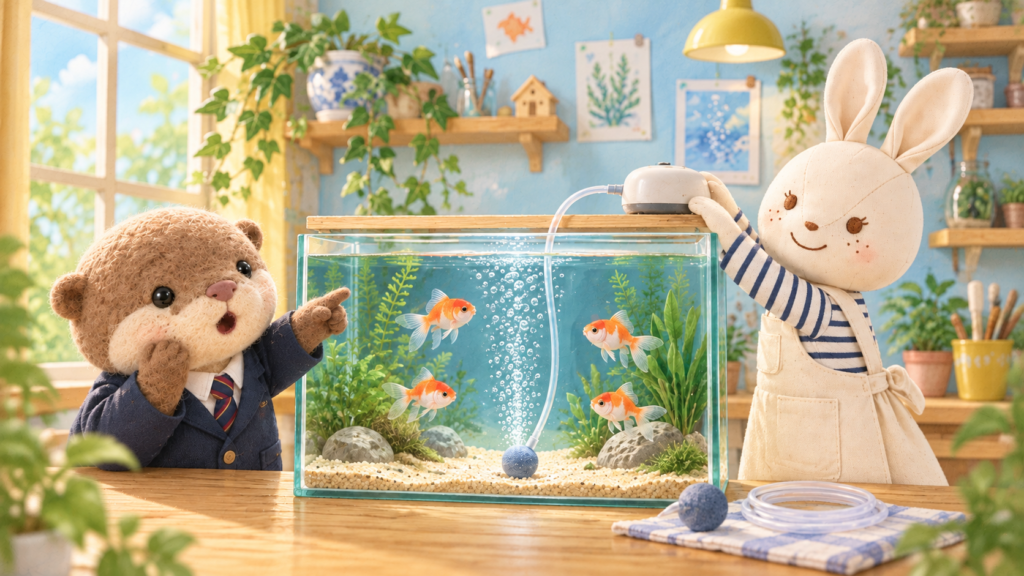 アイのアクアグッズ案内水槽のエアーポンプの選び方|水深・音・泡で選ぶおすすめ用品道具の特徴や使い方、選ぶときのポイントをアイが紹介します。記事はコチラ →
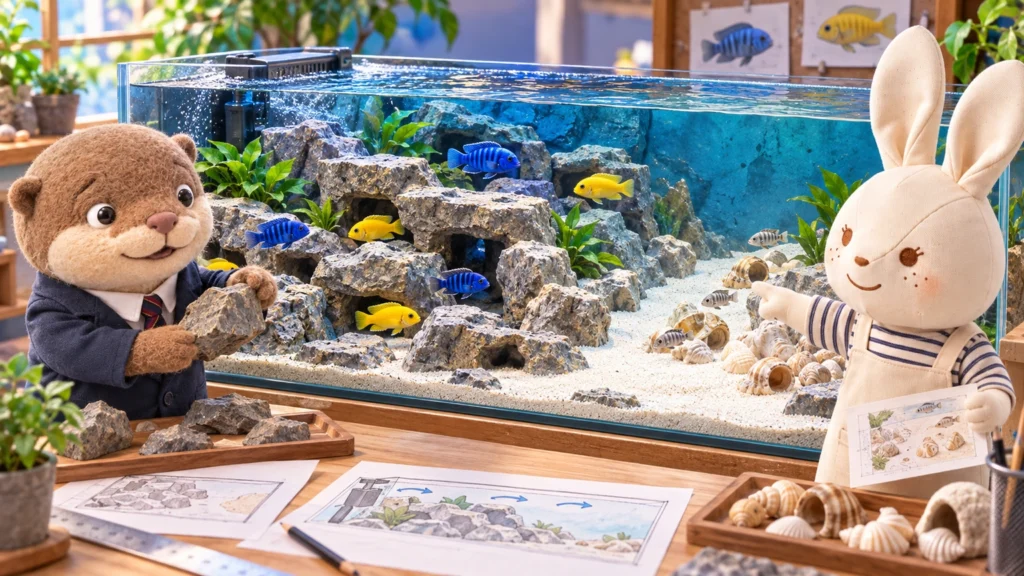 アイのアクアグッズ案内アフリカンシクリッドの飼育用品|水槽・ろ過・底砂・岩組み・餌の選び方道具の特徴や使い方、選ぶときのポイントをアイが紹介します。記事はコチラ →
 アイのアクアグッズ案内そのごはん、泳いでる! 卵から始めるブラインシュリンプの孵化と道具選び道具の特徴や使い方、選ぶときのポイントをアイが紹介します。記事はコチラ →
 アイのアクアグッズ案内コケを食べるコイの仲間に合わせる飼育用品|フライングフォックス・アルジイーター・ガラ道具の特徴や使い方、選ぶときのポイントをアイが紹介します。記事はコチラ →
さまざまな飼育テーマをご紹介。リンク先の記事には広告・商品紹介が含まれます。
案内・紹介記事一覧へ →分布マップ
レッドフィンペンギンテトラは、ブラジルのテレス・ピレス川水系に由来する魚として流通しています。ただし、正式な学術記載や標本情報に基づいて確定された産地ではないため、ここではテレス・ピレス川水系の概略代表地点を示しています。
※この地図は分布イメージを示すための概略プロットです。実際の採集地点や厳密な生息範囲を示すものではありません。
参考文献・参照資料
レッドフィンペンギンテトラは、現時点では正式記載名ではなく流通名として扱われるため、分類・分布・生息環境は Thayeria 属および近縁種の記載資料を中心に確認しています。飼育条件と繁殖は近縁の Thayeria boehlkei を主な参照対象とし、病気や導入時の注意点は魚病学・獣医学系の資料で補強しました。店舗、通販、個人ブログ、まとめサイトは除外しています。
-
分類・分布・形態
Moreira, C. R. & Lima, F. C. T. (2017). Thayeria tapajonica (Characiformes: Characidae), a new species from rio Tapajós basin, Brazil. Zootaxa, 4344(1), 137-146. DOI: 10.11646/zootaxa.4344.1.5 -
分類・学名・分布
Fricke, R., Eschmeyer, W. N. & Van der Laan, R. (eds.). Eschmeyer’s Catalog of Fishes. California Academy of Sciences. Thayeria boehlkei entry. California Academy of Sciences(参照日: 2026-06-28) -
分類・有効種確認
Froese, R. & Pauly, D. (eds.). FishBase. Scientific name search: genus Thayeria. FishBase(参照日: 2026-06-28) -
飼育条件・食性・繁殖
Froese, R. & Pauly, D. (eds.). FishBase. Thayeria boehlkei, Blackline penguinfish. 水温、pH、硬度、食性、群れでの飼育、卵の孵化時間に関する基礎参照。FishBase species summary(参照日: 2026-06-28) -
生息環境・同属比較
Froese, R. & Pauly, D. (eds.). FishBase. Thayeria ifati. 穏やかな浅場、腐植質を含む底質、止水的環境など、同属種の生息環境を確認するための補助参照。FishBase species summary(参照日: 2026-06-28) -
テレス・ピレス川水系
Ohara, W. M., Lima, F. C. T., Salvador, G. N. & Andrade, M. C. (2017). Peixes do Rio Teles Pires: diversidade e guia de identificação. Gráfica e Editora Amazonas, 399 pp. PDF -
繁殖・仔魚発生
Çelik, İ. & Çelik, P. (2024). Larval Development of Penguin Tetra (Thayeria boehlkei): Morphological Observations. Journal of Agricultural Production, 5(2), 97-105. DOI: 10.56430/japro.1464516 -
分類体系・系統背景
Oliveira, C. et al. (2011). Phylogenetic relationships within the speciose family Characidae (Teleostei: Ostariophysi: Characiformes) based on multilocus analysis and extensive ingroup sampling. BMC Evolutionary Biology, 11, 275. DOI: 10.1186/1471-2148-11-275 -
白点病・導入時の注意
Francis-Floyd, R., Yanong, R. P. E. & Pouder, D. B. Ichthyophthirius multifiliis (White Spot) Infections in Fish. University of Florida IFAS Extension, FA006. UF/IFAS Extension(参照日: 2026-06-28) -
白点病・獣医学的確認
Merck Veterinary Manual. Parasitic Diseases of Fish. Ichthyophthirius multifiliis による白点病の症状、診断、感染経路に関する参照。Merck Veterinary Manual(参照日: 2026-06-28) -
カラムナリス症・水質管理
Durborow, R. M., Thune, R. L., Hawke, J. P. & Camus, A. C. (1998). Columnaris Disease: A Bacterial Infection Caused by Flavobacterium columnare. SRAC Publication No. 479. Southern Regional Aquaculture Center PDF -
カラムナリス症・病理学
Declercq, A. M., Haesebrouck, F., Van den Broeck, W., Bossier, P. & Decostere, A. (2013). Columnaris disease in fish: a review with emphasis on bacterium-host interactions. Veterinary Research, 44, 27. DOI: 10.1186/1297-9716-44-27
補足: Thayeria sp. “Red Fin” / “Teles Pires” そのものは正式記載前の流通名であり、参考文献には同属・近縁種を扱う公的データベースと論文も含まれます。これらの知見が、この流通名の魚にすべて当てはまるとは限りません。




コメント