
解説 / Description
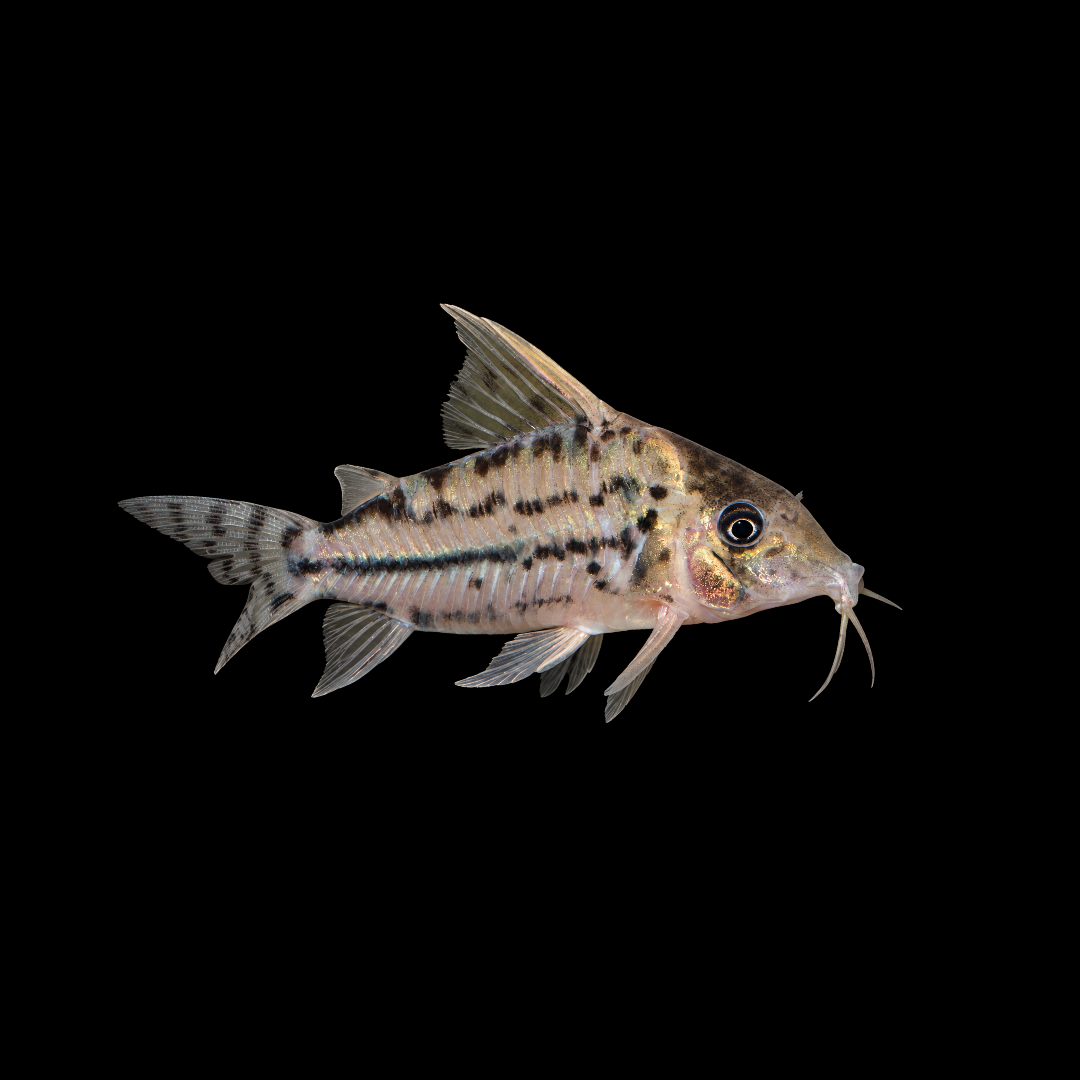
ブロキス・プルケールは、南米ブラジルのアマゾン川支流、プルス川流域に分布するカリクティス科の底生魚です。白く目立つ背びれの棘条と、体側を走る黒いライン模様、そしてやや長く伸びた吻部が特徴で、コリドラスの仲間の中でも独特の存在感を放ちます。背びれの発達や模様には個体差があり、同じブロキス・プルケールでも一匹ごとに異なる表情を楽しめることが魅力です。 Brochis pulchra, commonly known as the Pretty Corydoras, is a bottom-dwelling armored catfish native to the Rio Purus drainage of the Amazon basin in Brazil. Its distinguishing features include a conspicuous pale dorsal-fin spine, dark longitudinal body markings, and a moderately elongated snout. Individual variations in fin development and body patterns make each specimen distinctive and especially appealing to aquarium enthusiasts.
日本では長年「コリドラス・プルケール」の名前で親しまれてきましたが、2024年に発表されたコリドラス亜科の分類学的研究によって、ブロキス属への再分類が示されました。現在はBrochis pulchraという学名が採用されており、従来のCorydoras pulcherも旧学名として広く知られています。性格は比較的温和ですが、成長すると全長7~8cmほどになることがあり、底床を活発に動き回るため、十分な底面積と清潔で酸素の豊富な飼育環境が大切です。一般的な飼育と比べて繁殖は難しく、長期的な観察と丁寧な管理が求められます。 Long familiar to Japanese aquarists as Corydoras pulcher, this species was reassigned to the genus Brochis following a major phylogenetic revision published in 2024. The currently accepted scientific name is Brochis pulchra, while Corydoras pulcher remains widely recognized as its former name. Although generally peaceful, it may reach approximately 7–8 cm in total length and actively explores the substrate. Sufficient floor space, clean water, and good oxygenation are therefore important. Captive breeding is considerably more challenging than routine maintenance and requires careful, long-term husbandry.
基本情報 / Basic Information
| 学名 / Scientific Name | Brochis pulchra (Isbrücker & Nijssen, 1973) |
|---|---|
| 通称 / Common Name | ブロキス・プルケール、コリドラス・プルケール(旧属名による流通名)。模様の異なる個体に対して「スーパープルケール」などの名称が使われることもあります。 Brochis Pulchra, Pretty Corydoras, Pulcher Cory. Selected pattern variants may also be sold under trade names such as Super Pulcher. |
| 分類 / Family | ナマズ目・カリクティス科・コリドラス亜科・ブロキス属 Order Siluriformes, Family Callichthyidae, Subfamily Corydoradinae, Genus Brochis |
| 英名 / English Name | Pretty Corydoras, Pretty Cory |
| 分布 / Distribution | 南米ブラジル、アマゾン川水系のプルス川流域。原記載に用いられた標本の産地は、アマゾナス州ラブレアの北方に位置するプルス川です。 Rio Purus drainage of the Amazon basin, Brazil. The type locality is the Rio Purus north of Lábrea, Amazonas State. |
| 最大体長 / Max Size | 成魚は全長7~8cmほどになることがあります。魚類データベースには最大標準体長5.0cmの記録がありますが、これは尾びれを含まない長さです。全長と標準体長は測定方法が異なるため、数値を比較する際には注意が必要です。 Adults may reach approximately 7–8 cm in total length. A maximum standard length of 5.0 cm is recorded in a major fish database, but this measurement excludes the caudal fin. Total length and standard length are different measurements and should not be directly compared. |
| 寿命 / Lifespan | 本種に限定した信頼性の高い平均寿命のデータは十分ではありません。コリドラス類には長期間飼育される種類もあり、ブロキス・プルケールについても数年以上の長期飼育を前提とした環境づくりが望まれます。 Reliable species-specific data on average lifespan are limited. Some related armored catfish are maintained for many years, so Brochis pulchra should be kept with long-term care in mind. |
飼育環境 / Aquarium Environment
| 水槽サイズ / Tank Size | 60cm規格水槽(約60L)を少数飼育の最低限の目安とし、複数匹をゆとりを持って飼育する場合は90cm規格水槽(約180L)以上が望ましいでしょう。ブロキス・プルケールは底床を活発に動き回るため、水量だけでなく底面積を十分に確保することが重要です。成長した個体が自由に移動できる空間を用意してください。 A standard 60 cm aquarium of approximately 60 L is a practical minimum for a small number of fish. For a group, a standard 90 cm aquarium of approximately 180 L or larger is preferable. Brochis pulchra actively explores the substrate, so floor space is as important as water volume. Provide enough open space for mature fish to move freely. |
|---|---|
| 水温 / Temperature | 23~26℃を日常管理の目安とします。極端な高水温や急激な温度変化を避け、季節に応じてヒーターや冷却設備を使用してください。特に夏場は水温上昇によって水中の酸素が不足しやすくなるため注意が必要です。 Maintain approximately 23–26°C for routine care. Avoid excessive heat and sudden temperature changes, using heaters or cooling equipment as needed. During summer, elevated temperatures can reduce dissolved oxygen availability. |
| 水質 / Water Quality | 弱酸性~中性付近を中心に、pH6.0~7.5程度、軟水から中程度の硬度を飼育上の目安とします。ただし、これらは厳密な生存限界を示す数値ではありません。水質への適応には個体差があり、特定の数値に急激に調整するよりも、現在の環境を安定させることが重要です。日本の水道水でも飼育できる場合がありますが、地域によってpHや硬度が異なるため、必要に応じて測定してください。アンモニアや亜硝酸塩の蓄積を防ぎ、十分な酸素を確保しましょう。 Slightly acidic to approximately neutral water is suitable, with a practical pH target of around 6.0–7.5 and soft to moderately hard conditions. These are husbandry guidelines rather than strict survival limits. Individual tolerance varies, and stability is more important than rapidly adjusting the water to a particular value. Dechlorinated Japanese tap water may be suitable, but local pH and hardness vary. Prevent ammonia and nitrite accumulation and maintain adequate oxygenation. |
| レイアウト / Layout | 底床には田砂やボトムサンドなど、角が鋭くない細かな砂を薄く敷くとよいでしょう。ブロキス・プルケールは口ひげを使って砂の表面や内部の餌を探すため、底床の清潔さが重要です。流木や石、水草を適度に配置して落ち着ける場所を作りつつ、前面には広い採餌スペースを残します。水草を密生させる必要はありません。ろ過装置で安定した水質を維持し、エアレーションや適度な水面の動きによって酸素を供給してください。 Use a thin layer of fine, smooth sand without sharp edges. Brochis pulchra searches for food with its sensitive barbels, making substrate cleanliness important. Driftwood, stones, and plants can provide shelter, while an open area at the front should remain available for foraging. Dense planting is unnecessary. Effective filtration, aeration, and moderate surface movement help maintain clean, oxygen-rich water. |
| 注意点 / Precautions | 輸入直後の個体は長距離輸送によるストレスを受けていることがあるため、購入時には呼吸の様子、泳ぎ方、口ひげやひれの状態、痩せの有無を確認してください。導入時は水温と水質の差を慎重に調整し、輸送袋の水を飼育水槽に入れないようにします。ただし、輸送水が著しく汚れている場合は、長時間の水合わせがかえって負担になることもあります。背びれと胸びれの硬い棘は網に絡みやすいため、移動には容器を使用する方法も適しています。また、ときどき水面に上がって空気を吸う行動はコリドラス類に見られますが、頻繁に繰り返す場合は酸素不足や水質悪化も疑ってください。 Recently imported specimens may be stressed by prolonged transportation. Before purchase, examine respiration, swimming behavior, barbels, fins, and body condition. Carefully manage temperature and water differences during introduction, and avoid adding transport water to the aquarium. Prolonged acclimation in badly deteriorated shipping water can also be harmful. The rigid dorsal and pectoral spines may become entangled in nets, so transferring fish with a suitable container can be safer. Occasional trips to the surface to gulp air are normal among corydoradine catfish, but repeated or unusually frequent surfacing may indicate inadequate oxygenation or poor water quality. |
餌と給餌 / Feeding
| 餌の種類 / Diet | 主食にはコリドラス用の沈下性タブレットや顆粒状の人工飼料が適しています。補助的に冷凍アカムシ、ブラインシュリンプ、イトミミズ、ミジンコなどを与えることで、食事に変化をつけられます。ブロキス・プルケールは底床で小さな餌を探す性質があるため、沈下性の餌を中心に、栄養バランスと個体の食いつきを確認しながら組み合わせることが大切です。 Sinking catfish tablets and granulated prepared foods are suitable staples. Frozen bloodworms, brine shrimp, tubifex worms, and daphnia can be offered as supplementary foods. Brochis pulchra naturally searches for small food items near the substrate, so sinking foods should form the basis of a balanced diet. Feeding responses should be monitored. |
|---|---|
| 給餌のポイント / Feeding Tips | 底床付近で採餌するため、餌が確実に底まで届くようにしてください。1日1~2回を目安に、食べ切れる量を与えます。混泳水槽では中層の魚に餌を先取りされる場合があるため、ブロキス・プルケールが実際に食べているか観察しましょう。冷凍餌や生餌は嗜好性が高いものの、与え過ぎると底床に食べ残しがたまり、水質悪化を招きます。残餌は速やかに取り除き、生餌は衛生状態の確かなものを選んでください。 Ensure that food reaches the substrate, where these fish naturally forage. Feed manageable portions once or twice daily. In community aquariums, midwater fish may consume food before it reaches the bottom, so confirm that Brochis pulchra receives enough. Frozen and live foods are often readily accepted, but overfeeding can leave waste in the substrate and degrade water quality. Remove uneaten food promptly and use live foods from reliable sources. |
性格と混泳 / Temperament and Tank Mates
| 性格 / Temperament | ブロキス・プルケールは比較的温和で、他の魚に積極的に攻撃を仕掛けることは少ない種類です。底床を活発に探索する一方、落ち着ける場所では静かに休む姿も見られます。同種の仲間と一緒に行動することがあるため、十分な水槽サイズを確保できる場合は複数匹で飼育するのが望ましいでしょう。ただし、個体間の距離感や行動には差があります。 Brochis pulchra is generally peaceful and rarely initiates aggression toward other fish. It actively searches the substrate for food but also spends time resting in sheltered areas. Individuals may associate with others of their own species, making group maintenance preferable when sufficient aquarium space is available. Social behavior can vary between individuals. |
|---|---|
| 混泳の相性 / Compatibility | 小型から中型の温和なカラシン類、ラスボラ類、比較的おとなしいコイ科魚類などとの混泳に向いています。水温や水質の好みが近く、ブロキス・プルケールの採餌を妨げない種類を選びましょう。大型の肉食魚や攻撃性の強いシクリッド類、底床の場所を激しく争う魚との混泳は避けるのが無難です。また、同じコリドラス類でも体格や行動が異なるため、過密飼育にならないよう注意してください。 Suitable companions include peaceful small to medium-sized tetras, rasboras, and other nonaggressive community fish with similar environmental requirements. Avoid large predators, aggressive cichlids, and strongly territorial bottom dwellers. Even when keeping other corydoradine species, differences in size and behavior should be considered, and overcrowding should be avoided. |
病気と対策 / Diseases and Prevention
| かかりやすい病気 / Common Diseases | ブロキス・プルケールに特有の病気が多いという確かな資料はありませんが、一般的な観賞魚と同様に白点病や細菌感染などに注意が必要です。輸送時の擦れ傷や水質悪化をきっかけとして、ひれの損傷、体表の赤み、口周辺の異常などが現れる場合があります。食欲不振、呼吸の乱れ、体を物にこすりつける行動、ひれの欠損、異常な浮き方なども見逃せない変化です。 There is insufficient evidence that Brochis pulchra is uniquely prone to particular diseases, but it can develop common aquarium fish illnesses, including ich and bacterial infections. Shipping injuries and deteriorating water conditions may contribute to damaged fins, skin inflammation, or abnormalities around the mouth. Loss of appetite, abnormal respiration, rubbing against objects, fin deterioration, and unusual buoyancy are warning signs that require attention. |
|---|---|
| 対策と予防 / Prevention | 最も重要なのは、適切なろ過、定期的な換水、底床の清掃、十分な酸素供給によって安定した環境を保つことです。新しく導入する個体は状態を慎重に確認し、可能であれば別水槽で健康状態を観察してから混泳させます。病気が疑われる場合は原因を見極め、必要に応じて隔離してください。カリクティス科の魚は一般的な鱗ではなく骨板で体を覆われており、薬剤の種類によっては使用上の注意が必要です。魚病薬を使用する際は、ナマズ類への適用可否と製品の用法・用量を確認し、自己判断による濃度変更や複数薬剤の併用は避けてください。 Prevention centers on effective filtration, regular partial water changes, clean substrate, and adequate oxygenation. Carefully assess newly acquired fish and, where possible, observe them in a separate quarantine aquarium before introduction. Isolate affected individuals when appropriate and identify the likely cause before treatment. Callichthyid catfish have bony armor plates rather than typical fish scales, and some medications require particular caution. Always check whether a treatment is suitable for catfish and follow its approved instructions instead of arbitrarily changing dosages or combining medications. |
増やし方(繁殖) / Breeding
| 雌雄の判別 / Sexing | 成熟したメスはオスよりも体幅が広く、抱卵が進むと腹部がふっくらする傾向があります。上から観察すると体形の違いを確認しやすくなります。また、成熟したオスでは背びれが高く発達する場合があります。ただし、体形や背びれの形状には個体差があるため、若魚や未成熟個体では雌雄の判別が難しいことがあります。 Mature females generally have a broader body profile, particularly when carrying eggs, and are often easier to distinguish when viewed from above. Mature males may develop conspicuously taller dorsal fins. However, individual variation is considerable, and reliable sexing can be difficult in juveniles or immature specimens. |
|---|---|
| 繁殖形態 / Reproduction | ブロキス・プルケールは卵生で、飼育下での繁殖例は限られており、一般的なコリドラス類と比べて難易度が高いとされています。コリドラス亜科の多くの種類では、雌雄がT字型の姿勢を取る「Tポジション」と呼ばれる繁殖行動が見られます。メスは腹びれの間に卵を保持し、その後、水槽のガラス面や水草などに粘着性の卵を付着させます。ブロキス・プルケールでも産卵・孵化の報告がありますが、繁殖行動の詳細や安定して繁殖を成功させるための条件には、十分に解明されていない部分が残っています。 Brochis pulchra is an egg-layer, and documented captive breeding remains uncommon and relatively difficult compared with many familiar corydoradine catfish. In numerous related species, courtship involves a characteristic T-shaped position. Females hold eggs between their pelvic fins before attaching the adhesive eggs to surfaces such as aquarium glass or plants. Spawning and hatching have been reported for Brochis pulchra, although details of its reproductive behavior and consistently successful breeding conditions remain incompletely understood. |
| 繁殖のポイント / Breeding Tips |
繁殖を目指す場合は、まず十分に成熟した健康な雌雄をそろえ、長期にわたって安定した環境で飼育することが基本です。複数の親魚を収容できる60~90cm以上の水槽を用意し、質のよい沈下性飼料に加えて冷凍アカムシやブラインシュリンプなどを与え、体力と栄養状態を整えます。
Successful breeding attempts begin with healthy, fully mature males and females maintained under stable conditions over an extended period. A breeding aquarium of approximately 60–90 cm or larger can accommodate a small group. Offer nutritious sinking foods supplemented with frozen bloodworms and brine shrimp to maintain good body condition.
コリドラス類では雨季に相当する環境変化を利用した産卵誘発が知られており、新鮮な水への換水や水流・酸素供給の調整が試みられます。ブロキス・プルケールの繁殖事例には、中性付近で一定のミネラル分を含む水を用いた報告もあります。ただし、これらは限られた成功例であり、特定のpHや硬度、大量換水が必須条件と確立されたわけではありません。急激な水温低下や過度な換水は親魚への負担となるため、慎重に行う必要があります。 In many related catfish, seasonal environmental changes can stimulate spawning, and breeders sometimes experiment with partial water changes, altered flow, and increased aeration. Some reported breeding successes for Brochis pulchra involved approximately neutral water containing moderate mineral levels. However, these are limited observations rather than proof that a particular pH, hardness, or large water change is essential. Abrupt temperature drops and excessive water changes can stress breeding adults and should be avoided. 産卵後は卵が食べられないように保護し、必要に応じて親魚と分けて管理します。孵化した稚魚は卵黄の栄養を吸収した後、孵化直後のブラインシュリンプなど、口に入る大きさの餌を必要とします。育成水槽では弱い水流と清潔な水を保ち、食べ残しや底床の汚れに注意してください。本種の稚魚育成には不明な点も多く、他のコリドラス類で有効な方法がそのまま通用するとは限りません。 After spawning, protect the eggs from being eaten by adults and separate them when necessary. Once the newly hatched fry have absorbed their yolk reserves, they require appropriately sized foods such as newly hatched brine shrimp. Gentle filtration, clean water, and careful waste removal are essential. Because information on raising this species is limited, techniques successful with other corydoradine catfish may not always produce the same results. |
雑学と豆知識 / Trivia and Fun Facts
| 1. コリドラスからブロキスへ――分類研究が明らかにした関係 / 1. From Corydoras to Brochis: A Changing Classification |
ブロキス・プルケールが新種として正式に記載されたのは1973年のことです。魚類学者のイスブリュッカーとナイセンによって、ブラジルのプルス川から得られた標本をもとにCorydoras pulcherという学名が与えられました。当時は、現在よりも広い範囲の魚がコリドラス属にまとめられていました。
Brochis pulchra was formally described as a new species in 1973 by ichthyologists Isbrücker and Nijssen, based on specimens from the Rio Purus in Brazil. Its original scientific name was Corydoras pulcher. At the time, Corydoras was used for a much broader range of armored catfish than in the more recent classification.
その後、外見だけでは分からない種同士の関係を調べるため、骨格の特徴や遺伝情報を利用した研究が進みました。2024年にオンライン公表された大規模な系統研究では、従来のコリドラス属を複数の属に整理する分類体系が提示され、ブロキス・プルケールは復活したブロキス属に位置付けられました。この研究では、口先の形状や頭部の骨格を含む形態的特徴と遺伝情報の両方が検討されています。 As research progressed, scientists began examining skeletal anatomy and genetic information to understand relationships that external appearance alone could not reveal. A major phylogenetic study published online in 2024 proposed reorganizing the traditional Corydoras assemblage into several genera, placing Brochis pulchra within the reinstated genus Brochis. The revision considered both molecular evidence and morphological features, including aspects of skull and snout structure. この変更は、魚そのものが変わったことを意味しません。以前から知られていたブロキス・プルケールを、進化上の関係がより適切に反映される分類へ移したものです。ショップでは今でも「コリドラス・プルケール」という名称が広く使われていますが、学術的な分類名と流通名が異なる背景には、こうした研究の進展があります。 This change does not mean that the fish itself has changed. Rather, scientists have placed the familiar species in a genus that better reflects its evolutionary relationships. The former trade name Corydoras pulcher remains common in aquarium shops, illustrating how scientific classifications and established hobby names can coexist. |
|---|---|
| 2. 「美しい」という意味を持つ学名の由来 / 2. A Scientific Name Meaning “Beautiful” |
ブロキス・プルケールの種小名は、ラテン語で「美しい」を意味するpulcherに由来します。淡い地色に黒い縦帯が重なり、白っぽい背びれの棘条が際立つ姿は、この名前を印象的なものにしています。
The species epithet of Brochis pulchra comes from the Latin word pulcher, meaning “beautiful.” Its pale background coloration, contrasting dark stripes, and conspicuous light-colored dorsal-fin spine make the meaning especially fitting.
現在の学名がBrochis pulchraとなっている点にも、分類学ならではの理由があります。動物の学名では、形容詞に由来する種小名が属名の文法上の性に合わせて形を変えることがあります。Corydoras属に置かれていたときのpulcherは、Brochis属への移動に伴い、文法上の一致によってpulchraという形になります。2024年の分類改訂論文ではBrochis pulcherと表記されていましたが、2025年に種小名の語尾に関する訂正が公表されました。 There is also a grammatical reason why the currently accepted scientific name is Brochis pulchra. Under zoological nomenclature, species epithets derived from Latin adjectives may change their endings to agree with the grammatical gender of the genus. When the species was transferred from Corydoras to Brochis, the appropriate adjectival ending became pulchra. The 2024 taxonomic revision originally used the combination Brochis pulcher, but a correction to the gender agreement of species epithets was published in 2025. そのため、Corydoras pulcher、Brochis pulcher、Brochis pulchraという表記を見かけることがありますが、これらは分類の変遷や学名の表記上の違いによるものです。現在の分類を確認する際にはBrochis pulchraを基本とし、古い飼育記録や販売情報を調べる際には、以前の名前も知っておくと役立ちます。 Consequently, the spellings Corydoras pulcher, Brochis pulcher, and Brochis pulchra may all appear in scientific literature and aquarium-related material. These reflect taxonomic history and differences in nomenclatural usage. Brochis pulchra is the accepted combination in major current taxonomic references, while older spellings remain useful when searching historical aquarium records. |
| 3. プルス川で出会う、よく似た模様の仲間たち / 3. Similar-Looking Catfish of the Rio Purus |
ブロキス・プルケールの同定が難しい理由の一つは、プルス川流域に似た姿を持つ魚が複数生息していることです。シュワルツィや、流通上「スーパーシュワルツィ」と呼ばれる未記載種などにも、目を横切る黒い帯や体側の縦模様、淡色の背びれが見られます。水槽の中で並んでいると、一見して同じ種類の個体差のように感じられることもあるでしょう。
One reason Brochis pulchra can be difficult to identify is that several similarly patterned catfish inhabit the Rio Purus drainage. Schwartzi and undescribed forms sold as Super Schwartzi may also display dark eye bands, longitudinal body markings, and pale dorsal-fin structures. When viewed together, these similarities can make different species appear to be variations of one species.
しかし、体形をよく見ると違いがあります。ブロキス・プルケールは比較的長い吻部と細身の体形が特徴で、シュワルツィ類にはより短い吻部を持つものがいます。また、ブロキス・プルケールは体側中央を走る黒いラインが目立ち、その上下にも縦帯が現れます。模様には個体差があり、縦帯の一部が途切れて点列状に見えることもあります。 Closer examination reveals important differences. Brochis pulchra has a relatively elongated snout and slender body, while some related-looking Schwartzi forms possess shorter snouts. Its markings typically include a prominent dark midlateral stripe accompanied by additional longitudinal bands above and below it. These markings vary between individuals and may sometimes be interrupted or appear as rows of spots. ただし、模様と吻部の長さだけで、すべての流通個体を確実に同定できるわけではありません。似た種類が混ざって輸入されることもあるため、産地や入荷時の情報、複数の形態的特徴を合わせて確認することが大切です。見た目が似ているからといって、必ずしも同じ種とは限らないところに、この仲間の分類の奥深さがあります。 However, pattern and snout length alone do not always allow reliable identification of every imported specimen. Similar species may arrive in mixed shipments, making collection locality, import information, and several morphological characters important. Their resemblance illustrates how challenging identification can be among closely associated Amazonian armored catfish. |
| 4. 似た模様には意味がある?――ミュラー型擬態の研究 / 4. Do Shared Patterns Have a Purpose? Müllerian Mimicry |
異なる種類の魚が、なぜこれほど似た模様を持つのでしょうか。この疑問を考えるうえで興味深いのが、「ミュラー型擬態」と呼ばれる進化現象です。これは、捕食者に対して防御手段を持つ複数の生物が似た外見を共有することで、捕食者から避けられやすくなるという考え方です。
Why do different fish species sometimes develop remarkably similar patterns? One explanation involves Müllerian mimicry, an evolutionary phenomenon in which multiple defended or unpalatable species share similar warning appearances. Predators may learn to avoid a recognizable pattern, potentially benefiting several species that display it.
2011年に発表されたコリドラス亜科の研究では、似た色彩を持つ種同士の関係が調べられ、擬態に関係すると考えられる模様の共通性とともに、餌資源の使い分けが共存を支えていることが示されました。興味深いのは、似た姿を持つ魚が、必ずしも同じ方法で餌を探しているわけではないという点です。吻部の形や体の大きさが異なれば、利用しやすい餌や採餌場所にも違いが生じます。 A 2011 study of corydoradine catfish examined these shared color patterns and found that resource partitioning helps maintain the coexistence of species considered to participate in mimicry. Remarkably, fish that look alike do not necessarily obtain food in the same way. Differences in snout structure and body size can influence which food resources and feeding habitats they use. つまり、似た模様によって捕食者への防御上の利点を共有する一方、口先の形や体格の違いによって餌をめぐる競争を和らげている可能性があるのです。ただし、プルス川のすべての類似種について、同じ擬態関係が成立していることや、模様そのものが捕食者への警告として機能していることまで個別に実証されたわけではありません。ブロキス・プルケールの特徴的な姿は、こうした進化と生態の関係を考える手がかりにもなっています。 In other words, similar appearances may provide shared defensive advantages, while differences in feeding morphology help reduce competition for food. However, the precise mimicry relationships of every similarly patterned Rio Purus species have not been independently established, nor has the warning function of every pattern been demonstrated directly. The distinctive appearance of Brochis pulchra offers a fascinating perspective on how ecology and evolution can shape fish diversity. |
| 5. 白い背びれの美しさと、硬い棘が持つ役割 / 5. The Pale Dorsal Fin and Its Defensive Spine |
ブロキス・プルケールの魅力を語るうえで欠かせないのが、白っぽい色をした背びれの棘条です。特に成熟したオスでは背びれが高く発達することがあり、黒いライン模様との対比によって非常に印象的な姿になります。しかし、この棘条には装飾とは別の重要な役割もあります。
One of the most striking features of Brochis pulchra is its pale dorsal-fin spine. In mature males, the dorsal fin may become especially tall, creating a strong visual contrast with the dark body markings. Yet this spine serves a function beyond appearance.
カリクティス科の魚は体が硬い骨板で覆われているほか、背びれや胸びれに発達した棘を備えています。驚いたときなどに棘を立てることは、捕食者に飲み込まれにくくする防御行動の一つです。また、ナマズ類には棘の周辺に毒性のある分泌物を作る組織を持つ種類が知られており、コリドラス類でもこうした防御機構が研究されています。 Callichthyid catfish possess protective bony plates and well-developed dorsal and pectoral spines. Erecting these spines when threatened can make them more difficult for predators to swallow. Venom-associated defensive structures are also known in various catfish, including members of the corydoradine group. 観賞魚の輸送現場では、ブロキス・プルケールなどが強いストレスを受けた際に、分泌物による輸送水への影響が問題になることがあるとされています。ただし、本種が他のコリドラス類より著しく強い毒を持つことや、輸送中の死亡原因が常に自らの分泌物であることまで、科学的に確認されているわけではありません。輸送時には酸素不足、アンモニアの蓄積、外傷なども大きな負担になります。美しい背びれを傷つけず、余計な刺激を与えない扱い方が大切です。 In the ornamental fish trade, stress-related secretions and their possible effects on shipping water have been reported as concerns for Brochis pulchra and related catfish. However, it has not been conclusively demonstrated that this species is markedly more venomous than other corydoradines or that transport deaths are always caused by its own secretions. Oxygen depletion, ammonia accumulation, and physical injuries are also significant transport hazards. Gentle handling helps protect both the fish and its distinctive fins. |
| 6. プルス川の濁った水と、水槽で求められる環境 / 6. The Turbid Rio Purus and Aquarium Conditions |
ブロキス・プルケールの故郷であるプルス川は、アマゾン川水系の大きな支流の一つです。アマゾンの河川というと、落ち葉の成分によって黒褐色に染まった水を思い浮かべる人もいるでしょう。しかし、プルス川の本流は細かな土砂を多く運ぶ、いわゆるホワイトウォーターの特徴を持つ河川として知られています。
The Rio Purus, the native drainage of Brochis pulchra, is one of the major tributary systems of the Amazon. Amazonian rivers are often associated with dark, tannin-stained water, but the main Rio Purus is generally characterized as a whitewater river carrying substantial amounts of suspended sediment.
ホワイトウォーターといっても、水が白く透明に見えるわけではありません。泥や細かな砂、シルトなどを含むため、褐色がかった濁りを生じることがあります。このような河川では、流れの速さや底質、水の状態が場所や季節によって変化します。ブロキス・プルケールの生息環境を考える際にも、川全体が常に同じ水質であると捉えるのは適切ではありません。 The term whitewater does not mean that the water is clear or literally white. Suspended clay, fine sand, and silt can give it a turbid, brownish appearance. Flow, substrate, and water conditions vary between locations and seasons. It would therefore be misleading to assume that every habitat of Brochis pulchra has exactly the same water chemistry throughout the year. 水槽では、現地の濁りを再現する必要はありません。大切なのは、底床を清潔に保ち、十分な酸素と安定した水質を確保することです。細かな砂の上を口ひげで探りながら餌を探す姿は、底生魚としての性質をよく表しています。自然の環境を理解することは、見た目だけをまねるのではなく、その魚が必要とする生活空間を整えることにつながります。 There is no need to reproduce the river’s turbidity in an aquarium. What matters is maintaining a clean substrate, adequate oxygen, and stable water quality. Watching Brochis pulchra probe fine sand with its barbels provides a glimpse of its natural bottom-foraging behavior. Understanding its habitat helps aquarists provide an appropriate living environment rather than merely copying its appearance. |
| 7. 一本線から複数の縦帯まで――流通名と模様の個体差 / 7. From a Prominent Central Stripe to Multiple Bands: Trade Names and Pattern Variation |
日本の観賞魚市場では、ブロキス・プルケールのライン模様が愛好家の注目を集めてきました。体側中央の黒い線が太く整って見える個体や、複数のラインが明瞭に並ぶ個体、点列が混ざった模様の個体など、さまざまな表現が見られます。特に中央の一本線が際立つものは「スーパープルケール」などの名前で流通することがあります。
In the Japanese aquarium trade, the markings of Brochis pulchra have long attracted considerable attention. Individuals may display a particularly prominent central stripe, several clearly defined bands, or interrupted lines resembling rows of spots. Fish with striking central markings are sometimes marketed under names such as Super Pulcher.
ただし、これらの名称は学術的な亜種や正式な品種区分を示すものではありません。また、プルス川には似た模様を持つ別種や未記載種が存在するため、一本線が目立つことだけを理由にブロキス・プルケールと断定することもできません。1973年の原記載では、基準標本に4本、副基準標本に3本の褐色の縦帯が記録されています。どちらの標本も体側中央の帯は連続しており、その他の帯には不規則な部分が見られました。このことからも、体側の縦帯の本数や形には個体差があることが分かります。 These commercial labels are not formal subspecies names or standardized scientific categories. Furthermore, other described and undescribed species from the Rio Purus may show similar patterns, so a prominent central stripe alone cannot confirm the identity of Brochis pulchra. The original 1973 description recorded four brown longitudinal stripes in the holotype and three in the paratype. In both specimens, the central lateral stripe was continuous, while the other stripes were somewhat irregular. These observations demonstrate that the number and arrangement of body stripes can vary between individuals. 価格や希少性は、入荷状況、個体の状態、模様の好みなどによって変わるため、流通上の名称だけで一律に判断することはできません。輸入直後には一時的に体色が薄くなり、本来の模様が見えにくくなる場合もあります。購入時には模様の美しさだけでなく、種類の同定や健康状態を確かめることが、長く飼育を楽しむための大切な第一歩です。 Prices and perceived rarity vary with availability, condition, and individual preferences, so trade labels should not be treated as universal grading standards. Recently transported fish may temporarily lose coloration, making their markings harder to evaluate. Checking species identification and overall health, rather than selecting solely by pattern, is an important first step toward successful long-term care. |
| 8. 繁殖が難しい理由と、飼育記録が持つ価値 / 8. Why Breeding Is Difficult and Why Observations Matter |
コリドラスの仲間には、アエネウスやパレアトゥスのように家庭の水槽でも繁殖が比較的よく見られる種類があります。一方、ブロキス・プルケールは繁殖の成功例が少なく、長年飼育していても産卵に至らないことがあります。この違いは、単に水槽の大きさや餌の量だけで説明できるものではありません。
Some corydoradine catfish, such as the Bronze Cory and Peppered Cory, reproduce relatively readily in home aquariums. Brochis pulchra, by contrast, has comparatively few documented breeding successes, and even fish kept for years may not spawn. This difference cannot be explained simply by tank size or the amount of food offered.
繁殖には親魚の成熟度、健康状態、個体同士の相性、水温、水質、季節的な環境変化など、複数の要因が関係すると考えられます。国内外の成功報告では、水の硬度を調整した例もありますが、それがすべての水槽で有効な方法と確認されたわけではありません。とくに水質の調整は、数値を大きく変えること自体が魚に負担を与えるため、慎重さが求められます。 Breeding probably depends on several interacting factors, including maturity, health, compatibility between individuals, temperature, water chemistry, and seasonal environmental changes. Some documented attempts involved adjusting water hardness, but this does not establish a universally successful method. Large or abrupt changes in water chemistry can themselves be stressful and should be approached cautiously. 繁殖に成功した場合でも、卵の孵化と稚魚の育成は別の課題です。親魚の採餌や求愛の様子、換水前後の行動、産卵場所、稚魚の成長などを継続して観察することで、その水槽で何が起きているのかを理解しやすくなります。繁殖条件が十分に解明されていない種類だからこそ、一匹一匹の変化を丁寧に見守る姿勢が重要になります。 Even when spawning occurs, hatching the eggs and successfully raising the fry present separate challenges. Continuous observations of feeding, courtship, behavior before and after water changes, egg placement, and fry development can help reveal what is happening in a particular aquarium. For a species whose reproductive requirements remain incompletely understood, careful observation of individual fish is especially valuable. |
まとめ / Conclusion
ブロキス・プルケールは、白く伸びる背びれと端正なライン模様、そして力強さを感じさせる体形を備えた魅力的な底生魚です。比較的温和な性格を持ち、適切な底床と十分な飼育スペース、安定した水質を用意することで、その自然な行動をじっくり観察できます。口ひげを使って砂の中の餌を探す姿や、個体ごとに異なる模様の美しさは、長く付き合うほど新しい発見をもたらしてくれるでしょう。 Brochis pulchra is an appealing bottom-dwelling catfish distinguished by its pale, elongated dorsal fin, elegant longitudinal markings, and substantial body form. Its generally peaceful temperament makes it rewarding to observe when provided with suitable substrate, sufficient space, and stable water conditions. The sight of a fish searching fine sand with its barbels, together with the subtle differences in individual markings, offers lasting interest to attentive aquarists.
一方で、長距離輸送による負担や類似種との識別、繁殖の難しさなど、飼育にあたって理解しておきたい特徴もあります。特に繁殖は簡単ではありませんが、まずは健康な状態を維持し、落ち着いた環境で成長を見守ることが大切です。アマゾンのプルス川に由来する独特の姿を持つブロキス・プルケールは、日々の丁寧な管理と観察を通じて、その奥深い魅力を感じられる魚です。 At the same time, successful care requires an understanding of transport-related stress, identification difficulties, and the challenges of breeding. Although reproduction is far from straightforward, maintaining healthy fish in a stable environment is the essential foundation. With its distinctive appearance originating from the Rio Purus, Brochis pulchra offers a rewarding opportunity to appreciate the behavior and beauty of Amazonian armored catfish through patient observation and consistent care.
気になる道具や飼い方を見つけてみませんか?
 アイのアクアグッズ案内水草水槽のCO₂添加|3つの方式の選び方とおすすめ用品道具の特徴や使い方、選ぶときのポイントをアイが紹介します。記事はコチラ →
 アイのアクアグッズ案内水槽の中に掃除機がある!? コタロウと探る、フィッシュレットの仕掛け道具の特徴や使い方、選ぶときのポイントをアイが紹介します。記事はコチラ →
さまざまな飼育テーマをご紹介。リンク先の記事には広告・商品紹介が含まれます。
案内・紹介記事一覧へ →分布マップ
プルケール(Brochis pulchra)は、南米ブラジルのアマゾン川水系に属するプルス川流域に分布しています。原記載に用いられた標本は、アマゾナス州ラブレアの北方に位置するプルス川で採集されました。地図では、プルス川流域の地理的な位置と周辺環境を概略表示しています。
※この地図は、プルケールの分布地域であるプルス川流域を示す概略マップです。表示範囲は厳密な生息域の境界を示すものではなく、ピンは地理的な位置を把握するための代表地点です。実際の採集地点や個別の生息確認地点を示すものではありません。
参考文献
- Isbrücker, I. J. H. & Nijssen, H. (1973). Two new species of the callichthyid catfish genus Corydoras from Brazil (Pisces, Siluriformes, Callichthyidae). Beaufortia, 21(272), 1–7. 〔原記載・形態・産地〕
- Dias, A. C. et al. (2024). Phylogenomic analyses in the complex Neotropical subfamily Corydoradinae (Siluriformes: Callichthyidae) with a new classification based on morphological and molecular data. Zoological Journal of the Linnean Society, 203(3), zlae053(オンライン公表:2024年). 〔分類体系の再編〕
- Correction to: Phylogenomic analyses in the complex Neotropical subfamily Corydoradinae (Siluriformes: Callichthyidae) with a new classification based on morphological and molecular data (2025). Zoological Journal of the Linnean Society, 203(4), zlaf035. 〔学名の語尾修正〕
- California Academy of Sciences. Eschmeyer’s Catalog of Fishes:Brochis pulchra(旧学名 Corydoras pulcher). 〔現行学名・タイプ産地・分布〕
- Froese, R. & Pauly, D. (eds.). FishBase:プルケール(Pretty corydoras). 〔分布・記録体長・水温と水質の参考範囲〕
- dos Santos, A. L. M. R. et al. (2018). Purus River suspended sediment variability and contributions to the Amazon River from satellite data (2000–2015). Comptes Rendus Geoscience, 350(1–2), 13–19. 〔プルス川の河川環境・浮遊土砂〕
- Alexandrou, M. A. et al. (2011). Competition and phylogeny determine community structure in Müllerian co-mimics. Nature, 469, 84–88. 〔コリドラス類の模様・擬態・生態的な棲み分け〕
- Wright, J. J. (2009). Diversity, phylogenetic distribution, and origins of venomous catfishes. BMC Evolutionary Biology, 9, 282. 〔ナマズ類の棘・毒性分泌組織〕
- Chiang, A. et al. (2024). Comprehensive Husbandry Protocol for Corydoras Catfish and Many Other Amazonian Species. Journal of the American Association for Laboratory Animal Science, 63(5), 472–479. 〔コリドラス類の飼育環境・給餌・繁殖管理〕
- Kohda, M., Tanimura, M., Kikue-Nakamura, M. & Yamagishi, S. (1995). Sperm drinking by female catfishes: a novel mode of insemination. Environmental Biology of Fishes, 42, 1–6. 〔近縁種のTポジションと繁殖行動〕
- Petty, B. D., Francis-Floyd, R. & Yanong, R. P. E. Management of Aquarium Fish. Merck Veterinary Manual. 〔水質管理・輸送後の管理・隔離・疾病予防〕
- Petty, B. D., Francis-Floyd, R. & Yanong, R. P. E. Bacterial Diseases of Fish. Merck Veterinary Manual. 〔細菌感染とストレス・水質との関係〕
- Francis-Floyd, R., Yanong, R. P. E. & Pouder, D. B. Ichthyophthirius multifiliis (White Spot) Infections in Fish. University of Florida, UF/IFAS Extension, CIR920/FA006. 〔白点病の症状・予防・治療上の注意〕




コメント