

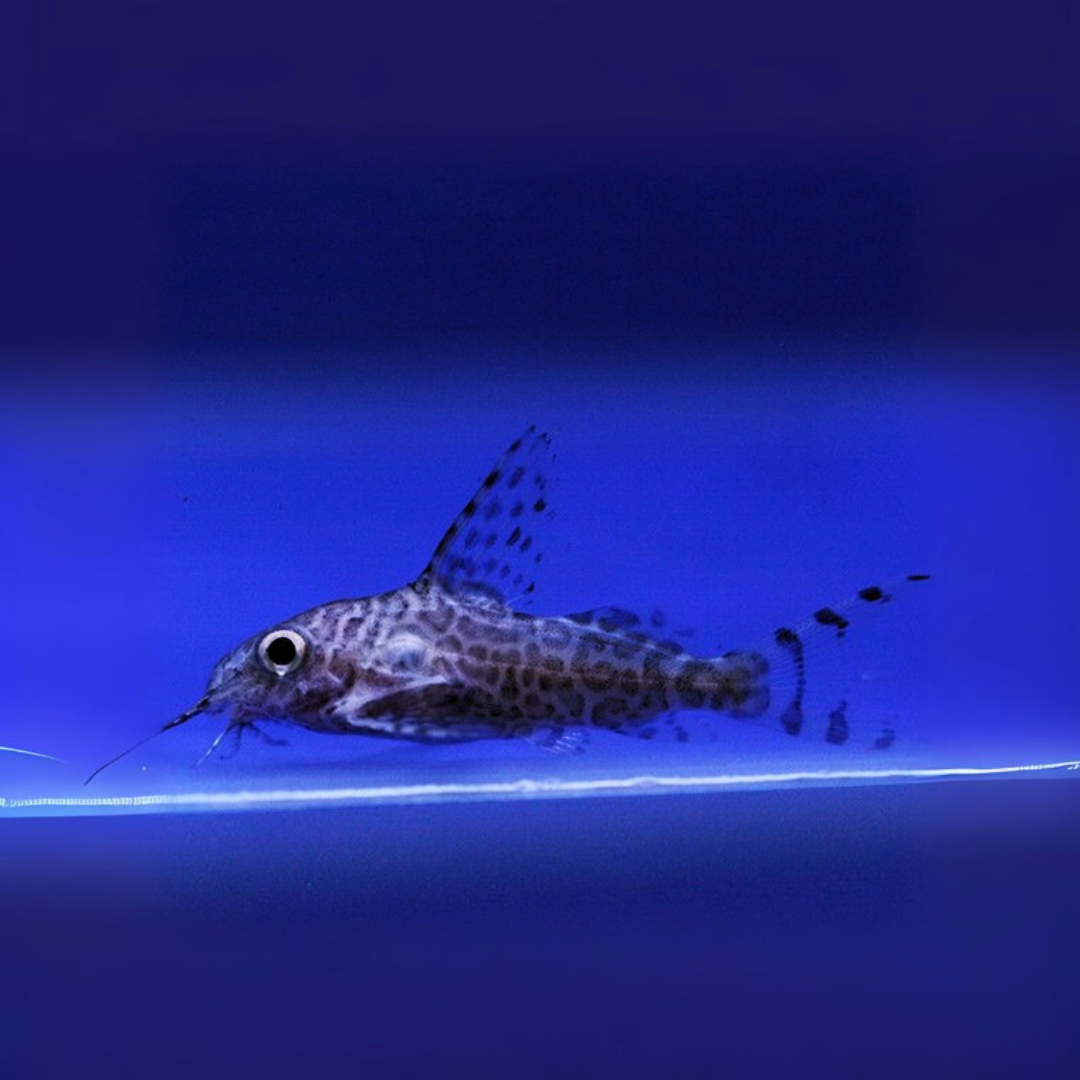
解説 / Description
フェザーフィン・シノドンティスは、アフリカの河川に分布するシノドンティス属のナマズです。幼魚のころは網目状の模様が目立ち、成長すると黒褐色の体に細かなスポットが入り、背びれが羽のように伸びる独特の姿へ変化します。丈夫で人工飼料にも慣れやすい一方、成長すると20cm前後になることがあり、底をよく動き回るため、見た目の小ささだけで導入しないことが大切です。 The featherfin synodontis is an African catfish belonging to the genus Synodontis. Juveniles often show a clear reticulated pattern, while adults develop a darker body with fine spots and a distinctive feather-like dorsal fin. It is hardy and usually adapts well to prepared foods, but it can grow to around 20 cm in aquariums and needs a properly planned tank rather than being chosen only for its small juvenile size.
基本情報 / Basic Information
| 学名 / Scientific Name | Synodontis eupterus |
|---|---|
| 通称 / Common Name | フェザーフィン・シノドンティス、シノドンティス・エプタルス、フェザーフィンキャットFeatherfin synodontis, featherfin catfish, squeaker catfish |
| 分類 / Family | ナマズ目 サカサナマズ科 シノドンティス属Order Siluriformes, family Mochokidae, genus Synodontis |
| 英名 / English Name | Featherfin Synodontis / Featherfin Catfish |
| 分布 / Distribution | 白ナイル川、ニジェール川、ボルタ川、チャド盆地など、西アフリカから中央アフリカにかけての広い水系に分布します。It is distributed across several West and Central African drainages, including the White Nile, Niger, Volta, and Lake Chad basin. |
| 最大体長 / Max Size | 野生下では約20〜30cm前後の記録があり、飼育下では15〜20cm程度で落ち着くことが多い魚です。Wild records indicate roughly 20 to 30 cm, while aquarium specimens often remain around 15 to 20 cm. |
| 寿命 / Lifespan | 適切な環境では10年以上飼育されることがあり、個体によってはさらに長生きする長寿のナマズです。With suitable care, it can live for more than 10 years, and some individuals may live considerably longer. |
飼育環境 / Aquarium Environment
| 水槽サイズ / Tank Size | 幼魚の一時飼育なら45cm規格水槽でも始められますが、長期飼育では60cm規格水槽以上を基本に考えます。成長した個体や混泳を考える場合は、60cmワイド水槽から90cm規格水槽以上を用意すると管理しやすくなります。Juveniles can be kept temporarily in a standard 45 cm tank, but long-term care should be based on at least a standard 60 cm aquarium. For adult specimens or community setups, a 60 cm wide tank or a standard 90 cm aquarium is easier to manage. |
|---|---|
| 水温 / Temperature | 22〜28℃を目安に管理します。急な水温変化は体調を崩す原因になるため、サーモスタット付きヒーターで安定させると安心です。 Maintain the temperature at around 22 to 28°C. A thermostatically controlled heater is recommended because sudden temperature changes can weaken the fish. |
| 水質 / Water Quality | 弱酸性から中性付近を中心に、pH6.0〜7.5程度を目安にします。丈夫な魚ですが、排泄量が多く水を汚しやすいため、強めのろ過と定期的な水換えが重要です。Slightly acidic to neutral water, around pH 6.0 to 7.5, is suitable. Although hardy, it produces a fair amount of waste, so strong filtration and regular water changes are important. |
| レイアウト / Layout | 流木、土管、石組みなどで体がしっかり隠れる場所を作ります。底床は掃除しやすい砂利や細かな砂を薄めに敷き、水草を使う場合はアヌビアスやミクロソリウムのように流木へ活着できる丈夫な種類が向いています。Provide secure hiding places with driftwood, pipes, or rockwork. Use an easy-to-clean substrate such as fine gravel or sand, and choose hardy plants attached to wood or stones, such as Anubias or Microsorum. |
| 注意点 / Precautions | 幼魚は小さく安価に流通することがありますが、成長後は存在感のある底生魚になります。ヒーターに寄りかかることもあるため、ヒーターカバーを使い、隠れ家を十分に用意して落ち着ける環境を作ることが必要です。Although juveniles are often sold small and inexpensive, adults become substantial bottom-dwelling fish. Use a heater guard because catfish may rest against heaters, and provide enough shelters to reduce stress. |
餌と給餌 / Feeding
| 餌の種類 / Diet | 雑食性で、沈降性の人工飼料を主食にできます。肉食・底生魚向けの沈下性ペレット、冷凍赤虫、乾燥エビ、イトミミズ系の餌などを利用できますが、長期飼育では栄養バランスのよい人工飼料を中心にするのが扱いやすいです。This omnivorous catfish can be maintained on sinking prepared foods. Sinking pellets for carnivorous or bottom-dwelling fish, frozen bloodworms, dried shrimp, and worm-based foods may be used, but balanced prepared foods are best as the staple diet. |
|---|---|
| 給餌のポイント / Feeding Tips | 夜行性が強いため、消灯前後に餌を与えると食べやすくなります。慣れない個体には冷凍赤虫や乾燥エビをきっかけにして人工飼料へ移行します。食べ残しは水質悪化につながるため、底に残る量を見ながら控えめに与えることが大切です。Because it is mainly nocturnal, feeding around lights-out is effective. New individuals can be introduced to pellets by first using attractive foods such as frozen bloodworms or dried shrimp. Avoid overfeeding because leftovers quickly degrade water quality. |
性格と混泳 / Temperament and Tank Mates
| 性格 / Temperament | 幼魚のうちは比較的おとなしく見えますが、成長すると縄張り意識が強くなる傾向があります。とくに同じ底層を使う魚や同種に対しては強く出ることがあるため、単なる「残餌処理役」として安易に入れないほうが安全です。Juveniles may appear relatively peaceful, but adults often become more territorial. They can be assertive toward other bottom-dwelling fish or their own kind, so they should not be added casually as a simple scavenger. |
|---|---|
| 混泳の相性 / Compatibility | 混泳相手は、本種の口に入らないサイズで、生活圏が重なりにくい中層から上層の魚が候補になります。ポリプテルス、プレコ、コリドラスなど底層を使う魚とは場所の取り合いになりやすく、小型魚は捕食対象になるため避けるべきです。一般的な家庭水槽では、シノドンティス類は1水槽1匹を基本に考えると失敗しにくいです。Suitable tank mates should be too large to swallow and should mainly use the middle or upper water layers. Bottom-dwellers such as bichirs, plecos, and Corydoras may compete for space, while small fish may be eaten. In ordinary home aquariums, keeping one synodontis per tank is usually the safer approach. |
病気と対策 / Diseases and Prevention
| かかりやすい病気 / Common Diseases | 丈夫な魚ですが、輸送直後や導入直後は白点病、ツリガネムシ病、肌荒れ、スレ傷からの二次感染に注意します。ナマズ類は体表が薬に敏感なことがあるため、一般的な小型魚と同じ感覚で強い薬浴を行うのは避けたほうが安心です。It is hardy, but newly imported or newly purchased individuals may develop ich, epistylis-like infections, skin irritation, or secondary infections from abrasions. Catfish can be sensitive to medications, so strong treatments used for ordinary small fish should be avoided unless carefully adjusted. |
|---|---|
| 対策と予防 / Prevention | 導入時は隔離水槽で様子を見て、急な水温変化や水質悪化を避けます。病気が疑われる場合は、まず水換え、塩水浴、隔離管理など負担の少ない方法から検討し、薬を使う場合はナマズ類への影響を考えて低濃度から慎重に行うことが重要です。Quarantine new fish and avoid sudden temperature or water-quality changes. If disease is suspected, start with low-stress measures such as water changes, salt baths, and isolation. When medication is necessary, begin cautiously at a reduced concentration because catfish may react strongly. |
増やし方(繁殖) / Breeding
| 雌雄の判別 / Sexing | 外見だけでの判別は難しく、成熟した雌は腹部がふっくらしやすい傾向があります。確実な判別には生殖突起の確認が必要とされますが、一般飼育では無理に判別する機会は多くありません。Sexing by appearance alone is difficult. Mature females may appear fuller in the abdomen, but reliable sexing generally requires examination of the genital papilla, which is rarely necessary in ordinary aquarium keeping. |
|---|---|
| 繁殖形態 / Reproduction | 卵をばらまく卵散布型で、親が卵や稚魚を守るタイプではありません。自然下では雨季に伴う水位や水質の変化が繁殖のきっかけになると考えられています。It is an egg-scattering species and does not provide parental care. In nature, spawning is thought to be triggered by seasonal changes associated with the rainy season. |
| 繁殖のポイント / Breeding Tips | 一般家庭の水槽で自然繁殖を狙うのは非常に難しい魚です。流通個体の多くは、東南アジアなどの養殖施設でホルモン誘発産卵によって生産されたブリード個体と考えられます。家庭飼育では繁殖よりも、終生飼育できる設備を整えることを優先したい魚です。Natural breeding in home aquariums is extremely difficult. Many specimens in the trade are thought to be commercially bred in Southeast Asian farms using hormone-induced spawning. For home aquarists, long-term care should be the priority rather than breeding. |
雑学と豆知識 / Trivia and Fun Facts
| 1. 名前に込められた「美しいひれ」 / 1. A name that refers to beautiful fins | 属名のSynodontisは、歯の構造に由来するとされる名前です。一方、種小名のeupterusは「美しい」や「よい」を意味する語と「ひれ」を意味する語に関係し、成長した個体でよく目立つ背びれの姿を思わせます。幼魚の網目模様だけでなく、成長後に背びれが長く伸びる変化も、この魚を長く飼う楽しみのひとつです。The genus name Synodontis is associated with tooth structure, while the species name eupterus relates to the idea of beautiful or well-developed fins. This fits the adult fish, whose dorsal fin becomes long and feather-like. The shift from the juvenile reticulated pattern to the elegant adult form is one of the pleasures of keeping this species over the long term. |
|---|---|
| 2. 「鳴くナマズ」としての一面 / 2. A catfish that can squeak | シノドンティスの仲間は、英語圏でSqueakerと呼ばれることがあります。これは胸びれの棘と関節部分をこすり合わせることで、きしむような音を出すことがあるためです。水槽内で頻繁に聞こえるものではありませんが、網ですくわれたときなど、強いストレスを感じた場面で防御的な合図として使われると考えられています。Some Synodontis species are known as squeakers because they can produce a rasping sound by rubbing the pectoral-fin spines against their joints. It is not something heard often in normal aquarium life, but it is thought to function as a defensive signal when the fish is stressed, such as during netting. |
| 3. 幼魚と成魚で印象が変わる魚 / 3. A fish that changes greatly with age | 幼魚では明るい網目模様が目立ち、販売時には小型でかわいらしい印象を受けます。しかし、成長すると体色は落ち着き、スポット状の模様と大きな背びれを持つ重厚なナマズらしい姿になります。購入時の姿だけで判断せず、成魚になったときの大きさと性格まで見越して迎えることが大切です。Juveniles show a clear reticulated pattern and are often sold as small, attractive fish. As they mature, the body darkens, spots become more apparent, and the dorsal fin gives the fish a much heavier catfish-like presence. It is important to consider the adult size and temperament, not only the juvenile appearance. |
| 4. 家庭繁殖が難しい理由 / 4. Why home breeding is difficult | 本種は丈夫で飼いやすい面がありますが、繁殖はまったく別の話です。自然界では雨季による増水や環境変化が産卵の刺激になると考えられ、家庭水槽でその条件を再現するのは困難です。そのため、一般に流通する個体は養殖施設で計画的に生産されたブリード個体が中心と考えられます。Although this species is hardy in aquariums, breeding is a different matter. In nature, spawning is likely stimulated by environmental changes associated with the rainy season, which are difficult to reproduce in a home tank. Therefore, most fish in the trade are likely to be commercially bred rather than home-bred. |
まとめ / Conclusion
フェザーフィン・シノドンティスは、丈夫さ、成長による姿の変化、アフリカ産ナマズらしい存在感を兼ね備えた魅力的な底物魚です。幼魚は手に取りやすい価格で流通することがありますが、長寿で成長後の体格もあるため、60cm規格水槽以上を基本に、ろ過力と隠れ家をしっかり用意して迎えることが重要です。 The featherfin synodontis is an appealing bottom-dwelling fish with hardiness, dramatic growth-related changes, and the strong presence typical of African catfish. Although juveniles are often affordable, the fish is long-lived and becomes substantial in size, so it should be kept in at least a standard 60 cm aquarium with strong filtration and secure hiding places.
混泳では、同じ底層を使う魚や口に入る小型魚を避け、生活圏とサイズの相性を慎重に見極めます。単なる掃除役ではなく、長く付き合う主役級のナマズとして扱うことで、この魚本来の魅力をじっくり楽しめるでしょう。 For community keeping, avoid small fish that can be swallowed and bottom-dwellers that compete for the same space. Treating this species not as a simple cleaner fish but as a long-term, central aquarium resident allows its true appeal to be appreciated.

気になる道具や飼い方を見つけてみませんか?
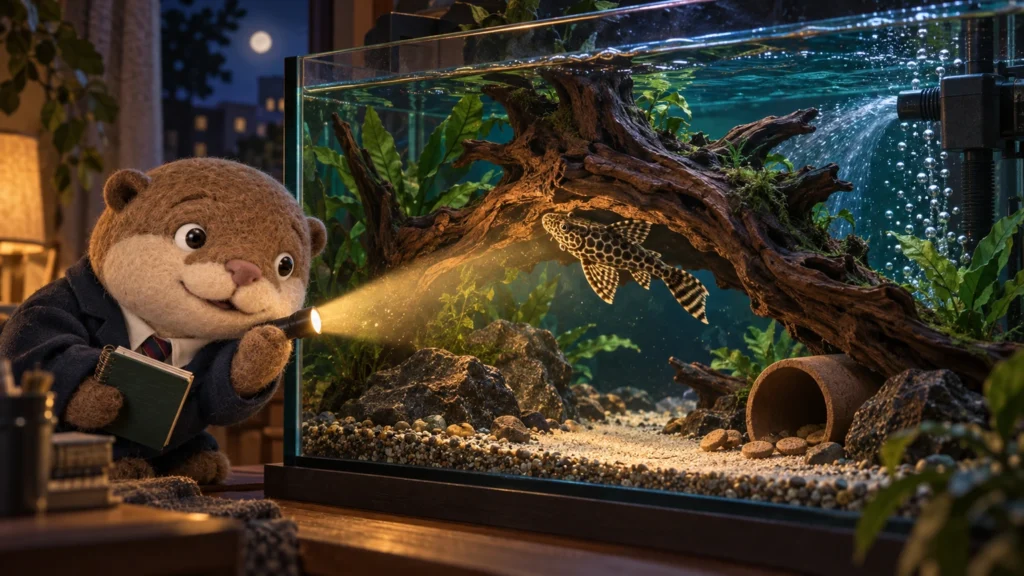 アイのアクアグッズ案内プレコ飼育に必要なもの|餌・流木・ろ過・隠れ家・掃除用品道具の特徴や使い方、選ぶときのポイントをアイが紹介します。記事はコチラ →
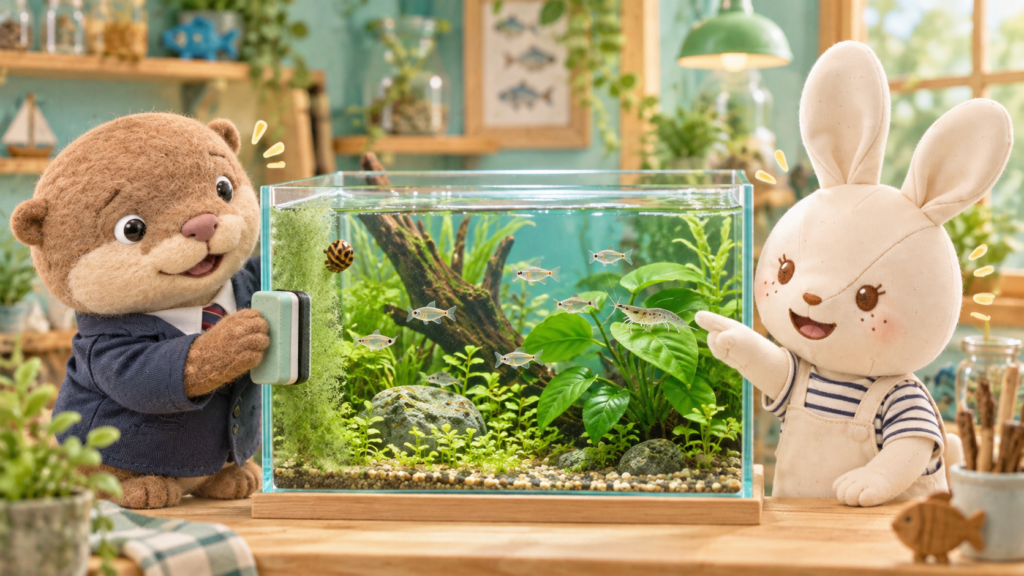 アイのアクアグッズ案内水槽のコケ掃除|道具の選び方とお掃除生体の得意・不得意道具の特徴や使い方、選ぶときのポイントをアイが紹介します。記事はコチラ →
さまざまな飼育テーマをご紹介。リンク先の記事には広告・商品紹介が含まれます。
案内・紹介記事一覧へ →参考文献・参照資料
本記事では、フェザーフィン・シノドンティス(Synodontis eupterus)の分類、分布、形態、生態、飼育上の注意点を確認するため、以下の資料を参照しました。
-
Froese, R. and Pauly, D. (Editors). FishBase. Synodontis eupterus, Featherfin squeaker.
https://www.fishbase.se/summary/synodontis-eupterus.html 主な確認項目:最大体長、水温・pH目安、泥底や岩場に見られる生息環境、昆虫幼虫や藻類を食べる食性、逆さ泳ぎ、卵生である点。 -
GBIF Secretariat. Synodontis eupterus Boulenger, 1901. GBIF Backbone Taxonomy.
https://www.gbif.org/species/2344483 主な確認項目:学名、命名者、記載年、分類上の位置づけ、原記載情報。 -
Fricke, R., Eschmeyer, W. N. and Van der Laan, R. (Editors). Eschmeyer’s Catalog of Fishes: Synodontis eupterus. California Academy of Sciences.
https://researcharchive.calacademy.org/research/ichthyology/catalog/fishcatget.asp?spid=47154 主な確認項目:有効名、原記載、タイプ産地、ホロタイプ情報、分類学的な扱い。 -
Boulenger, G. A. (1901). Descriptions of three new siluroid fishes of the genus Synodontis discovered by Mr. W. L. S. Loat in the White Nile. Annals and Magazine of Natural History, Series 7, 8(43), 10–12.
https://www.biodiversitylibrary.org/page/29980062 主な確認項目:本種の原記載、White Nileに関係する記載背景、学術記載の出典。 -
PlanetCatfish. Synodontis eupterus (Mochokidae) Cat-eLog.
https://www.planetcatfish.com/common/species.php?species_id=121 主な確認項目:英名、通称、成魚サイズの目安、語源に関する補足、アクアリウム上の基礎情報。 -
Kéver, L. et al. (2021). Morphological diversity of acoustic and electric communication systems of mochokid catfish. Journal of Comparative Neurology.
https://onlinelibrary.wiley.com/doi/pdf/10.1002/cne.25057 主な確認項目:サカサナマズ科における音響・電気シグナル、フェザーフィン・シノドンティスの発音・電気信号に関する学術的背景。 -
Parmentier, E. et al. (2010). Functional study of the pectoral spine stridulation mechanism in different mochokid catfishes. The Journal of Experimental Biology.
https://www.vliz.be/imisdocs/publications/ocrd/237687.pdf 主な確認項目:サカサナマズ科の胸びれ棘による摩擦発音、ストレス時や防御的場面での発音行動。
※販売店・通販サイト・個人ブログは除外し、分類・分布・形態・生態・学術的背景の確認に向いた資料を中心に掲載しています。飼育環境の目安は、これらの基礎情報をもとに家庭水槽向けに整理したものです。




コメント