

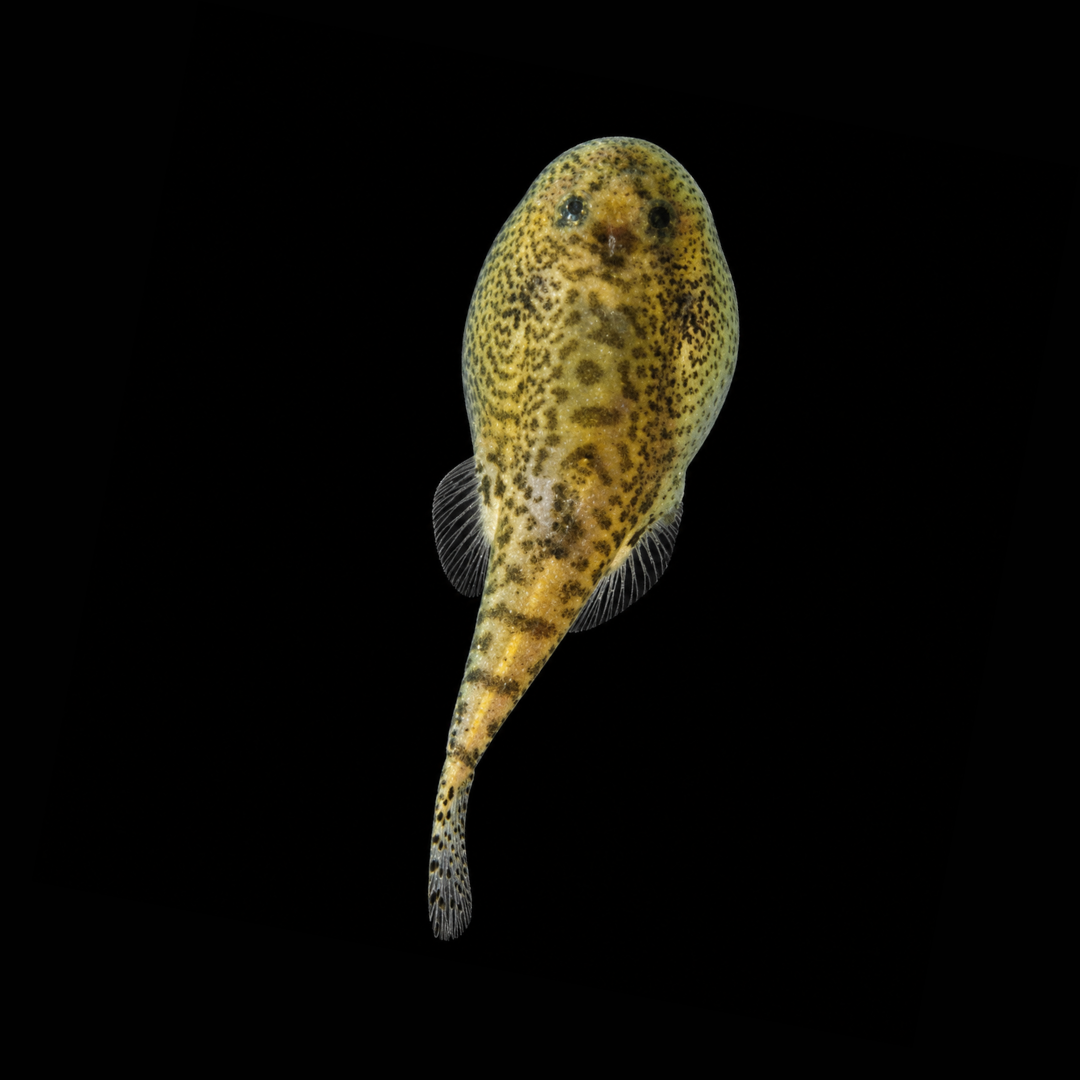
解説 / Description
セウェルリア cf. ブレヴィベントラリスは、ベトナム周辺の山地渓流に由来するとされる、タニノボリ科セウェルリア属の急流適応型淡水魚です。扁平な体と大きく広がる胸鰭・腹鰭を使って石やガラス面に吸い付くように止まり、細かなモザイク状の斑紋をまとった姿は、渓流魚らしい機能美と観賞価値を兼ね備えています。水槽内では石の表面を滑るように移動し、同種同士でお気に入りの場所を巡って押し合うような行動も見せます。 Sewellia cf. breviventralis is a rheophilic freshwater hillstream loach of the family Gastromyzontidae, thought to originate from mountain streams around Vietnam. With its flattened body and broadly expanded pectoral and pelvic fins, it clings to stones and aquarium glass, while its fine mosaic-like pattern gives it both functional beauty and strong ornamental appeal. In aquaria, it glides over stone surfaces and may push against its own kind over favored positions in the current.
ただし、観賞魚として流通する「cf. ブレヴィベントラリス」は、学術的に記載された真の Sewellia breviventralis と完全に同一とは限りません。「cf.」は「比較せよ」を意味する分類上の注意書きで、近縁の未記載種、地域変異、または流通上まとめられた個体群を含む可能性があります。ここで紹介する飼育情報は、日本国内でセウェルリア cf. ブレヴィベントラリスとして流通する魚を対象としています。 However, fish sold in the aquarium trade as “cf. breviventralis” are not necessarily identical to the scientifically described Sewellia breviventralis. The abbreviation “cf.” means “compare with” and signals a need for caution; traded fish may include undescribed close relatives, regional forms, or trade-grouped populations. This guide therefore treats Sewellia cf. breviventralis mainly as a Japanese aquarium trade name and presents husbandry information with appropriate caution.
基本情報 / Basic Information
| 学名 / Scientific Name | Sewellia cf. breviventralis |
|---|---|
| 通称 / Common Name | セウェルリア cf. ブレヴィベントラリス、ヒルストリームローチの仲間、SEW02・SEW03・SEW04系統として扱われることがある流通個体群Sewellia cf. breviventralis, hillstream loach, aquarium-trade forms sometimes associated with SEW02, SEW03, and SEW04 |
| 分類 / Family | コイ目 タニノボリ科 セウェルリア属Order Cypriniformes, family Gastromyzontidae, genus Sewellia |
| 英名 / English Name | Butterfly Loach, Hillstream Loach, Sewellia cf. breviventralis |
| 分布 / Distribution | 真の Sewellia breviventralis はベトナムのパコ川から知られます。観賞魚として流通する cf. 個体群は、ベトナム中部のフエ周辺などに由来すると推測されることがありますが、流通個体の正確な産地と分類には不確定要素があります。The true Sewellia breviventralis is known from the River Pako in Vietnam. Aquarium-trade cf. forms are sometimes suspected to originate from areas such as the Hue region of central Vietnam, but their exact provenance and taxonomic identity remain uncertain. |
| 最大体長 / Max Size | 真の Sewellia breviventralis は標準体長約5.1cm。流通名としての cf. 個体群では、おおむね全長5〜6.5cm前後を目安にしますが、個体群や入荷ロットによって差があります。The true Sewellia breviventralis reaches about 5.1 cm standard length. Aquarium-trade cf. forms are roughly expected to reach around 5–6.5 cm total length, although size may vary among populations and import lots. |
| 寿命 / Lifespan | 本流通名の個体群について、寿命を示す信頼性の高い定量データは多くありません。近縁セウェルリア類の飼育例を目安に、飼育下では3〜5年程度を見込むことが多く、低めの水温、強い水流、十分な酸素、安定した水質が長期維持の鍵になります。Reliable quantitative lifespan data for this trade form are limited. Based on aquarium experience with related Sewellia species, about 3–5 years is often used as a practical expectation, with moderately cool temperatures, strong current, high oxygen, and stable water quality being essential for long-term maintenance. |
飼育環境 / Aquarium Environment
| 水槽サイズ / Tank Size | 少数飼育なら60cm規格水槽が最低限の目安です。群れでの長期飼育や繁殖を視野に入れる場合は80L以上、できれば90cm規格水槽以上が扱いやすくなります。同種間の小競り合いを分散させるため、6匹以上で飼う場合は底面積を広く取り、流れの当たる石や餌場を複数作ります。A standard 60 cm aquarium is a practical minimum for a small group. For long-term group maintenance or breeding attempts, 80 liters or more, preferably a standard 90 cm aquarium or larger, is easier to manage. When keeping six or more, provide generous floor space and several current-facing stones and feeding areas to disperse conspecific contests. |
|---|---|
| 水温 / Temperature | 20〜24℃を中心に管理します。22〜24℃前後が安定しやすく、上限は26℃程度までを一時的な目安と考えます。高水温では溶存酸素が低下しやすいため、日本の夏場は水槽用クーラーや冷却ファンを用い、冷却とエアレーションを同時に強化します。 Maintain them mainly around 20–24°C. Around 22–24°C is often easy to stabilize, while about 26°C should be treated only as a short-term upper guide. Because warmer water holds less oxygen, Japanese summers require cooling with an aquarium chiller or fan together with stronger aeration. |
| 水質 / Water Quality | pH 6.0〜7.5程度、軟水〜中程度の硬度を目安にします。極端な酸性・アルカリ性や急変を避け、清浄で酸素の多い水を最優先します。硝酸塩はできるだけ低く保ち、定期的な換水と強力な濾過で有機物の蓄積を防ぎます。Aim for roughly pH 6.0–7.5 with soft to moderately hard water. Avoid extreme or rapidly changing parameters, and prioritize clean, highly oxygenated water. Keep nitrate as low as practical and prevent organic buildup through regular water changes and powerful filtration. |
| レイアウト / Layout | 滑らかな丸石、川砂利、平たい石を多めに配置し、石の表面に珪藻や緑藻、微生物を含むバイオフィルムを育てます。水草は本来の急流環境には多くありませんが、ミクロソリウムやアヌビアスなどの活着性水草は水質維持と景観の補助として使いやすいです。外部式フィルターに水流ポンプやエアレーションを組み合わせ、一方向の流れと乱流を含む渓流風の環境を作ります。Use plenty of smooth river stones, gravel, and flat rocks, and encourage biofilm containing diatoms, green algae, and microorganisms on stone surfaces. Aquatic plants are not abundant in their natural fast-current habitats, but attached plants such as Microsorum and Anubias can help water quality and aquascape structure. Combine an external filter with powerheads and aeration to create both directional flow and turbulence. |
| 注意点 / Precautions | 立ち上げ直後の未成熟な水槽には導入しないでください。酸欠、水温上昇、濾過不足、汚れの蓄積に弱く、環境が崩れると急に調子を落とします。また、ガラス面や機材を伝って上がることがあるため、フタは隙間なく設置します。薬剤には敏感に反応する場合があるため、治療時は酸素量を十分に確保し、用量を慎重に扱います。Do not introduce them to a newly set up, biologically immature aquarium. They are vulnerable to low oxygen, overheating, inadequate filtration, and organic pollution, and may decline quickly when conditions deteriorate. Use a tight-fitting lid because they may climb glass or equipment. They can be sensitive to medications, so provide strong oxygenation and dose cautiously during treatment. |
餌と給餌 / Feeding
| 餌の種類 / Diet | 野生下では、石に付着するバイオフィルムに含まれる藻類、微生物、水生無脊椎動物をついばむ底生性の雑食と考えます。飼育下では藻類配合の沈下性タブレット、細かな沈下性顆粒、プレコ用フード、冷凍赤虫、ブラインシュリンプ、ミジンコ類などを組み合わせます。ほうれん草やズッキーニ、スピルリナ粉末をゼラチンなどで固め、平たい石に塗る自家製フードも補助として有効です。In nature, they are best treated as benthic omnivores that graze biofilm containing algae, microorganisms, and aquatic invertebrates on stones. In aquaria, offer a combination of algae-based sinking tablets, fine sinking granules, pleco foods, frozen bloodworms, brine shrimp, and daphnia. Homemade foods made from spinach, zucchini, spirulina powder, and gelatin spread onto flat stones can also be useful as a supplement. |
|---|---|
| 給餌のポイント / Feeding Tips | いわゆる「コケだけで飼える魚」ではありません。藻類を育てる目的は、藻そのものだけでなく、そこに集まる微小生物を含めた自然な採餌面を作ることにあります。中層を泳いで餌を奪いに行く魚ではないため、餌は底面や石の上に確実に届くようにし、遊泳魚との混泳では消灯前や水流の下流側など、落ち着いて食べられる場所に少量ずつ与えます。動物質だけに偏らせず、植物質と微小動物質をバランスよく与えます。This is not a fish that can be maintained on “algae alone.” Encouraging algal growth is useful because it creates a natural grazing surface that includes microorganisms as well as algae. They do not swim into midwater to compete for food, so make sure food reaches the bottom or stone surfaces. In community tanks, feed small amounts where they can graze calmly, such as shortly before lights out or downstream of the main current. Avoid an all-animal diet and balance plant-based and small animal foods. |
性格と混泳 / Temperament and Tank Mates
| 性格 / Temperament | 他種に対してはおおむね温和で、底面や石の上を中心に暮らす落ち着いた魚です。一方で、同種間では餌場や流れの当たる石を巡って押し合うことがあります。成熟したオス同士では腹面を向かい合わせるような姿勢で競り合うこともありますが、多くの場合は深刻な傷を負わせる争いではなく、順位や距離感を確かめる行動に近いものです。They are generally peaceful toward other species and spend most of their time on the substrate and stone surfaces. Among their own kind, however, they may push and contest feeding sites or stones in the current. Mature males may display a belly-to-belly pushing stance, but this is usually more about testing rank and personal space than causing serious injury. |
|---|---|
| 混泳の相性 / Compatibility | 同じく清浄で酸素の多い水を好む小型ラスボラ、ダニオ、小型の温和なコイ科魚、穏やかなタニノボリ類などと相性があります。高水温を好む魚、強い水流を嫌う魚、底面で餌を独占する大型魚とは合わせにくいです。プレコ類や他の吸着性底生魚とは生活場所が重なるため、十分な底面積と複数の餌場を用意します。Suitable companions include small rasboras, danios, small peaceful cyprinids, and calm hillstream fishes that also prefer clean, oxygen-rich water. Avoid species that require warm water, dislike strong current, or dominate bottom foods. Plecos and other suction-feeding bottom dwellers overlap in habitat use, so provide ample floor space and multiple feeding areas. |
病気と対策 / Diseases and Prevention
| かかりやすい病気 / Common Diseases | 白点病、細菌性の皮膚炎、スレ傷からの二次感染、輸送直後の衰弱、酸欠や高水温による急な不調に注意します。野生採集個体では、導入直後に痩せや内部寄生虫が疑われる状態が見られることもあります。Watch for white spot disease, bacterial skin problems, secondary infections from abrasions, post-shipping weakness, and sudden decline caused by low oxygen or overheating. Wild-caught individuals may also show weight loss or signs suggesting internal parasites shortly after import. |
|---|---|
| 対策と予防 / Prevention | 予防の中心は、治療よりも環境管理です。導入前の水合わせを丁寧に行い、可能なら隔離水槽で観察してから本水槽へ移します。水温を低めに安定させ、強いエアレーションと水流を保ち、換水で有機物をためないことが大切です。薬浴が必要な場合は、タニノボリ類が薬剤に敏感なことを考慮し、酸素量を十分に確保しながら慎重に行います。Prevention depends more on environmental management than medication. Acclimate them carefully and, when possible, observe them in a quarantine tank before moving them to the main aquarium. Keep temperature moderately cool and stable, maintain strong aeration and flow, and prevent organic waste from accumulating through water changes. If medication is necessary, proceed cautiously because hillstream loaches can be sensitive, and maintain strong oxygenation throughout treatment. |
増やし方(繁殖) / Breeding
| 雌雄の判別 / Sexing | 成熟したメスは体幅が広く、吻部から胸鰭へかけて滑らかな輪郭になります。オスはやや細身で、吻部が角張って見え、胸鰭が体から直角気味に張り出す印象になります。さらに成熟したオスでは、胸鰭前縁や頭部背面に追星状の小さな隆起が並ぶことがあります。Mature females are broader, with a smoother outline from the snout to the pectoral fins. Males tend to be slimmer, with a more squared snout and pectoral fins that appear to project more sharply from the body. Mature males may also develop small tubercle-like ridges along the front of the pectoral fins and on the head. |
|---|---|
| 繁殖形態 / Reproduction | 卵生です。近縁セウェルリア類の飼育例では、強い水流の中でオスがメスを誘導し、卵と精子を放出する形で産卵すると考えられています。卵は底床の大粒砂利や石の隙間に落ち込み、親魚から守られることで孵化まで残りやすくなります。They are egg layers. Based on aquarium observations of related Sewellia species, the male is thought to lead the female into stronger current, where eggs and sperm are released. Eggs fall into gaps among coarse gravel and stones, where they are more likely to remain protected from the adults until hatching. |
| 繁殖のポイント / Breeding Tips | 大粒の川砂利を厚めに敷き、稚魚が隠れられる隙間を多く作ることが重要です。十分に成熟した複数個体を、強い水流と高酸素の安定した環境で仕上げます。繁殖のきっかけとして、25〜26℃前後へ少し上げて管理した後、冷たい清浄な水で多めに換水し、雨季の始まりを模す方法が知られています。初期飼料はインフゾリアなどの微小生物から始め、成長に合わせてブラインシュリンプ幼生やマイクロワームへ移行します。A thick layer of coarse river gravel is important because it creates many spaces where fry can hide. Condition a mature group in stable, fast-flowing, highly oxygenated water. A known trigger is to maintain them slightly warmer, around 25–26°C, for a period and then perform a larger change with clean, cooler water to imitate the onset of rains. Begin fry on microscopic foods such as infusoria, then move to newly hatched brine shrimp and microworms as they grow. |
雑学と豆知識 / Trivia and Fun Facts
| 1. 「cf.」が残す、分類の余白 / 1. The taxonomic space left by “cf.” | 学名に添えられる「cf.」は、ラテン語の confer に由来し、「比較せよ」という意味を持ちます。これは「Sewellia breviventralis に似ているが、厳密な同定には慎重さが必要」という合図です。観賞魚の世界では、美しい魚がまず流通し、後から研究や分類整理が追いつくことがあります。セウェルリア cf. ブレヴィベントラリスもその境界に立つ存在で、名前の奥には、まだ整理されきっていない東南アジアの渓流魚相の物語が隠れています。The “cf.” attached to the scientific name comes from the Latin confer, meaning “compare with.” It signals that the fish resembles Sewellia breviventralis but requires caution before exact identification. In the aquarium world, attractive fishes sometimes enter the trade before research and taxonomy fully catch up. Sewellia cf. breviventralis stands on that boundary, and behind its name lies the still-unfolding story of Southeast Asian hillstream fish diversity. |
|---|---|
| 2. 急流が磨いた吸着の形 / 2. A clinging form refined by current | セウェルリアの体は、単に平たいだけではありません。胸鰭と腹鰭が大きく横へ張り出し、腹面を石に密着させることで、急な流れの中でも姿勢を保ちます。プレコの仲間とは遠い系統でありながら、岩に張り付いて暮らすという似た生活様式が、よく似た輪郭を生みました。これは収斂進化のわかりやすい例で、水槽のガラスにぴたりと止まる小さな姿にも、流れに逆らわず利用するための機能美が表れています。The body of Sewellia is not merely flat. Its broad pectoral and pelvic fins spread sideways, allowing the belly to press against rocks and hold position in fast current. Although it is not closely related to plecos, a similar rock-clinging lifestyle has produced a surprisingly similar outline. This is a clear example of convergent evolution, and even the small figure clinging to aquarium glass reveals functional beauty built for using current rather than fighting it. |
| 3. 石の上に生まれる小さな社会 / 3. A tiny society on the stones | セウェルリアは温和な魚として紹介されることが多い一方、同種同士ではお気に入りの石や餌場を巡って堂々と自己主張します。腹面を向かい合わせるように押し合う姿は、激しい闘争というよりも、水槽内の順位や距離感を確かめる儀式のように見えることがあります。群れで飼うと、強い個体がどの石を選び、控えめな個体がどの流れに落ち着くのかが少しずつ見えてきます。底面の石組みが、彼らにとってはただの飾りではなく、小さな社会の舞台になるのです。Sewellia is often described as peaceful, yet individuals can be quite assertive over favorite stones and feeding spots. Their belly-to-belly pushing can look less like outright combat and more like a ritual for testing rank and personal space. In a group, it gradually becomes clear which stone a dominant fish chooses and where quieter individuals settle. The rockwork is not just decoration for them; it becomes the stage for a small social world. |
| 4. 美しさの背景にある保全の視点 / 4. Conservation behind the beauty | 真の Sewellia breviventralis は、ベトナムの限られた水系から知られる希少な魚です。急流に特化した魚は、ダム建設や森林伐採、土砂流入によって流れ・水質・底床環境が変わると、適した場所を失いやすい性質があります。観賞魚としての cf. 個体群が別種であったとしても、同じような山地渓流に依存しているなら、その脆弱さは大きく変わりません。状態よく長期維持し、可能なら繁殖へつなげる姿勢は、この魚を消費するだけでなく、理解しながら付き合うための大切な一歩になります。The true Sewellia breviventralis is a rare fish known from a limited Vietnamese drainage. Fish specialized for fast-flowing streams can quickly lose suitable habitat when dams, deforestation, and sedimentation alter current, water quality, and riverbed structure. Even if aquarium-trade cf. forms prove to be a different species, their dependence on similar mountain streams means that their vulnerability may be comparable. Maintaining them well for the long term, and breeding them when possible, is an important step toward understanding rather than merely consuming their beauty. |
まとめ / Conclusion
セウェルリア cf. ブレヴィベントラリスは、強い流れ、澄んだ水、豊富な酸素、そして石の表面に育つバイオフィルムがそろって初めて本来の魅力を見せてくれる魚です。丸みのある石を組み、低めの水温を保ち、十分な水流とエアレーションを与えることで、ぴたりと張り付く姿だけでなく、石から石へ移る軽やかな動きや、同種同士の小さな駆け引きまで楽しめるようになります。 Sewellia cf. breviventralis reveals its true appeal when strong current, clear water, abundant oxygen, and biofilm-covered stones come together. With rounded stones, moderately cool temperatures, strong flow, and ample aeration, it becomes more than a fish that clings to surfaces; its light movements from stone to stone and subtle social exchanges with its own kind become part of the aquarium’s charm.
分類にはまだ慎重に扱うべき余白がありますが、その余白はこの魚の価値を曇らせるものではありません。むしろ、小さな体に渓流への適応、未解決の分類、自然環境へのまなざしを抱えた存在として、丁寧に整えられた水槽の底に、静かな流れの景色を残してくれます。 Its classification still leaves room for caution, but that uncertainty does not diminish its value. Rather, as a small fish carrying the story of fast-water adaptation, unresolved taxonomy, and the need to look toward its natural environment, it leaves the quiet impression of flowing water across the bottom of a carefully prepared aquarium.

気になる道具や飼い方を見つけてみませんか?
 アイのアクアグッズ案内ラスボラ・ボララスの群泳を楽しむ飼育用品|水槽・ろ過・ヒーター・餌・水草道具の特徴や使い方、選ぶときのポイントをアイが紹介します。記事はコチラ →
 アイのアクアグッズ案内水換え・底砂掃除の道具の選び方|砂利・砂・ソイルに合うクリーナーとポンプ道具の特徴や使い方、選ぶときのポイントをアイが紹介します。記事はコチラ →
 アイのアクアグッズ案内小型カラシンの群れを楽しむ|餌と水換えから考える飼育用品ガイド小型カラシンの群れを眺める時間を、もっと楽しく。泳ぐ余白、餌の食べ方、続けやすい水換えを軸に、日本で揃えやすい用品の選び方を紹介します。記事はコチラ →
 アイのアクアグッズ案内旅行中、お魚のごはんはどうする? 自動給餌器・使える餌・スマート水槽の選び方旅行中の魚の餌やりを助ける自動給餌器を、アイとコタロウが紹介。時間指定、おかわり給餌、対応するフレークや顆粒、設置台、スマホ管理、一体型水槽、留守番フードまで、使いどころと選び方を案内します。記事はコチラ →
さまざまな飼育テーマをご紹介。リンク先の記事には広告・商品紹介が含まれます。
案内・紹介記事一覧へ →分布マップ
真の Sewellia breviventralis はベトナムのパコ川から知られ、観賞魚として流通する cf. 個体群はベトナム中部のフエ周辺などに由来すると推測されることがあります。ここでは分布イメージをつかみやすいよう、ベトナム中部付近を概略代表地点として示しています。
このマップは、分布欄の記述をもとにした概略プロットです。実際の採集地点、正確な産地、厳密な生息範囲を示すものではありません。流通する cf. 個体群は分類や産地に不確定要素があるため、保全・調査・採集記録としては扱わないでください。
参考文献
本リストは、分類、分布、生息環境、飼育条件、繁殖、病気や注意点を支える資料に絞って選定しています。店舗、通販、個人ブログ、まとめサイト、販売価格や流通在庫を主目的とする情報は除外しました。
-
Freyhof, J. & Serov, D. V. 2000.
Review of the genus Sewellia with description of two new species from Vietnam (Cypriniformes: Balitoridae). Ichthyological Exploration of Freshwaters 11(3): 217–240.
記事内での主な根拠:真の Sewellia breviventralis の原記載、分類、形態的特徴、パコ川分布、急流性の生息環境。
参照リンク -
Roberts, T. R. 1998.
Systematic revision of the balitorid loach genus Sewellia of Vietnam and Laos, with diagnoses of four new species. The Raffles Bulletin of Zoology 46(2): 271–288.
記事内での主な根拠:セウェルリア属の分類史、急流適応、アンキュリ、胸鰭・腹鰭の構造、雄の結節などの形態的説明。
参照リンク -
Froese, R. & Pauly, D. (eds.). FishBase.
Sewellia breviventralis Freyhof & Serov, 2000.
記事内での主な根拠:分類、分布「ベトナム・パコ川」、最大体長5.1cm SL、淡水底生魚であること、秒速1mを超える急流での採集情報、IUCN評価の確認。
参照リンク -
Huckstorf, V. & Freyhof, J. 2011.
Sewellia breviventralis. The IUCN Red List of Threatened Species 2011: e.T188001A8640365.
記事内での主な根拠:真の Sewellia breviventralis の絶滅危惧評価、個体群減少、ダム建設や森林伐採など生息地への脅威。
参照リンク -
SeriouslyFish.
Sewellia sp. ‘SEW02’.
記事内での主な根拠:観賞魚流通上の cf. 個体群に近いSEW02系統の扱い、浅く速い高酸素の源流・支流環境、飼育水温・pH・硬度の目安、底床と流れ、群れでの維持、繁殖に関する飼育下情報。
参照リンク -
Merck Veterinary Manual.
Bacterial Diseases of Fish.
記事内での主な根拠:水質悪化、有機物負荷、輸送、急な温度変化、低酸素、ストレスが細菌性疾患を誘発しやすいという注意点。
参照リンク -
Merck Veterinary Manual.
Parasitic Diseases of Fish.
記事内での主な根拠:白点病の原因となる Ichthyophthirius multifiliis、淡水魚での感受性、導入魚や器具を介した伝播、皮膚・鰓への影響、早期対応と隔離の重要性。
参照リンク
注:日本国内で流通する「セウェルリア cf. ブレヴィベントラリス」は、真の Sewellia breviventralis と完全に同一とは限らないため、真の記載種に関する文献と、SEW02など流通個体群に近い飼育情報を分けて参照しています。




コメント