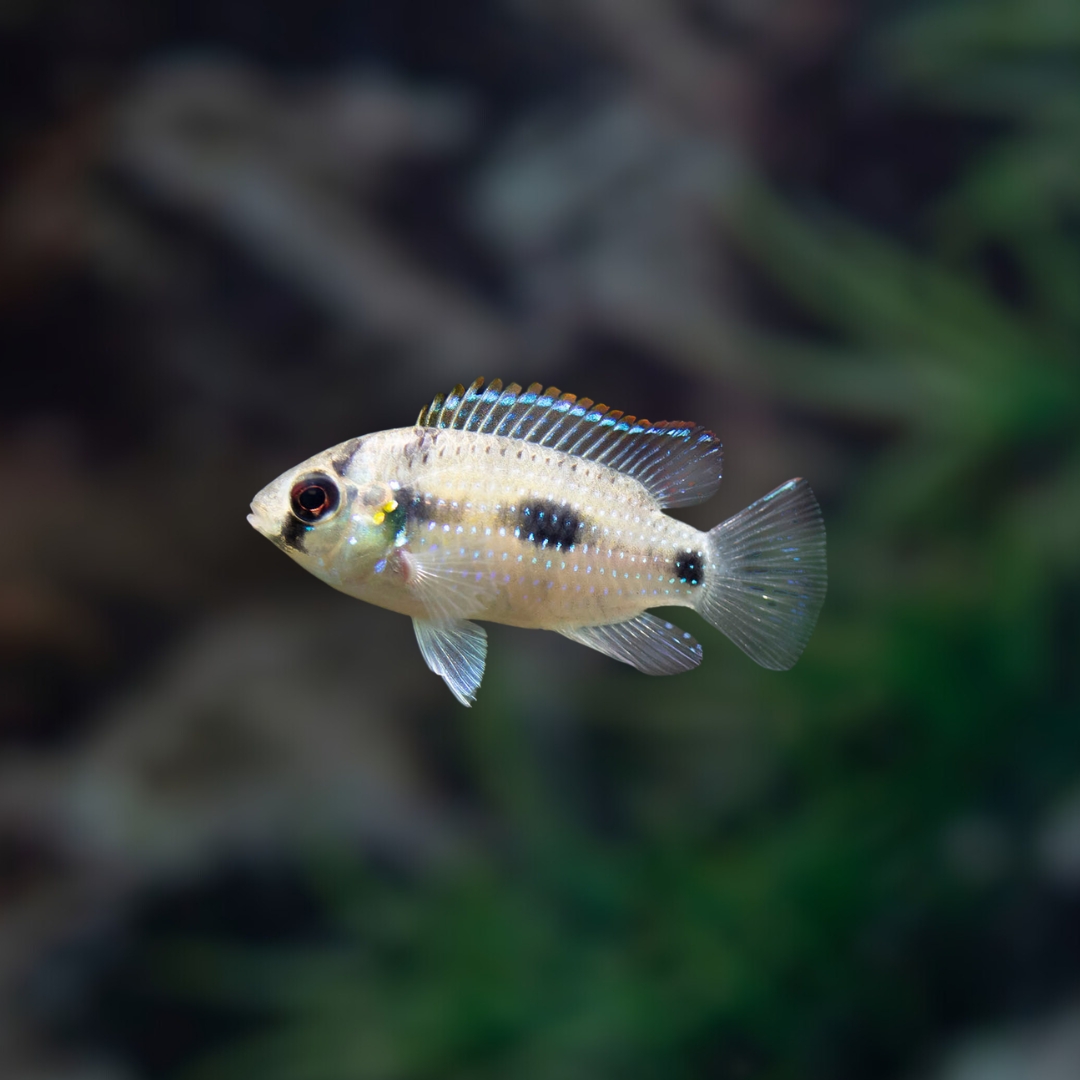
アノマロクロミス・トーマシーは、西アフリカの沿岸河川に分布する小型のシクリッドです。派手さで目を奪うタイプではありませんが、落ち着いた体色に浮かぶ黒い斑紋、温和な性格、そしてペアで卵や稚魚を守る行動が魅力です。水草や流木を多く入れた穏やかな水槽によくなじみ、シクリッドらしい観察のおもしろさを、比較的扱いやすいサイズで楽しめます。Anomalochromis thomasi is a small cichlid from coastal river systems in West Africa. It is not a showy fish at first glance, but its subtle markings, generally peaceful temperament, and attentive pair-based brood care make it highly rewarding to observe. In a calm, well-planted aquarium with driftwood and shelter, it offers much of the behavioural appeal of cichlids in a manageable size.
シクリッド科 Pseudocrenilabrinae 亜科。現在は Anomalochromis 属に置かれる1属1種の小型シクリッドとして扱われます。Family Cichlidae, subfamily Pseudocrenilabrinae. It is currently treated as the sole species in the genus Anomalochromis.
英名 / English Name
African butterfly cichlid
分布 / Distribution
西アフリカ。ギニア、シエラレオネ、リベリアにまたがる沿岸河川域に分布し、コンクレ川からセント・ジョン川周辺までの記録があります。West Africa. It is recorded from coastal river systems in Guinea, Sierra Leone, and Liberia, including the region from the Konkouré River to the St. John River.
最大体長 / Max Size
標準体長で約5cm、全長では最大約6.5cmが目安です。飼育下ではおおむね6cm前後の小型シクリッドとして考えるとよいでしょう。About 5 cm standard length, with a maximum total length of around 6.5 cm. In aquaria it is best regarded as a small cichlid of roughly 6 cm.
寿命 / Lifespan
飼育下では3〜5年程度がひとつの目安です。水質を安定させ、過密や強いストレスを避けることで長期飼育につながります。In aquaria, about 3 to 5 years is a practical guideline. Stable water quality, low stress, and avoiding overcrowding help support long-term care.
飼育環境 / Aquarium Environment
水槽サイズ / Tank Size
ペア飼育なら60cm規格水槽(約57L)以上を目安にします。若魚を複数匹からペアにする場合や混泳水槽では、80cm以上または75L以上の余裕ある水槽が安心です。For a pair, a standard 60 cm aquarium of about 57 L or larger is a practical minimum. For raising a group of juveniles to form pairs, or for community setups, an 80 cm tank or 75 L or more is safer.
水温 / Temperature
23〜27℃を基本に管理します。乾季の自然環境ではより高温になることもありますが、家庭水槽では急変を避け、安定を優先します。Maintain the aquarium at 23 to 27°C. Although natural habitats may become warmer in the dry season, stability is more important in a home aquarium.
水質 / Water Quality
弱酸性〜中性付近、pH6.0〜7.2程度を中心に、軟水〜中程度の硬度で管理します。FishBaseではpH6.0〜8.0、硬度5〜12dHの範囲も示されており、極端な水質よりも安定した清潔な水を重視します。Slightly acidic to neutral water, around pH 6.0 to 7.2, with soft to moderately hard water is suitable. FishBase also lists pH 6.0 to 8.0 and 5 to 12 dH, so stable, clean water is more important than chasing extreme values.
レイアウト / Layout
細かな砂や角の丸い底砂を敷き、流木、石、シェルター、水草で日陰と隠れ家を多めに作ります。産卵床になりやすい平らな石や広い葉を入れておくと、ペアが落ち着きやすくなります。水流は強すぎない方が向いています。Use fine sand or smooth gravel, with plenty of driftwood, rocks, shelters, and plants to create shade and cover. Flat stones or broad leaves can serve as potential spawning sites. Avoid overly strong current.
注意点 / Precautions
普段は比較的温和ですが、繁殖期にはテリトリー意識が強まります。産卵後に他魚を追うようであれば、隠れ家を増やす、混泳魚を離す、セパレーターを使うなどの対策を取ります。水質悪化にも注意し、少量の定期換水を習慣にしましょう。It is generally peaceful, but becomes more territorial when breeding. If a pair begins chasing tank mates after spawning, add cover, move other fish, or use a divider. Keep up with regular partial water changes to prevent declining water quality.
餌と給餌 / Feeding
餌の種類 / Diet
人工飼料のフレーク、顆粒、沈下性フードに加え、冷凍赤虫、ブラインシュリンプ、ミジンコなどを組み合わせます。水槽内の小型巻貝をついばむこともありますが、スネールだけに頼らず、栄養の偏らない給餌を行います。Offer flakes, granules, sinking foods, and frozen or live foods such as bloodworms, brine shrimp, and daphnia. It may pick at small snails in the aquarium, but snails should not be relied on as its sole food source.
給餌のポイント / Feeding Tips
1日1〜2回、数分で食べ切る量を与えます。臆病な個体は餌に出遅れることがあるため、混泳水槽では餌が全体に行き渡るようにします。繁殖を狙う場合は、冷凍餌や生き餌を適度に加えるとコンディションを整えやすくなります。Feed once or twice a day, only as much as the fish consume within a few minutes. Shy individuals may be slow to feed, so distribute food carefully in community tanks. For breeding condition, supplement good-quality prepared foods with frozen or live foods.
性格と混泳 / Temperament and Tank Mates
性格 / Temperament
シクリッドの中では温和で、やや臆病な面もあります。落ち着いた環境では前面に出てくるようになり、ペアでの行動や子育てを観察できます。It is peaceful for a cichlid and can be somewhat shy. In a calm aquarium it becomes more confident, and pair behaviour and brood care can be observed.
混泳の相性 / Compatibility
小型カラシン、ラスボラ、小型コリドラス、穏やかな小型ナマズ類など、性質の荒くない魚と相性がよいです。極端に小さく口に入る魚、ヒレをかじる魚、縄張りの強いシクリッドとの混泳は避けます。繁殖ペアができた場合は、同居魚に退避場所を十分に用意します。Suitable tank mates include small tetras, rasboras, small Corydoras, and peaceful small catfish. Avoid very tiny fish that could be swallowed, fin-nippers, or aggressive territorial cichlids. If a breeding pair forms, provide ample refuge for other fish.
病気と対策 / Diseases and Prevention
かかりやすい病気 / Common Diseases
本種だけに特有の病気は広く知られていません。一般的な熱帯魚と同じく、白点病、尾ぐされ、外傷からの細菌感染、食べ過ぎや水質悪化に伴う不調に注意します。No disease is widely recognized as specific to this species. As with many tropical fish, watch for ich, fin rot, bacterial infections after injuries, and stress-related problems caused by overfeeding or poor water quality.
対策と予防 / Prevention
急な水温変化、過密、餌の与えすぎを避け、週1回を目安に少量換水を行います。導入直後はよく観察し、外傷や白点が見られる場合は早めに隔離して治療します。新しく迎えた魚は、可能であればトリートメント期間を設けると安全です。Avoid sudden temperature changes, overcrowding, and overfeeding, and perform small weekly water changes. Observe new arrivals carefully and isolate fish early if injuries or white spots appear. A quarantine period for new fish is recommended when possible.
増やし方(繁殖) / Breeding
雌雄の判別 / Sexing
雌雄差は強くありませんが、成長したオスはメスよりやや大きく、背ビレや尻ビレの先が伸びやすい傾向があります。産卵が近いメスは腹部が丸みを帯びます。色だけでの判別は難しいことがあります。Sexual differences are not dramatic. Mature males tend to be somewhat larger and may have more extended dorsal and anal fin tips. Females become rounder in the belly when ready to spawn. Colour alone is not always reliable for sexing.
繁殖形態 / Reproduction
基質産卵型のシクリッドです。ペアが平らな石、葉、流木やシェルターの表面を選んで清掃し、そこへ産卵します。親は卵と稚魚を守る二親保護を行います。This is a substrate-spawning cichlid. A pair chooses and cleans a flat stone, leaf, piece of wood, or shelter surface before spawning. Both parents participate in brood care.
繁殖のポイント / Breeding Tips
若魚を複数匹から育て、自然にできた相性のよいペアを残す方法が成功しやすいです。産卵床になる平らな石を用意し、水質を清潔に保ちます。孵化後の稚魚にはブラインシュリンプ幼生や微細な初期飼料を与えます。親魚が神経質になりすぎる場合は、観察や水槽内作業を控えめにします。The easiest approach is to raise a group of juveniles and keep a naturally compatible pair. Provide flat spawning sites and maintain clean water. Once fry become free-swimming, offer newly hatched brine shrimp or suitably fine fry foods. If the parents become nervous, reduce disturbance around the aquarium.
雑学と豆知識 / Trivia and Fun Facts
1. 1属1種として扱われる、少し特別なシクリッド / 1. A distinctive cichlid in a genus of its own
アノマロクロミス・トーマシーは、もともと Paratilapia thomasi として記載され、その後の分類整理を経て現在の Anomalochromis thomasi として扱われています。属名の Anomalochromis は、前鰓蓋下顎側線管の通り方が通常と異なることに由来するとされます。こうした分類史を知ると、小さな水槽魚の名前にも、研究者が形態を丹念に見比べてきた長い物語があることが分かります。Anomalochromis thomasi was originally described as Paratilapia thomasi and later placed in its current genus. The genus name Anomalochromis refers to an unusual condition of the preopercular-mandibular lateral-line canal. Its name is a reminder that even a small aquarium fish carries a long taxonomic story built on careful anatomical comparison.
2. 「スネール対策」は期待しすぎないのが安全 / 2. Snail control should be viewed with realistic expectations
本種は水槽内の小型巻貝をついばむ魚として紹介されることがあります。ただし、個体差、餌の与え方、スネールの種類や大きさによって効果は変わります。図鑑としては「スネール駆除専用の魚」と断言するより、自然な採餌行動の一部として小型巻貝を食べることがある、と理解するのが適切です。導入する場合も、魚そのものを長期飼育する前提で迎えましょう。This species is sometimes recommended for picking at small pest snails in aquaria. However, results vary with individual fish, feeding routine, and the size and type of snails. It is more accurate to understand snail-eating as part of its opportunistic feeding behaviour, rather than treating it as a dedicated snail-removal tool. It should be kept because you want to care for the fish long term.
3. 巻貝と公衆衛生の話は、慎重に扱いたいテーマ / 3. Snails and public health are a topic to handle carefully
住血吸虫症のように淡水巻貝が伝播に関わる病気では、巻貝の管理が重要な対策のひとつとされています。WHOも、予防的な投薬、安全な水、衛生教育、環境管理などとあわせて中間宿主の巻貝対策を位置づけています。ただし、アノマロクロミス・トーマシーそのものが公衆衛生の現場で確立した防除手段である、と断言するのは避けるべきです。ここでは「巻貝を食べる魚への関心が、より大きな生態学・公衆衛生の研究とも接点を持つ」という読み物として紹介するに留めます。In diseases such as schistosomiasis, where freshwater snails are involved in transmission, snail control is an important part of broader control strategies. WHO places snail control alongside preventive chemotherapy, safe water, hygiene education, and environmental management. However, it would be too strong to claim that Anomalochromis thomasi itself is an established public-health control tool. Here, it is best presented as an example of how interest in snail-eating fishes connects aquarium keeping with broader ecological and public-health questions.
4. 小さな体で見せる、シクリッドらしい子育て / 4. Classic cichlid brood care in a small body
トーマシーの魅力は、体色やスネール対策だけではありません。平らな場所を掃除して産卵し、親が卵や稚魚を守る様子は、シクリッドらしい行動観察の醍醐味です。普段は控えめな魚が、繁殖期になると水槽の一角をしっかり守る姿を見せるため、小型魚でありながら「家族を作る魚」としての存在感があります。The appeal of this fish is not limited to colour or possible snail-picking. Its pair selects and cleans a spawning site, then guards eggs and fry, offering classic cichlid behaviour in miniature. A fish that is usually modest and shy can become a determined guardian during breeding, giving it a strong presence as a small fish with family life.
まとめ / Conclusion
アノマロクロミス・トーマシーは、穏やかな性格、扱いやすいサイズ、そしてペアでの繁殖行動を兼ね備えた、西アフリカ産小型シクリッドの名脇役です。水草、流木、隠れ家を整えた落ち着いた水槽では、派手な主張ではなく、じっくり観察するほど味わいが増す魅力を見せてくれます。Anomalochromis thomasi is a quietly excellent West African dwarf cichlid, combining a peaceful temperament, manageable size, and rewarding pair-breeding behaviour. In a calm aquarium furnished with plants, driftwood, and shelter, it reveals a charm that grows the longer you observe it.
本種を迎えるなら、単なるスネール対策の手段としてではなく、ひとつの生き物として長く付き合うつもりで環境を整えたいところです。安定した水質と安心できるレイアウトを用意すれば、トーマシーは図鑑のページを閉じたあとも、水槽の中で西アフリカの小さな物語を静かに続けてくれるでしょう。If you keep this species, it should be valued not merely as a possible snail-control helper, but as a living animal worth caring for in its own right. With stable water and a secure layout, it will continue its small West African story in the aquarium long after this guide has been read.
Greenwood, P. H. 1985. The generic status and affinities of Paratilapia thomasi Blgr. 1915 (Teleostei, Cichlidae). Bulletin of the British Museum (Natural History) Zoology, 49(2): 257-272. 確認対象:Anomalochromis 属を立てる分類学的根拠、形態学的検討、属レベルでの扱い。 https://biostor.org/reference/46
Daget, J. 1991. Anomalochromis. In Daget, J., Gosse, J.-P., Teugels, G. G. & Thys van den Audenaerde, D. F. E. (eds.), Checklist of the Freshwater Fishes of Africa (CLOFFA), Vol. 4. ISNB, MRAC & ORSTOM. 確認対象:西アフリカ淡水魚相における本属・本種の扱い、分布情報の基礎資料。 https://horizon.documentation.ird.fr/exl-doc/pleins_textes/divers16-03/36707.pdf
Diallo, I. & Lalèyè, P. 2020. Anomalochromis thomasi. The IUCN Red List of Threatened Species 2020: e.T181745A134773204. 確認対象:保全評価、原産地、自然分布の補助確認。分布確認の補助資料として参照。 https://www.iucnredlist.org/species/181745/134773204
University of Florida IFAS Extension. Ichthyophthirius multifiliis (White Spot) Infections in Fish. 参照日:2026年6月15日。 確認対象:白点病の原因生物、淡水魚・水族館・養殖施設で問題となる代表的な外部寄生虫病であること。 https://ask.ifas.ufl.edu/publication/FA006
巻貝と公衆衛生の補足に関する資料
World Health Organization. Schistosomiasis. Fact sheet. 2026年2月23日更新。参照日:2026年6月15日。 確認対象:住血吸虫症の感染サイクルに淡水巻貝が関与すること、対策として安全な水、衛生、行動変容、巻貝中間宿主対策などが位置づけられていること。アノマロクロミス・トーマシー自体の公衆衛生上の効果を示す資料ではありません。 https://www.who.int/news-room/fact-sheets/detail/schistosomiasis



 アイのアクアグッズ案内プレコ飼育に必要なもの|餌・流木・ろ過・隠れ家・掃除用品道具の特徴や使い方、選ぶときのポイントをアイが紹介します。記事はコチラ →
 アイのアクアグッズ案内水草水槽のCO₂添加|3つの方式の選び方とおすすめ用品道具の特徴や使い方、選ぶときのポイントをアイが紹介します。記事はコチラ →
 アイのアクアグッズ案内水草トリミングの道具とやり方|ハサミ・ピンセットを水草に合わせて選ぼう伸びすぎた水草は切っていい? 有茎草の差し戻し、前景草の絨毯、流木のモスを整える場面から、水草用ハサミ・ピンセット・ゴミ取りネットの選び方と片付けを紹介します。記事はコチラ →
 アイのアクアグッズ案内水草用ソイルの選び方|土・砂の違いとおすすめ商品道具の特徴や使い方、選ぶときのポイントをアイが紹介します。記事はコチラ →



コメント