

解説 / Description
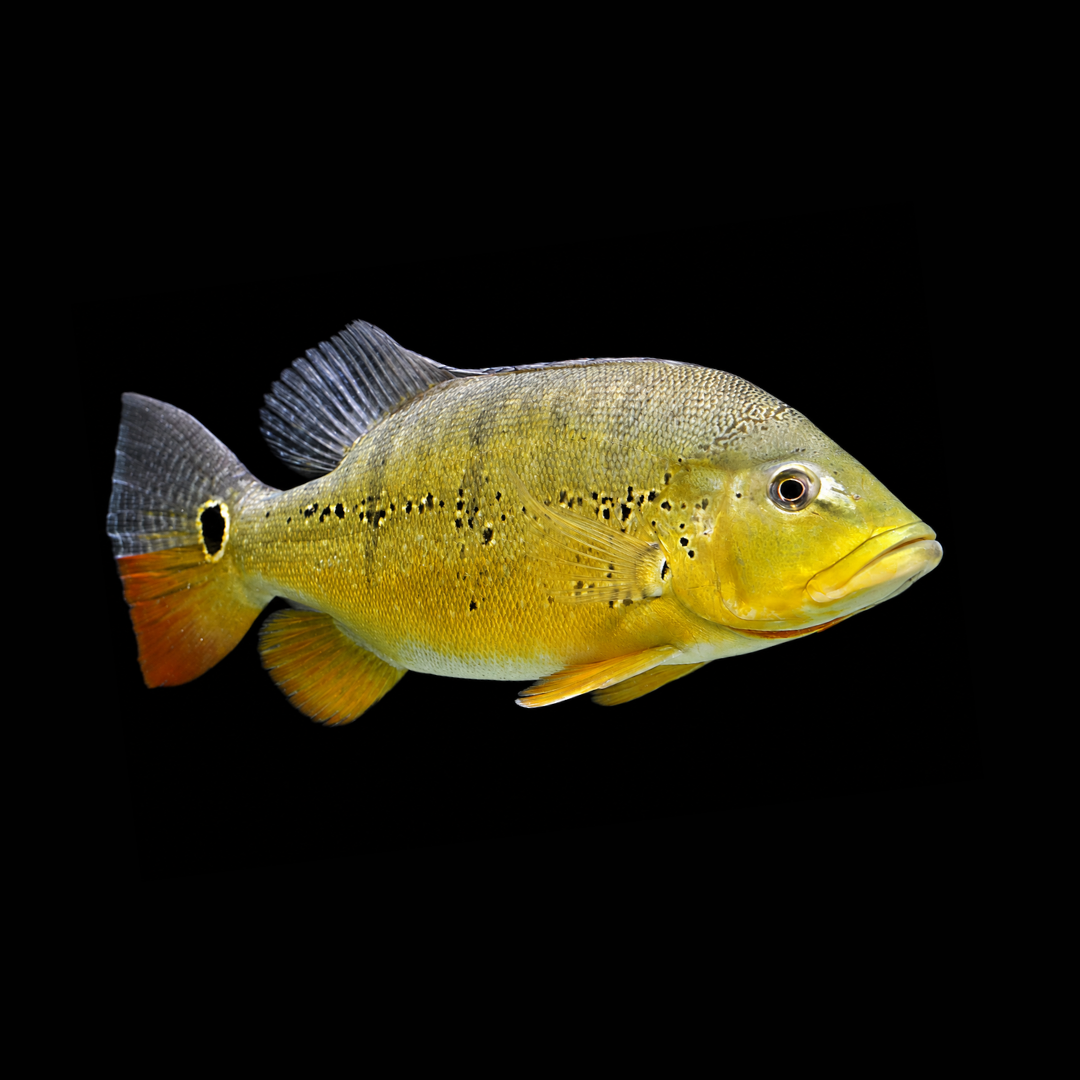
シクラ・メラニアエは、ブラジルのシングー川下流域に固有分布する肉食性シクリッドです。現地で「ツクナレ」、英語圏でピーコックバスと総称されるシクラ属の一員で、体側に散る細かな白斑と細い垂直帯が種を見分ける重要な手がかりになります。体色は成長段階や状態によって見え方が変わるため、黄緑色という印象だけで本種を判定するのは適切ではありません。2006年にSven O. KullanderとEfrem J. G. Ferreiraによるシクラ属の分類学的再検討の中で独立種として記載され、日本では「シクラ・メラニアエ」「キクラ・メラニアエ」などの表記で扱われます。自然下では強い流れのある岩場から採集・観察された記録があり、飼育下では広い遊泳空間、十分なろ過と酸素供給、そして飛び出しを防ぐ強固な蓋が重要です。 Cichla melaniae is a predatory cichlid endemic to the lower Rio Xingu drainage in Brazil. It belongs to the genus Cichla, whose members are widely known as tucunaré in Brazil and peacock bass in English. Numerous minute pale spots on the flanks and narrow vertical bars are important identification characters. Overall coloration can vary with age and condition, so a yellow-green appearance alone should not be used to identify the species. It was described as a distinct species in the 2006 taxonomic revision of Cichla by Sven O. Kullander and Efrem J. G. Ferreira. In Japan the name is seen in katakana as シクラ・メラニアエ or キクラ・メラニアエ. Wild records include rocky sites with strong current, while captive care calls for generous swimming space, adequate filtration and oxygenation, and a securely fixed cover to prevent jumping.
基本情報 / Basic Information
| 学名 / Scientific Name | Cichla melaniae Kullander & Ferreira, 2006 |
|---|---|
| 通称 / Common Name | シクラ・メラニアエ、キクラ・メラニアエ、ツクナレCichla melaniae, Xingu peacock bass, tucunaré |
| 分類 / Family | シクリッド科(Cichlidae)シクラ属(Cichla)Family Cichlidae, genus Cichla |
| 英名 / English Name | Xingu peacock bass |
| 分布 / Distribution | ブラジル、アマゾン川水系のシングー川下流域に固有分布します。強い流れの岩場からの採集記録や、ヴォルタ・グランデの高流速・岩礁域での観察記録がありますが、これらの地点だけに生息するという意味ではありません。Endemic to the lower Rio Xingu drainage in the Brazilian Amazon basin. Records include collection from strong current among rocks and an observation from a high-flow, rocky section of the Volta Grande, but these records should not be read as restricting the species to those exact habitat patches. |
| 最大体長 / Max Size | データベース上の公表最大記録は全長36.0cm、最大体重710gです。これは「通常すべての個体がこの大きさになる」という意味ではなく、飼育設備は体長だけでなく、活発な遊泳と体格を考えて余裕を持たせます。Database records list a maximum total length of 36.0 cm and a maximum published weight of 710 g. These figures are records rather than a prediction that every individual will reach the same size, and aquarium dimensions should also account for active swimming and body mass. |
| 寿命 / Lifespan | 本種単独について、信頼できる寿命の確定値は十分に示されていません。大型シクリッドとして長期飼育を前提に設備と維持費を計画するのが安全です。A well-established species-specific lifespan figure is not sufficiently documented. It is safest to plan housing and long-term running costs on the assumption that this is a long-lived large cichlid. |
飼育環境 / Aquarium Environment
| 水槽サイズ / Tank Size | 最低でも120cmクラスを目安とし、長期飼育では150〜180cm以上、奥行き60〜75cm以上の大型水槽が理想的です。日本の規格感では120cmワイド水槽以上を出発点とし、成長後は150cm〜180cmクラスへ余裕を持って移行できる計画が適します。大型水槽は水、ガラスまたはアクリル、底床、ろ過槽を含めて非常に重くなるため、床の耐荷重確認も重要です。A tank around 120 cm in length should be regarded as a practical minimum starting point, while long-term care is better suited to aquariums 150–180 cm or longer with a depth of roughly 60–75 cm or more. In Japanese aquarium terms, a 120 cm wide-format tank is a sensible starting point, with a plan to move to a 150–180 cm class system as the fish matures. Because a complete large aquarium system is extremely heavy, floor load capacity must also be checked. |
|---|---|
| 水温 / Temperature | Balneário do Pedralの採集記録では水温30〜32℃でした。ただし、これは一地点での採集時の値であり、本種の唯一の適温を示すものではありません。飼育では28〜30℃程度を実務上の目安としつつ、導入元の管理水温から急変させず、安定を優先します。高めの水温では酸素不足が起こりやすいため、エアレーションと水面攪拌を十分に確保します。 A collection record from Balneário do Pedral reported 30–32°C. This is a measurement from one locality, not proof of a single species-wide optimum. In captivity, around 28–30°C can be used as a practical working range while avoiding abrupt changes from the temperature at which the fish was previously kept. At warmer temperatures, ample aeration and surface agitation are especially important. |
| 水質 / Water Quality | Balneário do PedralではpH 6.5、硬度1 dGH未満の浅場から採集された記録があります。ただし、この一例だけから本種全体が極軟水を必須とすると断定はできません。飼育では数値を無理に合わせるより、急変を避け、アンモニアや亜硝酸を蓄積させず、定期的な換水で清浄な水を維持することを優先します。排泄量の多い大型肉食魚を管理するため、十分なろ過容量を確保します。At Balneário do Pedral, specimens were collected in shallow water at pH 6.5 and hardness below 1 dGH. A single locality record, however, is not enough to establish extreme softness as a universal requirement for the species. In captivity, prioritize stability over forcing exact numbers: avoid sudden changes, prevent ammonia and nitrite accumulation, and maintain clean water through regular water changes. Provide ample filtration capacity for a large predatory fish that produces substantial waste. |
| レイアウト / Layout | 遊泳空間を広く取りつつ、岩や大型流木で視線を遮る場所をつくります。自然のシングー川下流域を意識するなら、岩礁を主体にしながら水流ポンプで流れを作り、十分な酸素供給を確保すると本種の活動的な性質に合います。ただし、鋭い岩や不安定な構造物は突進時の外傷につながるため避けます。Keep a large open swimming area while using rocks and substantial driftwood to create visual breaks and sheltered zones. A Rio Xingu-inspired layout can emphasize rocky structure and directional current from a circulation pump, together with strong oxygenation. Avoid sharp rocks or unstable structures that could cause injury during sudden bursts of swimming. |
| 注意点 / Precautions | 飛び出し対策は最重要です。給餌時、照明の切り替え、夜間の物音などをきっかけに急激に跳ねる可能性があるため、厚みのあるアクリル板やポリカーボネート板など、衝撃に耐える蓋を隙間なく固定します。大型個体では蓋そのものを持ち上げる力も考慮し、確実な固定方法を採用します。また高水温・高代謝の魚なので、停電やポンプ停止による酸欠にも注意が必要です。Jump prevention is one of the most important safety measures. Feeding, sudden lighting changes, or unexpected nighttime noise can trigger explosive jumps, so use a strong acrylic or polycarbonate cover and secure every opening. Large individuals may be able to lift a loose lid, so positive fastening is preferable. Because this is a warm-water, high-metabolism predator, oxygen loss during power or pump failure is also a serious concern. |
餌と給餌 / Feeding
| 餌の種類 / Diet | 肉食性で、小魚や水生無脊椎動物などを捕食します。飼育下では大型肉食魚用の浮上性・半浮上性ペレットを主食にできる個体が多く、導入初期には冷凍餌や安全性を確認した生餌を補助的に利用します。生餌の常用は寄生虫や病原体の持ち込み、栄養の偏り、維持費増大につながるため、人工飼料へ移行できる個体では早めの餌付けが管理しやすい方法です。This is a carnivorous fish that preys on smaller fishes and aquatic invertebrates. In captivity, many individuals can be maintained on floating or semi-floating pellets formulated for large predatory fishes, with frozen foods or carefully sourced live foods used as transitional supplements. Long-term dependence on live feeder fish can increase disease and parasite risk, nutritional imbalance, and running costs, so early conversion to prepared foods is desirable where possible. |
|---|---|
| 給餌のポイント / Feeding Tips | 幼魚を人工飼料へ切り替える際は、捕食反応が高まるタイミングに人工飼料を少量ずつ試し、生餌や冷凍餌と同時に投入して餌として認識させる方法が使えます。混泳水槽では本種が餌を素早く独占しやすいため、浮上性餌と沈下性餌を時間差で与えたり、本種が落ち着いた後に底生魚へピンポイント給餌したりして、他魚の摂餌量も確認します。過剰給餌は水質悪化を急速に招くため、腹部の張りや残餌を見ながら量を調整します。When converting juveniles to prepared food, offer small amounts when their feeding response is strongest and, if necessary, introduce pellets alongside familiar live or frozen foods so that they are recognized as food. In community aquariums this species can monopolize food very quickly, so separate floating and sinking feeds by timing, and target-feed bottom dwellers after the Cichla has settled. Overfeeding rapidly degrades water quality, so adjust portions by observing abdominal fullness and uneaten food. |
性格と混泳 / Temperament and Tank Mates
| 性格 / Temperament | 俊敏で捕食性が強く、餌への反応も非常に速い魚です。同種や似た体型の大型魚に対して縄張り的になることがあり、個体差や水槽サイズによって攻撃性の出方が変わります。狭い環境では追尾や噛み付きが集中しやすいため、広い遊泳空間と視線を遮る構造が重要です。It is a fast, strongly predatory fish with an exceptionally quick feeding response. Territorial aggression may be directed toward conspecifics or similarly shaped large fishes, with the intensity varying among individuals and according to aquarium size. In cramped quarters, chasing and biting can become concentrated, so generous swimming room and visual barriers are important. |
|---|---|
| 混泳の相性 / Compatibility | 口に入るサイズの魚は捕食対象になるため混泳できません。大型水槽では、遊泳層や体型が異なり、十分な体格を持つ魚との混泳が成立する場合があります。上層を泳ぐ大型アロワナ類、底層を利用する大型ポリプテルス類、同程度の大型シクリッドなどが候補になりますが、安全を保証できる組み合わせはなく、導入後の観察と退避用水槽の準備が必要です。混泳相手が本種を捕食できるほど大きな口を持つ場合は、本種側が捕食される危険もあるため慎重な判断が必要です。Any fish small enough to fit into its mouth should be regarded as prey. In very large aquariums, coexistence may be possible with robust fishes that differ in body form or preferred swimming layer. Large arowanas using the upper water, substantial Polypterus species using the bottom, or similarly sized cichlids may be candidates, but no combination is guaranteed to be safe. Close observation and access to a separate holding tank are essential. Tank mates with a mouth large enough to swallow the Cichla also present an obvious predation risk and require particular caution. |
病気と対策 / Diseases and Prevention
| かかりやすい病気 / Common Diseases | 本種だけに特有の代表的疾病が確立しているわけではありませんが、導入直後のストレスや急な水温・水質変化が重なると、白点病など一般的な淡水魚の感染症が問題になる可能性があります。大型魚では突進による吻端や体表の擦過傷、混泳相手との闘争傷も見逃せません。There is no well-established disease uniquely characteristic of this species, but stress after introduction and sudden changes in temperature or water chemistry can predispose it to common freshwater fish infections such as white spot disease. In large predatory fishes, abrasions to the snout or body from sudden dashes and injuries from tank-mate aggression are also important concerns. |
|---|---|
| 対策と予防 / Prevention | 安定した高水質、十分な酸素供給、適切な水温、過密になりすぎない飼育密度を維持することが基本です。新規導入魚や生餌は可能な範囲で隔離・観察し、病原体を本水槽へ持ち込むリスクを下げます。食欲低下、呼吸の速さ、体色変化、体表の白点や充血、鰭の損傷などを日常的に確認し、異常時には原因を切り分けられるよう水温と主要な水質項目を測定します。Prevention is based on consistently clean water, abundant oxygen, stable temperature, and avoiding excessive stocking pressure. Newly acquired fishes and live foods should be quarantined or observed separately whenever practical to reduce the risk of introducing pathogens. Check appetite, respiration rate, body color, white spots, redness, and fin damage routinely, and measure temperature and key water-quality parameters when abnormalities appear. |
増やし方(繁殖) / Breeding
| 雌雄の判別 / Sexing | 本種単独について、外見だけで確実に雌雄を判定するための一般向け基準は十分に確立されていません。成熟個体で体格や繁殖期の外見に差が現れる可能性はありますが、未成熟魚の確実な判別は難しいと考えて管理するのが安全です。For this species specifically, widely accepted external criteria for reliable sex determination are not sufficiently established. Mature fishes may show differences in build or reproductive appearance, but juveniles should generally be treated as difficult to sex with confidence. |
|---|---|
| 繁殖形態 / Reproduction | シクラ属では親魚が卵や仔魚を守ることが知られています。ただし、シクラ・メラニアエの飼育下での詳しい繁殖行動や産卵条件については、情報が限られています。Parental care of eggs and young is known within Cichla. However, information on the detailed captive breeding behavior and spawning conditions of Cichla melaniae remains limited. |
| 繁殖のポイント / Breeding Tips | 繁殖を狙う場合は、まず十分な大きさの成熟個体を健康に育て、ペア形成時の激しい攻撃に対応できる広い水槽と隔離手段を確保することが前提になります。産卵床、水流、水質、温度変化など本種に適した具体条件については確立した情報が限られるため、観察記録を取りながら慎重に進める必要があります。Any breeding attempt should begin with healthy, fully mature fishes, a very large aquarium, and a means of separating individuals if pair formation produces severe aggression. Species-specific information on spawning substrate, current, water chemistry, and temperature cues remains limited, so careful observation and record keeping are essential. |
雑学と豆知識 / Trivia and Fun Facts
| 1. 2006年の再分類で姿を現したシングー川の固有種 / 1. An endemic Xingu species recognized in the 2006 revision | シクラ属の分類は長い間混乱しており、南米各地の個体群がシクラ・オセラリス、シクラ・テメンシス、シクラ・モノクルスなどの名前にまとめられて扱われる時代が続きました。転機となったのが2006年のKullanderとFerreiraによる大規模な再検討です。そこでシングー川下流域の独特な個体群がシクラ・メラニアエとして正式に記載され、各支流水系がそれぞれ固有の進化史を抱えていることを象徴する存在になりました。The taxonomy of Cichla was confused for many years, with geographically distinct populations often grouped under names such as Cichla ocellaris, Cichla temensis, or Cichla monoculus. A major turning point came with the 2006 revision by Kullander and Ferreira. The distinctive lower Rio Xingu population was formally described as Cichla melaniae, highlighting how individual Amazonian drainages can preserve their own evolutionary histories. |
|---|---|
| 2. 種小名「melaniae」は魚類学者への献名 / 2. The name “melaniae” honors an ichthyologist | 種小名のmelaniaeは、魚類学と進化生物学に大きく貢献してきたMelanie L. J. Stiassny博士に捧げられた献名です。属名Cichlaは古代ギリシャ語でベラ類を指す語に由来するとされ、学名の中には、魚そのものの形態だけでなく、分類学を築いてきた研究史も刻み込まれています。The species epithet melaniae is a patronym honoring ichthyologist and evolutionary biologist Melanie L. J. Stiassny. The generic name Cichla is derived from an ancient Greek term associated with wrasses. The scientific name therefore carries not only taxonomic identity, but also a trace of the history and people behind ichthyological research. |
| 3. 白い微小斑点と細い垂直帯が種判別の手がかり / 3. Fine pale spots and narrow bars aid identification | シクラ・メラニアエは、体側に現れる1〜3本の細い垂直帯と、多数の微小な白斑が特徴として挙げられます。補助的な細い帯が現れることもあり、近縁のシクラ・ミリアナエやシクラ・テメンシスとは、頭部や体側の斑紋配置、E1縦列鱗数などを組み合わせて識別します。観賞魚市場では色彩だけで判断されることもありますが、産地情報と複数の形態形質を合わせて見ることが重要です。Cichla melaniae is characterized by one to three narrow vertical bars on the flanks together with numerous tiny pale spots. Additional narrow interbars may also appear. It can be separated from similar species such as Cichla mirianae and Cichla temensis by combining head and flank pattern characters with meristic features such as the E1 scale count. In the aquarium trade, color alone can be misleading, so locality data and multiple morphological traits are important. |
| 4. 淡水エイを追う「核・追従型」の採餌行動 / 4. A nuclear-follower feeding association with a freshwater stingray | 2025年の短報では、シングー川のヴォルタ・グランデで、淡水エイPotamotrygon leopoldi 1個体の採餌にシクラ・メラニアエ1個体が追従する様子が記録されました。エイは岩礁底で巻貝Doryssa starksiを食べ、そのすぐ近くをシクラが追い、露出した餌や食べ残しを利用した可能性が示されています。重要なのは、これは両種の組み合わせとして初めて報告された「1例の観察」である点です。本種が常にこの方法で採餌することを示した研究ではなく、状況に応じて他種の採餌を利用できる可能性を示す記録として読むのが適切です。A 2025 short communication documented one Cichla melaniae following the feeding activity of one freshwater stingray, Potamotrygon leopoldi, in the Volta Grande of the Rio Xingu. The ray fed on the gastropod Doryssa starksi over rocky substrate, while the Cichla followed closely and may have used exposed prey or food remains. The key point is that this was the first reported observation of this particular association, not evidence that the species routinely feeds this way. It is best read as evidence of potential opportunistic flexibility. |
| 5. ベロ・モンテ水力発電施設と急流環境の変化 / 5. Belo Monte and the transformation of rapid habitats | シクラ・メラニアエはシングー川下流域に限られる固有種で、その流域ではベロ・モンテ水力発電施設の稼働に伴って流量と洪水パルスが大きく変化しています。ヴォルタ・グランデの急流魚類群を対象とした研究では、急流環境の冠水や減水が保全上の重要な問題として指摘されています。一方、シクラ・メラニアエそのものについて、個体数減少や絶滅危険度の変化を定量的に示した情報は限られています。2018年のIUCN評価は低懸念(LC)ですが、分布の狭い固有種であるため、生息環境の変化を継続して見る必要があります。Cichla melaniae is restricted to the lower Rio Xingu, where operation of the Belo Monte hydroelectric complex has substantially altered discharge and the flood pulse. Research on rapids-dwelling fish communities in the Volta Grande has identified flooding and dewatering of rapids as major conservation concerns. Species-specific quantitative evidence for a population decline or change in extinction risk remains limited for Cichla melaniae. Its 2018 IUCN assessment is Least Concern (LC), but continued attention to habitat change remains appropriate for a narrowly distributed endemic fish. |
| 6. 元素汚染の研究は「検出=危険」とは限らない / 6. Detection of elements does not automatically mean harmful contamination | シングー川のシクラ・メラニアエを対象に、魚体中の元素を調べた研究があります。ただし、元素が検出されたことと、直ちに「危険な濃度」「生物濃縮による健康被害」が証明されたことは同じではありません。2025年に公表されたセレンの研究では、2019年と2020年の採集個体で組織・地点・季節による濃度差が示され、継続的な監視の必要性が指摘されました。一方、2017年に中部シングー川で複数元素を調べた研究では、魚の筋肉中の濃度は低く、調査個体について食用上のリスクは低いと評価されています。したがって、本種をめぐる汚染問題は「元素、組織、地点、時期、評価基準を分けて読む」ことが重要です。Studies have measured trace elements in Cichla melaniae from the Xingu region, but detection alone does not demonstrate harmful contamination or biomagnification. A selenium study published in 2025 found differences among tissues, sites, and seasons in specimens collected in 2019 and 2020 and emphasized the value of continued monitoring. In contrast, a 2017 multi-element study from the middle Xingu reported relatively low concentrations in fish muscle and judged the sampled fish to present low consumption risk. The responsible interpretation is therefore element-, tissue-, site-, season-, and threshold-specific rather than a blanket claim of dangerous contamination. |
| 7. 「ツクナレ」の語源と尾柄の眼状斑は断定しすぎない / 7. Tucunaré etymology and the caudal eyespot require caution | ブラジルでシクラ属を指す「ツクナレ」はトゥピ語に由来しますが、「tucun=木」「aré=友」で『木の友』を意味するという説明は、確かな語源として断定しない方が安全です。この解釈を俗説または誤った分解とする説明もあるためです。一方、ピーコックバスという英名は、尾柄部の眼状斑を孔雀の羽の目玉模様になぞらえた呼称です。眼状斑の機能については、捕食者やヒレをかじる魚の攻撃をそらすという仮説のほか、他のシクラ属では親子の定位に関わる可能性も論じられており、シクラ・メラニアエで特定の機能が実証されたとまでは言えません。The Brazilian name tucunaré is derived from Tupi, but the popular explanation that it literally means “friend of the tree” should not be presented as settled etymology; some sources explicitly treat that word-by-word interpretation as erroneous. The English name peacock bass refers to the eye-like mark on the caudal peduncle. Several functions have been proposed for caudal ocelli in Cichla, including deflecting attacks and helping young orient to parents in other species, but no single function should be stated as demonstrated for Cichla melaniae. |
| 8. 日本では「キクラ・メラニアエ」の表記も見られる / 8. “Kikura melaniae” is also used in Japan | 日本では「シクラ・メラニアエ」だけでなく、「キクラ・メラニアエ」という表記も使われています。国内では表記や販売名に揺れが生じることがあるため、購入時は名称だけで判断せず、学名、由来、サイズ、餌付け状況、体表や鰭の状態を確認することが大切です。価格は在庫、サイズ、由来、輸入時期などで変動しやすく、固定的な相場として扱うより、その時点の販売情報を確認するのが確実です。In Japan, both シクラ・メラニアエ and キクラ・メラニアエ are used as katakana renderings of the name. Because spelling and sales labels can vary, buyers should confirm the scientific name, origin, size, feeding status, and condition of the skin and fins rather than relying on a trade name alone. Prices can vary with availability, size, origin, and import timing, so current listings are more useful than a fixed price range. |
まとめ / Conclusion
シクラ・メラニアエは、シングー川下流域に固有分布し、強い流れの岩場からも記録されているピーコックバスです。細かな白斑と細い垂直帯は本種を見分ける重要な特徴ですが、体色だけで判定せず、産地や複数の形態的特徴を合わせて見る必要があります。飼育では、広い水槽、十分なろ過と酸素供給、安定した水温・水質、そして確実な飛び出し対策を優先します。 Cichla melaniae is a peacock bass endemic to the lower Rio Xingu, with records that include rocky habitats under strong current. Fine pale spotting and narrow vertical bars are important identification characters, but color alone is not sufficient; locality and multiple morphological traits should be considered together. In captivity, priorities are generous space, adequate filtration and oxygenation, stable temperature and water quality, and secure jump prevention.
十分な設備を用意し、人工飼料への餌付けや混泳相手との関係を慎重に管理できれば、俊敏な捕食行動や力強い遊泳、成長に伴う模様の変化を観察できます。本種は流通名や見た目だけでは情報が混同されやすい魚でもあるため、学名と由来を確認し、個体ごとの状態を見ながら長期飼育を組み立てる姿勢が大切です。 With sufficient space, successful conversion to prepared foods, and carefully managed tank-mate relationships, the aquarist can observe powerful feeding behavior, strong swimming, and changes in pattern as the fish matures. Because trade labels and appearance can easily cause confusion, long-term care is best built around confirming the scientific name and origin, then adjusting husbandry to the condition of the individual fish rather than relying on assumptions attached to a sales name.

気になる道具や飼い方を見つけてみませんか?
 アイのアクアグッズ案内水槽ライトの選び方|魚の見え方・水草・海水で選ぶおすすめ照明道具の特徴や使い方、選ぶときのポイントをアイが紹介します。記事はコチラ →
 アイのアクアグッズ案内グッピー・プラティ・モーリーを親子で楽しむ飼育用品|水槽・稚魚保護・ろ過・餌・水草道具の特徴や使い方、選ぶときのポイントをアイが紹介します。記事はコチラ →
 アイのアクアグッズ案内アカヒレの仲間に合わせる飼育用品|無加温・混泳・繁殖の水槽とろ過道具の特徴や使い方、選ぶときのポイントをアイが紹介します。記事はコチラ →
 アイのアクアグッズ案内ダニオの仲間に合わせる飼育用品|ゼブラダニオから超小型種まで水槽・ろ過・餌を選ぶ道具の特徴や使い方、選ぶときのポイントをアイが紹介します。記事はコチラ →
さまざまな飼育テーマをご紹介。リンク先の記事には広告・商品紹介が含まれます。
案内・紹介記事一覧へ →分布マップ
シクラ・メラニアエ(Cichla melaniae)は、ブラジルのアマゾン川水系に属するシングー川下流域に固有分布します。下の地図は、記事に記載された分布地域全体を把握しやすくするための概略表示です。
※この地図は、記事の分布記載「ブラジル、アマゾン川水系のシングー川下流域」をもとに範囲を設定した概略表示です。マーカーは分布域を示すための代表地点であり、実際の採集地点や個体の確認地点を示すものではありません。
参考文献
- Kullander, S. O. & Ferreira, E. J. G. (2006). A review of the South American cichlid genus Cichla, with descriptions of nine new species (Teleostei: Cichlidae). Ichthyological Exploration of Freshwaters, 17(4), 289–398. Verlag Dr. Friedrich Pfeil
- Fricke, R., Eschmeyer, W. N. & Van der Laan, R. (eds.). Eschmeyer’s Catalog of Fishes: Genera, Species, References. California Academy of Sciences. Cichla melaniae Kullander & Ferreira, 2006(2026年7月7日更新版を参照). California Academy of Sciences
- Froese, R. & Pauly, D. (eds.). FishBase. Cichla melaniae Kullander & Ferreira, 2006. FishBase species summary
- Gomiero, L. M. & Braga, F. M. S. (2004). Reproduction of species of the genus Cichla in a reservoir in Southeastern Brazil. Brazilian Journal of Biology, 64(3B), 613–624. https://doi.org/10.1590/S1519-69842004000400008
- Vieira, A. B. C., Salvador-Jr., L. F., Melo, R. M. C., Santos, G. B. & Bazzoli, N. (2009). Reproductive biology of the peacock bass Cichla piquiti (Perciformes: Cichlidae), an exotic species in a Neotropical reservoir. Neotropical Ichthyology, 7(4), 745–750. https://doi.org/10.1590/S1679-62252009000400024
- Livengood, E. J. & Chapman, F. A. The Ornamental Fish Trade: An Introduction with Perspectives for Responsible Aquarium Fish Ownership. UF/IFAS Extension, University of Florida, Publication FA124. UF/IFAS Extension
- Petty, B. D., Francis-Floyd, R. & Yanong, R. P. E. (2022; updated 2024). Management of Aquarium Fish. Merck Veterinary Manual. Merck Veterinary Manual
- Petty, B. D., Francis-Floyd, R. & Yanong, R. P. E. (2022; updated 2024). Parasitic Diseases of Fish. Merck Veterinary Manual. Merck Veterinary Manual




コメント