
解説 / Description
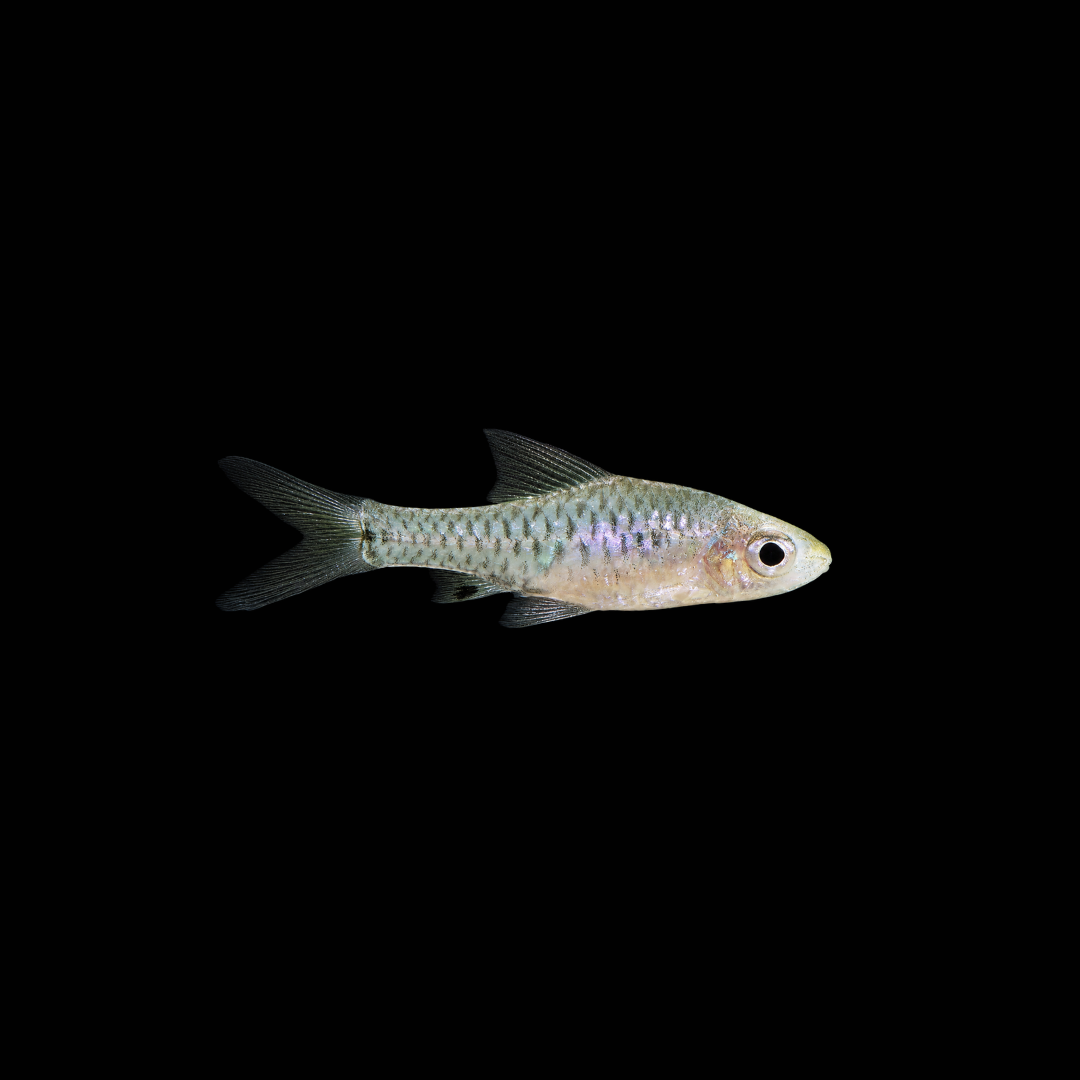
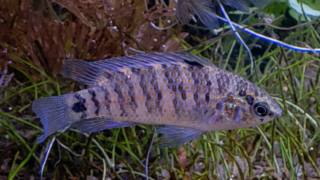
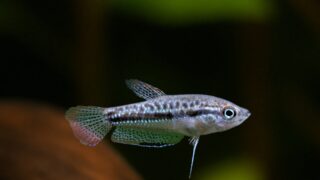
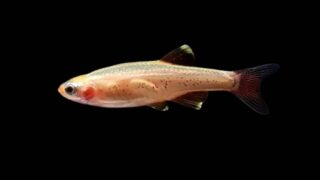
ハイフィンピグミーバルブは、東南アジアに分布する小型のコイ科魚類です。標準体長は最大でも約3cmと小さく、成熟したオスは背ビレが伸び、繁殖状態では朱赤色を帯びることがあります。銀色を基調にした体色、鱗の基部に入る細かな暗色模様、尾柄部・背ビレ・尻ビレに現れる黒斑が特徴で、落ち着いた水草水槽の中で控えめながらよく映える魚です。 The Highfin Pygmy Barb is a small cyprinid fish from Southeast Asia. It reaches only about 3 cm in standard length, and mature males develop an extended dorsal fin that may turn vermilion-red in breeding condition. Its silvery body, fine dark crescent markings at the base of the scales, and dark blotches on the caudal-fin base, dorsal fin, and anal fin give it a refined presence in calm planted aquariums.
本種は、単に小さくて温和な魚というだけではありません。頭部に目立つ感覚孔を持ち、側線は短く不完全で、飼育下では水草の葉の裏に腹を向けて産卵する行動が知られています。派手さで一瞬に目を奪うタイプではなく、群れの距離感、オスのディスプレイ、葉陰での動きまで観察するほど魅力が深まる、通好みの小型美魚です。 This species is more than just a tiny and peaceful community fish. It has conspicuous sensory pores on the head, a short and incomplete lateral line, and is known in aquaria for spawning beneath plant leaves while turning belly-up. Rather than being showy at first glance, it becomes more rewarding as the aquarist observes its social spacing, male displays, and subtle movements among plant leaves.
基本情報 / Basic Information
| 学名 / Scientific Name | Oreichthys parvus |
|---|---|
| 通称 / Common Name | ハイフィンピグミーバルブ、ロロフズ・ピグミーバルブ、レッドチップハイフィン・バルブ、レッドトップ・バルブHighfin Pygmy Barb, Roloff’s Pygmy Barb, Red-tip Highfin Barb, Red-top Barb |
| 分類 / Family | コイ目 コイ科 バルブ亜科Order Cypriniformes, family Cyprinidae, subfamily Smiliogastrinae |
| 英名 / English Name | Highfin Pygmy Barb, Roloff’s Pygmy Barb |
| 分布 / Distribution | 東南アジアのタイ南東部、マレー半島北部、タイとラオスにまたがるメコン川流域などから知られています。透明で流れの緩やかな小渓流に加え、タイ南部ナラティワート県のトデーン周辺では褐色に染まった酸性の泥炭湿地環境からも記録されています。Known from Southeast Asia, including southeastern Thailand, the northern Malay Peninsula, and the Mekong basin in Thailand and Laos. It is associated with clear, slow-flowing streams, and has also been recorded from brown-stained acidic peat swamp habitat around Toh Daeng in southern Thailand. |
| 最大体長 / Max Size | 標準体長で約3.0cm。全長では3〜4cm前後を目安にします。About 3.0 cm standard length; roughly 3 to 4 cm in total length as an aquarium guideline. |
| 寿命 / Lifespan | 飼育下ではおよそ2〜3年程度が目安です。小型魚のため、導入時の状態、水温、水質の安定性、餌の質によって差が出ます。In aquaria, around 2 to 3 years is a practical estimate. As a small fish, its longevity is influenced by import condition, temperature, water stability, and diet quality. |
飼育環境 / Aquarium Environment
| 水槽サイズ / Tank Size | 6〜8匹以上の群れで飼育するなら、最低でも30cmキューブ水槽前後、余裕を持たせるなら45cm規格水槽以上がおすすめです。体は小さいものの、オス同士の誇示や群れ内の距離感が出るため、泳ぐ余白と隠れ場所の両方を用意すると落ち着きます。For a group of at least 6 to 8 individuals, a tank around 30 cm cube is a practical minimum, while a standard 45 cm aquarium or larger is more comfortable. Although tiny, the fish benefit from both swimming space and cover because males display to one another and the group forms a loose social structure. |
|---|---|
| 水温 / Temperature | 22〜28℃を目安にします。日本の冬季はヒーターで保温し、短時間の上下よりも日常的な安定を優先してください。 Aim for 22 to 28°C. In colder seasons, use a heater and prioritize daily stability over chasing small short-term fluctuations. |
| 水質 / Water Quality | 弱酸性から中性付近、pH 6.0〜7.5を目安にします。原産地ではpH 5.35〜5.40程度の酸性ブラックウォーターからの記録もありますが、家庭水槽では極端な酸性を狙うより、急変を避けた安定した水質を維持することが大切です。軟水から中硬水まで対応しやすい一方、導入直後は慎重に水合わせを行います。Slightly acidic to near-neutral water, around pH 6.0 to 7.5, is a good aquarium target. Although the species has been recorded from acidic blackwater around pH 5.35 to 5.40, home aquaria should prioritize stable water over deliberately pushing the water to extremes. It is adaptable from soft to moderately hard water, but newly imported fish should be acclimated carefully. |
| レイアウト / Layout | アヌビアス、ミクロソリウム、クリプトコリネなどの陰性水草、浮き草、流木、落ち葉を組み合わせた、やや陰のあるレイアウトが向いています。底床は細かい砂や柔らかいソイルが扱いやすく、広めの葉を持つ水草を入れておくと、葉陰で休む姿や繁殖行動を観察しやすくなります。A calm, slightly shaded layout with shade-tolerant plants such as Anubias, Microsorum, and Cryptocoryne, along with floating plants, driftwood, and leaf litter, is suitable. Fine sand or soft aquarium soil is easy to manage. Broad-leaved plants increase opportunities to observe resting behavior and possible spawning activity beneath leaves. |
| 注意点 / Precautions | 強すぎる水流は避け、スポンジフィルターやシャワーパイプなどで水流を穏やかに分散させます。頭部に感覚孔が発達する魚なので、常に押し流されるような環境では落ち着きにくくなります。驚いたときに跳ねることもあるため、水槽にはフタをしてください。Avoid overly strong current. Sponge filters or diffused outflow from a spray bar are appropriate. Because this fish has well-developed sensory pores on the head, it is less likely to settle in a tank where it is constantly pushed around by flow. Use a lid, as startled individuals may jump. |
餌と給餌 / Feeding
| 餌の種類 / Diet | 細かく砕いたフレークフード、小粒の顆粒フード、沈下性のマイクロペレットに加え、ブラインシュリンプ、ミジンコ、冷凍アカムシなどを与えます。口が小さいため、餌の粒はかなり小さめに調整します。Offer finely crushed flakes, small granules, sinking micro-pellets, baby brine shrimp, daphnia, and frozen bloodworms. Because the mouth is small, foods should be very finely sized. |
|---|---|
| 給餌のポイント / Feeding Tips | 一度に多く入れるより、少量を確実に食べ切らせるほうが安全です。導入直後や痩せが見られる個体には、冷凍餌や生き餌を併用すると立ち上がりやすくなります。オスの発色や繁殖を狙う場合も、人工飼料だけに偏らせず、動物質の小型餌を定期的に混ぜると状態を上げやすくなります。Feed small portions that can be eaten completely rather than adding a large amount at once. Newly imported or thin individuals often settle better when frozen or live foods are offered. For stronger male coloration and breeding condition, include small animal-based foods regularly instead of relying only on prepared foods. |
性格と混泳 / Temperament and Tank Mates
| 性格 / Temperament | 温和で、同種同士ではゆるい群れを作ります。完全に一方向へ泳ぐ群泳魚というより、互いの距離を保ちながら水草や流木の周辺を行き来するタイプです。オス同士は背ビレを広げて誇示することがありますが、十分な数と隠れ場所があれば大きなトラブルになりにくい魚です。Peaceful and loosely shoaling. It is not a tight schooling fish that always swims in one direction; instead, individuals move among plants and wood while keeping social distance. Males may spread their dorsal fins and display to one another, but serious problems are unlikely when the group is large enough and cover is available. |
|---|---|
| 混泳の相性 / Compatibility | ボララス、ラスボラ、トリゴノスティグマ、小型カラシン、オトシンクルス、ピグミーコリドラスなど、同程度の大きさで温和な魚と相性がよいです。動きが激しい中型魚、口の大きい魚、気の強いシクリッド類との混泳では萎縮したり餌を取り負けたりしやすいため避けます。Good tank mates include peaceful, similarly sized fish such as Boraras, Rasbora, Trigonostigma, small tetras, Otocinclus, and pygmy Corydoras. Avoid boisterous medium-sized fish, large-mouthed species, and aggressive cichlids, as this small barb may become timid or lose out at feeding time. |
病気と対策 / Diseases and Prevention
| かかりやすい病気 / Common Diseases | 本種に特有の病気が広く知られているわけではありませんが、導入直後の白点病、痩せ、ヒレの傷み、水質悪化に伴う細菌性の不調には注意します。小型魚のため、症状が進む前に気づくことが大切です。No disease is widely recognized as specific to this species, but watch for white spot after introduction, weight loss, fin damage, and bacterial issues associated with poor water quality. Because it is very small, early detection is important. |
|---|---|
| 対策と予防 / Prevention | 急な水質変化を避け、ろ過が安定した水槽へ導入します。購入直後は体の薄さ、ヒレの欠け、呼吸の速さを確認し、必要に応じて隔離して様子を見ます。強い水流や過密、餌不足はストレスや痩せにつながるため、群れの全個体に餌が行き渡るようにしてください。Introduce the fish to a mature, stable aquarium and avoid sudden water changes. After purchase, check for thin bodies, damaged fins, and rapid breathing; quarantine if necessary. Strong current, overcrowding, and insufficient feeding can lead to stress and weight loss, so make sure all individuals in the group receive food. |
増やし方(繁殖) / Breeding
| 雌雄の判別 / Sexing | 成熟したオスは背ビレが伸び、状態が上がると背ビレが朱赤色を帯びます。メスは腹部に丸みが出やすく、背ビレはオスほど伸長せず、黒斑が比較的はっきり残ります。ただし若魚や状態の上がっていない個体では判別しにくいことがあります。Mature males develop a longer dorsal fin, which may turn vermilion-red in good condition. Females are usually rounder in the belly, have a less extended dorsal fin, and often retain the dark dorsal marking more clearly. Young or subdued individuals can be difficult to sex. |
|---|---|
| 繁殖形態 / Reproduction | 飼育下では、広い葉の裏側に腹を向けるように反転し、粘着性の卵を付着させる産卵行動が知られています。多くの小型コイ科魚類のように卵をばらまくだけの繁殖ではなく、葉裏を利用する点が本種の大きな見どころです。親魚は卵や稚魚の保護を行わないため、繁殖を狙う場合は採卵や親魚の隔離を考えます。In aquaria, this species is known to turn belly-up beneath broad leaves and attach adhesive eggs to the underside. Unlike many small cyprinids that simply scatter eggs, its use of leaf undersides is one of its most interesting behaviors. The parents do not guard eggs or fry, so egg collection or removing the adults should be considered when breeding is intended. |
| 繁殖のポイント / Breeding Tips | 状態のよい群れを用意し、アヌビアスなどの広い葉を持つ水草、弱めの水流、落ち着いた照明を整えます。稚魚は非常に小さいため、自由遊泳直後はインフゾリアや微細な初期飼料を用意し、その後にブラインシュリンプ幼生やマイクロワームへ移行します。繁殖例はあるものの、常に簡単に増える魚として扱うより、観察と準備を楽しむ中級者向けの繁殖対象と考えるとよいでしょう。Prepare a well-conditioned group, broad-leaved plants such as Anubias, gentle water flow, and subdued lighting. The fry are very small, so infusoria or other tiny first foods are needed after free swimming, followed later by baby brine shrimp and microworms. Although breeding has been reported, it is better regarded as a rewarding project for observant intermediate aquarists rather than an automatically prolific species. |
雑学と豆知識 / Trivia and Fun Facts
| 1. 名前に残る小さな体 / 1. A Name That Reflects Its Tiny Size | 種小名のparvusはラテン語で「小さい」を意味します。現在はOreichthys parvusとして扱われる有効種で、古い文献や流通名に見られるRoloff’s Pygmy Barbという呼び名は、かつて記載されたPuntius roloffiに由来します。小さな魚ですが、名前の変遷には東南アジア産小型コイ科魚類の分類史がぎゅっと詰まっています。The species name parvus means small in Latin. The fish is currently treated as the valid species Oreichthys parvus, while the trade name Roloff’s Pygmy Barb reflects the former name Puntius roloffi. Although the fish itself is tiny, its naming history carries a compact piece of the taxonomic story of Southeast Asian small cyprinids. |
|---|---|
| 2. 目立つ頭部の感覚孔 / 2. Conspicuous Sensory Pores on the Head | 本種の体側の側線は前方の数枚の鱗だけに限られ、頭部には細かな感覚孔が目立ちます。暗い水辺や落ち葉の多い環境では、視覚だけでなく水の微細な動きも重要な手がかりになります。この特徴を知ると、強い水流を避け、静かな葉陰や流木の陰を用意する飼育方法にも納得がいきます。The lateral line is restricted to only a few anterior scales, while the head bears conspicuous fine sensory pores. In dim or leaf-litter-rich habitats, subtle water movement can be as important as vision. Understanding this feature helps explain why a calm aquarium with gentle flow, plant shade, and driftwood cover suits the species so well. |
| 3. 清流だけでは語れない分布の面白さ / 3. More Than Just a Clear-Stream Fish | 本種は透明で流れの緩やかな小渓流にすむ魚として紹介されることが多い一方、タイ南部の泥炭湿地にある褐色で酸性の水域からも記録されています。これは、極端なブラックウォーターを家庭で再現しなければならないという意味ではありません。むしろ、清潔で安定した水、穏やかな流れ、落ち着ける隠れ場所という基本が、この魚の幅広い適応力を水槽内で安全に引き出す鍵になります。The species is often introduced as a clear, slow-stream inhabitant, yet it has also been recorded from brown-stained acidic peat swamp water in southern Thailand. This does not mean that extreme blackwater conditions must be reproduced at home. Instead, clean and stable water, gentle flow, and secure cover are the safest way to bring out its adaptability in the aquarium. |
| 4. 葉裏に隠れる繁殖のドラマ / 4. Breeding Drama Hidden Beneath Leaves | 状態の上がったオスが背ビレを広げ、ペアが葉の裏へ潜り込むように動く様子は、本種ならではの観察ポイントです。卵を目立たない葉裏へ付ける行動は、小さな魚が捕食や環境の変化から次世代を少しでも守ろうとする工夫のように見えます。水草水槽でじっくり飼うほど、その小さな動きの意味が見えてくる魚です。A conditioned male spreading its dorsal fin and a pair moving beneath a leaf are among the most rewarding observations this fish can offer. Attaching eggs under leaves appears to be a clever way for such a small species to place the next generation in a more concealed position. The longer it is kept in a planted aquarium, the more meaning appears in its small movements. |
| 5. データ不足は珍しさの勲章ではない / 5. Data Deficient Does Not Mean a Badge of Rarity | IUCNの評価では本種はデータ不足とされています。これは絶滅危惧であると断定されたという意味ではなく、野外での分布や個体群の情報がまだ十分ではないという扱いです。観賞魚として楽しむうえでは、ワイルド個体を大切に扱い、飼育下繁殖の知見が増えることが、長く付き合うための大切な一歩になります。The IUCN assessment treats this species as Data Deficient. This does not mean it has been confirmed as threatened; rather, information on its wild distribution and populations remains insufficient. For aquarists, careful treatment of wild-caught individuals and the gradual accumulation of captive-breeding knowledge are important steps toward keeping the species responsibly over the long term. |
まとめ / Conclusion
ハイフィンピグミーバルブは、30cmキューブ水槽から45cm規格水槽ほどの小さな水草水槽でも、その魅力をじっくり味わえる小型魚です。穏やかな水流、落ち着いた照明、広い葉を持つ水草、そして6〜8匹以上の仲間をそろえることで、控えめな銀色の体と赤く染まる背ビレが水草の緑の中に自然に浮かび上がります。 The Highfin Pygmy Barb is a small fish whose charm can be fully appreciated even in a planted aquarium from around a 30 cm cube to a standard 45 cm tank. With gentle flow, subdued lighting, broad-leaved plants, and a group of at least 6 to 8 individuals, its subtle silvery body and red-tinted male dorsal fin emerge beautifully among the green of aquatic plants.
大きく派手な主役魚ではありませんが、群れの中で交わされる小さな駆け引き、葉陰を選ぶ慎重な動き、繁殖期のオスが見せる一瞬の色彩には、長く観察するほど深まる味わいがあります。静かな水草水槽の中で、目立ちすぎず、それでも確かな存在感を残してくれる、奥ゆかしい小型バルブです。 It is not a large or flamboyant centerpiece fish, but its subtle social interactions, careful movements through leaf shade, and brief flashes of male breeding color become more compelling with time. In a quiet planted aquarium, it offers a modest yet unmistakable presence: a small barb with a quiet depth of character.
気になる道具や飼い方を見つけてみませんか?
 アイのアクアグッズ案内エーハイムはおもちゃから始まった? 小さな噴水から水槽へ、アイとコタロウの探訪道具の特徴や使い方、選ぶときのポイントをアイが紹介します。記事はコチラ →
 アイのアクアグッズ案内金魚を長く楽しむ飼育用品|水槽・フィルター・エアレーション・水換え道具の特徴や使い方、選ぶときのポイントをアイが紹介します。記事はコチラ →
 アイのアクアグッズ案内水合わせの道具とやり方|魚を迎える前にそろえたい容器・点滴キット・ネット買ってきた魚はすぐ水槽に入れていい? 水温合わせと水合わせの違いから、透明ケース・点滴キット・ネットの選び方、時間をかけすぎない注意点まで、アイとコタロウが紹介します。記事はコチラ →
 アイのアクアグッズ案内水槽用浄水器の選び方|水換えを楽にするタイプとROの違い道具の特徴や使い方、選ぶときのポイントをアイが紹介します。記事はコチラ →
さまざまな飼育テーマをご紹介。リンク先の記事には広告・商品紹介が含まれます。
案内・紹介記事一覧へ →分布マップ
ハイフィンピグミーバルブの分布として知られる地域を、代表地点として地図上に示しています。 正確な採集地点ではなく、分布イメージを把握するための概略プロットです。
※地図上のポイントは分布域を理解するための概略位置です。実際の採集地点や生息範囲を厳密に示すものではありません。
参考文献
本種の分類、分布、生息環境、飼育条件、繁殖、病気や注意点を支える資料として、分類データベース、査読論文、獣医学系の信頼できる資料に絞って選定しました。店舗・通販ページ、個人ブログ、まとめサイトは除外しています。
補足:Oreichthys parvus の逆さ産卵については、商業系サイトや飼育観察の情報が多く、学術資料だけで直接裏づけられる範囲は限定的です。これらには飼育下での観察報告や近縁種の知見も含まれ、本種のすべての個体に共通する性質として確認されているわけではありません。
-
Fricke, R., Eschmeyer, W. N. & Van der Laan, R. eds. Eschmeyer’s Catalog of Fishes. California Academy of Sciences.
学名の有効性、原記載、シノニム、分類上の位置づけ、分布の確認に使用。
https://researcharchive.calacademy.org/research/ichthyology/catalog/fishcatget.asp?spid=3528 -
Smith, H. M. 1933. Contributions to the ichthyology of Siam. II–VI. Journal of the Siam Society, Natural History Supplement, 9: 53–87.
Oreichthys parvus の原記載とタイプ産地を確認するための基礎文献。
https://thesiamsociety.org/wp-content/uploads/2020/03/NHBSS_009_1b_Smith_ContributionsToThe.pdf -
Kottelat, M. 1998. Fishes of the Nam Theun and Xe Bangfai basins, Laos, with diagnoses of twenty-two new species. Ichthyological Exploration of Freshwaters, 9(1): 1–128.
ラオス・メコン水系での記録、分布、分類学的整理を支える主要文献。 -
Schäfer, F. 2009. Oreichthys crenuchoides, a new cyprinid fish from West Bengal, India. Ichthyological Exploration of Freshwaters, 20(3): 201–211.
Oreichthys 属の識別形質、O. parvus の再診断、性的二型、近縁種の繁殖行動・スニーカーオスに関する記述の確認に使用。
https://www.pfeil-verlag.de/wp-content/uploads/2015/05/ief20_3_02.pdf -
Vilasri, V. 2002. Oreichthys parvus Smith, 1933 (Teleostei: Cyprinidae), an addition to the fish record from the peat swamp, southern Thailand. Tropical Natural History, 2(1): 64–65.
タイ南部トデーン泥炭湿地林での記録、ブラックウォーター環境、pH 5.35–5.40、共存魚種など、生息環境の幅を支える文献。
https://doi.org/10.58837/tnh.2.1.102861 -
Froese, R. & Pauly, D. eds. FishBase: Oreichthys parvus Smith, 1933.
最大標準体長、分布、淡水・底中層性、熱帯性、クリアで流れの緩やかな環境、IUCNのDD評価など、図鑑向けの基礎データ確認に使用。
https://fishbase.se/summary/50497 -
Vidthayanon, C. 2012. Oreichthys parvus. The IUCN Red List of Threatened Species 2012: e.T181295A1718505.
保全状況がData Deficientであること、野生個体群に関する情報不足を説明するための資料。
https://doi.org/10.2305/IUCN.UK.2012-1.RLTS.T181295A1718505.en -
Francis-Floyd, R. & Petty, B. D. Routine Health Care of Fish / Disorders and Diseases of Fish. MSD Manual Veterinary Manual.
病気の予防、ストレス・水質悪化・過密・検疫不足のリスク、日常管理、隔離、栄養、清掃、観察すべき症状の一般的根拠として使用。
https://www.msdvetmanual.com/all-other-pets/fish/routine-health-care-of-fish
https://www.merckvetmanual.com/all-other-pets/fish/disorders-and-diseases-of-fish

コメント