

解説 / Description
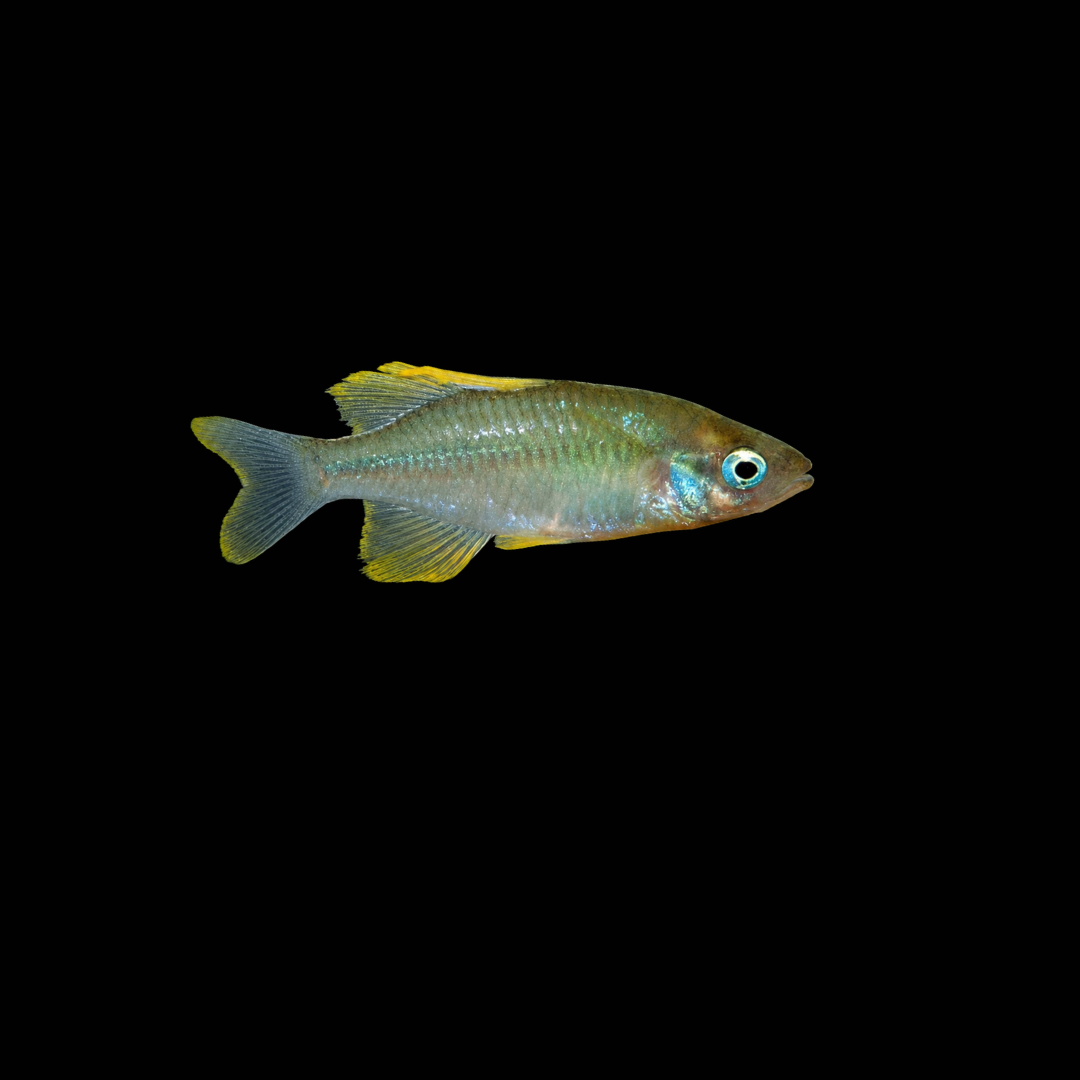
テルマセリナ・ボンティは、インドネシア・スラウェシ島のマリリ湖沼群と周辺水系にのみ分布する小型の淡水魚です。トゥティ湖、マハロナ湖、マリリ周辺の河川などから記録され、学術資料における最大標準体長は約6.5cmです。銀灰色を基調とする体、比較的大きな眼、首筋に見られる浅い隆起とやや厚みのある体形が特徴で、成熟した個体がヒレを広げて泳ぐ姿には、セイルフィン・シルバーサイドらしい端正な美しさがあります。 Telmatherina bonti is a small freshwater fish restricted to the Malili Lakes system and surrounding waters of Sulawesi, Indonesia. It has been recorded from Lake Towuti, Lake Mahalona, and rivers near Malili, and its published maximum standard length is about 6.5 cm. A silvery-gray body, relatively large eyes, a shallow rise at the nape, and a somewhat robust profile give the species its distinctive appearance. Mature fish display the elegant fins associated with sailfin silversides.
飼育下では中層を活発に泳ぎ、群れの中で位置を入れ替えながら求愛や追尾を繰り返します。原産地周辺の水は暖かく、急激な化学変化が少ない一方、トゥティ湖の表層水は研究報告でpH約7.8、導電率約210µS/cmとされており、極端な硬水や強アルカリ性の水を必要とする魚ではありません。数値を無理に引き上げるよりも、弱アルカリ性を中心とした安定した水質、十分な溶存酸素、清浄な飼育水を保つことが長期飼育の基本です。 In captivity the fish swim actively in midwater, repeatedly changing position within the group while displaying and following one another. Waters around their native range are warm and relatively stable, but published measurements for the surface of Lake Towuti are approximately pH 7.8 and 210 µS/cm conductivity. The species should therefore not be treated as requiring extremely hard or strongly alkaline water. Long-term care depends more on stable mildly alkaline conditions, strong oxygenation, and clean water than on forcing individual parameters upward.
基本情報 / Basic Information
| 学名 / Scientific Name | Telmatherina bonti Weber & de Beaufort, 1922 |
|---|---|
| 通称 / Common Name | テルマセリナ・ボンティ、ボンティ・ボンティ(種小名の由来となった現地名)Telmatherina bonti; bonti-bonti, the local name from which the specific epithet was derived |
| 分類 / Family | トウゴロウイワシ目・テルマセリナ科・テルマセリナ属Order Atheriniformes, Family Telmatherinidae, Genus Telmatherina |
| 英名 / English Name | Bonti sailfin silverside |
| 分布 / Distribution | インドネシア・南スラウェシ州のマリリ湖沼群と周辺水系。トゥティ湖、マハロナ湖、マリリ周辺の河川などに分布する固有種です。Endemic to the Malili Lakes system and surrounding waters in South Sulawesi, Indonesia, including Lake Towuti, Lake Mahalona, and rivers near Malili. |
| 最大体長 / Max Size | 学術資料では標準体長約6.5cm。観賞魚資料では全長約8cmが目安とされています。Approximately 6.5 cm in published standard length; aquarium references commonly give about 8 cm total length. |
| 寿命 / Lifespan | 本種に限定した信頼できる寿命データは確認されていません。飼育下で「数年」とされることがありますが、確立した値ではなく、水質の安定性や導入時の状態によって大きく左右されます。A reliable species-specific lifespan has not been established. Aquarium estimates of “several years” should be treated as provisional because longevity depends strongly on water stability and the condition of the fish at acquisition. |
飼育環境 / Aquarium Environment
| 水槽サイズ / Tank Size | 活発に泳ぐ群泳性の魚であるため、5〜6匹程度でも60cm規格水槽(約55〜65L)を実用上の最低目安とします。8〜10匹以上を維持する場合や繁殖を目指す場合は、75〜90cm水槽(約90L以上)を用意すると管理しやすくなります。45cm水槽(約30〜40L)は、隔離や一時的な蓄養に向きます。For a practical group of five or six active schooling fish, a standard 60 cm aquarium of approximately 55–65 L is the minimum useful size. A 75–90 cm aquarium of about 90 L or more is easier to manage for groups of eight to ten or for breeding. A 45 cm tank is better suited to quarantine or temporary holding. |
|---|---|
| 水温 / Temperature | 25〜28℃を目安に、日内変動を小さく保ちます。トゥティ湖の表層水は28〜29℃前後ですが、本種は周辺河川にも生息し、研究下では25℃で維持された例があります。高温時は酸素が不足しやすいため、28℃を超える場合はエアレーションを強化します。 Maintain approximately 25–28°C with minimal daily fluctuation. Surface water in Lake Towuti is commonly around 28–29°C, while the species also occupies surrounding rivers and has been maintained at 25°C in research aquaria. Increase aeration when temperatures exceed 28°C because warm water holds less oxygen. |
| 水質 / Water Quality | pH 7.5〜8.2程度の中性寄りから弱アルカリ性を目安とし、極端な軟水を避けます。導電率はおよそ150〜250µS/cmを参考にできますが、河川と湖では条件が異なるため、特定の数値を厳密に再現するより、急変させないことを優先します。GH・KHの種別最適値を示す十分な資料は乏しく、水道水が安定して適した範囲にある場合はRO水や専用塩を必須としません。Aim for neutral to mildly alkaline water around pH 7.5–8.2 and avoid extremely soft conditions. Conductivity of roughly 150–250 µS/cm is a useful reference, but river and lake habitats differ, so stability is more important than reproducing a single exact value. Species-specific optimum GH and KH values are not well established, and RO water or specialized salts are unnecessary when stable tap water already falls within a suitable range. |
| レイアウト / Layout | 前面から中央に広い遊泳空間を残し、側面と後景へ石、枝状流木、アヌビアス類やミクロソリウム類などを配置します。底床には大磯砂、川砂、化学的に安定した砂利が使いやすく、pHを強く下げる吸着系ソイルは避けます。水質を上げる素材は必要量だけを用い、過度な硬度上昇を防ぎます。細葉の水草や産卵モップを一角に設けると、求愛や産卵の場として利用されます。Leave broad open swimming space through the front and center, with rocks, branching wood, and plants such as Anubias or Java fern along the sides and rear. Stable gravel, river sand, or traditional aquarium gravel is suitable, while active soils that strongly lower pH should be avoided. Use alkaline buffering materials only when needed so that hardness does not rise excessively. Fine-leaved plants or spawning mops can serve as courtship and egg-laying sites. |
| 注意点 / Precautions | 導入時は販売水と飼育水の水温、pH、導電率を確認し、差が大きい場合は段階的に水合わせを行います。アンモニアと亜硝酸は検出されない状態を維持し、硝酸塩も低く保ちます。週1回、15〜25%程度を水温と水質を合わせた水で換える方法が基本です。適度な水流と十分な酸素を確保し、活発な遊泳による飛び出しを防ぐため、すき間の少ないふたを使用します。During acclimation, compare the temperature, pH, and conductivity of the transport water with the aquarium. When the difference is large, adjust the fish gradually. Keep ammonia and nitrite undetectable and nitrate low. A weekly change of roughly 15–25% with temperature- and chemistry-matched water is a sound routine. Provide moderate current, strong oxygenation, and a secure lid to prevent jumping. |
餌と給餌 / Feeding
| 餌の種類 / Diet | 小粒の顆粒飼料、細かいフレーク、ブラインシュリンプ、ミジンコ、冷凍アカムシを細かくしたもの、水生昆虫などを利用できます。人工飼料を主食としながら、小型の生餌や冷凍餌を組み合わせると、栄養の偏りを抑えやすくなります。Suitable foods include small granules, fine flakes, brine shrimp, daphnia, finely chopped frozen bloodworms, and aquatic insects. A quality prepared diet can form the staple, supplemented with small live or frozen foods for variety. |
|---|---|
| 給餌のポイント / Feeding Tips | 1日1〜2回、短時間で食べ切る量を与えます。高速度撮影による研究では、本種は体を前進させながら獲物をとらえる突進採餌を主に用いることが示されています。中層を流れる餌への反応が速いため、複数箇所へ少量ずつ与えると群れ全体へ行き渡りやすくなります。混泳魚がいる場合は、餌の沈下速度や投入位置を変えて餌負けを防ぎます。Feed once or twice daily in amounts consumed quickly. High-speed video research indicates that the species predominantly uses ram feeding, advancing toward prey during capture. Because it reacts rapidly to food moving through midwater, distribute small portions across several areas so the whole group can feed. In community aquaria, vary food placement and sinking rate to prevent slower fish from being outcompeted. |
性格と混泳 / Temperament and Tank Mates
| 性格 / Temperament | 観賞魚としての飼育報告では温和で活発とされ、中層を群れで泳ぎます。繁殖状態のオスはヒレを広げて追尾や小競り合いを行いますが、十分な遊泳空間と複数の退避場所があれば、深刻な争いは起こりにくいと考えられます。単独やペアよりも、5〜6匹以上の群れで本来の行動を観察しやすくなります。Aquarium reports describe the species as peaceful and lively, swimming in groups through midwater. Breeding males display their fins and may chase one another, but serious conflict is less likely when ample swimming space and several retreats are available. A group of at least five or six generally shows more natural behavior than a single fish or pair. |
|---|---|
| 混泳の相性 / Compatibility | 同じ程度の水温と中性〜弱アルカリ性の水を好む、温和な小〜中型魚が候補です。ヒレをかじる魚、極端に餌取りの遅い魚、低温や強い弱酸性を必要とする魚との組み合わせは避けます。小型甲殻類や稚エビは捕食される可能性があるため、エビ類と同居させる場合は成体中心とし、稚エビの隠れ場所を十分に確保します。Peaceful small to medium-sized fishes that accept similar temperatures and neutral to mildly alkaline water are the best candidates. Avoid fin-nippers, extremely slow feeders, and species requiring cool or strongly acidic water. Small crustaceans and juvenile shrimp may be eaten, so shrimp combinations are safer with adults and abundant cover for young. |
病気と対策 / Diseases and Prevention
| かかりやすい病気 / Common Diseases | 本種に特有の疾病は確認されていません。輸送疲れ、水温や水質の急変、有機物の蓄積が重なると、白点病、細菌性の尾ぐされ・口ぐされ、体表の白濁、エラ障害など、淡水魚に一般的な症状が現れることがあります。呼吸が速い、ヒレを閉じる、体をこすりつける、食欲が落ちるといった変化を早期に見つけることが重要です。No disease unique to this species has been established. Transport stress, sudden changes in temperature or water chemistry, and accumulated organic waste can predispose the fish to common freshwater problems such as white spot disease, bacterial fin or mouth erosion, skin cloudiness, and gill damage. Rapid breathing, clamped fins, flashing, and loss of appetite are important early warning signs. |
|---|---|
| 対策と予防 / Prevention | 新しい個体は2〜4週間を目安に隔離観察し、入荷水との水質差を段階的に縮めます。異常が見られた場合は、まず隔離して水温、アンモニア、亜硝酸、pH、導電率を確認し、症状と診断に合った観賞魚用薬を製品表示に従って使用します。高水温化や塩水浴を万能な処置として用いず、酸欠、ろ過バクテリアへの影響、水草や甲殻類への薬害にも注意します。原因が不明な場合や呼吸障害が強い場合は、魚病に詳しい専門家へ相談します。Quarantine new fish for approximately two to four weeks and reduce differences from the shipping water gradually. If abnormalities appear, isolate the fish, test temperature, ammonia, nitrite, pH, and conductivity, and use an aquarium medication appropriate to the diagnosis exactly as directed. Do not treat heat or salt as universal remedies, and consider oxygen shortage, damage to biofilters, and toxicity to plants or crustaceans. Seek specialist advice when the cause is unclear or breathing difficulty is severe. |
増やし方(繁殖) / Breeding
| 雌雄の判別 / Sexing | 成熟したオスは、メスよりも体色やヒレの装飾が目立ち、求愛時には背ビレと尻ビレを大きく広げます。メスは比較的控えめな外観で、成熟すると腹部に丸みが出る傾向があります。ただし、輸入個体には種同定や個体差の問題もあるため、若魚の段階では外見だけで断定せず、群れの中での求愛行動も確認します。Mature males generally show more conspicuous coloration and fin ornamentation than females and spread the dorsal and anal fins during courtship. Females are usually less ornate and may develop a rounder abdomen when mature. Because imported fish may vary and identification can be difficult, young fish should not be sexed from appearance alone; courtship behavior within the group is also useful. |
|---|---|
| 繁殖形態 / Reproduction | 卵生です。観賞魚としての飼育報告では、細葉の水草や産卵モップへ少数ずつ卵を産み続ける連続産卵型とされています。親魚による保護は期待できず、卵やふ化仔魚が食べられる可能性があります。The species is oviparous. Aquarium reports describe it as a continuous spawner that deposits small numbers of eggs among fine-leaved plants or spawning mops. Parental care should not be expected, and adults may consume eggs or newly hatched fry. |
| 繁殖のポイント / Breeding Tips | 複数の雌雄をバランスのよい餌で仕上げ、安定した水温と水質の繁殖水槽に産卵モップや細葉の水草を用意します。卵を確認したら、モップごと別容器へ移すか、親魚と卵を分けて食卵を防ぎます。ふ化仔魚には口に入る微細な初期飼料を与え、成長に応じてブラインシュリンプ幼生へ移行します。本種の繁殖に関する定量的な資料は限られるため、卵の発生や仔魚の成長を観察しながら、少量換水と給餌量を調整します。Condition several males and females with a varied diet and provide spawning mops or fine-leaved plants in a breeding aquarium with stable temperature and chemistry. Once eggs are found, move the mop to a separate container or otherwise separate eggs from the adults. Offer newly hatched fry suitably fine first foods, followed by newly hatched brine shrimp as they grow. Quantitative breeding data for the species are limited, so adjust small water changes and feeding according to observed egg development and fry growth. |
雑学と豆知識 / Trivia and Fun Facts
| 1. 湖と川の境界に生きる固有魚1. An Endemic Fish Living at the Lake–River Boundary | スラウェシ島は、アジア系とオーストラリア系の生物相が接するウォーレシアに位置します。マリリ湖沼群では多くの固有生物が進化しましたが、テルマセリナ・ボンティは湖内だけに閉じ込められた魚ではなく、湖とつながる河川にも分布します。この立ち位置は、本種を単なる「古代湖の魚」ではなく、湖内の適応放散と周辺河川を結ぶ存在として際立たせています。Sulawesi lies within Wallacea, where Asian and Australasian biotas meet. The Malili Lakes support remarkable endemic radiations, yet Telmatherina bonti is not confined to open lake habitats and also occurs in connected rivers. This position makes the species more than simply an “ancient-lake fish”: it forms a biological link between the lake radiation and surrounding river systems. |
|---|---|
| 2. 「ボンティ」は地域に伝わる魚名2. “Bonti” Preserves a Local Fish Name | 本種は1922年にマックス・ウェーバーとL・F・デ・ボーフォートによって記載されました。種小名のbontiは人物への献名ではなく、トゥティ湖周辺で使われていた「bonti-bonti」という呼び名に由来します。分類学上の名称に地域の言葉が残ったことで、この魚が科学的に記載される以前から、土地の人々に認識されていたことが伝わります。The species was described by Max Weber and L. F. de Beaufort in 1922. The specific epithet bonti is not an honorific; it comes from the local name “bonti-bonti” used around Lake Towuti. The survival of this local word in scientific nomenclature shows that the fish was recognized by local communities long before its formal description. |
| 3. 突進採餌は映像解析から分かった3. Ram Feeding Was Demonstrated by Motion Analysis | 2022年の研究では、高速度映像から得た捕食運動と顎のモデルが比較され、テルマセリナ・ボンティは主として突進採餌を用い、マロサテリナ・ラディゲシは吸い込み採餌を主に用いると結論づけられました。ただし、顎の力学モデルでは両種の差を明確に支持しない指標もあり、すべての形態が単純に二分されるわけではありません。水槽内で餌へ前進しながら食いつく姿は、映像解析で示された捕食運動を観察できる場面です。A 2022 study compared prey-capture motion from high-speed video with models of jaw mechanics. It concluded that T. bonti predominantly uses ram feeding, whereas Marosatherina ladigesi relies mainly on suction feeding. Some biomechanical jaw measures did not clearly separate the two species, however, showing that their functional differences are not a simple all-or-nothing division. In the aquarium, the forward movement used to intercept food reflects the kinematics documented in that study. |
| 4. 色彩型の情報には同定上の留保がある4. Color-Form Reports Require Identification Caution | 2026年の欧州輸入業者は、テルマセリナ・ボンティと考えられる入荷群について、黄色、白色、黄白色の個体が自然下で混在すると紹介しました。一方で、その報告自体が種同定を「ほぼ本種」としており、テルマセリナ属の識別が難しいことも明記しています。このため、色彩多型は興味深い流通上の観察ではあるものの、本種で確立した分類形質として断定せず、採集地や標本に基づく検証を待つのが妥当です。In 2026 a European ornamental-fish importer reported yellow, white, and yellow-white individuals in an import believed to be T. bonti. The same report explicitly stated that the identification was not completely certain and emphasized the difficulty of distinguishing Telmatherina species. The color variation is therefore an interesting trade observation, but it should not yet be treated as a firmly established diagnostic trait without locality and specimen-based confirmation. |
| 5. 2026年のゲノム研究が示した遺伝子流動5. A 2026 Genome Study Revealed Riverine Gene Flow | 2026年に公表された全ゲノム研究では、河川性のテルマセリナ・ボンティを基準ゲノムとして、マタノ湖のテルマセリナ類との関係が解析されました。その結果、本種と湖内のシャープフィン系統との間に、過去の遺伝子浸透だけでなく、湖と川の接点で続く遺伝子交流の痕跡も見つかりました。河川流入口から離れるほど共有される対立遺伝子が減るという傾向は、地理的な距離が遺伝子流動の強さに反映されていることを示します。A whole-genome study published in 2026 used the riverine T. bonti as the reference genome to examine relationships with Telmatherina species in Lake Matano. It detected both ancient introgression and signs of ongoing gene flow between T. bonti and the lacustrine sharpfin lineage at the lake–river interface. Excess allele sharing declined with increasing distance from the river inlet, showing how geographic distance is reflected in the strength of genomic exchange. |
| 6. 絶滅危惧種を扱う責任6. The Responsibility of Keeping an Endangered Species | テルマセリナ・ボンティは、2018年6月9日の評価に基づき、IUCNレッドリストで絶滅危惧種(EN)とされています。マリリ湖沼群では外来魚の定着や漁獲圧が固有魚群への脅威として報告されており、本種についても分布域と生息環境の縮小・劣化が懸念されています。日本国内で見かける機会は限られるため、入手時には販売名だけで判断せず、由来を確認できる個体を選び、群れを維持できる設備と長期飼育の計画を整えることが大切です。Telmatherina bonti is listed as Endangered on the IUCN Red List based on an assessment dated 9 June 2018. Established alien fishes and fishing pressure have been reported as threats to the endemic fish assemblages of the Malili Lakes, while the range and habitat of T. bonti are of conservation concern. Because the species appears only irregularly in the Japanese trade, keepers should look beyond the sales name, seek fish of documented origin, and prepare suitable facilities for a stable group and long-term care. |
まとめ / Conclusion
テルマセリナ・ボンティは、マリリ湖沼群と周辺河川の進化史を映す固有魚です。銀灰色の体と繊細なヒレ、群れで見せる活発な遊泳、オスの求愛行動は、水槽に絶え間のない動きと品のある彩りをもたらします。飼育では高いpHだけを追い求めず、25〜28℃を中心とした水温、清浄で酸素に富む水、急変の少ない中性〜弱アルカリ性の環境を保つことが重要です。 Telmatherina bonti is an endemic fish that reflects the evolutionary history of the Malili Lakes and their surrounding rivers. Its silvery-gray body, delicate fins, lively schooling, and male courtship displays bring constant movement and understated color to an aquarium. Successful care does not depend on pursuing a high pH alone, but on maintaining clean, well-oxygenated water, a stable temperature around 25–28°C, and neutral to mildly alkaline chemistry without abrupt change.
限られた分布域をもつ絶滅危惧種であることを踏まえると、由来の明確な個体を責任をもって迎え、適切な群れと飼育空間を長く維持する姿勢が欠かせません。安定した環境のもとで繁殖へつなげることができれば、遠いスラウェシの固有性を水槽内で守りながら、その魅力を次の世代へ受け渡すことにもつながります。 Because the species has a restricted range and is assessed as Endangered, responsible acquisition of well-documented stock and the long-term maintenance of an appropriate group are essential. When stable husbandry can be extended to captive breeding, aquarists help preserve a small part of Sulawesi’s unique freshwater heritage while passing the species’ appeal to future generations.
分布マップ
テルマセリナ・ボンティは、インドネシアのスラウェシ島南部にあるマリリ湖沼群と周辺水系に固有の淡水魚です。トゥティ湖、マハロナ湖、マリリ周辺の河川を含む地域を概略表示しています。
この地図の円と代表地点は、記事の分布情報をもとにした分布イメージ用の概略表示です。実際の採集地点、個体の確認地点、厳密な生息範囲を示すものではありません。
記事関連のおススメアイテム
参考文献・典拠
テルマセリナ・ボンティの分類、分布、生息環境、飼育条件、繁殖、疾病予防に関する記述を確認するため、学術データベース、査読論文、大学および獣医学の専門資料から選定しました。店舗、通販サイト、個人ブログ、まとめサイトは含めていません。
分類・分布・形態
-
Fricke, R., Eschmeyer, W. N. & Van der Laan, R.(eds.)(2026). Eschmeyer’s Catalog of Fishes: Genera, Species, References. California Academy of Sciences, species record for Telmatherina bonti.対応範囲:有効学名、記載者と記載年、テルマセリナ科への分類、模式産地、マリリ湖沼群への分布。
-
Miesen, F. W., Droppelmann, F., Hüllen, S., Hadiaty, R. K. & Herder, F.(2016). An annotated checklist of the inland fishes of Sulawesi. Bonn Zoological Bulletin, 64(2), 77–106.対応範囲:スラウェシ島の淡水魚相、テルマセリナ科の位置づけ、本種がマリリ湖沼群の河川・渓流を主な生息域とし、マタノ湖、マハロナ湖、トゥティ湖にも入ること。
-
FishBase(2026). Telmatherina bonti species summary. 2026年7月19日閲覧.対応範囲:トウゴロウイワシ目・テルマセリナ科という分類、トゥティ湖・マハロナ湖・マリリ周辺という分布、最大標準体長約6.5cm、体形に関する基本情報。
生息環境・飼育条件・採餌
-
Vuillemin, A., Friese, A., Alawi, M., Henny, C., Nomosatryo, S., Wagner, D., Crowe, S. A. & Kallmeyer, J.(2016). Geomicrobiological Features of Ferruginous Sediments from Lake Towuti, Indonesia. Frontiers in Microbiology, 7, 1007.対応範囲:トゥティ湖を囲む超苦鉄質岩、鉄に富む堆積環境、低栄養性、表層水温約28~29℃、pH約7.8、導電率約210µS/cmなど、原産水域の陸水学的背景。
-
Nursyahran, Heriansah, Jayadi, Ilmiah & Yusuf, A.(2024). Sintasan, pertumbuhan dan proksimat tubuh ikan opudi, Telmatherina bonti(Weber and De Beaufort, 1922)selama domestikasi. Media Akuakultur, 19(1), 41–46.対応範囲:本種を60日間飼育した種固有の研究。水温27.2~28.6℃、pH 7.4~8.3、溶存酸素6.0~8.7mg/Lの飼育実績と、ミジンコ、ブラインシュリンプ、ユスリカ幼虫を用いた給餌試験。
-
Wasiljew, B. D., Pfaender, J., Wipfler, B., Wantania, L. L. & Herder, F.(2022). Functional morphology of prey capture in stream-dwelling sailfin silversides(Telmatherinidae)based on high-speed video recordings. Zoomorphology, 141, 347–359.対応範囲:高速度撮影による本種の突進採餌、河川性テルマセリナとしての生態的特徴、研究下で25℃の水槽に維持し、ブラインシュリンプを与えた飼育条件。
-
Francis-Floyd, R., Yanong, R. P. E. & Petty, B. D.(2024). Environmental Diseases of Aquatic Animals in Aquatic Systems. Merck Veterinary Manual. 2024年9月更新.対応範囲:水質検査の重要性、低酸素とアンモニアの危険性、アンモニア・亜硝酸を検出されない状態に保つという一般的な管理原則、pHとアンモニア毒性の関係。
繁殖
-
Nursyahran, Kariyanti, Ilmiah, Jayadi & Yusuf, A.(2021). Fecundity and egg diameter of endemic fish(Telmatherina bonti Weber and De Beaufort, 1922)from Towuti Lake, South Sulawesi, Indonesia. International Journal of Fisheries and Aquatic Studies, 9(3), 378–382.対応範囲:トゥティ湖産の野生個体における抱卵数と卵径。本種が卵生であることや、繁殖能力を論じる際の種固有の補助資料。
病気・隔離・注意点
-
Petty, B. D., Francis-Floyd, R. & Yanong, R. P. E.(2024). Bacterial Diseases of Fish. Merck Veterinary Manual. 2024年9月更新.対応範囲:水質悪化、有機物負荷、輸送・取り扱い、水温変化、低酸素などが細菌感染症の誘因となること、カラムナリス症を含む細菌性疾病では診断と感受性試験が重要であること。
-
Francis-Floyd, R., Yanong, R. P. E. & Pouder, D. B.(2023). Ichthyophthirius multifiliis(White Spot)Infections in Fish. UF/IFAS Extension, CIR920/FA006.対応範囲:淡水魚の白点病、輸送後に発症する可能性、温度変化や過密との関係、器具を共用しないこと、新規個体を最低30日間隔離するという予防指針。
資料確認日:2026年7月19日




コメント