

解説 / Description
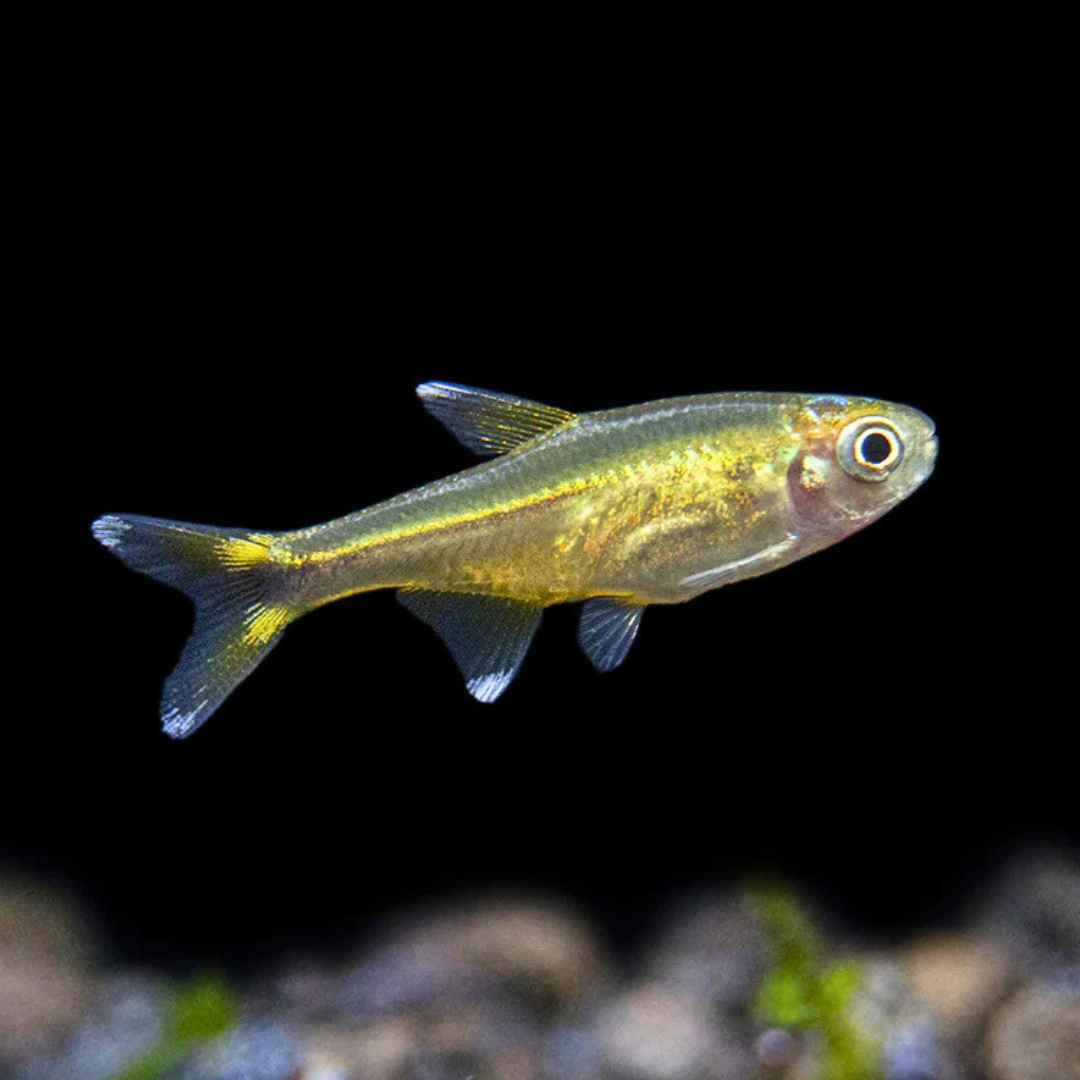
シルバーチップテトラは、ブラジルのサンフランシスコ川流域を代表的な分布域とする小型カラシンの仲間です。名前の通り、背ビレ・尾ビレ・腹ビレ・尻ビレの先端に白から銀色の小さな斑が入り、群れで泳ぐと水槽の中に細かな光が散るような美しさを見せます。成熟したオスは黄褐色から赤銅色を帯びて発色し、メスはやや淡い銀褐色になりやすいため、状態が上がるほど雌雄の違いも観察しやすくなります。 The silvertip tetra is a small characiform fish most notably associated with the São Francisco River basin in Brazil. As its name suggests, the tips of the dorsal, caudal, pelvic, and anal fins are marked with bright white to silvery spots, giving a sparkling effect when the fish swim in a group. Mature males tend to develop yellowish-brown to coppery tones, while females are usually paler and more silvery-brown, making sexual differences easier to observe in well-conditioned fish.
丈夫で人工飼料にもよく餌付き、日本の一般的な水道水にも順応しやすいことから、入門種としても人気があります。ただし、活発で好奇心が強く、少数飼育では他魚を追い回したりヒレをつついたりすることがあります。最低でも5匹以上、できれば10匹以上のまとまった群れで飼うことで小競り合いが分散し、本来の群泳美と落ち着いた行動を引き出しやすくなります。 This species is hardy, readily accepts prepared foods, and adapts well to the soft to neutral tap water common in many parts of Japan, which makes it a popular beginner-friendly tetra. However, it is active and inquisitive, and small groups may chase tank mates or nip fins. Keeping at least five, and preferably ten or more, helps spread minor aggression within the group and brings out its natural shoaling behavior.
基本情報 / Basic Information
| 学名 / Scientific Name | Hasemania nana |
|---|---|
| 通称 / Common Name | シルバーチップテトラ、シルバーチップ。なお、コッパーテトラという呼称は別種のハセマニア・メラヌラに使われることが多いため、本記事では混同を避けてシルバーチップテトラに統一します。Silvertip tetra. The name copper tetra is more commonly used for another Hasemania species, Hasemania melanura, so this article uses silvertip tetra to avoid confusion. |
| 分類 / Family | カラシン目・アケストロラムフス科・スティコノドン亜科・ハセマニア属。旧来の観賞魚文献や一部の解説では、広い意味でカラシン科として扱われることもあります。Order Characiformes, family Acestrorhamphidae, subfamily Stichonodontinae, genus Hasemania. Older aquarium references and some general guides may still place it broadly under Characidae. |
| 英名 / English Name | Silvertip Tetra |
| 分布 / Distribution | ブラジルのミナスジェライス州を中心とするサンフランシスコ川流域。主に小川や支流など、比較的流れの穏やかな淡水域に生息するとされています。近年の地域調査では近接流域での記録も報告されていますが、観賞魚図鑑としてはサンフランシスコ川流域産として理解するとよいでしょう。The São Francisco River basin, especially around Minas Gerais, Brazil. It is generally associated with small streams and tributaries with relatively moderate flow. Some recent regional surveys have reported records from nearby drainage systems, but for aquarium-guide purposes it is best understood as a São Francisco basin species. |
| 最大体長 / Max Size | 標準体長で最大約3.8cm。水槽内で見た全長では4cm前後、個体によってはそれよりやや大きく見えることがあります。Up to about 3.8 cm standard length. In aquariums, the visible total length is often around 4 cm, and some individuals may appear slightly larger. |
| 寿命 / Lifespan | 一般的に3〜5年ほどが目安です。清潔な水質、安定した水温、過食を避けた管理ができれば、より長く楽しめる場合もあります。Typically around 3–5 years. With clean water, stable temperature, and careful feeding, some individuals may live longer. |
飼育環境 / Aquarium Environment
| 水槽サイズ / Tank Size | 長期飼育では60cm規格水槽、水量約55〜60L以上を推奨します。45cm規格水槽でも短期管理や少数飼育は可能ですが、本種はよく泳ぎ、群れで飼うほど安定するため、横幅のある水槽の方が向いています。まとまった群泳や混泳を楽しむなら60cm規格水槽以上が安心です。For long-term care, a 60 cm standard tank of roughly 55–60 L or larger is recommended. A 45 cm tank can work for temporary or small-group management, but this species is active and becomes more stable in a group, so a tank with more horizontal swimming space is preferable. For shoaling displays and community setups, a 60 cm tank or larger is safer. |
|---|---|
| 水温 / Temperature | 22〜28℃が目安です。日常管理では24〜26℃前後が扱いやすく、日本の夏場に30℃を超える状態が続くと負担になりやすいため、冷却ファンや水槽用クーラーで28℃以下を保つと安心です。 A range of 22–28°C is suitable, with about 24–26°C being easy to manage in everyday care. Prolonged temperatures above 30°C during Japanese summers can be stressful, so keeping the tank below 28°C with a cooling fan or aquarium chiller is safer. |
| 水質 / Water Quality | 弱酸性から弱アルカリ性まで幅広く適応します。目安はpH 6.0〜8.0、軟水から中硬水程度です。日本の多くの地域の水道水なら、カルキ抜きと温度合わせを丁寧に行えば飼育しやすい魚です。It adapts to a wide range from slightly acidic to slightly alkaline water. A practical range is pH 6.0–8.0 and soft to moderately hard water. In many regions of Japan, dechlorinated tap water with proper temperature adjustment is suitable. |
| レイアウト / Layout | 後景や両サイドに有茎草、ウィローモス、流木などを配置し、中央には泳ぐための空間を残すレイアウトが向いています。暗色系の底床ややや落ち着いた照明にすると、オスの黄褐色から赤銅色の発色とヒレ先の白い輝きが引き立ちます。Plant the back and sides with stem plants, moss, and driftwood while leaving open swimming space in the center. Dark substrate and subdued lighting help emphasize the males’ yellowish-brown to coppery tones and the bright white fin tips. |
| 注意点 / Precautions | 活発な魚なので、少数飼育では追い回しやヒレつつきが目立つことがあります。5匹以上、理想的には10匹以上で群れを作り、長いヒレを持つベタ、グッピーのオス、エンゼルフィッシュ、泳ぎの遅いグラミー類との混泳は避けるのが無難です。驚いた拍子に飛び出すこともあるため、フタも用意してください。Because this is an active species, small groups may show chasing or fin-nipping. Keep at least five, ideally ten or more, and avoid slow or long-finned tank mates such as bettas, male fancy guppies, angelfish, and many gouramis. A tight-fitting lid is also recommended because startled fish may jump. |
餌と給餌 / Feeding
| 餌の種類 / Diet | 熱帯魚用フレーク、微粒子の顆粒フード、小型魚用ペレットを主食にできます。発色や繁殖コンディションを高めたい場合は、冷凍アカムシ、ブラインシュリンプ、ミジンコなどを補助的に与えるとよいでしょう。イトミミズは栄養価が高い一方で水を汚しやすいため、与える場合は少量に留めます。Staple foods include tropical fish flakes, fine granules, and small pellets. For better color and breeding condition, supplement with frozen bloodworms, brine shrimp, or daphnia. Tubifex-style foods can be nutritious but may foul the water easily, so use only small amounts if offered. |
|---|---|
| 給餌のポイント / Feeding Tips | 食欲が強く、底に落ちた餌もよく探します。与えすぎると肥満や水質悪化につながるため、1日1〜2回、2〜3分で食べ切れる量を目安にします。群れの中で餌をめぐる動きが速いため、弱い個体にも行き渡るよう、少量を広めに散らして与えると安心です。This species has a strong appetite and will search for food even on the substrate. Overfeeding can cause obesity and water deterioration, so feed once or twice daily, only what they finish within 2–3 minutes. Because the group feeds quickly, scattering small portions over a wider area helps weaker individuals get food. |
性格と混泳 / Temperament and Tank Mates
| 性格 / Temperament | 基本的には群れで生活する活発な小型魚ですが、ネオンテトラなどに比べるとやや気が強い面があります。十分な数で飼うと群れの中で小競り合いが分散し、落ち着いた行動になりやすいです。オス同士の軽い追いかけ合いは、本種らしいディスプレイ行動として見られることがあります。It is an active shoaling fish, but it can be somewhat bolder and more assertive than tetras such as neon tetras. In a sufficiently large group, minor squabbles are spread among conspecifics and behavior tends to become calmer. Brief chases between males may be seen as part of their natural display behavior. |
|---|---|
| 混泳の相性 / Compatibility | 相性がよいのは、ネオンテトラ、カージナルテトラ、グリーンネオンテトラ、ラスボラ類、コリドラス類、オトシンクルス、クーリーローチなど、同程度のサイズで泳ぎが速い魚や生活層が異なる魚です。ヤマトヌマエビの成体とは比較的合わせやすい一方、稚エビや小型のミナミヌマエビは捕食される可能性があります。Good tank mates include similarly sized, quick-swimming fishes such as neon tetras, cardinal tetras, green neon tetras, and small rasboras, as well as species occupying different levels such as Corydoras, Otocinclus, and kuhli loaches. Adult Amano shrimp are usually suitable, but tiny shrimplets and small dwarf shrimp may be eaten. |
病気と対策 / Diseases and Prevention
| かかりやすい病気 / Common Diseases | 白点病、尾ぐされ病、カラムナリス症、外部寄生虫、輸送直後のコンディション低下による肌荒れなどに注意します。丈夫な魚ですが、急な水温変化、過密、ろ過不足、餌の与えすぎが重なると発症しやすくなります。Watch for ich, fin rot, columnaris-like bacterial infections, external parasites, and skin irritation after shipping. Although hardy, the species becomes more vulnerable when sudden temperature changes, overcrowding, poor filtration, or overfeeding occur together. |
|---|---|
| 対策と予防 / Prevention | 導入時は水温合わせと水合わせを丁寧に行い、可能であればトリートメント期間を設けます。週1回を目安に全水量の25〜30%を換水し、底床の汚れをためないことが大切です。白点病が疑われる場合は早期に隔離し、魚病薬の使用は製品表示に従って慎重に行ってください。Acclimate new fish carefully for both temperature and water chemistry, and use a quarantine period when possible. Change about 25–30% of the water weekly and prevent debris from accumulating in the substrate. If ich is suspected, isolate affected fish early and use medication carefully according to the product instructions. |
増やし方(繁殖) / Breeding
| 雌雄の判別 / Sexing | 成熟したオスは体がスリムで、黄褐色から赤銅色の発色が強く出ます。メスはオスより淡い色合いで、抱卵すると腹部が丸くふくらみます。繁殖期にはオスの発色と求愛行動がより目立ちます。Mature males are slimmer and show stronger yellowish-brown to coppery coloration. Females are paler and become rounder in the abdomen when carrying eggs. During breeding condition, male coloration and courtship displays become more obvious. |
|---|---|
| 繁殖形態 / Reproduction | 卵生で、細かな水草や産卵モップの中に粘着性の卵をばらまくタイプです。親魚は卵や孵化直後の仔魚を守らず、むしろ食べてしまうことがあるため、計画繁殖では親魚の隔離が重要です。It is an egg-scattering species that deposits adhesive eggs among fine plants or spawning mops. The parents do not guard the eggs or larvae and may eat them, so removing the adults is important in planned breeding. |
| 繁殖のポイント / Breeding Tips | 30〜45cm水槽を繁殖用に用意し、ウィローモスや産卵モップ、卵だけが落ちるメッシュを設置します。水温は26〜28℃、弱酸性寄りの軟水、薄暗い環境が目安です。産卵後は親魚を戻します。卵は水温条件によって差がありますが、およそ1日前後から1.5日ほどで孵化し、研究条件下では25℃で約22時間後に孵化した例も報告されています。稚魚は自由遊泳後しばらく口が非常に小さいため、最初はインフゾリアや微細な稚魚用フードを与え、成長に合わせてブラインシュリンプ幼生へ切り替えます。Prepare a 30–45 cm breeding tank with Java moss, spawning mops, or a mesh through which eggs can fall. Aim for 26–28°C, slightly acidic soft water, and dim lighting. Remove the adults after spawning. Hatching time varies with conditions, but it is roughly around one day to 1.5 days; under laboratory conditions, hatching at about 22 hours after fertilization at 25°C has been reported. Newly free-swimming fry are very small, so start with infusoria or very fine fry food, then switch to newly hatched brine shrimp as they grow. |
雑学と豆知識 / Trivia and Fun Facts
| 1. 小さな魚に刻まれた分類学の旅 / 1. A Taxonomic Journey in a Small Fish | シルバーチップテトラは1875年、デンマークの動物学者クリスチャン・フレデリック・リュトケンによってTetragonopterus nanusとして記載されました。種小名のnanaは、ラテン語で「小さい」を意味する言葉に由来します。その後、1911年にアメリカの研究者マリオン・ダービン・エリスがハセマニア属を設け、本種はHasemania nanaとして整理されました。属名Hasemaniaは、南米で多くの魚類標本を集めたジョン・ディーデリヒ・ハセマンへの献名です。水槽の中では数センチの小魚に見えますが、その名前には19世紀から20世紀初頭にかけての南米探検と博物学の歴史が詰まっています。The silvertip tetra was described in 1875 by the Danish zoologist Christian Frederik Lütken as Tetragonopterus nanus. The species name nana comes from Latin and means “small.” In 1911, the American researcher Marion Durbin Ellis established the genus Hasemania, and the species was transferred to Hasemania nana. The genus name honors John Diederich Haseman, who collected many fish specimens in South America. In the aquarium it may seem like a tiny fish of only a few centimeters, but its name carries the history of South American exploration and natural history from the nineteenth and early twentieth centuries. |
|---|---|
| 2. 脂ビレを持たないカラシンという個性 / 2. A Characin Without an Adipose Fin | 多くのカラシン類には、背ビレと尾ビレの間に小さな脂ビレがあります。しかし、ハセマニア属の仲間は脂ビレを欠くことが古くから重要な特徴として扱われ、シルバーチップテトラを見分ける手がかりにもなってきました。ただし近年の研究では、カラシン類における脂ビレの有無は複数の系統で独立に変化し、近縁群では種内変異や発生の短縮と結びつく例も示されています。そのため、脂ビレの有無だけで魚の系統関係を単純に判断するのは避けるべきだと考えられています。Many characins possess a small adipose fin between the dorsal and caudal fins. Members of Hasemania have long been characterized by the absence of this fin, and it remains a useful clue when identifying the silvertip tetra. However, recent research on characiform fishes suggests that the presence or absence of the adipose fin has changed independently in several lineages, and in related groups it may also be associated with intraspecific variation and developmental truncation. For that reason, adipose-fin presence alone should not be used as a simple guide to evolutionary relationships. |
| 3. 白いチップは群れの合図かもしれない / 3. The White Tips May Act as Shoaling Signals | 本種のヒレ先に入る白い斑は、観賞魚としての美しさを支える大きな魅力です。自然下では、小川の水草や流木、落ち葉の影の中で群れを作って泳ぐと考えられます。そのような環境では、動いたときに点滅するような白いヒレ先が仲間の位置を知らせる目印になっている可能性があります。ただし、これは行動生態から考えられる解釈の一つであり、直接的に確認された機能としては断定せず、観察を楽しむための視点として受け止めるのが適切です。The white markings at the fin tips are a major part of the species’ beauty in aquariums. In nature, it likely swims in groups among shaded streams with plants, driftwood, and leaf litter. In such settings, the flashing white fin tips may help individuals track one another. This should be treated as a plausible interpretation based on behavior and ecology rather than a definitively proven function, but it offers an enjoyable way to observe the fish. |
| 4. 日本の水槽文化に合った丈夫な入門種 / 4. A Hardy Beginner Fish Well Suited to Japanese Aquariums | シルバーチップテトラが日本で長く親しまれてきた理由は、美しさだけではありません。弱酸性から弱アルカリ性まで適応幅が広く、多くの地域の水道水に無理なくなじみやすいこと、人工飼料をよく食べること、そして観賞魚市場ではブリード個体が安定して流通しやすいことが、飼育のしやすさを支えています。一方で、丈夫さに甘えて少数だけで飼うと、本種の活発さがトラブルとして表れます。まとまった群れを用意することが、この魚の美しさと飼いやすさを同時に引き出す鍵です。The silvertip tetra has remained popular in Japan not only because it is attractive, but also because it is practical. It tolerates a broad water range from slightly acidic to slightly alkaline, adapts readily to tap water in many areas, accepts prepared foods well, and is commonly available as commercially bred stock in the aquarium trade. However, its hardiness can be misleading: when kept in very small numbers, its energetic nature may turn into trouble. A proper group is the key to bringing out both its beauty and its ease of care. |
| 5. 研究対象としても注目される小型魚 / 5. A Small Fish with Research Potential | 近年、本種ではミトコンドリアゲノムや雌雄差に関わる研究も進み、単なる観賞魚にとどまらない学術的価値が見直されています。ミトコンドリアゲノムは16,581塩基対の環状DNAとして報告され、さらに25℃条件下で受精後約22時間という短い時間で孵化する例も示されています。オスとメスで体色が大きく異なること、ヒレ先に明瞭な白斑を持つこと、小型で発生が速いことは、色彩や性差、発生を調べるうえで興味深い特徴です。家庭の水槽で眺める一匹一匹が、進化や発生、遺伝の物語につながっていると考えると、この小さなテトラの見え方も少し変わってきます。Recent studies on this species, including mitochondrial genome work and research related to sexual differences, have highlighted its value beyond the aquarium hobby. Its mitochondrial genome has been reported as a circular DNA molecule of 16,581 base pairs, and laboratory observations have shown hatching at about 22 hours after fertilization at 25°C. Its clear difference in male and female coloration, distinct white fin tips, small size, and rapid development make it interesting for studies of pigmentation, sexual dimorphism, and development. When viewed this way, each small tetra in a home aquarium becomes connected to broader stories of evolution, development, and genetics. |
まとめ / Conclusion
シルバーチップテトラは、丈夫で飼いやすく、群れで泳がせたときの白いヒレ先の輝きが美しい小型カラシンです。長期飼育では60cm規格水槽以上を基本に考えると扱いやすく、暗色の底床と水草を組み合わせることで発色も引き立ちます。 The silvertip tetra is a hardy, easy-to-keep small characiform fish whose white fin tips shine beautifully when the fish swim in a group. For long-term keeping, a 60 cm standard tank or larger is the easiest starting point, and dark substrate with aquatic plants helps bring out its coloration.
一方で、少数飼育では追い回しやヒレつつきが出やすいため、本種だけで十分な数をそろえることが最も大切です。適切な群れ、水質管理、控えめな給餌、相性のよい混泳相手を意識すれば、シルバーチップテトラは初心者にも熟練者にも長く楽しめる、魅力と学術的背景を兼ね備えた一種になります。 At the same time, small groups are more likely to chase or nip, so keeping a sufficient number of their own kind is the most important point. With a proper shoal, stable water quality, restrained feeding, and compatible tank mates, the silvertip tetra becomes a species that both beginners and experienced aquarists can enjoy for years, combining aquarium appeal with a fascinating scientific background.

気になる道具や飼い方を見つけてみませんか?
 アイのアクアグッズ案内水換え・底砂掃除の道具の選び方|砂利・砂・ソイルに合うクリーナーとポンプ道具の特徴や使い方、選ぶときのポイントをアイが紹介します。記事はコチラ →
 アイのアクアグッズ案内おとひめ物語|養殖生まれの餌を、わが家の魚に合う一粒へ道具の特徴や使い方、選ぶときのポイントをアイが紹介します。記事はコチラ →
さまざまな飼育テーマをご紹介。リンク先の記事には広告・商品紹介が含まれます。
案内・紹介記事一覧へ →本記事では、店舗・販売ページを除外し、分類、分布、飼育条件、形態、発生、ゲノム情報の確認に以下の資料を参照しました。
- Froese, R. and Pauly, D. eds. FishBase: Hasemania nana (Lütken, 1875), Silvertip tetra. 分布、水温、pH、硬度、最大体長、群れでの飼育、推奨水槽サイズ、IUCN評価の確認に使用。
- DDBJ Taxonomy Browser: Hasemania nana, Taxonomy ID 681919. アケストロラムフス科、スティコノドン亜科、ハセマニア属という現行分類の確認に使用。
- GBIF Backbone Taxonomy: Hasemania nana (Lütken, 1875). 原記載名、同物異名、英名、分類データベース上の扱いの確認に使用。
- Eschmeyer’s Catalog of Fishes, California Academy of Sciences: Hasemania marginata Meinken, 1938. Hasemania marginataがHasemania nanaの同物異名として扱われる点の確認に使用。
- Zanata, A. M. and Serra, J. P. 2010. Hasemania piatan, a new characid species from the rio de Contas drainage, northeastern Brazil. Neotropical Ichthyology. ハセマニア属の歴史、ブラジル楯状地由来河川との関係、脂ビレを欠く属として扱われてきた経緯の確認に使用。
- Teixeira, T. F. et al. 2022. A new species of Hyphessobrycon from the upper rio Juruena, with comments on adipose-fin polymorphism in characids. Neotropical Ichthyology. カラシン類における脂ビレ有無の分類上の扱い、種内変異、形質の解釈を慎重にするための根拠として使用。
- Zu, R., Zhao, Z. X., Xu, P. and Sun, X. W. 2015. The complete mitochondrial genome of the silvertip tetra, Hasemania nana. Mitochondrial DNA, 26(6): 889–890. ミトコンドリアゲノムが16,581塩基対の環状DNAとして報告されている点の確認に使用。
- Lee, H. J. et al. 2025. Comprehensive transcriptome profiling of silvertip tetra (Hasemania nana). Frontiers in Marine Science. 雌雄差、発生研究、25℃条件下で受精後約22時間に孵化するという記述の確認に使用。
- ETYFish Project: Family Acestrorhamphidae Eigenmann 1907. 属名Hasemania、種小名nanaの語源・命名背景の確認に使用。




コメント