

▶ 記事の生体をAMAZONで買う ▶ 記事の生体をYahooで買う
解説 / Description
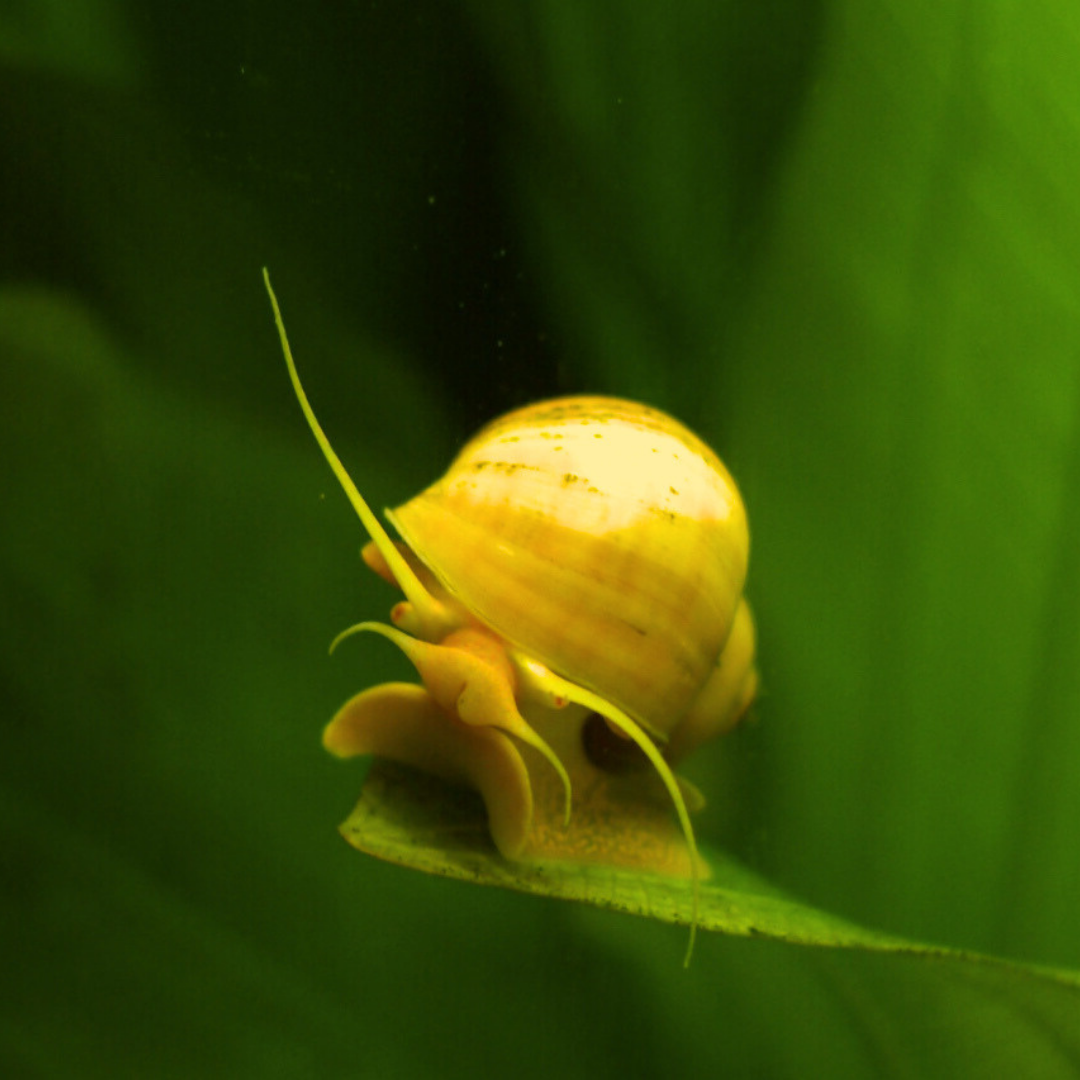
ゴールデンアップルスネールは、明るい黄色系の殻を持つ個体が特に親しまれている、観賞用として人気の高い淡水性の巻貝です。一般に「ミステリースネール」とも呼ばれ、アクアリウムで流通するこの仲間の代表的な種類は、現在では Pomacea diffusa として扱われます。かつては Pomacea bridgesii の名で紹介されることも多かったため、古い資料や販売名では表記が混在していることがあります。 The Golden Apple Snail is a popular freshwater aquarium snail, especially loved for yellow-shelled ornamental forms. It is also widely called the Mystery Snail, and this commonly traded aquarium species is now generally treated as Pomacea diffusa. Older books and trade names may still use Pomacea bridgesii, so both names can sometimes appear in aquarium references.
本種は、ニュースや農業被害の話題で「ジャンボタニシ」と呼ばれることが多いスクミリンゴガイ(Pomacea canaliculata)とは別種です。スクミリンゴガイは水稲などを食害する外来の有害動物として問題視されていますが、ゴールデンアップルスネールとして観賞用に流通する本種 Pomacea diffusa は、主に付着藻類、柔らかいコケ、残餌、傷んだ植物質などを食べます。そのため、水草水槽でも導入しやすい「お掃除役」として親しまれています。ただし、水槽内のコケだけで長期間健康に維持するのは難しいため、専用フードや野菜類を補助的に与えることが大切です。 This species is different from Pomacea canaliculata, the apple snail often discussed in Japan as “Jumbo Tanishi” in connection with rice-field damage. While P. canaliculata is treated as a harmful alien pest of rice and other crops, the aquarium species commonly sold as the Golden Apple Snail, Pomacea diffusa, mainly feeds on soft algae, biofilm, leftover food, and decaying plant matter. For that reason, it is often appreciated as a useful cleaner snail in planted aquariums. However, algae in the tank alone is rarely enough to maintain it in good condition, so supplemental foods and vegetables should be provided.
基本情報 / Basic Information
| 学名 / Scientific Name | Pomacea diffusa |
|---|---|
| 通称 / Common Name | ゴールデンアップルスネール、ミステリースネール、アップルスネールの一種Golden Apple Snail, Mystery Snail, a type of Apple Snail |
| 分類 / Family | 腹足綱・リンゴガイ科Class Gastropoda, family Ampullariidae |
| 英名 / English Name | Mystery Snail, Spike-topped Apple Snail, Golden Apple Snail |
| 分布 / Distribution | 南米のアマゾン川流域周辺。ボリビアを模式産地とし、ブラジルやペルーなどを含むアマゾン川流域に広く分布するとされます。観賞用としては世界各地で飼育・流通しています。Native to parts of the Amazon basin in South America, with Bolivia as the type locality and records from the wider Amazon region including Brazil and Peru. It is also kept and traded worldwide as an ornamental aquarium snail. |
| 最大体長 / Max Size | 殻高で4cm前後が多く、良好な環境では5〜6cm程度に育つことがあります。飼育環境や系統によって差があります。Often around 4 cm in shell height, and may reach about 5–6 cm under good conditions, depending on strain and aquarium conditions. |
| 寿命 / Lifespan | およそ1〜4年程度。高水温では代謝が上がり、寿命が短くなる傾向があります。Usually about 1–4 years. Higher temperatures can increase metabolism and may shorten lifespan. |
飼育環境 / Aquarium Environment
| 水槽サイズ / Tank Size | 少数飼育なら30cm規格水槽以上でも飼育可能ですが、水質の安定を考えると45cm規格水槽以上が扱いやすいです。複数匹を飼育する場合や魚と混泳させる場合は、60cm規格水槽以上をおすすめします。A small number can be kept in a 30 cm standard tank, but a 45 cm standard tank or larger is easier for stable water quality. For multiple snails or community setups with fish, a 60 cm standard tank or larger is recommended. |
|---|---|
| 水温 / Temperature | 22〜26℃前後が扱いやすく、許容範囲としては20〜28℃前後が目安です。10℃を下回るような低温は避け、30℃前後の高水温が続く環境も長期飼育には不向きです。 Around 22–26°C is easy to manage, with about 20–28°C as a practical range. Avoid temperatures below 10°C, and prolonged temperatures around or above 30°C are not ideal for long-term care. |
| 水質 / Water Quality | 中性〜弱アルカリ性、やや硬めの水を好みます。目安としてpH 7.0〜8.0前後を維持すると殻の状態を保ちやすくなります。酸性に傾いた軟水では殻が白く荒れたり、穴が開いたりすることがあるため、カキ殻、サンゴ砂、カルシウム添加剤などでミネラルを補うと安心です。Neutral to slightly alkaline, moderately hard water is preferred. A pH of about 7.0–8.0 helps maintain shell condition. In acidic, soft water, the shell may erode or develop pits, so mineral support such as oyster shell, coral sand, or calcium supplements can be helpful. |
| レイアウト / Layout | 水草水槽にも向いていますが、植えたばかりで根張りの弱い水草は、移動時に引き抜かれることがあります。流木、石、水草、ガラス面などを歩き回るため、移動しやすいレイアウトにすると観察しやすくなります。水面より上に産卵するため、繁殖を狙う場合は水面とフタの間に数cmの空間を確保します。It is suitable for planted aquariums, although newly planted or weakly rooted plants may be uprooted as the snail moves around. Driftwood, rocks, plants, and glass surfaces all provide grazing areas. If breeding is desired, leave several centimeters of space between the water surface and lid because eggs are laid above the waterline. |
| 注意点 / Precautions | フタのすき間から脱走することがあるため、特に夜間は水槽のフタをしっかり閉めてください。銅を含む魚病薬や薬品は無脊椎動物に強い影響を与えることがあるため、使用前に必ず隔離します。また、同属にはスクミリンゴガイのように農業被害で問題となる種類もいるため、本種をそれらと混同しないことが大切です。飼育個体や卵は、種にかかわらず絶対に野外へ放さないでください。This snail may escape through gaps, so the aquarium lid should be secure, especially at night. Medications or chemicals containing copper can be highly toxic to invertebrates, so snails should be removed before treatment. Because some related apple snails, such as Pomacea canaliculata, are serious agricultural pests, it is important not to confuse them with this species. Regardless of species, never release adults, juveniles, or eggs outdoors. |
餌と給餌 / Feeding
| 餌の種類 / Diet | 付着藻類、柔らかいコケ、残餌、傷んだ植物質、沈下性の人工飼料、プレコ用タブレット、藻類ウェハー、ゆでたズッキーニやホウレンソウ、キュウリなどを食べます。殻の維持にはカルシウムを含む餌やミネラル補給が重要です。It eats soft algae, biofilm, leftover food, decaying plant matter, sinking prepared foods, pleco tablets, algae wafers, and blanched vegetables such as zucchini, spinach, and cucumber. Calcium-rich foods and mineral supplementation are important for shell maintenance. |
|---|---|
| 給餌のポイント / Feeding Tips | 「コケ取り用」として導入しても、水槽内のコケだけでは不足しやすいです。餌が足りないと柔らかい浮草や新芽をかじることがあるため、少量ずつ沈下性フードや野菜を追加します。食べ残しは水を汚すため、数時間〜翌日を目安に取り除きます。Even when introduced as an algae eater, natural algae in the tank is often insufficient. If food is lacking, the snail may nibble soft floating plants or tender new growth, so provide small amounts of sinking food or vegetables. Remove leftovers within several hours to the next day to avoid water pollution. |
性格と混泳 / Temperament and Tank Mates
| 性格 / Temperament | 非常におとなしく、魚やエビを襲うことはありません。昼夜を問わず水槽内を移動し、ガラス面や流木、水草の表面をなめ取るようにして餌を探します。It is very peaceful and does not attack fish or shrimp. It moves around the aquarium day and night, grazing on glass, driftwood, and plant surfaces. |
|---|---|
| 混泳の相性 / Compatibility | 小型カラシン、メダカ、小型コイ科、グッピー、プラティ、ドワーフシュリンプなど、穏やかな魚やエビとの混泳に向いています。一方で、アベニーパファーなどのフグ類、クラウンローチなどのボティア系、大型シクリッド、貝をつつく魚との混泳は避けてください。It is suitable with peaceful fish and shrimp such as small characins, medaka, small cyprinids, guppies, platies, and dwarf shrimp. Avoid pufferfish, botiid loaches such as clown loaches, large cichlids, and any fish that pick at or eat snails. |
病気と対策 / Diseases and Prevention
| かかりやすい病気 / Common Diseases | 魚のような白点病にかかるわけではありませんが、酸性・軟水による殻の溶解、カルシウム不足による殻の荒れ、急な水質変化による活動低下、高水温や低水温による衰弱が問題になりやすいです。It does not suffer from fish diseases such as ich in the same way fish do, but common problems include shell erosion in acidic soft water, poor shell growth from calcium deficiency, reduced activity from sudden water-quality changes, and weakness from unsuitable temperatures. |
|---|---|
| 対策と予防 / Prevention | pHと硬度を安定させ、カルシウムとミネラルを切らさないことが基本です。導入時は水温合わせと水合わせを丁寧に行い、魚病薬を使用する場合は必ず成分を確認します。銅を含む薬品は危険なため、治療時は別容器へ隔離してください。Stable pH and hardness, along with consistent calcium and mineral availability, are the foundation of prevention. Acclimate carefully when introducing new snails, and always check ingredients before using fish medications. Copper-containing treatments are dangerous, so remove snails to a separate container before treatment. |
増やし方(繁殖) / Breeding
| 雌雄の判別 / Sexing | 本種は雌雄異体で、繁殖にはオスとメスが必要です。外見だけでの判別はやや難しく、交尾時の位置関係や、生殖器の確認で判断します。メスは交尾後、しばらく精子を体内に保持できるため、単独飼育に見えても後から産卵することがあります。This species has separate sexes, so both a male and a female are needed for breeding. Sexing by appearance alone can be difficult and is usually judged by mating position or examination of reproductive structures. Females can store sperm after mating, so a female may lay fertile eggs even after being kept alone. |
|---|---|
| 繁殖形態 / Reproduction | 水中ではなく、水面より上のガラス面やフタの裏などに卵塊を産み付けます。卵塊は産みたてでは白っぽく見えることがあり、その後、淡いピンク〜サーモンピンク色になって表面が硬化します。卵は乾きすぎても、水に浸かっても発生に失敗しやすく、適度な湿度が必要です。Egg masses are laid above the waterline, on glass or the underside of the lid rather than underwater. The clutch may look whitish when freshly laid, then becomes pale pink to salmon-pink and hardens after laying. Eggs can fail if they become too dry or are submerged, so moderate humidity is important. |
| 繁殖のポイント / Breeding Tips | 繁殖を狙う場合は、水面とフタの間に産卵スペースを作ります。卵塊はおよそ2〜4週間で孵化することが多く、孵化した稚貝は水中へ落ちます。増やしたくない場合は、卵塊が目立つため早めに取り除くことで個体数を管理できます。For breeding, leave space between the water surface and lid for egg laying. Clutches often hatch in about 2–4 weeks, and the juveniles drop into the water. If breeding is not desired, population control is easy because the egg masses are visible and can be removed early. |
雑学と豆知識 / Trivia and Fun Facts
| 1. 学名が変わった巻貝 / 1. A Snail with a Revised Scientific Name | アクアリウムの世界では、長いあいだ本種が Pomacea bridgesii として紹介されてきました。しかし、分類学的な見直しや遺伝的な研究が進むにつれ、観賞用として広く流通している小型のタイプは Pomacea diffusa として扱うのが適切とされるようになりました。この違いは単なる名前の問題ではなく、農業被害で問題となる近縁種と区別するうえでも重要です。In the aquarium hobby, this snail was long introduced as Pomacea bridgesii. As taxonomic revision and genetic research advanced, however, the smaller ornamental form widely traded in aquariums came to be treated as Pomacea diffusa. This is not just a naming issue; it is also important for distinguishing it from related apple snails that can cause agricultural damage. |
|---|---|
| 2. スクミリンゴガイとは別種 / 2. Different from the Channeled Apple Snail | 日本で「ジャンボタニシ」としてメディアに取り上げられることが多いスクミリンゴガイは、学名 Pomacea canaliculata の別種です。水稲などを食害する外来の有害動物として農業上の大きな問題になっており、生態系被害防止外来種リストでは「重点対策外来種」とされています。一方、この記事で扱うゴールデンアップルスネールは Pomacea diffusa で、同じリンゴガイ科ではあるものの、性質や食性、流通上の扱いが異なります。ただし、どちらも野外放流は絶対に避けるべきです。The snail often covered in Japanese media as “Jumbo Tanishi” is a different species, Pomacea canaliculata. It is a serious agricultural pest that damages rice and other crops, and is listed in Japan as a priority alien species requiring control. The Golden Apple Snail discussed in this article is Pomacea diffusa. Although both belong to the apple snail family, their habits, diet, and treatment in the aquarium trade differ. Even so, neither adults nor eggs should ever be released outdoors. |
| 3. 「ミステリースネール」という名前の不思議 / 3. The Mystery Behind the Name “Mystery Snail” | 「ミステリースネール」という呼び名は、もともとは北米へ持ち込まれたアジア産のタニシ類に由来するという説があります。これらのタニシは卵を水槽内に産み付けるのではなく、体内で稚貝を育ててから産むため、飼育者から見ると、ある日突然小さな貝が現れたように見えました。その「謎めいた」繁殖から生まれた名前が、のちに流通の中で南米産のリンゴガイの仲間にも使われるようになったと考えられています。The name “Mystery Snail” is often explained as originally referring to Asian viviparid snails introduced to North America. These snails give birth to developed young rather than laying visible egg masses, so to early aquarists, small snails seemed to appear suddenly and mysteriously. The attractive trade name was later applied to South American apple snails as the aquarium industry developed. |
| 4. エラと肺を持つ二刀流の呼吸 / 4. Dual Breathing with Gills and a Lung | ゴールデンアップルスネールの仲間は、水中でエラ呼吸を行うだけでなく、肺のように働く器官で空気呼吸もできます。水面近くで管のような水管を伸ばす姿は、まるで小さなシュノーケルを使っているようです。これは、酸素の少ない水域でも生き残るために役立つ仕組みだと考えられています。Apple snails such as the Golden Apple Snail can breathe not only with gills underwater but also with a lung-like organ for air breathing. When it extends its siphon near the surface, it looks as if it is using a tiny snorkel. This adaptation is thought to help it survive in waters where dissolved oxygen can become low. |
| 5. パラスネイリングと呼ばれる行動 / 5. A Behavior Nicknamed Parasnailing | 水面近くまで登ったあと、ふわりと落下したり、水流に乗って漂ったりする行動が見られることがあります。愛好家の間では、パラセーリングとスネールを組み合わせて「パラスネイリング」と呼ばれることもあります。遊んでいるように見えますが、浮力や水流を利用して効率よく移動する行動と考えられており、餌場を探す移動の一部として解釈されることがあります。After climbing near the surface, the snail may suddenly let go, drift, or float with the current. Hobbyists sometimes call this “parasnailing,” a playful blend of parasailing and snail. Although it looks like play, it may be an efficient way to use buoyancy and water movement for relocation, possibly as part of searching for better feeding areas. |
| 6. 色彩バリエーションの魅力 / 6. The Appeal of Color Varieties | アクアリウムで人気が高い理由のひとつが、ゴールデン、アイボリー、ブルー、マゼンタ、パープル、ジェイドなどの多彩な色彩です。殻の色、縞模様、体色の組み合わせによって見え方が変わるため、同じ種類でも印象が大きく異なります。特に明るい殻色の個体は水草の緑によく映え、レイアウト水槽のアクセントとしても楽しめます。One reason this snail is so popular is its range of color varieties, including gold, ivory, blue, magenta, purple, and jade. The appearance changes depending on shell color, stripe pattern, and body color, so individuals of the same species can look very different. Bright shell colors stand out beautifully against green aquatic plants and can become an attractive accent in aquascapes. |
まとめ / Conclusion
ゴールデンアップルスネールは、美しい見た目と穏やかな性質をあわせ持つ、水草水槽にも取り入れやすい淡水巻貝です。付着藻類や残餌を食べてくれるため「お掃除役」としても役立ちますが、健康に長く飼うには水質、硬度、カルシウム、補助給餌の管理が欠かせません。 The Golden Apple Snail is a peaceful and attractive freshwater snail that fits well in planted aquariums. It can help graze on algae and leftover food, but long-term success depends on stable water quality, adequate hardness, calcium availability, and supplemental feeding.
また、スクミリンゴガイのように日本の農業や生態系に影響を与える近縁種がいるため、「似た名前でも別種であること」と「飼育個体や卵を野外へ放さないこと」を理解しておくことがとても重要です。正しい知識を持って管理すれば、ゴールデンアップルスネールは水槽内で存在感のある、観察していて楽しいパートナーになってくれます。 Because related species such as Pomacea canaliculata can affect agriculture and ecosystems in Japan, it is important to understand that similar names may refer to different species, and that adults, juveniles, and eggs must never be released outdoors. With proper knowledge and care, the Golden Apple Snail can become a charming and fascinating aquarium companion.

気になる道具や飼い方を見つけてみませんか?
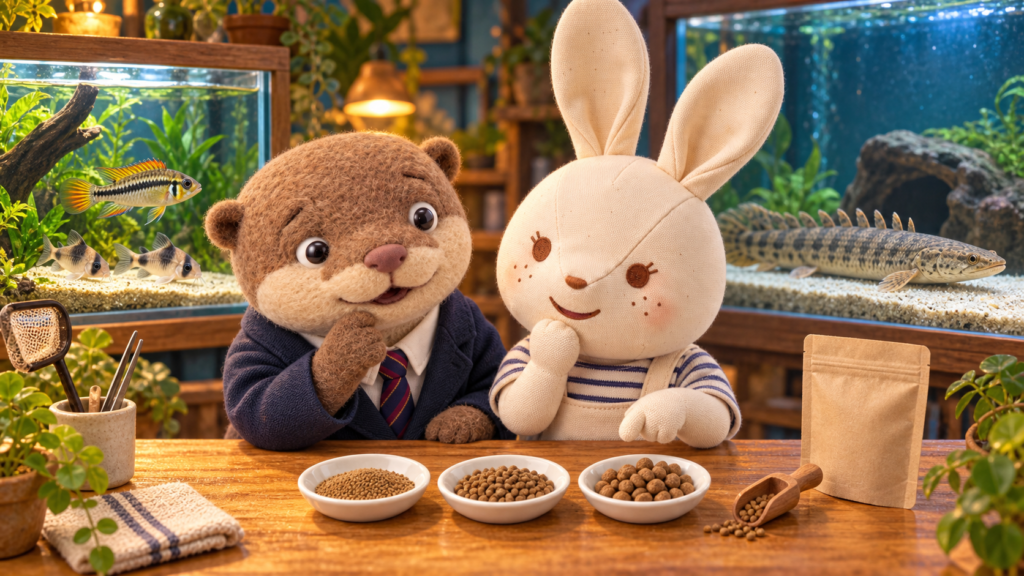 アイのアクアグッズ案内おとひめ物語|養殖生まれの餌を、わが家の魚に合う一粒へ道具の特徴や使い方、選ぶときのポイントをアイが紹介します。記事はコチラ →
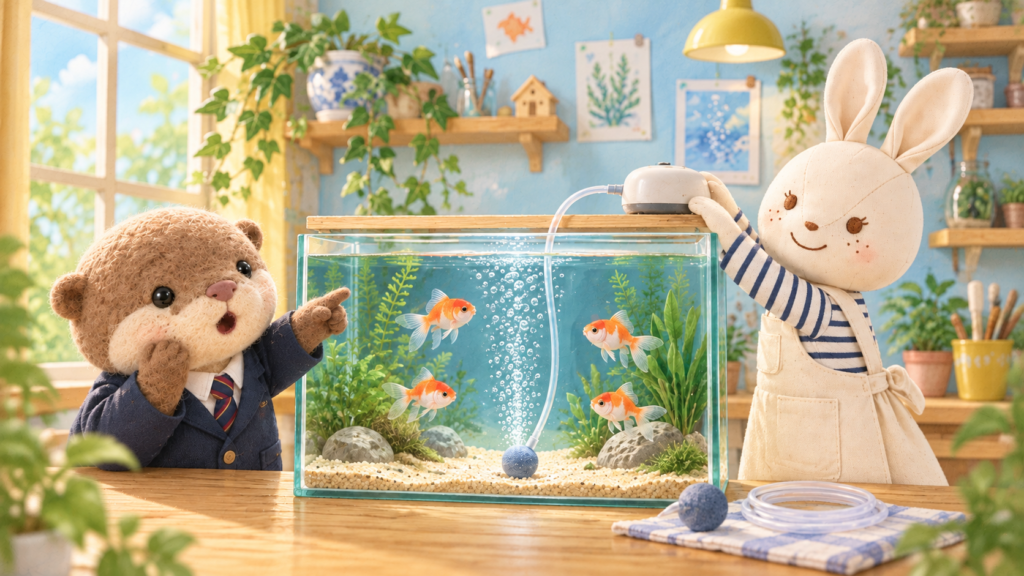 アイのアクアグッズ案内水槽のエアーポンプの選び方|水深・音・泡で選ぶおすすめ用品道具の特徴や使い方、選ぶときのポイントをアイが紹介します。記事はコチラ →
さまざまな飼育テーマをご紹介。リンク先の記事には広告・商品紹介が含まれます。
案内・紹介記事一覧へ →▶ 記事の生体をAMAZONで買う ▶ 記事の生体をYahooで買う
- 査読論文 Rawlings, T. A., Hayes, K. A., Cowie, R. H., & Collins, T. M. (2007). The identities and distributions of the apple snails (Ampullariidae) introduced into Florida. Biological Invasions, 9(5), 605-612. doi:10.1007/s10530-006-9032-2
- 査読論文 Hayes, K. A., Cowie, R. H., & Thiengo, S. C. (2009). A global phylogeny of apple snails: Gondwanan origin, generic relationships, and the influence of outgroup choice (Caenogastropoda: Ampullariidae). Biological Journal of the Linnean Society, 98(1), 61–76. doi:10.1111/j.1095-8312.2009.01246.x
- 総説・専門書 Cowie, R. H. (2002). Apple snails (Ampullariidae) as agricultural pests: their biology, impacts and management. In: Barker, G.M., Ed., Molluscs as Crop Pests, CABI Publishing, pp. 145-192.
- 公的資料 農林水産省 植物防疫所. 輸入が禁止されている有害動植物. https://www.maff.go.jp/pps/j/search/ikuni/index.html
- 公的資料 環境省 自然環境局. 特定外来生物等一覧. https://www.env.go.jp/nature/intro/2outline/list.html
- 専門情報サイト Ghesquiere, S. (2007). Applesnail.net: The Online Apple Snail Encyclopedia. https://www.applesnail.net
- 市民科学 Mystery Snail Color Genetics Project (MSCG). Community-based breeding and color inheritance research on Pomacea diffusa. The Freshwater Gastropods of North America (FWGNA) community project.




コメント