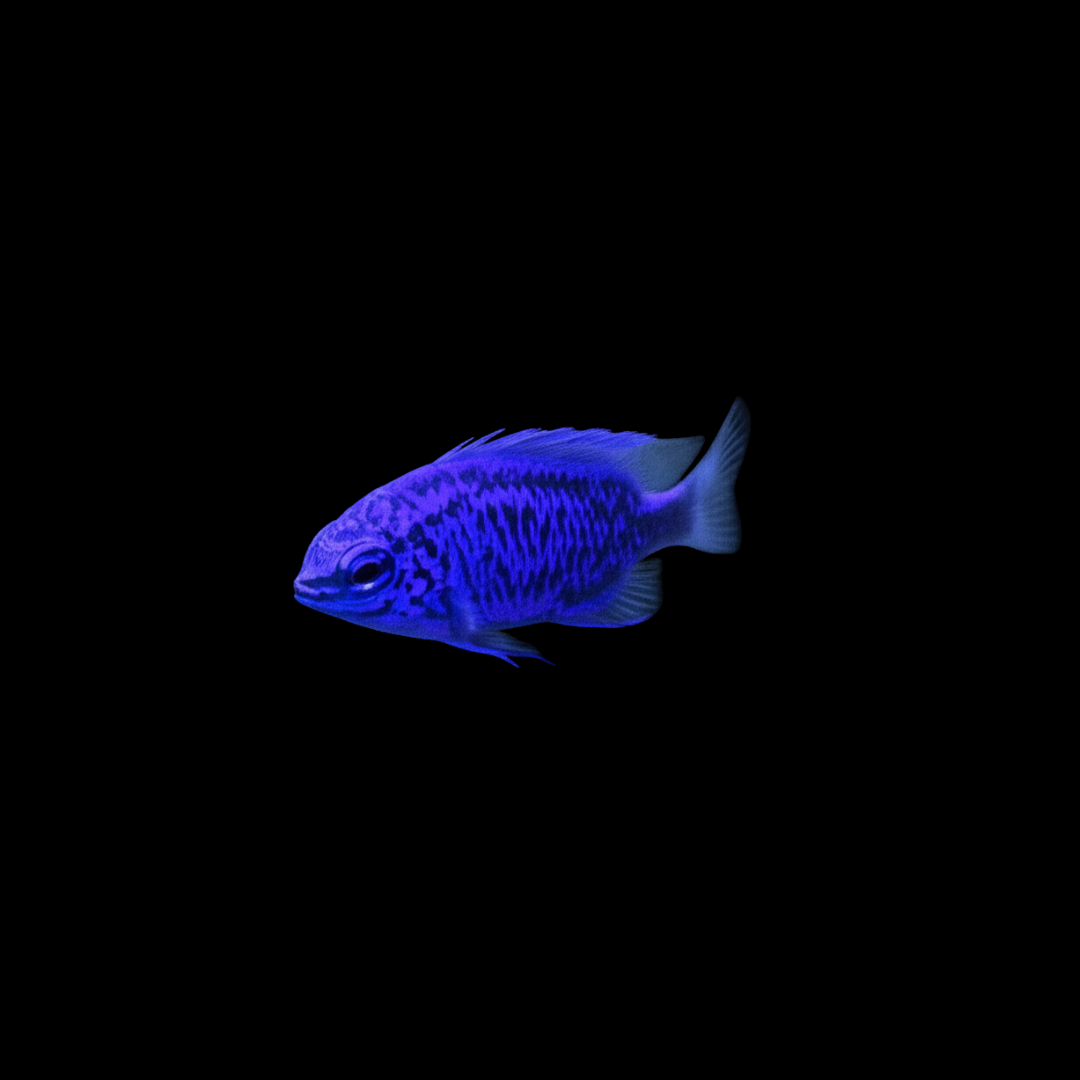
スプリンガーズダムセルは、インド西太平洋のサンゴ礁に生息する、鮮烈な濃青色が美しい小型のスズメダイです。全長5.5cmほどとコンパクトながら、その存在感は抜群で、アクアリウムの世界では単なる鑑賞魚以上の価値を持つ「実用魚」としても高く評価されています。特にミドリイシなどのサンゴを食害するヒラムシ(AEFW)を捕食する性質があるため、サンゴ愛好家の間では心強い守護神として知られています。丈夫で適応力が高く、初心者から上級者まで幅広く愛される、現代のリーフアクアリウムにおいて欠かせないピースといえるでしょう。Springer’s Damselfish is a beautiful small damselfish from the Indo-West Pacific, known for its vivid deep blue coloration. Reaching a maximum length of about 5.5 cm, it has a significant presence and is highly valued in the aquarium hobby as a “utility fish” beyond mere ornamentation. In particular, it is known among coral enthusiasts as a reliable guardian due to its tendency to prey on coral-eating flatworms (AEFW) that damage Acropora corals. Hardy and adaptable, it is an essential component of modern reef aquariums, loved by beginners and experts alike.
約5年前後(飼育環境による)Approx. 5 years (depending on the environment)
飼育環境 / Aquarium Environment
水槽サイズ / Tank Size
約113L以上(90cm規格水槽相当)を推奨。小型水槽でも飼育可能ですが、複数飼育や混泳を考慮すると余裕を持ったサイズが望ましいです。Recommended 30 gallons (approx. 113 liters) or larger. While they can be kept in smaller tanks, a larger size is preferable for multiple individuals or community setups.
水温 / Temperature
23℃ ~ 28℃23°C – 28°C (73°F – 82°F)
水質 / Water Quality
pH 8.1 ~ 8.4、比重 1.020 ~ 1.025。標準的な海洋環境を維持してください。pH 8.1 – 8.4, Specific Gravity 1.020 – 1.025. Maintain standard marine conditions.
レイアウト / Layout
隠れ家となるライブロックや岩組みを豊富に配置してください。サンゴ礁を再現したリーフタンクは本種の生態に最も適しています。Provide plenty of live rock or rockwork for hiding places. A reef tank mimicking a coral reef is most suitable for their biology.
注意点 / Precautions
輸送直後など強いストレスを感じると、体色が真っ黒に変色することがありますが、落ち着けば美しい青色に戻ります。They may turn completely black when under severe stress, such as immediately after transport, but will return to their beautiful blue once settled.
餌と給餌 / Feeding
餌の種類 / Diet
雑食性。人工飼料(フレーク・グラニュール)によく餌付きますが、イサザアミ(マイシス)やブラインシュリンプなどの冷凍餌も好んで食べます。Omnivorous. They readily accept dry foods (flakes/pellets) but also enjoy frozen foods like mysis shrimp and brine shrimp.
給餌のポイント / Feeding Tips
1日2〜3回、数分で食べきれる量を与えてください。サンゴ水槽では、サンゴの隙間に潜む害虫を捕食する習性を活かすため、適度な空腹状態を保つのも一つの手法です。Feed 2-3 times a day in amounts they can finish within a few minutes. In reef tanks, keeping them slightly hungry can encourage their natural pest-hunting behavior.
性格と混泳 / Temperament and Tank Mates
性格 / Temperament
スズメダイ科の中では比較的温和ですが、成長に伴い縄張り意識を持つようになります。Relatively peaceful for a damselfish, but they will develop territorial tendencies as they mature.
混泳の相性 / Compatibility
他の小型海水魚との混泳が可能です。同種間では小競り合いをすることがあるため、ハレム飼育(1匹のオスに複数のメス)を試みる際は十分なスペースが必要です。Compatible with other small marine fish. They may bicker with conspecifics, so providing ample space is necessary when attempting harem groups.
病気と対策 / Diseases and Prevention
かかりやすい病気 / Common Diseases
白点病、ウーディニウム病など海水魚一般的な病気に注意が必要です。Susceptible to common marine diseases such as Cryptocaryon irritans (Marine Ich) and Amyloodinium (Marine Velvet).
対策と予防 / Prevention
水質の安定とストレスの軽減が最大の予防策です。導入時の水合わせは丁寧に行い、殺菌灯の使用も効果的です。The best prevention is stable water quality and stress reduction. Acclimatize carefully during introduction; using a UV sterilizer can also be effective.
増やし方(繁殖) / Breeding
雌雄の判別 / Sexing
外見での判別は非常に困難ですが、成熟したオスは繁殖期に縄張りを守る行動がより顕著になります。It is very difficult to distinguish sex by appearance, but mature males exhibit more pronounced territorial guarding during breeding.
繁殖形態 / Reproduction
基質産卵型。岩肌などに粘着性の卵を産み付け、孵化するまでオスが保護します。Substrate spawner. They lay adhesive eggs on rock surfaces, which the male guards until hatching.
繁殖のポイント / Breeding Tips
水槽内での自然産卵は比較的見られますが、稚魚の育成には専門的な知識と微小な初期餌料が必要となります。Natural spawning in aquariums is relatively common, but raising larvae requires specialized knowledge and microscopic initial feeds.
雑学と豆知識 / Trivia and Fun Facts
1. 学名の由来:偉大なる魚類学者へのオマージュ / 1. Origin of Scientific Name: Homage to a Great Ichthyologist
種小名の「springeri」は、スミソニアン博物館の名誉研究員であったヴィクター・G・スプリンガー博士に捧げられたものです。彼はインド太平洋の魚類研究において多大な貢献をした権威であり、この美しい青い魚の発見にも深く関わっています。学名には、新しい命の発見に情熱を注いだ科学者への敬意が込められているのです。The specific epithet “springeri” is dedicated to Dr. Victor G. Springer, an honorary research associate at the Smithsonian Institution. He was a leading authority on Indo-Pacific fishes. The name reflects the deep respect for the scientist who dedicated his passion to discovering new life.
2. 驚異の生存戦略:姿を消す「漆黒の変身」 / 2. Survival Strategy: The “Jet-Black Transformation”
この魚は、極度のストレスを感じると全身を真っ黒に変色させる能力を持っています。これは単なる体調不良のサインではなく、野生下で捕食者から逃げるための高度な擬態戦略です。サンゴの奥深い影に逃げ込んだ際、鮮やかな青は逆に目立ってしまいます。瞬時に黒くなることで影と同化し、外敵の目を欺くのです。飼育下で黒くなっているのを見つけたら、優しく見守ってあげましょう。This fish has the ability to turn its entire body jet-black when under extreme stress. This is not just a sign of poor health but a sophisticated mimicry strategy to escape predators. In the deep shadows of corals, bright blue would stand out. By instantly turning black, they blend into the shadows to deceive enemies. If you see them turn black in captivity, watch over them gently.
3. サンゴ水槽の救世主:AEFW対策のバイオコントロール / 3. Savior of Reef Tanks: Bio-control for AEFW
サンゴ愛好家にとって最大の恐怖の一つである「アクロポラ・イーティング・フラットワーム(AEFW)」というヒラムシ。これに対し、スプリンガーズダムセルは非常に強力な捕食者として機能します。薬剤を使用せず、生体の本能を利用して害虫を駆除する「生物学的防除」の担い手として、その価値は極めて高いと考えられています。サンゴの隙間を器用に泳ぎ回り、微小な異変を見逃さない彼らは、まさに水槽内の警備員なのです。Acropora-Eating Flatworms (AEFW) are a nightmare for coral enthusiasts. Springer’s Damselfish acts as a powerful predator against them. Their value is extremely high as agents of “biological control,” eliminating pests through natural instinct without chemicals. Swimming skillfully through coral branches, they are the true security guards of the tank.
水深30mという、光も流れも穏やかな深場まで適応できる本種。その秘密は尾ビレの形状にあります。流体力学的に優れた設計の尾ビレは、泳ぐ際に周囲に発生させる渦が極めて小さく、音を立てずに移動することを可能にしています。この「静かな泳ぎ」は、静寂な深海リーフにおいて捕食者に気づかれず、かつ獲物に忍び寄るための、自然が生み出した芸術的な適応といえるでしょう。This species can adapt to depths of 30 meters where light and currents are gentle. The secret lies in the shape of its caudal fin. Hydrodynamically superior, it generates minimal vortices, allowing for silent movement. This “silent swimming” is an artistic adaptation of nature to stalk prey and avoid predators in the quiet deep-sea reefs.
まとめ / Conclusion
スプリンガーズダムセルは、その吸い込まれるような美しい青さと、サンゴ水槽を守る実用的な能力を兼ね備えた、稀有な海水魚です。丈夫で飼育しやすく、日本の家庭用アクアリウム環境にも非常に適しています。ストレスによる黒変など、彼ら特有の生理現象を理解してあげることで、より深い飼育の喜びを感じることができるでしょう。Springer’s Damselfish is a rare marine fish that combines mesmerizing blue beauty with practical utility in protecting reef tanks. Hardy and easy to keep, they are perfectly suited for home aquarium environments in Japan. By understanding their unique physiological phenomena, such as stress-induced blackening, you will experience deeper joy in keeping them.
これからリーフタンクを始める方にも、サンゴの管理に悩むベテランの方にも、スプリンガーズダムセルは最高のパートナーとなってくれるはずです。サンゴの枝間を彩るサファイアのような輝きを、ぜひあなたの水槽でも楽しんでみてください。Whether you are starting a reef tank or are an expert managing corals, Springer’s Damselfish is sure to be an excellent partner. We hope you enjoy the sapphire-like brilliance dancing between the coral branches in your own aquarium.
Allen, G. R. and Lubbock, R. (1976) Chrysiptera springeri, a new species of damselfish from the Molucca Islands.(Proceedings of the Biological Society of Washington, 88(31): 345-350)
Barton, J. A., et al. (2019) Determining the effective biological control of the coral-eating flatworm Prosthiostomum acroporae.(Frontiers in Marine Science, 6:524)
FishBase – Chrysiptera springeri Species Summary: Max length 5.5 cm, reef-associated, depth range 3-30 m.(World Wide Web electronic publication)
IUCN Red List of Threatened Species (2021) Chrysiptera springeri: Least Concern (LC).(The IUCN Red List of Threatened Species 2021)
Smithsonian Institution (National Museum of Natural History) Victor G. Springer – Eponymy and Research Database.
ORA (Oceans, Reefs & Aquariums) / Biota Group Captive Breeding Reports and Biological Pest Control (AEFW Removal).(Commercial Aquaculture and Sustainability Data)



 アイのアクアグッズ案内水槽用ヒーターの選び方|固定式・温度調節式と、水量に合うW数の考え方水槽の魚は冬に寒くない? アイとコタロウが水温計から固定式・温度調節式・分離式ヒーターまで比較。水量と室温に合うW数、設置場所、水換えや交換の注意点を、国内メーカーの商品とともに紹介します。記事はコチラ →
 アイのアクアグッズ案内旅行中、お魚のごはんはどうする? 自動給餌器・使える餌・スマート水槽の選び方旅行中の魚の餌やりを助ける自動給餌器を、アイとコタロウが紹介。時間指定、おかわり給餌、対応するフレークや顆粒、設置台、スマホ管理、一体型水槽、留守番フードまで、使いどころと選び方を案内します。記事はコチラ →
 アイのアクアグッズ案内テトラミンって、こんなにあるの? アイとコタロウのごはん探究旅道具の特徴や使い方、選ぶときのポイントをアイが紹介します。記事はコチラ →
 アイのアクアグッズ案内ローチの仲間に合わせる飼育用品|クーリー・流水性・ボーシャの水槽と底砂道具の特徴や使い方、選ぶときのポイントをアイが紹介します。記事はコチラ →



コメント