

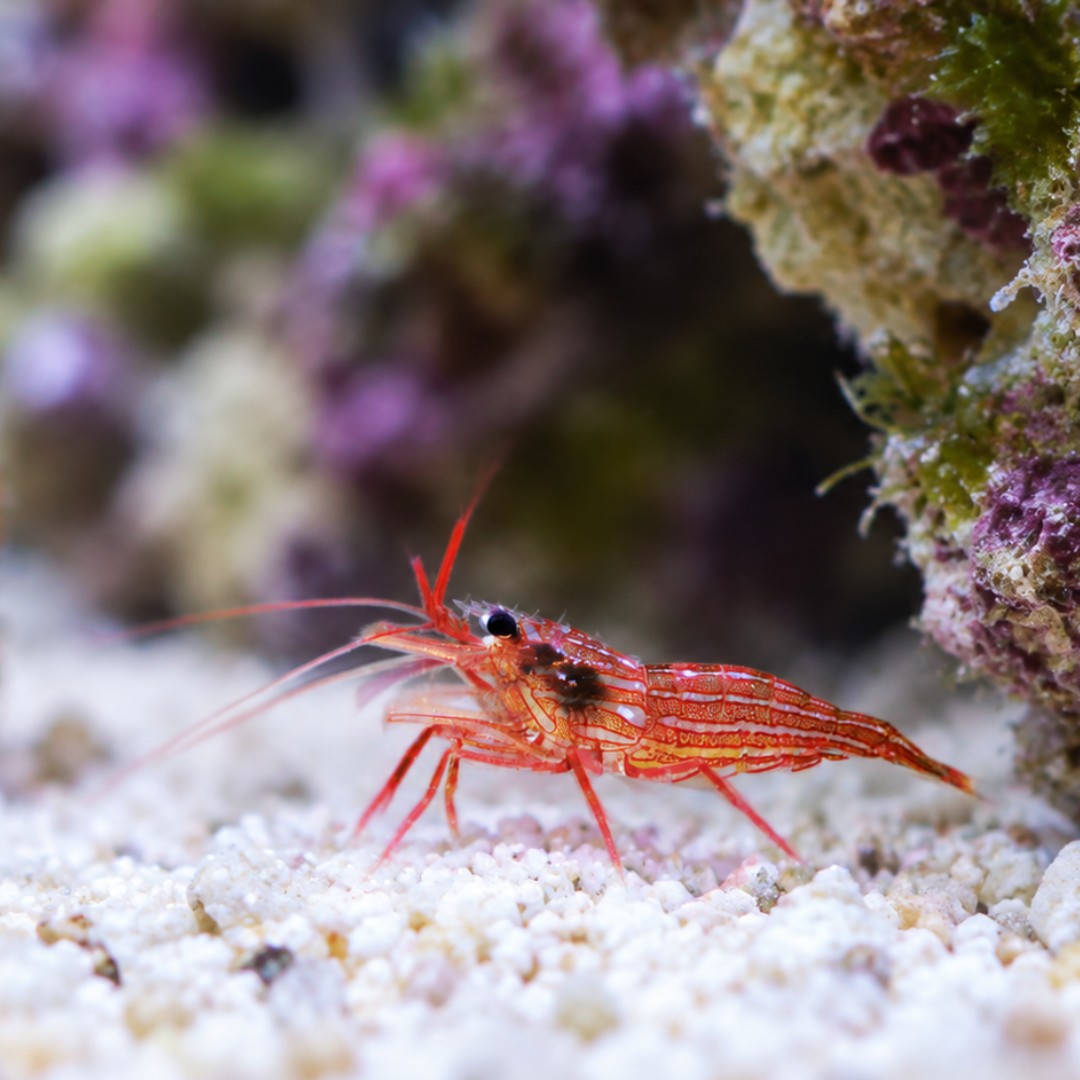
解説 / Description
アカシマモエビは、半透明の体に赤色の細い縦縞が走る小型の海産エビです。日本沿岸にも生息し、観賞用として流通しています。食性は幅広く、デトリタスや藻類、小型の無脊椎動物などを食べる雑食性です。また、魚類の外部寄生虫を捕食することがあるほか、飼育下ではカーリーを食べることも知られています。ただし、魚を常に掃除する専門的なクリーナーというより、普段の採餌の一環としてこうした生物を利用するタイプです。夜行性が強く、日中は岩の隙間などに隠れ、暗くなると活発に餌を探します。 Lysmata vittata is a small marine shrimp characterized by a translucent body marked with fine red longitudinal stripes. It occurs naturally along the Japanese coast and is also traded as an ornamental shrimp. It is an omnivore with a broad diet that includes detritus, algae, and small invertebrates. It may also consume external parasites from fishes and is known to prey on Aiptasia in captivity. Rather than being an obligate specialist cleaner, however, it is better regarded as an opportunistic or facultative cleaner that incorporates such prey into its normal foraging behavior. The species is strongly nocturnal, usually sheltering in rock crevices during the day and becoming active after dark.
基本情報 / Basic Information
| 学名 / Scientific Name | Lysmata vittata (Stimpson, 1860) |
|---|---|
| 通称 / Common Name | アカシマモエビIndian lined shrimp |
| 分類 / Family | 十脚目・ヒゲナガモエビ科・ヒゲナガモエビ属Order Decapoda, family Lysmatidae, genus Lysmata |
| 英名 / English Name | Indian lined shrimp |
| 分布 / Distribution | かつてはインド・西太平洋に広く分布する一種として扱われていましたが、近年の分類学的再検討によって、従来のLysmata vittataには複数の別種が混同されていたことが明らかになっています。現在の狭義のL. vittataは、主に日本、中国、ロシア沿海地方など東アジアの温帯から亜熱帯域を自然分布域とする可能性が高いと考えられています。日本では千葉県から九州にかけての浅海を中心に記録され、日本海側にも確認例があります。Lysmata vittata was historically treated as a broadly distributed Indo-West Pacific species, but modern taxonomic studies have shown that several distinct species were previously grouped under this name. Lysmata vittata in the strict sense is now considered likely to be native mainly to temperate and subtropical East Asia, including Japan, China, and the Russian Far East. In Japan, it has been recorded primarily in shallow coastal waters from Chiba Prefecture southward to Kyushu, with records also known from the Sea of Japan coast. |
| 最大体長 / Max Size | 全長約3〜4cm程度Approximately 3–4 cm in total length |
| 寿命 / Lifespan | 本種に限定した信頼できる寿命データは乏しく、明確な寿命は分かっていません。Reliable species-specific lifespan data are limited, and a definitive lifespan has not been established. |
飼育環境 / Aquarium Environment
| 水槽サイズ / Tank Size | 単独飼育なら30cm規格水槽程度から飼育できますが、水質の安定性や混泳を考えると45cm規格水槽以上が扱いやすくなります。複数飼育や魚との混泳では、個体数に応じて十分な底面積と隠れ家を確保してください。A single shrimp can be maintained from around a 30 cm standard aquarium, although a 45 cm standard tank or larger is easier to manage because of greater water stability and more room for tank mates. When keeping several shrimp or combining them with fish, provide sufficient bottom area and hiding places for the number of animals present. |
|---|---|
| 水温 / Temperature | 飼育では24〜27℃程度をひとつの目安にし、急激な変化を避けて安定させます。野外ではこれより低い水温域から確認された例もありますが、水槽内では生息可能な限界を試すより、安定した環境を維持することを優先します。 For aquarium care, approximately 24–27°C can be used as a practical target, with stability being more important than testing the animal’s tolerance limits. Although wild and introduced populations have been recorded at lower temperatures, captive animals should be protected from rapid temperature fluctuations. |
| 水質 / Water Quality | 一般的な海水水槽と同様、比重1.023〜1.026、pH8.1〜8.4程度を目安に安定した水質を維持します。アンモニアと亜硝酸塩は検出されない状態を保ち、硝酸塩の蓄積も抑えます。甲殻類は水質や塩分の急変に影響を受けやすいため、個々の数値を追うこと以上に、急激な変動を起こさない管理が重要です。As with other marine aquaria, stable conditions around a specific gravity of 1.023–1.026 and a pH of about 8.1–8.4 are suitable practical targets. Ammonia and nitrite should remain undetectable, and excessive nitrate accumulation should be avoided. Because crustaceans can be sensitive to sudden changes in water chemistry and salinity, maintaining stability is more important than repeatedly adjusting individual values. |
| レイアウト / Layout | ライブロックや岩を組み、日中に身を隠せる暗い隙間を複数用意します。特に脱皮直後は外殻が柔らかく無防備になるため、魚が入り込みにくい細い隙間や洞窟状の隠れ家があると安心です。自然下でも石や岩の隙間を利用するため、このようなレイアウトは本来の行動にも適しています。Arrange live rock or other rockwork to create several shaded crevices where the shrimp can shelter during the day. Immediately after molting, the shell is soft and the shrimp is particularly vulnerable, so narrow refuges that larger fish cannot easily enter are useful. Such a layout also reflects the species’ natural tendency to shelter among rocks and stones. |
| 注意点 / Precautions | 導入時は水温や塩分の急変を避け、点滴法などを利用して時間をかけて水合わせします。また、海水水槽では蒸発によって塩分が上昇しやすいため、日常的な補水も重要です。基本的にはサンゴ水槽でも飼育できますが、餌不足を避け、サンゴへの給餌時に餌を奪うような行動がないか観察してください。During introduction, avoid abrupt changes in temperature and salinity and acclimate the shrimp gradually, for example by using a drip method. Evaporation can also raise salinity in marine aquaria, so regular freshwater top-off is important. The species can generally be kept in reef aquaria, but adequate feeding and observation are advisable, especially when corals are being target-fed. |
餌と給餌 / Feeding
| 餌の種類 / Diet | 雑食性で、自然下ではデトリタス、藻類、小型の無脊椎動物などさまざまなものを利用します。飼育下では海水魚用の沈下性人工飼料や甲殻類向けの餌などを与えられ、魚の食べ残しも拾って食べます。カーリーや魚類の外部寄生虫を捕食することもありますが、それだけを餌として飼育するのではなく、通常の給餌を行ってください。It is omnivorous and naturally consumes a variety of foods, including detritus, algae, and small invertebrates. In captivity, it can be offered sinking prepared foods for marine fish or crustaceans and will also scavenge uneaten food. Although it may consume Aiptasia and external fish parasites, these should not be treated as its sole food source, and normal feeding should be provided. |
|---|---|
| 給餌のポイント / Feeding Tips | 夜行性が強いため、消灯前後など活動が高まる時間帯に沈下性の餌を与えると摂餌を確認しやすくなります。魚との混泳では食べ残しを拾うこともありますが、それだけでは十分な量を確保できない場合があります。エビまで餌が届いていることを確認し、残餌による水質悪化を避けながら食べ切れる量を与えます。Because the species is strongly nocturnal, sinking food offered around lights-out often makes feeding easier to observe. Although it may scavenge leftovers in a community aquarium, those scraps are not always sufficient. Make sure food actually reaches the shrimp while avoiding excessive quantities that could deteriorate water quality. |
性格と混泳 / Temperament and Tank Mates
| 性格 / Temperament | 比較的温和なエビです。自然下では複数個体が同じ場所から見つかることもあり、特定の宿主に依存せず生活します。日中は物陰に隠れていることが多く、夜になると水槽内を歩き回って餌を探します。It is a generally peaceful shrimp. Multiple individuals may occur together in natural habitats, and the species is free-living rather than dependent on a particular host. It commonly remains hidden during the day and becomes more active at night while searching for food. |
|---|---|
| 混泳の相性 / Compatibility | 小型のハゼ類やスズメダイ類、カクレクマノミなど、甲殻類を積極的に捕食しない小型海水魚とは比較的合わせやすい種類です。同種を複数飼育する場合も、十分なスペースと隠れ家を用意します。一方、エビを餌として認識する大型魚や、甲殻類を捕食する性質の強い魚との混泳では食べられる危険があります。特に脱皮直後は無防備になるため注意が必要です。It is generally compatible with smaller marine fishes that do not actively prey on crustaceans, such as many gobies, damselfishes, and clownfish. Multiple conspecifics can also be kept when sufficient space and shelter are provided. Larger fishes and species with a strong tendency to prey on crustaceans may eat the shrimp, with freshly molted individuals being particularly vulnerable. |
病気と対策 / Diseases and Prevention
| かかりやすい病気 / Common Diseases | アカシマモエビに特有の疾病について、家庭水槽向けに確立された情報は多くありません。飼育上は、病名のある疾病よりも、水質や塩分の急変に伴う衰弱や脱皮時のトラブルに注意が必要です。なお、海水魚の白点病を引き起こすクリプトカリオン・イリタンスは魚類を宿主とする寄生虫であり、アカシマモエビ自身がその宿主になるわけではありません。There is limited established information on diseases specifically affecting Lysmata vittata in home aquaria. In practice, stress caused by sudden changes in water quality or salinity and problems associated with molting are important concerns. Cryptocaryon irritans, the parasite responsible for marine ich, is a parasite of fishes and does not use Lysmata vittata itself as a fish-like host. |
|---|---|
| 対策と予防 / Prevention | 安定した水温と塩分を維持し、アンモニアや亜硝酸塩が蓄積しないよう十分なろ過と定期的な換水を行うことが基本です。脱皮直後に安全に身を隠せる場所も確保します。また、銅を含む魚病薬は甲殻類に強い毒性を示すことがあるため、エビを収容した水槽へ安易に使用しないでください。Prevention is based on maintaining stable temperature and salinity, effective filtration, and regular water changes so that ammonia and nitrite do not accumulate. Secure hiding places are also important during the vulnerable period following a molt. Copper-containing fish medications can be highly toxic to crustaceans and should not be used casually in an aquarium containing shrimp. |
増やし方(繁殖) / Breeding
| 雌雄の判別 / Sexing | アカシマモエビは、一般的な「雄個体」と「雌個体」に生涯分かれる種類ではありません。雄性先熟同時雌雄同体という繁殖様式を持ち、若い時期にはまず雄として繁殖できる状態になり、その後、成長に伴って卵巣側の機能も発達します。成熟した段階では雄としての生殖機能を残したまま雌としても繁殖できるため、成体を外見だけで単純に雄と雌の二種類へ分ける考え方は適していません。Lysmata vittata does not remain permanently divided into separate male and female individuals. It exhibits protandric simultaneous hermaphroditism: younger shrimp first become reproductively functional as males, and the ovarian function develops later as they grow. Mature hermaphrodites retain male reproductive function while also being capable of reproducing in the female role, so adults cannot be adequately understood as two permanently separate sexes based on appearance alone. |
|---|---|
| 繁殖形態 / Reproduction | 若い個体は雄として成熟した後、雄と雌の両方の生殖機能を持つ同時雌雄同体の段階へ移行します。同時雌雄同体となった個体は、別の個体に対して雄としても雌としても繁殖できますが、自家受精は行いません。交尾と産卵は脱皮と密接に関係しており、受精した卵は腹肢に抱えられます。実験室内では、胚発生から孵化まで平均8.37日という結果が報告されています。Young individuals first mature as males and later enter a simultaneous-hermaphrodite phase with both male and female reproductive functions. Hermaphrodites can reproduce with another individual in either sexual role, but they do not self-fertilize. Mating and spawning are closely associated with molting, and fertilized eggs are brooded beneath the abdomen on the pleopods. Under laboratory conditions, embryonic development to hatching has been reported to average 8.37 days. |
| 繁殖のポイント / Breeding Tips | 親エビの抱卵後、最も難しいのは孵化した浮遊幼生の育成です。本種では9つのゾエア期が確認されており、成体とは異なる専用の幼生管理が必要になります。孵化した幼生には目立った卵黄の蓄えが見られず、外部から得る餌への依存が高いと考えられています。一方で、絶食が直ちに全個体の死を意味するわけではありません。初期幼生を用いた実験では、孵化後に絶食させた個体の50%が、その後に給餌しても次の段階へ脱皮できなくなる時間であるPNR50が約2.42日と算出されています。つまり、幼生育成では孵化後の早い段階から適切な微小餌料を安定して供給し、水質を維持することが重要です。The most difficult part of breeding begins after the eggs hatch, when the planktonic larvae must be reared separately from the adults. Nine zoeal stages have been described for this species, and the larvae require specialized management very different from that of adult shrimp. Newly hatched larvae lack conspicuous yolk reserves and are therefore considered strongly dependent on external food, although starvation does not immediately kill every larva. In an experimental study, the PNR50 was approximately 2.42 days. This means that after this period of initial starvation, about half of the larvae had lost the ability to molt successfully even when feeding was resumed. In practical terms, suitable microscopic food should be available early after hatching while water quality is kept stable. |
雑学と豆知識 / Trivia and Fun Facts
| 1. シカゴ大火で失われた「種の基準」 / 1. The Species Standard Lost in the Great Chicago Fire | アカシマモエビの分類史は、19世紀の海洋探検と一つの大火災によって大きく左右されました。William Stimpsonは香港で得られた標本をもとに、1860年にHippolysmata vittataとしてこの種を記載しました。しかし、そのタイプ標本を含む資料は1871年のシカゴ大火で失われてしまいます。しかも当時の原記載は短く、後世の研究者が「どの姿を本当のL. vittataと呼ぶべきか」を判断する重要な基準まで失われてしまいました。その結果、世界各地のよく似たエビが長年同じ名前で扱われ、分類上の混乱が続くことになります。後の研究では、A.J. Bruceが香港産標本を用いて再記載した個体がネオタイプに指定され、現在のL. vittataの基準が改めて定められました。The taxonomic history of Lysmata vittata was strongly shaped by nineteenth-century exploration and a major urban fire. William Stimpson described the species from material collected in Hong Kong in 1860 under the name Hippolysmata vittata. The original type material was later destroyed in the Great Chicago Fire of 1871. Because Stimpson’s original description was brief, the loss of the specimens also removed a crucial reference for determining exactly which shrimp should bear the name L. vittata. For many years, similar-looking shrimps from widely separated regions were consequently placed under the same name. Modern researchers eventually designated the Hong Kong specimen used by A.J. Bruce in his redescription as the neotype, providing a new reference point for the identity of the species. |
|---|---|
| 2. 「アカシマモエビ」という名前の中に複数種が隠れていた / 2. Several Species Had Been Hidden Under One Name | 近年の形態比較とDNA解析によって、かつてLysmata vittataと呼ばれていたエビの中には、実際には複数の異なる系統が含まれていたことが分かってきました。真のL. vittataでは、第1触角の背側鞭に副枝がなく、腹部には主に細い縦縞が見られます。一方、長く同種と混同されていたLysmata rauliでは、1節からなる小さな副枝を持ち、横方向の暗色模様が加わることが特徴の一つです。2022年の研究ではL. rauliが独立した有効種として再び認められ、さらに従来のL. vittata複合体にはほかの系統も含まれることが示されました。見た目がよく似ているだけでは種を判断できないという、海産エビの分類の難しさをよく表す例です。Modern comparisons of morphology and DNA have shown that shrimps once grouped together under the name Lysmata vittata actually include several distinct lineages. True L. vittata lacks an accessory branch on the dorsal antennular flagellum and is characterized mainly by fine longitudinal stripes on the abdomen. Lysmata rauli, which was long confused with it, has a small one-segment accessory branch and typically shows additional dark transverse markings. In 2022, L. rauli was formally restored as a valid species, and research also demonstrated that the broader historical L. vittata complex contains additional lineages. The case illustrates how difficult marine shrimp identification can be when species look superficially alike. |
| 3. 雄として成熟した後も、雄の機能を失わない / 3. Male Function Is Retained After Female Function Develops | アカシマモエビの雄性先熟同時雌雄同体は、単純な「雄から雌への性転換」とは異なります。若い時期には雄として繁殖できる状態になりますが、その後に卵巣側が成熟しても、雄としての生殖能力を失いません。成熟個体は相手に対して雄としても雌としても繁殖できる一方、自分自身の卵を自家受精することはありません。この独特な変化には、造雄腺から分泌されるIAGや、眼柄神経節で作られるGIH、CFSHなど複数のホルモンが関係しています。研究では、これらが単純に「雄を作る」「雌を作る」と一方向に働くのではなく、雄性形質、卵巣発達、成長などを互いに関連させながら調節していることが示されています。Protandric simultaneous hermaphroditism in Lysmata vittata is more complex than a simple change from male to female. Young shrimp first become capable of reproducing as males, but they do not lose male reproductive function when the ovarian portion later matures. Mature individuals can reproduce with a partner in either the male or female role, yet they do not fertilize their own eggs. This unusual transition is associated with several endocrine factors, including insulin-like androgenic gland hormones and neuropeptides such as GIH and CFSH produced in the eyestalk ganglia. Research indicates that these hormones do not act as simple one-way switches for male or female development but interact with processes involving male traits, ovarian development, and growth. |
| 4. 東京湾奥や日本海側にも姿を見せる / 4. Records Extend into Inner Tokyo Bay and the Sea of Japan Coast | 赤い縞模様から南国のエビという印象を受けますが、日本では千葉県から九州にかけての浅海に分布し、東京湾奥でも記録されています。千葉県浦安市の三番瀬周辺で採集された例では、その見た目から当初は観賞用個体の放流まで疑われたものの、本種はもともと房総半島周辺にも分布するエビです。また、日本海側では太平洋側ほど記録が多くないものの、新潟沿岸などでも確認されています。さらに、北米へ移入した個体群が4.5℃という低い水温の場所から採集された例もあり、見た目から想像する以上に幅広い環境で生存できることが分かります。Its bright red stripes may give the impression of a strictly tropical shrimp, yet in Japan the species occurs in shallow waters from Chiba Prefecture southward to Kyushu and has also been recorded in inner Tokyo Bay. A specimen found around Sanbanze near Urayasu initially looked so unusual for the area that an aquarium release was suspected, although the species naturally occurs around the Boso Peninsula. Records are less abundant on the Sea of Japan side, but the shrimp has also been confirmed along the Niigata coast. Introduced populations in North America have even been collected at temperatures as low as 4.5°C, indicating a broader environmental tolerance than its tropical-looking coloration might suggest. |
| 5. カーリーを食べることがある / 5. It May Prey on Aiptasia | 海水水槽では、ライブロックなどに付着して持ち込まれるカーリーが急速に増え、周囲のサンゴを刺胞で刺激することがあります。アカシマモエビは飼育下でカーリーを捕食することが知られており、この性質が観賞用として注目される理由の一つになっています。ただし、生物による捕食には個体差があり、すべてのエビが同じように食べるとは限りません。大きく成長したカーリーを避ける場合もあるため、「入れれば必ず全滅させられる生物」と考えるのではなく、日常的な管理を補助する存在として考えるのが適切です。Aiptasia anemones can enter marine aquaria on live rock, multiply rapidly, and irritate nearby corals with their stinging cells. Lysmata vittata is known to prey on Aiptasia in captivity, which is one reason it has attracted interest among marine aquarists. However, biological predation varies among individuals, and not every shrimp will necessarily feed on Aiptasia to the same degree. Large anemones may also be ignored, so the shrimp is better regarded as a potential aid in pest management rather than a guaranteed method of complete eradication. |
| 6. 白点病研究で注目されたのは「水槽内の寄生虫」も食べること / 6. Parasite Control Research Includes Stages Away from the Fish | アカシマモエビは、魚の体表にいる寄生虫だけでなく、環境中に離れた段階の寄生虫も捕食することが実験で確認されています。海水魚の白点病を引き起こすクリプトカリオン・イリタンスを用いた研究では、感染魚と同居させたアカシマモエビが夜間に魚体上のトロフォント数を減らしました。さらに、水槽底などに存在する増殖期のトモントについては、実験条件下で日中に約69%、夜間には約98%減少させています。この結果は、アカシマモエビが養殖魚の寄生虫対策に利用できる可能性を示したもので、現在の家庭水槽で白点病治療の代わりとして使えることを意味するものではありません。Experiments have shown that Lysmata vittata can consume not only parasites associated with the fish itself but also parasite stages present elsewhere in the environment. In research using Cryptocaryon irritans, the cause of marine ich, shrimp kept with infected fish reduced the number of trophonts on fish at night. The shrimp also reduced environmental tomonts by about 69% during daytime trials and about 98% during nocturnal trials under the experimental conditions. These findings indicate potential value for parasite management in aquaculture, but they do not mean that adding the shrimp to a home aquarium can replace established treatment when marine ich occurs. |
| 7. 丈夫な生き物だからこそ、野外へ放してはいけない / 7. Its Adaptability Is Also a Reason Not to Release It | 近年の分類学的研究では、狭義のLysmata vittataが北米やニュージーランドにも移入していることが確認されています。船舶による輸送などが侵入経路として考えられており、アクアリウム流通も生物が本来の分布域を越えて移動する経路の一つになり得ます。日本に自然分布している種であっても、飼育個体を海へ戻してよいわけではありません。産地の異なる個体が持ち込まれれば地域個体群の遺伝的構成に影響する可能性があり、病原体などを一緒に持ち込むおそれもあります。一度飼育を始めた個体は野外へ放さず、最後まで水槽内で適切に管理することが大切です。Modern taxonomic research has confirmed introduced populations of Lysmata vittata sensu stricto in North America and New Zealand. Shipping is considered one possible pathway of introduction, while the aquarium trade is another mechanism by which aquatic organisms can potentially be transported beyond their natural ranges. Even in Japan, where the species occurs naturally, captive shrimp should not be released into the sea. Animals originating from other regions could potentially alter the genetic composition of local populations or introduce pathogens. Once kept in captivity, they should remain responsibly managed within the aquarium rather than being released into natural waters. |
まとめ / Conclusion
アカシマモエビは、透明感のある体を彩る赤い縦縞と、夜になると岩陰から現れて餌を探し回る姿が魅力の海水エビです。雑食性でさまざまな餌を利用し、カーリーや魚類の外部寄生虫を捕食することもありますが、こうした働きだけを目的にするのではなく、一種の海洋生物として適切な環境と十分な餌を用意して飼育することが大切です。安定した水質と塩分、脱皮時にも安心して身を隠せる場所を整えることが、長く観察するための基本となります。 Lysmata vittata is an attractive marine shrimp, combining a translucent body with fine red longitudinal stripes and a nocturnal habit of emerging from shelter to forage after dark. Its omnivorous diet may include Aiptasia and external fish parasites, but these useful behaviors should not overshadow its needs as a living marine animal. Stable water quality and salinity, adequate food, and secure hiding places for vulnerable molting periods form the basis of successful long-term care.
さらに、若い時期には雄として成熟し、その後も雄の機能を維持したまま雌としての生殖機能を獲得するという、雄性先熟同時雌雄同体の繁殖様式を持っています。外見は数センチほどの小さなエビですが、その背景には複雑な分類史や生殖生理があり、身近な水槽の中でも海洋生物の多様な生き方を感じさせてくれる存在です。 The species is also remarkable for its protandric simultaneous hermaphroditism: individuals first mature as males and later acquire female reproductive function while retaining the ability to reproduce as males. Although only a few centimeters long, this shrimp has a complex taxonomic history and an unusual reproductive biology, making it an especially interesting example of the diversity of marine life that can be observed in an aquarium.

気になる道具や飼い方を見つけてみませんか?
 アイのアクアグッズ案内水槽のろ材の選び方|ウール・リング・活性炭の違いとおすすめ商品フィルターの中の綿や石は何をしている? アイとコタロウが、ウール・スポンジ・セラミック・焼結ガラス・活性炭・ゼオライトを比較。機種との相性、入れ方、洗い方と交換まで商品とともに紹介します。記事はコチラ →
 アイのアクアグッズ案内水草トリミングの道具とやり方|ハサミ・ピンセットを水草に合わせて選ぼう伸びすぎた水草は切っていい? 有茎草の差し戻し、前景草の絨毯、流木のモスを整える場面から、水草用ハサミ・ピンセット・ゴミ取りネットの選び方と片付けを紹介します。記事はコチラ →
 アイのアクアグッズ案内コケを食べるコイの仲間に合わせる飼育用品|フライングフォックス・アルジイーター・ガラ道具の特徴や使い方、選ぶときのポイントをアイが紹介します。記事はコチラ →
 アイのアクアグッズ案内アカヒレの仲間に合わせる飼育用品|無加温・混泳・繁殖の水槽とろ過道具の特徴や使い方、選ぶときのポイントをアイが紹介します。記事はコチラ →
さまざまな飼育テーマをご紹介。リンク先の記事には広告・商品紹介が含まれます。
案内・紹介記事一覧へ →分布マップ
アカシマモエビ(Lysmata vittata)は、主に日本、中国、ロシア沿海地方など、東アジアの温帯から亜熱帯域に分布すると考えられています。日本では千葉県から九州にかけての浅海を中心に記録され、日本海側にも確認例があります。
※この地図は分布地域を把握するための概略表示です。表示範囲は記事中の分布情報をもとに設定しており、個々の生息地点や分布境界を正確に示すものではありません。地図上のマーカーは分布域を見やすくするために設定した代表地点であり、実際の採集地点を示すものではありません。
参考文献
-
分類・学名
WoRMS Editorial Board. World Register of Marine Species: Lysmata vittata (Stimpson, 1860). World Register of Marine Species. WoRMS -
分類・分布
Aguilar, R., Prakash, S., Ogburn, M.B., Lohan, K.M.P., MacDonald, K.S., Driskell, A.C., Ahyong, S.T., Leray, M., McIlroy, S.E., Tuckey, T.D. & Baeza, J.A. (2022). Unresolved taxonomy confounds invasive species identification: the Lysmata vittata Stimpson, 1860 (Decapoda: Caridea: Lysmatidae) species complex and recent introduction of Lysmata vittata sensu stricto in the western Atlantic. Journal of Crustacean Biology, 42(1), ruab079. DOI -
分類
Guéron, R., Almeida, A.O., Aguilar, R., Ogburn, M.B., Prakash, S. & Baeza, J.A. (2022). Delimiting species within the Lysmata vittata (Stimpson, 1860) (Decapoda: Lysmatidae) species complex in a world full of invaders. Zootaxa, 5150(2), 189–216. DOI -
日本での生息環境・行動
東京都公園協会・八丈ビジターセンター. アカシマモエビ. 八丈植物公園・八丈ビジターセンター -
繁殖・胚発生・飼育環境
Alves, D.F.R., López Greco, L.S., Barros-Alves, S.P. & Hirose, G.L. (2019). Sexual system, reproductive cycle and embryonic development of the red-striped shrimp Lysmata vittata, an invader in the western Atlantic Ocean. PLOS ONE, 14(1), e0210723. DOI -
雌雄同体・生殖腺発達・飼育環境
Chen, D., Liu, F., Zhu, Z., Lin, Q., Zeng, C. & Ye, H. (2019). Ontogenetic development of gonads and external sexual characters of the protandric simultaneous hermaphrodite peppermint shrimp, Lysmata vittata (Caridea: Hippolytidae). PLOS ONE, 14(4), e0215406. DOI -
幼生発生
Yang, H.J. & Kim, C.H. (2010). Zoeal Stages of Lysmata vittata (Decapoda: Caridea: Hippolytidae) Reared in the Laboratory. Animal Systematics, Evolution and Diversity, 26(3), 261–278. DOI -
幼生の初期給餌
Barros-Alves, S.P., Almeida, A.S., Almeida, A.C., Costa, R.C. & Alves, D.F.R. (2020). Nutritional vulnerability of early zoeal stages of the invasive shrimp Lysmata vittata (Decapoda: Caridea) in the Atlantic Ocean. Journal of the Marine Biological Association of the United Kingdom, 100(4), 577–584. DOI -
魚類外部寄生虫・生物的防除
Vaughan, D.B., Grutter, A.S. & Hutson, K.S. (2018). Cleaner shrimp are a sustainable option to treat parasitic disease in farmed fish. Scientific Reports, 8, 13959. DOI -
病気治療時の注意・銅の毒性
Merck Veterinary Manual. Management of Aquarium Fish. Merck Veterinary Manual




コメント