

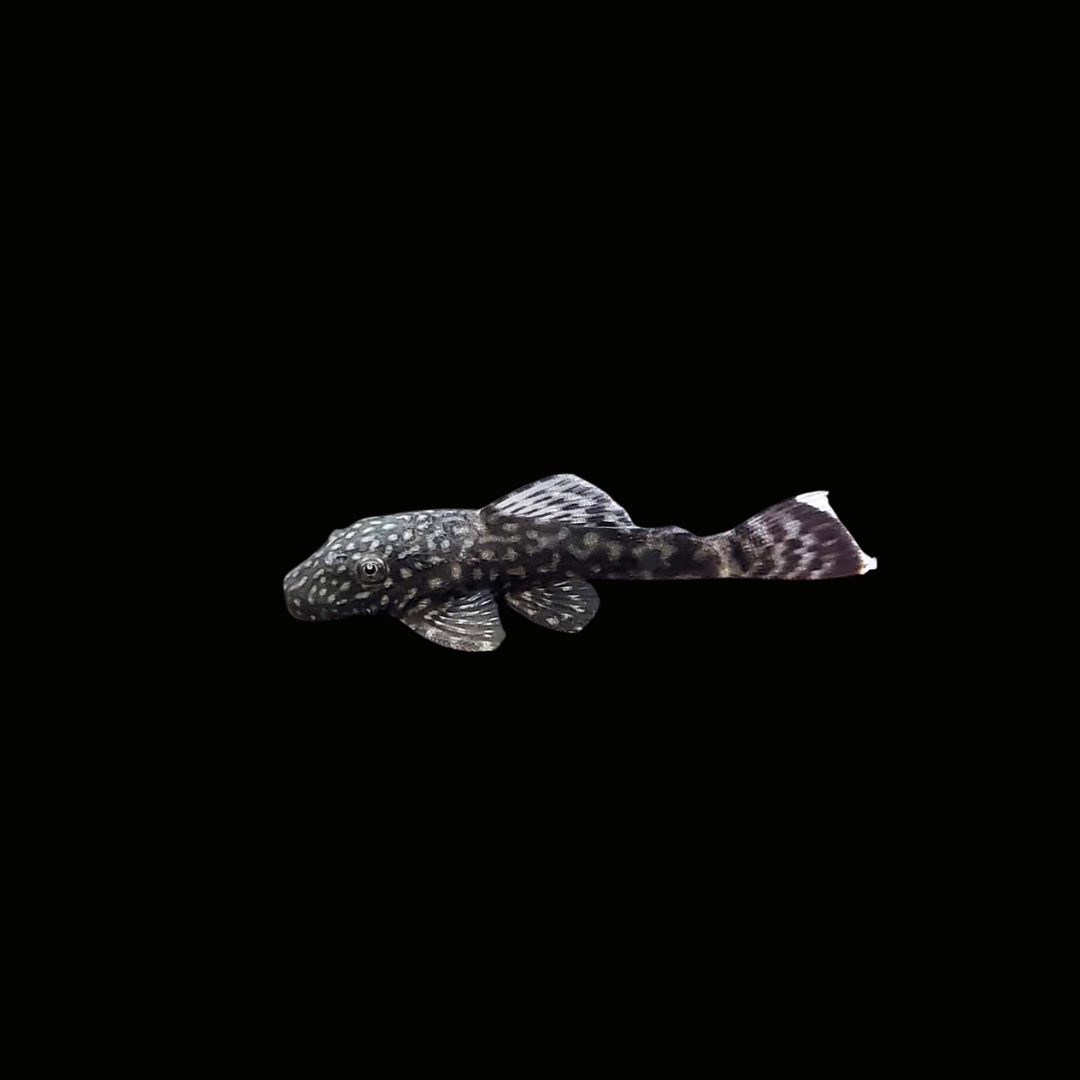
解説 / Description
スポテッドブッシープレコは、南米原産のアンキストルス属に由来する小型プレコの一群として流通している、温和で飼育しやすい底生魚です。黒褐色から暗灰色の体に細かな白いスポットが入り、成長したオスでは吻部から頭部にかけて枝分かれしたヒゲ状の肉質突起が発達します。日本の観賞魚店で見られる個体の多くは東南アジアなどで累代繁殖されたブリード個体で、複数の近縁種が関わる可能性があるため、学名は一般にAncistrus sp.として扱われます。ガラス面や流木に付いた柔らかい藻類をよく食べるため「コケ取り役」として親しまれますが、長く健康に飼うには流木、植物質の餌、十分な隠れ家を備えた環境づくりが欠かせません。 The Spotted Bristlenose Pleco is a small, peaceful bottom-dwelling catfish commonly traded as a member of the genus Ancistrus. It has a dark brown to charcoal body covered with fine pale spots, and mature males develop branching, fleshy bristles across the snout and head. Many individuals sold in Japanese aquarium shops are captive-bred lines produced for generations in Southeast Asia and elsewhere, and because they may involve several closely related species, they are usually treated under the practical name Ancistrus sp. Although it is highly valued as an algae-eating fish, long-term success depends on providing driftwood, plant-rich foods, clean oxygenated water, and plenty of shelters.
基本情報 / Basic Information
| 学名 / Scientific Name | Ancistrus sp. |
|---|---|
| 通称 / Common Name | スポテッドブッシープレコ、ブッシープレコ、ミニブッシープレコSpotted Bristlenose Pleco, Bristlenose Pleco, Bushynose Pleco |
| 分類 / Family | ナマズ目 ロリカリア科 ヒポストムス亜科 アンキストルス族 アンキストルス属Order Siluriformes, family Loricariidae, subfamily Hypostominae, tribe Ancistrini, genus Ancistrus |
| 英名 / English Name | Spotted Bristlenose Pleco |
| 分布 / Distribution | 原種や近縁種は南米大陸の河川水系に広く分布し、パラナ川、パラグアイ川、ウルグアイ川流域などが知られます。日本で流通する個体の多くは、東南アジアなどの養殖場で繁殖されたブリード個体です。Wild ancestors and related species are widely distributed in South American river systems, including the Paraná, Paraguay, and Uruguay basins. Most individuals in the Japanese trade are captive-bred fish produced in farms in Southeast Asia and other regions. |
| 最大体長 / Max Size | 一般的に約9〜15cm。流通名の「ミニブッシー」は幼魚を指す場合が多く、成魚になっても極小のままという意味ではありません。Usually about 9 to 15 cm. The trade name “mini bristlenose” often refers to juveniles and does not mean that the fish remains tiny as an adult. |
| 寿命 / Lifespan | 適切な飼育下で5年以上。状態良く管理できれば10年、まれに10〜12年ほど生きることもあります。More than 5 years under proper care. Well-kept individuals may live around 10 years, and occasionally 10 to 12 years. |
飼育環境 / Aquarium Environment
| 水槽サイズ / Tank Size | 単独飼育でも水量に余裕のある60cm規格水槽、約57〜75L以上が安心です。成魚を複数飼育する場合やオス同士がいる場合は、底面積と隠れ家を確保しやすい90cm規格水槽以上が望まれます。For a single fish, a standard 60 cm aquarium with roughly 57 to 75 L or more is recommended. For multiple adults, especially males, a standard 90 cm tank or larger is preferable to provide floor space and separate shelters. |
|---|---|
| 水温 / Temperature | 22〜29℃。広めの範囲に適応しますが、急な水温変化は白点病などの引き金になりやすいため、ヒーターとサーモスタットで安定させます。 22 to 29°C. It tolerates a fairly broad range, but sudden temperature changes can trigger problems such as white spot disease, so stable heating is important. |
| 水質 / Water Quality | 弱酸性〜中性を中心に、pH6.0〜7.5前後が扱いやすい範囲です。極端な軟水や硬水を避け、よく濾過された清潔で酸素の多い水を維持します。日本の水道水でも、カルキ抜きと十分な水合わせを行えば適応しやすい魚です。Slightly acidic to neutral water, around pH 6.0 to 7.5, is easy to manage. Avoid extreme soft or hard water and maintain clean, well-filtered, oxygen-rich conditions. It usually adapts well to properly dechlorinated tap water when acclimated carefully. |
| レイアウト / Layout | 流木、岩、プレコ用シェルターを組み合わせ、暗く落ち着ける隠れ家を複数用意します。流木は観賞用の飾りだけでなく、表面のバイオフィルムや微量の木質繊維をかじることで消化を助ける重要な要素です。底床は吻部やヒゲを傷つけにくい、角の丸い砂利や細かな砂が向いています。Use driftwood, rocks, and pleco caves to create several shaded shelters. Driftwood is not just decoration; it provides biofilm and small amounts of woody fiber that help support digestion. Smooth gravel or fine sand is suitable for protecting the snout and bristles. |
| 注意点 / Precautions | 夜行性が強く、導入直後は隠れている時間が長くなります。2〜3cmほどの極小幼魚は体力が少なく、水合わせの失敗や餌不足に弱いため、可能なら4〜5cm以上のしっかりした個体を選ぶと安心です。藻類だけに頼る飼育は餓死につながるため避けてください。It is strongly nocturnal and may hide for long periods after introduction. Very small juveniles of 2 to 3 cm have limited reserves and are vulnerable to poor acclimation and starvation, so robust individuals of 4 to 5 cm or larger are safer choices. Do not rely on aquarium algae alone as a food source. |
餌と給餌 / Feeding
| 餌の種類 / Diet | 草食性の強い雑食性です。茶ゴケや柔らかい藻類を食べますが、主食にはスピルリナなど植物質を含むプレコ用沈下性タブレットやウエハースを使います。補助的に、無農薬のズッキーニ、キュウリ、茹でたほうれん草、サヤインゲンなどを少量与えるとよいでしょう。冷凍赤虫やブラインシュリンプなどの動物性餌も食べますが、与えすぎは消化不良の原因になるため控えめにします。It is an omnivore with a strong herbivorous tendency. It eats diatoms and soft algae, but its staple diet should be sinking pleco tablets or wafers containing plant matter such as spirulina. Small portions of pesticide-free zucchini, cucumber, blanched spinach, or green beans can be offered as supplements. Frozen bloodworms and brine shrimp are accepted, but should be used sparingly because excessive animal protein can cause digestive problems. |
|---|---|
| 給餌のポイント / Feeding Tips | 消灯後など、本種が活動しやすい時間帯に沈下性の餌を入れると食べやすくなります。混泳水槽では他の魚に餌を取られないよう、複数箇所に分けて与えると安心です。食べ残しの野菜やタブレットは水質悪化を防ぐため、時間を決めて取り出してください。Feed sinking foods after lights out or during periods when the fish is more active. In community tanks, place food in several spots so it is not outcompeted by tank mates. Remove uneaten vegetables and tablets after a set period to prevent water pollution. |
性格と混泳 / Temperament and Tank Mates
| 性格 / Temperament | 基本的に温和で、他種に積極的に攻撃することはほとんどありません。普段は流木、岩陰、シェルター内に潜み、夜間や餌の時間に活動的になります。ただし成熟したオス同士ではシェルターや餌場をめぐる小競り合いが起こることがあります。It is generally peaceful and rarely attacks other species. It usually stays around driftwood, rockwork, or shelters and becomes more active at night or during feeding. Mature males may spar over caves or feeding areas. |
|---|---|
| 混泳の相性 / Compatibility | 小型テトラ、ラスボラ、グラミー、コリドラス、ドワーフシクリッドなど、水質が合う穏やかな魚との混泳に向きます。大型肉食魚やプレコを丸呑みできる魚との混泳は避けます。臆病な底層魚や餌取りの遅い魚がいる場合は、プレコが餌を独占しないよう給餌場所を分ける配慮が必要です。It suits community aquariums with peaceful fish such as small tetras, rasboras, gouramis, Corydoras, and dwarf cichlids that share similar water requirements. Avoid large predatory fish that could swallow it. With shy bottom dwellers or slow feeders, distribute food so the pleco does not monopolize it. |
病気と対策 / Diseases and Prevention
| かかりやすい病気 / Common Diseases | 水温や水質の急変による白点病、導入直後のストレスによる拒食、餌不足による痩せ、動物性餌の与えすぎによる消化不良や内臓への負担に注意します。底床やレイアウト材で吻部やヒゲを傷つけると、二次感染につながることもあります。Watch for white spot disease caused by sudden temperature or water-quality changes, refusal to feed after introduction, wasting from insufficient food, and digestive stress from excessive animal protein. Injuries to the snout or bristles from rough substrate or decor may lead to secondary infections. |
|---|---|
| 対策と予防 / Prevention | 導入時は水温と水質を丁寧に合わせ、急な環境変化を避けます。強い濾過とエアレーションで溶存酸素を保ち、定期的な換水で水質を安定させてください。流木と植物質の餌を切らさず、夜間に実際に食べているかを観察することも大切です。薬品を使う場合は、ナマズ類が薬剤に敏感な場合があるため、製品の注意書きに従って慎重に行います。Acclimate carefully and avoid sudden environmental changes. Maintain strong filtration, good aeration, and stable water quality through regular water changes. Provide driftwood and plant-based foods consistently, and check that the fish is actually eating at night. When medication is needed, use caution and follow product instructions, as catfish can be sensitive to some treatments. |
増やし方(繁殖) / Breeding
| 雌雄の判別 / Sexing | 標準体長7cm前後、生後約1年ほどで判別しやすくなります。オスは吻部から頭部中央にかけて太く枝分かれしたヒゲ状突起が発達します。メスにも吻部の縁に短い突起が出ることがありますが、頭部中央まで密に発達することは通常ありません。抱卵したメスは腹部が横にふくらみます。Sexing becomes easier at around 7 cm standard length, often after about one year. Males develop thick, branching bristles from the snout across the center of the head. Females may have small bristles along the snout edge, but usually do not develop dense central head bristles. Gravid females show a noticeably swollen abdomen. |
|---|---|
| 繁殖形態 / Reproduction | 洞窟産卵型です。オスが一端の閉じたプレコ用シェルターや土管、流木の穴などを縄張りとして守り、メスを誘い込んで内部の天井や奥の壁面にオレンジ色の卵を産ませます。産卵後はオスが卵と稚魚を守る父性保護を行います。It is a cave spawner. The male guards a one-ended pleco cave, tube, or hollow in driftwood, invites the female inside, and the female lays orange eggs on the ceiling or inner wall. After spawning, the male provides paternal care for the eggs and fry. |
| 繁殖のポイント / Breeding Tips | 成熟したペアと適切なシェルターがあれば、水槽内繁殖は比較的狙いやすい種類です。産卵後、オスは胸鰭や腹鰭で卵に水流を送り、死卵やゴミを取り除きながら守ります。卵は水温にもよりますが約4〜5日で孵化し、稚魚はヨークサックを吸収してから自力で餌を探し始めます。初期餌には細かく砕いた植物性フレーク、塩抜きした細かなベビーブラインシュリンプ、柔らかくした野菜、流木やマジックリーフ表面のバイオフィルムなどが役立ちます。稚魚は水質悪化に弱いため、少量給餌とこまめな管理が重要です。Breeding is relatively achievable when mature pairs and suitable caves are provided. After spawning, the male fans the eggs with his fins and removes dead eggs or debris. Eggs usually hatch in about 4 to 5 days depending on temperature, and fry begin feeding after absorbing the yolk sac. Finely crushed plant flakes, rinsed fine baby brine shrimp, softened vegetables, and biofilm on driftwood or Indian almond leaves are useful first foods. Fry are sensitive to poor water quality, so small feedings and careful maintenance are essential. |
雑学と豆知識 / Trivia and Fun Facts
| 1. 「Ancistrus」という名に込められたフックの姿 / 1. The hook hidden in the name Ancistrus | アンキストルス属の名前は、ギリシャ語で釣り針やフックを意味する語に由来するとされます。これは、彼らが鰓蓋の周辺に備えるフック状の皮歯を思わせる命名です。水槽の中ではのんびりしたコケ取り役に見えますが、その体は硬い骨板、吸盤状の口、そして特殊な皮歯を備えた、急流の底で生き抜くためのよくできた道具箱のような構造をしています。The name Ancistrus is thought to derive from a Greek word associated with hooks or fishhooks, referring to the hook-like odontodes around the gill-cover region. In the aquarium it may look like a calm algae grazer, but its body is a highly specialized toolkit of bony plates, a suction-cup mouth, and defensive odontodes adapted for life along fast-flowing river bottoms. |
|---|---|
| 2. オスのヒゲは飾りだけではない / 2. The male’s bristles are more than decoration | 成熟したオスの顔に広がるヒゲ状突起は、ブッシープレコ最大の個性です。この突起については、薄暗い巣穴の中で稚魚の群れのように見え、メスに「このオスはすでに子育てに成功している」と印象づける、いわゆる稚魚擬態の可能性が議論されてきました。さらに、突起から分泌される粘液が卵や稚魚の保護、あるいは初期栄養に関わる可能性も示唆されています。つまりこのヒゲは、見た目のインパクトだけでなく、繁殖戦略の一部として進化した複雑な器官なのかもしれません。The branching bristles on mature males are the most distinctive feature of bristlenose plecos. One influential idea is fry mimicry: in a dim cave, the bristles may resemble a cluster of young fry, making a male appear as if he is already a successful parent. Other observations suggest that mucus from the bristles may help protect eggs or support young fry. In other words, the bristles may not be mere ornamentation, but part of a complex reproductive strategy. |
| 3. 「ミニブッシー」という名前の落とし穴 / 3. The misunderstanding behind “mini bristlenose” | 日本の店頭では、2〜3cmほどの幼魚が「ミニブッシープレコ」として販売されることがあります。この名前はかわいらしく、小型水槽向きに感じられますが、多くの場合は成長途中の幼魚を指しています。成魚では10cmを超えることも珍しくないため、購入時の小ささだけで判断せず、将来の体長と寿命を見込んで水槽を用意することが大切です。特に極小サイズの幼魚は体力が少ないため、最初の水合わせと餌付けがその後の成否を大きく左右します。In Japanese shops, juveniles of around 2 to 3 cm are sometimes sold as “mini bristlenose plecos.” The name sounds charming and suitable for small aquariums, but it usually refers to a young fish, not a permanently tiny variety. Adults can exceed 10 cm, so the future size and long lifespan should be considered before purchase. Very small juveniles also have limited reserves, making careful acclimation and reliable feeding especially important. |
| 4. 流木はインテリアであり、食卓でもある / 4. Driftwood is both furniture and a dining table | ブッシープレコの水槽に流木がよく使われるのは、南米風の雰囲気を出すためだけではありません。流木の表面には微生物や藻類がつくるバイオフィルムが育ち、プレコはそれを吸盤状の口で削り取るように食べます。その過程で微量の木質繊維も取り込み、消化管の働きを助けると考えられています。美しいレイアウト材でありながら、隠れ家であり、食卓でもあるところに、流木の大きな価値があります。Driftwood is not used only to create a South American atmosphere. Its surface grows biofilm made up of microorganisms and algae, which the pleco grazes with its sucker-like mouth. In the process, it may also ingest small amounts of woody fiber that help support digestion. Driftwood is therefore decoration, shelter, and dining table all at once. |
| 5. 似ている名前のスターライトブッシープレコに注意 / 5. Be careful with the similar Starlight Bristlenose Pleco | スポテッドブッシープレコと混同されやすい魚に、スターライトブッシープレコと呼ばれる美麗種がいます。こちらは黒い体に白い星のようなスポットが映える魅力的な魚ですが、系統によっては一般的なスポテッドブッシーより大きくなる場合があります。小型のコケ取り魚として迎えるつもりなら、流通名だけでなく、学名、Lナンバー、成魚サイズを店頭で確認しておくと安心です。A fish often confused with the Spotted Bristlenose Pleco is the Starlight Bristlenose Pleco, a striking form with bright white spots on a deep black body. Depending on the lineage, however, it may grow larger than the typical spotted bristlenose sold as Ancistrus sp. If you are choosing a small algae-eating fish, check not only the trade name but also the scientific name, L-number, and adult size. |
まとめ / Conclusion
スポテッドブッシープレコは、温和な性格、扱いやすいサイズ、優れた藻類摂食能力を備えた、コミュニティ水槽に迎えやすい小型プレコです。丈夫な魚ではありますが、単なる「掃除役」と考えるのではなく、流木、植物質の餌、隠れ家、安定した水質を整えることで、本来の魅力を長く楽しめます。 The Spotted Bristlenose Pleco is a small pleco well suited to community aquariums thanks to its peaceful nature, manageable size, and strong algae-grazing ability. It is hardy, but it should not be treated merely as a cleaning fish. Driftwood, plant-based foods, shelters, and stable water quality allow its true appeal to shine for many years.
オスのヒゲに隠された繁殖戦略や、洞窟内で卵を守り抜く父性保護など、本種には観察するほどに面白さが増す生物学的な魅力があります。適切に飼育すれば10年前後の長い付き合いになることもあり、水槽の片隅で静かに働く姿は、アクアリウムに落ち着きと奥行きを与えてくれるでしょう。 Its biology becomes more fascinating the longer it is observed, from the reproductive meaning of the male’s bristles to the devoted paternal care shown inside caves. With proper care, it can become a companion for around a decade, quietly adding both function and depth to the aquarium.

気になる道具や飼い方を見つけてみませんか?
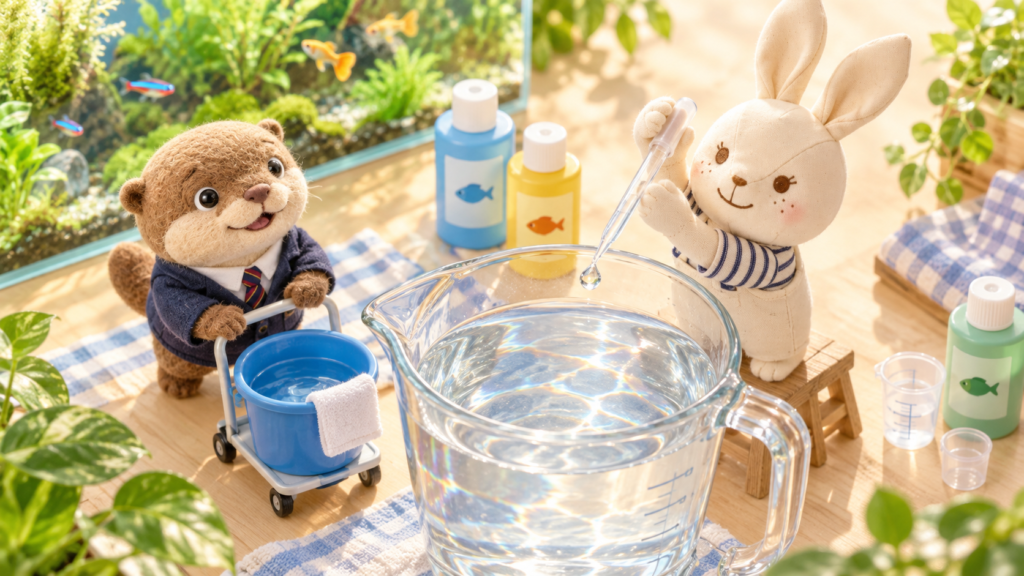 アイのアクアグッズ案内カルキ抜き・水質調整剤の選び方|水換えと水槽の種類に合わせて選ぶ道具の特徴や使い方、選ぶときのポイントをアイが紹介します。記事はコチラ →
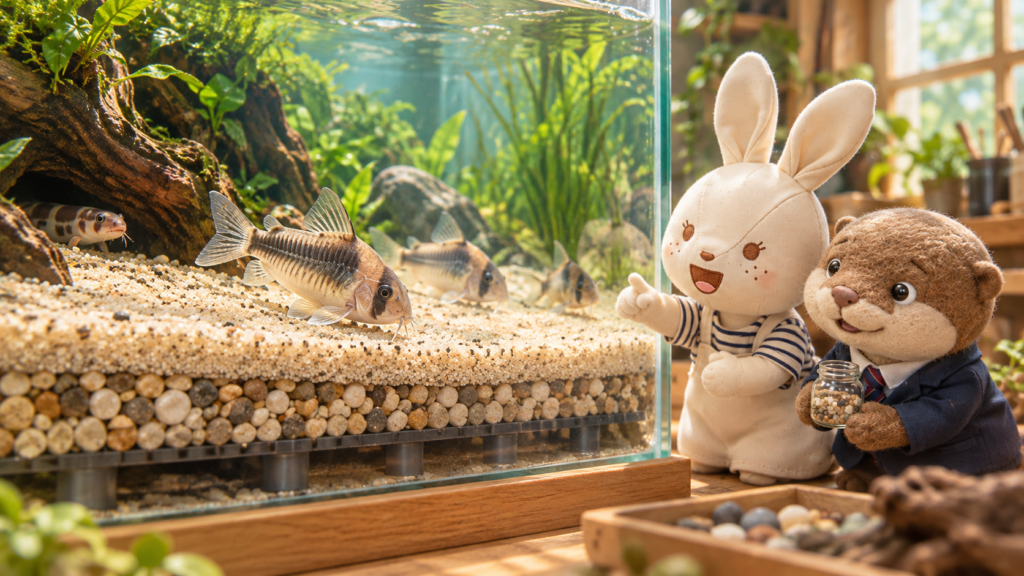 アイのアクアグッズ案内水槽の底砂の選び方|砂・砂利の違いとおすすめ商品道具の特徴や使い方、選ぶときのポイントをアイが紹介します。記事はコチラ →
さまざまな飼育テーマをご紹介。リンク先の記事には広告・商品紹介が含まれます。
案内・紹介記事一覧へ →参考文献・参照資料
本記事では、スポテッドブッシープレコとして流通する個体を便宜上 Ancistrus sp. と扱い、分類・分布・生息環境・飼育管理・繁殖・病気予防に関する根拠として、以下の公的データベース、査読論文、獣医・水産系資料を参照しました。店舗、通販ページ、個人ブログ、まとめサイトは参考文献から除外しています。
-
Fricke, R., Eschmeyer, W. N. & Van der Laan, R. eds. Eschmeyer's Catalog of Fishes. California Academy of Sciences.参照範囲:Ancistrus cirrhosus の学名、命名者、分類上の扱い、シノニム確認。
-
Froese, R. & Pauly, D. eds. FishBase: Ancistrus cirrhosus (Valenciennes, 1836).参照範囲:ロリカリア科・ヒポストムス亜科としての分類、南米パラナ川流域という分布、底生性淡水魚であること、生息環境、藻類食、最大標準体長の目安。
-
U.S. Fish and Wildlife Service. 2018. Ecological Risk Screening Summary: Jumbie Teta, Ancistrus cirrhosus.参照範囲:公的機関による分類・分布・生態情報の確認、自然環境での生息条件、国外導入リスク評価上の基礎情報。
-
Lujan, N. K., Armbruster, J. W., Lovejoy, N. R. & López-Fernández, H. 2015. Multilocus molecular phylogeny of the suckermouth armored catfishes with a focus on Hypostominae. Molecular Phylogenetics and Evolution.参照範囲:ロリカリア科、とくにヒポストムス亜科における分子系統学的背景、吸盤状の口を持つプレコ類の分類理解。
-
Sabaj, M. H., Armbruster, J. W. & Page, L. M. 1999. Spawning in Ancistrus with comments on the evolution of snout tentacles as a novel reproductive strategy: larval mimicry. Ichthyological Exploration of Freshwaters.参照範囲:洞窟産卵、オスによる卵・仔魚保護、吻部突起が稚魚を模倣する可能性という繁殖生態の仮説。
-
Yan, H. Y. 2009. A histochemical study on the snout tentacles and snout skin of bristlenose catfish Ancistrus triradiatus. Journal of Fish Biology.参照範囲:オスの吻部突起に見られる杯状細胞や粘液分泌に関する組織学的知見。栄養供給・抗菌・化学シグナルへの関与は、可能性として考えられているものです。
-
Petty, B. D., Francis-Floyd, R. & Yanong, R. P. E. MSD Veterinary Manual: Management of Aquarium Fish.参照範囲:観賞魚の健康管理、水質管理、治療薬の扱い、獣医療的観点からの飼育管理上の注意点。
-
MSD Veterinary Manual: Disorders and Diseases of Fish.参照範囲:白点病、細菌・真菌・寄生虫性疾患、ストレス・過密・水質悪化・検疫不足が病気の誘因になるという病気予防の基本。
-
MSD Veterinary Manual: Providing a Home for Fish.参照範囲:水質を定期的に確認する必要性、塩素、pH、水温などの管理、導入前の水質確認と環境由来疾患の予防。
-
Crosby, T. C., Hill, J. E., Watson, C. A. & Yanong, R. P. E. University of Florida IFAS Extension. On-Farm Transport of Ornamental Fish.参照範囲:観賞魚の輸送・導入時における水合わせ、異なる水質へ徐々に慣らす必要性、導入時ストレスを減らすための基本的考え方。
注記:日本の観賞魚市場で「スポテッドブッシープレコ」「ミニブッシープレコ」として流通する個体は、特定の原種に断定しにくいブリード系統を含むため、分類・自然分布に関する記述では Ancistrus cirrhosus および近縁の Ancistrus 属資料を参照しつつ、種が確定していない個体には Ancistrus sp. という表記を用います。




コメント