

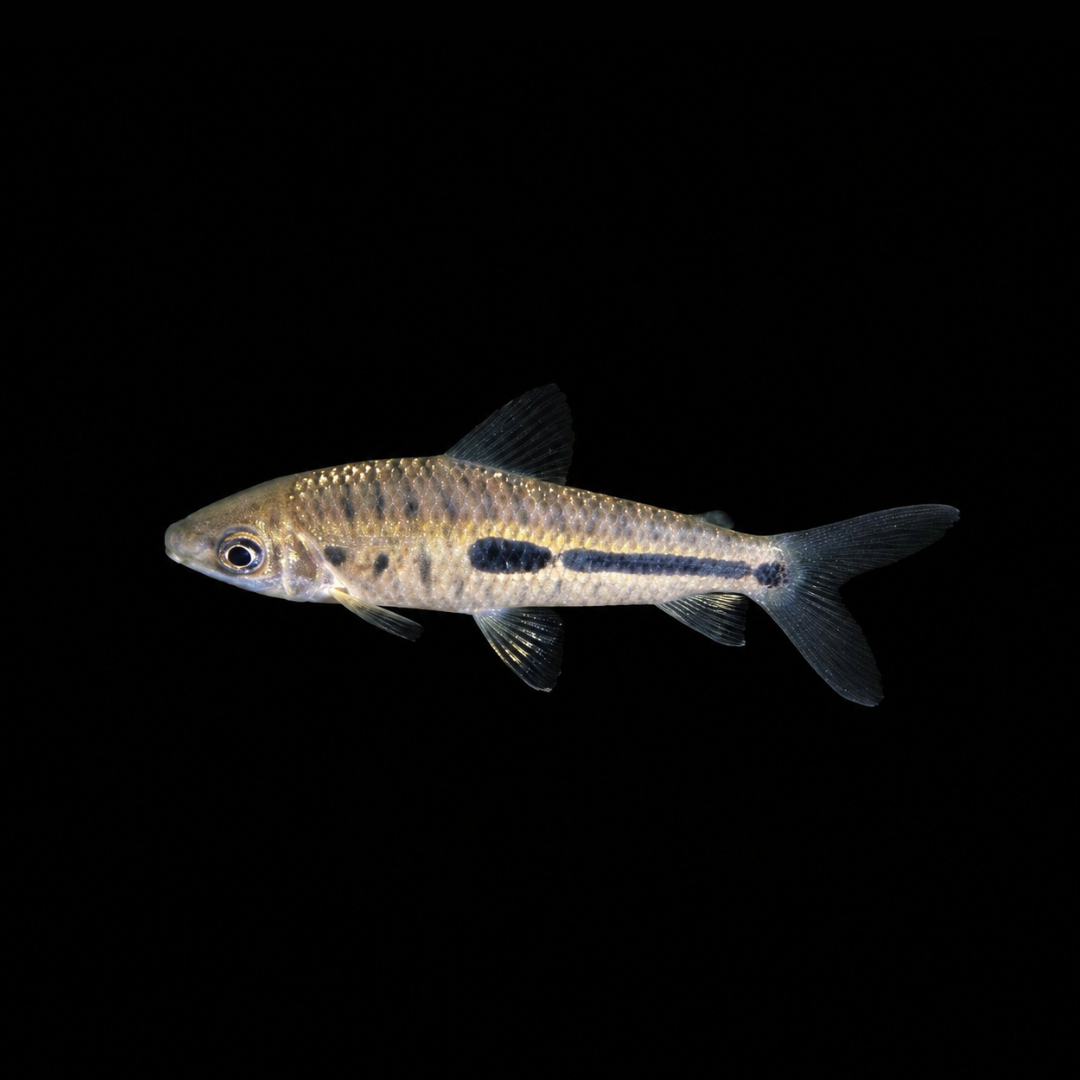
解説 / Description
レポリヌス・モラレシは、南米アマゾン川流域に分布するアノストムス科の中型カラシンです。細長く力強い体型と、体側を走る黒い縦帯が印象的で、水槽内でも流木や岩の周囲を活発に泳ぎ回ります。アノストムス科の仲間らしく、頭をやや下げた姿勢で底面や流木の表面を探ることがあり、その独特の採餌行動も本種の大きな見どころです。 Leporinus moralesi is a medium-sized anostomid characin from the Amazon River basin of South America. Its elongated, powerful body and dark lateral stripe give it a distinctive appearance, and it actively explores the area around driftwood and rocks in the aquarium. Like many members of the family Anostomidae, it may forage with its head angled downward, a behavior that adds much of its character.
観賞魚としては、いわゆる南米産中型カラシンや珍カラの一種として扱われることがあります。ただし、成長すると30cm前後に達する可能性があり、遊泳力、跳躍力、縄張り意識の強さを考慮した飼育設計が欠かせません。見た目の面白さだけで選ぶ魚ではなく、大型水槽、強めのろ過、確実なフタ、慎重な混泳判断を用意して迎えたい魚です。 In the aquarium hobby, it may be treated as one of the unusual medium-sized South American characins. However, it can approach 30 cm in total length, so its swimming power, jumping ability, and territorial tendencies must be considered from the beginning. This is not a fish to choose by appearance alone; it should be kept with a spacious tank, strong filtration, a secure lid, and carefully planned tank mates.
基本情報 / Basic Information
| 学名 / Scientific Name | Leporinus moralesi Fowler, 1942 |
|---|---|
| 通称 / Common Name | レポリヌス・モラレシ、モラレス・レポリヌスMorales’ leporinus |
| 分類 / Family | カラシン目 アノストムス科 レポリヌス属Order Characiformes, family Anostomidae, genus Leporinus |
| 英名 / English Name | Morales’ leporinus. “Headstander” is also used broadly for fishes in the family Anostomidae. |
| 分布 / Distribution | 南米のアマゾン川流域。文献上はブラジル、エクアドル、コロンビア、ペルーを含むアマゾン水系から知られる。Amazon River basin in South America, with records from the Amazon drainage including Brazil, Ecuador, Colombia, and Peru. |
| 最大体長 / Max Size | 最大で約30cm。飼育下でも20cmを超えることがあり、終生飼育では中型魚として十分な空間を確保する必要がある。Up to about 30 cm total length. Aquarium specimens can exceed 20 cm, so long-term care requires the space appropriate for a medium-sized fish. |
| 寿命 / Lifespan | 種単位の詳細な寿命データは限られる。適切な大型水槽で数年以上の長期飼育を前提に計画したい。Detailed species-specific lifespan data are limited. It should be planned for as a fish that may be kept for several years or longer in a suitable large aquarium. |
飼育環境 / Aquarium Environment
| 水槽サイズ / Tank Size | 若魚期は60cm規格水槽で一時的に管理できる場合もあるが、終生飼育では最低でも90cm規格水槽、できれば120cm規格水槽以上が望ましい。体長だけでなく遊泳力があるため、奥行き45cm以上を確保すると扱いやすい。Juveniles may be managed temporarily in a standard 60 cm tank, but long-term care requires at least a standard 90 cm aquarium, preferably a standard 120 cm tank or larger. Because it is an active swimmer, a tank depth of 45 cm or more is recommended. |
|---|---|
| 水温 / Temperature | 22〜26℃を基本とし、飼育では24〜26℃前後で安定させると管理しやすい。急な水温変化は避ける。 Use 22 to 26°C as the basic range; in aquaria, keeping the temperature stable around 24 to 26°C is practical. Avoid sudden temperature changes. |
| 水質 / Water Quality | 弱酸性から中性付近を目安にする。水質への順応性は比較的高いが、急なpH変化や水質悪化は避けたい。硝酸塩が蓄積しやすい大型魚水槽では、ろ過能力と定期換水の両方を重視する。Aim for slightly acidic to near-neutral water. The species is relatively adaptable, but sudden pH shifts and deteriorating water quality should be avoided. In a large-fish aquarium where nitrate can build up, both filtration capacity and regular water changes are important. |
| レイアウト / Layout | 流木、角の取れた岩、広い遊泳空間を組み合わせる。水流をやや強めに作ると活動的な姿を観察しやすい。柔らかい水草や有茎草は食害を受けやすいため、水草を主役にしたレイアウトには向かない。Combine driftwood, rounded rocks, and open swimming space. Moderate current helps bring out its active behavior. Soft plants and stem plants are likely to be damaged or eaten, so it is not well suited to planted aquascapes. |
| 注意点 / Precautions | 飛び出し対策は必須。ガラスフタやポリカーボネート板で水槽上面を覆い、配管やコードの隙間も塞ぐ。大型個体はフタを押し上げることがあるため、必要に応じて重しを使う。餌をよく食べて排泄量も増えやすいので、外部式フィルターや上部式フィルターなどで強めのろ過を用意する。Jump prevention is essential. Cover the tank with glass or polycarbonate lids and close gaps around pipes and cords. Large individuals may push up light lids, so weights may be needed. Because the fish eats readily and produces considerable waste, strong filtration such as canister or overhead filters is recommended. |
餌と給餌 / Feeding
| 餌の種類 / Diet | 雑食性で、植物質もよく利用する。沈下性ペレット、プレコ用タブレット、スピルリナ配合フード、大型カラシン用フードを中心に、冷凍赤虫、クリル、エビ類などを補助的に与える。副食として、少量の茹でたホウレンソウやグリーンピースを使うこともできる。Omnivorous and makes good use of plant-based foods. Use sinking pellets, pleco tablets, spirulina-based foods, and large characin pellets as staples, with frozen bloodworms, krill, and shrimp as supplements. Small portions of blanched spinach or green peas may also be offered occasionally. |
|---|---|
| 給餌のポイント / Feeding Tips | 動物性の餌だけに偏らせず、植物質を含む餌を組み込む。食欲が強く食べ残しも水質悪化につながりやすいため、与えすぎには注意する。流木や岩の近くに沈下餌を落とすと、表面を探るような自然な採餌行動を観察しやすい。Do not rely only on animal-based foods; include foods with vegetable matter. Because it has a strong appetite and leftovers can quickly affect water quality, avoid overfeeding. Placing sinking foods near wood or rocks can encourage natural surface-foraging behavior. |
性格と混泳 / Temperament and Tank Mates
| 性格 / Temperament | 丈夫で活動的だが、縄張り意識が強く、同種や似た体型の魚に対して攻撃的になることがある。追い回しやヒレかじりが出る場合があるため、穏やかな小型魚を集めたコミュニティ水槽には向かない。Hardy and active, but territorial and potentially aggressive toward its own kind or similarly shaped fishes. It may chase or nip fins, so it is not suitable for a peaceful small-fish community aquarium. |
|---|---|
| 混泳の相性 / Compatibility | 小型テトラ、グッピー、小型コリドラスなどとの混泳は避ける。候補になるのは、体格が同等以上でタフな中大型魚、中大型プレコ、ドラス類、同サイズの遊泳性カラシンなど。ただし個体差が大きいため、導入後は必ず観察し、攻撃が続く場合に隔離できる準備をしておく。同種複数飼育は争いが強く出やすく、基本的には単独飼育が安全。Avoid keeping it with small tetras, guppies, or small Corydoras. Possible tank mates include robust medium to large fishes, medium to large plecos, doradid catfish, and similarly sized active characins. Individual temperament varies, so observe carefully after introduction and be ready to separate fish if aggression persists. Keeping multiple individuals together can intensify fighting, so single-specimen care is usually safer. |
病気と対策 / Diseases and Prevention
| かかりやすい病気 / Common Diseases | 特定の病気に極端に弱い魚ではないが、輸入直後や導入直後はスレ傷、白点病、外傷からの細菌感染、ヒレ裂け、消化不良に注意する。飛び出しや混泳相手との争いによる傷は、二次感染のきっかけになりやすい。This is not a particularly delicate species, but newly imported or newly introduced individuals should be watched for abrasions, ich, bacterial infections from wounds, torn fins, and digestive problems. Injuries from jumping or fighting can easily lead to secondary infections. |
|---|---|
| 対策と予防 / Prevention | 導入時は水合わせを丁寧に行い、可能であれば隔離水槽で状態を確認する。清潔な水、強力なろ過、定期換水、過密を避けた飼育が基本となる。外傷が見られる場合は水質悪化を防ぎ、必要に応じて隔離して治療する。急な照明点灯で驚かせないことも、飛び出しと外傷の予防につながる。Acclimate carefully and, if possible, observe new arrivals in a quarantine tank. Clean water, strong filtration, regular water changes, and avoiding overcrowding are the foundation of prevention. If wounds are seen, prevent water deterioration and isolate for treatment when necessary. Avoid startling the fish with sudden lighting changes, as this also helps reduce jumping and injuries. |
増やし方(繁殖) / Breeding
| 雌雄の判別 / Sexing | 外見だけでの雌雄判別は難しい。成熟したメスは腹部に丸みが出る可能性があるが、確実な判別点としては扱いにくい。Sexing by appearance is difficult. Mature females may become fuller-bodied, but this is not a reliable feature on its own. |
|---|---|
| 繁殖形態 / Reproduction | 卵生。文献上、近縁種を含むレポリヌス類では水草や植物が密に茂る場所でペア産卵する情報がある。本種でも、自然下では増水期や植物の多い環境が繁殖に関係すると考えられる。Egg-laying. Literature on Leporinus species notes paired spawning in densely vegetated areas. In this species, seasonal flooding and plant-rich habitats are likely related to reproduction in nature. |
| 繁殖のポイント / Breeding Tips | 一般家庭の水槽での繁殖例は非常に少なく、実践的には難しい。水位変化、水流、水温、水質、豊富な餌、産卵場所など、複数の条件が関係すると考えられる。繁殖を狙う場合でも、まずは大型水槽で健康に成熟させることが前提となる。Breeding in home aquaria is very rare and practically difficult. Water-level changes, current, temperature, water chemistry, abundant food, and suitable spawning sites may all be involved. Even for advanced attempts, the first requirement is to raise healthy mature fish in a large aquarium. |
雑学と豆知識 / Trivia and Fun Facts
| 1. 学名に残る分類学の足跡 / 1. A taxonomic trail preserved in the name | 本種の現在の学名は Leporinus moralesi Fowler, 1942 です。もともとは Leporinus muelleri Steindachner, 1876 として扱われましたが、この名前は Leporinus muelleri Günther, 1859 によって先に使われていたため、後に置換名として moralesi が用いられました。小さな学名の変更にも、標本、記載、命名規約が積み重なる魚類分類学の歴史が刻まれています。The current scientific name is Leporinus moralesi Fowler, 1942. It was previously associated with Leporinus muelleri Steindachner, 1876, but that name was preoccupied by Leporinus muelleri Günther, 1859, so moralesi was introduced as a replacement name. Behind this small change in wording lies the history of specimens, descriptions, and zoological nomenclature. |
|---|---|
| 2. モラレス博士への献名 / 2. A name honoring Dr. Morales | 種小名の moralesi は、ペルーの生物学者カルロス・モラレス・マセド博士にちなむ献名です。モラレス博士はリマの自然史博物館で教授・館長を務めた人物として知られ、南米の自然史研究と深く関わりました。観賞魚として水槽に迎える一匹にも、南米のフィールド研究や博物館資料の歴史が静かに結びついています。The specific name moralesi honors Dr. Carlos Morales Macedo, a Peruvian biologist associated with the natural history museum in Lima. Even a single aquarium fish can therefore carry a quiet connection to South American field research and museum-based natural history. |
| 3. 「ウサギのような魚」という属名 / 3. A genus name meaning “rabbit-like” | Leporinus という属名は、ラテン語でウサギを意味する lepus、leporis に由来します。アノストムス科の仲間には、植物質や付着物をかじり取るための切歯状の歯を持つ種が多く、その口元がウサギの門歯を連想させます。水槽内でタブレットや流木の表面を熱心に探る姿を見ると、この名前が単なる比喩ではないことを実感できます。The genus name Leporinus comes from the Latin lepus or leporis, meaning rabbit. Many anostomid fishes have incisor-like teeth used for biting plant matter and scraping surfaces, recalling a rabbit’s front teeth. Watching the fish work over tablets or driftwood in the aquarium makes the name feel surprisingly fitting. |
| 4. ヘッドスタンダーらしい採餌行動 / 4. Foraging behavior typical of headstanders | アノストムス科の魚は、英語で headstanders と呼ばれることがあります。これは、多くの種が頭を下げた角度で定位し、底面、石、流木、水草の表面を探る行動を見せるためです。レポリヌス・モラレシも、斜め下を向いて餌を探す姿が見られることがあり、体形や口のつくりと行動が結びついた南米魚らしい魅力を楽しめます。Fishes of the family Anostomidae are often called headstanders because many hold a head-down angle while exploring the substrate, stones, wood, and plants. Leporinus moralesi may show this behavior as it searches for food, offering a clear example of how body shape, mouth structure, and behavior come together in a South American river fish. |
| 5. 国内流通では「出会い」の要素が強い魚 / 5. A fish whose availability often depends on timing | 日本では、レポリヌス・モラレシは常時どの店にも並ぶ定番魚というより、南米産中型カラシンを扱う専門店で入荷時に出会う魚です。野生採集個体として流通することが多く、サイズ、状態、価格は時期や店舗によって変わります。購入時は模様の美しさだけでなく、体表の傷、痩せ、呼吸、餌付き、そして自宅の水槽に十分なフタがあるかまで確認したいところです。In Japan, Leporinus moralesi is less a constant shop staple and more a fish encountered when specialty stores receive medium-sized South American characins. It is often traded as wild-caught stock, so size, condition, and price vary by timing and retailer. When buying one, check not only the pattern but also abrasions, body condition, breathing, feeding response, and whether your aquarium has a truly secure lid. |
| 6. 保全状況と飼育者の責任 / 6. Conservation status and the aquarist’s responsibility | 本種はIUCNレッドリストで低懸念と評価されていますが、それは飼育を軽く考えてよいという意味ではありません。アマゾン川流域の魚を家庭の水槽で長く飼う以上、終生飼育できる設備を整え、不要な放流を絶対に行わず、入荷直後の個体を丁寧に立ち上げる姿勢が求められます。珍しい魚を楽しむことと、生き物を責任を持って扱うことは、いつも同じ水槽の中にあります。The species is assessed as Least Concern on the IUCN Red List, but that does not make its care casual. Keeping an Amazonian fish at home requires the equipment for long-term care, a strict commitment never to release unwanted fish, and careful acclimation of newly imported specimens. Enjoying unusual fishes and caring for living animals responsibly always belong in the same aquarium. |
まとめ / Conclusion
レポリヌス・モラレシは、黒い縦帯、力強い体つき、頭を下げて餌を探る独特の行動によって、南米産中型カラシンの面白さをよく伝えてくれる魚です。水草を美しく残す水槽よりも、流木、岩、水流、広い遊泳空間を組み合わせた環境でこそ、その存在感が際立ちます。 Leporinus moralesi expresses much of what makes medium-sized South American characins fascinating: a bold dark stripe, a powerful body, and distinctive head-down foraging behavior. It shows its best presence not in a delicate planted aquarium, but in a setup built around wood, rocks, current, and open swimming space.
飼育には、大型水槽、強めのろ過、確実な飛び出し対策、そして混泳への慎重な判断が必要です。その条件を整えられれば、水槽の中でただ泳ぐだけでなく、探り、かじり、流れに向かって姿勢を保つ姿を通して、アマゾン水系の魚らしい躍動感を長く楽しませてくれます。 Care requires a large aquarium, strong filtration, reliable jump prevention, and careful judgment about tank mates. When those conditions are met, the fish offers more than simple movement: it explores, grazes, and holds itself against the current, bringing the lively character of an Amazonian river fish into the aquarium for years to come.

気になる道具や飼い方を見つけてみませんか?
 アイのアクアグッズ案内水草トリミングの道具とやり方|ハサミ・ピンセットを水草に合わせて選ぼう伸びすぎた水草は切っていい? 有茎草の差し戻し、前景草の絨毯、流木のモスを整える場面から、水草用ハサミ・ピンセット・ゴミ取りネットの選び方と片付けを紹介します。記事はコチラ →
 アイのアクアグッズ案内水槽のエアーポンプの選び方|水深・音・泡で選ぶおすすめ用品道具の特徴や使い方、選ぶときのポイントをアイが紹介します。記事はコチラ →
 アイのアクアグッズ案内金魚を長く楽しむ飼育用品|水槽・フィルター・エアレーション・水換え道具の特徴や使い方、選ぶときのポイントをアイが紹介します。記事はコチラ →
 アイのアクアグッズ案内水槽の底砂の選び方|砂・砂利の違いとおすすめ商品道具の特徴や使い方、選ぶときのポイントをアイが紹介します。記事はコチラ →
さまざまな飼育テーマをご紹介。リンク先の記事には広告・商品紹介が含まれます。
案内・紹介記事一覧へ →分布マップ
レポリヌス・モラレシは、南米のアマゾン川流域に分布し、ブラジル、エクアドル、コロンビア、ペルーを含むアマゾン水系から知られています。地図では、分布イメージ用の概略代表地点としてアマゾン流域中央部付近を示しています。
Google Earthで開くこの位置表示は、分布欄の内容をもとにした概略プロットです。実際の採集地点や厳密な生息範囲を示すものではありません。
参考文献・参照資料
以下は、レポリヌス・モラレシの分類、分布、生息環境、飼育条件、繁殖、病気・管理上の注意点を確認するために参照した資料です。店舗、通販サイト、個人ブログ、まとめサイトは含めていません。
-
Fricke, R., Eschmeyer, W. N. & Van der Laan, R. (eds.). Eschmeyer’s Catalog of Fishes. California Academy of Sciences.
参照範囲:現行学名、命名者、置換名としての扱い、タイプ産地、分類上の位置づけ、分布。
Leporinus moralesi の項目 -
Froese, R. & Pauly, D. (eds.). FishBase: Leporinus moralesi Fowler, 1942.
参照範囲:アノストムス科としての分類、淡水・底中層性、熱帯性、水温、アマゾン川流域の分布、最大体長、繁殖メモ、IUCN評価。
FishBase species summary -
Birindelli, J. L. O., Britski, H. A. & Lima, F. C. T. (2013). New species of Leporinus from the Rio Tapajós Basin, Brazil, and redescription of L. moralesi (Characiformes, Anostomidae). Copeia, 2013(2), 238–247.
参照範囲:本種の再記載、近縁種との識別、形態・斑紋に関する分類学的根拠。
DOI: 10.1643/CI-12-081 -
Sidlauskas, B. L., Melo, B. F., Birindelli, J. L. O., Burns, M. D., Frable, B. W., Hoekzema, K., Dillman, C. B., Sabaj, M. H. & Oliveira, C. (2025). Molecular phylogenetics, a new classification, and a new genus of the Neotropical fish family Anostomidae (Teleostei: Characiformes). Neotropical Ichthyology, 23(1), e240076.
参照範囲:アノストムス科の分子系統、Leporinusを含む分類再編の背景、科内の多様性。
Neotropical Ichthyology 掲載ページ -
FishBase: Family Anostomidae – Headstanders.
参照範囲:アノストムス科の分布、歯や口部の特徴、頭を下げる姿勢、植物質・デトリタスを利用する食性傾向。
Family Anostomidae summary -
Breder, C. M. & Rosen, D. E. (1966). Modes of Reproduction in Fishes. T.F.H. Publications / American Museum of Natural History.
参照範囲:魚類の繁殖様式の基礎情報。FishBase上で繁殖情報の主要参照文献として用いられている古典的資料。
FishBase reference summary -
Merck Veterinary Manual. Providing a Home for Fish.
参照範囲:ろ過、水質監視、アンモニア・亜硝酸・硝酸塩、過密、テリトリー、攻撃性、日常管理に関する一般的な水槽管理の根拠。
Merck Veterinary Manual -
Yanong, R. P. E. Fish Health Management Considerations in Recirculating Aquaculture Systems—Part 3: General Recommendations and Problem-Solving Approaches. UF/IFAS Extension.
参照範囲:検疫、バイオセキュリティ、水質管理、給餌・清掃・観察を含む疾病予防の考え方。
UF/IFAS Extension publication




コメント