
解説 / Description
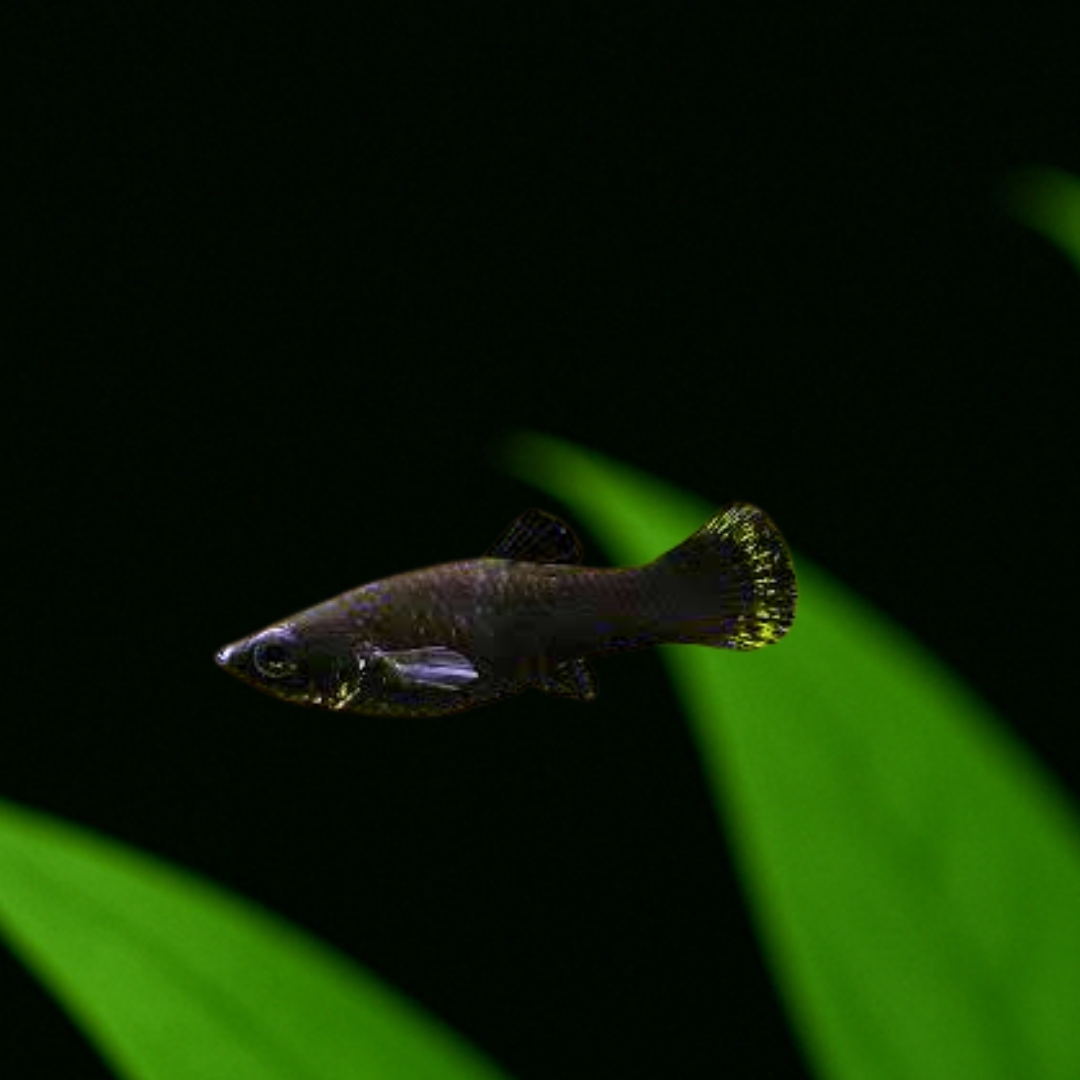
ブラックモーリーは、全身が黒く染まる姿で古くから親しまれてきた、カダヤシ科ポエシリア属の卵胎生熱帯魚です。観賞魚としての魅力に加え、水面の油膜、柔らかいコケ、藍藻と呼ばれるシアノバクテリアの薄い膜、有機物の付着面をついばむ行動が見られるため、水草水槽ではお掃除役の魚として導入されることもあります。流通名としてのブラックモーリーは、コクチモーリーの黒色品種として扱われることが多い一方、観賞魚として長く改良されてきた系統にはセルフィンモーリーやユカタンモーリーなど近縁種の特徴を受け継ぐものも含まれると考えられます。丈夫で飼いやすい魚ですが、弱酸性・軟水に傾きすぎた環境では調子を崩しやすいため、中性から弱アルカリ性で、ミネラル分をある程度含む水を意識すると長期飼育が安定します。 The Black Molly is a livebearing tropical fish in the family Poeciliidae, long appreciated for its dark black body color. In addition to its ornamental appeal, it is often introduced as a maintenance fish in planted aquariums because it grazes on surface film, soft algae, thin cyanobacterial films often called blue-green algae, and organic films on aquarium surfaces. As a trade name, Black Molly is often treated as a black form of the Shortfin Molly, but long-established aquarium strains may also include traits inherited from related mollies such as the Sailfin Molly and the Yucatan Molly. Although generally hardy, it does best in neutral to slightly alkaline water with some mineral content, and prolonged overly soft or acidic conditions can lead to poor condition.
基本情報 / Basic Information
| 学名 / Scientific Name | Poecilia sphenops系の黒色品種として扱われることが多い。流通個体にはPoecilia latipinnaやPoecilia veliferaなど近縁種の影響を受けた交雑・改良系統が含まれる場合がある。 |
|---|---|
| 通称 / Common Name | ブラックモーリー、黒モーリー、モーリーBlack Molly, Molly |
| 分類 / Family | カダヤシ目 カダヤシ科 ポエシリア属Order Cyprinodontiformes, family Poeciliidae, genus Poecilia |
| 英名 / English Name | Black Molly / Molly |
| 分布 / Distribution | 観賞魚として世界中で養殖・流通する。基礎として扱われるコクチモーリーはメキシコからコロンビア周辺に分布し、近縁のセルフィンモーリー類は北米南部から中米沿岸域にかけて知られる。Cultivated and traded worldwide as an aquarium fish. The Shortfin Molly, commonly treated as the main basis of many black strains, occurs from Mexico to Colombia, while related sailfin-type mollies are known from the southern United States and coastal Central American regions. |
| 最大体長 / Max Size | 一般的なショートフィン系では約5〜8cm。雌や大型系統では10cm前後に達する場合がある。Usually about 5–8 cm in common shortfin-type strains. Females and larger strains may reach around 10 cm. |
| 寿命 / Lifespan | おおむね2〜4年。水質、餌、混泳ストレス、繁殖頻度によって差が出る。Typically around 2–4 years, depending on water quality, diet, social stress, and breeding frequency. |
飼育環境 / Aquarium Environment
| 水槽サイズ / Tank Size | 長期飼育では60cm規格水槽以上が扱いやすい。少数を一時的に飼うだけなら45cm規格水槽や30cmキューブ水槽でも維持できる場合があるが、よく泳ぎ、雌雄間の追尾や雄同士の小競り合いも起こるため、余裕のある水量と遊泳スペースを確保したい。For long-term care, a standard 60 cm aquarium or larger is easiest to manage. A standard 45 cm tank or 30 cm cube may work for a small number of fish in some cases, but because mollies are active swimmers and males may chase females or spar with each other, generous water volume and open swimming space are recommended. |
|---|---|
| 水温 / Temperature | 24〜28℃が飼育しやすい目安。種としてはより広い温度範囲に耐えることがあるが、家庭水槽では急変と酸欠を避け、夏場はエアレーションや水温上昇対策を行う。 24–28°C is a practical aquarium range. The species complex can tolerate a wider range, but in home aquariums sudden changes and oxygen shortage should be avoided, with aeration and heat control used in summer. |
| 水質 / Water Quality | 中性〜弱アルカリ性、目安としてpH 7.0〜8.0前後を好む。やや硬水寄りの環境が望ましく、ソイル水槽のようにpHと硬度が大きく下がる環境では痩せやシミー症状が出ることがある。必要に応じて少量のサンゴ砂、牡蠣殻、大磯砂などを利用し、極端な軟水化を避ける。Neutral to slightly alkaline water, roughly around pH 7.0–8.0, is preferred. Moderately hard water is beneficial. In soil-based planted tanks where pH and hardness drop too far, fish may become thin or show shimmying symptoms. Small amounts of coral sand, oyster shell, or mineral-rich gravel can help prevent excessive softening. |
| レイアウト / Layout | 遊泳スペースを残しつつ、流木、水草、石組みで視線を遮る場所を作る。雌が雄の追尾から逃げられる隠れ家、稚魚が逃げ込める浮草や細かい水草を用意すると、群れのストレスが下がり繁殖も安定しやすい。Provide open swimming space while using driftwood, plants, and rocks to create visual barriers. Hiding places help females avoid persistent males, and floating or fine-leaved plants give fry shelter, reducing stress and improving breeding success. |
| 注意点 / Precautions | 水草水槽で一般的な弱酸性・軟水環境とは相性が合わない場合がある。特にpH 6.0前後以下が続く環境、急な水質変化、導入直後の輸送疲れには注意する。モーリー類は塩分に強い性質を持つが、塩は常用必須ではない。水草や他の混泳生体は塩分に弱いことがあるため、治療やトリートメントで使う場合は原則として隔離容器で行う。They may not thrive in the soft, acidic conditions common in some planted aquariums. Prolonged water around or below pH 6.0, sudden water changes, and post-transport stress require special care. Mollies tolerate salt well, but salt is not required as a constant additive. Since plants and some tank mates may be salt-sensitive, salt treatment should usually be done in a separate container. |
餌と給餌 / Feeding
| 餌の種類 / Diet | 雑食性。人工飼料、植物質を含むフレークや顆粒、冷凍赤虫、ブラインシュリンプ、ゆでたホウレンソウやスピルリナ系フードなどを組み合わせるとよい。自然下の近縁種は藻類、植物質、昆虫、甲殻類、有機物などを利用し、水槽内でも緑藻、柔らかい付着物、藍藻と呼ばれるシアノバクテリアの薄い膜に口をつけることがある。Omnivorous. Offer quality flakes or granules, preferably with vegetable matter, plus frozen bloodworms, brine shrimp, blanched spinach, or spirulina-based foods. Related wild mollies feed on algae, plant matter, insects, crustaceans, and organic material, and aquarium fish often graze on green algae, soft surface films, and sometimes thin cyanobacterial films. |
|---|---|
| 給餌のポイント / Feeding Tips | 1日1〜2回、数分で食べきる量を与える。コケ取り目的で導入しても、完全に餌を抜くと痩せやすいため、植物質を含む餌を少量ずつ継続する。油膜、藍藻、コケ対策として期待する場合も、ブラックモーリーだけに過度な解決を求めず、ろ過、換水、水流、過剰給餌の見直しと組み合わせる。Feed once or twice daily, only as much as they consume within a few minutes. Even when introduced for algae control, they should not be starved; provide small amounts of vegetable-rich food regularly. For surface film, cyanobacteria, or algae control, combine their grazing with proper filtration, water changes, water flow improvement, and feeding management. |
性格と混泳 / Temperament and Tank Mates
| 性格 / Temperament | 基本的には温和で、他種を積極的に襲う魚ではない。ただし繁殖欲が強く、雄は雌をしつこく追尾したり、雄同士で小競り合いをしたりする。雄1匹に対して雌2匹以上の割合にすると、雌への負担を分散しやすい。Generally peaceful and not predatory toward similarly sized fish. However, males are highly reproductive and may persistently chase females or spar with other males. Keeping at least two females per male helps distribute attention and reduce stress. |
|---|---|
| 混泳の相性 / Compatibility | 小型〜中型の温和な熱帯魚、カラシン類、ラスボラ類、コリドラス、オトシンクルスなどと相性がよい。茶ゴケ担当のオトシンクルス、糸状藻類をつまむヤマトヌマエビ、油膜や藍藻、柔らかい付着物に口をつけるブラックモーリーを組み合わせると、水槽内の役割分担がしやすい。ただし稚エビや極小の稚魚は捕食される可能性があるため、エビの繁殖水槽では注意が必要である。They mix well with peaceful small to medium community fish such as tetras, rasboras, Corydoras, and Otocinclus. A balanced maintenance team may include Otocinclus for diatoms, Amano shrimp for some filamentous algae, and Black Mollies for surface film, cyanobacterial films, and soft growths.ilms, and soft growths. Very small shrimp fry or tiny fish fry may be eaten, so caution is needed in shrimp-breeding tanks. |
病気と対策 / Diseases and Prevention
| かかりやすい病気 / Common Diseases | 導入直後の白点病、水カビ病、尾ぐされ、痩せ、シミー症状に注意する。シミーは病名というより、軟水化、低pH、急な水質変化、ミネラル不足、低水温、ストレスなどで体を左右に震わせるように泳ぐ不調のサインとして扱うとよい。Watch for ich, fungal infections, fin rot, wasting, and shimmying, especially after introduction. Shimmying is best understood not as a single disease, but as a distress sign often linked to overly soft or acidic water, sudden water changes, mineral deficiency, low temperature, or stress. |
|---|---|
| 対策と予防 / Prevention | 導入時は水温合わせと水合わせを丁寧に行い、可能なら隔離水槽で観察する。水質は中性〜弱アルカリ性を維持し、急激なpH低下を避ける。体調不良時には隔離容器で0.5%前後の塩水浴が用いられることがあるが、塩分濃度と時間は個体の状態を見ながら慎重に調整する。薬浴が必要な場合は症状に合った観賞魚用薬を使用し、塩分や薬剤に弱い水草・エビ類とは分けて管理する。Acclimate new fish carefully and, when possible, observe them in a quarantine tank. Maintain neutral to slightly alkaline water and avoid sudden pH drops. Salt baths around 0.5% may be used in a separate container for stressed mollies, but concentration and duration should be adjusted carefully while observing the fish. When medication is needed, choose an appropriate aquarium treatment and separate salt- or drug-sensitive plants and invertebrates. |
増やし方(繁殖) / Breeding
| 雌雄の判別 / Sexing | 雄は尻ビレが棒状の交尾器であるゴノポディウムに変化する。雌は尻ビレが扇形で、体がふっくらしやすく、成熟すると雄より大きくなる傾向がある。Males have a modified anal fin called a gonopodium, shaped like a slender reproductive organ. Females retain a fan-shaped anal fin, become rounder-bodied, and often grow larger than males. |
|---|---|
| 繁殖形態 / Reproduction | 卵胎生。雄がゴノポディウムで雌に精子を渡し、雌は体内で受精卵を育て、稚魚の形で産み落とす。雌は精子を体内に一定期間保持できるため、一度の交尾後も雄がいない状態で複数回出産することがある。Livebearing. The male transfers sperm using the gonopodium, and the female develops the young internally before giving birth to free-swimming fry. Females can store sperm for a period, so they may give birth multiple times even without a male present afterward. |
| 繁殖のポイント / Breeding Tips | 妊娠期間はおおむね約1ヶ月で、1回に数十匹、多い場合は100匹を超える稚魚を産むことがある。親魚は稚魚を食べるため、確実に残したい場合は産卵箱、隔離ケース、浮草やウィローモスなどの隠れ家を用意する。雌への負担を避けるため、過密飼育や雄の入れすぎは避け、十分な餌と安定した水質を保つ。Gestation is roughly one month, and a female may produce several dozen fry, sometimes more than 100 in a large brood. Adults may eat the fry, so use a breeding box, separate nursery, floating plants, or moss if you want to raise them reliably. Avoid overcrowding and too many males, and maintain good nutrition and stable water quality to reduce stress on females. |
雑学と豆知識 / Trivia and Fun Facts
| 1. ブラックモーリーという名前は、品種名として見ると分かりやすい / 1. Black Molly is best understood as a trade and strain name | ブラックモーリーは、図鑑や販売現場ではコクチモーリーの黒色品種として説明されることが多い魚です。一方で、観賞魚のモーリー類は長い年月をかけて交配と選抜が重ねられてきたため、体型やヒレの形にはセルフィン系やユカタン系の影響を感じさせるものもあります。そのため、学名をひとつだけに強く固定して語るよりも、「ポエシリア属の黒色改良品種群」と捉えるほうが、現在の流通実態には合っています。黒一色のシンプルな魚に見えますが、その背後には観賞魚改良の長い歴史が重なっています。In books and aquarium shops, the Black Molly is often explained as a black strain of the Shortfin Molly. At the same time, aquarium mollies have been crossed and selected for many generations, so some strains show body and fin traits suggestive of sailfin or Yucatan-type ancestry. For that reason, it is more accurate in the aquarium context to treat Black Molly as a black cultivated strain group within Poecilia rather than forcing every individual under a single species name. Behind its simple black appearance lies a long history of ornamental fish breeding. |
|---|---|
| 2. 水槽の油膜や藍藻をつつく行動には、口の向きと食性が関係している / 2. Surface and cyanobacteria grazing are linked to mouth shape and feeding habits | 水面に浮かぶ油膜は、餌の油分だけでなく、細菌、タンパク質、有機物が集まってできる薄い膜として現れることがあります。また、水槽で藍藻と呼ばれるシアノバクテリアは、ぬめりのある膜状に広がることがあり、ブラックモーリーがこの薄い膜をついばむ例はアクアリウム実用上よく語られます。モーリー類は水面付近の餌や付着物をついばみやすい口の向きを持ち、自然下でも植物質、藻類、小動物、有機物など幅広い食物を利用します。そのため、油膜や薄い藍藻膜への補助的な対策として期待できます。ただし、藍藻は水流不足、有機物の蓄積、栄養塩、照明条件などが絡んで増えるため、ブラックモーリーだけで根絶できると考えるより、吸い出し、換水、ろ過、水流、給餌量の見直しと組み合わせるのが現実的です。Surface film may form from bacteria, proteins, oils, and other organic matter accumulating at the water surface. Cyanobacteria, often called blue-green algae in aquariums, can also spread as slimy sheets or films, and Black Mollies are often reported by aquarists to graze on these thin films. Mollies have a mouth position suited to grazing near the surface, and related wild forms use a wide range of foods, including plant matter, algae, small animals, and organic material. This makes them useful as a supplementary measure against surface film and thin cyanobacterial growth. However, cyanobacteria are promoted by factors such as weak circulation, organic buildup, nutrients, and lighting, so Black Mollies should be combined with siphoning, water changes, filtration, flow improvement, and feeding control rather than treated as a complete cure. |
| 3. 卵胎生という繁殖方式が、予想外の稚魚を生む / 3. Livebearing reproduction can produce unexpected fry | ブラックモーリーの雄は、尻ビレが変化したゴノポディウムを使って雌に精子を渡します。雌は卵を体外に産むのではなく、体内で稚魚の形になるまで育ててから産み落とします。さらに雌は精子を体内に保持する能力を持つため、雄と一度交尾しただけでも、しばらくの間は複数回の出産が起こることがあります。購入時には雌だけに見えても、後日突然稚魚が現れることがあるのはこのためです。Male Black Mollies transfer sperm with a modified anal fin called a gonopodium. Females do not lay eggs externally; instead, they carry developing young inside the body and give birth to free-swimming fry. They can also store sperm, so a female may produce several broods after a single mating. This is why fry sometimes appear unexpectedly even when the aquarium seems to contain only females. |
| 4. 塩分への強さは便利だが、塩の常用を意味しない / 4. Salt tolerance is useful, but it does not mean salt is always needed | モーリー類は淡水から汽水まで幅広い塩分に適応できる性質を持つことで知られ、近縁種には海水に近い環境へ順応できるものもいます。この性質は、隔離容器での塩水浴や導入時のトリートメントを行いやすいという利点につながります。しかし、健康なブラックモーリーを飼うために本水槽へ常に塩を入れなければならないわけではありません。特に水草水槽やエビとの混泳水槽では、塩分が植物や無脊椎動物に負担をかける場合があります。大切なのは、塩に頼りきることではなく、硬度、pH、硝酸塩、酸素量を安定させることです。Mollies are known for tolerating a wide range of salinities from freshwater to brackish water, and some related forms can acclimate to near-marine conditions. This can make salt baths and quarantine treatment easier. However, healthy Black Mollies do not require constant salt in the main aquarium. In planted tanks or shrimp aquariums, salt can stress plants and invertebrates. The priority is not constant salt use, but stable hardness, pH, nitrate control, and oxygen levels. |
| 5. 日本の温水環境では、局所的な定着例が知られている / 5. Local establishment in warm Japanese waters has been recorded | 熱帯魚であるモーリー類は、日本の多くの地域では冬の低水温を越しにくい魚です。しかし、温泉排水や温排水が流れ込む水路のように冬でも暖かい場所では、ポエシリア属魚類が局所的に定着することがあります。北海道ではコクチモーリーの自然繁殖が報告され、鹿児島県指宿市周辺では近縁のスリコギモーリーが温泉水の影響を受ける河川で見つかっています。影響の大きさは場所によって異なり、必ずしも全国へ広がるという意味ではありませんが、飼育魚を自然へ逃がさないという原則は非常に重要です。As tropical fish, mollies generally cannot survive cold winters in many parts of Japan. However, in warm places such as channels influenced by hot spring discharge or thermal effluent, Poecilia species can establish local populations. Natural reproduction of the Shortfin Molly has been reported in Hokkaido, and the related Poecilia mexicana has been recorded around warm spring-influenced waters in Ibusuki, Kagoshima. The scale of impact differs by location and does not mean nationwide spread is inevitable, but the principle remains essential: aquarium fish must never be released into natural waters. |
まとめ / Conclusion
ブラックモーリーは、黒い体色、卵胎生による繁殖力、油膜、藍藻、柔らかい付着物をついばむ行動を兼ね備えた、非常に魅力的な熱帯魚です。初心者にも扱いやすい丈夫さを持ちますが、その本来の力を引き出すには、中性〜弱アルカリ性、やや硬水寄りの水質を意識し、弱酸性・軟水に傾きすぎないよう管理することが大切です。 The Black Molly is a highly appealing tropical fish, combining a black body color, livebearing reproduction, and the habit of grazing on surface film and soft growths. It is hardy enough for beginners, but to bring out its best condition, aquarists should maintain neutral to slightly alkaline, moderately hard water and avoid prolonged soft, acidic conditions.
また、よく増え、環境適応力が高い魚であるからこそ、終生飼育と逸出防止の責任も重要です。水槽内では頼もしいお掃除役であり、観賞魚史の中でも興味深い改良品種であるブラックモーリーを、正しい水質管理と倫理的な飼育意識のもとで楽しみましょう。 Because it breeds readily and adapts well to a range of environments, responsible lifelong care and prevention of escape are essential. In the aquarium, the Black Molly is both a dependable maintenance fish and a fascinating product of aquarium breeding history, best enjoyed with proper water management and ethical husbandry.
気になる道具や飼い方を見つけてみませんか?
 アイのアクアグッズ案内水槽のエアーポンプの選び方|水深・音・泡で選ぶおすすめ用品道具の特徴や使い方、選ぶときのポイントをアイが紹介します。記事はコチラ →
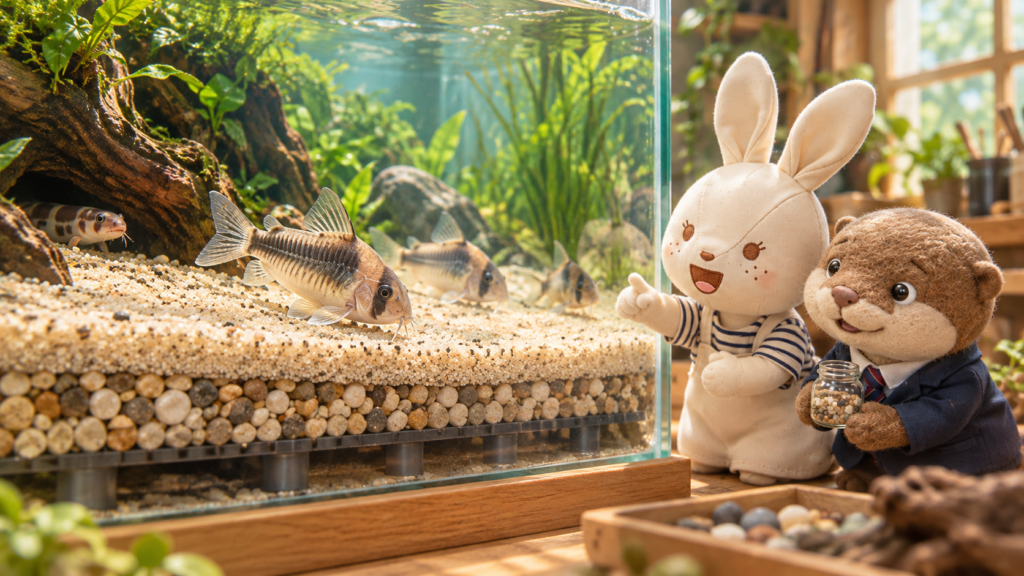 アイのアクアグッズ案内水槽の底砂の選び方|砂・砂利の違いとおすすめ商品道具の特徴や使い方、選ぶときのポイントをアイが紹介します。記事はコチラ →
さまざまな飼育テーマをご紹介。リンク先の記事には広告・商品紹介が含まれます。
案内・紹介記事一覧へ →本記事では、ブラックモーリーおよび近縁のポエシリア属魚類について、分類、分布、飼育水質、食性、繁殖、外来定着、藍藻と水質管理に関する記述を確認するため、店舗・販売ページを除外し、魚類データベース、公的機関、学術論文、非販売系のアクアリウム解説資料を参照しました。
- FishBase. Poecilia sphenops, Molly コクチモーリーの分類、自然分布、淡水・汽水性、pH、硬度、水温、最大サイズなど、基本情報と飼育環境の確認に使用。
- FishBase Field Guide. Poecilia sphenops Valenciennes, 1846 ブラックモーリーが世界的に流通する黒色品種であること、食性、緑藻の摂食、乾燥飼料への適応、最小水槽サイズの目安確認に使用。
- U.S. Geological Survey, Nonindigenous Aquatic Species. Black molly (Poecilia latipinna × velifera) Species Profile ブラックモーリーという流通名に交雑由来の系統が含まれ得ること、観賞魚由来の逸出・放流リスクを説明する補助資料として使用。
- U.S. Fish and Wildlife Service. Ecological Risk Screening Summary: Mexican Molly, Poecilia sphenops ポエシリア属魚類の観賞魚流通、導入リスク、雄のゴノポディウムなど、繁殖と外来化に関する基礎情報の確認に使用。
- 国立環境研究所 侵入生物データベース. コクチモーリー 日本国内におけるコクチモーリーの移入情報、北海道での記録、自然分布、体長、温度選好性、卵胎生、食性、影響評価の確認に使用。
- 尼岡邦夫・仲谷一宏. 2001. 北海道白老町で自然繁殖しているコクチモーリー Poecilia sphenops. 魚類学雑誌 48: 109–112. 北海道白老町におけるコクチモーリーの自然繁殖記録を確認するために使用。
- 松沼瑞樹・本村浩之. 2009. 鹿児島県指宿市で自然繁殖しているカダヤシ科スリコギモーリー(新称). 魚類学雑誌 56: 21–30. 鹿児島県指宿市の温泉水影響河川におけるスリコギモーリー Poecilia mexicana の自然繁殖記録を確認するために使用。
- Australian Government. Water Quality Australia. Cyanobacteria (blue-green algae) 藍藻がシアノバクテリアであること、光・栄養塩・二酸化炭素などを利用して増殖することの確認に使用。
- Aquarium Science. 16.4. Blue-Green Algae 水槽内の藍藻対策について、水流不足、高リン酸、低酸素などの実用的な要因整理を確認するために使用。ブラックモーリー単独での根絶ではなく、補助的対策として扱うための参考資料。
確認日:2026年6月1日

コメント