

解説 / Description
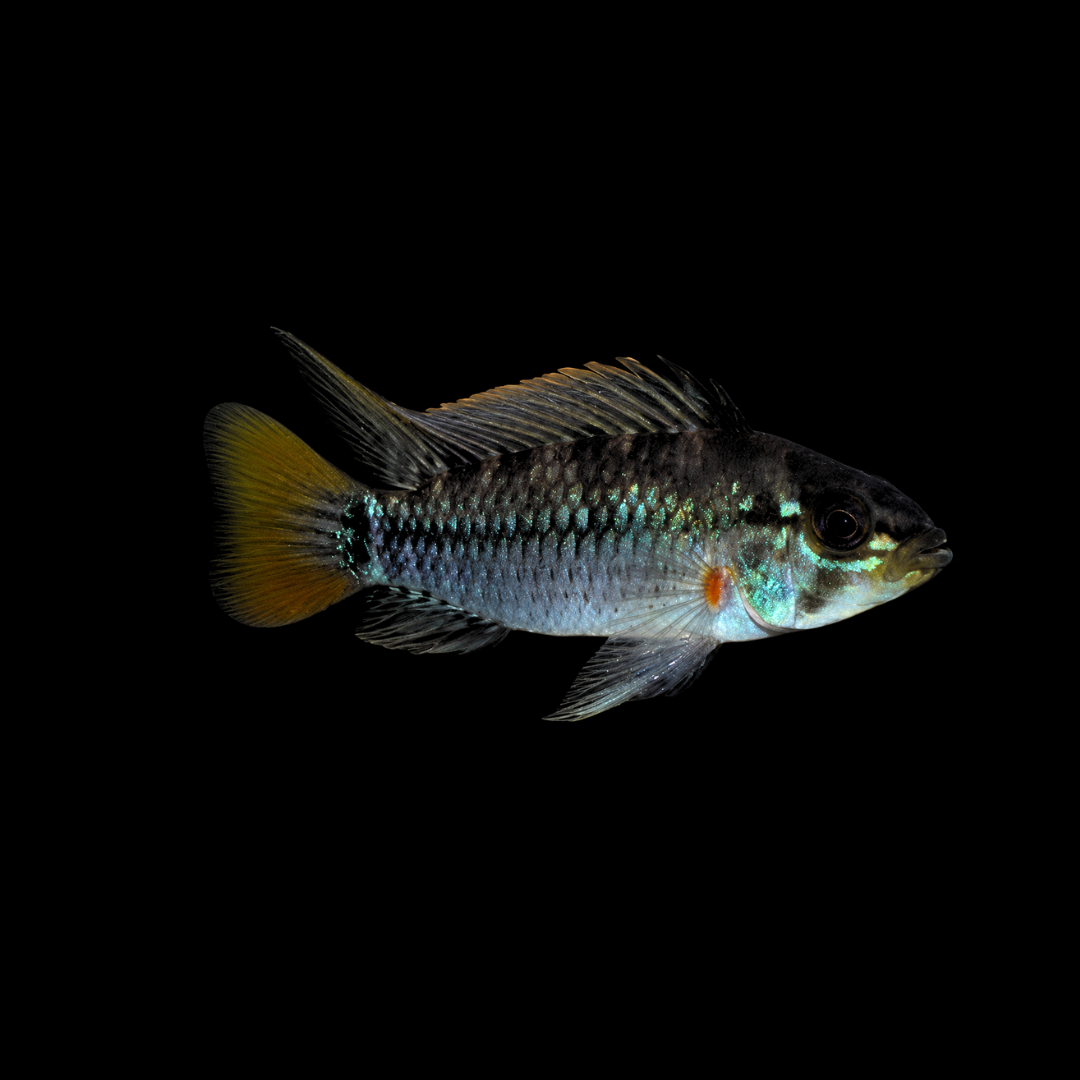
アピストグラマ・エウノータスは、南アメリカの上部アマゾン水系に分布するドワーフシクリッドです。アピストグラマの中では比較的体高があり、成熟した雄では頬に青い金属光沢が浮かび、胸びれの付け根付近に橙色から赤色のアクセントが現れる個体も見られます。青灰色の体色、黒い斑紋、黄橙色のひれが環境や状態によって表情を変える、観察するほど魅力が伝わる種類です。一方、エウノータス・コンプレックスには外見のよく似た近縁型が多く、観賞魚流通ではそれらがエウノータスの名と結び付けられることもあります。色彩だけで判断せず、産地情報や黒色斑紋なども含めて見ることが大切です。 Apistogramma eunotus is a dwarf cichlid from the upper Amazon basin of South America. Compared with many other Apistogramma, it has a relatively deep body. Mature males may show metallic blue iridescence on the cheek and orange to reddish accents near the base of the pectoral fin. The blue-gray body, dark markings, and yellow-orange fins can change in appearance with condition and surroundings. The A. eunotus complex also contains closely similar forms, and aquarium-trade fish associated with the eunotus name are not always straightforward to identify. Color alone should therefore be considered together with locality information and dark patterning.
基本情報 / Basic Information
| 学名 / Scientific Name | Apistogramma eunotus Kullander, 1981 |
|---|---|
| 通称 / Common Name | アピストグラマ・エウノータス、エウノータス。Apistogramma eunotus. |
| 分類 / Family | シクリッド目・シクリッド科・アピストグラマ属Order Cichliformes, Family Cichlidae, Genus Apistogramma |
| 英名 / English Name | Blue Cheek Dwarf Cichlid |
| 分布 / Distribution | 南アメリカの上部アマゾン川水系。ブラジル、コロンビア、ペルーから知られ、ペルーではウカヤリ川・アマゾン川の支流域やヤバリ川水系、ブラジルではジャプラ川水系などに分布します。Upper Amazon basin in South America, with records from Brazil, Colombia, and Peru. Documented localities include tributaries of the Ucayali and Amazon rivers and the Yavarí system in Peru, and the Japurá drainage in Brazil. |
| 最大体長 / Max Size | 記録されている最大標準体長は約5.3cmです。標準体長は尾びれを含まない計測値なので、水槽内で見た全長はこれより長くなります。雌は一般に雄より小型です。The documented maximum standard length is about 5.3 cm. Standard length excludes the caudal fin, so the fish appears longer when measured as total length in an aquarium. Females are generally smaller than males. |
| 寿命 / Lifespan | 本種に固有の寿命の目安は明確になっていません。飼育下での寿命は、飼育条件や個体の状態によっても変わります。A reliable species-specific lifespan figure is not well established. Longevity in captivity also varies with husbandry and individual condition. |
飼育環境 / Aquarium Environment
| 水槽サイズ / Tank Size | 底面45×30cm程度の45cm規格水槽(約40L前後)が小型個体やペア管理の最低目安ですが、成熟雄の縄張り性と繁殖期の追尾を考えると、長期飼育には60cm規格水槽(約60L前後)以上が安心です。複数個体を同居させる場合は、さらに底面積の広い水槽を選びます。A tank with a footprint around 45 × 30 cm, roughly a Japanese 45 cm standard aquarium of about 40 L, is a practical minimum for small fish or a pair. Because adult males can become strongly territorial, a 60 cm standard aquarium of about 60 L or larger is safer for long-term maintenance. Use substantially more floor space for multiple fish. |
|---|---|
| 水温 / Temperature | 飼育では23〜27℃程度を基本の目安にします。自然分布のデータには23〜30℃の記録がありますが、野外で確認された範囲と水槽で常用する適温は同じではありません。日常的には上限寄りの高水温を続けず、急激な温度変化も避けます。 For aquarium care, about 23–27°C is a practical target. Field data include records up to 30°C, but a range observed in nature should not automatically be treated as the preferred long-term aquarium temperature. Avoid prolonged high temperatures near the upper limit and prevent abrupt temperature changes. |
| 水質 / Water Quality | pH6.5〜7.5付近を中心に、軟水から中程度の硬度で安定させると管理しやすい種類です。フィールド情報では中性付近の水域からも知られ、強い酸性水を必須としません。日本の水道水は地域差が大きいため、カルキ抜き後のpHと硬度を確認し、極端な調整よりも安定した水質と定期的な換水を優先します。A stable pH around 6.5–7.5 with soft to moderately hard water is practical for aquarium care. Field records include near-neutral waters, so strongly acidic conditions are not essential. Because tap water varies by region, test pH and hardness after dechlorination and prioritize stability and regular water changes over extreme chemical adjustment. |
| レイアウト / Layout | 細かな砂を底床に敷き、流木、石、落ち葉、植木鉢やココナッツシェルなどで視線を遮る隠れ家を複数作ります。ミクロソリウム、ウィローモス、クリプトコリネ、アヌビアスなどの陰性水草とも相性がよく、浮草で光を和らげると落ち着きやすくなります。水流は弱めにし、底砂を口に含んで探る行動を妨げない、角のない細粒の底床が適しています。Use fine, smooth sand and create multiple sight breaks and shelters with driftwood, stones, leaf litter, flowerpots, or coconut shells. Low-light plants such as Microsorum, mosses, Cryptocoryne, and Anubias work well, and floating plants can soften the light. Keep flow gentle and provide rounded, fine substrate that allows the fish to sift sand naturally. |
| 注意点 / Precautions | 最大の注意点は繁殖期の縄張り争いです。雄が雌を激しく追うことも、産卵後に子育て中の雌が雄を追い払うこともあるため、双方が逃げ込める複数のシェルターと視線を切る構造が欠かせません。追尾時には飛び出すことがあるので、フタの隙間も塞ぎます。また、酸性化だけを目的に落ち葉やソイルを過剰投入せず、汚れた古水を長期間放置しないことが重要です。The main concern is territorial aggression during breeding. Males may chase females intensely, while brood-guarding females may later drive males away. Provide multiple refuges, broken lines of sight, and escape routes for both sexes. Chased fish may jump, so cover gaps securely. Avoid forcing acidity with excessive botanicals or substrate, and do not allow neglected, deteriorating water to accumulate. |
餌と給餌 / Feeding
| 餌の種類 / Diet | 肉食傾向のある雑食性として扱われ、飼育下では小粒の沈下性顆粒やペレットを主食にし、冷凍アカムシ、ブラインシュリンプ、ミジンコ類などを組み合わせて与えられます。単一の餌だけに偏らせず、食べやすい大きさの餌を複数使うと管理しやすくなります。It is generally treated as an omnivore with a strong preference for animal foods. In aquaria, small sinking granules or pellets can form the staple diet, supplemented with frozen bloodworms, brine shrimp, and daphnia. Using several appropriately sized foods is preferable to relying on a single item. |
|---|---|
| 給餌のポイント / Feeding Tips | 1回に大量に与えるより、食べ切れる量を1日1〜2回に分けて与えます。底層で探す習性があるため、餌が水面だけでなく中層から底層へ届くようにします。人工飼料だけ、冷凍アカムシだけといった単一メニューに偏らせず、複数の餌を組み合わせることで栄養の偏りと肥満を防ぎます。繁殖後の雌や育成中の若魚には、少量をこまめに与える方法が向いています。Offer only what the fish can finish, usually once or twice daily rather than in one heavy feeding. Because they forage near the substrate, make sure food reaches the mid and lower levels. Avoid relying on a single food such as pellets alone or bloodworms alone; dietary variety helps reduce nutritional imbalance and obesity. Brood females and growing juveniles benefit from smaller, more frequent meals. |
性格と混泳 / Temperament and Tank Mates
| 性格 / Temperament | 普段は底層から中層を中心に行動する観察しやすいドワーフシクリッドですが、縄張り意識は明確です。特に成熟した雄は同種や近縁種に強く出ることがあり、繁殖期には追尾が激しくなります。一方、産卵後は雌が鮮やかな黄色の子育て色に変わり、卵や稚魚を守るために非常に強気になります。A readily observed dwarf cichlid that spends much of its time near the bottom and mid-water, but it is distinctly territorial. Mature males can be forceful toward conspecifics and related cichlids, especially during breeding. After spawning, females turn bright yellow in brood coloration and can become highly assertive while guarding eggs and fry. |
|---|---|
| 混泳の相性 / Compatibility | 水槽上部から中層を泳ぐ温和な小型魚とは比較的合わせやすく、ペンシルフィッシュなどを少数入れると警戒心が和らぐことがあります。一方、底層で縄張りが重なる別のドワーフシクリッドや、攻撃性の強いシクリッドとの混泳は避けるのが無難です。繁殖を確実に観察したい場合は、ペアまたは管理可能な小グループを主役にした専用水槽が扱いやすく、稚魚を守る雌が混泳魚を追い立てる可能性も考慮します。It generally combines well with peaceful small fishes that occupy the upper and middle levels. A few pencilfish can sometimes act as dither fish and reduce shyness. Avoid other territorial dwarf cichlids that compete for the same bottom space and larger aggressive cichlids. For reliable breeding observation, a pair or carefully managed small group in a dedicated aquarium is easiest, as brood-guarding females may chase tank mates. |
病気と対策 / Diseases and Prevention
| かかりやすい病気 / Common Diseases | エウノータスだけに特有の疾患が明確に知られているわけではありません。一般的な熱帯魚と同様に、水温や水質の急変、導入時のストレス、過密や外傷をきっかけとして、白点病、細菌性のひれの損傷や皮膚症状、消化器系の不調などが起こることがあります。ワイルド個体では外部・内部寄生虫を持ち込む可能性にも注意します。No disease is clearly established as uniquely characteristic of A. eunotus. As with other tropical fishes, sudden changes in temperature or water quality, transport stress, crowding, and injuries can be followed by ich, bacterial fin or skin problems, and digestive disorders. Wild-caught specimens also warrant caution for possible external or internal parasites. |
|---|---|
| 対策と予防 / Prevention | 新規導入魚は可能なら隔離して観察し、急なpH・水温差を避けてゆっくり水合わせします。定期的な換水、食べ残しの除去、ろ過の安定、過密回避を基本とし、ひれをたたむ、体色が急に暗くなる、呼吸が速い、餌を食べないといった変化を早期に捉えます。治療時は病名を決めつけず症状を確認し、薬剤を使用する場合は製品の対象魚・用量・水温条件を守ります。Quarantine new fish when possible and acclimate them gradually to avoid abrupt pH or temperature differences. Prevention centers on regular water changes, removal of uneaten food, stable filtration, and avoiding crowding. Watch for early signs such as clamped fins, sudden darkening, rapid breathing, or loss of appetite. Do not assume a diagnosis from one symptom; if medication is required, follow the product’s species, dosage, and temperature instructions precisely. |
増やし方(繁殖) / Breeding
| 雌雄の判別 / Sexing | 成熟した雄は雌より大きく、背びれと尻びれの後方が伸びて先端が尖りやすく、頬の青い光沢やひれの黄橙色も目立ちます。雌は小型でひれが比較的丸く、通常時は控えめな体色ですが、繁殖期には全身が鮮やかな黄色に変わり、黒い斑紋とのコントラストが強くなります。若魚では差が小さいため、体格とひれが仕上がるまで判別しにくい場合があります。Mature males are larger, with the rear portions of the dorsal and anal fins becoming more extended and pointed; blue cheek iridescence and yellow-orange fin coloration are often stronger. Females remain smaller with comparatively rounded fins and subdued normal coloration, but become vivid yellow with sharply contrasting dark markings during breeding. Juveniles can be difficult to sex until body size and fin shape are well developed. |
|---|---|
| 繁殖形態 / Reproduction | 洞窟産卵型です。雌が流木のくぼみ、石の下、植木鉢やココナッツシェルなどの天井面に卵を付着させ、卵と仔魚の世話を主に担当します。1回の産卵数はおよそ100〜150個と報告されています。アピストグラマらしく雌主導の子育てがはっきりしており、孵化後も雌が稚魚の群れを誘導します。A cave-spawning species. The female attaches eggs to the ceiling of a cavity such as a hollow in driftwood, the underside of a stone, a flowerpot, or a coconut shell, and she performs most egg and larval care. Clutches of roughly 100–150 eggs have been reported. Brood care is strongly female-led, and after hatching she continues to guide the school of fry. |
| 繁殖のポイント / Breeding Tips | 23〜27℃程度の範囲で水温と水質を安定させ、入り口の大きさや向きが異なる産卵シェルターを複数用意します。状態のよい親魚に栄養価の高い餌を与え、定期的な換水で清浄な環境を保ちます。産卵後は雌雄の攻撃性を観察し、追い詰められる個体がいる場合は隔離します。稚魚が自由遊泳を始めたら、孵化直後のブラインシュリンプ幼生や微細な初期飼料を少量ずつ1日数回与えます。Maintain stable water within roughly 23–27°C and provide several spawning shelters with different entrance sizes and orientations. Condition the adults with nutritious foods and use regular water changes to keep conditions clean and stable. After spawning, watch both sexes for aggression and separate any fish that is being cornered. Once the fry become free-swimming, offer newly hatched brine shrimp nauplii or very fine starter foods in small portions several times per day. |
雑学と豆知識 / Trivia and Fun Facts
| 1. 1981年に独立種として記載された魚 / 1. A species formally described in 1981 | エウノータスは、スウェーデンの魚類学者スヴェン・O・クランダーによって1981年に新種として記載されました。タイプ産地はペルーのウカヤリ川水系、プカルパ近郊のカンポベルデ周辺です。現在も Apistogramma eunotus Kullander, 1981 は有効種として扱われています。流通魚では近縁型との同定が難しい場合がありますが、学術上の種名そのものは現在も有効であり、まずこの点を分けて理解すると分類上の混乱を避けやすくなります。Apistogramma eunotus was formally described as a new species in 1981 by Swedish ichthyologist Sven O. Kullander. Its type locality lies near Campo Verde in the Ucayali drainage close to Pucallpa, Peru. Apistogramma eunotus Kullander, 1981 remains a valid species today. Aquarium-trade fish can still be difficult to distinguish from closely related forms, but that identification issue is separate from the validity of the scientific name itself. |
|---|---|
| 2. 学名が語る「不確かな線」と「立派な背中」 / 2. A name suggesting an “inconstant line” and a strong back | 属名 Apistogramma はギリシャ語系の apistos と gramma に由来し、「一定しない線」といった意味に解釈されます。命名者が由来を明記したわけではありませんが、本属で側線の発達が変則的であることに結び付けて説明されるのが一般的です。一方、種小名 eunotus は「良い・立派な」を表す eu と「背」を表す notos に由来するとされ、同属の中でも体高が高く、背のラインがしっかりした本種の姿によく似合います。名前を知ってから魚を見ると、体型そのものが学名のヒントとして見えてきます。The genus name Apistogramma is derived from Greek-rooted words often interpreted as “inconstant line.” The original naming did not explicitly explain the allusion, but it is commonly linked to the unusual or variably developed lateral-line system of the genus. The species epithet eunotus is generally interpreted from eu, meaning good or well-developed, and notos, meaning back, a fitting reference to the species’ relatively deep-bodied profile. Once the name is understood, the fish’s shape itself becomes part of its taxonomic story. |
| 3. 英名の由来になった「ブルーチーク」 / 3. The blue cheek behind the English name | 成熟した雄の頬には青い金属光沢が現れやすく、Blue Cheek Dwarf Cichlid という英名はこの印象的な発色に由来します。さらに胸びれの付け根付近に橙色から赤色の斑点が出る個体もおり、落ち着いた青灰色の体に小さな暖色が差し込むのがエウノータスらしい魅力です。ただし発色は個体差、産地、順位、照明、背景色、健康状態で変わるため、一つの色だけで同定するのではなく、体型や黒色斑紋も合わせて見る必要があります。Mature males often develop metallic blue iridescence on the cheek, inspiring the English name Blue Cheek Dwarf Cichlid. Many individuals also show an orange to reddish spot near the base of the pectoral fin, adding a warm accent to the subdued blue-gray body. Color alone, however, is not a reliable identification tool: locality, individual genetics, social status, lighting, background, and condition all influence appearance, so body shape and dark patterning should also be considered. |
| 4. 近縁種との境界は黒い模様に現れる / 4. Dark markings help separate close relatives | 専門家の種群整理では、エウノータスはレガニ・グループ内のエウノータス・コンプレックスに置かれることがあります。ここでいうグループやコンプレックスは正式な分類階級というより、近縁種を比較するための実用的なまとまりです。近縁のクルジィなどとは長く混同されてきましたが、威嚇時に体側の一部の縦帯が下側で分かれて見えることなど、メラニン斑紋の細部が鑑別の手掛かりになります。色鮮やかなひれより、むしろ黒い線や斑点の置かれ方が分類の鍵になる点は、アピストグラマ観察の奥深いところです。Specialist working classifications often place A. eunotus within the A. regani group and the A. eunotus complex. These “groups” and “complexes” are practical arrangements for comparing related species rather than formal Linnaean ranks. The species has long been confused with close relatives such as A. cruzi, and details of melanin patterning can be useful clues—for example, portions of the vertical bars may appear split below the lateral band during threat display. In Apistogramma identification, the placement of dark bars and spots can be more informative than the brightest fin colors. |
| 5. 一つの色に収まらない地域変異 / 5. Locality variation resists a single color standard | エウノータスとその近縁型は上部アマゾン域の複数地域から知られ、採集地によって体色、尾びれの模様、赤や橙色の乗り方、ひれの伸び方に違いが見られます。観賞魚流通では「オレンジテール」などの名称も使われますが、専門的な流通・同定情報では A. cf. eunotus として扱われる例もあります。そのため、「オレンジテール」をそのまま A. eunotus の固定された品種名や通称とみなすのは慎重であるべきです。産地名と色彩名、そして学術的な同定は、それぞれ別の情報として見ると混乱を避けられます。A. eunotus and closely related forms are known from several parts of the upper Amazon region, and locality-associated differences can occur in body color, caudal pattern, orange or red accents, and fin development. Aquarium-trade names such as “Orange Tail” are also used, but specialist identification sources often apply them to A. cf. eunotus forms. It is therefore safer not to treat “Orange Tail” automatically as a fixed variety or common name of true A. eunotus. Locality names, color labels, and scientific identification represent different kinds of information. |
| 6. ブラックウォーターだけの魚ではない / 6. Not a fish restricted to blackwater | アピストグラマと聞くと、タンニンで濃く染まった強酸性のブラックウォーターを連想しがちです。ところがエウノータスは、ブラックウォーターだけでなく、クリアウォーターやホワイトウォーターの環境からも知られています。この幅広さが、飼育下で極端な低pHを要求しにくい背景の一つと考えられます。ただし「何でも平気」という意味ではありません。地域ごとの水道水は性質が異なるため、魚を水に無理やり合わせるのではなく、実測した水質を把握し、急変のない清浄な環境を保つことが本種の強健さを引き出します。The name Apistogramma often evokes strongly acidic, tannin-stained blackwater. A. eunotus, however, is known from blackwater, clearwater, and whitewater conditions. That ecological breadth helps explain why it does not necessarily require extremely low pH in captivity. This does not mean the fish tolerates careless conditions. Tap water differs by region, so the best approach is to know the actual water parameters and maintain clean, stable conditions without abrupt shifts. |
| 7. 洞窟の天井に並ぶ100〜150個の卵 / 7. A clutch of 100–150 eggs on a cave ceiling | エウノータスの繁殖では、雌が洞窟状の隠れ家の天井におよそ100〜150個の卵を産み付けることが報告されています。産卵を境に雌の役割は劇的に変わり、体色は鮮黄色へ、行動は慎重な小型魚から強気な保護者へと切り替わります。孵化した仔魚が自由に泳げるようになると、雌は群れをまとめながら水槽内を移動させます。小さな体で自分より大きな雄に向かっていく姿は、シクリッドが高い子育て行動を発達させた魚であることを、身近な水槽の中で実感させてくれます。A. eunotus females have been reported to attach roughly 100–150 eggs to the ceiling of a cave-like shelter. Spawning triggers a dramatic shift: the female turns bright yellow and changes from a cautious small fish into a determined guardian. Once the larvae become free-swimming, she gathers and guides the fry around the aquarium. Watching such a small fish confront even a larger male offers a vivid demonstration of the highly developed parental behavior for which cichlids are famous. |
| 8. 保全上は低懸念でも、生息地の多様性は大切 / 8. Least Concern does not make habitat diversity unimportant | 本種はIUCNレッドリストで低懸念(Least Concern)と評価されており、現行データベースでは2020年10月28日の評価が示されています。広い分布域を持つ一方、アピストグラマ類では採集地情報が近縁型や地域個体群を考える手掛かりになります。野生由来個体を扱うときは、珍しい色だけでなく、どこから来た魚なのかという情報も大切にすると、観賞魚としての魅力と自然史上の背景を無理なく結び付けて理解できます。The species is assessed as Least Concern on the IUCN Red List, with the current database citing an assessment dated 28 October 2020. Although the species has a broad range, locality information remains useful when considering closely related forms and regional populations of Apistogramma. For wild-origin fish, knowing where a specimen came from can be as informative as its unusual coloration and helps connect aquarium appreciation with natural history. |
まとめ / Conclusion
アピストグラマ・エウノータスは、青く輝く頬と高い体高に加え、洞窟産卵や雌による子育てを観察できる、シクリッドらしい行動の豊かな魚です。強い酸性水だけを前提とする種類ではなく、中性付近を中心とした安定した水質でも飼育しやすい点は、日本のアクアリウムでも扱いやすさにつながります。流通魚には近縁型との同定が難しい例もあるため、色彩名だけでなく産地や斑紋を含めて見ると、本種の特徴をより正確に捉えられます。 Apistogramma eunotus combines a metallic blue cheek and relatively deep-bodied shape with classic cichlid behaviors such as cave spawning and female brood care. It is not a species that must be kept only in strongly acidic water, and stable conditions around neutral can make it comparatively manageable in aquaria. Because aquarium-trade fish may sometimes be difficult to distinguish from related forms, locality and dark patterning are more informative than a color label alone.
その一方で、繁殖期の激しい追尾や縄張り争いは決して軽視できません。十分な底面積、複数の隠れ家、飛び出し対策、そして魚同士の関係を見ながら必要なら隔離する判断が、落ち着いた飼育につながります。環境が整った水槽で、雄の繊細な発色と雌の力強い子育てが交互に現れる姿は、南米の小型シクリッドが持つ奥深さを長く楽しませてくれます。 At the same time, intense chasing and territorial conflict during breeding should never be underestimated. Adequate floor space, multiple refuges, a secure lid, and the willingness to separate fish when necessary are essential for stable care. In a well-designed aquarium, the male’s subtle coloration and the female’s forceful brood care reveal different sides of the same species and make this South American dwarf cichlid rewarding to observe over the long term.
気になる道具や飼い方を見つけてみませんか?
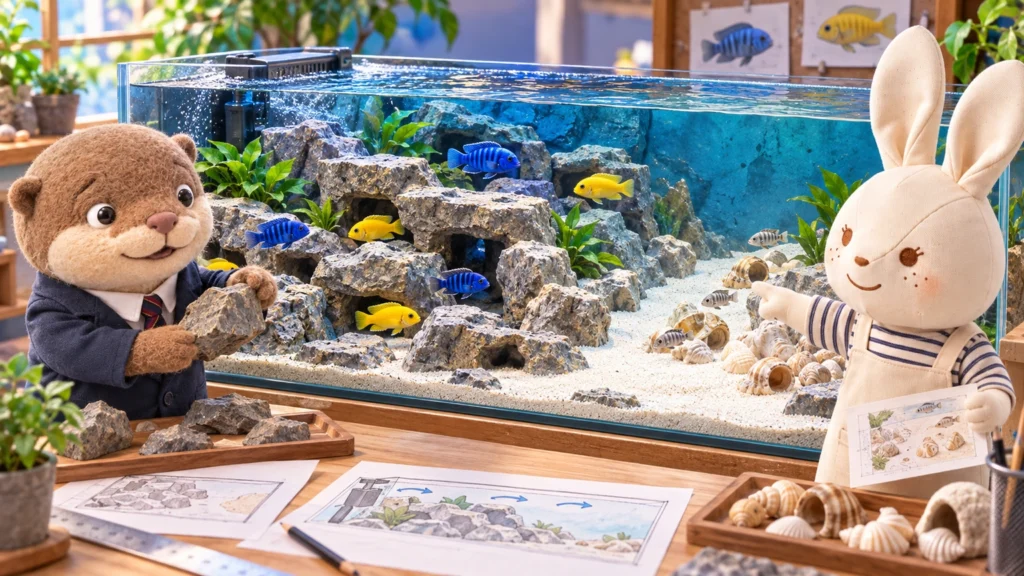 アイのアクアグッズ案内アフリカンシクリッドの飼育用品|水槽・ろ過・底砂・岩組み・餌の選び方道具の特徴や使い方、選ぶときのポイントをアイが紹介します。記事はコチラ →
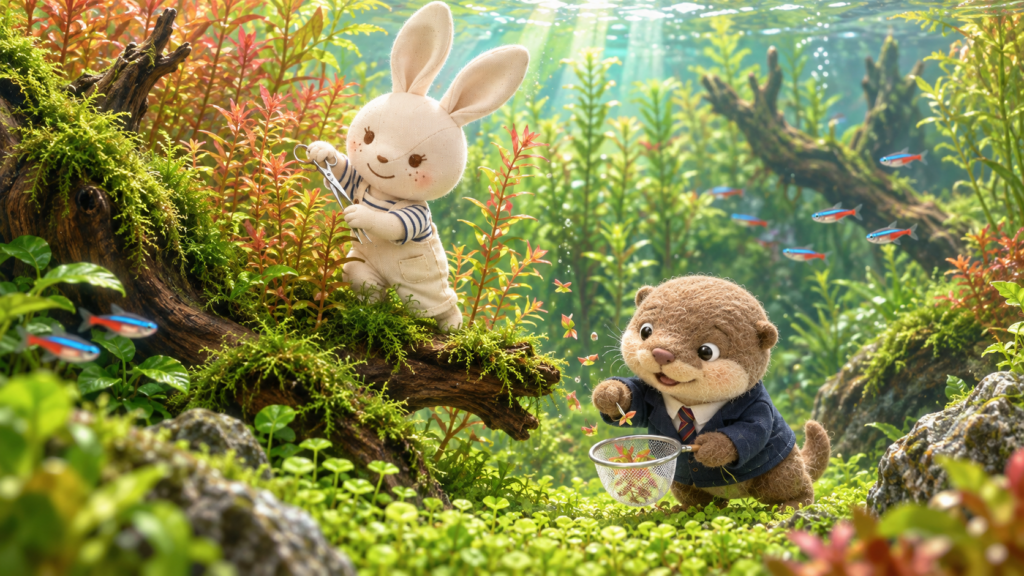 アイのアクアグッズ案内水草トリミングの道具とやり方|ハサミ・ピンセットを水草に合わせて選ぼう伸びすぎた水草は切っていい? 有茎草の差し戻し、前景草の絨毯、流木のモスを整える場面から、水草用ハサミ・ピンセット・ゴミ取りネットの選び方と片付けを紹介します。記事はコチラ →
 アイのアクアグッズ案内バルブの仲間に合わせる飼育用品|チェリーバルブ・スマトラ・中型種の水槽とろ過道具の特徴や使い方、選ぶときのポイントをアイが紹介します。記事はコチラ →
 アイのアクアグッズ案内小型カラシンの群れを楽しむ|餌と水換えから考える飼育用品ガイド小型カラシンの群れを眺める時間を、もっと楽しく。泳ぐ余白、餌の食べ方、続けやすい水換えを軸に、日本で揃えやすい用品の選び方を紹介します。記事はコチラ →
さまざまな飼育テーマをご紹介。リンク先の記事には広告・商品紹介が含まれます。
案内・紹介記事一覧へ →分布マップ
アピストグラマ・エウノータス(Apistogramma eunotus)は、南アメリカの上部アマゾン川水系に分布し、ブラジル、コロンビア、ペルーから知られています。ペルーのウカヤリ川・アマゾン川支流域やヤバリ川水系、ブラジルのジャプラ川水系などを含む分布域を概略表示しています。
※この地図は記事に記載された分布地域をもとにした概略表示です。マーカーは分布域を把握しやすくするために設定した代表地点であり、実際の採集地点を示すものではありません。
参考文献
- Kullander, S. O. 1981. “Description of a new species of Apistogramma (Teleostei: Cichlidae) from the upper Amazonas basin.” Bonner Zoologische Beiträge 32(1–2): 183–194.
- Kullander, S. O. 1986. Cichlid Fishes of the Amazon River Drainage of Peru. Swedish Museum of Natural History, Stockholm, 1–431, pls. 1–38. ISBN 91-86510-04-5. 資料
- Fricke, R., Eschmeyer, W. N. & Van der Laan, R. (eds.) 2026. Eschmeyer’s Catalog of Fishes: Genera, Species, References. California Academy of Sciences. Apistogramma eunotus(2026年8月20日閲覧)
- Froese, R. & Pauly, D. (eds.). FishBase: Apistogramma eunotus Kullander, 1981. Species Summary(2026年8月20日閲覧)
- Koslowski, I. 2002. Die Buntbarsche Amerikas, Band 2: Apistogramma & Co. Verlag Eugen Ulmer, Stuttgart, 320 pp. ISBN 3-8001-3820-4.
- Römer, U. 2000. Cichlid Atlas, Volume 1: Natural History of South American Dwarf Cichlids. Mergus Verlag, Melle, 1311 pp. ISBN 3-88244-056-2.
- Petty, B. D., Francis-Floyd, R. & Yanong, R. P. E. “Management of Aquarium Fish.” Merck Veterinary Manual. Updated June 2026. 資料(2026年8月20日閲覧)
- Francis-Floyd, R. & Petty, B. D. “Disorders and Diseases of Fish.” Merck Veterinary Manual. Updated April 2026. 資料(2026年8月20日閲覧)




コメント