

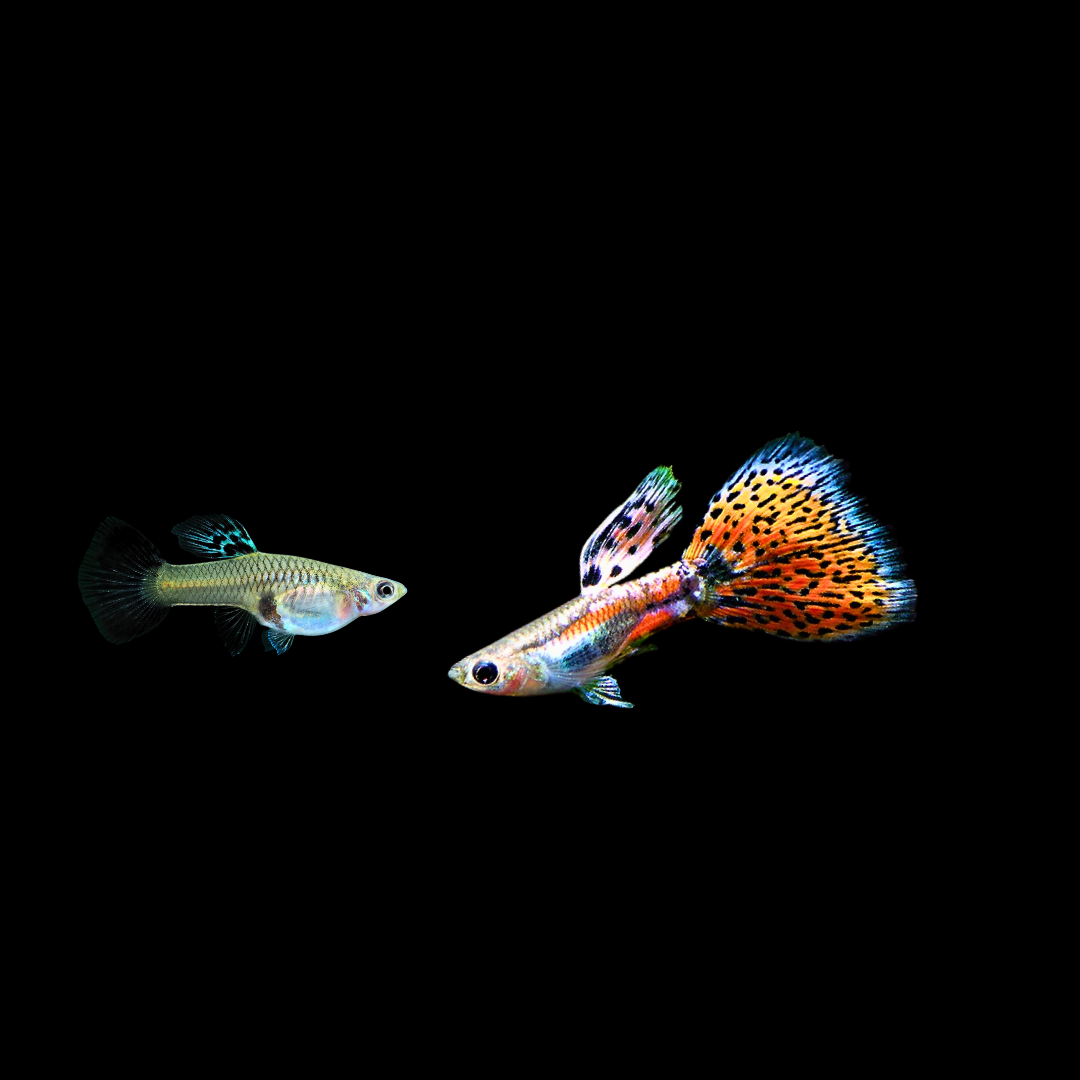
解説 / Description
レッドグラスグッピーは、赤い体色と尾びれに入る細かなグラス模様が魅力の改良グッピーです。日本の国産グッピー文化の中でも、ブルーグラスやブラオと深く関わる系統として知られ、単に赤いグッピーというだけでなく、グラス系品種の遺伝や選別を理解するうえでも重要な存在です。 The Red Grass Guppy is a selectively bred guppy strain admired for its red coloration and fine grass-like patterning on the caudal fin. In Japanese fancy guppy culture, it is closely connected with Blue Grass and Blau-type guppies, making it important not only as a beautiful red strain but also as a key example for understanding inheritance and selection in grass-patterned guppies.
飼育自体は一般的なグッピーに準じますが、美しい尾びれを維持するには、急な水質変化を避け、穏やかな水流と安定した水温を保つことが大切です。繁殖力は高いものの、赤の濃さ、尾びれの形、グラス模様の細かさを維持するには、親魚の選別と系統管理が重要になります。 Its husbandry is generally similar to that of other fancy guppies, but stable water conditions, gentle flow, and steady temperature are important for maintaining beautiful fins. Although it breeds readily, maintaining deep red color, good tail shape, and fine grass patterning requires careful selection of breeders and strain management.
基本情報 / Basic Information
| 学名 / Scientific Name | Poecilia reticulata |
|---|---|
| 通称 / Common Name | レッドグラスグッピー、レッドグラス、グラスグッピーRed Grass Guppy, Red Grass, Grass Guppy |
| 分類 / Family | カダヤシ目カダヤシ科グッピー属Order Cyprinodontiformes, family Poeciliidae, genus Poecilia |
| 英名 / English Name | Red Grass Guppy |
| 分布 / Distribution | 原種のグッピーは南米北部からカリブ海周辺に分布します。レッドグラスグッピーは観賞魚として作出・維持される改良品種で、自然分布を持つ野生種ではありません。日本国内では国産グッピーの代表的な系統のひとつとして流通しています。The wild guppy is native to northern South America and nearby Caribbean regions. The Red Grass Guppy is a selectively bred aquarium strain rather than a naturally distributed wild form. In Japan, it is distributed as one of the representative domestic fancy guppy strains. |
| 最大体長 / Max Size | オス約3〜4cm、メス約4〜6cm。品種改良個体では体格や尾びれの大きさに系統差があります。Males are about 3 to 4 cm, while females are about 4 to 6 cm. Body size and fin development vary among selected lines. |
| 寿命 / Lifespan | およそ1〜2年程度。安定した水温と水質で管理すれば、より長く状態よく飼育できる場合があります。Usually around 1 to 2 years. With stable temperature and water quality, individuals may remain healthy for a longer period. |
飼育環境 / Aquarium Environment
| 水槽サイズ / Tank Size | ペア飼育なら30cm規格水槽から可能ですが、安定性と繁殖を考えるなら45cm規格水槽以上がおすすめです。複数ペアや稚魚の育成まで考える場合は、60cm規格水槽を用意すると管理しやすくなります。A pair can be kept in a standard 30 cm aquarium, but a 45 cm standard tank or larger is recommended for stability and breeding. For several pairs or raising fry, a standard 60 cm tank is easier to manage. |
|---|---|
| 水温 / Temperature | 23〜26℃前後が扱いやすい範囲です。高温にも低温にもある程度適応しますが、急激な温度変化は白点病や体調不良の原因になるため、冬はヒーター、夏は冷却ファンなどで安定させます。 Around 23 to 26°C is a practical range. Guppies can adapt to some variation, but sudden temperature changes may trigger ich or stress, so a heater in winter and cooling fan in summer help maintain stability. |
| 水質 / Water Quality | 中性〜弱アルカリ性を基本とし、pH 6.8〜7.8前後を目安にします。日本の水道水でも飼育しやすい品種ですが、長期飼育では酸性化しすぎないよう、定期的な水換えと底床の管理が重要です。Neutral to slightly alkaline water is preferred, with pH around 6.8 to 7.8 as a practical guide. This strain is generally manageable in Japanese tap water, but regular water changes and substrate care are important to prevent excessive acidification over time. |
| レイアウト / Layout | 強い水流を避け、泳ぎやすい開けた空間と稚魚が隠れられる水草を組み合わせると管理しやすくなります。グッピーグラス、ウィローモス、マツモなどは稚魚の隠れ家としても使いやすく、繁殖水槽との相性も良好です。底床は管理しやすい大磯砂や薄敷きのソイルなどが候補になります。Avoid strong currents and combine open swimming space with plants that can shelter fry. Guppy grass, Java moss, and hornwort are useful in breeding setups. Substrates such as manageable river gravel or a thin layer of aquarium soil can be used depending on the keeper’s approach. |
| 注意点 / Precautions | 大きな尾びれを持つオスは強い水流で疲れやすいため、フィルターの吐出口を壁面に向けるなどして水流を和らげます。導入直後は水合わせを丁寧に行い、特に外国産個体や出所の異なる個体を混ぜる場合は、病気の持ち込みを避けるため隔離期間を設けると安心です。Males with large caudal fins can tire in strong currents, so redirect filter outflow toward the glass or otherwise soften the flow. Acclimate new fish carefully, and when mixing imported or unrelated stock, a quarantine period helps reduce the risk of introducing disease. |
餌と給餌 / Feeding
| 餌の種類 / Diet | 主食にはグッピー用の人工飼料、細かなフレークフード、微粒タイプの顆粒餌が適しています。植物質を含む餌を基本にしつつ、ブラインシュリンプベビー、冷凍アカムシ、イトメなどの動物性飼料を補助的に与えると、繁殖や成長の助けになります。Guppy pellets, fine flakes, and micro granules are suitable staple foods. A diet containing plant-based ingredients can be used as the base, while baby brine shrimp, frozen bloodworms, and small live foods can support growth and breeding condition. |
|---|---|
| 給餌のポイント / Feeding Tips | 1日1〜2回、数分で食べきれる量を与えます。グッピーはよく食べますが、過剰給餌は水質悪化と病気の原因になります。繁殖目的でブラインシュリンプベビーを多用する場合は、スポンジフィルターなど吸い込みの少ないろ過を使うと、水質管理がしやすくなります。Feed once or twice daily, only as much as the fish can finish within a few minutes. Guppies eat eagerly, but overfeeding causes poor water quality and disease. When using baby brine shrimp frequently for breeding, sponge filtration makes water management easier by reducing food loss into the filter. |
性格と混泳 / Temperament and Tank Mates
| 性格 / Temperament | 温和で活発に泳ぐ魚です。オス同士で軽い追いかけ合いをすることはありますが、強い縄張り性はありません。メスに対するオスの求愛が多くなるため、複数で飼う場合はメスの負担にも配慮します。It is peaceful and active. Males may chase one another lightly, but they are not strongly territorial. Because males court females frequently, the stress placed on females should be considered in group setups. |
|---|---|
| 混泳の相性 / Compatibility | 小型カラシン、コリドラス、小型のプレコ、穏やかな卵胎生魚などとは混泳しやすい傾向があります。ただし、尾びれをかじる魚、動きの荒い魚、大型魚との混泳は避けます。品種維持を目的とする場合は、他系統のグッピーやエンドラーズとの混泳は交雑につながるため不向きです。They usually mix well with small tetras, Corydoras, small plecos, and peaceful livebearers. Avoid fin-nipping species, rough swimmers, and larger predatory fish. If strain preservation is the goal, avoid keeping them with other guppy strains or Endler-type livebearers because hybridization may occur. |
病気と対策 / Diseases and Prevention
| かかりやすい病気 / Common Diseases | 白点病、尾ぐされ病、カラムナリス症、エロモナス症、痩せ、ヒレをたたむ不調などに注意します。特に導入直後、水温変化が大きい時期、水質が悪化した水槽では発症しやすくなります。Watch for ich, fin rot, columnaris, Aeromonas-related infections, wasting, and clamped fins. Problems are more likely just after introduction, during periods of large temperature fluctuation, or in aquariums with deteriorating water quality. |
|---|---|
| 対策と予防 / Prevention | 週1回を目安に1/4〜1/3程度の水換えを行い、底床の汚れをためすぎないようにします。導入時は隔離観察を行い、体調不良の個体は早めに別容器で管理します。軽いストレス性の不調では塩浴が補助的に使われることがありますが、症状が明確な細菌性感染では、原因に合った観賞魚用薬品を選び、説明書に従って薬浴します。Change about one quarter to one third of the water weekly and avoid excessive waste buildup in the substrate. Quarantine and observe new fish, and isolate weak individuals early. Salt baths may help in mild stress-related cases, but clear bacterial infections require an appropriate aquarium medication used according to its instructions. |
増やし方(繁殖) / Breeding
| 雌雄の判別 / Sexing | オスはメスより小型で色彩が鮮やかになり、尻びれが交接器であるゴノポディウムに変化します。メスは体が大きく腹部がふっくらしやすく、尾びれの発色はオスより控えめなことが多いです。若魚の段階で雌雄を分けると、意図しない交配を防ぎやすくなります。Males are smaller, more colorful, and have an anal fin modified into a gonopodium. Females are larger, often fuller-bodied, and usually less brightly colored in the fins. Separating juveniles by sex early helps prevent unintended mating. |
|---|---|
| 繁殖形態 / Reproduction | 卵胎生です。メスの体内で受精と発生が進み、卵ではなく泳げる状態の稚魚を産みます。一度交配したメスは体内に精子を保持し、オスがいない環境でも複数回出産することがあります。It is a livebearing fish. Fertilization and development occur inside the female, and she gives birth to free-swimming fry rather than laying eggs. A female that has mated once may store sperm and give birth multiple times even without a male present. |
| 繁殖のポイント / Breeding Tips | 繁殖自体は容易ですが、品種としての美しさを維持するには選別が欠かせません。尾筒が太く、背びれと尾びれの形がよく、赤の発色が濁らず、細かなグラス模様が尾びれ全体に均一に入るオスを親に選びます。メスは体格がよく、曲がりや奇形がなく、尾びれに色素や模様の兆候が見える個体を選ぶとよいでしょう。稚魚は親に食べられることがあるため、水草を多めに入れるか、産卵箱や育成水槽を利用します。Breeding is easy, but selection is essential for maintaining the strain. Choose males with a strong caudal peduncle, good dorsal and caudal fin shape, clear red coloration, and fine grass patterning across the tail. Females should be robust, free from deformities, and show signs of good color or pattern in the caudal fin. Fry may be eaten by adults, so dense plants, a breeder box, or a separate rearing tank are useful. |
雑学と豆知識 / Trivia and Fun Facts
| 1. レッドグラスとブルーグラス、ブラオの関係 / 1. Relationship with Blue Grass and Blau | レッドグラスグッピーを語るうえで欠かせないのが、ブルーグラスやブラオとの関係です。日本のグッピー愛好家の間では、赤い色素を通常通り表す個体がレッドグラス、赤い部分が青く見える個体がブルーグラス、赤い色素が大きく欠けて青黒く見える個体がブラオとして扱われます。ブルーグラス同士を交配すると、理論上はレッドグラス、ブルーグラス、ブラオが一定の割合で分離します。そのため、レッドグラスはブルーグラスの副産物として語られることもありましたが、現在では赤いグラス表現を磨き込む独立した魅力を持つ品種として楽しまれています。A key point in understanding the Red Grass Guppy is its relationship with Blue Grass and Blau-type guppies. Among Japanese fancy guppy breeders, individuals with normal red pigment expression are treated as Red Grass, those in which the red areas appear blue are called Blue Grass, and those lacking much of the red pigment and appearing dark bluish are referred to as Blau. When Blue Grass individuals are bred together, Red Grass, Blue Grass, and Blau-type offspring may segregate in predictable proportions. For this reason, Red Grass was sometimes described as a by-product of Blue Grass breeding, but today it is appreciated as a strain with its own refined red grass expression. |
|---|---|
| 2. グラス模様は固定すれば終わりではない / 2. Grass Patterning Requires Ongoing Selection | グラスという名前から、単純に細かな点模様が入れば完成と思われがちですが、実際の系統維持ではそれほど単純ではありません。尾びれのドットが細かく均一で、赤が濁らず、モザイク柄のように大柄へ流れすぎないことが大切です。さらに、尾びれの美しさだけでなく、尾筒の太さや背びれの伸び、泳ぎの安定感まで含めて選ばなければ、世代を重ねるうちに見た目の完成度が落ちてしまいます。レッドグラスの美しさは、色だけでなく、毎世代の細かな選別によって守られているといえます。The name “grass” may make the pattern sound simple, but maintaining it is not merely a matter of producing spotted tails. The dots should be fine and even, the red should remain clear, and the pattern should not drift into a coarse mosaic-like appearance. Breeders must also consider caudal peduncle strength, dorsal fin development, and stable swimming. The beauty of Red Grass is therefore preserved not only by color but by careful selection in every generation. |
| 3. グッピーは研究魚としても知られる / 3. Guppies as Research Fish | グッピーは観賞魚として有名ですが、行動、生態、性選択、遺伝などの研究でもよく知られる魚です。オスの色彩や模様はメスへのアピール、捕食者からの見つかりやすさ、環境条件などと関係して研究されてきました。レッドグラスグッピーのような改良品種を見るときも、単にきれいな魚としてだけでなく、色素、構造色、選別交配、人間の美意識が重なって生まれた生きた教材として眺めることができます。Guppies are famous aquarium fish, but they are also widely used in studies of behavior, ecology, sexual selection, and genetics. Male coloration and patterning have been studied in relation to female choice, predator visibility, and environmental conditions. A fancy strain such as the Red Grass Guppy can therefore be seen not only as a beautiful aquarium fish but also as a living example of pigment expression, structural color, selective breeding, and human aesthetic preference. |
| 4. 日本の水槽で扱いやすい国産系統の価値 / 4. Value of Domestic Japanese Lines | 国内ブリードのレッドグラスグッピーは、日本の水道水や一般的な室内水槽の環境に慣れている個体が多く、導入後の立ち上がりが比較的安定しやすい点が魅力です。一方で、出所の異なるグッピーを安易に混ぜると、水質への慣れの違いや病原体の持ち込みによって不調が出ることがあります。美しい系統を長く維持したい場合は、購入時の見た目だけでなく、どのような環境で育てられてきたか、同じ系統をどのように維持していくかを考えることが大切です。Domestic Japanese-bred Red Grass Guppies are often already accustomed to Japanese tap water and typical indoor aquarium conditions, making them comparatively stable after introduction. However, mixing guppies from different sources without care can lead to stress from water-condition differences or the introduction of pathogens. To maintain a beautiful line over the long term, it is important to consider not only appearance at purchase but also the environment in which the fish were raised and how the line will be managed. |
| 5. 野生化する力と飼育者の責任 / 5. Adaptability and Keeper Responsibility | グッピーは繁殖力と適応力が高い魚で、温泉地や温排水のある水路など、冬でも水温が保たれる場所では国内でも定着例が知られています。この強さは水槽内では飼育しやすさにつながりますが、自然環境に放してよいという意味ではありません。改良品種であるレッドグラスグッピーも、最後まで飼いきる、譲渡先を探す、病気を持ち込まないよう管理するという基本を守ることで、アクアリウム文化全体の信頼を支える存在になります。Guppies are highly reproductive and adaptable, and feral populations have been reported in warm places such as hot spring outflows and thermally influenced waterways in Japan. This resilience makes them easy to keep in aquariums, but it does not mean they should ever be released into nature. Even as a selectively bred strain, the Red Grass Guppy should be kept responsibly, rehomed when necessary, and managed carefully to avoid spreading disease or impacting local ecosystems. |
まとめ / Conclusion
レッドグラスグッピーは、鮮やかな赤と繊細なグラス模様を楽しめる、国産グッピー文化を象徴する品種のひとつです。一般的なグッピーと同じく飼育しやすい一方で、尾びれの美しさや色の深みを維持するには、安定した水質、穏やかな水流、丁寧な給餌、そして無理のない繁殖管理が大切です。 The Red Grass Guppy is one of the symbolic strains of Japanese fancy guppy culture, offering vivid red coloration and delicate grass patterning. Like other guppies, it is relatively easy to keep, but maintaining beautiful fins and deep color requires stable water quality, gentle flow, careful feeding, and sensible breeding management.
また、ブルーグラスやブラオとの関係を知ることで、この品種は単なる赤い観賞魚ではなく、遺伝、選別、系統維持の面白さまで味わえる存在になります。はじめてのグッピーとしても、品種改良の奥深さを楽しみたい飼育者にもおすすめできる、見応えと学びの多いグッピーです。 Understanding its relationship with Blue Grass and Blau-type guppies reveals that this strain is more than just a red ornamental fish; it also offers insight into inheritance, selection, and line maintenance. It is suitable both for keepers starting with guppies and for hobbyists who want to appreciate the depth of selective breeding.

気になる道具や飼い方を見つけてみませんか?
 アイのアクアグッズ案内水草用ソイルの選び方|土・砂の違いとおすすめ商品道具の特徴や使い方、選ぶときのポイントをアイが紹介します。記事はコチラ →
 アイのアクアグッズ案内水槽のろ材の選び方|ウール・リング・活性炭の違いとおすすめ商品フィルターの中の綿や石は何をしている? アイとコタロウが、ウール・スポンジ・セラミック・焼結ガラス・活性炭・ゼオライトを比較。機種との相性、入れ方、洗い方と交換まで商品とともに紹介します。記事はコチラ →
さまざまな飼育テーマをご紹介。リンク先の記事には広告・商品紹介が含まれます。
案内・紹介記事一覧へ →参考文献・参照資料
本記事では、レッドグラスグッピーをグッピー Poecilia reticulata の改良品種として扱い、分類、分布、体サイズ、繁殖生態、性選択、外来定着に関する基礎情報を以下の資料に基づいて整理しています。品種名や系統名については、国内の観賞魚流通・ブリード文化で用いられる呼称として本文中で説明しています。
-
Froese, R. and Pauly, D. Editors. FishBase. Poecilia reticulata, Guppy. World Wide Web electronic publication.
https://www.fishbase.se/summary/Poecilia-reticulata -
国立環境研究所 侵入生物データベース. 「グッピー」 Poecilia reticulata.
https://www.nies.go.jp/biodiversity/invasive/DB/detail/50240.html -
Global Invasive Species Database. Poecilia reticulata.
https://www.iucngisd.org/gisd/speciesname/Poecilia%2Breticulata -
U.S. Fish and Wildlife Service. Ecological Risk Screening Summary: Guppy, Poecilia reticulata.
https://www.fws.gov/sites/default/files/documents/Ecological-Risk-Screening-Summary-Guppy.pdf -
Evans, J. P. and Magurran, A. E. 2000. Multiple benefits of multiple mating in guppies. Proceedings of the National Academy of Sciences.
https://pmc.ncbi.nlm.nih.gov/articles/PMC27698/ -
佐藤綾. 2018. 「グッピーにおける性淘汰とオスの体色の多様性」 動物心理学研究.
https://www.jstage.jst.go.jp/article/janip/advpub/0/advpub_68.1.9/_article/-char/ja/ -
Herdegen-Radwan, M. et al. 2022. Can female guppies learn to like male colours? A test of the role of associative learning in originating sexual preferences. Proceedings of the Royal Society B.
https://pmc.ncbi.nlm.nih.gov/articles/PMC8984809/





コメント