

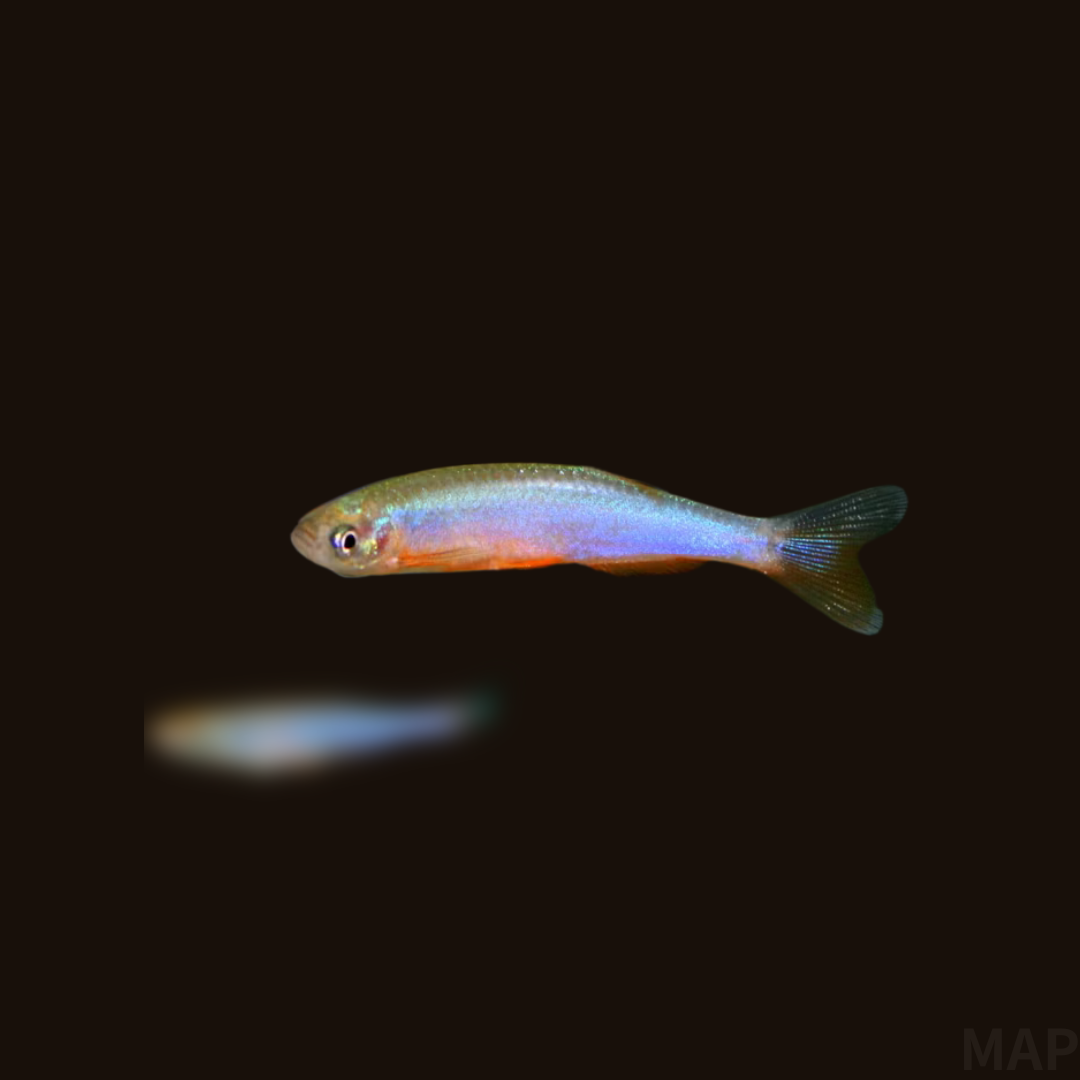
解説 / Description
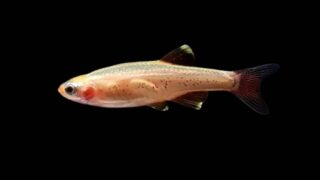
ダニオ・エスメラルダは、東南アジアのメコン川流域やその周辺水系に分布する小型のダニオ類です。学術的には主に Danio roseus として扱われますが、分類体系によっては Brachydanio rosea として掲載されることもあり、日本の流通名でも「ブラキダニオ・エスメラルダ」と呼ばれる場合があります。成熟したオスは腹部やヒレにローズピンクの色彩を見せ、体側には光の角度によって青緑から紫がかった金属光沢が現れます。温和で活発に群泳するため、水草レイアウト水槽の中層を軽やかに彩ってくれる魚です。 Danio esmeralda is a small danionin fish from the Mekong basin and nearby river systems in Southeast Asia. It is most commonly treated scientifically as Danio roseus, although some taxonomic treatments list it as Brachydanio rosea; in the Japanese aquarium trade, names such as “Brachydanio Esmeralda” may also appear. Mature males show rosy-pink coloration on the belly and fins, while the flanks can flash blue-green to violet metallic tones depending on the angle of light. Peaceful, lively, and social, it adds graceful midwater movement to planted aquariums.
基本情報 / Basic Information
| 学名 / Scientific Name | Danio roseus Fang & Kottelat, 2000 ※資料によっては Brachydanio rosea、または Brachydanio roseus と表記されることがあります。※Some references treat or label this species as Brachydanio rosea or Brachydanio roseus. |
|---|---|
| 通称 / Common Name | ダニオ・エスメラルダ、エスメラルダダニオ、ブラキダニオ・エスメラルダ、ダニオ・ロゼア、ローズダニオRosy danio, rose danio, purple passion danio, Brachydanio Esmeralda |
| 分類 / Family | コイ目 ダニオ科 ダニオ亜科 ダニオ属。従来の広義の扱いではコイ科に含められることもあります。小型ダニオ類を Brachydanio に分ける体系では、ブラキダニオ属の一種として扱われます。Order Cypriniformes, family Danionidae, subfamily Danioninae, genus Danio. In broader traditional treatments it may be placed within Cyprinidae. Under classifications that separate the smaller danios into Brachydanio, it is treated as a species of that genus. |
| 英名 / English Name | Rosy Danio, Rose Danio, Purple Passion Danio |
| 分布 / Distribution | タイ、ラオス、ミャンマーを中心とするメコン川流域。分類データベースによっては、紅河水系、サルウィン川水系、中国雲南省を含めて扱われます。The Mekong basin, mainly in Thailand, Laos, and Myanmar. Some taxonomic databases also include records from the Red River and Salween River systems and Yunnan, China. |
| 最大体長 / Max Size | 標準体長で最大約3.8cm。観賞魚としては全長4〜5cm前後で見られることが多く、流通上はやや大きめに表記される場合があります。Up to about 3.8 cm standard length. In aquariums it is often seen around 4–5 cm total length, and trade descriptions may list a slightly larger apparent size. |
| 寿命 / Lifespan | 適切な水温と水質を保てば、およそ3〜5年程度です。Around 3–5 years when temperature and water quality are properly maintained. |
飼育環境 / Aquarium Environment
| 水槽サイズ / Tank Size | 最低でも45cm規格水槽を目安にしますが、群泳の美しさと遊泳スペースを考えると60cm規格水槽以上がおすすめです。8〜10匹以上で泳がせる場合は、底面積に余裕のある90×30cm程度の水槽にすると、追いかけ合いや群れの移動が自然に見えます。A 45 cm standard tank is a practical minimum, but a 60 cm standard tank or larger is recommended for a stable school and adequate swimming space. For groups of eight to ten or more, a tank with a footprint around 90 × 30 cm allows more natural chasing and schooling movement. |
|---|---|
| 水温 / Temperature | 18〜25℃を目安にします。一般的な熱帯魚よりやや低めを好むため、日本の夏は高水温対策が重要です。水槽用クーラー、冷却ファン、エアコンを使い、長時間25℃を大きく超えないように管理します。 Aim for 18–25°C. This species prefers slightly cooler conditions than many common tropical fish, so summer heat management is important in Japan. Use an aquarium chiller, cooling fan, or room air conditioning to avoid prolonged temperatures well above 25°C. |
| 水質 / Water Quality | 弱酸性〜中性のpH6.0〜7.5、軟水〜中硬水を目安にします。原産地では比較的冷涼で流れのある水域と関係が深いため、清潔で溶存酸素の多い水を保つことが大切です。硝酸塩をためすぎないよう、月1〜2回を目安に20〜30%程度の換水を行うと安定しやすくなります。Slightly acidic to neutral water, around pH 6.0–7.5, with soft to moderately hard conditions is suitable. Because the species is associated with relatively cool, flowing waters in nature, clean and oxygen-rich water is important. To prevent excessive nitrate buildup, 20–30% water changes once or twice a month are a useful general guide. |
| レイアウト / Layout | 暗めの底床、石、流木、ミクロソリウム、ボルビティス、アヌビアスなどを組み合わせると、青緑の光沢とローズピンクの発色が引き立ちます。前景には泳げる空間を残し、中景から後景に水草や流木をまとめて、群れが泳ぐ場所と落ち着ける陰を両方用意します。適度な水流は好みますが、常に強い流れにさらされない休息エリアも必要です。A dark substrate with rocks, driftwood, Java fern, Bolbitis, Anubias, and similar plants helps emphasize the blue-green sheen and rosy-pink coloration. Leave open swimming space in the foreground while arranging plants and driftwood in the middle to rear areas, providing both active swimming room and calmer shaded retreats. Moderate current is beneficial, but the fish should also have areas away from constant strong flow. |
| 注意点 / Precautions | 飛び出しやすい魚なので、フタは必須です。ろ過器の配管まわりやコードを通す隙間からも飛び出すことがあるため、できるだけすき間をふさぎます。また、単独や少数では不安が強くなり、物陰に隠れたり発色が鈍ったりしやすいため、同種を8匹以上、できれば10匹前後で飼うと落ち着きます。This is a strong jumper, so a tight-fitting lid is essential. Cover gaps around filter pipes and cables as much as possible. It can become nervous when kept alone or in very small numbers, often hiding or showing duller colors, so keep at least eight individuals, ideally around ten or more. |
餌と給餌 / Feeding
| 餌の種類 / Diet | 人工飼料に慣れやすく、フレークフードや小粒の顆粒フードを主食にできます。発色や繁殖を意識する場合は、冷凍アカムシ、ブラインシュリンプ、ミジンコ、イトミミズなどを補助的に与えるとよいでしょう。It usually accepts prepared foods readily, with flakes and small granules suitable as staples. For better coloration and breeding condition, supplement the diet with frozen bloodworms, brine shrimp, daphnia, tubifex, or similar foods. |
|---|---|
| 給餌のポイント / Feeding Tips | 水面付近から中層で餌を追うのが得意なので、浮上性またはゆっくり沈む餌が向いています。完全に底まで落ちた餌は残りやすいため、少量を1〜2分で食べきれる程度に分けて与えます。群れの中で餌を競いやすいので、全体に行き渡るよう水面に広げて与えると安心です。It feeds best near the surface and in midwater, so floating or slow-sinking foods are ideal. Food that falls completely to the bottom may be ignored, so feed small portions that can be eaten within one to two minutes. Because the group may compete actively for food, spread the food over the surface so all individuals can feed. |
性格と混泳 / Temperament and Tank Mates
| 性格 / Temperament | 温和で活発な群泳魚です。オス同士がヒレを広げたり追いかけたりすることはありますが、多くは順位確認やディスプレイの範囲で、相手を傷つけるような争いには発展しにくい魚です。It is a peaceful and active schooling fish. Males may spread their fins or chase one another, but this is usually display and social ranking behavior rather than serious aggression. |
|---|---|
| 混泳の相性 / Compatibility | 同程度の大きさのラスボラ、ダニオ、テトラ、コリドラス、ローチ、小型レインボーフィッシュ、小型グラミー類などと相性が良いです。一方で、泳ぎが速く餌への反応もよいため、ベタやロングフィンタイプのグッピーなど、動きが遅くヒレの長い魚は落ち着かなくなることがあります。Good tank mates include similarly sized rasboras, danios, tetras, Corydoras, small loaches, small rainbowfish, and small gouramis. Because it swims quickly and reacts strongly to food, very slow or long-finned fish such as bettas and long-fin guppies may become stressed. |
病気と対策 / Diseases and Prevention
| かかりやすい病気 / Common Diseases | 本種だけに特有の病気が多いわけではありません。ただし、高水温、低酸素、水質悪化、少数飼育によるストレスが続くと、白点病、尾腐れ病、細菌性感染症などのリスクが高まります。特に夏場に水温が上がり続ける環境では、酸素不足と免疫低下が重なりやすくなります。It is not known for many species-specific diseases. However, prolonged heat, low oxygen, poor water quality, or stress from being kept in too small a group can increase the risk of ich, fin rot, and bacterial infections. In hot summer conditions, oxygen shortage and reduced resilience may occur together. |
|---|---|
| 対策と予防 / Prevention | 予防の基本は、25℃を大きく超える高水温を避け、酸素量の多い清潔な水を維持することです。新しく迎えた個体は状態をよく観察し、急な水質変化を避けながら水合わせを行います。導入直後は餌食いや泳ぎ方を見て、異常があれば早めに隔離します。十分な匹数で群れを作らせることも、ストレスを下げる大切な対策です。Prevention begins with avoiding sustained temperatures well above 25°C and maintaining clean, oxygen-rich water. Observe newly introduced fish carefully and acclimate them gradually to avoid sudden water-quality changes. After introduction, watch feeding response and swimming behavior, and isolate any abnormal individuals early. Keeping a proper school is also an important way to reduce stress. |
増やし方(繁殖) / Breeding
| 雌雄の判別 / Sexing | メスはやや大きく、体に丸みが出やすく、抱卵すると腹部がふっくらします。オスは比較的スリムで、成熟すると腹部やヒレのローズピンク、体側の青緑の光沢がより強く出ます。繁殖期にはオス同士のディスプレイも目立ちます。Females are generally slightly larger and rounder, with a fuller belly when carrying eggs. Males are slimmer and, when mature, show stronger rosy-pink coloration on the belly and fins along with a brighter blue-green sheen on the flanks. Male display behavior also becomes more noticeable in breeding condition. |
|---|---|
| 繁殖形態 / Reproduction | コイ科小型魚に多いばらまき型産卵です。親魚は卵や稚魚を保護せず、卵を食べてしまうことがあるため、計画的に増やす場合は産卵用水槽を用意します。It is an egg-scattering species, as is typical of many small cypriniform fishes. The parents do not guard eggs or fry and may eat the eggs, so a separate spawning tank is recommended for planned breeding. |
| 繁殖のポイント / Breeding Tips | 20〜30L程度の産卵水槽にウィローモス、産卵モップ、メッシュ、ビー玉などを入れ、卵が親魚から逃げ込める構造を作ります。親魚には事前に冷凍アカムシやブラインシュリンプなど栄養価の高い餌を与えて状態を整えます。夕方にメス1匹に対してオス2匹程度、または複数ペアを移し、新鮮でやや冷たい水を少しずつ足すと、雨季の刺激に似た条件となり翌朝の産卵を誘いやすくなります。産卵後は親魚を戻し、遊泳を始めた稚魚にはインフゾリアや微細な稚魚用パウダーフードを与え、成長に合わせてブラインシュリンプ幼生へ移行します。Prepare a 20–30 L spawning tank with Java moss, spawning mops, mesh, or marbles so that eggs can fall out of reach of the adults. Condition the parents in advance with nutritious foods such as frozen bloodworms and brine shrimp. Move one female with about two males, or several pairs, into the spawning tank in the evening. Adding small amounts of fresh, slightly cooler water can imitate rainy-season stimulation and encourage spawning the next morning. Remove the adults after spawning. Once the fry become free-swimming, feed infusoria or very fine fry powder at first, then move on to newly hatched brine shrimp as they grow. |
雑学と豆知識 / Trivia and Fun Facts
| 1. 「ローズ」と「エスメラルダ」、二つの色名を持つ魚 / 1. A fish with two color-inspired names | 種小名の roseus は、ラテン語で「バラ色」を意味します。これは成熟したオスが見せるローズピンクの婚姻色に由来します。一方、日本で親しまれる「エスメラルダ」という流通名は、体側に浮かぶ青緑色の金属光沢を連想させる名前です。学名は赤みの美しさを、流通名は青緑の輝きを切り取っており、一匹の小さな魚に二つの色の物語が重なっています。The species name roseus means “rosy” in Latin, referring to the pinkish breeding coloration of mature males. In Japan, the trade name “Esmeralda” evokes the blue-green metallic sheen on the flanks. The scientific name captures its rosy warmth, while the Japanese trade name highlights its emerald-like shimmer, giving this small fish two overlapping color stories. |
|---|---|
| 2. ブラキダニオと呼ばれることがある理由 / 2. Why it may be called Brachydanio | ダニオ・エスメラルダを調べていると、Danio roseus だけでなく Brachydanio rosea や Brachydanio roseus という表記に出会うことがあります。これは別種という意味ではなく、小型で細身のダニオ類を Danio に広く含めるか、再び Brachydanio として分けるかという分類体系の違いによるものです。日本の流通名で「ブラキダニオ・エスメラルダ」と書かれる場合も、基本的にはこの分類上の揺れを反映した呼び方と考えると理解しやすくなります。現在の主要なデータベースでは Danio roseus が追いやすい名前ですが、古い資料や一部の専門的な魚類相カタログではブラキダニオ表記が現れるため、両方を知っておくと情報をたどりやすくなります。When researching this fish, you may encounter not only Danio roseus but also names such as Brachydanio rosea or Brachydanio roseus. These do not indicate a different species; rather, they reflect different taxonomic treatments of the small, slender danios, either keeping them broadly within Danio or separating them again as Brachydanio. In the Japanese trade, the name “Brachydanio Esmeralda” can be understood as a reflection of this taxonomic history. Danio roseus is currently the easiest name to follow in major databases, but knowing the Brachydanio form helps when reading older references or specialist faunal catalogues. |
| 3. パールダニオとの見分け方 / 3. How to distinguish it from the pearl danio | 近縁のパールダニオとはよく似ていますが、見分けるときは体側後半のラインとヒゲの長さに注目します。ダニオ・エスメラルダでは体側後半の明瞭な水平ラインが欠けるか非常に薄く、吻部のヒゲも比較的短い傾向があります。購入時にオレンジ色のラインがはっきり出ている個体が混じる場合は、パールダニオや交雑由来の可能性も考えながら、複数の特徴を合わせて確認すると安心です。It closely resembles the pearl danio, but the rear body markings and barbel length are helpful clues. In Danio roseus, clear horizontal lines on the rear half of the body are absent or very faint, and the rostral barbels tend to be shorter. If individuals show strong orange lines, it is worth checking multiple characters carefully for pearl danio influence or possible hybrid origin. |
| 4. 水草水槽で映える理由 / 4. Why it shines in planted aquariums | ダニオ・エスメラルダの体色は、濃い底床や水草の陰影と組み合わさると特に美しく見えます。暗い背景は魚の体色を引き締め、ローズピンクのヒレと青緑の光沢を浮かび上がらせます。前景を広く空け、中景から後景に水草をまとめると、群れが水槽前面を横切るたびに光の角度が変わり、小さな魚ながらとても動きのある景色を作ります。Its colors are especially attractive against a dark substrate and the shadows of aquatic plants. A darker background helps deepen the body color and makes the rosy fins and blue-green sheen stand out. By leaving the foreground open and planting the middle to rear sections, the school can sweep across the front of the tank, changing color as the viewing angle shifts. |
| 5. 環境科学でも注目されるダニオ / 5. A danio of interest in environmental science | ダニオ類ではゼブラフィッシュが実験動物としてよく知られていますが、東南アジアの河川環境を考えるうえでは、その地域に実際に暮らす魚を調べることにも大きな意味があります。ダニオ・エスメラルダは、メコン川流域に関係する在来魚として、生態毒性学の分野でゼブラフィッシュを補うモデル候補とされています。観賞魚として水槽を彩るだけでなく、地域の水環境を読み解く手がかりにもなり得る魚です。Among danios, the zebrafish is famous as a laboratory model, but when studying Southeast Asian river environments, locally occurring species can offer important ecological relevance. Danio roseus, as a fish associated with the Mekong region, has been considered a complementary model to zebrafish in ecotoxicology. Beyond its beauty in aquariums, it may also help researchers understand environmental risks in its home region. |
まとめ / Conclusion
ダニオ・エスメラルダは、涼しめで酸素の多い水、適度な流れ、そして十分な群れを整えることで、本来の軽やかな泳ぎと繊細な発色を見せてくれる小型美魚です。特に日本の夏は高水温が大きな負担になりやすいため、涼しく安定した環境を守ることが、長く美しい姿を楽しむための大切なポイントになります。 Danio esmeralda is a small, beautiful fish that shows its graceful movement and delicate coloration best in cooler, oxygen-rich water with moderate current and a proper school. In Japan, summer heat can be a major burden, so maintaining a cool and stable environment is essential for enjoying its beauty over the long term.
Danio roseus としても、Brachydanio rosea としても語られてきたこの魚は、分類名の揺れさえも含めて、ダニオ類の奥深さを感じさせてくれます。水草の緑や流木の陰を背景に、群れがふっと向きを変えるたび、ローズピンクと青緑の光が静かに重なり、小さな体で水槽全体にやわらかな躍動感を添えてくれます。 Whether discussed as Danio roseus or Brachydanio rosea, this fish reflects the fascinating depth of danionin taxonomy. Against the green of aquatic plants and the shadows of driftwood, each turn of the school brings a quiet overlap of rosy pink and blue-green light, adding gentle movement and presence to the entire aquarium.

気になる道具や飼い方を見つけてみませんか?
 アイのアクアグッズ案内海水魚初心者の必需品|水槽・人工海水・比重計・水質検査道具の特徴や使い方、選ぶときのポイントをアイが紹介します。記事はコチラ →
 アイのアクアグッズ案内コリドラスのもふもふ時間を楽しむ|餌・底砂・お掃除用品の選び方コリドラスのもふもふする食事風景を楽しむために。沈む餌2種類の違い、口元に配慮した底砂、食べ残しを回収する道具を、アクアグッズナビゲーターのアイが紹介します。記事はコチラ →
 アイのアクアグッズ案内ラスボラ・ボララスの群泳を楽しむ飼育用品|水槽・ろ過・ヒーター・餌・水草道具の特徴や使い方、選ぶときのポイントをアイが紹介します。記事はコチラ →
 アイのアクアグッズ案内ローチの仲間に合わせる飼育用品|クーリー・流水性・ボーシャの水槽と底砂道具の特徴や使い方、選ぶときのポイントをアイが紹介します。記事はコチラ →
さまざまな飼育テーマをご紹介。リンク先の記事には広告・商品紹介が含まれます。
案内・紹介記事一覧へ →参考文献・根拠資料
ダニオ・エスメラルダの記事内容のうち、分類、分布、生息環境、飼育条件、繁殖、病気や注意点、分類名の揺れに関係する根拠資料を中心に選定しています。店舗・通販ページ、個人ブログ、一般的なまとめサイトは含めていません。最終確認日:2026年6月19日。
-
Fang, F. & Kottelat, M. (2000). Danio roseus, a new species from the Mekong basin in northeastern Thailand and northwestern Laos (Teleostei: Cyprinidae). Ichthyological Exploration of Freshwaters, 11(2), 149-154.
根拠範囲:原記載、タイプ産地、近縁のパールダニオとの識別、メコン流域産であることの基礎情報。オンラインで確認しやすい書誌情報は FishBase と Eschmeyer’s Catalog of Fishes に掲載されています。FishBase: Danio roseus / Eschmeyer’s Catalog of Fishes: Danio roseus
-
Fricke, R., Eschmeyer, W. N. & Van der Laan, R. (eds.). Eschmeyer’s Catalog of Fishes. California Academy of Sciences.
根拠範囲:現在の有効名としての Danio roseus、Danionidae / Danioninae での扱い、Brachydanio 系表記の併記、タイプ産地、東南アジアのメコン川・紅河・サルウィン川水系を含む分布情報。Eschmeyer’s Catalog of Fishes: Danio roseus
-
Froese, R. & Pauly, D. (eds.). FishBase. Danio roseus species summary.
根拠範囲:主要データベース上の分類、最大標準体長3.8cm、メコン川流域のタイ・ラオス・ミャンマー分布、淡水・中層遊泳性、冷涼な流水の小川・湧水・滝周辺に関係する生息環境、IUCN低懸念評価の確認。FishBase: Danio roseus
-
Kottelat, M. (2013). The Fishes of the Inland Waters of Southeast Asia: A Catalogue and Core Bibliography of the Fishes Known to Occur in Freshwaters, Mangroves and Estuaries. Raffles Bulletin of Zoology, Supplement 27, 1-663.
根拠範囲:東南アジア内陸水域の魚類相、Brachydanio 属を用いる分類体系、Brachydanio rosea としての扱い、タイプ産地情報の確認。記事内の「ブラキダニオと呼ばれることがある理由」を支える中心資料です。Raffles Bulletin of Zoology Supplement 27 PDF
-
Canadian Council on Animal Care. (2020). CCAC guidelines: Zebrafish and other small, warm-water laboratory fish.
根拠範囲:小型ダニオ類を含む小型温水性淡水魚の飼育管理、福祉、水質管理、環境エンリッチメント、給餌、観察、疾病予防に関する一般原則。対象は主にゼブラフィッシュと小型実験魚のため、ダニオ類の飼育条件を補助する資料として使用しています。CCAC guidelines PDF
-
Westerfield, M. The Zebrafish Book. Zebrafish Information Network, University of Oregon.
根拠範囲:ダニオ類のばらまき型産卵、親魚による食卵を避けるためのビー玉利用、採卵、繁殖管理の補助根拠。対象はゼブラフィッシュですが、近縁の小型ダニオ類の繁殖手法を説明するうえで参照価値があります。ZFIN: Breeding Zebrafish / ZFIN: Pair-Wise Breeding
-
Nasiadka, A. & Clark, M. D. (2012). Zebrafish Breeding in the Laboratory Environment. ILAR Journal, 53(2), 161-168.
根拠範囲:実験環境下のダニオ類繁殖、産卵ケージ、ビー玉が卵の食害を避ける役割、親魚管理、胚の扱い。繁殖欄のビー玉・メッシュ利用を補強する査読資料として使用しています。ILAR Journal PDF
-
Merck Veterinary Manual. Disorders and Diseases of Fish.
根拠範囲:魚病の発生要因としてのストレス、水質悪化、過密、検疫不足、細菌・原虫・真菌・寄生虫などの感染症。病気と対策欄の「予防重視」の考え方を支える資料です。Merck Veterinary Manual: Disorders and Diseases of Fish
-
MSD Veterinary Manual. Environmental Diseases of Aquatic Animals in Aquatic Systems.
根拠範囲:水質悪化が環境性疾患の主要因であること、溶存酸素、アンモニア、亜硝酸、pHなどの水質管理の重要性。高水温時の酸素不足や清潔な水を維持する必要性の補強資料です。MSD Veterinary Manual: Environmental Diseases
-
University of Florida IFAS Extension. Stress—Its Role in Fish Disease.
根拠範囲:ストレスが魚の自然防御を弱め、病気の発生を助長するという一般原則。少数飼育、急な環境変化、水質不良を避けるという注意点を補強する資料です。UF/IFAS Extension: Stress—Its Role in Fish Disease
-
Seetapan, K., Nobsatian, S., Bullangpoti, V. & Kaewwongse, M. (2026). Rose danio (Danio roseus): A Native Mekong Basin Alternative to Zebrafish for Acute, Developmental, and Neurobehavioral Toxicity Testing. Environmental Toxicology and Chemistry, 45(6), 1567-1580.
根拠範囲:雑学欄の「環境科学でも注目されるダニオ」の補足根拠。メコン流域在来の Danio roseus を、ゼブラフィッシュを補う毒性試験モデル候補として評価した研究です。Environmental Toxicology and Chemistry: Rose danio toxicity testing




コメント