

解説 / Description
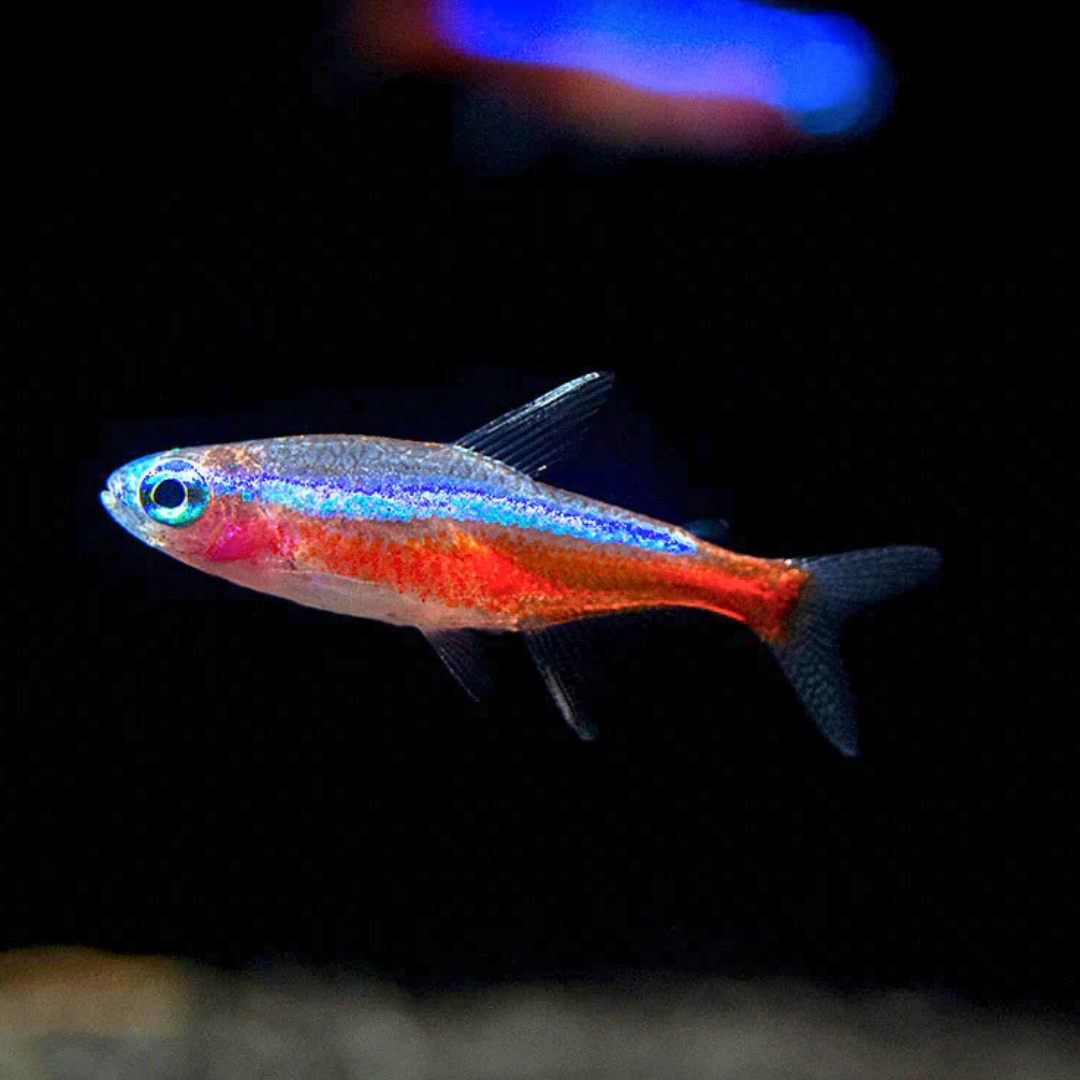
カージナルテトラは、南米のリオ・ネグロ川や上部オリノコ川流域を中心に分布する小型カラシンです。頭部から尾まで走るネオンブルーの輝きと、体の下半部を広く染める鮮やかな赤色が最大の魅力で、古くから水草水槽や群泳レイアウトの主役として親しまれてきました。よく似たネオンテトラよりも赤い範囲が広いため、落ち着いた水槽内でも強い存在感を放ちます。性格は非常に温和で、安定した水質と十分な群れを用意すれば飼育しやすい魚ですが、特にワイルド個体では急な水質変化を避け、軟水寄りの落ち着いた環境を整えることが大切です。 The cardinal tetra is a small characin distributed mainly in the Rio Negro and upper Orinoco river systems of South America. Its greatest appeal lies in the vivid contrast between the neon-blue stripe running from head to tail and the bright red coloration covering much of the lower body. It has long been treasured as a centerpiece for planted aquariums and schooling displays. Compared with the similar neon tetra, the red area is much more extensive, giving the fish a stronger visual presence even in subdued aquascapes. It is very peaceful and generally manageable when kept in stable water and proper groups, although wild-caught specimens should be protected from sudden water-parameter changes and kept in calm, soft-water conditions whenever possible.
基本情報 / Basic Information
| 学名 / Scientific Name | Paracheirodon axelrodi |
|---|---|
| 通称 / Common Name | カージナルテトラ、ワイルドカージナル、ブリードカージナルCardinal tetra, wild cardinal tetra, captive-bred cardinal tetra |
| 分類 / Family | カラシン目、Acestrorhamphidae科、Megalamphodinae亜科、パラケイロドン属。資料や流通現場では、従来の広い意味でカラシン科の仲間として紹介されることもあります。Order Characiformes, family Acestrorhamphidae, subfamily Megalamphodinae, genus Paracheirodon. In aquarium literature and trade contexts, it may also be introduced under the older, broader characin family concept. |
| 英名 / English Name | Cardinal tetra |
| 分布 / Distribution | 南米の上部オリノコ川流域およびアマゾン水系のリオ・ネグロ川上流から中流域を中心に分布します。国としてはブラジル、コロンビア、ベネズエラに関わる流域で知られ、落ち葉や枝が堆積した酸性寄りのブラックウォーター環境と深く結びついています。Distributed mainly in the upper Orinoco basin and the upper to middle Rio Negro basin of the Amazon system. It is known from drainage areas associated with Brazil, Colombia, and Venezuela, and is closely linked to acidic blackwater habitats rich in leaf litter and submerged woody material. |
| 最大体長 / Max Size | 標準体長で約3cm、観賞魚としての全長ではおおむね3から4cm前後です。流通上はやや大きめに見積もられることもありますが、5cm級は一般的な目安としては大きめの表現です。About 3 cm in standard length, and generally around 3 to 4 cm in total length in aquarium contexts. Trade descriptions sometimes give larger figures, but 5 cm should be treated as a relatively generous estimate rather than the usual expectation. |
| 寿命 / Lifespan | 飼育下では3から5年ほどが一つの目安です。安定した水質と低ストレスの環境ではさらに長く維持されることもあります。野生下では季節変動、捕食、採集圧などの影響を受けるため、水槽内より短命になりやすいと考えられます。A practical aquarium estimate is around 3 to 5 years. With stable water and low stress, some individuals may live longer. In the wild, seasonal fluctuation, predation, and other pressures likely make average survival shorter than in aquariums. |
飼育環境 / Aquarium Environment
| 水槽サイズ / Tank Size | 飼育の基本は60cm規格水槽以上がおすすめです。少数ならより小型の水槽で維持される例もありますが、本種は群れで中層を泳ぐ魚なので、余裕を持った水量と遊泳スペースがある方が安定します。30匹以上で本格的な水草レイアウトを組む場合は、90cm規格水槽以上にすると群泳の美しさを引き出しやすくなります。A standard 60 cm aquarium or larger is recommended as the basic setup. Small groups are sometimes kept in smaller tanks, but this species is a midwater schooling fish, so generous water volume and swimming space are beneficial. For groups of 30 or more in a planted aquascape, a standard 90 cm aquarium or larger is ideal for showing their schooling behavior. |
|---|---|
| 水温 / Temperature | 24から28℃。長期飼育では25から26℃前後で安定させると管理しやすく、急激な水温変化は避けます。 24 to 28°C. For long-term care, maintaining around 25 to 26°C is practical, and sudden temperature changes should be avoided. |
| 水質 / Water Quality | 弱酸性から中性、目安はpH 5.5から7.0、軟水寄りを好みます。自然生息地ではpH 4から6程度の酸性水域も知られますが、家庭水槽では極端な低pHを狙うより、急変させず安定させることが重要です。ブリード個体は中性付近にも適応しやすく、ワイルド個体ではソイル、マジックリーフ、ヤシャブシの実などで穏やかなブラックウォーター環境を作ると落ち着きやすくなります。サンゴ砂など水を硬くアルカリ性に傾ける素材は避けてください。Prefers soft, mildly acidic to neutral water, roughly pH 5.5 to 7.0 in aquariums. Natural habitats can include acidic waters around pH 4 to 6, but in home aquaria stability is more important than forcing an extremely low pH. Captive-bred specimens often adapt well to near-neutral water, while wild-caught fish may settle better in gently blackwater-style conditions created with active soil, catappa leaves, or alder cones. Avoid materials such as coral sand that harden the water and raise alkalinity. |
| レイアウト / Layout | 水草、流木、落ち葉を組み合わせた落ち着いたレイアウトが向いています。暗めの背景や底床にすると青と赤の発色が引き立ちます。遊泳スペースを完全に塞がず、前景から中層に群れが泳げる空間を残すと美しく見えます。A calm layout using aquatic plants, driftwood, and leaf litter suits this species well. Dark backgrounds and substrates enhance the blue and red coloration. Leave open midwater swimming space so the school can move naturally through the aquascape. |
| 注意点 / Precautions | 導入直後は輸送ストレスと水質差に弱いため、慎重な水合わせが大切です。特にワイルド個体は急なpHや硬度の変化を避けます。最低でも5匹、できれば10匹以上で飼育し、単独飼育によるストレスを防ぎましょう。New arrivals can be sensitive to transport stress and water differences, so careful acclimation is important. Wild-caught specimens especially should not be exposed to sudden changes in pH or hardness. Keep at least five, and preferably ten or more, to prevent stress from solitary housing. |
餌と給餌 / Feeding
| 餌の種類 / Diet | 人工飼料、顆粒フード、フレークフード、冷凍アカムシ、冷凍ミジンコ、ブラインシュリンプなどをよく食べます。自然下では小型甲殻類、ミミズ状の小動物、昆虫の幼虫や動物プランクトンなどを中心に利用する、微小動物食寄りの雑食性と考えるとよいでしょう。Accepts prepared micro pellets, granules, flakes, frozen bloodworms, frozen daphnia, and brine shrimp. In nature it feeds mainly on small crustaceans, worm-like invertebrates, insect larvae, and zooplankton, so it is best understood as an omnivore leaning toward micro-predation. |
|---|---|
| 給餌のポイント / Feeding Tips | 口が小さいため、細かい餌を少量ずつ与えます。1日1から2回、数分で食べ切る量が目安です。ワイルド個体は導入初期に人工飼料への反応が鈍いことがあるため、冷凍ミジンコやブラインシュリンプで食欲を確認しながら、徐々に人工飼料へ慣らすとよいでしょう。Because the mouth is small, offer fine foods in modest portions. Feed once or twice daily, only as much as they can finish within a few minutes. Wild-caught specimens may initially respond poorly to dry foods, so frozen daphnia or brine shrimp can be used to stimulate feeding before gradually introducing prepared diets. |
性格と混泳 / Temperament and Tank Mates
| 性格 / Temperament | 非常に温和で、同種同士でも大きな争いはほとんどありません。自然下では大きな群れを作るため、水槽内でも仲間が多いほど落ち着き、発色や遊泳行動が安定しやすくなります。Very peaceful, with little serious aggression among its own kind. Since it forms large groups in nature, it becomes calmer and shows better color and behavior when kept in a proper school. |
|---|---|
| 混泳の相性 / Compatibility | ラスボラ、ペンシルフィッシュ、小型コリドラス、オトシンクルス、ドワーフシクリッド、ヤマトヌマエビなど、温和で本種を捕食しない生体と相性が良いです。口に入るサイズの魚を食べる大型魚、動きの荒い魚、ヒレをつつく魚との混泳は避けます。エンゼルフィッシュとの混泳は、個体差やサイズ差によって捕食リスクがあるため慎重に判断してください。Compatible with peaceful species that will not prey on them, such as rasboras, pencilfish, small Corydoras, Otocinclus, dwarf cichlids, and Amano shrimp. Avoid large predatory fish, overly boisterous species, and fin-nippers. Angelfish may work in some cases, but size differences and individual temperament must be considered carefully. |
病気と対策 / Diseases and Prevention
| かかりやすい病気 / Common Diseases | 白点病、カラムナリス症、エロモナス感染症、輸送後の衰弱に伴う細菌感染に注意が必要です。特に体色が白く抜ける、群れから離れる、泳ぎが弱くなるといった症状は早めに観察してください。俗にネオン病と呼ばれる症状には複数の原因が関わることがあり、単純に一つの病気として判断しないことが大切です。Watch for ich, columnaris disease, Aeromonas infections, and bacterial problems following transport stress. Early signs include fading color, leaving the school, and weak swimming. Conditions often called “neon tetra disease” may involve multiple causes, so they should not be assumed to be a single simple disease. |
|---|---|
| 対策と予防 / Prevention | 安定した水温、清潔なろ過、過密を避けた飼育、導入時のトリートメントが基本です。病魚は早めに隔離し、水草水槽へ強い薬を直接入れず、必要に応じてベアタンクで薬浴します。細菌感染が疑われる場合は、観賞魚用医薬品の説明書に従い、薬剤量、薬浴時間、照明管理、活性炭除去などを守ることが重要です。Prevention is based on stable temperature, clean filtration, avoiding overcrowding, and proper quarantine for new arrivals. Sick fish should be isolated promptly, and strong medications should not be added directly to planted aquariums. When bacterial disease is suspected, follow the instructions for aquarium medications carefully, including dosage, treatment duration, lighting, and removal of activated carbon. |
増やし方(繁殖) / Breeding
| 雌雄の判別 / Sexing | 雌雄判別は難しく、成熟した雌はやや大きく腹部に丸みが出やすい傾向があります。雄はやや細身に見えることがありますが、外見だけで確実に判別するのは困難です。Sexing is difficult. Mature females tend to be slightly larger and rounder in the abdomen, while males may appear slimmer. However, reliable identification by appearance alone is challenging. |
|---|---|
| 繁殖形態 / Reproduction | 水草や水没した根などに卵をばらまく散卵型です。親魚は卵や稚魚を保護せず、産卵後に自ら卵を食べることがあります。卵や孵化直後の稚魚は強い光に弱いとされ、暗めの環境で管理した方が成功率を高めやすいとされています。An egg-scattering species that releases eggs among plants and submerged roots. The parents provide no care and may eat the eggs after spawning. The eggs and newly hatched fry are widely considered sensitive to strong light, so subdued or dark conditions are generally recommended to improve success. |
| 繁殖のポイント / Breeding Tips | 家庭での繁殖難易度は高めです。pH 5.5から6.0程度、硬度を極力低くした軟水、水温24℃前後、薄暗い産卵水槽を用意し、底にネットやウィローモスを敷いて卵を親から守ります。孵化後の稚魚は非常に小さく、初期飼料としてインフゾリアなどの微生物が必要になります。水換え時の急変にも弱いため、少量ずつ丁寧に管理します。Home breeding is quite difficult. Prepare a dim spawning tank with very soft water, around pH 5.5 to 6.0 and about 24°C, and use a mesh or fine plants such as Java moss to protect the eggs from the parents. Newly hatched fry are extremely small and require microscopic foods such as infusoria at first. Water changes must be very gentle because sudden changes can be fatal. |
雑学と豆知識 / Trivia and Fun Facts
| 1. 名前に刻まれた発見史 / 1. A Name with a Taxonomic Story | カージナルテトラの学名はParacheirodon axelrodiです。種小名のaxelrodiは、観賞魚出版や熱帯魚文化の普及に大きな影響を与えたHerbert R. Axelrodに由来します。本種は1956年にCheirodon axelrodiとして記載され、のちに現在のParacheirodon属として扱われるようになりました。鮮烈な赤色からcardinalisという名が関連文献で扱われた経緯もあり、現在の英名であるCardinal tetraにもその赤の印象が色濃く残っています。小さな魚の名前の中に、1950年代の観賞魚ブームと分類学の歴史が静かに刻まれているのです。The scientific name of the cardinal tetra is Paracheirodon axelrodi. The species name axelrodi honors Herbert R. Axelrod, a major figure in aquarium publishing and the popularization of tropical fishkeeping. The species was described in 1956 as Cheirodon axelrodi and was later placed in Paracheirodon. The vivid red coloration also shaped the name “cardinal tetra,” and related literature has historically reflected this association. This tiny fish carries within its name a story of the 1950s aquarium boom and the history of taxonomy. |
|---|---|
| 2. 青いラインは色素ではなく光の芸術 / 2. The Blue Stripe Is an Optical Effect | カージナルテトラの青いラインは、単純な青い色素だけで表現されているわけではありません。近縁のネオンテトラ類で研究されているように、皮膚の反射細胞に含まれるグアニン結晶の配列が光を反射し、角度や光環境によって青から緑がかった輝きに見えます。夜間や暗い環境で色が沈んで見えるのは、体調不良だけでなく、この構造色が光環境に左右されるためでもあります。朝、照明が点いたあとにゆっくり色が戻る様子は、まるでアマゾンの薄明かりの中で魚体が再び目を覚ますような美しさがあります。The blue stripe is not produced simply by blue pigment alone. As studied in closely related neon tetras, arrays of guanine crystals in reflective skin cells can reflect light, producing blue to greenish tones depending on viewing angle and illumination. When the fish appears dull at night or in darkness, it is not always a sign of poor health; the structural color is also influenced by lighting conditions. Watching the color return after the aquarium lights come on feels like seeing the fish awaken again in the dim light of the Amazon. |
| 3. 魚を買い、森を守るという関係 / 3. Buying a Fish Can Help Protect a Forest | リオ・ネグロ川流域では、カージナルテトラの採集が地域住民の重要な現金収入になってきました。プロジェクト・ピアバが掲げる魚を買い、森を救おうという考え方は、観賞魚取引を単なる消費ではなく、熱帯雨林を伐採せずに生活を支える仕組みとして捉えるものです。野生採集そのものが常に無条件で善であるわけではありませんが、適切に管理された流通では、魚と人と森の関係が持続可能な形で結ばれる可能性があります。In the Rio Negro region, collecting cardinal tetras has long provided important cash income for local communities. Project Piaba’s idea, often summarized as “buy a fish, save a tree,” views the aquarium trade not merely as consumption but as a way to support livelihoods without clearing rainforest. Wild collection is not automatically beneficial in every situation, but when properly managed, it can connect fish, people, and forests in a more sustainable relationship. |
| 4. プラチナ個体の不思議 / 4. The Mystery of Platinum Cardinal Tetras | まれに流通するプラチナカージナルテトラについては、固定された改良品種というより、寄生虫や皮膚組織の反応に伴う後天的な銀白色化ではないかと説明されることがあります。ただし、この仕組みは一般向けの流通説明や趣味家の観察に基づいて語られる部分も多く、すべての個体で同じ原因と断定できるわけではありません。観賞魚としては非常に美しい一方で、時間の経過とともに輝きが薄れ、通常の赤と青の姿に近づく例も知られています。美しさの裏側に、生き物の体色と健康状態、そして環境の複雑な関係が隠れていることを教えてくれる存在です。Rare platinum cardinal tetras are often described not as a fixed selectively bred strain, but as a silvery change associated with parasites or reactions in the skin tissue. However, much of this explanation comes from aquarium-trade accounts and hobbyist observations, so it should not be treated as a single confirmed cause for every specimen. Although visually striking, the sheen may fade over time, and some fish gradually approach the usual red-and-blue appearance. It is a fascinating reminder that beauty, body coloration, health, and environment can be closely intertwined. |
まとめ / Conclusion
カージナルテトラは、状態のよい個体を選び、安定した環境に導入すれば飼いやすい小型熱帯魚です。その一方で、背景にはアマゾンのブラックウォーター環境、分類学の歴史、地域経済と森林保全まで関わる奥深い物語があります。ブリード個体は日本の水道水にも比較的なじみやすく、初めての群泳魚としても扱いやすい存在です。 The cardinal tetra is an approachable small tropical fish when healthy specimens are selected and introduced into stable conditions. Yet behind its beauty lies a rich story involving Amazonian blackwater habitats, taxonomic history, local economies, and rainforest conservation. Captive-bred specimens adapt comparatively well to Japanese tap water and are excellent candidates for a first schooling fish.
本来の魅力を引き出すには、10匹以上の群れ、弱酸性から中性の安定した軟水、落ち着いた水草や流木のレイアウトが鍵になります。赤と青のきらめきが水槽の中をそろって泳ぐ姿は、まさに小さなアマゾンを自宅に迎えるような体験を与えてくれるでしょう。 To bring out its full appeal, provide a school of ten or more, stable soft water from mildly acidic to neutral, and a calm layout with plants and driftwood. When the red and blue flashes move together through the aquarium, they offer the feeling of welcoming a small piece of the Amazon into the home.

気になる道具や飼い方を見つけてみませんか?
 アイのアクアグッズ案内小型カラシンの群れを楽しむ|餌と水換えから考える飼育用品ガイド小型カラシンの群れを眺める時間を、もっと楽しく。泳ぐ余白、餌の食べ方、続けやすい水換えを軸に、日本で揃えやすい用品の選び方を紹介します。記事はコチラ →
 アイのアクアグッズ案内そのごはん、泳いでる! 卵から始めるブラインシュリンプの孵化と道具選び道具の特徴や使い方、選ぶときのポイントをアイが紹介します。記事はコチラ →
さまざまな飼育テーマをご紹介。リンク先の記事には広告・商品紹介が含まれます。
案内・紹介記事一覧へ →▶ 記事の生体をAMAZONで買う ▶ 記事の生体をYahooで買う
参考文献・参照資料
本記事では、分類・分布・生態・水質耐性・構造色・リオネグロ流域の観賞魚漁業に関する記述を中心に、以下の資料を参照しました。
- Froese, R. and Pauly, D. Editors. FishBase. Paracheirodon axelrodi, Cardinal tetra: fisheries, aquarium. 分類、分布、最大体長、水温、pH、群泳性、繁殖難易度、孵化日数、最低水槽サイズの確認に使用。
- Fricke, R., Eschmeyer, W. N. and Van der Laan, R. Editors. Eschmeyer’s Catalog of Fishes. California Academy of Sciences. Paracheirodon axelrodi (Schultz, 1956). 有効学名、原記載者、シノニム、Acestrorhamphidae科Megalamphodinae亜科としての分類、分布情報の確認に使用。
- Walker, I. 2004. The food spectrum of the cardinal-tetra (Paracheirodon axelrodi, Characidae) in its natural habitat. Acta Amazonica, 34(1): 69-73. 自然下での食性、微小動物食寄りの雑食性、消化管の特徴に関する記述の参考として使用。
- Oliveira, S. R., Souza, R. T. Y. B., Brasil, E. M. and Andrade, J. I. A. 2008. Tolerance to temperature, pH, ammonia and nitrite in cardinal tetra, Paracheirodon axelrodi, an Amazonian ornamental fish. Acta Amazonica, 38(4): 773-780. カージナルテトラの水温、pH、アンモニア、亜硝酸への耐性と、輸送・水質管理に関する科学的背景の確認に使用。
- Yoshioka, S., Kinoshita, S., Matsuhana, B. and Fujii, R. 2010. Mechanism of variable structural colour in the neon tetra. Journal of the Royal Society Interface, 8(54): 56-66. 近縁種ネオンテトラにおけるグアニン結晶と反射細胞による構造色の仕組みを、青いラインの説明の補助資料として使用。
- Chao, N. L. 2001. The Fishery, Diversity, and Conservation of Ornamental Fishes in the Rio Negro Basin, Brazil: A review of Project Piaba (1989-99). リオネグロ流域の観賞魚漁業、プロジェクト・ピアバ、地域経済と保全の関係に関する記述の参考として使用。
- Schaefer, S. A., Petry, P., Prang, G., Sonneschien, L. and Dowd, S. 2003. Conservation and Management of Ornamental Fish Resources of the Rio Negro Basin, Amazonia, Brazil: Project Piaba. Copeia, 2003(3): 672-675. 持続可能な観賞魚採集と保全モデルの補強資料として使用。
- Tribuzy-Neto, I. A., Beltrão, H., Benzaken, Z. S. and Yamamoto, K. C. 2020. Analysis of the Ornamental Fish Exports from the Amazon State, Brazil. Boletim do Instituto de Pesca, 46(4): e588. アマゾナス州からの観賞魚輸出、主要輸出種、国際流通に関する背景資料として使用。
- Project Piaba. Official website. プロジェクト・ピアバの活動概要と、リオネグロ流域の漁業保全に関する現行情報の確認に使用。




コメント