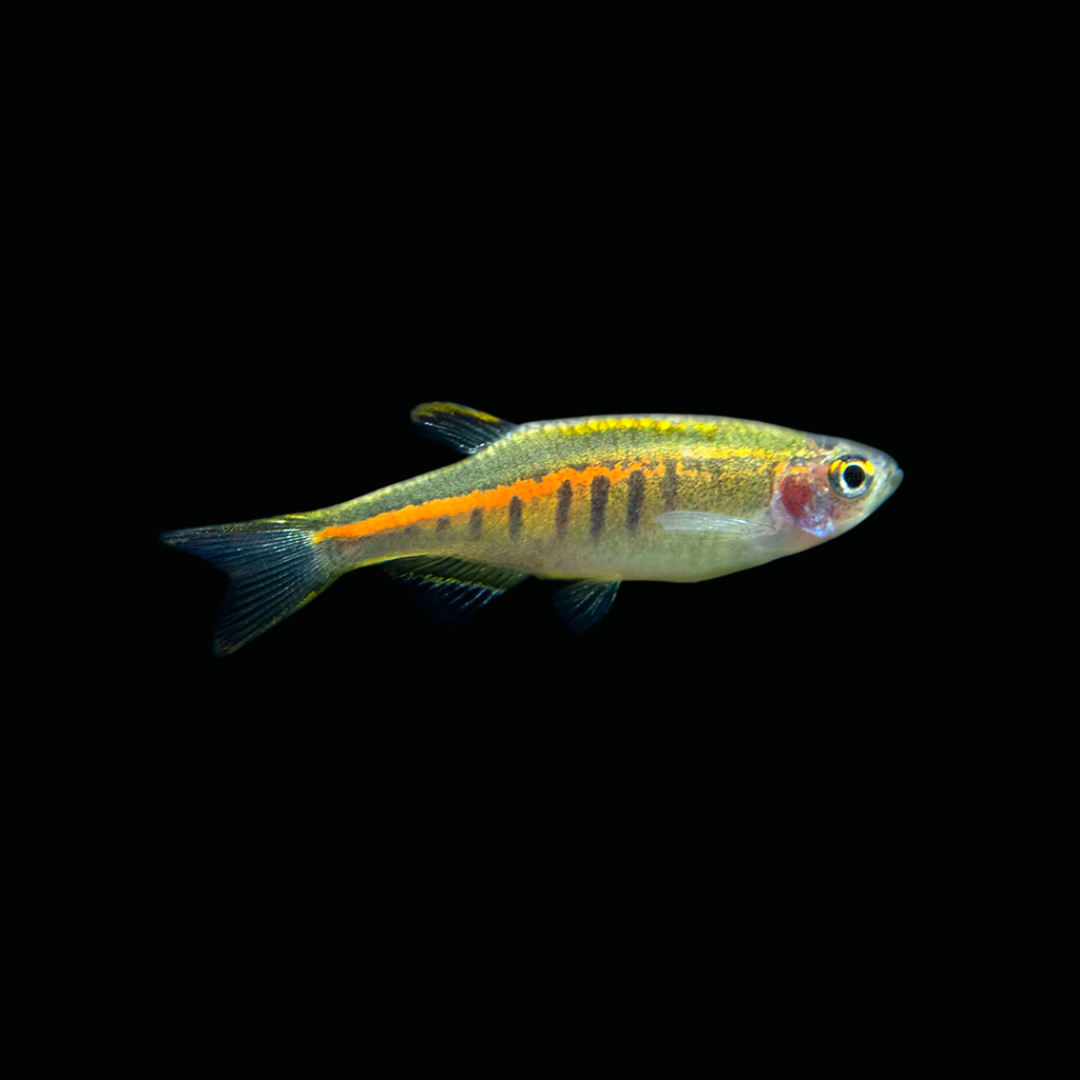
オレンジグリッターダニオは、ミャンマー北部の上部エーヤワディー川水系に分布する小型のダニオ類です。体側に入るオレンジ色のラインと青緑色のきらめきが美しく、水草レイアウト水槽では小さな閃光のような存在感を見せます。海外ではグローライトダニオの名で知られますが、日本ではオレンジグリッターダニオの流通名が広く使われています。The Orange Glitter Danio is a small danionin fish from the upper Ayeyarwady River drainage in northern Myanmar. Its orange lateral markings and blue-green sheen give it a sparkling appearance in planted aquariums. Internationally it is best known as the Glowlight Danio, while the Japanese trade commonly uses the name Orange Glitter Danio.
コイ目 ダニオ科またはコイ科 ダニオ亜科 ダニオ属。分類体系によって科の扱いに差があり、古典的にはコイ科、近年のデータベースではダニオ科として扱われることがあります。また、一部の文献ではセレスティクティス属として扱われた例もあります。Order Cypriniformes, family Danionidae or Cyprinidae depending on the classification system, subfamily Danioninae, genus Danio. Some taxonomic treatments have also placed this species in Celestichthys.
英名 / English Name
Glowlight Danio
分布 / Distribution
ミャンマー北部、上部エーヤワディー川水系に分布するとされます。原記載ではミッチーナ地方のKamaingおよびNamma周辺の小さな岩の多い流れが産地として示されています。観賞魚として流通する個体は、現在では東南アジアなどで繁殖されたブリード個体が中心と考えられます。It is recorded from the upper Ayeyarwady River drainage in northern Myanmar. The original description refers to small rocky streams around Kamaing and Namma in the Myitkyina District. Aquarium specimens available today are generally considered to be mainly captive-bred in Southeast Asia and elsewhere.
最大体長 / Max Size
標準体長で約3.1cmが記録されています。観賞魚としては全長3〜4cm前後の小型魚として扱われます。A maximum standard length of about 3.1 cm is recorded. In aquariums it is generally treated as a small fish reaching around 3 to 4 cm in total length.
寿命 / Lifespan
一般的には2〜3年ほどが目安です。水質、温度、餌、導入時の状態がよければ、より長く維持できる場合もあります。A typical aquarium lifespan is around 2 to 3 years. With good water quality, suitable temperature, varied feeding, and healthy stock, some individuals may live longer.
飼育環境 / Aquarium Environment
水槽サイズ / Tank Size
小型魚ですが泳ぎが速く、横方向の遊泳距離を必要とします。最低でも45cm規格水槽を目安にし、10匹以上で群泳させる場合は60cm規格水槽以上が扱いやすいです。余裕があれば60cm規格水槽、またはそれ以上の水槽で泳がせると、群れの動きがより自然に見えます。Although small, this is a fast swimmer that benefits from horizontal swimming space. A standard 45 cm aquarium is a practical minimum, while a standard 60 cm aquarium or larger is easier for groups of 10 or more. Larger tanks allow more natural shoaling movement.
水温 / Temperature
22〜26℃前後が飼育しやすい範囲です。比較的幅広い温度に適応しますが、原産地の一部には冷涼な流水環境も含まれるため、夏場に28℃以上が長く続く環境では冷却ファンなどで対策すると安心です。冬場はヒーターを使用します。Around 22 to 26°C is a practical range for aquarium care. The species adapts to a fairly broad range, but because some natural habitats are cool, flowing waters, prolonged summer temperatures above 28°C are best avoided with cooling fans or similar measures. A heater is needed in winter.
水質 / Water Quality
弱酸性〜弱アルカリ性の中性付近で飼育できます。目安はpH 6.5〜7.5、軟水〜中程度の硬度です。現地調査ではpH 7.6、導電率11 µS/cmのような非常に低ミネラルの水が記録された例もあり、清浄な水を好む傾向がうかがえます。ただし、家庭水槽では極端な超軟水を再現するよりも、急変を避け、アンモニアと亜硝酸を出さず、硝酸塩を低めに保つことが重要です。It can be kept around neutral, from slightly acidic to slightly alkaline water. A useful target is pH 6.5 to 7.5 with soft to moderately hard water. Field data include very low-mineral water such as pH 7.6 and conductivity of 11 µS/cm, suggesting an association with clean water. In home aquariums, however, stability and cleanliness are more important than reproducing extreme ultra-soft water.
レイアウト / Layout
中央から前面にかけて泳ぎ回れる空間を残し、後景や側面に水草、流木、石を配置すると落ち着きます。原産地の流れには水草が少ない場所もありますが、飼育下ではミクロソリウム、ボルビティス、アヌビアス、クリプトコリネ類などを使った水草レイアウトとも好相性です。暗めの底床を使うと、体色のオレンジと青緑のコントラストが見えやすくなります。Leave open swimming space in the front and center, and place plants, driftwood, and stones along the back and sides. Some natural streams may have little aquatic vegetation, but in aquariums this species works very well in planted layouts with Microsorum, Bolbitis, Anubias, Cryptocoryne, and similar plants. A darker substrate helps the orange and blue-green colors stand out.
注意点 / Precautions
最も重要な注意点は飛び出しです。驚いた時、給餌時、群れ内の追尾時に跳ねることがあるため、隙間の少ないフタを必ず用意してください。また、餌取りが速いので、動きの遅い混泳魚が餌を食べられているか観察することも大切です。The most important precaution is jumping. It may leap when startled, during feeding, or during chasing within the group, so a tight-fitting lid is essential. It is also a very quick feeder, so observe whether slower tank mates are getting enough food.
餌と給餌 / Feeding
餌の種類 / Diet
細かなフレークフード、小粒の顆粒飼料などの人工飼料をよく食べます。野生下では落下昆虫、水生昆虫の幼生、小型の動物性プランクトンなどを利用すると考えられるため、冷凍赤虫、冷凍ベビーブラインシュリンプ、ミジンコ、サイクロプスなどを補助的に与えると、体調維持や発色に役立ちます。It readily accepts fine flakes and small granules. In nature it is considered to feed on fallen insects, aquatic insect larvae, and small zooplankton-like prey, so frozen bloodworms, frozen baby brine shrimp, daphnia, and cyclops are useful supplements for condition and coloration.
給餌のポイント / Feeding Tips
表層から中層で素早く餌を追うため、沈みが遅く、口に入る細かな餌が適しています。1回量は控えめにし、1〜2分で食べ切れる量を1日1〜2回与えると水を汚しにくくなります。色揚げを意識する場合は、カロテノイドを含む餌を週に数回取り入れると、オレンジ色の維持に役立つと考えられます。Because it feeds actively in the upper and middle water layers, slowly sinking and finely sized foods are suitable. Offer small portions once or twice daily, enough to be eaten within 1 to 2 minutes. Foods containing carotenoids given a few times per week may help maintain the orange coloration.
性格と混泳 / Temperament and Tank Mates
性格 / Temperament
温和ですが、非常に活発でスピードのある群泳魚です。少数飼育では臆病になったり、群れ内の追尾が特定個体に集中したりしやすいため、最低6〜8匹、できれば10匹以上で飼育すると本来の行動と体色が出やすくなります。It is peaceful but extremely active and fast. In small numbers it may become shy, and chasing within the group can focus on particular individuals. Keep at least 6 to 8, preferably 10 or more, to bring out natural behavior and coloration.
混泳の相性 / Compatibility
小型テトラ、ラスボラ、小型ダニオ、コリドラス、クーリーローチなど、同程度のサイズで温和な魚と相性が良いです。ただし、泳ぎの遅い魚や臆病な魚は餌を取り負けることがあります。ミナミヌマエビやビーシュリンプの成体とは同居できる場合がありますが、稚エビは捕食されやすいため、エビの繁殖を主目的にした水槽には向きません。Good tank mates include small tetras, rasboras, small danios, Corydoras, and kuhli loaches or other peaceful fish of similar size. Slow or timid species may be outcompeted at feeding time. Adult dwarf shrimp may sometimes coexist, but shrimplets are likely to be eaten, so it is not ideal for shrimp-breeding aquariums.
病気と対策 / Diseases and Prevention
かかりやすい病気 / Common Diseases
特定の病気に極端に弱い魚ではありませんが、導入直後や水質が悪化した時には白点病、コショウ病、カラムナリス症、尾腐れ病などに注意が必要です。輸送や網による擦れ傷がある個体では、細菌感染が進みやすくなることがあります。It is not unusually delicate, but newly introduced or stressed fish may be susceptible to ich, velvet disease, columnaris, and fin rot. Fish with transport or netting abrasions may be more vulnerable to bacterial infections.
対策と予防 / Prevention
購入後は水温と水質を急変させないように、時間をかけて水合わせを行います。アンモニアと亜硝酸を検出させないこと、硝酸塩を低く保つこと、過密飼育を避けることが基本です。異常が見られた個体は早めに隔離し、症状に応じて観賞魚用の白点病薬、抗菌薬などを適切に使用します。Acclimate new fish slowly to avoid sudden changes in temperature and water chemistry. Keep ammonia and nitrite at zero, maintain low nitrate, and avoid overcrowding. Isolate affected fish early and use appropriate aquarium medications for ich, bacterial infections, or other symptoms as needed.
増やし方(繁殖) / Breeding
雌雄の判別 / Sexing
メスはやや大きく、抱卵すると腹部が丸くふくらみます。オスは比較的スリムで、状態が上がるとオレンジ色や青緑色が濃く見えることがあります。雌雄差は若魚では分かりにくく、成熟後に判別しやすくなります。Females are usually slightly larger and develop a rounder abdomen when carrying eggs. Males are slimmer, and in good condition their orange and blue-green colors may appear stronger. Sexing young fish can be difficult, becoming easier as they mature.
繁殖形態 / Reproduction
水草や底床付近に卵をばらまく基質散乱型です。親魚は卵や稚魚を保護せず、食卵することがあるため、計画的に増やす場合は親と卵を物理的に分ける必要があります。It is a substrate-scattering egg layer, depositing eggs among plants or near the bottom. The adults do not guard eggs or fry and may eat them, so planned breeding requires physical separation of adults and eggs.
繁殖のポイント / Breeding Tips
10〜15L程度の繁殖水槽にウィローモスや産卵モップ、または鉢底ネットなどのメッシュを設置し、卵が親魚の口に届かない場所へ落ちるようにします。親魚には事前に冷凍赤虫やブラインシュリンプなどを与えてコンディションを整え、夕方にペアまたは小グループを入れると翌朝に産卵することがあります。産卵後は親を戻し、稚魚が小さいうちはインフゾリアや超微粒子飼料を用い、成長後にブラインシュリンプ幼生へ切り替えると育てやすくなります。Use a 10 to 15 L breeding tank with Java moss, spawning mops, or a raised mesh so eggs fall beyond the adults’ reach. Condition the adults with rich foods such as frozen bloodworms and brine shrimp, then introduce a pair or small group in the evening; spawning may occur the next morning. Remove the adults afterward. The fry are tiny, so start with infusoria or ultra-fine fry food, then switch to newly hatched brine shrimp once they are large enough.
雑学と豆知識 / Trivia and Fun Facts
1. 学名に残った小さな命名の物語 / 1. A small naming story preserved in the scientific name
本種は1928年にスンダル・ラル・ホラによって記載され、種小名のchopraeはB. N. Chopra博士への献名です。男性名への献名としてはchopraiの綴りも見られますが、現在の主要な魚類データベースではDanio chopraeが有効名として扱われています。小さな熱帯魚の名前にも、記載時の表記、後年の解釈、命名規約の考え方が重なっており、分類学の歴史を感じさせます。This species was described in 1928 by Sunder Lal Hora, and the species name choprae honors Dr. B. N. Chopra. The spelling choprai has also appeared because the name commemorates a man, but major current fish databases treat Danio choprae as the valid name. Even the name of this small aquarium fish carries the layered history of original spelling, later interpretation, and zoological nomenclature.
2. DanioかCelestichthysか / 2. Danio or Celestichthys?
オレンジグリッターダニオは、文献によってDanio属として扱われたり、Celestichthys属として扱われたりしてきました。これは単なる名前の揺れではなく、小型ダニオ類の系統関係をどう整理するかという研究上の見方の違いに関係しています。実際の流通や飼育情報ではDanio chopraeが最も通じやすい一方、Celestichthys chopraeという表記を見かけた場合も、同じ魚を指している可能性が高いと考えてよいでしょう。The Orange Glitter Danio has been treated in different works either as Danio or as Celestichthys. This is not just a casual spelling variation; it reflects different views on how small danionin fishes should be classified. In aquarium trade and husbandry contexts, Danio choprae is the most widely understood name, while Celestichthys choprae usually refers to the same fish in taxonomic contexts.
3. GloFishとは別物の、天然のグローライト / 3. A natural glowlight, not a GloFish
英名のGlowlight Danioは、体側のオレンジ色の輝きをよく表した名前です。一方で、GloFishは蛍光タンパク質遺伝子を導入した改良系統の商標名であり、オレンジグリッターダニオとは別の存在です。本種の色彩は自然の色素や光の反射によるもので、暗い底床や水草の緑を背景にすると、その輝きがいっそう印象的に見えます。The English name Glowlight Danio describes the natural orange glow along the body. GloFish, on the other hand, is a trademarked name for genetically modified fluorescent lines and is separate from the Orange Glitter Danio. This species’ coloration comes from natural pigments and light reflection, and it looks especially striking against dark substrate and green aquatic plants.
4. 清流の魚らしい飼育のコツ / 4. Husbandry hints from a clear-stream fish
原産地の記録には、岩の多い小川や、非常に導電率の低い清浄な水が含まれます。ただし、家庭水槽で数値だけを極端に近づけようとすると、かえって水質が不安定になることがあります。大切なのは、汚れをためず、酸素を十分に含んだ水を保ち、群れがしっかり泳げる空間を用意することです。難しい水作りよりも、安定した清潔な水槽管理が本種にはよく合います。Habitat records include small rocky streams and very low-conductivity clean water. In the home aquarium, however, chasing extreme numbers can make conditions unstable. What matters most is avoiding accumulated waste, maintaining oxygen-rich water, and providing room for the shoal to swim. Stable, clean aquarium management suits this fish better than overly complicated water adjustment.
5. 小さな魚ほど大きな群れで美しくなる / 5. A small fish that becomes more beautiful in a larger group
オレンジグリッターダニオは1匹でも色鮮やかですが、本当の魅力は群れで現れます。数が少ないと不安から隠れがちになったり、強い個体の追尾が一部に集中したりします。10匹以上で泳がせると、群れの中で小さな緊張関係が分散し、全体として自然な動きになります。水草の緑を背景に、オレンジと青緑の光点がいくつも交差する様子は、本種ならではの景観効果です。A single Orange Glitter Danio is colorful, but its real appeal appears in a group. When kept in too few numbers, it may hide from insecurity or direct too much chasing toward certain individuals. In a group of 10 or more, social pressure is dispersed and the shoal behaves more naturally. Against green aquatic plants, the crossing flashes of orange and blue-green create a visual effect unique to this species.
まとめ / Conclusion
オレンジグリッターダニオは、鮮やかな体色、活発な群泳、比較的丈夫な性質を兼ね備えた、水草水槽向きの小型美魚です。ミャンマー北部の上部エーヤワディー川水系に由来する魚であり、分類や学名の扱いにも興味深い背景があります。The Orange Glitter Danio is a small, attractive fish well suited to planted aquariums, combining vivid coloration, active shoaling behavior, and generally hardy nature. It originates from the upper Ayeyarwady River drainage in northern Myanmar and has an interesting background in taxonomy and nomenclature.
飼育では、隙間のないフタ、十分な遊泳スペース、清潔で酸素を含んだ水、そして6〜10匹以上の群れが重要です。極端な水質調整よりも、安定した環境とこまめな観察を大切にすれば、オレンジと青緑にきらめく群泳を長く楽しめるでしょう。For successful care, provide a tight lid, ample swimming space, clean oxygen-rich water, and a group of at least 6 to 10 or more. Rather than chasing extreme water chemistry, focus on stability and regular observation, and this fish will reward you with a lively shoal of orange and blue-green flashes.
Hora, S. L. 1928. Notes on fishes in the Indian Museum. XV. Notes on Burmese fishes. Records of the Indian Museum, 30(1): 37-40.
原記載文献。Danio chopraeの記載者、記載年、原産地情報、学名の基礎確認に使用。
Kullander, S. O. 2012. Description of Danio flagrans, and redescription of D. choprae, two closely related species from the Ayeyarwaddy River drainage in northern Myanmar (Teleostei: Cyprinidae). Ichthyological Exploration of Freshwaters, 23(3): 245-262.
D. chopraeの再記載、上部エーヤワディー川水系での分布、近縁種D. flagransとの識別点、形態情報の確認に使用。
Kottelat, M. 2013. The fishes of the inland waters of Southeast Asia: a catalogue and core bibliography of the fishes known to occur in freshwaters, mangroves and estuaries. Raffles Bulletin of Zoology, Supplement No. 27: 1-663.
東南アジア淡水魚の分類目録として、Celestichthysとして扱われた分類上の背景確認に使用。
Vishwanath, W. 2010. Danio choprae. The IUCN Red List of Threatened Species 2010.
保全状況の確認に使用。FishBase上でも本種はLeast Concernとして参照されています。



 アイのアクアグッズ案内小型カラシンの群れを楽しむ|餌と水換えから考える飼育用品ガイド小型カラシンの群れを眺める時間を、もっと楽しく。泳ぐ余白、餌の食べ方、続けやすい水換えを軸に、日本で揃えやすい用品の選び方を紹介します。記事はコチラ →
 アイのアクアグッズ案内おとひめ物語|養殖生まれの餌を、わが家の魚に合う一粒へ道具の特徴や使い方、選ぶときのポイントをアイが紹介します。記事はコチラ →



コメント