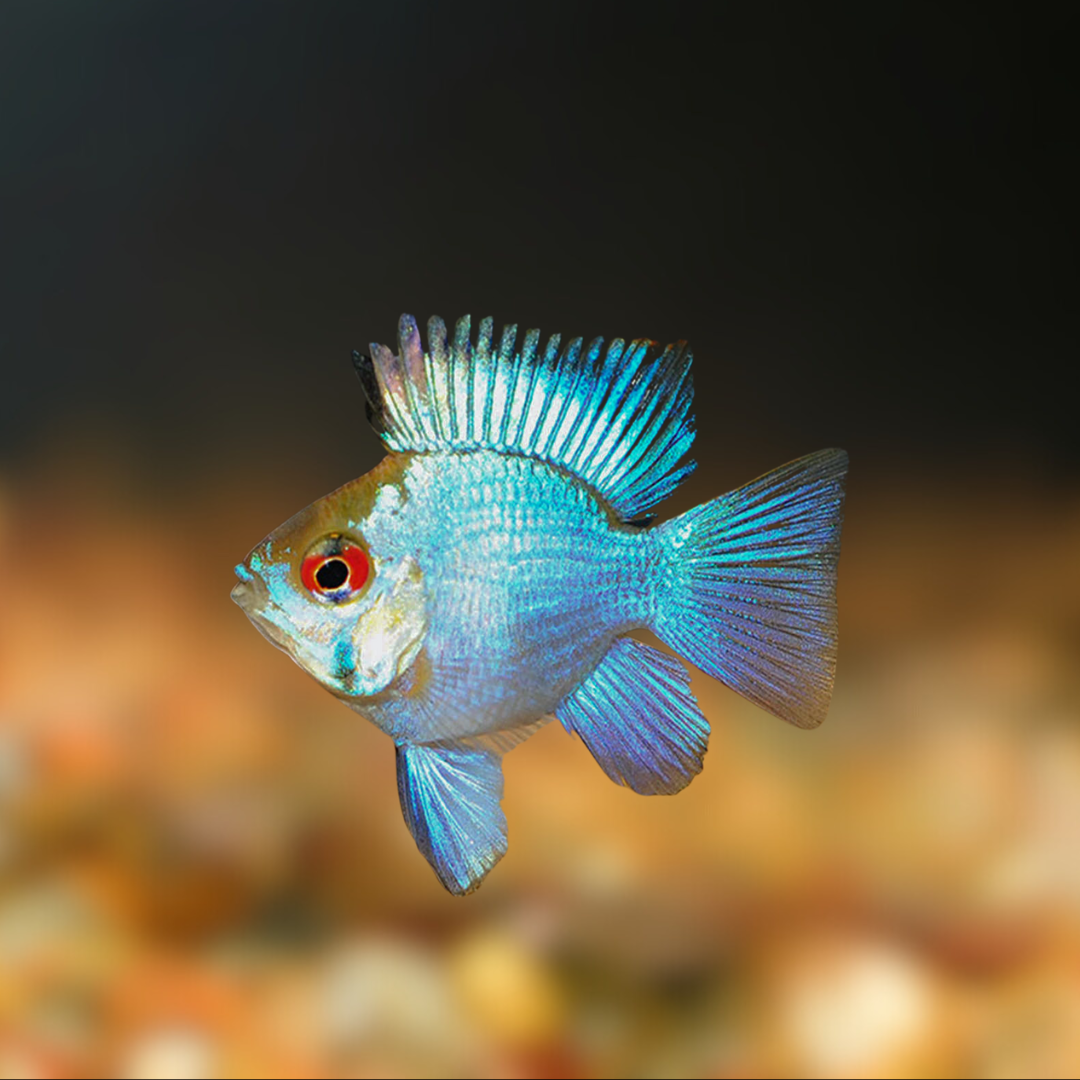
コバルトブルーバルーン・ラミレジィは、南米原産のラミレジィをもとに作出された観賞魚の改良品種です。全身を覆う金属的な青い光沢と、丸く短いバルーン体型が大きな魅力で、小型水槽でもひときわ目を引く存在になります。一方で、原種や通常体型の改良品種に比べると、体型の短さから泳ぎや消化に負担が出やすいと考えられるため、見た目の可愛らしさだけでなく、清潔な弱酸性寄りの水、高めで安定した水温、穏やかな水流を意識した丁寧な飼育が大切です。The Cobalt Blue Balloon Ramirezi is an ornamental selectively bred variety derived from the South American ram cichlid. Its metallic blue sheen and rounded, shortened body make it a striking fish even in a small aquarium. However, compared with wild-type or standard-bodied cultivated forms, its compact body is thought to place extra stress on swimming and digestion, so careful husbandry with clean, slightly acidic water, stable warm temperatures, and gentle water movement is important.
基本情報 / Basic Information
学名 / Scientific Name
Mikrogeophagus ramirezi
通称 / Common Name
コバルトブルーバルーン・ラミレジィ、コバルトブルー・バルーンラミレジィ、バルーンラミレジィCobalt Blue Balloon Ram, Electric Blue Balloon Ram, Balloon Ram
分類 / Family
シクリッド科 ミクロゲオファグス属Family Cichlidae, genus Mikrogeophagus
英名 / English Name
Cobalt Blue Balloon Ram, Electric Blue Balloon Ram
分布 / Distribution
野生原種は南米のオリノコ川流域、ベネズエラおよびコロンビアのリャノ地域に分布します。本品種は野生採集魚ではなく、主に観賞魚ファームで繁殖された改良品種です。The wild-type species occurs in the Orinoco River basin, especially the llanos region of Venezuela and Colombia. This variety is not a wild-caught form but a selectively bred aquarium strain produced mainly in ornamental fish farms.
最大体長 / Max Size
約4〜5cm前後。通常体型のラミレジィより短く丸い体型に見えます。Around 4 to 5 cm. It appears shorter and rounder than the standard-bodied ram cichlid.
寿命 / Lifespan
おおむね2年前後が目安です。管理状態や個体差によって1〜3年程度の幅があり、改良品種としてはデリケートな部類です。Around two years is a practical guideline. Depending on care and individual condition, the range may be roughly 1 to 3 years, and this variety should be regarded as delicate.
飼育環境 / Aquarium Environment
水槽サイズ / Tank Size
ペア飼育なら45cm規格水槽以上が目安です。混泳や複数飼育をする場合は、60cm規格水槽以上、できれば60cmワイド水槽以上を用意すると管理しやすくなります。水量に余裕を持たせることで水質変化が緩やかになり、デリケートな本品種には安心です。For a pair, a standard 45 cm aquarium or larger is a practical minimum. For community keeping or multiple individuals, a standard 60 cm aquarium or, preferably, a wider 60 cm tank is easier to manage. A larger water volume helps reduce sudden water-quality changes, which is important for this delicate variety.
水温 / Temperature
27〜30℃を目安に、特に28℃前後で安定させると状態を保ちやすいです。低温に傾くと動きが鈍り、白点病などのトラブルを招きやすくなるため、冬場はヒーターと水温計で確実に管理することが大切です。Aim for 27 to 30°C, with around 28°C being a practical stable target. When kept too cool, the fish may become sluggish and more prone to problems such as white spot disease, so a reliable heater and thermometer are important in cooler seasons.
水質 / Water Quality
弱酸性〜中性付近、目安としてpH5.5〜7.0前後の清潔な軟水〜中硬水が向いています。繁殖を意識する場合は、やや軟水・弱酸性寄りの安定した水が扱いやすいです。急なpH変動やアンモニア、亜硝酸、硝酸塩の蓄積に弱いため、ろ過を十分に効かせ、少量の定期換水で安定させることが重要です。Clean, soft to moderately hard water around slightly acidic to neutral conditions, roughly pH 5.5 to 7.0, is suitable. For breeding, stable water on the softer and slightly acidic side is easier to work with. The fish is sensitive to sudden pH shifts and the accumulation of ammonia, nitrite, and nitrate, so stable filtration and regular partial water changes are important.
レイアウト / Layout
細かい砂や角の少ない底床を使い、流木、水草、平らな石などで隠れ家と視線を遮る場所を作ります。バルーン体型のため強い水流は苦手なので、フィルターの吐出口を壁面に向けるなどして穏やかな水流に調整しておくと安心です。Use fine sand or a smooth substrate, and provide driftwood, aquatic plants, and flat stones to create hiding places and visual barriers. Because the balloon body form is not suited to strong currents, adjust the filter outlet to keep water movement gentle.
注意点 / Precautions
導入直後の水合わせ、水温低下、餌の与えすぎ、強い水流が大きな負担になりやすい魚です。特に輸入直後や入荷直後の個体は体力が落ちていることがあるため、痩せ、腹部の異常なふくらみ、泳ぎの乱れがない個体を選び、導入後は静かな環境で落ち着かせることが必要です。Acclimation stress, low temperatures, overfeeding, and strong current can place heavy stress on this fish. Newly imported or recently arrived specimens may be weakened, so choose individuals without emaciation, abnormal abdominal swelling, or unstable swimming, and allow them to settle in a calm environment after introduction.
餌と給餌 / Feeding
餌の種類 / Diet
小型シクリッド用の顆粒フード、冷凍赤虫、冷凍ブラインシュリンプ、ミジンコ類などを組み合わせます。人工飼料だけに偏らせず、食いつきや便の状態を見ながら消化しやすい餌を選ぶと扱いやすいです。Offer a combination of small cichlid pellets, frozen bloodworms, frozen brine shrimp, daphnia, and similar small foods. Avoid relying on only one food type, and choose easily digestible foods while watching appetite and feces condition.
給餌のポイント / Feeding Tips
1回量は控えめにし、短時間で食べ切れる量を1日1〜2回与えます。バルーン体型の個体は内臓への余裕が少ないため、食べ残しが出るほどの給餌や、乾燥餌を大量に与える管理は避けます。腹部が張りやすい個体では、冷凍餌をよく解凍して少量ずつ与えるなど、消化への負担を減らす工夫が大切です。Feed modest portions once or twice a day, only as much as the fish can finish quickly. Because balloon-bodied individuals have limited internal space, avoid heavy feeding and excessive dry foods. If an individual tends to become bloated, fully thaw frozen foods and offer small portions to reduce digestive stress.
性格と混泳 / Temperament and Tank Mates
性格 / Temperament
小型シクリッドとしては比較的温和ですが、ペア形成時や産卵前後には縄張り意識が強くなります。普段は底層から中層をゆっくり泳ぎ、流木や水草の周辺で落ち着いて過ごすことが多い魚です。It is relatively peaceful for a small cichlid, but territorial behavior increases during pair formation and around spawning. It usually swims calmly in the lower to middle levels of the aquarium and often stays around driftwood and plants.
混泳の相性 / Compatibility
小型カラシン、ラスボラ、コリドラス類など、穏やかで本種をつつかない魚と相性がよいです。動きの速い魚や気の強い魚、大型魚との混泳は餌を取られたりストレスを受けたりしやすいため避けます。繁殖を狙う場合は、ペア単独またはごく控えめな混泳にしたほうが成功しやすいです。It is compatible with peaceful tank mates such as small tetras, rasboras, and Corydoras that do not harass it. Avoid fast, aggressive, or large fish, as they may outcompete or stress the ram. For breeding, a pair-only setup or very limited community arrangement is more reliable.
病気と対策 / Diseases and Prevention
かかりやすい病気 / Common Diseases
白点病、尾ぐされ、細菌性の体表トラブル、腹部膨満、消化不良、転覆気味の泳ぎなどに注意が必要です。特にバルーン体型の個体では、体型由来の負担から腹部の張りや泳ぎの乱れが目立つ場合があります。Watch for white spot disease, fin rot, bacterial skin or fin problems, abdominal swelling, digestive issues, and unstable swimming. In balloon-bodied individuals, body-form-related stress may make bloating or swimming imbalance more noticeable.
対策と予防 / Prevention
予防の基本は、水温を高めに安定させること、ろ過を効かせること、食べ残しを出さないこと、急な水質変化を避けることです。治療が必要な場合は、症状を見極めて隔離し、白点病や細菌性疾患など原因に合った魚病薬を使用します。薬に弱い個体もいるため、まずは水質と水温を整え、早期発見を心がけることが重要です。Prevention depends on stable warm temperatures, effective filtration, avoiding leftover food, and preventing sudden water-quality changes. If treatment is needed, isolate the fish and use an appropriate medication based on the suspected cause, such as white spot disease or bacterial infection. Some individuals may be sensitive to medication, so maintaining water quality and detecting problems early are essential.
増やし方(繁殖) / Breeding
雌雄の判別 / Sexing
通常体型のラミレジィでは、オスの背ビレ前方の伸長、体格、メスの腹部の赤みが手がかりになります。ただし、コバルトブルー系では腹部の色が青い光沢に隠れやすく、バルーン体型では体型差も読み取りづらいため、複数の特徴と行動を合わせて判断することが大切です。In standard-bodied rams, male fin extension, body size, and the reddish belly of females can be useful clues. In cobalt blue forms, however, the female belly color can be obscured by the blue sheen, and the balloon body shape can make body-form differences harder to read, so sexing is best judged from several traits and behavior together.
繁殖形態 / Reproduction
平らな石、流木、水草の広い葉などに産卵する基質産卵型です。ペアで卵を守る行動を見せますが、改良品種では親魚の経験や個体差により、食卵や育仔失敗が起こることもあります。It is a substrate spawner that lays eggs on flat stones, driftwood, or broad plant leaves. Pairs may guard the eggs, but in selectively bred varieties, egg eating or failed parental care can occur depending on individual experience and condition.
繁殖のポイント / Breeding Tips
繁殖を狙う場合は、若く健康な個体を複数導入し、自然に相性のよいペアができるのを待つ方法が現実的です。産卵床になる平らな石を用意し、水温28℃前後、弱酸性寄りの清潔な水を保ちます。産卵後は親に任せる方法と卵を隔離する方法がありますが、どちらの場合も急な水質変化を避けることが成功の鍵です。For breeding, it is practical to start with several young, healthy individuals and allow a compatible pair to form naturally. Provide flat stones as spawning sites and maintain clean, slightly acidic water at around 28°C. Eggs may be left with the parents or separated for artificial rearing, but in either case, avoiding sudden water-quality changes is the key to success.
雑学と豆知識 / Trivia and Fun Facts
1. ラミレジィという名前の背景 / 1. The story behind the name Ramirezi
ラミレジィの種小名 ramirezi は、原種の発見や初期流通に関わった人物名に由来するとされます。もともとは Apistogramma ramirezi として記載され、その後、近縁属との違いや属名の扱いをめぐって複数の学名が使われた時期がありました。現在は Mikrogeophagus ramirezi という学名が広く用いられており、小型シクリッドの中でも分類史の変遷がよく知られた魚のひとつです。The specific name ramirezi is understood to be linked to a person involved in the discovery and early trade of the species. It was originally described as Apistogramma ramirezi, and several different generic names were used over time as ichthyologists debated its relationships. Today, Mikrogeophagus ramirezi is widely accepted, making this fish one of the small cichlids with a particularly interesting taxonomic history.
2. コバルトブルーは原種の色ではなく改良品種の魅力 / 2. Cobalt blue is a cultivated aquarium trait
野生型のラミレジィにも青い斑点や虹色の光沢はありますが、全身がネオンのように青く輝くコバルトブルー表現は、人為的な選抜交配によって強調された観賞魚ならではの形質です。別種ではなく Mikrogeophagus ramirezi の改良品種として扱うのが自然ですが、品種作出の詳しい系統情報は商業ファーム内に留まることも多く、由来を断定しすぎない姿勢が大切です。Wild-type rams already show blue spotting and iridescence, but the full-body neon-blue appearance of cobalt blue strains is an aquarium trait emphasized through selective breeding. It is best treated as a selectively bred form of Mikrogeophagus ramirezi rather than a separate species, although detailed strain histories often remain within commercial breeding facilities, so it is best to avoid overconfident claims about its exact origin.
3. バルーン体型と飼育者の責任 / 3. Balloon body form and keeper responsibility
バルーン体型は、丸く愛らしい印象を与える一方で、通常体型よりも内臓や泳ぎに負担が出やすいと考えられます。この特徴は観賞価値として流通していますが、魚にとっては必ずしも機能的に有利な体型ではありません。そのため、飼育者は「かわいいから丈夫」と考えるのではなく、餌の量、水流、水質、水温を一段丁寧に管理し、負担を減らす環境を用意することが大切です。The balloon body shape gives the fish a cute, rounded look, but it is thought to place more stress on internal organs and swimming than the standard body form. While this trait is valued in the ornamental trade, it is not necessarily functionally advantageous for the fish. Keepers should therefore avoid assuming that a cute appearance means hardiness, and should manage food amount, current, water quality, and temperature with extra care.
4. 高めの水温が合う理由 / 4. Why warmer water suits this species
原種のラミレジィは、南米オリノコ川流域のリャノと呼ばれる地域に由来します。この地域では季節によって水位や環境が大きく変わり、浅く温まりやすい水域も利用されます。その背景を考えると、一般的な熱帯魚水槽より少し高めの27〜30℃を好む傾向は自然なものです。ただし、高水温では水の汚れも進みやすいため、温度だけでなく清潔さを同時に保つことが重要です。The wild-type ram comes from the llanos of the Orinoco basin in South America, where water levels and conditions change greatly with the seasons and shallow waters can warm easily. This background helps explain why the species tends to do well at somewhat warmer temperatures of 27 to 30°C. However, warmer water can also deteriorate faster, so cleanliness must be maintained along with temperature.
まとめ / Conclusion
コバルトブルーバルーン・ラミレジィは、鮮やかな青色と丸い体型を兼ね備えた、非常に観賞性の高い改良ラミレジィです。小型で美しい一方、水温低下、水質悪化、強い水流、餌の与えすぎに弱く、通常体型のラミレジィよりも慎重な管理が求められます。The Cobalt Blue Balloon Ramirezi is a highly ornamental ram variety combining vivid blue coloration with a rounded body shape. Although small and beautiful, it is sensitive to low temperatures, poor water quality, strong current, and overfeeding, so it requires more careful management than standard-bodied ram cichlids.
飼育では、28℃前後の安定した水温、弱酸性寄りの清潔な水、穏やかなレイアウト、少量で消化しやすい給餌を意識することが大切です。バルーン体型という特徴に伴う負担を理解し、無理のない環境を整えてあげることで、この魚らしい青い輝きと穏やかな表情を長く楽しみやすくなります。Successful care depends on stable temperatures around 28°C, clean slightly acidic water, a calm layout, and modest portions of easily digestible food. By understanding the extra burden associated with the balloon body form and providing a low-stress environment, keepers can enjoy this fish’s blue brilliance and gentle character for as long as possible.



 アイのアクアグッズ案内エビのおうち、食べちゃっていいの!? コタロウと探る、不思議なエビのごはん道具の特徴や使い方、選ぶときのポイントをアイが紹介します。記事はコチラ →
 アイのアクアグッズ案内グッピー・プラティ・モーリーを親子で楽しむ飼育用品|水槽・稚魚保護・ろ過・餌・水草道具の特徴や使い方、選ぶときのポイントをアイが紹介します。記事はコチラ →




コメント