

解説 / Description
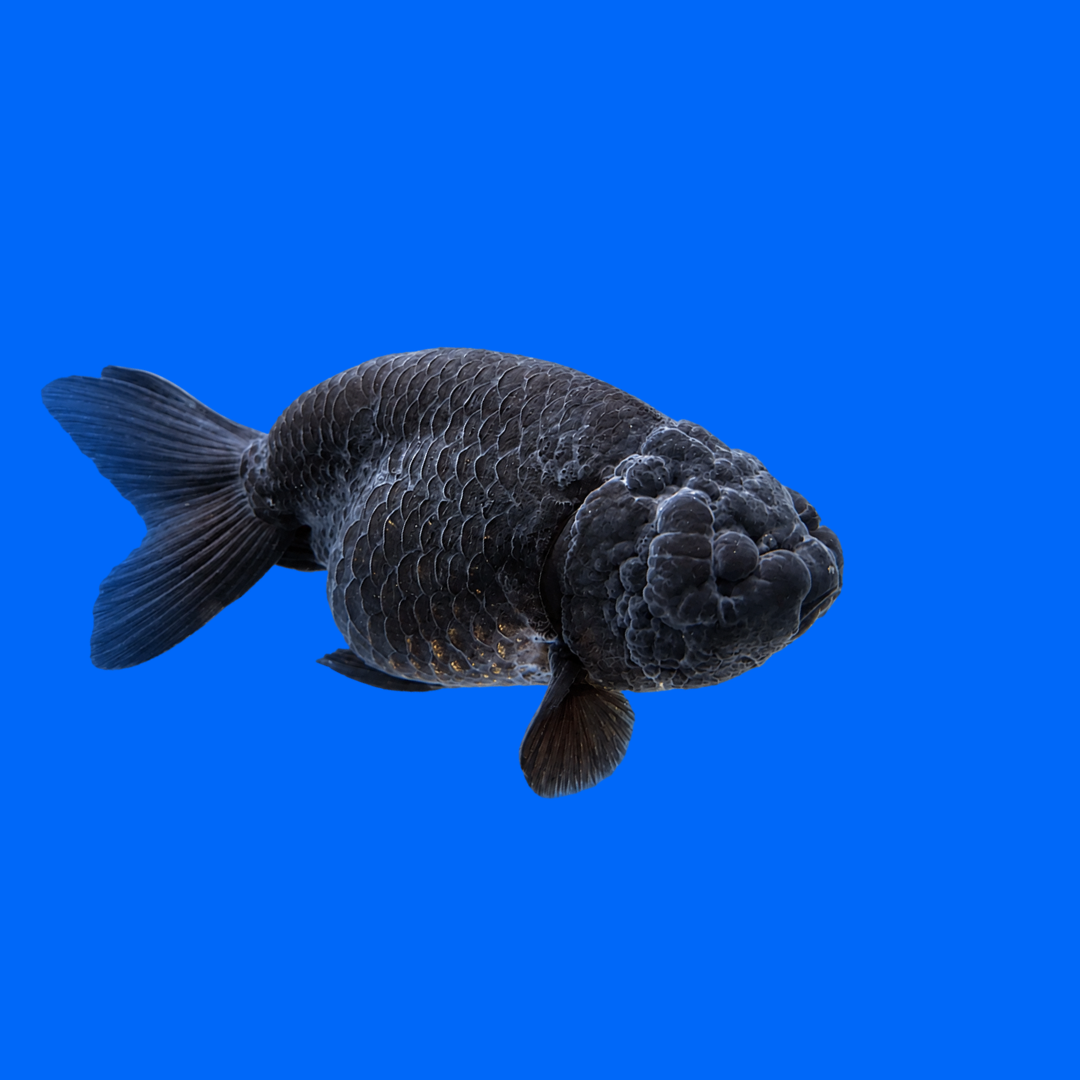
黒ランチュウは、背ビレを欠く丸みのある体型と、頭部に発達する肉瘤、黒を基調とした体色を楽しむ金魚です。日本の流通では「黒ランチュウ」「ブラックランチュウ」などの名称が広く使われていますが、伝統的な日本らんちうの上見基準に近い個体から、横見を意識した体型や肉瘤を持つ個体まで幅があります。黒色は成長に伴って変化することがあり、さらに周囲の明暗によって一時的に濃淡が変わって見えることもあります。体色だけでなく、背なり、尾筒、尾の開き、肉瘤の発達、無理なく泳げているかまで含めて観察すると、黒ランチュウの個体ごとの魅力が分かりやすくなります。 Black Ranchu is a goldfish sold for its rounded dorsal-finless body, fleshy head growth, and predominantly black coloration. In the aquarium trade, the name covers a range of fish, from individuals resembling traditional Japanese top-view Ranchu to lines selected more strongly for side-view body shape and head growth. The black coloration may change as the fish matures, while background brightness can also cause reversible changes in how dark the fish appears. Looking beyond color to the back line, caudal peduncle, tail carriage, head growth, and ease of swimming gives a more balanced view of each individual.
基本情報 / Basic Information
| 学名 / Scientific Name | Carassius auratus(観賞品種:黒ランチュウ / ornamental cultivar: Black Ranchu) |
|---|---|
| 通称 / Common Name | 黒ランチュウ、ブラックランチュウBlack Ranchu, Black Ranchu Goldfish |
| 分類 / Family | コイ目・コイ科・フナ属Order Cypriniformes, Family Cyprinidae, Genus Carassius |
| 英名 / English Name | Black Ranchu Goldfish |
| 分布 / Distribution | 野生分布を持たない改良金魚です。黒ランチュウとして流通する個体は日本国内外で生産されており、産地や繁殖系統によって体型や体色の傾向に幅があります。A domesticated ornamental goldfish with no natural wild distribution. Fish sold as Black Ranchu are bred both in Japan and overseas, and body shape and coloration can vary among breeders and lines. |
| 最大体長 / Max Size | 成魚で15〜20cm程度がひとつの目安です。系統や成長条件によって差があります。About 15–20 cm as a general adult-size guide, with variation among lines and growing conditions. |
| 寿命 / Lifespan | 金魚として10〜15年程度がひとつの目安で、適切な環境ではさらに長く生きる例もあります。黒ランチュウだけに固有の寿命差が明確に示されているわけではありません。About 10–15 years is a useful general guide for goldfish, and some live considerably longer with appropriate care. A distinct lifespan specific to Black Ranchu has not been established. |
飼育環境 / Aquarium Environment
| 水槽サイズ / Tank Size | 1匹でも少なくとも50〜60L程度、つまり60cm規格水槽相当以上を目安にし、可能であればさらに余裕を持たせます。2匹以上の成魚では90cm規格水槽相当以上、または同等以上の水量を確保できる浅く広い容器が管理しやすくなります。水量が大きいほど水温や水質が安定しやすく、ろ過能力と遊泳スペースにも余裕を持たせられます。For a single fish, use at least about 50–60 L, roughly the capacity of a standard 60 cm aquarium, and provide more space whenever possible. Two or more adults are easier to manage in the volume of a standard 90 cm aquarium or a similarly spacious, shallow, wide container. Larger volumes provide more stable water conditions and more room for filtration and swimming. |
|---|---|
| 水温 / Temperature | 18〜24℃程度を安定して保つと管理しやすくなります。金魚は比較的幅広い水温に適応しますが、短時間での急変は避けてください。水温が高くなるほど水中の酸素は不足しやすいため、夏季などは十分なエアレーションを確保します。 A stable range of about 18–24°C is practical for routine care. Goldfish can tolerate a broader range, but rapid temperature changes should be avoided. Because warmer water holds less dissolved oxygen, provide adequate aeration during hot conditions. |
| 水質 / Water Quality | pH6.5〜7.5前後を目安にした安定した淡水環境が適します。金魚は排泄量が多いため、十分な生物ろ過と定期的な換水を行い、アンモニアと亜硝酸をできるだけ検出させない管理が重要です。数値を急に調整するより、水質の急変を避け、清浄で酸素の多い状態を保つことを優先します。Stable freshwater around pH 6.5–7.5 is a practical target. Goldfish produce substantial waste, so effective biological filtration and regular partial water changes are important, with ammonia and nitrite kept as close to undetectable as possible. Avoid sudden chemical adjustments and prioritize stable, clean, well-oxygenated water. |
| レイアウト / Layout | 管理を優先する場合はベアタンクやシンプルなレイアウトが使いやすく、観賞水槽では泳ぎを妨げない広い空間と、落ち着ける場所を両立させます。鋭い石や枝状の流木は肉瘤や体表を傷つけるおそれがあるため避けます。暗い背景では体色が濃く見えやすくなりますが、これは背景への生理的な反応を含む見え方の変化であり、長期的な色変わりを防ぐこととは別です。For easy maintenance, a bare-bottom or otherwise simple layout is practical. In a display aquarium, combine open swimming space with areas where the fish can feel secure. Avoid sharp rocks and branching wood that may injure the head growth or skin. A dark background can make the fish appear darker through physiological background adaptation, but this is separate from preventing long-term color change. |
| 注意点 / Precautions | 黒色は生涯まったく変わらないとは限らず、成長に伴って赤褐色や橙色が現れる個体もいます。一方、背景の明暗による濃淡の変化は、必ずしも恒久的な褪色を意味しません。また、丸手の金魚は体型上、浮力の異常が目立つことがあるため、過密飼育、強すぎる水流、急激な水温変化、過給餌を避けます。新規導入魚は既存魚とすぐに混ぜず、別容器で健康状態を観察してから合流させます。Black coloration is not guaranteed to remain unchanged for life, and some fish develop brown, red, or orange areas as they mature. By contrast, short-term darkening or paling in response to background brightness does not necessarily represent permanent fading. Compact fancy goldfish can also show buoyancy problems more readily, so avoid crowding, excessive current, rapid temperature changes, and overfeeding. Observe new fish separately before adding them to an established group. |
餌と給餌 / Feeding
| 餌の種類 / Diet | 金魚用の良質な人工飼料を主食とし、丸手の個体では沈下性のものを選ぶと、水面で空気を多く飲み込みにくくなります。冷凍赤虫などは補助的に利用できます。肉瘤や体づくりだけを目的に高タンパク質の餌へ偏らせず、成長段階と水温に合った総合的な栄養バランスを優先します。Use a good-quality formulated goldfish diet as the staple. For round-bodied fancy goldfish, sinking food can reduce excessive air intake during surface feeding. Frozen bloodworms or similar foods can be offered as supplements. Rather than relying on a very high-protein diet solely to promote body or head growth, prioritize balanced nutrition appropriate to the fish’s age and water temperature. |
|---|---|
| 給餌のポイント / Feeding Tips | 食べ切れる少量を与え、残餌を出さないことを優先します。水温が下がると代謝や消化の進み方も変わるため、季節や魚の状態に合わせて給餌量を調整します。浮力の乱れが給餌後に出やすい個体では沈下性飼料を試し、腹部の張り、糞、泳ぎ方を観察してください。症状が繰り返す場合は、単なる食べ過ぎと決めつけず原因を見直します。Offer only small amounts that are eaten promptly and avoid leaving excess food in the tank. Metabolism and digestion change as water temperature falls, so adjust feeding to the season and the fish’s condition. If buoyancy problems appear after meals, a sinking diet may help; monitor abdominal swelling, feces, and swimming behavior. Recurrent problems should not automatically be assumed to be simple overeating. |
性格と混泳 / Temperament and Tank Mates
| 性格 / Temperament | 基本的には温和で、同種間でも大きな争いは起こしにくい金魚です。ただし、餌への反応は強く、個体差によっては給餌時に押し合うことがあります。泳ぎは和金型の金魚よりゆっくりしているため、強すぎる水流は負担になりやすく、穏やかな流れが向きます。Generally peaceful and not strongly aggressive toward its own kind. Feeding responses can be vigorous, and individuals may jostle one another at mealtimes. Compared with streamlined goldfish such as Common or Comet types, Ranchu swim more slowly and are better suited to gentle current. |
|---|---|
| 混泳の相性 / Compatibility | 同程度の大きさで泳ぎの速さが近いランチュウ、オランダ獅子頭、琉金などの丸手金魚と合わせやすい傾向があります。和金、コメットなど素早い品種と混ぜると餌負けしやすく、極端に体格差がある組み合わせも避けます。小型熱帯魚やエビ類との混泳は、水温条件や捕食・誤食の問題があるため基本的にはおすすめしません。They are most compatible with similarly sized, slow-swimming fancy goldfish such as other Ranchu, Oranda, and Ryukin. Fast varieties such as Common Goldfish and Comets may outcompete them for food, and large size differences should also be avoided. Mixing them with small tropical fish or shrimp is generally not recommended because of temperature differences and the risk of accidental predation. |
病気と対策 / Diseases and Prevention
| かかりやすい病気 / Common Diseases | 丸手の金魚では、正常な姿勢や水深を保てない浮力障害が目立つことがあります。ただし原因は一つではなく、体型と浮き袋の構造、消化管内のガス、浮き袋そのものの異常、内臓疾患などが関係する場合があります。ほかにも白点病、体表の感染症、エラの異常など、一般的な金魚に見られる疾病に注意します。食欲低下、呼吸の速さ、体をこすりつける動き、不自然な浮き沈みは体調変化のサインです。Round-bodied fancy goldfish can show buoyancy disorders in which they cannot maintain a normal position or depth. These problems do not have a single cause; body and swim-bladder anatomy, gas in the digestive tract, swim-bladder abnormalities, and internal disease may all be involved. They are also susceptible to common goldfish problems such as white spot disease, skin infections, and gill disorders. Loss of appetite, rapid breathing, flashing, or abnormal floating and sinking are signs that warrant closer attention. |
|---|---|
| 対策と予防 / Prevention | 過密を避け、安定した水質と十分な酸素を保つことが基本です。水温を急変させず、残餌を出さないように給餌します。浮力異常が給餌直後だけに見られる場合は一時的に給餌量を見直す余地がありますが、長引く、繰り返す、呼吸異常や腫れを伴う場合は原因の切り分けが必要です。新規導入魚は別容器で観察し、薬剤を使う場合は対象疾病と用法を確認して製品表示に従います。Prevention starts with avoiding crowding and maintaining stable, well-oxygenated water. Prevent rapid temperature changes and avoid leaving uneaten food. If buoyancy trouble appears only immediately after feeding, adjusting the amount or type of food may be reasonable; persistent or recurrent signs, especially with rapid breathing or swelling, require a broader assessment of the cause. Observe new fish separately, and use medications only for appropriate indications and according to the product label. |
増やし方(繁殖) / Breeding
| 雌雄の判別 / Sexing | 繁殖期のオスはエラ蓋や胸ビレ前縁に白い追星が現れやすく、メスを追尾する行動が見られます。成熟したメスは抱卵すると腹部がふっくらと張り、総排泄孔がやや目立つことがあります。若魚や非繁殖期は外見だけでの判別が難しい場合があります。During the breeding season, males often develop small white breeding tubercles on the gill covers and leading rays of the pectoral fins and actively chase females. Mature females carrying eggs usually become fuller through the abdomen, and the vent may appear more prominent. Sexing juveniles or fish outside the breeding season can be difficult. |
|---|---|
| 繁殖形態 / Reproduction | 卵生で、粘着性の卵を水草や産卵用モップなどに付着させるタイプです。親魚は卵を保護せず、産卵後に卵を食べることがあるため、採卵する場合は親魚と卵を分けて管理します。Oviparous. They scatter adhesive eggs that stick to aquatic plants, spawning mops, or similar surfaces. The parents provide no brood care and may eat the eggs, so breeders usually separate adults from the eggs after spawning. |
| 繁殖のポイント / Breeding Tips | 十分に成熟した健康な親魚を用い、産卵前は水質と栄養状態を整えます。孵化後の稚魚は成長に応じて給餌し、体型や尾形、泳ぎ、体色などを見ながら選別します。親魚と同じ外観がそのまま揃って現れるとは限らず、黒色も成長の途中で変化することがあるため、繁殖では長期的な観察と選抜が必要です。Use mature, healthy broodstock and condition them with stable water quality and good nutrition before spawning. Feed the fry appropriately as they grow and evaluate body shape, tail form, swimming ability, and coloration over time. Offspring will not necessarily reproduce the parents’ appearance uniformly, and black coloration may change during growth, so breeding requires long-term observation and selection. |
雑学と豆知識 / Trivia and Fun Facts
| 1. 黒ランチュウは「黒いランチュウ」以上の存在 / 1. More Than Simply a Black Ranchu | 「ランチュウ」という言葉には、日本で上見を中心に発達してきた伝統的ならんちうと、海外を含めて横見の体型や肉瘤を強く意識して選抜されたランチュウ型の金魚が含まれる場合があります。黒ランチュウという流通名もこの幅の中で使われるため、黒い体色だけで伝統的な日本らんちうと同じ評価基準に当てはめるのは適切ではありません。どのタイプであっても、背ビレを欠く輪郭、体の左右バランス、尾の付き方、無理なく泳げているかを見ると、その個体の特徴をつかみやすくなります。The word Ranchu can refer both to the traditional Japanese top-view form and, in the broader aquarium trade, to Ranchu-type goldfish selected more strongly for side-view body shape and head growth. The trade name Black Ranchu is used across this range, so black coloration alone does not place every fish under the same traditional Japanese judging standard. Regardless of type, the dorsal-finless outline, symmetry, tail set, and ability to swim comfortably are useful features to assess. |
|---|---|
| 2. なぜ黒は変わりやすいのか / 2. Why the Black Color Can Change | 金魚の稚魚には黒褐色の時期があり、多くの品種では成長に伴って黒色素が目立たなくなり、赤や橙色が現れます。黒ランチュウとして流通する個体でも、黒色の残り方や色変わりの時期には差があります。また、金魚の体色は成長だけでなく、色素細胞の働きやホルモン、周囲の明るさにも影響されます。つまり、購入時の黒さだけから将来の体色を確実に予測することはできません。Goldfish fry pass through a dark juvenile stage, and in many varieties the dark pigment becomes less prominent as red or orange coloration develops with growth. Among fish sold as Black Ranchu, the persistence and timing of black coloration vary. Goldfish coloration is also influenced by pigment-cell activity, hormones, and environmental brightness. In practical terms, the darkness of a fish at the time of purchase cannot guarantee its future coloration. |
| 3. 黒い容器が生む「背景適応」 / 3. Background Adaptation in Dark Containers | 金魚では、白い背景と黒い背景で体色の明暗が変化し、それに伴って体色調節に関わるホルモン系の反応も変わることが研究で確認されています。暗い背景では濃く、明るい背景では淡く見えやすいのは、この「背景適応」による部分があります。ただし、この反応は背景に応じた体色調節であり、成長に伴って黒色が失われる長期的な色変わりを止める仕組みではありません。黒い容器は黒を濃く見せる助けにはなっても、将来の体色を保証するものではないと考えるのが自然です。Studies in goldfish have shown that body tone changes between white and black backgrounds and that hormonal systems involved in color regulation respond as well. Fish therefore tend to look darker on a dark background and paler on a light one as part of background adaptation. This response is different from long-term color change during growth. A dark container can help a fish appear darker, but it cannot guarantee that black coloration will remain unchanged over time. |
| 4. 「上見」が形づくったランチュウの美 / 4. How Top-View Appreciation Shaped Ranchu Beauty | ランチュウの美しさは、現代のガラス水槽よりもずっと前の鑑賞文化から育まれてきました。桶や鉢の上から魚を見る「上見」では、背ビレがないことによって背中の輪郭が途切れず、頭から尾にかけての曲線が一枚のシルエットとして見えます。そのため、黒ランチュウでも横から肉瘤の大きさだけを見るより、上から頭幅、胴の太さ、尾筒、尾の開きまで一続きに眺めると、ランチュウらしい評価軸が理解しやすくなります。黒い体色は輪郭を際立たせるため、上見では形の良し悪しがむしろはっきり見えることがあります。Ranchu aesthetics developed long before the modern glass aquarium became common. In traditional top-view appreciation, the lack of a dorsal fin allows the outline of the back to flow continuously from head toward tail. Looking from above reveals head width, body mass, caudal peduncle strength, and tail spread as a single silhouette. With Black Ranchu, the dark body can make that silhouette especially clear, sometimes revealing structural strengths and weaknesses more readily than side viewing alone. |
| 5. 産地名だけでは品質は決まらない / 5. Origin Alone Does Not Determine Quality | 黒ランチュウにはタイ産、中国産、国産などの産地表示が付くことがありますが、産地名だけで体色の安定性や体型、品質を一律に決めることはできません。実際の個体差には、繁殖場、親系統、育成条件、選別基準など多くの要素が関わります。購入時は産地を参考情報の一つとして受け取り、背なり、左右のバランス、尾の付き方、肉瘤の状態、泳ぎ方、呼吸、体表に異常がないかを個体ごとに確認する方が確実です。Black Ranchu may be sold with labels such as Thai-bred, Chinese-bred, or Japanese-bred, but place of origin alone cannot reliably determine color stability, body shape, or quality. Differences among breeders, parent lines, rearing conditions, and selection standards all contribute to individual variation. Treat origin as one piece of background information and assess each fish directly for symmetry, back line, tail set, head growth, swimming, respiration, and skin condition. |
| 6. 色揚げ飼料と黒色は別に考える / 6. Color Foods and Black Pigmentation Are Different Issues | 金魚用の色揚げ飼料には、アスタキサンチンなど赤や橙系の発色を補う目的のカロテノイドが配合されることがあります。一方、黒ランチュウの黒い見え方にはメラニン系の色素や背景への生理的反応などが関わるため、色揚げ飼料だけで黒色を維持できるとは考えない方が適切です。体色を観察するときも、まず水質、給餌量、背景、照明、魚の健康状態を安定させ、そのうえで個体本来の色の変化を見ていくことが大切です。Some goldfish color-enhancing foods contain carotenoids such as astaxanthin to support red and orange coloration. The dark appearance of Black Ranchu also involves melanin-based pigmentation and physiological responses to the environment, so color food alone should not be expected to maintain black coloration. When judging color, first keep water quality, feeding, background, lighting, and general health stable, then observe how the individual fish changes over time. |
まとめ / Conclusion
黒ランチュウは、黒い体色だけでなく、背ビレのない背なり、丸みのある体型、尾の付き方、肉瘤、そして泳ぎ方まで含めて個性が表れる金魚です。体色は成長とともに変わることがあり、背景の明暗によっても見え方が変わります。そのため、購入時の黒さだけにとらわれず、健康状態と体型のバランスを見ながら育てることが、長く楽しむうえで大切です。 Black Ranchu show their individuality not only through dark coloration but also through the dorsal-finless back line, rounded body, tail set, head growth, and the way they swim. Their color may change with age, and background brightness can alter how dark they appear. For long-term keeping, it is better to value overall health and balanced form rather than judging the fish only by how black it looks at purchase.
十分な水量とろ過、安定した水温と水質、食べ過ぎを避けた給餌、毎日の観察が整えば、黒ランチュウは落ち着いた姿を長く見せてくれます。上見を楽しむ個体でも横見を楽しむ個体でも、黒い輪郭の中に現れる体型や泳ぎの違いを見ていくほど、一匹ごとの魅力が深まっていくでしょう。 With adequate water volume and filtration, stable temperature and water quality, restrained feeding, and daily observation, Black Ranchu can remain rewarding fish to keep for many years. Whether an individual is enjoyed from above or from the side, its body shape and movement within the dark silhouette reveal more of its character over time.

気になる道具や飼い方を見つけてみませんか?
 アイのアクアグッズ案内海水魚初心者の必需品|水槽・人工海水・比重計・水質検査道具の特徴や使い方、選ぶときのポイントをアイが紹介します。記事はコチラ →
 アイのアクアグッズ案内水槽の中に陸地がある!? コタロウと探るアクアテラリウムのメカニズム滝の水はどこから来るの? 白い霧の正体は? アイとコタロウが、水の循環、隠れたポンプ、霧の装置、陸上の植物と水草の葉の変化から、アクアテラリウムのメカニズムを探ります。記事はコチラ →
さまざまな飼育テーマをご紹介。リンク先の記事には広告・商品紹介が含まれます。
案内・紹介記事一覧へ →分布マップ
黒ランチュウは野生分布を持たない改良金魚で、日本国内外で生産・流通しています。特定の自然分布域を示せないため、地図では生産・流通地域を含む概略的な広域表示としています。
※この地図は分布欄の記述をもとにした概略表示です。黒ランチュウには特定の野生分布域がないため、マーカーは表示上の代表地点として日本付近に設定しており、実際の採集地点・産地・繁殖地点を示すものではありません。
参考文献
- Fricke, R., Eschmeyer, W. N. & Van der Laan, R. (eds). 2026. Eschmeyer's Catalog of Fishes: Carassius auratus. California Academy of Sciences. Electronic version updated 13 August 2026. Accessed 3 September 2026.
- Froese, R. & Pauly, D. (eds). 2026. FishBase: Carassius auratus (Linnaeus, 1758). World Wide Web electronic publication, version 02/2026. Accessed 3 September 2026.
- RSPCA Australia. 2024. How should I care for my goldfish? RSPCA Knowledgebase. Updated 1 May 2024. Accessed 3 September 2026.
- Petty, B. D., Francis-Floyd, R. & Yanong, R. P. E. 2024. Management of Aquarium Fish. Merck Veterinary Manual. Full review May 2022; updated September 2024. Accessed 3 September 2026.
- Petty, B. D., Francis-Floyd, R. & Yanong, R. P. E. 2024. Parasitic Diseases of Fish. Merck Veterinary Manual. Full review May 2022; updated September 2024. Accessed 3 September 2026.
- Kobayashi, M., Iwata, E. & Sorensen, P. W. 2026. Environmental and Physiological Regulation of Reproduction in the Goldfish: Gonadal Development, Maturation, and Spawning Behavior: A Review. Animals, 16(5), 775. doi:10.3390/ani16050775.
- Li, I.-J., Chang, C.-J., Liu, S.-C., Abe, G. & Ota, K. G. 2015. Postembryonic staging of wild-type goldfish, with brief reference to skeletal systems. Developmental Dynamics, 244(12), 1485–1518. doi:10.1002/dvdy.24340.
- Kasagi, S., Mizusawa, K. & Takahashi, A. 2020. The effects of chromatic lights on body color and gene expressions of melanin-concentrating hormone and proopiomelanocortin in goldfish (Carassius auratus). General and Comparative Endocrinology, 285, 113266. doi:10.1016/j.ygcen.2019.113266.




コメント