

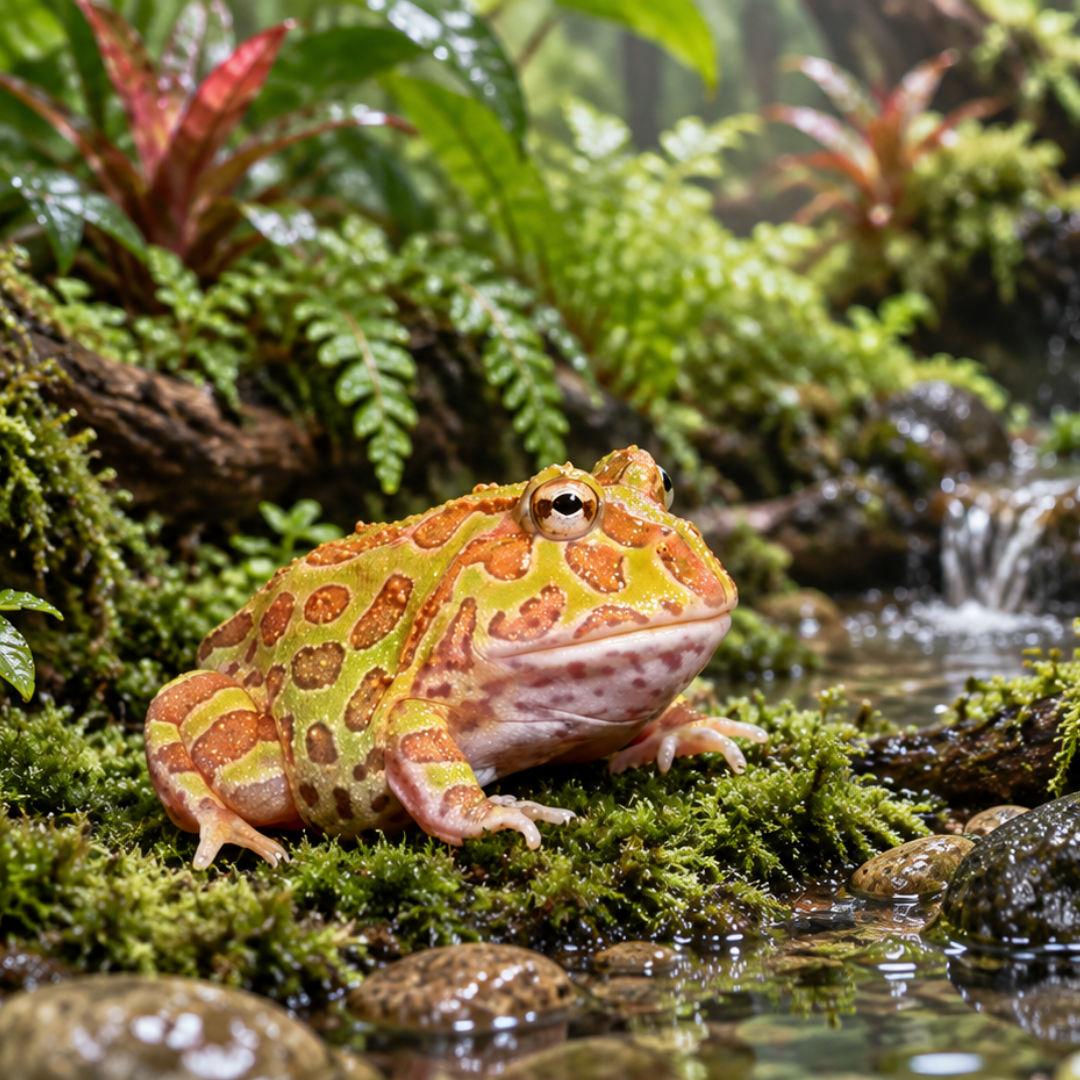
解説Description
クランウェルツノガエルは、南米中央部の半乾燥地帯グランチャコに暮らす、ずんぐりした地表性のカエルです。体に対して大きな頭と口、目の上の小さな角状突起、落ち葉に溶け込む緑色から褐色の模様が印象的です。ふだんは土に浅く潜り、目と頭だけを出して獲物を待ち伏せます。獲物が近づくと、粘着性の高い舌と強い顎を一瞬で働かせます。丸い体と大きな口から「パックマンフロッグ」とも呼ばれ、多彩な色彩品種が流通することもあり、日本でも広く親しまれています。 Cranwell’s horned frog is a stocky, terrestrial frog from the Gran Chaco, a seasonally dry region in central South America. Its disproportionately large head and mouth, small horn-like projections above the eyes, and green-to-brown leaf-litter camouflage give it an unmistakable appearance. It usually waits partly buried with only its eyes and crown exposed. When prey approaches, the frog deploys its adhesive tongue and powerful jaws in an instant. Its round body and broad mouth inspired the nickname “Pacman frog,” and captive-bred color morphs have helped make it a popular amphibian in Japan and elsewhere.
基本情報Basic Information
| 学名Scientific Name | Ceratophrys cranwelli Barrio, 1980 |
|---|---|
| 通称Common Name | クランウェルツノガエル、クランウェル、パックマンフロッグ。流通時には、アルビノ、ペパーミント、パターンレスなどのモルフ名が添えられることもあります。Cranwell’s horned frog, Chacoan horned frog, and Pacman frog. Captive animals may also be labeled with morph names such as albino, peppermint, or patternless. |
| 分類Classification | 両生綱・無尾目・ユビナガガエル科・ツノガエル属Class Amphibia, order Anura, family Ceratophryidae, genus Ceratophrys |
| 英名English Name | Cranwell’s Horned Frog / Chacoan Horned Frog |
| 分布Distribution | アルゼンチン、ボリビア、ブラジル、パラグアイ西部にまたがるグランチャコ地域。季節的に乾燥する草原、低木林、疎林に生息し、降雨後にできる一時的な浅い水場で繁殖します。The Gran Chaco region of Argentina, Bolivia, Brazil, and western Paraguay. It inhabits seasonally dry grassland, scrub, and open woodland and breeds in temporary shallow pools formed after rain. |
| 成体サイズAdult Size | 吻端から総排泄孔までの体長は、成体でおおむね8〜13cmほど。一般に雌のほうが大きく、よく育った個体では体重が数百gに達します。雌雄、系統、飼育状態によって個体差があります。Adults generally measure about 8–13 cm in snout-to-vent length. Females are usually larger, and a well-grown animal may weigh several hundred grams. Size varies with sex, lineage, and husbandry. |
| 寿命Lifespan | 飼育寿命を示す十分な統計はありませんが、適切な環境では10年前後、またはそれ以上飼育された例があります。肥満、慢性的な低温、不衛生な環境、異物の誤飲は健康を損なう大きな要因です。Robust lifespan statistics are not available, but animals have been kept for around ten years or longer under suitable conditions. Obesity, chronic chilling, poor hygiene, and ingestion of foreign material are major threats to long-term health. |
飼育環境Enclosure Environment
| 飼育容器・サイズEnclosure and Size | 通気を確保でき、ふたを確実に閉じられるガラスケージまたは樹脂ケースを用います。成体1匹には床面45×30cm程度をひとつの目安とし、大型の雌には60×30cm以上が扱いやすいでしょう。高さより床面積を優先し、幼体は餌と排泄を確認しやすい小さめの容器から始めても構いません。Use a well-ventilated glass or plastic enclosure with a securely closing lid. A floor area of roughly 45 × 30 cm is a practical starting point for one adult, while 60 × 30 cm or more is easier to manage for a large female. Floor space matters more than height. Juveniles may begin in a smaller enclosure where feeding and waste are easy to monitor. |
|---|---|
| 温度Temperature | 日中24〜28℃、夜間は20℃台前半までの緩やかな低下を目安にし、30℃を超える高温や20℃を大きく下回る状態を長引かせません。ケージ内に緩やかな温度差を設け、カエル自身が場所を選べるようにします。保温は室温管理、またはサーモスタットに接続した側面ヒーターなどで行い、温度計のセンサーは生体がいる床面付近に置きます。底面全体の加温は、土へ潜って暑さを避ける行動を妨げ、乾燥や低温やけどを招くおそれがあるため避けます。Aim for 24–28°C during the day, with a gentle nighttime drop into the low 20s Celsius. Avoid prolonged exposure above 30°C or well below 20°C. Provide a mild thermal gradient so the frog can choose its position. Heat the room or use a thermostatically controlled heater on one side, placing the temperature probe near substrate level. Avoid heating the entire floor, because doing so can interfere with the frog’s instinct to burrow away from heat and may cause dehydration or low-temperature burns. |
| 環境管理Environmental Management | 床材は握っても水が滴らない程度に湿らせ、表面を常時ぬかるませないことが大切です。湿度計の数値だけでなく、皮膚が乾かず、結露や悪臭がなく、空気がこもっていない状態を目指します。全身が無理なく浸かり、容易に出入りできる浅い水入れを置き、カルキを除いた清潔な水へ毎日交換します。排泄物と汚れた床材はすぐに取り除き、定期的に全交換します。洗剤や消毒剤の残留にも注意します。Keep the substrate moist enough to clump without releasing water when squeezed, but never permanently waterlogged. Look beyond a hygrometer reading: the skin should not dry, yet the enclosure should remain free of persistent condensation, stale air, and odor. Provide a shallow dish that allows the frog to soak and exit easily, and replace it daily with clean, dechlorinated water. Remove waste and fouled substrate promptly, replace the substrate regularly, and prevent detergent or disinfectant residues. |
| レイアウトLayout | ヤシガラ土や両生類向けソイルなど、保湿性があり、柔らかく崩れやすい床材を5〜10cmほど敷きます。体を隠せるコルク片や人工植物を添えると落ち着きますが、鋭い装飾品は置きません。砂利、大粒のバークチップ、長い繊維の水苔など、飲み込むと詰まりやすい素材は避けます。検疫中や体調観察を優先する短期間は、湿らせたペーパーを使う簡素なレイアウトも利用できます。Provide 5–10 cm of moisture-retentive, soft, crumbly substrate such as fine coconut fiber or an amphibian-safe soil. Cork bark or artificial foliage can add security, but omit sharp decorations. Avoid gravel, large bark chips, and long-fiber moss that may obstruct the gut if swallowed. During quarantine or a short period of close health monitoring, a simple setup with damp paper can also be used. |
| 注意点Precautions | 皮膚は化学物質を吸収しやすいため、素手で頻繁に触りません。移動が必要なときは、すすいで湿らせたパウダーフリーのニトリル手袋を使い、短時間で済ませます。咬まれると深い傷になることがあるため、口元へ指を近づけないでください。UVB照射の必要量には一律の基準がないため、使用する場合は弱い照射域と十分な日陰を用意し、製品ごとの照射距離を守って、過熱や過剰照射を避けます。新しく迎えた個体は既存個体から隔離し、器具、水、床材を共有しません。Amphibian skin readily absorbs chemicals, so avoid frequent bare-hand contact. When transfer is necessary, use rinsed, damp, powder-free nitrile gloves and keep handling brief. A bite can be deep; never place fingers near the mouth. There is no single established UVB level for this species; if UVB is provided, combine a low-intensity exposure area with ample shade, follow the lamp’s distance guidance, and prevent overheating or excessive exposure. Quarantine new animals from established ones and do not share equipment, water, or substrate. |
餌と給餌Feeding
| 餌の種類Diet | 主食にはミミズ、コオロギ、デュビア、カイコ幼虫など、適切に育てられた多様な無脊椎動物を使います。市販のツノガエル用総合栄養食も利用できます。昆虫には必要に応じてカルシウム剤を薄くまぶし、ビタミンD3の量はUVBの有無や製品濃度を考えて調整します。ピンクマウスなど脂肪の多い脊椎動物や小魚は常食にせず、ごく限られた補助食にとどめます。野外採集の虫は農薬や寄生虫の危険があるため避けます。Base the diet on varied, properly raised invertebrates such as earthworms, crickets, dubia roaches, and silkworm larvae. A nutritionally complete commercial horned-frog diet can also be used. Dust insects lightly with calcium as needed, adjusting vitamin D3 according to UVB exposure and product concentration. Fatty vertebrate prey such as pinkie mice and feeder fish should not be staples and are best reserved as rare supplements. Avoid wild-caught insects because of pesticide and parasite risks. |
|---|---|
| 給餌のポイントFeeding Tips | 餌は頭幅を超えない大きさを基本とし、硬いものや飲み込みにくい形のものは避けます。幼体は体格と消化を見ながら少量を1〜2日おき、成体は適量を5〜10日おきから調整するのが目安です。腹部が不自然に張るほど与えず、体重と体形を定期的に記録します。床材の上で与える場合はピンセットを使うか別容器へ誘導して誤飲を減らし、口を傷つけにくい先端の丸い器具を選びます。食欲が落ちても強制給餌を急がず、まず温度、脱水の有無、排便、体重変化を確認します。As a rule, food items should not exceed the width of the frog’s head; avoid items that are hard or awkward to swallow. Offer juveniles small meals every one to two days according to size and digestion, then adjust adults from a starting interval of about five to ten days. Do not feed until the abdomen becomes unnaturally distended, and record weight and body condition regularly. Use feeding tongs or a separate feeding area to reduce substrate ingestion, choosing rounded tips that are less likely to injure the mouth. If appetite declines, do not rush to force-feed; first check temperature, hydration, feces, and weight change. |
行動と同居Behavior and Cohabitation
| 行動・性質Behavior | 薄明薄暮から夜間に動きやすい待ち伏せ型の捕食者で、日中は床材に潜ったまま過ごすことが多い種です。動かないこと自体は異常ではありません。降雨や湿度変化のあとに活動や雄の鳴き声が増えることがあります。獲物と認識した動くものには素早く反応し、防御時には体を膨らませたり、鳴いたり、咬みついたりします。触れ合いを楽しむ動物ではなく、自然な姿勢や捕食行動を静かに観察する飼育に向きます。This sit-and-wait predator is most responsive from dusk into the night and often remains buried during the day; stillness alone is not abnormal. Activity and male calling may increase after rain or a change in humidity. It strikes rapidly at moving objects perceived as prey and may inflate, vocalize, or bite when defensive. It is not a handling pet, but an animal best appreciated through quiet observation of its posture and feeding behavior. |
|---|---|
| 同居の相性Compatibility | 原則として1匹ずつ単独飼育します。同種でも大きさに差があれば共食いが起こり、同程度の大きさでも咬傷、餌の奪い合い、慢性的なストレスが生じるおそれがあります。他種との同居も、捕食、病原体の持ち込み、環境条件の不一致を招くため適しません。繁殖目的で雌雄を合わせる場合も継続的に監視し、産卵後は速やかに分けます。House each frog alone. Cannibalism can occur when sizes differ, while even similarly sized frogs may inflict bites, compete for food, or experience chronic stress. Mixed-species housing is also unsuitable because it introduces predation, pathogen exchange, and incompatible environmental needs. Even breeding pairs require constant supervision and prompt separation after spawning. |
病気と対策Diseases and Prevention
| かかりやすい病気・不調Common Diseases and Health Problems | 床材や小石の誤飲による腸管閉塞、低温時の消化不良、脱水、過湿や不衛生な環境に伴う皮膚炎や細菌性敗血症、栄養の偏りによる代謝性骨疾患、過剰給餌による肥満に注意します。脚や腹面の発赤は「レッドレッグ」と呼ばれることがありますが、これは単一の病名ではなく、外傷や細菌感染など複数の原因で生じる症候です。眼の白濁、異常なむくみ、脱皮不全、長引く拒食、体重減少、排便停止、呼吸の異常も受診が必要なサインです。両生類ツボカビ症やラナウイルス感染症なども鑑別対象になります。Important problems include intestinal obstruction from swallowed substrate or stones, poor digestion at low temperatures, dehydration, dermatitis or bacterial septicemia associated with persistently wet or unhygienic conditions, metabolic bone disease from nutritional imbalance, and obesity from overfeeding. Redness of the legs or underside is often called “red leg,” but this is a syndrome rather than one disease and may have several causes, including trauma and bacterial infection. Cloudy eyes, abnormal swelling, retained shed, prolonged anorexia, weight loss, lack of feces, or abnormal breathing also warrant veterinary attention. Chytridiomycosis and ranavirus infection may also need to be considered. |
|---|---|
| 対策と予防Prevention and Care | 温度を毎日確認し、清潔な水、適度に湿った床材、十分な通気、適切な給餌量を維持することが予防の基本です。新規個体は別室または離れた場所で器具を分けて検疫し、世話は既存個体を先に行います。異常があれば写真、体重、給餌・排便記録を残し、両生類を診療できる動物病院へ早めに相談してください。人用薬、抗菌薬、消毒薬、塩、ヨード剤などの自己判断による投与や薬浴は、皮膚障害や中毒、診断の遅れを招くため行いません。Prevention rests on daily temperature checks, clean water, moderately moist substrate, adequate ventilation, and suitable portions. Quarantine newcomers with dedicated equipment in a separate room or distant area, and service established animals first. If abnormalities appear, record photographs, weight, feeding, and feces and consult a veterinarian experienced with amphibians promptly. Do not administer or bathe the frog in human medicines, antibiotics, disinfectants, salt, or iodine products without veterinary direction; amphibian skin makes dosing errors and toxicity especially dangerous. |
増やし方(繁殖)Breeding
| 雌雄の判別Sexing | 成熟した雄は雌より小型で、繁殖期には喉が灰色から黒っぽくなり、前肢の親指付近に抱接のための婚姻瘤が発達します。雄は低く反復する広告音を発します。雌は一般に大柄で頭幅と胴回りが増しますが、幼体の外見だけで確実に判別するのは困難です。Mature males are smaller than females. During breeding condition the throat becomes gray to dark, and nuptial pads develop near the thumbs for amplexus. Males produce a repeated, low advertisement call. Females generally develop a broader head and fuller body, but juveniles cannot be sexed reliably by external appearance alone. |
|---|---|
| 繁殖形態Reproduction | 野生では乾期後のまとまった降雨を合図に、一時的な水場へ集まり、短期間に繁殖する爆発型繁殖を行います。雄は水面で鳴いて雌を呼び、前肢の後ろで雌を抱える抱接を行います。その後、雌が水中へ多数の卵を産み、体外受精します。孵化した幼生は早い段階から肉食性が強く、水生昆虫やほかの幼生を捕食しながら、干上がりやすい水場で急速に成長して変態します。In the wild, heavy rain after the dry season triggers explosive breeding in temporary pools. Males call at the water surface and clasp females just behind the forelimbs. Females then release numerous eggs into the water for external fertilization. Tadpoles become strongly carnivorous early in development, eating aquatic invertebrates and other larvae as they grow and metamorphose rapidly before the pool disappears. |
| 繁殖のポイントBreeding Tips | 飼育下繁殖には、健康で十分に成熟した親、季節変化の再現、広い産卵水槽、水質と水温の安定が必要で、初級者向けではありません。ホルモン剤による誘発は獣医学的・研究的管理を要する処置であり、飼育者が自己判断で行うものではありません。親は卵や相手を捕食する可能性があるため産卵後に分け、卵と幼生には強い水流を当てません。幼生は共食いしやすいため、十分な空間と餌を用意し、サイズ差に応じて分けます。変態が近づいたら浅い水位と上陸場所を準備し、上陸後は小さな生き餌へ切り替えます。大量の幼体を終生飼育できる環境や適切な譲渡先まで計画してから、繁殖に取り組みます。Captive breeding requires healthy, fully mature adults, simulated seasonal cues, a spacious spawning enclosure, and stable water quality and temperature; it is not a beginner project. Hormonal induction is a veterinary or research procedure and should never be attempted without qualified oversight. Adults may eat eggs or each other, so separate them after spawning and avoid directing strong currents at eggs or larvae. Because tadpoles are cannibalistic, provide ample space and food and grade them by size. As metamorphosis approaches, supply shallow water and easy land access, then transition froglets to tiny live prey after they emerge. Before breeding, plan suitable lifelong care or responsible homes for the large number of offspring that may result. |
雑学と豆知識Trivia and Fun Facts
| 1. 名前に残る研究者と新種記載1. A Researcher Remembered in the Name | 種小名のcranwelliは、アルゼンチンの爬虫両生類学者ホルヘ・A・クランウェルにちなみます。本種は、ベルツノガエルと同じ種として扱われたこともありましたが、1980年にBarrioによって独立種として記載されました。見慣れたペットの学名には、南米の自然史研究の歩みが刻まれています。The specific name cranwelli honors Argentine herpetologist Jorge A. Cranwell. The frog was once treated as the same species as the Argentine horned frog before Barrio formally described it as distinct in 1980. The scientific name of this familiar pet preserves a chapter of South American natural-history research. |
|---|---|
| 2. 乾期を越える「繭」2. A Cocoon for the Dry Season | グランチャコの乾期には地中へ潜り、代謝を落として休眠します。その際、何層もの古い角質と粘液で体を包む「繭」を作り、皮膚から失われる水分を抑えます。雨が戻ると繭を脱ぎ、剥がした皮を食べて再利用します。飼育下で乾燥させて休眠を強制する行為は、脱水や衰弱の危険があり、通常の健康管理には必要ありません。During the Gran Chaco dry season, the frog burrows and lowers its metabolism. Layers of shed keratin and mucus form a “cocoon” that reduces water loss through the skin. When rain returns, the frog breaks free and eats the shed covering, recycling its nutrients. Deliberately drying a pet to force estivation is unnecessary for routine care and can cause severe dehydration or debilitation. |
| 3. 舌は瞬間的に働く粘着装置3. A Tongue That Acts Like Smart Adhesive | ツノガエルの舌は、柔らかな組織、微細な表面構造、力のかかり方によって粘度が変化する唾液の組み合わせで獲物へ密着します。舌が当たる瞬間には唾液が広がって獲物の表面になじみ、引き戻すときには粘りが獲物を保持します。つまり、舌そのものの力だけでなく、舌と唾液が一体となって獲物を捕らえているのです。A horned frog’s tongue combines soft tissue, microscopic surface structures, and saliva whose viscosity changes under force. At impact the saliva spreads and conforms to the prey’s surface; during retraction its viscosity helps retain the prey. In other words, capture depends not on tongue strength alone, but on the tongue and saliva working as one adhesive system. |
| 4. 小さな体に不釣り合いな顎4. Oversized Jaws on a Compact Body | 大きな頭蓋と発達した顎の筋肉により、体格から想像しにくい強い咬合力を発揮します。上顎には獲物を保持する小さな歯が並び、下顎前方には歯のように見える骨性突起があります。この構造は獲物を逃がしにくくする一方、大きすぎる餌を吐き戻しにくいという危険も生みます。「口に入りそう」ではなく、安全に飲み込める大きさで餌を選ぶことが重要です。A large skull and well-developed jaw muscles generate a surprisingly strong bite for the frog’s size. Small teeth line the upper jaw, while tooth-like bony projections sit at the front of the lower jaw. These features retain struggling prey, but they also make oversized food difficult to release. Prey selection must therefore be based on what can be swallowed safely, not merely what appears to fit in the mouth. |
| 5. 音を出す肉食性オタマジャクシ5. Carnivorous Tadpoles That Make Sound | 幼生は大きな口と強い角質の顎をもち、同種を含む動物質の餌を積極的に捕らえます。さらに、攻撃されたときなどに水中で短い音を出すことが報告されています。音が同種間の認識や共食いの抑制に関わる可能性が研究されており、オタマジャクシを「静かな草食者」と見る固定観念を鮮やかに覆します。The tadpoles have large mouths and powerful keratinized jaws and actively seize animal prey, including members of their own species. They have also been reported to emit brief underwater sounds when attacked or disturbed. Researchers have explored whether these signals aid recognition and reduce cannibalism, overturning the familiar image of tadpoles as silent herbivores. |
| 6. 染色体が語る近縁種との違い6. Chromosomes Reveal a Difference Between Relatives | クランウェルツノガエルは2倍体で2n=26とされる一方、よく似たベルツノガエルでは8倍体の2n=104が知られています。姿が似た近縁種の間に大きな倍数性の違いがあることは、ツノガエル類の染色体進化を考えるうえで興味深い材料です。外見が似ていても、遺伝的な成り立ちは同じとは限らないことを示しています。Cranwell’s horned frog is diploid with 2n = 26 chromosomes, whereas the similar Argentine horned frog is known as an octoploid with 2n = 104. This large difference in ploidy between close look-alikes makes horned frogs particularly interesting for studies of chromosome evolution. It shows that similar outward appearance does not necessarily imply the same genetic history. |
| 7. 飼育下で広がった色彩の世界7. A Captive Palette of Color Morphs | 野生型の緑色や褐色に加え、アルビノ、ペパーミント、パターンレスなど、多くのモルフが飼育下で作出・流通しています。色が違っても基本的な飼育要求は同じですが、アルビノ個体には強い光を避けられる隠れ場所を十分に用意します。流通名は、遺伝様式が厳密に検証された名称とは限らないため、繁殖を考える場合は血統情報も確認します。Alongside wild-type greens and browns, captive breeding has produced and distributed many morphs, including albino, peppermint, and patternless animals. Basic husbandry remains the same, although albinos should have ample shelter from bright light. Trade names do not always describe rigorously verified inheritance, so breeders should also investigate lineage records. |
| 8. ファンタジーツノガエルという交雑個体8. The Hybrid Known as the Fantasy Frog | クランウェルツノガエルとアマゾンツノガエルの交雑個体は、一般にファンタジーツノガエルの名で流通します。長い眼上突起や複雑な模様など、両親種の特徴を組み合わせて見せることがあります。流通名だけでは由来を判断できない場合があるため、純粋種の繁殖を目的とするなら、親種と血統が確認できる個体を選ぶことが大切です。Hybrids between Cranwell’s and Amazonian horned frogs are commonly sold as fantasy frogs. They may combine parental traits such as elongated eye horns and complex patterning. A trade name alone may not establish an animal’s origin, so anyone planning a pure-species breeding program should choose animals with documented parent species and lineage. |
| 9. 日本での流通と迎え方9. Trade and Acquisition in Japan | 日本の現行制度では、両生類は、哺乳類・鳥類・爬虫類と異なり、動物愛護管理法に基づく第一種動物取扱業や販売時の対面説明義務の対象に含まれていません。そのため通信販売でも流通していますが、発送できることと安全に迎えられることは別問題です。猛暑、厳寒、長時間輸送を避け、到着時刻に確実に受け取り、飼育設備を先に安定させておく必要があります。給餌履歴、サイズ、健康状態、モルフや親情報を説明できる、信頼性の高い販売者を選ぶことが長期飼育の第一歩です。Under Japan’s current system, amphibians—unlike mammals, birds, and reptiles—are not covered by the Type I Animal Handling Business system or its face-to-face sales explanation requirement under the Act on Welfare and Management of Animals. They are therefore sold by mail order, but the ability to ship an animal does not guarantee a safe arrival. Avoid extreme heat, severe cold, and long transit; be present for delivery; and stabilize the enclosure beforehand. Choosing a reputable seller who can explain the animal’s feeding history, size, health, morph, and parentage is the first step toward long-term care. |
| 10. 野生と飼育をつなぐ責任10. Responsibility Linking Captivity and the Wild | ペットとして流通する個体であっても、野外へ放してはいけません。日本の生態系に影響を与えるだけでなく、飼育環境由来の病原体を持ち込むおそれがあります。最後まで飼うこと、繁殖数を管理すること、器具や排水を適切に扱うことは、身近な自然と原産地の自然の双方を尊重する姿勢につながります。A pet frog must never be released into the wild. Release could affect Japan’s ecosystems and introduce pathogens from captivity. Lifelong care, controlled breeding, and responsible handling of equipment and wastewater show respect for both local nature and the species’ native environment. |
まとめConclusion
クランウェルツノガエルは、静かな姿の内側に、乾燥を越える休眠能力、瞬間的に働く舌、強い顎、肉食性の幼生という驚くほど活動的な進化の物語を秘めています。丈夫そうに見えても、皮膚から環境の影響を直接受ける両生類です。適温、清潔な水、湿りすぎない床材、通気、多様で適量の餌を丁寧に整えることが健康の土台になります。 Cranwell’s horned frog appears quiet, yet it embodies a remarkably dynamic evolutionary story: dry-season dormancy, a lightning-fast adhesive tongue, powerful jaws, and predatory tadpoles. Despite its robust appearance, it remains an amphibian whose skin responds directly to its surroundings. Appropriate temperature, clean water, moist but not saturated substrate, ventilation, and a varied diet in restrained portions form the foundation of good health.
頻繁に触れたり、たくさん食べさせたりするのではなく、必要な世話を適切な頻度で続け、小さな変化を見逃さずに見守ることが大切です。土からのぞく目や獲物を狙う構えを静かに観察すると、丸い体の向こうに、グランチャコの乾燥と降雨に適応してきた暮らしが見えてきます。 Rather than frequent handling or generous feeding, this frog needs measured care and close attention to small changes. Quiet observation of its eyes peering from the soil and its poised ambush offers a glimpse of a life shaped by the dry seasons and rains of the Gran Chaco.

気になる道具や飼い方を見つけてみませんか?
 アイのアクアグッズ案内アカヒレの仲間に合わせる飼育用品|無加温・混泳・繁殖の水槽とろ過道具の特徴や使い方、選ぶときのポイントをアイが紹介します。記事はコチラ →
 アイのアクアグッズ案内小型カラシンの群れを楽しむ|餌と水換えから考える飼育用品ガイド小型カラシンの群れを眺める時間を、もっと楽しく。泳ぐ余白、餌の食べ方、続けやすい水換えを軸に、日本で揃えやすい用品の選び方を紹介します。記事はコチラ →
 アイのアクアグッズ案内海水魚初心者の必需品|水槽・人工海水・比重計・水質検査道具の特徴や使い方、選ぶときのポイントをアイが紹介します。記事はコチラ →
 アイのアクアグッズ案内水草の肥料の選び方|底床用・液肥・メネデールの使い分け道具の特徴や使い方、選ぶときのポイントをアイが紹介します。記事はコチラ →
さまざまな飼育テーマをご紹介。リンク先の記事には広告・商品紹介が含まれます。
案内・紹介記事一覧へ →分布マップ
クランウェルツノガエルは、アルゼンチン、ボリビア、ブラジル、パラグアイ西部にまたがるグランチャコ地域に分布します。
この地図は分布地域全体を示す概略表示です。マーカーは分布の目安として設定した代表地点であり、実際の採集地点や個体の確認地点を示すものではありません。
参考文献
分類・分布・生息環境
- Frost, D. R. (2024). Ceratophrys cranwelli Barrio, 1980. Amphibian Species of the World 6.2, American Museum of Natural History. 資料ページ
- Administración de Parques Nacionales, Argentina. Ceratophrys cranwelli(Sistema de Información de Biodiversidad). 資料ページ
- Faivovich, J., Nicoli, L., Blotto, B. L., et al. (2014). “Big, Bad, and Beautiful: Phylogenetic Relationships of the Horned Frogs (Anura: Ceratophryidae).” South American Journal of Herpetology, 9(3), 207–227. DOI
生態・食性・繁殖
- Schalk, C. M., Montaña, C. G., Klemish, J. L., & Wild, E. R. (2014). “On the Diet of the Frogs of the Ceratophryidae: Synopsis and New Contributions.” South American Journal of Herpetology, 9(2), 90–105. DOI
- Vera Candioti, M. F. (2005). “Morphology and Feeding in Tadpoles of Ceratophrys cranwelli (Anura: Leptodactylidae).” Acta Zoologica, 86(1), 1–11. DOI
- Marangoni, F., Schaefer, E., Cajade, R., & Tejedo, M. (2009). “Growth-Mark Formation and Chronology of Two Neotropical Anuran Species.” Journal of Herpetology, 43(3), 546–550. DOI
- Trudeau, V. L., Somoza, G. M., Natale, G. S., et al. (2010). “Hormonal Induction of Spawning in 4 Species of Frogs by Coinjection with a Gonadotropin-Releasing Hormone Agonist and a Dopamine Antagonist.” Reproductive Biology and Endocrinology, 8, 36. DOI
飼育・栄養・疾病対策
- Poole, V. A., & Grow, S. (eds.). (2012). Amphibian Husbandry Resource Guide, 2nd ed. Association of Zoos and Aquariums, Amphibian Taxon Advisory Group. PDF
- Ferrie, G. M., Alford, V. C., Atkinson, J., et al. (2014). “Nutrition and Health in Amphibian Husbandry.” Zoo Biology, 33(6), 485–501. DOI
- Wright, K. M., & Whitaker, B. R. (eds.). (2001). Amphibian Medicine and Captive Husbandry. Krieger Publishing Company. 書誌情報
- Densmore, C. L., & Green, D. E. (2007). “Diseases of Amphibians.” ILAR Journal, 48(3), 235–254. DOI
- Pessier, A. P., & Mendelson, J. R. III (eds.). (2017). A Manual for Control of Infectious Diseases in Amphibian Survival Assurance Colonies and Reintroduction Programs, Version 2.0. IUCN/SSC Conservation Breeding Specialist Group. PDF




コメント