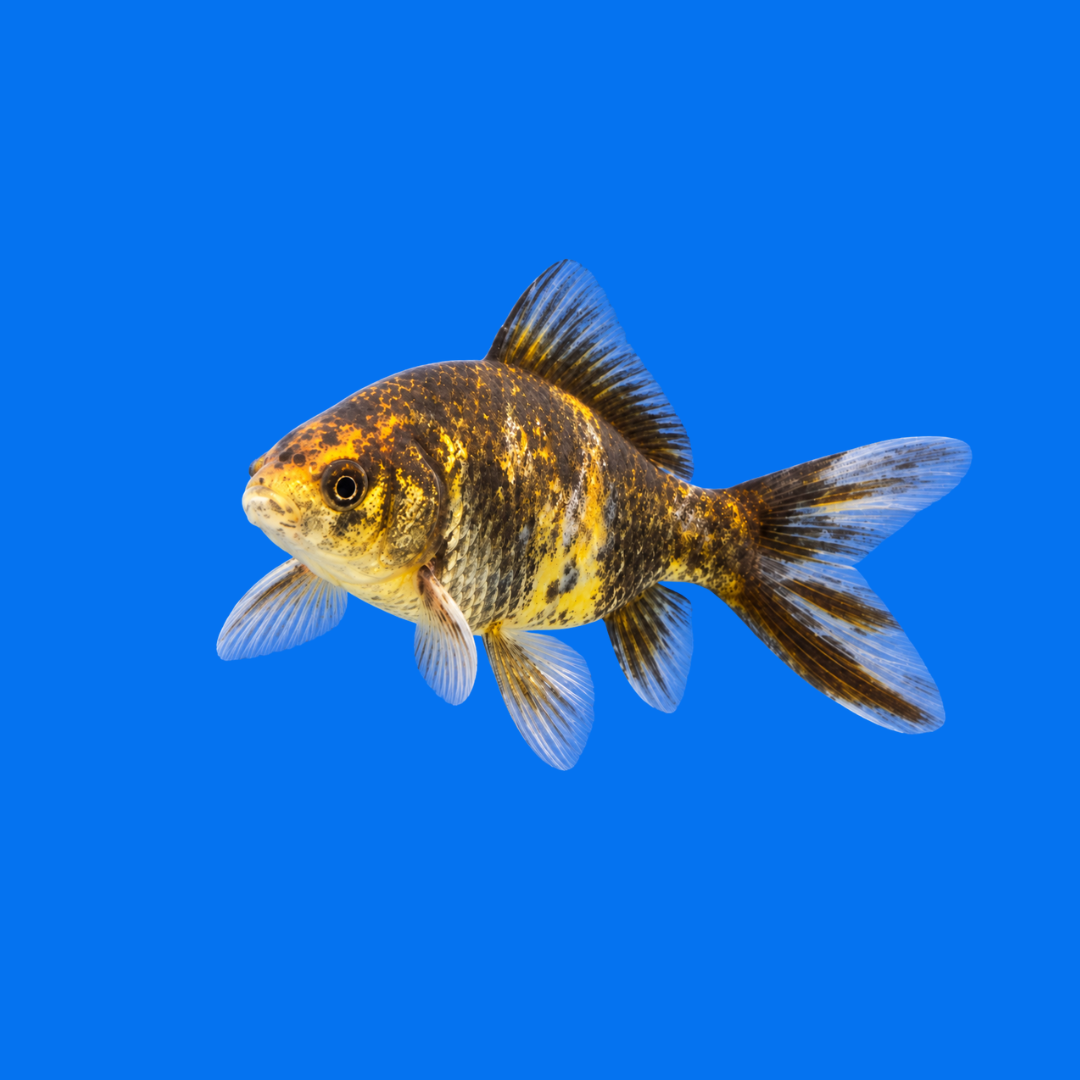
タイガー朱文金は、朱文金らしい細長い体型と単尾を基本に、一般的な朱文金より橙・赤・褐色・黒を強く見せ、青を少なめにした個体群に使われる名称です。現状では、独立品種として統一的な標準が広く共有されているわけではなく、朱文金の色彩選抜型・流通名として捉えるのが適切です。青が完全にないことを示す名称ではなく、個体によっては青灰色やモザイク透明鱗由来の複雑な色調も見られます。暖色と黒のコントラストに、長物金魚らしい軽快な泳ぎが重なることが魅力です。Tiger Shubunkin is a name used for Shubunkins that retain the typical long body and single tail while showing more orange, red, brown, and black and less blue than ordinary Shubunkins. At present, it is best understood as a color-selected type or trade name within Shubunkins; no widely shared independent breed standard has been established for it. The name does not mean that blue must be completely absent, and some individuals still show bluish-gray tones and the complex appearance associated with nacreous scaling. Its appeal comes from the contrast of warm colors and black together with the lively swimming style of long-bodied goldfish.
基本情報 / Basic Information
学名 / Scientific Name
Carassius auratus (Linnaeus, 1758)
通称 / Common Name
タイガー朱文金、レッドタイガー朱文金など。いずれも主として流通上の呼称です。Tiger Shubunkin, Red Tiger Shubunkin, and similar trade names.
分類 / Family
コイ目・コイ科・フナ属。タイガー朱文金自体に独立した分類学上の階級は設定されていません。Order Cypriniformes, family Cyprinidae, genus Carassius. Tiger Shubunkin does not have a separate taxonomic rank.
英名 / English Name
Tiger Shubunkin Goldfish
分布 / Distribution
国内では、外国産の長物金魚として流通する例が確認されており、東南アジアブリードと表示された販売例もあります。ただし、タイガー朱文金という名称全体に共通する単一の原産国は明らかではありません。金魚そのものは東アジアに由来し、現在は世界各地で飼育・繁殖されています。In Japan, Tiger Shubunkins are documented in trade as imported long-bodied goldfish, and some retail listings identify Southeast Asian-bred stock. However, no single country of origin can be assigned to the Tiger Shubunkin name as a whole. Goldfish themselves originated in East Asia and are now kept and bred worldwide.
最大体長 / Max Size
タイガー朱文金固有の最大体長は明らかではありません。朱文金を含む単尾・長体型の金魚は30cmを超えて成長することがあるため、成魚の大きさを見越して十分な遊泳空間を確保します。No maximum size specific to Tiger Shubunkin has been established. Single-tailed, long-bodied goldfish, including Shubunkins, can grow beyond 30 cm, so housing should be planned with adult size and swimming space in mind.
寿命 / Lifespan
タイガー朱文金固有の寿命データはありません。飼育下の金魚では10~15年以上が一つの目安とされ、良好な条件では20年以上生きる例も知られています。長期飼育では、水量とろ過能力に余裕を持たせ、水質を安定させ、過密を避けることが重要です。There are no lifespan data specific to Tiger Shubunkin. Captive goldfish are commonly described as living 10–15 years or longer, with some individuals exceeding 20 years under good conditions. For long-term care, provide adequate water volume and filtration, maintain stable water quality, and avoid overcrowding.
飼育環境 / Aquarium Environment
水槽サイズ / Tank Size
必要な水槽サイズは、個体の大きさ、匹数、ろ過能力によって変わります。長期飼育では横方向の遊泳距離を優先し、成長後を見越すなら90cm規格水槽以上を一つの目安にすると管理しやすくなります。複数の成魚をゆったり飼う場合は、120cm規格水槽・120cmワイド水槽や十分な容量の屋外池も選択肢になります。60cm規格水槽を使う場合は、若魚の育成や少数飼育であっても、成長に応じたサイズアップを前提に考えます。The required aquarium size varies with fish size, stocking level, and filtration capacity. For long-term care, prioritize horizontal swimming distance; a standard 90 cm aquarium or larger is a practical guideline when planning for adult growth. For several adults, a standard or wide 120 cm aquarium or a suitably large outdoor pond can be considered. If a standard 60 cm aquarium is used for juveniles or a small number of fish, plan to increase the enclosure size as the fish grow.
水温 / Temperature
成長期の管理では18~25℃前後を一つの目安にし、急激な水温変化を避けます。これはタイガー朱文金だけの固有条件ではなく、金魚の飼育・繁殖研究で用いられてきた範囲をもとにした目安です。34℃で長期間飼育した研究では、給餌効率の悪化、体色の低下、肝組織への負担が報告されているため、発色を目的に不必要な高水温を維持する根拠はありません。For active growth, roughly 18–25°C can be used as one practical guideline, while sudden temperature changes should be avoided. This is not a Tiger Shubunkin-specific requirement; it reflects ranges used in goldfish husbandry and reproductive studies. Long-term exposure to 34°C has been associated with poorer feed utilization, fading coloration, and liver tissue damage, so there is no basis for maintaining unnecessarily high temperatures to intensify color.
水質 / Water Quality
pH7~8前後を一つの目安にし、数値そのものより急変を避けて安定させることを重視します。排泄量が多いため、十分な生物ろ過と曝気を行い、アンモニアと亜硝酸は検出されない状態を維持するのが基本です。定期的な部分換水で硝酸塩や溶存有機物の蓄積も抑えます。A pH around 7–8 can be used as one guideline, with stability more important than chasing a precise number. Because goldfish produce substantial waste, adequate biological filtration and aeration are essential, and ammonia and nitrite should remain undetectable. Regular partial water changes help limit the buildup of nitrate and dissolved organic waste.
レイアウト / Layout
中央から前面に広い遊泳空間を確保し、装飾物は角のないものを選びます。底床は掃除しやすい薄敷き、またはベアタンクでも飼育できます。水草はついばまれたり抜かれたりすることがあるため、使う場合は丈夫な種類を選び、鉢植えや流木への活着で保護すると扱いやすくなります。活発に泳ぐ長物なので、水槽にはふたを設けて飛び出しにも備えます。Keep a broad open swimming area through the center and front of the aquarium, and choose decorations without sharp edges. A thin, easy-to-clean substrate or a bare-bottom setup can both work well. Live plants may be nibbled or uprooted, so tougher species are easier to use, especially when protected in pots or attached to wood. Because long-bodied goldfish are active swimmers, a secure lid is also advisable to reduce the risk of jumping.
注意点 / Precautions
小型水槽での過密飼育、ろ過不足、急な水温変化、食べ残しの蓄積は体調不良につながりやすい要因です。新しく迎えた個体は既存魚とすぐに混ぜず、別容器で状態を観察してから導入すると病気の持ち込みを減らせます。暖色の発色を強める目的で高水温を維持する有効性は確認されておらず、むしろ高温による負担に注意が必要です。Overcrowding in small tanks, insufficient filtration, sudden temperature changes, and accumulated uneaten food can quickly lead to health problems. Newly acquired fish should be observed separately before joining established stock to reduce the risk of introducing disease. The benefit of maintaining unusually high temperatures to intensify warm coloration has not been demonstrated, and prolonged high temperatures can instead place stress on the fish.
餌と給餌 / Feeding
餌の種類 / Diet
主食は栄養バランスの整った金魚用の完全配合飼料が適しています。粒の大きさや浮沈性は、個体のサイズと食べ方に合わせて選びます。補助的に植物質を含む餌や、冷凍アカムシ、ブラインシュリンプなどを少量与えることもできます。スピルリナやカロテノイドを利用した給餌は金魚の発色に影響する研究がありますが、タイガー模様そのものを作ったり、遺伝的に固定したりするものではありません。A nutritionally complete commercial goldfish diet should form the staple food. Choose pellet size and whether the food floats or sinks according to the size and feeding behavior of the fish. Small amounts of plant-containing foods, frozen bloodworms, or brine shrimp can be offered as supplements. Research in goldfish shows that feeding strategies using spirulina or carotenoids can affect pigmentation, but they do not create the Tiger pattern itself or genetically fix it.
給餌のポイント / Feeding Tips
1日1~2回を基本に、短時間で食べ切れる量だけを与えます。活発に食べても過剰給餌は水質悪化を招くため、腹部の張り、糞の状態、残餌、水温を見ながら量を調整します。低水温期は代謝と摂餌量が下がるので、同じ量を機械的に与え続けないことが大切です。Feed once or twice daily as a general routine, offering only what can be consumed quickly. Even enthusiastic feeding can lead to overfeeding and poor water quality, so adjust portions according to body condition, feces, leftovers, and water temperature. Metabolism and appetite decline at lower temperatures, so feeding amounts should not remain fixed throughout the year.
性格と混泳 / Temperament and Tank Mates
性格 / Temperament
基本的には温和で、長物金魚らしくよく泳ぎ、餌にも積極的です。強い縄張り性を示す魚ではありませんが、産卵期には雄が雌を追尾するため、一時的に激しい動きが見られます。また口に入る大きさの卵や仔魚、小型生物を食べることがあります。Generally peaceful, active, and enthusiastic at feeding time, Tiger Shubunkins behave much like other long-bodied goldfish. They are not strongly territorial, although males may chase females vigorously during the breeding season. They may also eat eggs, fry, or very small animals that fit into the mouth.
混泳の相性 / Compatibility
同程度の大きさと遊泳力を持つ朱文金、コメット、和金などの長物金魚との混泳が最も合わせやすい組み合わせです。丸手で泳ぎの遅い金魚は餌取りで不利になりやすいため、体型差が大きい場合は別飼育が無難です。高水温を必要とする熱帯魚、ひれをかじる魚、口に入るほど小さな魚との混泳は避けます。The easiest companions are similarly sized, similarly active long-bodied goldfish such as other Shubunkins, Comets, and Wakin-type goldfish. Slow-swimming fancy goldfish can be outcompeted at feeding time, so markedly different body types are often better kept separately. Avoid tropical species requiring high temperatures, fin-nipping fish, and fish small enough to be swallowed.
病気と対策 / Diseases and Prevention
かかりやすい病気 / Common Diseases
タイガー朱文金だけに特有の病気は知られていません。金魚全般と同様に、白点病などの寄生虫症、鰓や体表の寄生虫、細菌性のひれ傷みや体表炎症、真菌性の二次感染などに注意します。食欲低下、体をこする動作、呼吸の速さ、ひれの閉じ、白点や発赤、腹部膨満、眼球突出などは異常を疑う手がかりになります。No disease is known to be unique to Tiger Shubunkins. As with goldfish generally, watch for parasitic diseases such as white spot disease, gill or skin parasites, bacterial fin and skin infections, and secondary fungal infections. Reduced appetite, flashing or rubbing, rapid breathing, clamped fins, white spots, redness, abdominal swelling, or protruding eyes are useful warning signs.
対策と予防 / Prevention
新規導入魚の隔離観察、十分なろ過と曝気、定期換水、過密と過剰給餌の回避が基本です。病魚が出たときは、水槽容積、水温、アンモニア・亜硝酸・pH、食欲、泳ぎ、ひれ、体表、腹部、眼などを記録し、外見だけで薬を決め打ちしないようにします。可能であれば原因を確認してから、病態に合った治療を行います。Quarantine and observation of new fish, adequate filtration and aeration, regular water changes, and avoidance of overcrowding and overfeeding are the foundation of prevention. When illness appears, record tank volume, temperature, ammonia, nitrite, pH, appetite, swimming behavior, fins, skin, abdomen, and eyes rather than selecting medication from appearance alone. Whenever possible, identify the cause before choosing treatment.
増やし方(繁殖) / Breeding
雌雄の判別 / Sexing
繁殖期の雄では、鰓ぶたや胸びれ前縁に白い追星が現れやすく、雌は成熟すると腹部がふっくらして見える傾向があります。若魚や繁殖期以外は判別が難しいことも多いため、単一の特徴だけで断定せず、体型と追星、繁殖行動を合わせて判断します。During the breeding season, males often develop white breeding tubercles on the gill covers and leading edges of the pectoral fins, while mature females tend to become fuller through the abdomen. Sexing juveniles or fish outside the breeding season can be difficult, so body shape, tubercles, and breeding behavior should be considered together rather than relying on a single feature.
繁殖形態 / Reproduction
卵生で、雄が雌を追尾しながら、水草や産卵用モップなどに粘着性の卵を産ませます。親魚による卵食が起こるため、産卵後は親魚と卵を分けて管理します。孵化後の仔魚は遊泳を始めてから、ごく細かな初期餌を与え、成長に合わせて粉末飼料や細粒飼料へ移行します。They are egg-laying fish. Males chase females, which scatter adhesive eggs onto aquatic plants, spawning mops, or similar substrates. Because adults readily eat the eggs, breeders separate the parents from the eggs after spawning. Once the fry become free-swimming, very fine starter foods are offered, followed by powdered and then fine-granule feeds as they grow.
繁殖のポイント / Breeding Tips
親魚候補は健康、体型、ひれ、遊泳能力を優先して選び、そのうえで鱗タイプと色彩を評価します。タイガーらしさを残したい場合は、橙・赤・褐色・黒の面積と青の量、全身の模様バランスを見ながら後代選別を続けます。ただしタイガー配色を決める固有遺伝子や固定世代数は確立されていないため、一度の交配で同じ模様が揃うとは限りません。複数世代にわたり親魚と同腹魚の表現を記録し、再現性を確認することが重要です。Select broodstock first for health, body shape, fin quality, and swimming ability, then evaluate scale type and color. To retain a Tiger-like appearance, continue selecting offspring for the balance of orange, red, brown, and black, the amount of blue, and the overall distribution of pattern. However, no Tiger-specific gene or standardized number of generations required for fixation has been established, so a single cross will not necessarily produce uniform patterns. Recording parents and siblings across multiple generations is important for assessing repeatability.
雑学と豆知識 / Trivia and Fun Facts
1. 「タイガー」は体型名ではなく、主に色彩を示す名前 / 1. “Tiger” mainly describes color, not body type
タイガー朱文金を理解するとき、まず面白いのは「Tiger」という呼び名が、ブリストル朱文金やロンドン朱文金のような体型・尾型の系統名とは少し性格が違うことです。現在確認されている流通資料では、通常の朱文金よりも橙、褐色、黒が多く、青が少ないことが特徴として説明されています。つまりタイガーらしさの中心は、虎を思わせる暖色と黒の重なりです。名称だけで血統の固定度まで保証されるわけではありません。繁殖系統を重視して選ぶ場合は、親魚や同腹魚の色柄、成魚時の色残りが分かれば、名称だけを見るよりもその系統の傾向を判断しやすくなります。One of the most useful ways to understand Tiger Shubunkin is to recognize that “Tiger” works differently from names such as Bristol or London Shubunkin, which are strongly associated with body and tail standards. Current trade descriptions emphasize more orange, brown, and black and less blue than in ordinary Shubunkins. In other words, the Tiger identity is centered on the warm-and-black contrast that recalls a tiger pattern. The name itself does not guarantee a fixed bloodline. For aquarists choosing fish with breeding in mind, information about the parents, variation among siblings, and mature coloration can be more useful than the trade name alone when judging the tendencies of a particular line.
2. 朱文金の成立史は日本の金魚史と深く結びつく / 2. Shubunkin History Is Closely Tied to Japan
朱文金は、1892年ごろに初代秋山吉五郎が作出し、1900年に松原新之助が命名したと伝えられています。交配内容の細部には資料差がありますが、「秋山作出・松原命名」という系譜は日本の金魚史で広く紹介されています。その後、朱文金は海外でも選抜され、英国ではロンドン朱文金やブリストル朱文金のように体型や尾型を重視した系統が発展しました。現在は海外で「Tiger」の名を持つ色彩選抜型が流通し、日本でも外国産として入荷する例があります。ただし、タイガー朱文金固有の創始者や成立経路は明らかではないため、これらを一続きの固定血統として捉えるのは適切ではありません。Shubunkin is commonly described in Japanese goldfish history as having been developed by Kichigoro Akiyama I around 1892 and named “Shubunkin” by Shinnosuke Matsubara in 1900. Sources differ on some details of the original crosses, but the Akiyama-development and Matsubara-naming tradition is widely repeated in Japan. Shubunkins were later selected overseas as well, and British lines such as London and Bristol Shubunkins developed around body and tail form. Today, color-selected fish marketed as “Tiger” are produced overseas and are also imported into Japan. However, the founder and exact developmental pathway of Tiger Shubunkin itself are not established, so these events should not be interpreted as one continuously documented fixed bloodline.
3. 青を減らすタイガーと、青を重視するブリストル / 3. Tiger reduces blue while Bristol standards value it
朱文金では一般に浅葱や青みが魅力の一つとして語られますが、タイガー朱文金はその価値観を少し反転させたような存在です。英国の現行品評標準では、ブリストル朱文金は体の少なくとも25%を青とする基準が示されている一方、タイガーは青を控えめにして橙、褐色、黒を強く見せる方向で流通しています。そのため、非常に優れたタイガー朱文金が、そのままブリストル朱文金の評価基準でも高く評価されるとは限りません。同じ「朱文金」という大きな枠の中でも、何を美しいと見るかによって選抜の方向が大きく変わる好例です。Blue and pale bluish tones are often celebrated as part of classic Shubunkin beauty, but Tiger Shubunkin almost reverses that emphasis. Current British show standards for Bristol Shubunkin specify that at least 25% of the body should be blue, whereas Tiger Shubunkins are marketed with less blue and greater emphasis on orange, brown, and black. A superb Tiger Shubunkin therefore would not automatically be an ideal Bristol Shubunkin. It is an excellent example of how different breeding goals can create very different ideas of beauty within the broader Shubunkin tradition.
朱文金の独特な色の重なりを語るうえで欠かせないのが、透明鱗やモザイク透明鱗と呼ばれる鱗の性質です。古典的な金魚遺伝学のMatsui系表記では、全透明鱗のmattをTT、モザイク透明鱗のnacreousをTt、普通鱗のmetallicをttとする単一遺伝子座モデルが用いられてきました。このモデルでnacreous同士を交配すると、理論上はmatt:nacreous:metallicがおおむね1:2:1に分かれます。ただし、これは鱗の反射性と透明性に関する古典モデルであり、タイガー特有の橙、褐色、黒の配置が同じ比率で遺伝するという意味ではありません。タイガー配色を決める固有の遺伝子や単純な遺伝比は、現時点で明らかになっていません。The complex layered colors of Shubunkins cannot be discussed without their transparent and nacreous scale traits. In the classical Matsui notation used in goldfish genetics, matt fish with transparent scaling are represented as TT, nacreous or mosaic-transparent fish as Tt, and metallic ordinary-scaled fish as tt. Under this single-locus model, a nacreous-to-nacreous cross is expected to segregate approximately 1:2:1 for matt, nacreous, and metallic scale phenotypes. This is a classical model of scale reflectivity and transparency, not a rule for the orange, brown, and black patterning that defines the Tiger look. No Tiger-specific gene or simple inheritance ratio for this color pattern has been established.
5. 色揚げ餌は「模様を作る魔法」ではない / 5. Color-enhancing food does not create the pattern
タイガー朱文金では赤や橙の鮮やかさに目が向きやすいため、色揚げ餌への期待も大きくなります。金魚ではスピルリナやカロテノイドを利用した餌が体色の強度に影響する研究がありますが、餌がタイガー模様そのものを新しく作ったり、次世代に固定したりするわけではありません。遺伝的に持っている色の素質に、成長段階、健康状態、栄養状態などが重なって、最終的な見え方が形づくられます。色揚げ餌はあくまでその一部を支える手段と考えると、無理な高温飼育や過剰給餌に頼らず、健康と発色を両立しやすくなります。Because vivid red and orange are so noticeable in Tiger Shubunkins, color-enhancing diets can seem especially attractive. Studies in goldfish show that feeds containing spirulina or carotenoids can influence color intensity, but food does not create a Tiger pattern from nothing or fix that pattern in future generations. Genetic color potential, growth stage, health, and nutritional condition all contribute to the final appearance. Treating color food as one supporting factor rather than a magic solution helps avoid unnecessary high-temperature keeping or overfeeding and keeps health at the center of color development.
6. 「固定品種か、色選別群か」を見分ける視点 / 6. How to think about fixed lines versus color-selected groups
タイガー朱文金を繁殖まで楽しみたい場合、商品名だけでなく「次の世代でどの程度同じ傾向が現れるか」を見ることが重要です。同腹魚の色柄に大きなばらつきがあることだけで固定度を断定することはできませんが、複数世代にわたる親魚と子の記録は、特徴の再現性を判断する材料になります。現在、タイガー朱文金について、世界共通の固定世代数や独立品種としての統一基準は確認されていません。親魚、同腹魚、成魚時の色残り、繁殖世代の記録を合わせて見ることで、名称だけでは分からない系統の傾向をより慎重に捉えられます。For aquarists interested in breeding Tiger Shubunkins, the trade name alone is less informative than observing how consistently similar tendencies appear in later generations. Wide variation among siblings does not by itself prove how fixed a line is, but records of parents and offspring across several generations can help assess repeatability. No worldwide independent breed standard or agreed number of generations required for fixation has been confirmed for Tiger Shubunkin. Looking at parents, sibling variation, mature color retention, and breeding records together provides a more cautious picture of a line than the name alone.
まとめ / Conclusion
タイガー朱文金は、朱文金の長体・単尾を基本に、橙、赤、褐色、黒を目立たせ、青を少なめにした色彩傾向で流通する金魚です。現時点では、独立品種として統一的な標準が確立されているものというより、朱文金の色彩選抜型・流通名として理解すると、個体差や系統ごとの違いを無理なく捉えられます。Tiger Shubunkin is a long-bodied, single-tailed Shubunkin marketed for a color tendency that emphasizes orange, red, brown, and black while reducing blue. At present, understanding it as a color-selected type or trade name within Shubunkins, rather than as a separately standardized breed, gives a more accurate picture of variation among individual fish and breeding lines.
飼育では、成長後を見越した遊泳空間、十分なろ過、安定した水質を整えることが基本です。暖色と黒のバランスは個体ごとに異なり、成長に伴って見え方が変わることもあります。活発に泳ぐ姿と、その個体ならではの色柄の変化を長く観察できることが、タイガー朱文金の魅力です。Good care begins with enough swimming space for adult growth, adequate filtration, and stable water quality. The balance of warm colors and black differs among individuals and may change in appearance as the fish matures. Its active swimming and the gradual development of each fish’s individual pattern are central parts of the appeal of keeping Tiger Shubunkins.
繁殖・水温
Razani, H. & Hanyu, I. (1986). Annual Reproductive Cycle of 2–3 Years Old Female Goldfish and Its Artificial Modification by Manipulations of Water Temperature and Photoperiod. Nippon Suisan Gakkaishi, 52(6), 965–969. https://doi.org/10.2331/suisan.52.965
高水温・飼育上の注意
Khieokhajonkhet, A., Phoprakot, M., Aeksiri, N., Kaneko, G. & Phromkunthong, W. (2023). Effects of thermal stress responses in goldfish (Carassius auratus): growth performance, total carotenoids and coloration, hematology, liver histology, and critical thermal maximum. Fish Physiology and Biochemistry, 49(6), 1391–1407. https://doi.org/10.1007/s10695-023-01263-9
給餌・発色
Elshafey, A. E., Khalafalla, M. M., Abou Zaid, A. A., Mohamed, R. A. et al. (2023). Source diversity of Artemia enrichment boosts goldfish (Carassius auratus) performance, β-carotene content, pigmentation, immune-physiological and transcriptomic responses. Scientific Reports, 13, 21801. https://doi.org/10.1038/s41598-023-48621-4






コメント