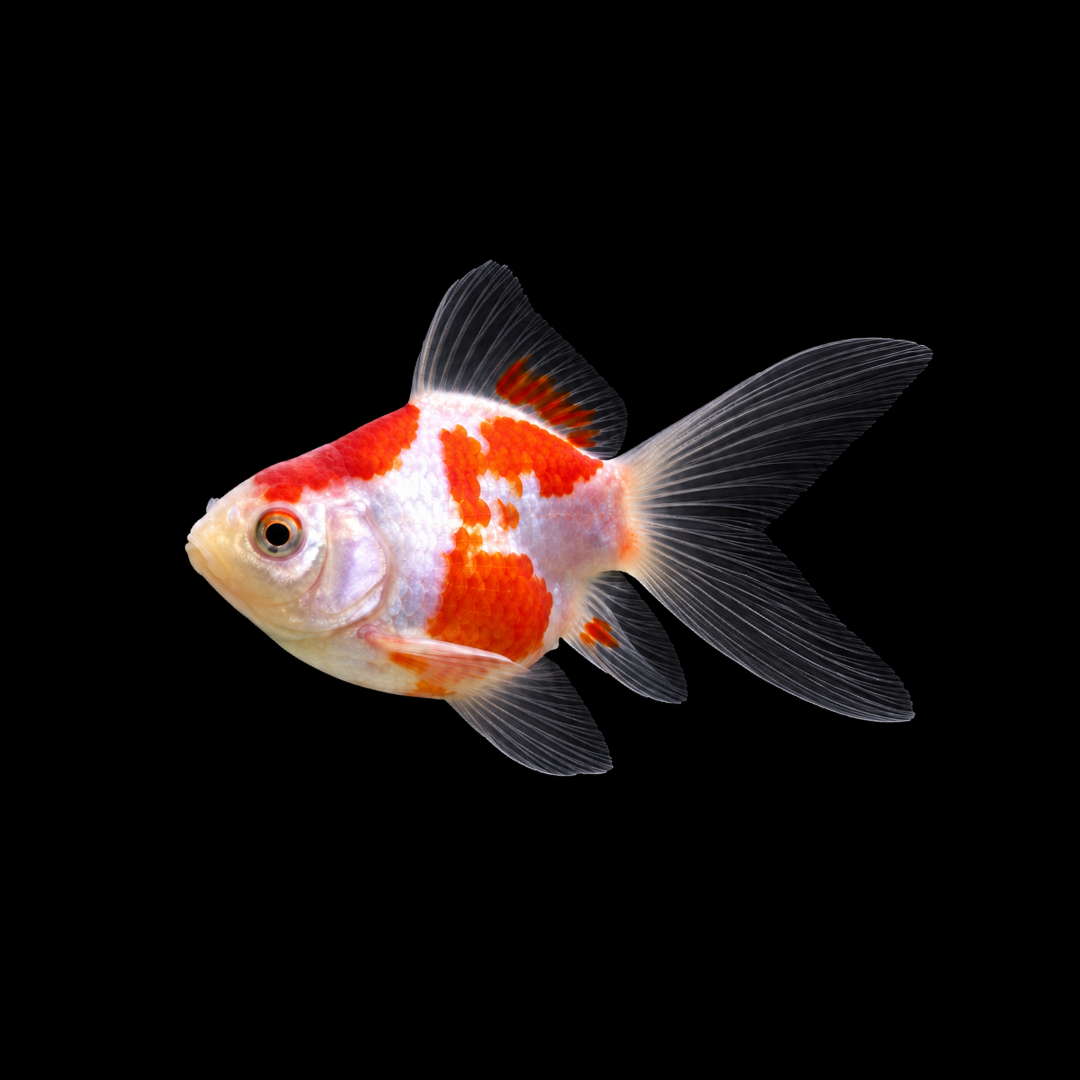
玉サバは、新潟県中越地方で育まれてきた金魚の品種です。琉金を思わせる丸い体に、左右へ開かない一枚尾を備え、ふっくらとした姿と軽快な泳ぎを楽しめます。紅白の模様や体の丸みには個体差があり、横から眺めると背中から腹へ続く曲線がよく分かります。大型に育つ系統もあるため、迎えるときは幼魚のかわいらしさだけでなく、成長後の泳ぐ広さまで考えてあげましょう。Tamasaba is a goldfish variety developed in the Chuetsu region of Niigata, Japan. It combines a rounded, Ryukin-like body with a single tail that does not divide into paired lobes. Its lively swimming and curved silhouette are particularly attractive from the side. Body shape and red-and-white markings vary between individuals. Some lines grow large, so plan for adult swimming space when choosing a young fish.
基本情報 / Basic Information
学名 / Scientific Name
Carassius auratus
通称 / Common Name
玉サバ、タマサバ、越後玉サバ。サバ尾は関連する呼称ですが、より長手の体型を区別して指す場合があります。Tamasaba, Echigo Tamasaba. Sabao is a related name, sometimes used specifically for a more elongated body type.
分類 / Family
コイ目・コイ科・フナ属。キンギョの飼育品種であり、玉サバだけに独立した種の学名があるわけではありません。Order Cypriniformes; family Cyprinidae; genus Carassius. Tamasaba is a domestic goldfish variety, not a separate species.
英名 / English Name
Tamasaba goldfishTamasaba goldfish
分布 / Distribution
野生の自然分布域を持つ品種ではありません。発祥地は日本の新潟県中越地方で、長岡市の山古志地域周辺などで育まれてきました。現在は国内外で繁殖・飼育されています。This domestic variety has no natural wild range. It originated in the Chuetsu region of Niigata, Japan, including the area around Yamakoshi in Nagaoka. It is now bred and kept in Japan and overseas.
最大体長 / Max Size
大型系統では30cm以上に育つことがありますが、品種全体の確定した最大値は不明です。成長は系統と飼育条件に左右されます。大きさを比較するときは、尾びれを含む全長か、含まない体長かを確認してください。Large-growing lines may exceed 30 cm, but a verified maximum for the variety is unknown. Growth depends on lineage and husbandry. Check whether a stated measurement includes the tail (total length) or excludes it (body length).
寿命 / Lifespan
玉サバに限定した平均寿命の統計は不明です。金魚一般では10〜15年ほどが目安として挙げられ、適切な環境で長く付き合うことを前提に迎えたい魚です。A reliable average specific to Tamasaba is unavailable. Around 10–15 years is commonly given for goldfish in general; plan for a long-term commitment.
飼育環境 / Aquarium Environment
水槽サイズ / Tank Size
成長を見越して90cm規格水槽(幅90×奥行45×高さ45cm、公称容量約182L)以上から計画し、大型個体には120cmワイド水槽(例:120×60×60cm、公称容量約432L)以上や十分な広さの飼育池を用意します。これは飼育計画の目安で、体の大きさや尾の長さ、匹数によってさらに広い設備が必要です。底砂や水面の余裕により実際の水量は少なくなります。For planning, consider at least a Japanese 90 cm standard aquarium (90 × 45 × 45 cm; approximately 182 L nominal). Large adults may need a 120 cm wide aquarium (for example, 120 × 60 × 60 cm; approximately 432 L nominal) or a spacious pond. These are planning guides: body size, tail length and stocking may require more space. Actual water volume is lower after allowing for substrate and freeboard.
水温 / Temperature
室内では20〜24℃程度を管理の目安にします。屋外では季節に応じた低水温にも順応しますが、寒さに強いことと、急な温度変化に耐えられることは別です。夏は日よけと通気で過熱・酸欠を防ぎます。Around 20–24°C is a useful indoor management range. Outdoor fish can acclimatise to cooler seasonal conditions, but cold tolerance does not imply tolerance of sudden temperature changes. Provide shade and aeration against summer overheating and oxygen depletion.
水質 / Water Quality
淡水で飼育し、pHは6.5〜7.5程度を一つの目安に、急変させない管理を優先します。アンモニアと亜硝酸は検出されない状態を目指し、硝酸塩も測定して換水量を調整します。硬度を一定の数値へ無理に合わせるより、使用水の性質を把握し、安定した生物ろ過を保つことが大切です。Keep in freshwater. A pH of approximately 6.5–7.5 is a useful guide, with stability taking priority over abrupt adjustment. Aim for undetectable ammonia and nitrite, and monitor nitrate to guide water changes. Understand the source water and maintain biological filtration rather than forcing hardness to an arbitrary value.
レイアウト / Layout
中央に広い遊泳空間を残し、角の鋭い石や狭い穴のある飾りは避けます。水草や背景で落ち着ける場所も作りましょう。ろ過器は排泄量に対応できるものを選び、吐出口の向きを調整して強い流れを避けます。底の汚れを取り除きやすい構成が管理に役立ちます。Leave ample central swimming space and avoid sharp rocks or decorations with narrow holes. Plants and visual cover provide sheltered areas. Choose filtration suited to the waste load, direct outlets away from strong currents, and keep the bottom accessible for cleaning.
注意点 / Precautions
換水は週1回、全体の20〜30%程度を出発点とし、測定値と汚れ方に応じて量や頻度を調整します。新しい水は塩素を中和し、水温を合わせます。屋外越冬には、底まで凍らない水深・水量とガス交換の確保が必要です。小型容器の凍結や急冷には弱く、暖かい室内から真冬の屋外へ突然移してはいけません。飼育魚は河川やため池へ放さないでください。As a starting routine, replace around 20–30% weekly, adjusting to test results and waste accumulation. Dechlorinate replacement water and match its temperature. Outdoor overwintering requires sufficient depth and volume to avoid freezing solid, together with gas exchange. Small containers may freeze or cool rapidly. Never move a warm indoor fish directly outdoors in midwinter or release captive fish into natural waters.
餌と給餌 / Feeding
餌の種類 / Diet
金魚用の栄養バランスが整った配合飼料を主食にします。水面で空気を飲み込みやすい個体には沈下性が向きます。冷凍アカムシ、ミジンコ、ブラインシュリンプなどは少量の副食にとどめ、これらだけに偏らせません。Use a nutritionally balanced goldfish feed as the staple. Sinking pellets suit fish that gulp air at the surface. Offer small amounts of frozen bloodworms, daphnia or brine shrimp as supplements, not as the entire diet.
給餌のポイント / Feeding Tips
活動している成魚では1日1〜2回、短時間で食べ切れる少量を基本に、体形や食欲を見ながら調整します。水温が下がる時期は徐々に減らし、低水温でほとんど動かず食べないときは給餌を休みます。餌切りは冬眠を起こす操作ではなく、代謝低下に合わせた管理です。食べ残しを取り除き、食欲があるからといって増量し続けないようにしましょう。For active adults, begin with one or two small meals daily, eaten promptly, and adjust to condition and appetite. Reduce feeding as the water cools and suspend it when fish are inactive and not eating in cold water. Withholding food responds to lower metabolism; it does not induce hibernation. Remove leftovers and avoid continually increasing the ration simply because the fish appears hungry.
性格と混泳 / Temperament and Tank Mates
性格 / Temperament
比較的温和で、餌を探して活発に泳ぎます。繁殖期には追尾が強くなることがあり、普段おとなしい個体でも相手を疲れさせる場合があります。Generally peaceful and active when foraging. Spawning chases can become persistent and exhaust another fish even when the individuals are normally calm.
混泳の相性 / Compatibility
体格と泳ぐ速さが近い金魚が候補です。泳ぎの遅い品種や小さな個体では、餌の取り負けや接触による負傷に注意します。錦鯉と池で飼育されることもありますが、大きな体格差や過密がある環境での安全は保証されません。全個体が食べられるか確認し、追われる・傷つく場合は分けて飼います。口に入る小魚やエビとの混泳は避けます。Goldfish of similar size and swimming ability are suitable candidates. Slower varieties and small fish may lose access to food or be injured by contact. Tamasaba are sometimes kept with koi in ponds, but large size differences and crowding make compatibility uncertain. Check that every fish feeds and separate any that are chased or injured. Avoid small fish or shrimp that can fit inside the mouth.
病気と対策 / Diseases and Prevention
かかりやすい病気 / Common Diseases
金魚で見られる白点病、体表やえらの寄生虫症、細菌感染などに注意します。丸い体形の個体では、浮き上がる・沈めない・横倒しになるといった転覆症状も見逃せません。「転覆病」は一つの病原体による病名ではなく、浮力や姿勢を保てない状態の通称です。空気の飲み込みや消化管の問題、浮き袋や内臓の異常など、原因は一つとは限りません。Watch for white spot disease, skin or gill parasites, and bacterial infections seen in goldfish. Rounded individuals may also develop floating, inability to descend, or abnormal posture. “Swim bladder disease” is a common label for buoyancy or balance problems rather than one infection. Possible causes include swallowed air, digestive problems, and abnormalities of the swim bladder or other organs.
対策と予防 / Prevention
新しい魚は別容器で観察してから合流させ、過密と過食を避けます。異常が出たら、まず水温、アンモニア、亜硝酸、酸素供給を確認してください。泳げない個体には強い水流を避け、食べられないときは無理に与えません。転覆症状だけで長期絶食や高温への加温、0.5%塩水浴を一律に行うことは勧められません。これらで改善するとは限らず、状態が続く場合や出血・腹部膨満・呼吸異常がある場合は、魚を診療できる獣医師に相談します。Observe newcomers separately before introduction and avoid crowding or overfeeding. If problems arise, first check temperature, ammonia, nitrite and oxygen supply. Reduce strong currents for a fish unable to swim, and do not force feeding. Buoyancy symptoms alone do not justify routine prolonged fasting, heating to high temperatures or a 0.5% salt bath. These measures may not address the cause. Persistent symptoms, bleeding, abdominal swelling or abnormal breathing warrant consultation with a veterinarian who treats fish.
増やし方(繁殖) / Breeding
雌雄の判別 / Sexing
繁殖期の雄では、えらぶたや胸びれに追星と呼ばれる白い小突起が見られます。雌は抱卵すると腹部がふくらみますが、玉サバはもともと丸いため、体形だけでの判別は困難です。追尾行動なども合わせて観察し、腹部を押して確かめることは避けます。Breeding males may develop small white tubercles on the gill covers and pectoral fins. Females become fuller when carrying eggs, but Tamasaba are naturally round, so body shape alone is unreliable. Observe courtship as well, and do not squeeze the abdomen to check sex.
繁殖形態 / Reproduction
卵生で、体外受精を行います。春の水温上昇に伴って繁殖し、水草や産卵床に粘着性の卵を産み付けます。親魚による卵の保護はなく、卵や稚魚を食べることがあります。産卵数は雌の大きさや状態によって変わります。An egg-laying fish with external fertilisation. Spawning commonly accompanies rising spring temperatures, with adhesive eggs deposited on plants or spawning material. Adults do not guard eggs and may eat eggs or fry. Egg numbers vary with female size and condition.
繁殖のポイント / Breeding Tips
健康な親魚と産卵床を用意し、産卵後は卵を親から分けます。孵化までの日数は水温で変わり、数日程度が目安です。稚魚が泳ぎ始めたら口に合う大きさのワムシや孵化直後のブラインシュリンプなどを与え、食べられているか確認します。弱い通気と清潔な水を保ち、成長に応じて飼育密度を下げます。一枚尾でも、親と同じ体形や模様がすべての子に現れるとは限りません。Provide healthy broodfish and suitable spawning material, then separate eggs from adults. Hatching takes several days, depending on temperature. When fry become free-swimming, offer appropriately sized rotifers or newly hatched brine shrimp and check that they can eat them. Maintain gentle aeration and clean water, reducing density as they grow. A single tail does not guarantee that all offspring inherit the parents’ body shape or markings.
雑学と豆知識 / Trivia and Fun Facts
1. 雪国で育まれた丸い金魚 / 1. A rounded goldfish from snow country
玉サバの背景には、新潟の金魚づくりと錦鯉の養殖文化があります。琉金と庄内金魚の交配に由来すると伝えられていますが、作出年や初期の交配経過には不明な点が残ります。池での育成と選別を重ねるなかで、丸い体と一枚尾を持つ姿が受け継がれてきました。寒冷地で育まれた来歴は魅力の一つですが、すべての個体が同じ寒さに耐えられるわけではありません。冬越しの成否には、それまでの飼育環境と池や容器の条件が関わります。Tamasaba reflects Niigata’s traditions of goldfish breeding and koi culture. It is traditionally linked to crosses between Ryukin and Shonai goldfish, although its exact founding date and early breeding sequence remain unclear. Pond rearing and selection maintained its rounded body and single tail. Its cold-region heritage is appealing, but individuals do not all have identical tolerance: previous husbandry and pond or container conditions matter during winter.
2. 一枚尾でも、金魚の仲間 / 2. A single tail within the goldfish family
「サバ」という名前でも、食用魚のサバとは別の仲間です。玉サバは琉金や和金と同じ金魚で、呼び名はその姿に結び付いています。金魚の二つに分かれた尾の形成には、体の発生を調節する遺伝子の変化が関わることが研究で示されています。ただし、尾の形を決める仕組みが分かっても、玉サバの丸みや成長、耐寒性まで一つの遺伝子で説明できるわけではありません。尾が一枚だから優良魚がほぼ100%生まれる、という結論にもつながりません。Despite “saba” meaning mackerel, Tamasaba belongs to the goldfish family alongside Ryukin and Wakin. Its name reflects appearance, not a relationship to marine mackerel. Research links the development of the goldfish’s divided tail to changes in a gene involved in body development. This does not mean one gene explains Tamasaba body shape, growth and cold tolerance, nor that a single tail guarantees nearly 100% show-quality offspring.
3. 呼び名の奥にある選別の違い / 3. Names and breeding preferences
玉サバとサバ尾は、体の丸みや長さによって呼び分けられることがあります。福ダルマなどの名称も知られていますが、観賞魚の品種名や系統名は、野生生物の種を分ける学名とは役割が異なります。名前だけで姿を決めつけず、背中の線、腹の張り、尾の長さ、泳ぐ姿を見比べると、一匹ごとの違いが見えてきます。鑑賞上の体形を比べる際にも、尾まで含めた全長と、尾を含めない体長を混同しないことが大切です。Tamasaba and Sabao may be distinguished by roundness or elongation. Names such as Fukudaruma are also used, but ornamental varieties and breeder lines serve a different purpose from scientific species names. Compare the back profile, abdomen, tail length and swimming posture rather than assuming a name fixes every trait. When comparing proportions, distinguish total length including the tail from body length excluding it.
4. 青水と冬の付き合い方 / 4. Green water and winter care
屋外の金魚飼育では、植物プランクトンによって緑色に見える「青水」が使われることがあります。ただし、緑色の水であれば冬越しが安全になるわけではありません。プランクトンは夜間には酸素を消費し、濃くなりすぎたり大量に死んだりすると水質が不安定になります。玉サバの姿や呼吸を確かめられる状態を保ち、青水だけで栄養や酸素が十分に得られると思い込まないことが、穏やかな冬越しにつながります。Outdoor goldfish keepers sometimes use “green water”, coloured by phytoplankton. Green colour alone does not make overwintering safe. Plankton consumes oxygen at night, and dense growth or mass die-off can destabilise water quality. Keep conditions that allow inspection of the fish and their breathing, rather than assuming green water supplies all necessary food and oxygen.
5. 大きさだけでは決まらない魅力 / 5. More than size alone
玉サバは体形、模様、紅白の色合い、系統などによって評価が分かれます。「ジャンボ」という呼称にも、すべての生産者に共通する一律のサイズ基準があるとは限りません。大きく育てる楽しみはあっても、給餌量を増やせば健康な大魚になるわけではないのです。無理なく泳ぐ姿や日々の食べ方にも目を向けると、値段や大きさだけでは測れない、その個体らしい魅力を感じられます。Tamasaba are valued for body shape, markings, colour quality and lineage. “Jumbo” does not necessarily indicate a single size standard shared by all breeders. Growing a large fish can be rewarding, but extra food alone does not produce healthy growth. Watching effortless swimming and everyday feeding reveals qualities that price and size cannot measure.
まとめ / Conclusion
丸い体を一枚尾で運ぶ玉サバは、かわいらしさと活動的な泳ぎを併せ持つ新潟の地金魚です。ゆったりと泳げる場所を用意すると、体の曲線や紅白の模様、個体ごとの表情をじっくり楽しめます。With its rounded body and single tail, Tamasaba brings both charm and lively movement to an aquarium. Generous swimming space lets you appreciate its curves, markings and individual character.
長く健やかに暮らしてもらうためには、丈夫さに頼りきらず、成長に合った広さ、安定した水質、季節に応じた給餌を整えることが大切です。毎日の泳ぎや食欲を見守りながら、その一匹に合ったペースで付き合っていきましょう。For a long and healthy life, support its hardiness with space that matches growth, stable water quality and feeding suited to the season. Observe its swimming and appetite each day, and let the individual fish guide your care.






コメント