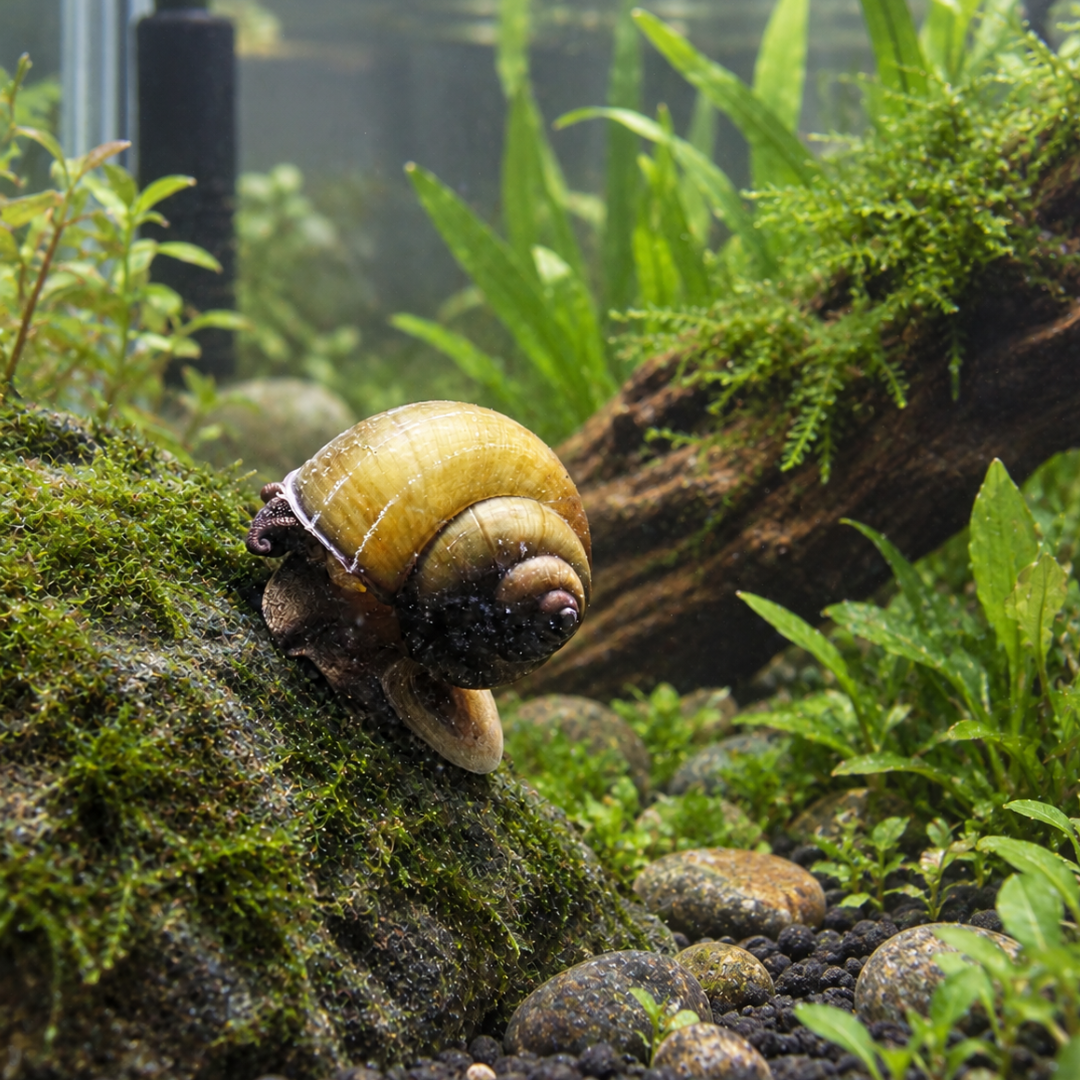
タニシは、軟体動物門・腹足綱・タニシ科に属する淡水性巻貝の総称です。日本ではヒメタニシ、マルタニシ、オオタニシ、琵琶湖固有のナガタニシがよく知られ、水田や用水路、池沼、湖の底で暮らします。褐色から緑褐色の殻と、殻口を閉じる蓋を備えた素朴な姿ですが、付着藻類を削り取り、底の有機物を食べ、さらに水中の微細な粒子をこし取るという多彩な摂食能力を持ちます。アクアリウムではヒメタニシが特に多く流通し、メダカ鉢やビオトープの穏やかな同居者として親しまれています。ただし、水を完全に浄化する装置ではないため、定期的な換水や掃除に代わる存在ではありません。The Japanese name tanishi refers collectively to freshwater gastropods in the family Viviparidae. Familiar Japanese representatives include hime-tanishi, maru-tanishi, oo-tanishi, and the Lake Biwa endemic naga-tanishi, which inhabit rice paddies, irrigation channels, ponds, marshes, and lake bottoms. Their brown to greenish-brown shells and opercula look modest, but their feeding repertoire is remarkable: they graze surface algae, consume organic material on the bottom, and filter fine particles from the water. Hime-tanishi is especially common in the Japanese aquarium trade and is valued as a peaceful companion in medaka tubs and outdoor biotopes. It is not, however, a substitute for water changes or routine aquarium maintenance.
基本情報 / Basic Information
学名 / Scientific Name
Viviparidae Gray, 1847
通称 / Common Name
タニシ、田螺。アクアリウム流通では、主にヒメタニシを指すことが多いRiver snail or viviparid snail; in the Japanese aquarium trade, tanishi most often refers to hime-tanishi
分類 / Family
軟体動物門・腹足綱・新生腹足亜綱・原始紐舌目・タニシ科。日本産の代表的な分類群として、ヒメタニシ、マルタニシ、オオタニシ、ナガタニシが知られます。属名や亜種の扱いは、分類体系によって異なる場合がありますPhylum Mollusca, Class Gastropoda, Subclass Caenogastropoda, Order Architaenioglossa, Family Viviparidae. Familiar Japanese taxa include hime-tanishi, maru-tanishi, oo-tanishi, and naga-tanishi. Generic placement and subspecies treatment may differ among taxonomic systems
英名 / English Name
River snail, viviparid snail
分布 / Distribution
タニシ科はアジア、ヨーロッパ、アフリカ、北米などの淡水域に分布します。日本では種によって分布が異なり、ヒメタニシは各地の水田や水路、池沼で見られ、ナガタニシは琵琶湖水系に限られますViviparids occur in freshwater habitats across Asia, Europe, Africa, and North America. Distribution varies by species in Japan: the mud snail occurs in rice paddies, channels, ponds, and marshes over a broad area, while the long-spired mystery snail is restricted to the Lake Biwa system
最大体長 / Max Size
日本産の代表種では、殻高約3.5〜6.5cm。ヒメタニシは約3〜3.5cm、大型のオオタニシでは約6.5cmに達しますAmong familiar Japanese species, shell height is approximately 3.5–6.5 cm. Hime-tanishi reaches about 3–3.5 cm, while the larger oo-tanishi can reach about 6.5 cm
寿命 / Lifespan
種、成長段階、水温、餌などの条件によって大きく異なります。タニシ類全体に共通する確かな年数は示されていませんが、適切な環境では複数年にわたって飼育できますLifespan varies substantially with species, life stage, temperature, diet, and other conditions. No single well-supported figure applies to all viviparids, but they can live for several years under suitable care
飼育環境 / Aquarium Environment
水槽サイズ / Tank Size
ヒメタニシを少数飼育する場合は、30cm規格水槽(約12L)以上が目安です。ただし、小さな容器ほど水温と水質が変化しやすいため、安定性を重視するなら45cm規格水槽(約35L)以上が扱いやすくなります。大型種や複数飼育には、60cm規格水槽(約55〜60L)以上を推奨しますA Japanese-standard 30 cm aquarium of about 12 L is a practical minimum for a few hime-tanishi. Because temperature and water quality change more quickly in small volumes, a Japanese-standard 45 cm tank of about 35 L or larger is easier to keep stable. Use a Japanese-standard 60 cm tank of about 55–60 L or larger for large species or groups
水温 / Temperature
種類や産地によって耐えられる範囲は異なるため、タニシ類全体に一つの限界水温を当てはめることはできません。ヒメタニシを室内で飼育する場合は15〜25℃前後を目安とし、急な温度変化を避けます。夏は高水温に伴う酸欠、屋外越冬では容器全体の凍結と乾燥に注意しますTolerance varies by species and source population, so one temperature limit cannot be applied to every viviparid. For indoor care of hime-tanishi, around 15–25°C is a practical target, with sudden changes avoided. Guard against oxygen depletion during summer heat and against complete freezing or drying in outdoor winter containers
水質 / Water Quality
急変の少ない中性〜弱アルカリ性の淡水が適しています。軟水や酸性に大きく傾く水では殻が傷みやすいため、適度な硬度とカルシウムを保ちます。アンモニアと亜硝酸塩は検出されない状態を維持し、硝酸塩の蓄積は定期換水で抑えますStable neutral to slightly alkaline freshwater is suitable. Very soft or distinctly acidic water can promote shell deterioration, so maintain moderate hardness and calcium availability. Keep ammonia and nitrite undetectable and control nitrate accumulation through regular water changes
レイアウト / Layout
角の鋭くない砂利や細かな砂を薄く敷き、石、流木、水草などに藻類や微生物の膜が育つ面を用意します。殻を傷つける鋭利な素材は避け、開放水槽には蓋を設けます。屋外容器では夏の日陰を確保し、冬も水が完全に凍結したり容器が乾いたりしないように管理しますUse a thin layer of smooth gravel or fine sand and provide rocks, driftwood, and aquatic plants where algae and biofilm can develop. Avoid sharp materials that can damage the shell and cover open aquariums. Shade outdoor tubs in summer and prevent them from freezing solid or drying out in winter
注意点 / Precautions
コケやアオコを食べても、ろ過装置や換水の代わりにはなりません。とくに銅を含む魚病薬などの薬品はタニシに有害となる場合があるため、使用前に無脊椎動物への安全性を確認します。野外採集個体は寄生生物や汚染物質を持ち込む可能性があるので隔離観察し、触れた後は手を洗います。飼育個体を野外へ放してはいけません。また、鮮やかなピンク色の卵塊を水面より上に産むスクミリンゴガイは、タニシ科ではありませんAlthough they consume algae and suspended material, they do not replace filtration or water changes. Chemicals such as copper-containing fish medications can be harmful to snails, so verify invertebrate safety before use. Quarantine wild-collected animals because they may introduce parasites or contaminants, and wash hands after handling. Never release captive specimens outdoors. The golden apple snail, which lays vivid pink egg masses above the waterline, does not belong to the family Viviparidae
餌と給餌 / Feeding
餌の種類 / Diet
付着藻類、植物プランクトン、底床上のデトリタス、柔らかな枯れ葉などを食べます。飼育下では沈下性の藻類食魚用フード、甲殻類用フード、無農薬の茹でた葉野菜などを補助的に与えます。殻の形成を支えるため、カルシウムを含む貝・エビ用フードも役立ちますThey eat attached algae, phytoplankton, detritus on the substrate, and soft decaying leaves. In captivity, supplement these foods with sinking algae wafers, crustacean pellets, or blanched pesticide-free leafy vegetables. Calcium-containing snail or shrimp foods can help support shell formation
給餌のポイント / Feeding Tips
立ち上げ直後の水槽や徹底的に掃除された水槽では自然発生する餌が不足します。夜に少量を与え、翌朝まで残る量は減らしてください。野菜は傷む前に回収します。稚貝は移動範囲が狭いため、微細な餌や藻類の膜が常に近くにある環境を整えると育ちやすくなりますNewly established or heavily cleaned aquariums may not contain enough naturally occurring food. Offer a small amount in the evening and reduce the portion if food remains the next morning. Remove vegetables before they spoil. Because newborns move only short distances, they grow more reliably when fine foods and algal biofilm are continuously available nearby
性格と混泳 / Temperament and Tank Mates
性格 / Temperament
動きの速い健全な魚やエビを捕らえることはできず、通常は他の生体を追い回しません。ただし、死骸や動かない卵などを餌として取り込む可能性はあります。蓋を閉じて休むこと自体は異常ではありませんが、複数個体が長時間閉じたままなら、水質や酸素量を確認しますThey cannot capture healthy, fast-moving fish or shrimp and do not normally pursue other animals. They may, however, feed opportunistically on carcasses or stationary eggs. Resting behind a closed operculum is not abnormal by itself, but if several snails remain closed for a prolonged period, check water quality and oxygen levels
混泳の相性 / Compatibility
メダカ、温和な小型魚、ミナミヌマエビなどとの相性は、おおむね良好です。ただし、魚卵を保護する繁殖容器では、タニシを分けて管理します。金魚との混泳は可能ですが、個体によっては触角をつつくため観察が必要です。フグ、ドジョウ類の一部、大型シクリッド、ザリガニなど、貝を捕食したり殻を割ったりする生体との混泳は避けますThey are generally compatible with medaka, peaceful small fish, and dwarf shrimp. Keep them separate from breeding containers where fish eggs need protection. They can be kept with goldfish, but individual fish may peck at their tentacles, so observation is needed. Avoid pufferfish, some loaches, large cichlids, crayfish, and other animals that prey on snails or crush their shells
病気と対策 / Diseases and Prevention
かかりやすい病気 / Common Diseases
魚のように診断名が確立した病気は多くありません。飼育下で問題になりやすいのは、酸性に傾いた軟水やミネラル不足に伴う殻の白化・薄化・欠損、急な水質変化や薬品による中毒、酸欠による衰弱ですFew aquarium diseases have well-established diagnoses comparable to those of fish. The most frequent captive problems are whitening, thinning, or erosion of the shell in very soft or acidic water with limited minerals, poisoning caused by sudden water-quality changes or chemicals, and weakness associated with low oxygen
対策と予防 / Prevention
導入前に水温を合わせ、少量ずつ飼育水を混ぜて急変を避けます。pHと硬度を測り、必要であればカキ殻やサンゴ砂をろ材の一部に少量ずつ用います。入れ過ぎによる急な水質変化を防ぐため、追加後も数値を確認してください。定期換水で硝酸塩の蓄積を抑えます。古い殻の欠損は元の形には戻りませんが、環境を整えることで殻口側に形成される新しい部分の状態は改善が期待できます。異常個体は隔離し、原因が分からないまま薬浴を行うことは避けますMatch temperature before introduction and gradually mix in aquarium water to avoid sudden changes. Monitor pH and hardness; if buffering is needed, add a small amount of oyster shell or coral sand to part of the filter and continue testing so that the water does not change abruptly. Perform regular water changes to limit nitrate accumulation. Old shell damage will not regain its original shape, but suitable conditions can improve the quality of new shell formed at the aperture. Isolate abnormal individuals and avoid medication when the cause is unknown
増やし方(繁殖) / Breeding
雌雄の判別 / Sexing
雌雄異体です。雄は右側の触角が交尾器として変形し、太く短く、内側へ曲がって見えます。雌の触角は左右とも細く、ほぼまっすぐ伸びます。小さな個体や触角を縮めた個体では見誤りやすいため、活動中に正面から確認しますThe sexes are separate. In males, the right tentacle is modified as a copulatory organ and appears thicker, shorter, and curved inward. Females have two slender, mostly straight tentacles. Small or retracted individuals can be difficult to sex, so observe an active snail from the front
繁殖形態 / Reproduction
交尾による体内受精を行い、雌の育児嚢内で被膜に包まれた卵が発生します。一般には卵胎生、または広い意味で胎生と説明され、雌は親と同じ巻貝の姿になった稚貝を直接産みます。水草や壁面に卵塊を産み付けることはありません。雌は交尾後に精子を保持し、雄がいない環境でもしばらく稚貝を産む場合がありますFertilization is internal, and encapsulated eggs develop within the female’s brood pouch. This reproductive mode is commonly described as ovoviviparity, or more broadly as viviparity: the female releases already formed juvenile snails rather than attaching egg masses to plants or glass. Females can store sperm after mating and may continue producing young for some time even when no male is present
繁殖のポイント / Breeding Tips
成熟した雌雄を揃え、急変の少ない中性〜弱アルカリ性の水を保ちます。日本産種は春から夏の水温上昇期に繁殖が活発になるため、無理に加温するより季節に合わせて安定させます。稚貝の餓死を防ぐには、藻類や微生物の膜が育った別容器へ移すか、スポンジフィルターを用いた穏やかな育成環境を用意します。吸水口には細かなスポンジを付け、底床を強く掃除し過ぎないようにします。増え過ぎを避けたい場合は雄だけを飼う方法がありますが、雌は精子を保持できるため、雌1匹でも導入後に稚貝を産む可能性がありますKeep mature males and females in stable, neutral to slightly alkaline water. Japanese species become reproductively active as water warms from spring into summer, so maintain seasonal stability rather than forcing reproduction with extra heat. To prevent starvation, move newborns to a separate container rich in algae and biofilm or provide a gentle rearing tank with a sponge filter. Fit a fine sponge over the intake and avoid cleaning the substrate too aggressively. Keeping only males can limit reproduction, but a single newly introduced female may still produce young because females can store sperm
雑学と豆知識 / Trivia and Fun Facts
1. 一匹で三つの食べ方 / 1. Three Feeding Methods in One Snail
タニシが水辺の掃除役と呼ばれる理由は、単に壁面のコケを食べるからではありません。歯舌で付着藻類を削る「刈り取り食」、底に沈んだ有機物を取り込む「堆積物食」、鰓と粘液で水中の微細な藻類や懸濁物を集める「濾過摂食」を使い分けます。水が緑色になった容器で透明度が上がることがあるのは、三つ目の働きによるものです。ただし、食べたものは排泄物として水槽内へ戻り、窒素やリンそのものが消えるわけではありません。透明になった水にも換水が必要だという点に、タニシの能力を上手に生かすコツがありますPond snails are called aquatic cleaners for more than their ability to graze algae from walls. They alternate among three feeding modes: scraping attached algae with the radula, ingesting settled organic matter, and using the gills and mucus to collect microscopic algae and suspended particles from the water. Their third method explains why a green-water container may become visibly clearer. The captured material ultimately returns to the aquarium as waste, however, so nitrogen and phosphorus do not simply disappear. Their talents are most useful when paired with regular water changes
2. 「ジャンボタニシ」は別の科 / 2. The “Jumbo Tanishi” Belongs to Another Family
水田で問題となる「ジャンボタニシ」の標準和名はスクミリンゴガイで、南米原産のリンゴガイ科に属します。タニシ科の雌は体内で子を育てて稚貝を産むのに対し、スクミリンゴガイは水面より上へ鮮やかなピンク色の卵塊を産み付けます。この違いを知っていれば、水辺で見かけた貝の正体を考える大きな手掛かりになります。呼び名は似ていますが、生態も農業への影響も同じではありませんThe agricultural pest popularly called “jumbo tanishi” in Japan is the golden apple snail, a South American member of the family Ampullariidae. Female viviparids brood young internally and release juveniles, whereas golden apple snails place conspicuous pink egg masses above the waterline. Knowing this contrast provides a powerful clue when identifying snails around rice paddies. The popular names sound similar, but their biology and agricultural effects are not the same
3. 右の触角が語る雄の正体 / 3. The Male Revealed by His Right Tentacle
多くの巻貝には雌雄同体の仲間がいますが、タニシは雄と雌が別です。雄では右触角が交尾器へ変化しており、左右の形が揃いません。小さな頭部を正面からそっと眺めると、繁殖器官が外見に表れた巧みな体のつくりが分かります。反対に雌は左右の触角がほぼ同じ形です。この違いは、増え方を管理したいときにも役立ちますMany familiar aquarium snails are hermaphroditic, but viviparids have separate males and females. In males, the right tentacle is modified into a copulatory organ, producing a visible asymmetry. A careful front view reveals how reproductive anatomy is incorporated into the snail’s external form. Females, by contrast, have two similarly shaped tentacles. This difference is also useful when managing reproduction in captivity
4. DNAが揺さぶる名前の歴史 / 4. DNA and a Changing Taxonomic History
タニシ類は、殻の形が成長段階や環境によって変わりやすく、外見だけに頼る分類が難しい仲間です。日本産タニシ類を調べた分子系統研究でも、殻の形に基づく従来の分類とDNAから推定した系統が一致しない例が確認されています。そのため、属名や亜種の扱いは資料やデータベースによって異なる場合があります。これは単純な誤記とは限らず、分類学上の見解や更新時期の違いを反映したものです。和名と異名を手掛かりに複数の資料を確認すると、古い記録と現在の情報を結び付けやすくなりますViviparid shells can change with age and environment, making classification based on appearance alone difficult. Molecular phylogenetic research on Japanese viviparids has likewise found cases in which traditional shell-based classification does not agree with relationships inferred from DNA. Generic placement and subspecies treatment may therefore differ among publications and databases. Such differences are not necessarily simple errors; they may reflect competing taxonomic views or different dates of revision. Searching by the Japanese name as well as synonyms makes it easier to connect older records with current information
5. 田んぼから昔話へ / 5. From the Rice Paddy into Folklore
水田の身近な生き物だったタニシは、食材であると同時に物語の住人にもなりました。昔話「田螺長者」では、子を願った夫婦のもとへ授かった小さなタニシが、知恵と誠実さによって幸せをつかみます。泥の中に静かに暮らす小さな生き物が、人の運命を変える主人公になったのです。かつて各地で味噌煮やつぼ汁として食べられた歴史と合わせて見ると、タニシが日本人の暮らしと水田に長く寄り添ってきたことが分かりますAs familiar inhabitants of rice paddies, tanishi became both food and characters in stories. In the folktale Tanishi Chōja, a tiny snail granted to a couple longing for a child finds happiness through wisdom and sincerity. A small animal living quietly in the mud thus becomes a hero who changes human lives. Together with its history as an ingredient in dishes such as miso stew and tsubo-jiru soup, the tale shows how closely tanishi accompanied Japanese life in rice-growing landscapes
6. 水槽の外へ出さないという責任 / 6. The Responsibility to Keep Them Out of the Wild
日本の水辺では環境改変によって減少しているタニシ類がいる一方、アジア産タニシの一部は北米やヨーロッパへ持ち込まれ、現地では外来生物として定着しています。タニシ類は、ある土地では守るべき在来種となり、別の土地では生態系への影響が懸念される外来種にもなります。この対照は、生き物と生息地の関係を考える大切さを教えてくれます。飼えなくなった個体や増えた稚貝を川や池へ放さず、最後まで管理することが、身近な水辺を守る基本ですSome Japanese viviparids are declining where their native habitats have been altered, yet certain Asian viviparids introduced to North America and Europe have become established non-native species. Viviparids may therefore require protection as native species in one region while raising ecological concerns as introduced species in another. This contrast shows why an animal must be considered in relation to its habitat. Never release unwanted adults or juveniles into rivers or ponds; responsible lifetime management is fundamental to protecting local waters
まとめ / Conclusion
タニシは、ゆっくりとした動きの中に、壁面を削り、底をついばみ、水中の粒子を集める三つの暮らし方を秘めています。中性から弱アルカリ性の安定した水、十分な酸素、カルシウム、そして自然な餌が育つ面を用意すれば、丈夫な殻を保ちながら落ち着いて暮らします。Beneath their slow movements, viviparid snails conceal three ways of making a living: scraping surfaces, feeding on the bottom, and collecting particles from the water. Given stable neutral to slightly alkaline water, ample oxygen, calcium, and surfaces rich in natural food, they can live calmly while maintaining healthy shells.
水槽やメダカ鉢を静かに巡る姿は目立ちませんが、その足跡には水田の生態系、昔話、食文化、そして現代の保全までが重なっています。掃除役としてだけでなく、一つの命として丁寧に観察すると、殻を背負った小さな同居者は日本の水辺の奥深さを毎日そっと見せてくれます。Their quiet circuits around an aquarium or medaka tub may be easy to overlook, yet their story connects rice-paddy ecology, folklore, food traditions, and modern conservation. When observed as living animals rather than merely as cleaners, these small shelled companions reveal something new each day about the depth and complexity of Japan’s freshwater world.
Hirano, T., Saito, T. and Chiba, S. 2015. “Phylogeny of freshwater viviparid snails in Japan.” Journal of Molluscan Studies, 81(4): 435–441. https://doi.org/10.1093/mollus/eyv019
Saito, T. and Kagawa, O. 2020. “New insights from museum specimens: a case of Viviparidae (Caenogastropoda: Mollusca) in Iwakawa’s collection preserved in the National Museum of Nature and Science, Tokyo.” Biodiversity Data Journal, 8: e52233. https://doi.org/10.3897/BDJ.8.e52233
Ye, B., Saito, T., Hirano, T., Dong, Z., Do, V. T. and Chiba, S. 2020. “Human-geographic effects on variations in the population genetics of Sinotaia quadrata (Gastropoda: Viviparidae) that historically migrated from continental East Asia to Japan.” Ecology and Evolution, 10: 8055–8072. https://doi.org/10.1002/ece3.6456
Hirai, N., Tatarazako, N., Koshio, M., Kawabe, K., Shiraishi, F., Hayakawa, Y. and Morita, M. 2004. “Seasonal changes in sex ratio, maturation, and size composition of fresh water snail, Sinotaia quadrata histrica, in Lake Kasumigaura.” Environmental Sciences, 11(5): 243–257. https://pubmed.ncbi.nlm.nih.gov/15746900/
Smithsonian Environmental Research Center. “Japanese Mysterysnail, Heterogen japonica.” National Exotic Marine and Estuarine Species Information System(NEMESIS). https://invasions.si.edu/nemesis/species_summary/-493(2026年9月14日閲覧)
Haak, D. M., Stephen, B. J., Kill, R. A., Smeenk, N. A., Allen, C. R. and Pope, K. L. 2014. “Toxicity of copper sulfate and rotenone to Chinese mystery snail (Bellamya chinensis).” Management of Biological Invasions, 5(4): 371–375. https://doi.org/10.3391/mbi.2014.5.4.08






コメント