
解説 / Description
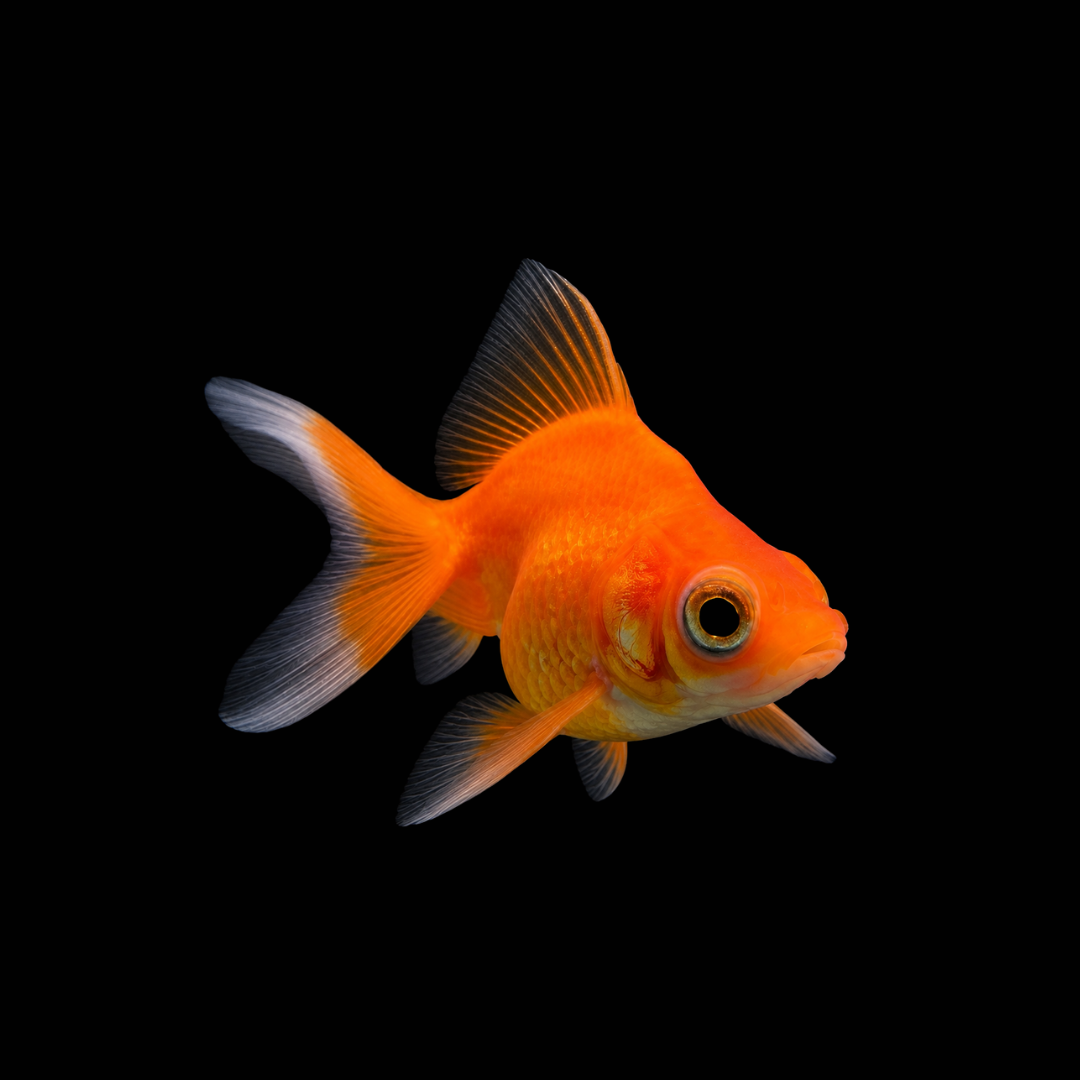
赤出目金は、左右へ大きく張り出した眼球と、丸みのある体型、優雅に広がる二ツ尾を備えた金魚の改良品種です。赤から橙赤色を基調とする体色は水槽の中でもよく映え、独特の表情とゆったりした泳ぎが大きな魅力です。一方で、突出した眼は傷つきやすく、視力も強くないため、尖った装飾品や強い水流、餌取りの速い魚との同居には配慮が必要です。十分な水量と穏やかな環境を整えれば、長く付き合える存在になります。 The Red Telescope Goldfish is a selectively bred form of goldfish characterized by strongly protruding eyes, a rounded body, and an elegant divided tail. Its red to orange-red coloration stands out beautifully in an aquarium, while its unusual expression and gentle swimming style give it a distinctive charm. The protruding eyes are vulnerable to injury and the fish does not see especially well, so sharp decorations, strong currents, and fast-feeding tank mates should be avoided. With ample water volume and a calm environment, it can become a long-lived aquarium companion.
基本情報 / Basic Information
| 学名 / Scientific Name | Carassius auratus (Linnaeus, 1758) の改良品種, a domesticated ornamental variety |
|---|---|
| 通称 / Common Name | 赤出目金、出目金(赤色系)Red Telescope Goldfish, Telescope Goldfish |
| 分類 / Family | コイ目・コイ科・フナ属Order Cypriniformes, Family Cyprinidae, Genus Carassius |
| 英名 / English Name | Red Telescope Goldfish |
| 分布 / Distribution | 野生種ではなく、中国を中心とする東アジアの金魚育種文化の中で成立した改良品種。現在は日本を含む世界各地で飼育・流通しています。A domesticated ornamental form rather than a wild population. It developed within the East Asian goldfish-breeding tradition, especially in China, and is now kept and traded worldwide, including in Japan. |
| 最大体長 / Max Size | 飼育下では15〜20cm程度に育つことが多く、個体や飼育条件によってはさらに大きくなることがあります。成魚の体格と排泄量を見越し、水量に余裕を持たせます。In captivity, fancy goldfish of this type commonly reach around 15–20 cm, with some individuals growing larger depending on genetics and husbandry. Aquarium volume should allow for adult body size and waste production. |
| 寿命 / Lifespan | 品種単独の厳密な平均寿命は示しにくいものの、良好な水質と飼育環境では10年以上生きる例もあります。赤出目金では、眼の外傷や浮力異常などを防ぐ長期的な管理が重要です。金魚全体では43年生きたTishの記録が知られています。A precise average lifespan for this particular variety is difficult to define, but goldfish kept under good water quality and husbandry can live for more than a decade. For Red Telescope Goldfish, long-term prevention of eye injuries and buoyancy problems is especially important. The best-known authenticated goldfish longevity record is Tish, which lived for 43 years. |
飼育環境 / Aquarium Environment
| 水槽サイズ / Tank Size | 小型の若魚では60cm規格水槽から飼育を始める例もありますが、成魚の終生飼育では水量に余裕を持たせることが重要です。成魚1匹で100L程度以上を目安とする飼育指針もあり、日本の規格水槽では60cmワイド水槽(約120L)や90cm規格水槽(約180L)が余裕を確保しやすい選択肢です。複数飼育ではさらに大きな水量を用意します。A standard 60 cm aquarium may be used for smaller juveniles, but long-term adult care benefits from substantially more water volume. Some husbandry guidance recommends about 100 L or more for one adult fancy goldfish; in common Japanese tank formats, a 60 cm wide tank of roughly 120 L or a standard 90 cm tank of roughly 180 L provides more practical space. Additional adults require still more volume. |
|---|---|
| 水温 / Temperature | 15〜23℃程度を日常飼育の目安にし、急激な変化を避けます。金魚はより低い水温にも順応できますが、高温や短時間の大きな水温差は負担になるため、安定を優先します。 Around 15–23°C is a useful everyday target. Fancy goldfish can acclimate to cooler water, but high temperatures and abrupt changes place additional stress on them, so stability should take priority over a precise number. |
| 水質 / Water Quality | pH 6.5〜8.5程度の範囲を目安に、特定の数値へ無理に合わせるより安定を優先します。アンモニアと亜硝酸が蓄積しないよう、ろ過と定期的な部分換水を行い、水道水を使う場合は残留塩素を必ず中和します。換水量や頻度は飼育密度と水質測定の結果に合わせて調整します。Aim for stable water in roughly the pH 6.5–8.5 range rather than forcing a particular number. Use adequate filtration and regular partial water changes so ammonia and nitrite do not accumulate, and always neutralize chlorine or chloramine in tap water. The amount and frequency of water changes should be adjusted to stocking level and water-test results. |
| レイアウト / Layout | 突出した眼を守るため、尖った岩や流木、硬い人工水草は避けます。ベアタンク、または角のない丸い砂利を使ったシンプルな構成が安全です。泳ぐための空間を広く取り、スポンジフィルターなどを活用して水流は穏やかにします。To protect the protruding eyes, avoid sharp rocks, driftwood, and rigid artificial plants. A bare-bottom tank or a simple setup with smooth rounded gravel is safer. Leave generous open swimming space and keep the current gentle, for example by using sponge filtration or diffusing filter outflow. |
| 注意点 / Precautions | 最大の注意点は眼球の外傷です。網ですくう際やレイアウト変更時にも眼を引っ掛けないよう慎重に扱います。遊泳力と餌取り能力が高くないため、強い水流や過密飼育、和金・コメットなど動きの速い金魚との競争は避けます。冬季の低水温時は代謝が低下するため、給餌量も水温に合わせて調整します。The greatest concern is physical injury to the eyes. Handle the fish carefully when netting or changing the layout so the eyes do not catch on objects. Because swimming and feeding performance are limited, avoid strong currents, overcrowding, and intense competition with fast forms such as Wakin-type goldfish or Comets. In cold winter water, metabolism slows and feeding should be adjusted accordingly. |
餌と給餌 / Feeding
| 餌の種類 / Diet | 金魚用の沈下性ペレットを主食にすると、視力の弱い赤出目金でも餌を追いやすくなります。赤い体色の維持を意識する場合は、アスタキサンチンなどのカロテノイドを含む金魚用飼料を組み合わせる方法があります。繁殖後の稚魚には、成長段階に応じてブラインシュリンプや青水を利用します。Sinking goldfish pellets make a suitable staple because a Red Telescope Goldfish with limited vision can locate them more easily. When emphasizing red coloration, diets formulated with carotenoids such as astaxanthin may be incorporated. Newly free-swimming fry can be raised with appropriately sized foods such as brine shrimp and green water. |
|---|---|
| 給餌のポイント / Feeding Tips | 1日1回を基本に、成長段階や飼育条件に応じて少量を分ける方法もあります。数分で食べ切れる量にとどめ、目の前や底面の見つけやすい位置へ少しずつ与えると食べ残しを減らせます。低水温では代謝と消化が落ちるため、魚の状態を見ながら給餌量を減らします。食べ残しは早めに取り除きます。Once-daily feeding is a useful baseline, although small divided meals may be used according to growth stage and husbandry conditions. Offer only what the fish can finish within a few minutes, placing small amounts where the fish can locate them easily. Metabolism and digestion slow in cooler water, so reduce feeding according to the fish’s condition and remove leftovers promptly. |
性格と混泳 / Temperament and Tank Mates
| 性格 / Temperament | 基本的には温和で、攻撃性は高くありません。丸い体型と大きな眼のため泳ぎはゆっくりしており、周囲を探るように移動する姿が見られます。視力に頼り切らず、嗅覚なども使って餌を探します。It is generally peaceful and not strongly aggressive. Its rounded body and enlarged eyes make it a relatively slow swimmer, often moving deliberately while searching its surroundings. It does not rely on vision alone and can also use other senses, including smell, to locate food. |
|---|---|
| 混泳の相性 / Compatibility | 出目金同士の飼育が最も管理しやすく、琉金、らんちゅう、ピンポンパールなど、比較的泳ぎのゆっくりした丸手の金魚が候補になります。和金やコメットなど速く泳ぐ品種は餌を先に食べやすく、接触で眼を傷つける危険もあるため避けるのが無難です。相性が良い組み合わせでも、給餌時に全個体が十分食べられているか確認します。Keeping telescope varieties together is usually the easiest arrangement. Other slower, round-bodied fancy goldfish such as Ryukin, Ranchu, and Pearlscale-type fish can also be considered. Faster forms such as Wakin-type goldfish and Comets may outcompete them for food and can increase the risk of accidental eye injury, so they are best avoided. Even with compatible fish, confirm during feeding that every individual is eating adequately. |
病気と対策 / Diseases and Prevention
| かかりやすい病気 / Common Diseases | 突出した眼では、擦り傷に続く白濁や二次感染、通常とは異なる腫れや左右差、重症時の眼球損傷が問題になります。また、丸い体型の金魚では浮力バランスの異常が起こることがあり、水質悪化時には尾ぐされ症状や水カビの付着なども見られます。眼の濁り、ヒレの崩れ、食欲低下、姿勢の変化を早めに見つけることが重要です。The protruding eyes are vulnerable to abrasions followed by cloudiness or secondary infection, unusual swelling or asymmetry, and severe eye damage. Round-bodied goldfish may also develop buoyancy disorders, while deteriorating water quality can be associated with fin damage and fungal growth. Early changes such as cloudy eyes, fraying fins, reduced appetite, or altered posture should be noticed promptly. |
|---|---|
| 対策と予防 / Prevention | 予防の中心は、水質を安定させること、尖った物を置かないこと、過密や強い水流を避けることです。体調不良時にはまず隔離して水質と水温を確認します。0.5%塩水浴が補助的に用いられることもありますが、すべての症状に共通する治療ではありません。薬浴を行う場合は観賞魚用薬剤の対象症状と用法・用量を確認し、重症例や原因が判断できない場合は魚類を診療できる獣医師など専門家へ相談します。Prevention centers on stable water quality, removing sharp objects, and avoiding overcrowding and excessive current. If a fish becomes unwell, isolate it and first check water quality and temperature. A 0.5% salt bath is sometimes used as supportive care, but it is not a universal treatment for every condition. When medication is needed, follow the labeled indication and dosage for ornamental fish, and seek professional veterinary advice for severe or unclear cases. |
増やし方(繁殖) / Breeding
| 雌雄の判別 / Sexing | 繁殖期のオスは、鰓蓋や胸鰭の前縁に白い小さな追星が現れることがあります。メスは成熟すると腹部に丸みが出やすく、産卵期にはオスに追尾されます。ただし若魚や季節外では外見だけの判別が難しいため、複数の特徴を合わせて判断します。During the breeding season, males may develop small white breeding tubercles on the gill covers and the leading edges of the pectoral fins. Mature females often become fuller through the abdomen and may be chased by males as spawning approaches. Sexing young fish or fish outside the breeding season can be difficult, so several signs should be considered together. |
|---|---|
| 繁殖形態 / Reproduction | 卵生で、水草や産卵床へ粘着性の卵を多数産み付けます。親魚は卵を食べるため、産卵後は親魚または卵の付いた産卵床を速やかに分けます。孵化までの日数は水温によって変わりますが、20℃前後では数日が目安です。It is an egg-laying fish that deposits many adhesive eggs on aquatic plants or spawning media. Adults may eat the eggs, so the parents or egg-covered spawning material should be separated promptly after spawning. Hatching time varies with temperature, but at around 20°C it is generally a matter of several days. |
| 繁殖のポイント / Breeding Tips | 春を思わせる緩やかな水温上昇が繁殖のきっかけになりやすく、20℃前後がひとつの目安です。アナカリスやマツモ、人工産卵床を十分に用意し、激しい追尾でメスの眼が壁面へ当たらないよう空間を確保します。卵は弱いエアレーションで管理し、白く濁った無精卵は水カビの広がりを防ぐため除去します。孵化後は栄養袋を吸収して泳ぎ始めてから、ブラインシュリンプや青水など小さな餌へ移行します。A gradual rise in temperature that mimics spring often helps trigger spawning, with around 20°C serving as a practical reference point. Provide plenty of Elodea-type plants, hornwort, or artificial spawning media, and leave enough open space so vigorous chasing does not force the female’s eyes into the tank walls. Incubate the eggs with gentle aeration and remove opaque infertile eggs to reduce fungal spread. Once the fry have absorbed their yolk reserves and begin swimming freely, transition to small foods such as brine shrimp and green water. |
雑学と豆知識 / Trivia and Fun Facts
| 1. 「龍睛」と呼ばれた大きな眼 / 1. The Great Eyes Once Called “Dragon Eyes” | 出目金につながる大きな眼の金魚は、中国では「龍睛」と呼ばれてきました。金魚の飼育が屋外の池だけでなく、陶製の鉢など人の手で細かく管理できる環境へ広がると、野外では不利になりやすい大きな眼や長い尾といった特徴も守られ、選び残されるようになります。つまり、出目金の姿は突然現れた奇抜な形ではなく、人が何世代にもわたって「この姿を残したい」と選び続けた美意識の積み重ねです。大きく張り出した眼は、東アジアの観賞魚文化が生み出した象徴的な形態の一つと言えます。Goldfish with enlarged protruding eyes have long been known in China as “Dragon Eyes.” As goldfish keeping expanded from outdoor ponds into ceramic vessels and other closely managed environments, features that would be disadvantageous in the wild—such as enlarged eyes and elaborate tails—could be protected and deliberately retained. The telescope form therefore did not simply appear as an isolated oddity; it is the accumulated result of generations of people choosing to preserve a particular aesthetic. Its wide-set eyes are one of the most recognizable shapes created by East Asian ornamental-fish culture. |
|---|---|
| 2. 大きな眼の裏側にあるLRP2 / 2. LRP2 Behind the Telescope Eye | 近年の遺伝学研究では、出目金の眼球突出にLRP2遺伝子の機能低下が深く関わることが示されています。出目金系統では、この遺伝子に大きな挿入変異やナンセンス変異が見つかっており、正常なタンパク質が作られにくくなることで眼の発生や組織維持に影響すると考えられています。さらに、同じく眼が突出して上向きになる頂天眼でもLRP2が関与しますが、出目金とは別の変異が確認されています。同じ遺伝子を舞台に異なる変異が似た形を生み出したことは、人為選択のもとで起きた分子レベルの平行進化として非常に興味深い例です。Recent genetic studies indicate that reduced LRP2 function plays a major role in the development of telescope eyes. Telescope-eye lineages carry large insertion mutations or nonsense variants affecting this gene, which are thought to disrupt normal protein function and influence ocular development and tissue maintenance. Celestial-eye goldfish, whose protruding eyes turn upward, also involve LRP2, but through a different mutation. Similar forms arising through different mutations in the same gene provide a striking example of molecular parallel evolution under artificial selection. |
| 3. 二ツ尾は発生学の研究対象でもある / 3. The Twin Tail Is Also a Developmental Biology Story | 出目金の優雅な二ツ尾には、chordin系遺伝子のE127X変異が深く関わっています。この変異ではタンパク質が途中で短くなり、胚の背腹方向を形づくる仕組みに変化が生じることで、尾部の骨格や鰭が左右へ分かれる形態につながります。現代の二ツ尾金魚ではこのE127Xアレルが広く共有されており、長い育種の過程でこの変異が選抜され、維持されてきたことが分かります。ただし、最初にどのような個体から固定が始まったかまでは遺伝子データだけでは断定できません。The elegant divided tail of telescope goldfish is closely associated with the E127X mutation in the chordin gene system. This mutation truncates the protein and alters developmental signaling that helps establish the embryo’s dorsal–ventral pattern, contributing to the divided skeletal and fin structure of the tail. The E127X allele is widely shared among modern twin-tail goldfish, showing that it was selected and maintained through a long history of breeding. Genetic data alone, however, do not identify the exact individual in which that historical fixation began. |
| 4. 黒出目金が赤くなる「色変わり」 / 4. When a Black Telescope Turns Red | 金魚の体色は、黒色素胞、赤色素胞、虹色素胞など複数の色素細胞が重なり合って作られます。幼魚のころに暗いフナ色をしていた個体が成長とともに赤や橙へ変わるのは、金魚ではよく見られる色変わりです。黒出目金でも、加齢や飼育環境などの影響に伴って黒色が薄れ、その下の赤橙色が目立つようになる個体がいます。赤い発色には餌由来のカロテノイドも関わるため、体色は遺伝だけで完全に決まるのではなく、成長、栄養、環境が重なって見えてくる表現型なのです。Goldfish coloration is created by the interaction of several pigment-cell types, including melanophores, erythrophores, and iridophores. Young fish that begin with a dark, wild-type coloration often change toward red or orange as they mature. Some black telescope goldfish also lose black pigmentation with age or environmental change, allowing underlying red-orange coloration to become more prominent. Dietary carotenoids contribute to red coloration as well, so appearance is not determined by genetics alone but emerges through the interaction of growth, nutrition, and environment. |
| 5. 「上見」が育てた出目金の美しさ / 5. The Beauty Shaped by Top Viewing | 透明なガラス水槽が一般的でなかった時代、金魚は鉢やたらいで上から鑑賞されることが多く、この見方を「上見」と呼びます。出目金の左右へ張り出した眼や広がる尾は、水面越しに上から見たときにも強い個性を示します。出目金系の蝶尾では、上見で蝶の羽のように開く尾の形が大きな鑑賞点になっています。ただし、出目金そのものの形態が上見だけを目的に成立したと断定するより、当時の飼育容器と鑑賞習慣が、その美しさの受け止め方に大きく関わってきたと見るのが自然です。Before transparent glass aquariums became common, goldfish were often admired from above in bowls and tubs, a viewing style known in Japan as uwami. The telescope’s laterally projecting eyes and broad tail also create a strong impression when seen through the water surface. In Butterfly Tail telescope varieties, the horizontally spread caudal fin is especially valued from above. Rather than claiming that telescope morphology arose solely for top viewing, it is more accurate to say that historical containers and viewing customs strongly influenced how these forms were appreciated. |
| 6. 43年生きた金魚「Tish」 / 6. Tish, the Goldfish That Lived 43 Years | 金魚の長寿を語るときによく知られるのが、イギリスで飼育されていた「Tish」です。1956年に縁日の景品として迎えられ、1999年まで43年間生き、ギネス世界記録で最長寿の金魚として認定されました。晩年には体色が銀白色へ変化したことも記録されています。赤出目金そのものの寿命記録ではありませんが、金魚という魚が、安定した環境と長期的な世話のもとで驚くほど長く生きる可能性を持つことを示す象徴的な例です。One of the best-known examples of goldfish longevity is Tish, a goldfish kept in the United Kingdom. Won as a fairground prize in 1956, Tish lived until 1999 and reached 43 years of age, earning recognition from Guinness World Records as the longest-lived goldfish. Tish was also reported to have become silvery-white in old age. This was not a Red Telescope Goldfish, but the story remains a powerful reminder of how long goldfish can potentially live under stable conditions and consistent long-term care. |
まとめ / Conclusion
赤出目金は、大きく張り出した眼、丸みのある体、二ツ尾、そして赤から橙赤色の体色が組み合わさった、個性のはっきりした金魚です。その姿は長い育種の歴史の中で受け継がれ、現在ではLRP2やchordin系遺伝子の研究から、眼や尾の特徴が生まれる仕組みも具体的に理解されつつあります。 The Red Telescope Goldfish is a distinctly shaped fancy goldfish combining protruding eyes, a rounded body, a divided tail, and red to orange-red coloration. These features have been retained through a long history of selective breeding, and research on LRP2 and the chordin gene system is increasingly clarifying how its eye and tail traits develop.
飼育では、特徴的な大きな眼を傷つけない環境づくりが何より大切です。十分な水量、穏やかな水流、尖った物のないレイアウト、餌を落ち着いて食べられる環境を整えることで、赤出目金らしいゆったりとした泳ぎを長く楽しみやすくなります。華やかな姿の奥に、長い育種の歴史と繊細な体のつくりをあわせ持つ金魚です。 In husbandry, protecting the characteristic enlarged eyes is especially important. Ample water volume, gentle current, smooth décor without sharp edges, and a feeding setup that allows unhurried eating all help support the fish’s calm swimming style over the long term. Behind its striking appearance is a goldfish shaped by a long breeding history and a body plan that deserves careful handling.
気になる道具や飼い方を見つけてみませんか?
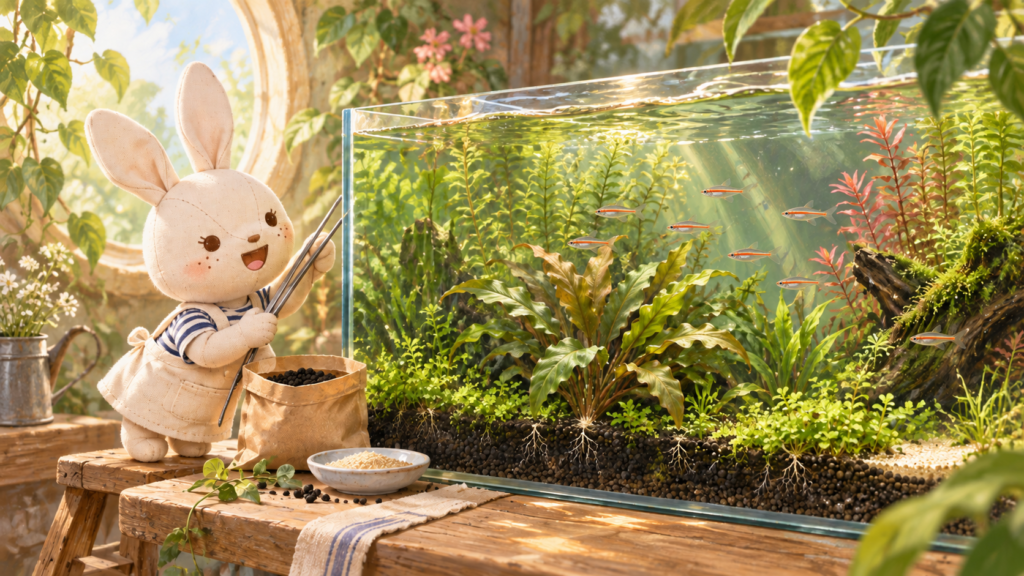 アイのアクアグッズ案内水草用ソイルの選び方|土・砂の違いとおすすめ商品道具の特徴や使い方、選ぶときのポイントをアイが紹介します。記事はコチラ →
 アイのアクアグッズ案内コリドラスのもふもふ時間を楽しむ|餌・底砂・お掃除用品の選び方コリドラスのもふもふする食事風景を楽しむために。沈む餌2種類の違い、口元に配慮した底砂、食べ残しを回収する道具を、アクアグッズナビゲーターのアイが紹介します。記事はコチラ →
さまざまな飼育テーマをご紹介。リンク先の記事には広告・商品紹介が含まれます。
案内・紹介記事一覧へ →分布マップ
赤出目金(Carassius auratus の改良品種)は野生個体群ではなく、中国を中心とする東アジアの金魚育種文化の中で成立した観賞用品種です。現在は日本を含む世界各地で飼育・流通しています。地図では、その成立背景を示すため、中国を中心とした東アジアを概略表示しています。
※この地図は記事の分布情報をもとにした概略表示であり、厳密な分布境界を示すものではありません。赤出目金は改良品種のため、マーカーは中国を中心とする金魚育種文化圏を示す代表地点として設定したもので、実際の採集地点や特定個体の産地を示すものではありません。
参考文献
- Fricke, R., Eschmeyer, W. N. & Van der Laan, R. (eds.). Eschmeyer’s Catalog of Fishes: Species by Family/Subfamily. California Academy of Sciences. Carassius auratus の分類・学名情報 分類、学名、命名者の確認。
- Froese, R. & Pauly, D. (eds.). FishBase: Carassius auratus (Linnaeus, 1758). FishBase species summary 分布、淡水域を中心とする生息環境、体サイズ、卵生・水草への産卵などの生物学的情報。
- Ornamental Aquatic Trade Association (OATA). How to look after fancy goldfish. Fancy Goldfish Care Sheet 改良金魚の水槽容量、水温、pH、水質、ろ過、水流、眼を傷つけにくいレイアウト、給餌、混泳、雌雄判別、繁殖条件、産卵後の管理。
- Petty, B. D., Francis-Floyd, R. & Yanong, R. P. E. Management of Aquarium Fish. Merck Veterinary Manual, Professional Version. Full review May 2022; updated September 2024. Merck Veterinary Manual 水質管理、アンモニア・亜硝酸対策、隔離、外傷時の浸透圧管理、塩分利用を含む観賞魚の一般的な健康管理。
- Petty, B. D., Francis-Floyd, R. & Yanong, R. P. E. Bacterial Diseases of Fish. Merck Veterinary Manual, Professional Version. Full review May 2022; updated September 2024. Merck Veterinary Manual 水質悪化、過密、輸送や外傷などを背景とする細菌感染、Aeromonas属やFlavobacterium属を含む病気と予防上の考え方。
- Petty, B. D., Francis-Floyd, R. & Yanong, R. P. E. Mycotic Diseases of Fish. Merck Veterinary Manual, Professional Version. Full review May 2022; updated September 2024. Merck Veterinary Manual 外傷や水質悪化などに続発しやすい水カビ類を含む真菌・真菌様疾患の位置づけ。
- Canadian Veterinary Medical Association (CVMA). Swim Bladder Problems in Goldfish. 24 October 2012. CVMA 丸みの強い改良金魚でみられる浮力異常、体型との関係、原因が多因子的であること、清潔な飼育環境と獣医師による評価の重要性。

コメント