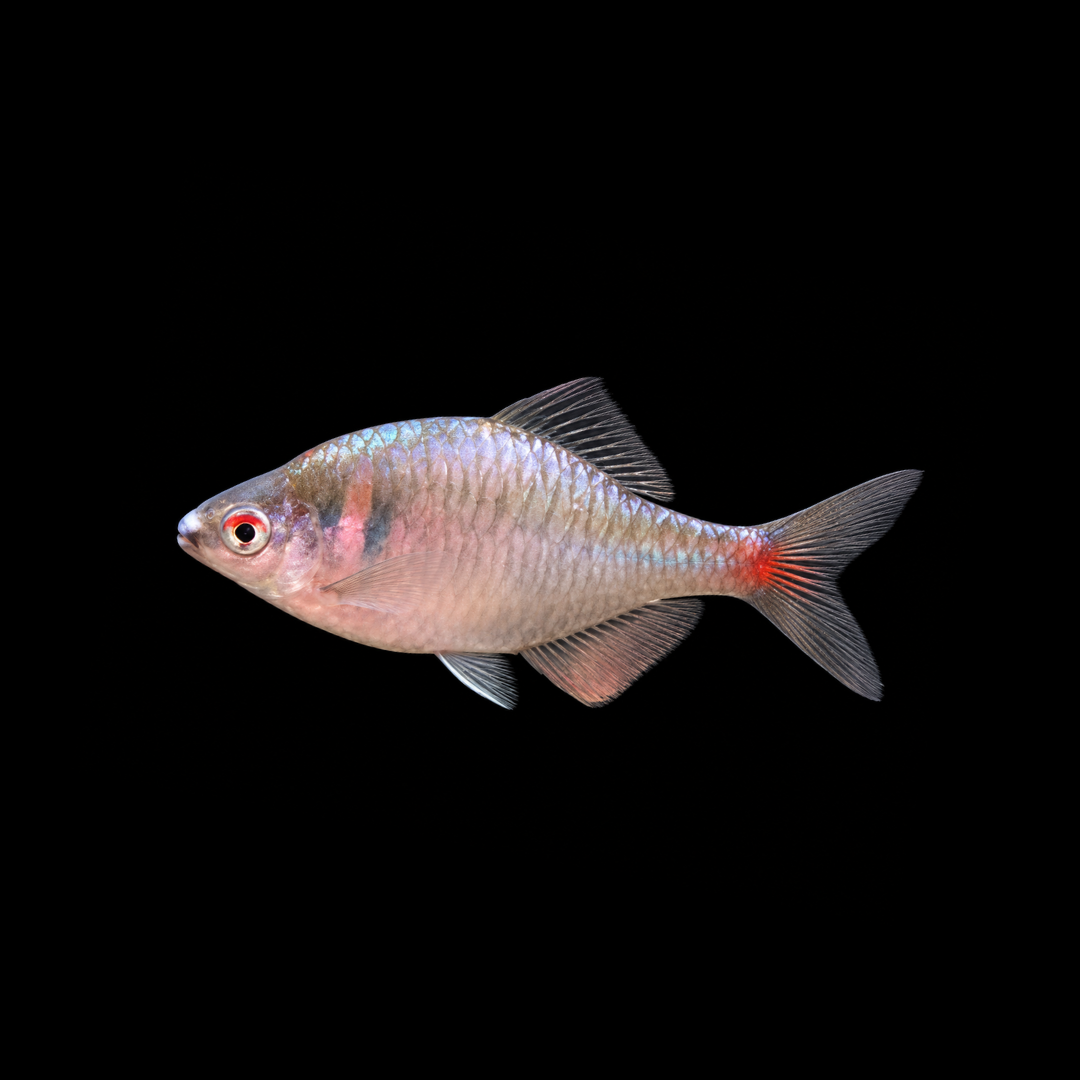
鏡鱗タイリクバラタナゴは、東アジア原産のタイリクバラタナゴから作出された観賞用品種です。通常より大きく、並び方も不規則な鱗が一枚ずつ光を返すため、見る角度によって魚体の表情が変わります。繁殖期のオスは赤、桃色、青緑色を帯び、鏡のような鱗との対比がひときわ鮮やかです。丈夫で人工飼料にもなじみやすい一方、繁殖には生きた淡水二枚貝が必要で、野外へ放せば在来のニッポンバラタナゴとの交雑や産卵場所の競合を招きます。美しさと生態上の責任を一緒に理解し、閉鎖された飼育環境で終生管理することが大切です。The mirror-scale rosy bitterling is an ornamental strain of the East Asian rosy bitterling. Its enlarged, irregularly arranged scales reflect light individually, giving the fish a different appearance as the viewing angle changes. During the breeding season, males develop vivid red, pink, and blue-green colors that contrast beautifully with the reflective scales. Although this hardy fish readily accepts prepared foods, reproduction depends on living freshwater mussels. Release into the wild can cause hybridization with the native Japanese rosy bitterling and competition for spawning mussels. Its beauty should therefore be enjoyed with responsible, lifelong care in a securely closed aquarium.
コイ目・タナゴ科・バラタナゴ属Order Cypriniformes, family Acheilognathidae, genus Rhodeus
英名 / English Name
Rosy bitterling
分布 / Distribution
原種はアムール川水系から珠江水系にかけての東アジアに自然分布します。日本には移入され、池沼、水路、流れの緩い河川などに広く定着しています。鏡鱗は観賞用に維持される改良品種であり、自然分布を持つ地域個体群ではありません。The wild species is native to East Asia from the Amur River basin to the Pearl River basin. It has been introduced widely in Japan, where it occurs in ponds, canals, marshes, and slow-flowing rivers. The mirror-scale form is a selectively maintained ornamental strain, not a naturally distributed regional population.
最大体長 / Max Size
通常は全長4〜7cmほどで、大きなオスでは8cm前後に達することがあります。Usually about 4–7 cm in total length; large males may approach 8 cm.
寿命 / Lifespan
おおむね2〜3年。安定した環境では4年ほど生きる個体もいます。Generally 2–3 years, although some individuals may live for about 4 years under stable conditions.
飼育環境 / Aquarium Environment
水槽サイズ / Tank Size
少数なら45cm規格水槽(約35L)以上、群れでの飼育や繁殖を考えるなら60cm規格水槽(約57L)以上を推奨します。30cm水槽でも短期的な維持はできますが、水質と繁殖期の縄張りを安定させにくくなります。Use at least a standard 45 cm aquarium of approximately 35 L for a few fish. A standard 60 cm aquarium of approximately 57 L or larger is recommended for a group or breeding project. A 30 cm tank can maintain fish temporarily but offers less stable water quality and too little space for breeding territories.
水温 / Temperature
18〜24℃を目安に管理します。日本の室内では無加温越冬できることが多いものの、急変と凍結は避けてください。夏は十分に通気し、28℃を超える高水温が長く続かないよう冷却します。Maintain approximately 18–24°C. In many Japanese homes the fish can overwinter without a heater, but abrupt changes and freezing must be avoided. Provide strong aeration and cooling in summer so that temperatures above 28°C do not persist.
水質 / Water Quality
中性付近から弱アルカリ性、目安としてpH 6.5〜8.0のよくこなれた淡水が適します。数値を追い過ぎるより、アンモニアと亜硝酸を検出させず、硝酸塩を低く保つことが重要です。1週間に全水量の4分の1から3分の1を、温度差を抑えたカルキ抜き済みの水で交換します。Mature freshwater near neutral to mildly alkaline, roughly pH 6.5–8.0, is suitable. More important than chasing a precise pH is keeping ammonia and nitrite undetectable and nitrate low. Replace about one-quarter to one-third of the water weekly with dechlorinated water of a similar temperature.
レイアウト / Layout
細かな砂利または砂を薄く敷き、抽水植物や丈夫な水草、流木で視線を遮る場所を作りながら、中央には遊泳空間を残します。ろ過は安定させつつ流れを強くし過ぎず、夏と二枚貝を入れる繁殖期は特に酸素量を確保します。驚いたときの飛び出しを防ぐため、ふたも用意してください。Use a thin layer of fine gravel or sand. Add emergent plants, hardy aquatic plants, or wood to break lines of sight while retaining an open central swimming area. Provide mature filtration without excessive current, and ensure high oxygen levels in summer and whenever breeding mussels are present. A lid prevents startled fish from jumping out.
注意点 / Precautions
飼育個体、卵、稚魚、飼育水、同居させた二枚貝を河川、池、水路へ絶対に放さないでください。在来のニッポンバラタナゴと交雑し、ほかのタナゴ類とは産卵母貝を奪い合うおそれがあります。屋外容器には逸出防止用の網を付け、増え過ぎた個体は責任を持って譲渡先を探します。自治体条例で扱いが規制される場合があるため、入手や移動の前に地域の最新規則も確認してください。Never release adults, eggs, fry, aquarium water, or mussels used in the tank into rivers, ponds, or canals. The fish can hybridize with the native Japanese rosy bitterling and compete with other bitterlings for spawning mussels. Fit outdoor containers with escape-proof mesh and arrange responsible rehoming for surplus fish. Local ordinances may restrict possession or movement, so check current rules before obtaining or transporting them.
餌と給餌 / Feeding
餌の種類 / Diet
雑食性で、野外では動物プランクトン、微小な水生昆虫、付着藻類などを食べます。飼育下では小粒の淡水魚用人工飼料や細かくしたフレークを主食にし、冷凍アカムシ、ミジンコ、孵化させたブラインシュリンプを副食にできます。This omnivore eats zooplankton, tiny aquatic invertebrates, and attached algae in the wild. In aquaria, use small freshwater-fish pellets or finely crushed flakes as the staple, supplemented with frozen bloodworms, daphnia, or newly hatched brine shrimp.
給餌のポイント / Feeding Tips
1日1〜2回、数分で食べ切る量を与えます。口が小さいため、粒が大きい場合は指ですりつぶしてください。婚姻色を引き出したい時期も高タンパクな餌だけに偏らせず、複数の餌を組み合わせます。食べ残しは早めに取り除き、二枚貝を入れた水槽では水質を悪化させないよう特に少量ずつ与えます。Feed once or twice daily, offering only what is consumed within a few minutes. Crush food that is too large for the small mouth. Even when conditioning males for breeding colors, combine several foods rather than relying only on protein-rich items. Remove leftovers promptly and feed especially sparingly in tanks containing mussels.
性格と混泳 / Temperament and Tank Mates
性格 / Temperament
普段は活発で比較的温和な群泳魚です。ただし繁殖期のオスは二枚貝の周囲に縄張りを作り、ほかのオスを追い払います。少数を狭い水槽に入れると弱い個体へ攻撃が集中しやすいため、十分な広さと隠れ場所を確保します。Normally active, social, and fairly peaceful, the species becomes more territorial during breeding. Males defend areas around mussels and drive rival males away. In a cramped tank with too few fish, aggression may focus on one subordinate individual, so provide adequate room and visual cover.
混泳の相性 / Compatibility
同程度の大きさで、温和な日本産淡水魚とは混泳できます。ドジョウ類など生活層が異なる魚は比較的合わせやすい一方、繁殖を狙う水槽では単種飼育が安全です。小さな稚魚や稚エビは捕食されることがあり、大型魚、攻撃的な魚、長いヒレを持つ魚との混泳は避けます。野生由来魚との混泳は病原体の持ち込みにも注意してください。It can live with peaceful temperate freshwater fish of a similar size. Bottom-dwelling loaches often occupy a different zone, but a species-only aquarium is safer for breeding. Tiny fry and shrimp may be eaten. Avoid large, aggressive, or long-finned tank mates, and quarantine wild-origin fish to reduce disease introduction.
病気と対策 / Diseases and Prevention
かかりやすい病気 / Common Diseases
水温急変や水質悪化をきっかけに、白点病、尾ぐされ病、細菌性の体表炎などが見られます。体を物にこすり付ける、ヒレを閉じる、呼吸が速い、餌を食べない、白点や充血が現れるといった変化が主な警戒サインです。二枚貝の幼生が魚体に付着する場合もあるため、白い粒だけで病名を決めつけず、経過とほかの症状を合わせて観察します。Sudden temperature changes or poor water quality may precede white spot disease, fin rot, and bacterial skin infections. Warning signs include flashing against objects, clamped fins, rapid breathing, loss of appetite, white spots, or reddened skin. Mussel larvae can also attach to fish, so do not diagnose disease from white specks alone; consider their development and accompanying symptoms.
対策と予防 / Prevention
新しい魚は別容器で2〜4週間観察し、水温合わせと水合わせを丁寧に行います。過密を避け、定期換水、底床掃除、十分なろ過と酸素供給を続けることが基本です。異常個体は隔離し、水温、アンモニア、亜硝酸、pHを確認して原因を先に整えます。薬を使う場合は病名を見極め、製品表示に従ってください。淡水二枚貝やエビは魚病薬に弱いことがあるため、治療は原則として別容器で行います。Observe new fish in a separate container for 2–4 weeks and acclimate temperature and water conditions gradually. Avoid crowding and maintain regular water changes, substrate cleaning, mature filtration, and adequate oxygen. Isolate affected fish and first check temperature, ammonia, nitrite, and pH. If medication is needed, identify the likely disease and follow the product label. Freshwater mussels and shrimp may be sensitive to fish medications, so treatment should generally be carried out in a separate container.
増やし方(繁殖) / Breeding
雌雄の判別 / Sexing
繁殖期のオスは頬から腹部、各ヒレに赤や桃色が強く現れ、背側には青緑色の光沢が出ます。吻には白い追星が現れ、腹ビレ前縁の白線も目立ちます。メスは銀灰色を基調とし、背ビレの黒斑が残りやすく、産卵期には腹部から細長い産卵管を伸ばします。若魚や非繁殖期は判別しにくいことがあります。Breeding males develop intense red or pink on the cheeks, belly, and fins, with a blue-green sheen over the upper body. White breeding tubercles appear on the snout and the pale leading edge of the pelvic fin becomes conspicuous. Females remain mainly silver-gray, usually retain a dark dorsal-fin spot, and extend a long ovipositor when ready to spawn. Juveniles and non-breeding adults can be difficult to sex.
繁殖形態 / Reproduction
春から夏を中心に繁殖する卵生魚で、メスは生きた淡水二枚貝の出水管から産卵管を差し込み、鰓の内部に卵を産みます。オスが入水管の近くで放精し、取り込まれた水流が精子を卵へ運びます。水温約21〜22℃の人工授精例では約2日で孵化し、その後も仔魚は貝内で発育します。自然に泳ぎ出る「浮上」までの期間は水温や母貝によって変わりますが、おおむね数週間です。This egg-laying species breeds mainly from spring through summer. The female inserts her ovipositor through a living mussel’s exhalant siphon and deposits eggs inside the gills. The male releases sperm near the inhalant siphon, and the mussel’s water current carries it toward the eggs. In artificial-fertilization observations at approximately 21–22°C, hatching occurred in about two days. Larvae then continue developing inside the mussel and emerge as free-swimming fry after a period that varies with temperature and host, generally several weeks.
繁殖のポイント / Breeding Tips
60cm規格水槽(約57L)以上に、目安としてオス1匹とメス2〜3匹を収容し、複数の隠れ場所を設けます。産卵には健康な二枚貝が不可欠ですが、野生個体の採集や移動は地域の規則、希少種保護、病原体拡散の問題を伴うため、種名と由来が明確な適法入手個体だけを用いてください。二枚貝は植物プランクトン不足、高水温、低酸素に弱く、死亡すると急速に水を汚します。毎日状態を確認し、開殻したまま反応しない個体は直ちに隔離します。産卵後は適切な時期に貝を親魚から分け、浮上した稚魚には口に合う微細な餌を少量ずつ複数回与えます。最初はゾウリムシなどの微小生物を用意し、成長に合わせて孵化直後のブラインシュリンプ、稚魚用粉末飼料へ段階的に切り替えます。Use a standard 60 cm aquarium of approximately 57 L or larger, with roughly one male to two or three females and several visual refuges. Healthy living mussels are essential, but collecting or moving wild mussels can conflict with local rules, threatened-species protection, and disease-control needs. Use only legally obtained, correctly identified mussels of documented origin. Mussels are vulnerable to food shortage, high temperature, and low oxygen, and a dead mussel can rapidly foul the water. Inspect them daily and immediately isolate any individual that remains gaping and unresponsive. After spawning, move the mussel away from the parents at an appropriate time. Feed emerged fry tiny portions several times daily, beginning with suitably small microorganisms such as infusoria and gradually changing to newly hatched brine shrimp and powdered fry food as they grow.
雑学と豆知識 / Trivia and Fun Facts
1. 鏡のような鱗は観賞品種の個性 / 1. An ornamental strain with mirror-like scales
鏡鱗の魅力は、鱗の大きさと並び方が通常個体とは異なるため、魚が身をひるがえすたびに反射の輪郭まで動いて見えるところにあります。改良品種として選抜維持されてきた形質ですが、その原因遺伝子や遺伝様式をタイリクバラタナゴで直接示した査読研究は、広く参照できる形では十分に確立していません。透明鱗など別の鱗変異で得られた知見を、そのまま鏡鱗の仕組みとみなさない慎重さが必要です。系統を維持する場合は、親魚と子の表現を記録して選別することが、外観と健全性の両方を見守る手掛かりになります。The fascination of the mirror-scale form lies in the enlarged, irregular scales: as the fish turns, even the outlines of the reflections seem to move. The trait has been maintained through ornamental selection, but peer-reviewed evidence directly establishing its causal gene and inheritance pattern in rosy bitterlings is not yet widely available. Findings from other scale variants, such as transparent-scale fish, should not automatically be treated as the mechanism of mirror scaling. Breeders can learn much by recording the appearance and health of both parents and offspring across generations.
2. バラ色を宿す名前の物語 / 2. A name colored like a rose
学名の属名Rhodeusはバラ色を思わせる語に結び付けられ、英名Rosy bitterlingと和名のバラタナゴも、繁殖期のオスが見せる華やかな色彩をよく表しています。種小名ocellatusは「小さな目のような斑紋を持つ」という意味のラテン語に由来します。学名の末尾に付くKner, 1866は、この魚を1866年に記載したオーストリアの魚類学者ルドルフ・クナーを示します。国内資料では長くRhodeus ocellatus ocellatusという亜種名も使われてきましたが、現代のデータベースではRhodeus ocellatusを種名として扱う例が一般的です。The genus name Rhodeus is associated with a rose-colored appearance. Both the English name “rosy bitterling” and the Japanese name baratanago evoke the spectacular breeding colors of the male. The Latin epithet ocellatus means bearing a small eye-like mark. The authority Kner, 1866 honors the formal description published in 1866 by Austrian ichthyologist Rudolf Kner. Japanese references have long used the subspecies name Rhodeus ocellatus ocellatus, while modern databases commonly present Rhodeus ocellatus at species rank.
3. 二枚貝は「ゆりかご」だが、単純な助け合いではない / 3. The mussel nursery is not a simple mutualism
メスが出水管から卵を送り込み、オスの精子が入水管から水流に乗って届く繁殖法は、タナゴ類を象徴する生態です。卵と仔魚は外敵から守られますが、貝にとっては鰓の空間や酸素を使われる負担になり得るため、現在は「産卵共生」という柔らかな言い方だけでなく、托卵や寄生に近い関係として研究されます。一方、多くのイシガイ類の幼生は成長の一時期に魚へ付着します。ただし、同じ魚と貝が互いの子を必ず運ぶ一対一の交換ではありません。水槽の小さな出来事の背後には、魚と貝それぞれの繁殖戦略が重なった長い進化の歴史があります。The female places eggs through the exhalant siphon, while sperm released by the male is carried inward through the inhalant current. This remarkable breeding system defines the bitterlings. The embryos gain protection, yet their occupation of gill space and use of oxygen can burden the mussel. Researchers therefore discuss the relationship not only as a spawning association but also in terms of brood parasitism. Many unionid mussel larvae, in turn, attach temporarily to fish during development, but this is not a guaranteed one-to-one exchange between the same fish and mussel. A seemingly small aquarium event reflects a long evolutionary history of overlapping reproductive strategies.
4. 日本への移入が残した重い影響 / 4. The lasting impact of introduction to Japan
タイリクバラタナゴは、1942年ごろに中国から導入されたハクレンなどの種苗へ混入して関東へ入ったと考えられています。その後、放流魚への混入や、1960年代に霞ヶ浦から琵琶湖へ移されたイケチョウガイの鰓内に卵や仔魚が残っていた可能性などを通じて、分布を広げました。在来のニッポンバラタナゴとは交雑して繁殖能力のある子孫を残せるため、いったん逸出すると「あとで回収する」だけでは元に戻せません。鏡鱗という人の手で磨かれた美しさを守る行為と、野外へ出さない行為は、切り離せない一つの飼育姿勢です。The rosy bitterling is thought to have reached the Kanto region around 1942 as an accidental contaminant among Chinese carp seed stock imported from China. It later spread through releases mixed with other fishes and possibly through eggs or larvae remaining in the gills of freshwater mussels moved from Lake Kasumigaura to Lake Biwa in the 1960s. It can hybridize with the native Japanese rosy bitterling and produce fertile offspring, so escape cannot be undone simply by collecting a few fish later. Preserving the beauty selected by aquarists and preventing release are inseparable parts of responsible care.
5. 光は「色温度」より見え方の総合設計 / 5. Lighting is more than color temperature
鱗の輝きには、グアニン結晶を含む虹色素胞などの反射構造が関わります。けれども、高いケルビン値の照明ほど必ず美しく見えるわけではありません。自然な白色で演色性の高い照明を基準にし、暗い背景、魚が落ち着ける植栽、観察者から見た光の角度を整えると、婚姻色と鏡鱗の反射が無理なく引き立ちます。強過ぎる光は魚を警戒させ、コケの増加も招くため、明るさと点灯時間は生体の様子を見ながら調整するのが近道です。Reflective structures such as iridophores containing guanine crystals contribute to the shimmer of fish scales. A higher color-temperature rating, however, does not automatically produce a better view. Start with a natural white lamp with good color rendering, then consider a dark background, reassuring plant cover, and the angle of light relative to the observer. This reveals both breeding colors and mirror-scale reflections without forcing the effect. Excessive light can stress the fish and promote algae, so tune intensity and photoperiod by observing the animals.
まとめ / Conclusion
鏡鱗タイリクバラタナゴは、丈夫で親しみやすい小魚の姿に、選抜育種による大胆な鱗の表情を重ねた存在です。静かな水流、清潔で酸素の豊かな水、落ち着ける植栽を整えると、普段の銀色のきらめきから繁殖期の華やかな婚姻色まで、季節とともに変わる姿を楽しめます。The mirror-scale rosy bitterling combines the approachable hardiness of a small temperate fish with the bold scale pattern created through selective breeding. Gentle flow, clean oxygen-rich water, and reassuring plant cover reveal a seasonal transformation from everyday silver flashes to the vivid breeding colors of mature males.
その輝きを長く守る鍵は、安定した日常管理と、決して野外へつなげない責任ある飼育です。二枚貝とともに繰り広げられる繁殖まで見届けられれば、一匹の小魚を育てる楽しみは、水中で結び付く生き物たちの関係を理解する喜びへと深まっていきます。Long-term enjoyment depends on stable daily care and an absolute commitment to prevent release into the wild. For keepers able to observe breeding with freshwater mussels, the pleasure of raising a small fish can deepen into an appreciation of the intricate relationships linking life beneath the water.
Fricke, R., Eschmeyer, W. N. & Van der Laan, R.(eds.). Eschmeyer’s Catalog of Fishes: Genera, Species, References. California Academy of Sciences. “Rhodeus ocellatus (Kner, 1866).”
資料を開く分類、学名、記載者、分類学上の扱い
Park, J.-M. & Han, K.-H.(2018). “Early Life History of Rhodeus Fish (R. uyekii and R. ocellatus) in the Nakdong River Water System.” Development & Reproduction, 22(1), 39–53.
DOIを開く卵の形態、孵化までの時間、仔魚の初期発育
Spence, R. & Smith, C.(2013). “Rose bitterling (Rhodeus ocellatus) embryos parasitize freshwater mussels by competing for nutrients and oxygen.” Acta Zoologica, 94(1), 113–118.
DOIを開く二枚貝の鰓内での発育、浮上、二枚貝との托卵寄生関係
Francis-Floyd, R. & Petty, B. D. “Disorders and Diseases of Fish.” Merck Veterinary Manual. 2026年4月更新.
資料を開く水質悪化や過密と疾病の関係、一般的な症状、隔離、衛生管理、薬剤使用時の考え方
Francis-Floyd, R., Yanong, R. P. E. & Pouder, D. B. “Ichthyophthirius multifiliis (White Spot) Infections in Fish.” UF/IFAS Extension.
資料を開く淡水魚の白点病、症状、診断、水温変化や過密との関係






コメント