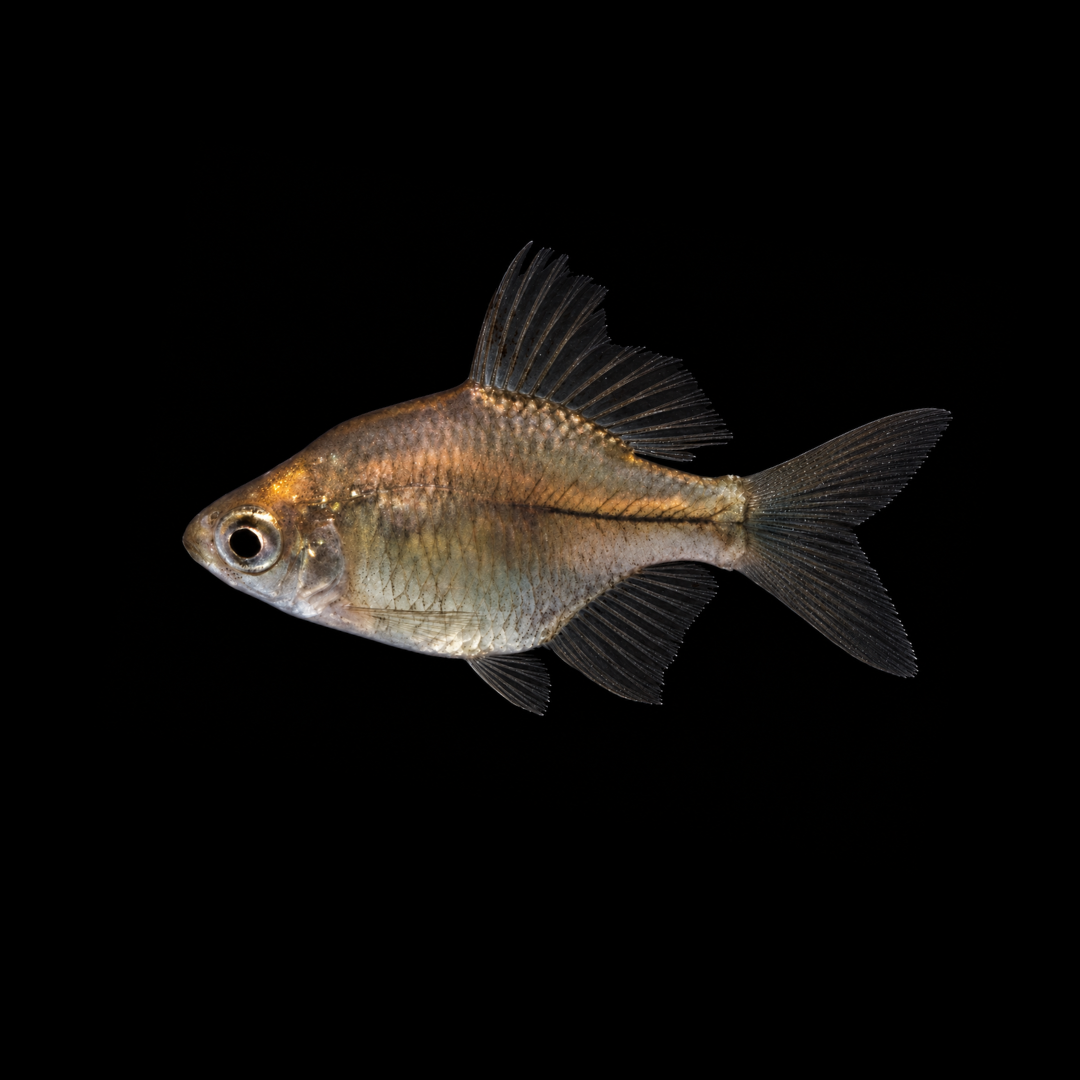
タイバラマンボウは、タイリクバラタナゴのうち、胴が短く体高の高い姿を持つ観賞用の短胴型です。分類学上の独立種ではなく、丸い輪郭が海のマンボウを思わせることから付いた日本の流通名です。繁殖期のオスはばら色から紫青色を帯び、背びれと尻びれの縁も鮮やかになります。メスは落ち着いた銀緑色で、産卵期には長い産卵管を伸ばします。独特の体型とタナゴらしい季節変化を同時に楽しめる一方、短胴型の体に負担をかけない少量給餌と、穏やかな水流が大切です。原種は日本では外来魚で、在来のニッポンバラタナゴとの交雑が問題となっているため、飼育個体を水槽の外へ放してはいけません。Taibara Manbou is the Japanese trade name for ornamental continental rosy bitterlings with a shortened trunk and unusually deep body. It is not a separate taxonomic species; the name compares its rounded outline with that of an ocean sunfish. Breeding males develop rose to violet-blue color and brightly edged fins, while females remain silver-green and grow a long ovipositor during the spawning season. This fish combines a distinctive body form with the seasonal changes typical of bitterlings, but its compact build calls for restrained feeding and gentle current. The parent form is non-native in Japan and hybridizes with the native Japanese rosy bitterling, so captive fish must never be released outdoors.
基本情報 / Basic Information
学名 / Scientific Name
Rhodeus ocellatus ocellatus (Kner, 1866) の短胴型(流通上の品種名), short-bodied ornamental form identified by a trade name
コイ目・タナゴ科・バラタナゴ属。従来の体系や日本の行政資料では、コイ科タナゴ亜科として扱われる場合があります。Order Cypriniformes, family Acheilognathidae, genus Rhodeus. Older classifications and some Japanese administrative sources place bitterlings in Cyprinidae, subfamily Acheilognathinae.
英名 / English Name
Short-bodied Rosy Bitterling (説明的な流通英名。原種は Rosy Bitterling) (a descriptive trade name; the parent form is the Rosy Bitterling)
分布 / Distribution
タイバラマンボウは飼育・流通上の呼称であり、独自の自然分布はありません。原種は中国、朝鮮半島、台湾など東アジア原産で、日本には1942年に水産種苗へ混入して入ったとされています。現在は北海道、本州、四国、九州の河川下流、湖沼、水路に外来分布します。Taibara Manbou is a name used in captivity and the aquarium trade, so it has no separate natural range. The parent form is native to East Asia, including China, the Korean Peninsula, and Taiwan. It is thought to have entered Japan accidentally with fishery stock in 1942 and is now introduced in Hokkaido, Honshu, Shikoku, and Kyushu, chiefly in lower rivers, lakes, ponds, and canals.
最大体長 / Max Size
タイバラマンボウだけを対象とした確かな最大体長の資料は確認されていません。短胴の程度や系統による差が大きいため、原種の記録をそのまま当てはめることはできません。参考として、タイリクバラタナゴでは標準体長9.2cmの記録があります。No reliable maximum size has been documented specifically for Taibara Manbou. Because the degree of body shortening varies among individuals and breeding lines, the parent species’ measurement cannot be applied directly. For reference, the continental rosy bitterling has been recorded to 9.2 cm standard length.
寿命 / Lifespan
情報なし。タイバラマンボウだけを対象とした信頼できる寿命統計は確認されていません。寿命は体型、給餌、水温、水質などの飼育条件によっても変わるため、一律の年数では示せません。No reliable lifespan data are available specifically for Taibara Manbou. Longevity also varies with body form, feeding, temperature, water quality, and other husbandry conditions, so a single number cannot be given with confidence.
飼育環境 / Aquarium Environment
水槽サイズ / Tank Size
少数飼育でも45cm規格水槽(約35〜40L)以上を目安とし、複数匹をゆったり飼う場合は60cm規格水槽(約55〜65L)を推奨します。規格水槽の容量は製品によって異なります。水量と横幅に余裕があるほど水質と水温が安定し、繁殖期のオス同士も距離を取りやすくなります。Use at least a standard 45 cm aquarium of about 35–40 L for a small group. A standard 60 cm aquarium of about 55–65 L is recommended when keeping several fish with more room; actual volume varies among products. Extra water volume and horizontal space help stabilize conditions and allow breeding males to keep their distance.
水温 / Temperature
18〜24℃を安定して保つと飼いやすく、繁殖を狙う場合は20℃前後からが目安です。原種は季節的な低温にも耐えますが、短胴型では急な水温変化を避けます。夏は水温の上がり過ぎに注意し、送風や水槽用クーラー、十分なエアレーションで酸欠を防ぎます。A stable 18–24°C is suitable for routine care, and spawning activity may begin as the water approaches 20°C. Although the parent species tolerates seasonally cool water, avoid abrupt temperature changes in short-bodied fish. In summer, prevent excessive warming and oxygen shortage with ventilation, aquarium cooling, and adequate aeration.
水質 / Water Quality
中性付近の水質を目安とし、急な変化を避けます。アンモニアと亜硝酸は検出されない状態を保ち、週1回を目安に全水量の20〜30%を同温のカルキ抜き水で交換します。特定の数値へ無理に合わせるより、安定した水質を保つことが重要です。Aim for water near neutral pH and avoid abrupt change. Keep ammonia and nitrite undetectable and replace about 20–30% weekly with dechlorinated water of a similar temperature. Stable conditions matter more than forcing the aquarium toward a narrowly defined value.
レイアウト / Layout
黒系の大磯砂など落ち着いた底床を敷き、側面と背面に水草や枝状流木で退避場所を作りつつ、中央には広い遊泳空間を残します。ろ過器の吐出口はガラス面へ向けて水流を和らげ、飛び出し防止のフタを隙間なく設置します。二枚貝は繁殖時だけ、適法に入手した健康な個体を使用します。Use a subdued dark substrate, with plants or branching wood along the sides and rear for refuge while leaving an open central swimming lane. Direct the filter outlet toward the glass to soften the current and fit a secure lid against jumping. Add healthy, legally sourced freshwater mussels only when breeding is intended.
注意点 / Precautions
短胴個体は遊泳や摂餌の状態に個体差があります。迎える前に、背骨の極端な曲がり、常に体が傾く様子、餌をうまく食べられない様子がないかを確認します。2026年9月時点で原種は外来生物法の特定外来生物ではありませんが、環境省の第2版生態系被害防止外来種リストでは、行政上の対策区分として「定着初期/限定分布・防除推進外来種」に位置付けられています。在来タナゴとの交雑を防ぐため、魚、卵や仔魚を含む可能性のある二枚貝、飼育水を野外へ放流せず、地域の条例や漁業権も確認してください。Short-bodied individuals vary in their ability to swim and feed. Before purchase, check for severe spinal curvature, persistent tilting, or difficulty taking food. As of September 2026, the parent form is not designated as a Specified Invasive Alien Species under Japan’s Invasive Alien Species Act. However, Japan’s second national invasive-species list places it in the administrative management category for early-stage or locally distributed alien species targeted for control. Never release the fish, mussels that may contain eggs or larvae, or aquarium water outdoors, and check local ordinances and fishing rights.
餌と給餌 / Feeding
餌の種類 / Diet
雑食性です。主食には口に入る大きさの高品質な沈下性小粒ペレットや細かくしたフレークを用い、冷凍アカムシ、ミジンコ、ふ化直後のブラインシュリンプなどを補助的に与えます。植物質や藻類原料を含む飼料も組み合わせると栄養が偏りにくくなります。This strain is omnivorous. Offer high-quality sinking micro-pellets or finely crushed flakes as staples, supplemented with frozen chironomid larvae, daphnia, or newly hatched brine shrimp. Including a food with plant or algal ingredients helps keep the diet balanced.
給餌のポイント / Feeding Tips
1日1〜2回、30〜60秒ほどで食べ切る少量を分けて与えます。腹部が張ったままになる量や、残餌が出る量は多すぎます。水面で空気をのみ込みにくい沈下性飼料を中心にし、低水温期は食欲と消化に合わせて量を減らします。毎日、食後の傾き、浮き上がり、沈み込みがないかを確認すると、浮力異常の早期発見につながります。Feed one or two small portions daily, each consumed within about 30–60 seconds. A persistently swollen abdomen or leftover food indicates overfeeding. Favor sinking food to reduce air gulping and reduce portions in cool water as appetite and digestion slow. Check after meals for tilting, unwanted floating, or sinking so buoyancy problems are noticed early.
性格と混泳 / Temperament and Tank Mates
性格 / Temperament
普段は温和で、仲間とまとまって泳ぎます。ただし繁殖期のオスは二枚貝の周囲に縄張りを作り、同種のオスを追うことがあります。複数飼育では見通しを部分的に遮る水草と十分な横幅を用意し、追われる個体が休める場所を作ります。Normally peaceful and social, these fish tend to swim together. Breeding males may defend the area around a mussel and chase rival males. For groups, provide adequate horizontal space and plants that break sight lines so subordinate fish can rest.
混泳の相性 / Compatibility
同程度の水温を好む温和なメダカ類、小型のドジョウ類、成体のヌマエビ類などとは比較的合わせやすい魚です。ただし、稚エビや稚魚は捕食されることがあります。大型魚、攻撃的な魚、ヒレをかじる魚、強い水流を必要とする魚は避けます。保全上、ニッポンバラタナゴをはじめとする在来タナゴ類とは混泳させず、交雑や取り違えを防いでください。This fish is generally compatible with peaceful medaka, small loaches, and adult freshwater shrimp that prefer similar temperatures, although fry and shrimplets may be eaten. Avoid large predators, aggressive or fin-nipping fish, and species that require strong current. For conservation reasons, do not mix this form with the native Japanese rosy bitterling or other native bitterlings; this helps prevent hybridization and accidental misidentification.
病気と対策 / Diseases and Prevention
かかりやすい病気 / Common Diseases
とくに注意したいのは、横転、浮上、沈下などとして現れる浮力異常です。一般に「転覆病」と呼ばれますが、単一の病気を指す名称ではありません。消化管の膨満、水温や水質の急変、感染、浮き袋を含む臓器の異常など、さまざまな原因で似た症状が現れます。短胴型での発症率を示す信頼できる統計はありません。そのほか、白点病、細菌性の皮膚・鰓障害、傷に続発する水カビ症に注意します。The main concern is abnormal buoyancy seen as rolling, floating, or sinking. Often called swim bladder disease, it is not the name of a single disease. Digestive-tract distension, sudden changes in temperature or water quality, infection, and abnormalities of the swim bladder or other organs can produce similar signs. Reliable incidence data specific to this form are unavailable. Also watch for white spot disease, bacterial skin or gill disease, and fungal growth secondary to injury.
対策と予防 / Prevention
新しい魚は2〜4週間を目安に隔離観察し、水合わせを丁寧に行います。少量給餌、残餌の除去、定期換水、急な温度変化の回避が基本です。浮力異常が出たら別容器へ隔離し、まず水温、アンモニア、亜硝酸を確認します。給餌はいったん止め、悪化していないかを観察します。改善しない場合や、呼吸が速い、出血や潰瘍がある場合は、魚を診られる獣医師や十分な経験を持つ専門店へ相談してください。塩水浴、昇温、魚病薬は原因によって逆効果になるため、診断と製品表示に基づいて行い、二枚貝やエビは薬浴容器から外します。Quarantine new fish for roughly two to four weeks and acclimate them gradually. Prevention rests on small meals, removal of leftovers, regular water changes, and avoidance of sudden temperature shifts. If buoyancy becomes abnormal, isolate the fish and first check temperature, ammonia, and nitrite. Pause feeding and watch closely for deterioration. Seek a fish veterinarian or an experienced aquatic specialist if the problem persists or if rapid breathing, bleeding, or ulcers appear. Salt, heat, and medications can be harmful when used for the wrong cause, so follow a diagnosis and the product label, and keep mussels and shrimp out of medicated water.
増やし方(繁殖) / Breeding
雌雄の判別 / Sexing
繁殖期のオスは腹部から体側に赤紫色の婚姻色が現れ、体側の青緑色が強まり、吻や眼の周囲に白い追星が出ます。メスは銀白色から緑灰色で、総排泄孔付近から細長い産卵管を伸ばします。非繁殖期や若魚では差が弱く、体型だけでの判別は確実ではありません。In the breeding season, males develop red-violet nuptial color on the belly and flanks, stronger blue-green iridescence, and white breeding tubercles around the snout and eyes. Females remain silver to green-gray and extend a slender ovipositor from the vent area. Differences are subtle outside the breeding season and in juveniles, so body shape alone is unreliable.
繁殖形態 / Reproduction
春から夏に繁殖する二枚貝産卵型です。メスは生きたイシガイ科二枚貝の出水管から産卵管を差し入れ、鰓の水管へ電球形の卵を産みます。オスの精子は入水管から貝内へ運ばれて受精し、胚は貝の中で発育します。水温や条件によりますが、およそ15〜30日後に自力で泳げる仔魚が貝から出てきます。人工授精とシャーレ内での培養は研究上実施されていますが、衛生管理と発生学的知識を要する専門的な方法です。This is a spring-to-summer mussel-spawning fish. The female inserts her ovipositor through the exhalant siphon of a living unionid mussel and places bulb-shaped eggs in the gill water tubes. The male’s sperm is drawn through the inhalant siphon, fertilizing eggs that then develop inside the mussel. Depending on temperature and conditions, free-swimming young generally emerge after about 15–30 days. Artificial fertilization and Petri-dish incubation have been used in research, but they require specialized embryological and hygiene control.
繁殖のポイント / Breeding Tips
成熟した雌雄を用意し、水温が20℃前後まで上がり日長が伸びる季節に、本種が産卵に利用できることを確認した健康な二枚貝を導入します。二枚貝は適法な販売先から入手し、種の同定、漁業権、保護条例の問題がある野外採集は避けます。二枚貝は微細な藻類などをろ過摂食するため、餌不足や酸欠を起こさない管理が必要です。産卵を確認した貝は、必要に応じて同じ水質の育成容器へ静かに移し、親魚による仔魚の捕食を防ぎます。貝から出た仔魚には、ふ化直後のブラインシュリンプや微細な稚魚用飼料を少量ずつ与えます。貝と飼育水を自然水域へ移さないことも繁殖管理の一部です。Prepare mature males and females, and when the water approaches 20°C as day length increases, introduce a healthy mussel confirmed to be suitable for this bitterling’s spawning. Obtain mussels from a lawful supplier and avoid wild collection, which can raise identification, fishing-rights, and conservation-law issues. Mussels filter microscopic algae and other particles, so they require management that prevents starvation and oxygen shortage. Once spawning is confirmed, move the mussel gently to a rearing container with matching water conditions if separation is needed to protect emerging young from the adults. Feed fry after they leave the mussel small portions of newly hatched brine shrimp or fine fry food. Never transfer the mussel or its water to natural waterways.
雑学と豆知識 / Trivia and Fun Facts
1. 「マンボウ」は姿を表す愛称 / 1. “Manbou” Describes the Silhouette
名前から海水魚のマンボウとの近縁関係を想像したくなりますが、両者はまったく別の系統です。タイバラマンボウはコイ目の淡水魚で、「マンボウ」は短い胴と高い体高が作る円盤状の輪郭を親しみやすく表した流通上の愛称です。分類名ではなく、改良品種の魅力をひと目で伝える日本の観賞魚文化らしい名前なのです。Despite the name, this fish is not closely related to the marine ocean sunfish. It is a freshwater cypriniform fish, and “Manbou,” the Japanese word for sunfish, is an affectionate trade nickname for the disc-like outline produced by its short trunk and deep body. It is a name from ornamental-fish culture, not a taxonomic rank.
2. 短胴の仕組みは、まだこの系統では未解明 / 2. The Mechanism Behind This Strain Remains Unresolved
ほかのコイ科魚類に見られる短胴個体では、脊椎骨の圧縮や癒合によって体が短くなり、相対的に体高が高く見える例が報告されています。ただし、タイバラマンボウの骨格や遺伝要因を直接調べた公表研究は確認されていません。つまり、ほかの魚で知られている仕組みは理解の手掛かりにはなりますが、この短胴型の原因を特定する証拠ではありません。In other cyprinid fishes, compressed or fused vertebrae have been associated with a shorter body and an apparently deeper profile. However, no published study has directly examined the skeleton or genetic basis of Taibara Manbou. Findings from other fishes therefore offer a useful clue, but they do not identify the cause of this particular short-bodied form.
3. ばら色を宿す属名 / 3. A Genus Named for Rose Color
属名 Rhodeus は、ばら色を表すギリシャ語に由来します。普段は銀色を基調とする小魚が、繁殖期になるとオスだけ赤紫や青緑の光をまとい、名前の由来を体現するように変化します。タイバラマンボウでは高い体側が色の面積を大きく見せるため、短胴という形態と婚姻色が互いを引き立てます。The genus name Rhodeus derives from a Greek word associated with rose color. A small fish that is mostly silver outside the breeding season transforms as the male develops red-violet and blue-green color. In Taibara Manbou, the deep flank presents a broad field of color, allowing the compact form and nuptial display to amplify one another.
4. 1942年に始まった日本での外来史 / 4. An Introduced History Beginning in 1942
原種が日本へ入った記録は1942年にさかのぼり、中国から導入された水産種苗への偶発的な混入とされています。タナゴの卵や仔魚は二枚貝の鰓内で育つため、魚だけでなく産卵母貝の移動も分布拡大の経路になり得ます。環境省の現行リストも、淡水真珠養殖用二枚貝に卵や仔魚が混入する可能性へ注意を促しています。小さな魚の旅は、魚の輸送だけで起きるとは限らないのです。The parent form’s recorded history in Japan begins in 1942, when it was accidentally introduced with fishery stock from China. Because bitterling eggs and young develop inside mussel gills, moving spawning mussels can also transport fish. Japan’s current national invasive-species list specifically warns that eggs or larvae may accompany freshwater mussels used in pearl culture. A small fish can therefore travel without being moved as an obvious fish at all.
5. 二枚貝との関係は単純な「助け合い」ではない / 5. The Mussel Relationship Is Not Simple Mutual Aid
安全な鰓の中を借りて育つ姿は共生の美談に見えますが、生態学ではタナゴの繁殖は托卵寄生として研究されています。胚が場所と酸素を使うことで、宿主の二枚貝に負担をかける可能性があるためです。一方、イシガイ科二枚貝の幼生は魚に付着して分散しますが、どの魚が適した宿主になるかは貝の種類ごとに異なります。両者の関係は、一方的な恩恵でもいつも対等な交換でもなく、長い共進化の中で形を変えてきた緊張を含む結びつきです。Growing inside a protected gill chamber may look like a tidy story of mutual cooperation, but ecologists study bitterling reproduction as brood parasitism because embryos occupy space and use oxygen that can burden the mussel host. Unionid mussel larvae, in turn, attach to fish for dispersal, but suitable host fishes differ among mussel species. The relationship is neither a one-way gift nor always an equal exchange; it is a dynamic association shaped by a long history of coevolution.
6. 貝の外でも発生を観察できる研究技術 / 6. Research Can Follow Development Outside a Mussel
二枚貝の奥で進む発生は、外から観察しにくい現象です。人工授精したタイリクバラタナゴの卵をシャーレ内で管理した研究では、受精から自由に泳げる段階までの最初の14日間が、24の発生段階として詳しく記載されました。これは、二枚貝を使わない家庭向け繁殖法が確立したという意味ではありません。温度、換水、胚密度を管理した研究条件によって、通常は見えない発生の過程を観察できたという成果です。Development deep inside a mussel is difficult to observe from outside. In a study that managed artificially fertilized rosy bitterling eggs in Petri dishes, researchers described 24 developmental stages across the first 14 days, from fertilization to free swimming. This does not mean that a mussel-free home breeding method has been established. Rather, controlled research conditions for temperature, water changes, and embryo density made the normally hidden developmental process observable.
まとめ / Conclusion
タイバラマンボウは、丸い輪郭と繁殖期の繊細な婚姻色をあわせ持ち、水槽の中で季節の変化を感じさせてくれる魚です。45〜60cm規格水槽に穏やかな流れと十分な遊泳空間を整え、沈下性の餌を少量ずつ与えることで、短胴型の体へ配慮しながら飼育できます。Taibara Manbou combines a rounded outline with delicate breeding-season color, bringing a sense of seasonal change to the aquarium. A standard 45–60 cm tank with gentle flow, ample swimming room, and small portions of sinking food supports care that takes its short-bodied form into account.
生きた二枚貝を利用する繁殖行動は、魚とほかの生物が結び付く仕組みの奥深さを見せてくれます。同時に、飼育個体や産卵に用いた二枚貝を水槽の外へ放さないことも欠かせません。終生飼育と放流防止を徹底することで、この魚の個性的な姿と在来の水辺の双方を大切にできます。Its use of living mussels for spawning reveals the depth of the links between aquatic species. That fascination also carries a responsibility: neither captive fish nor mussels used for spawning should be released outdoors. Lifelong care and strict prevention of release help protect both this fish’s distinctive character and Japan’s native freshwater communities.
分類・学名
Fricke, R., Eschmeyer, W. N. & Van der Laan, R. (eds.). Eschmeyer’s Catalog of Fishes: Genera, Species, References. California Academy of Sciences. 原資料(2026年9月12日閲覧)
分類・分布・生息環境・飼育条件・繁殖
Froese, R. & Pauly, D. (eds.). FishBase: Rhodeus ocellatus. 原資料(2026年9月12日閲覧)
交雑・遺伝的浸透
Kawamura, K. et al. (2001). “Genetic Introgression by the Rose Bitterling, Rhodeus ocellatus ocellatus, into the Japanese Rose Bitterling, R. o. kurumeus (Teleostei: Cyprinidae).” Zoological Science, 18(7), 1027–1039. doi:10.2108/zsj.18.1027
繁殖・胚発生
Yi, W., Rücklin, M., Poelmann, R. E., Aldridge, D. C. & Richardson, M. K. (2021). “Normal stages of embryonic development of a brood parasite, the rosy bitterling Rhodeus ocellatus (Teleostei: Cypriniformes).” Journal of Morphology, 282, 783–819. doi:10.1002/jmor.21335
繁殖・二枚貝との関係
Spence, R. & Smith, C. (2013). “Rose bitterling (Rhodeus ocellatus) embryos parasitize freshwater mussels by competing for nutrients and oxygen.” Acta Zoologica, 94(1), 113–118. doi:10.1111/j.1463-6395.2011.00532.x
飼育管理・水質・検疫・薬剤使用上の注意
Petty, B. D., Francis-Floyd, R. & Yanong, R. P. E. (2026 update). “Management of Aquarium Fish.” MSD Veterinary Manual, Professional Version. 原資料(2026年9月12日閲覧)
病気・予防
Francis-Floyd, R. & Petty, B. D. (2026 update). “Disorders and Diseases of Fish.” MSD Veterinary Manual. 原資料(2026年9月12日閲覧)






コメント