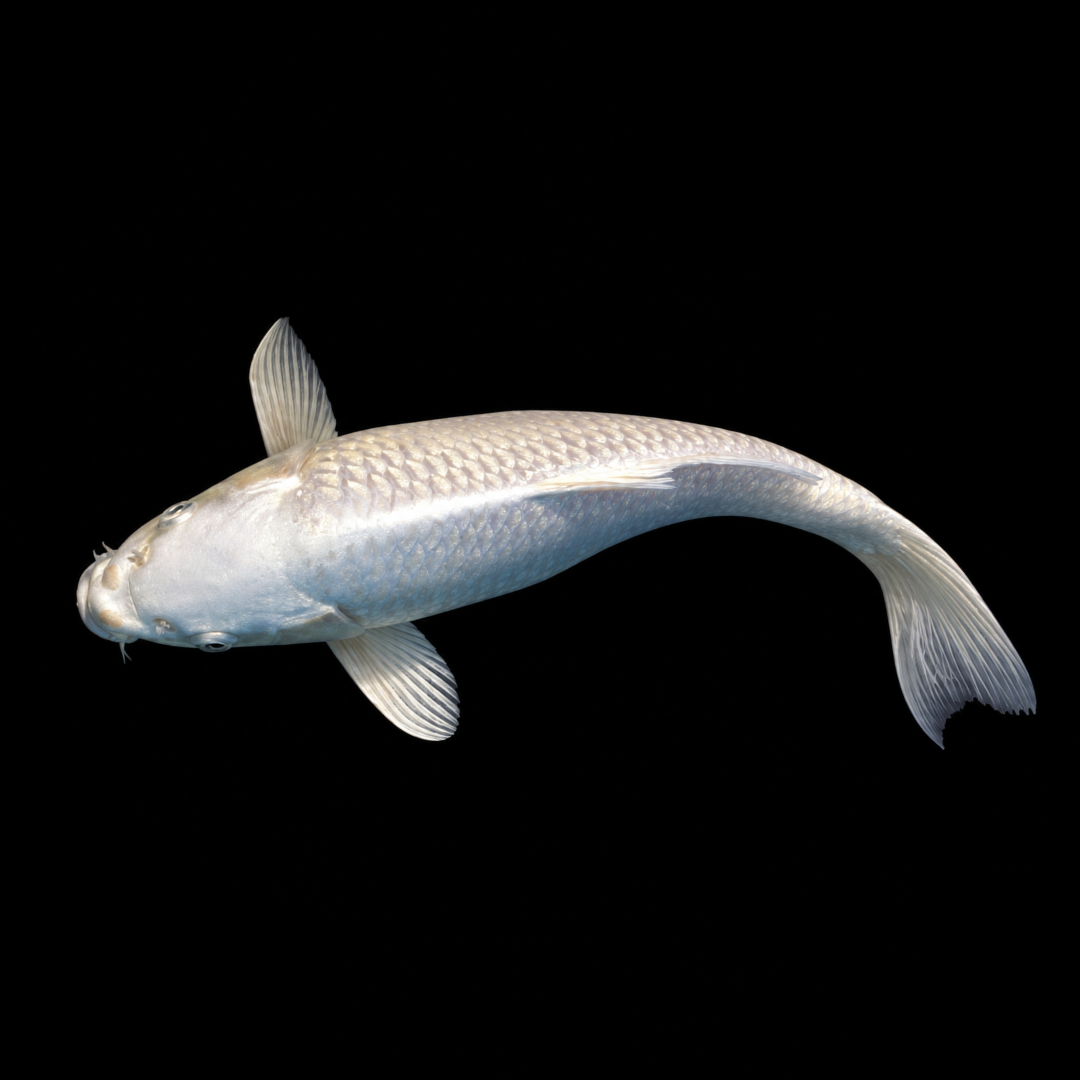
プラチナ錦鯉は、雪を思わせる銀白色の体が、光の向きに合わせて金属のようにきらめく錦鯉です。一般に「プラチナ」または「プラチナ黄金」と呼ばれ、模様を持たず、全身が一色の金属光沢を見せる「光り無地」に分類されます。斑紋を持たないぶん、頭部から尾びれまで続く照り、整然とした鱗、伸びやかな体形がそのまま魅力になります。丈夫なコイの品種ですが、成長すると大きくなり、排泄量も多いため、長期飼育には広い遊泳空間、十分なろ過と酸素供給、成長後の飼育場所まで見通した計画が欠かせません。Platinum koi are Nishikigoi whose snow-white to silvery bodies gleam with a metallic sheen as the light changes. Commonly called Platinum Koi or Platinum Ogon, they belong to the Hikari Muji group: single-colored metallic koi without a pattern. Because they have no markings, their appeal rests on an even luster from head to tail, orderly scales, and a strong, balanced body. They are a hardy variety of common carp, but they grow large and produce substantial waste. Long-term care therefore requires generous swimming space, adequate filtration and oxygen, and a realistic plan for their adult home.
コイ目・コイ科・コイ属。錦鯉の品種区分では光り無地Order Cypriniformes, family Cyprinidae, genus Cyprinus. Classified as Hikari Muji among Nishikigoi varieties
英名 / English Name
Platinum Ogon
分布 / Distribution
日本で作出された観賞用品種で、現在は世界各地で飼育・繁殖されています。野生種ではないため、プラチナ黄金そのものに自然分布地はありません。An ornamental variety developed in Japan and now bred and kept worldwide. As a domesticated variety rather than a wild form, Platinum Ogon has no natural range of its own.
最大体長 / Max Size
飼育条件によって70〜90cmほどまで育ち、1mを超える例もあります。Depending on its conditions, it may grow to about 70–90 cm, and some koi exceed 1 m.
寿命 / Lifespan
平均寿命は30年ほどとされています。安定した水質、適切な給餌、十分な空間が保たれれば、さらに長く生きることもあります。Average lifespan is generally considered to be about 30 years. With stable water quality, appropriate feeding, and adequate space, koi may live considerably longer.
飼育環境 / Aquarium Environment
水槽サイズ / Tank Size
15cm前後の幼魚1尾を一時的に飼育する場合でも、90cm規格水槽(約150L)以上が扱いやすい目安です。成長に合わせて120cmワイド水槽(約300L以上)や、さらに大きな水槽・池へ移行してください。必要な水量は個体の大きさ、尾数、ろ過能力によって大きく変わります。成魚を複数で長期飼育する場合は、池を含めた設備を専門店に相談すると安心です。小さな容器に合わせて成長が緩やかになることはありますが、過密や水質悪化を許容してよいという意味ではありません。Even for the temporary care of one juvenile around 15 cm, a standard 90 cm aquarium of roughly 150 L or more is a practical starting point. As it grows, move it to a 120 cm wide aquarium of 300 L or more, then to a still larger system or pond. The required volume varies greatly with fish size, stocking level, and filtration capacity. For the long-term care of several adults, consult a specialist about a suitable pond or equivalent system. Growth may slow in a small enclosure, but this does not make crowding or poor water quality acceptable.
水温 / Temperature
飼育管理の目安は15〜25℃です。屋外の池では季節に応じて、これより広い水温範囲で過ごしますが、急激な変化は避けてください。高水温時は酸欠に注意し、水温が下がるにつれて給餌量と回数を減らします。8℃以下では、原則として給餌を控えます。A practical management range is 15–25°C. Outdoor pond koi experience a wider seasonal range, but sudden temperature changes should be avoided. Guard against oxygen shortage in warm water and reduce both the amount and frequency of feeding as the water cools. As a general rule, withhold food at 8°C or below.
水質 / Water Quality
急変のない中性〜弱アルカリ性、pH6.5〜8.0を目安とします。アンモニアと亜硝酸は検出されない状態を保ち、硝酸塩の蓄積も定期換水で抑えます。強い生物ろ過とエアレーションを用い、特に夏は溶存酸素の確保を優先してください。Maintain stable neutral to mildly alkaline water, roughly pH 6.5–8.0. Ammonia and nitrite should remain undetectable, while regular water changes limit nitrate accumulation. Use strong biological filtration and aeration, with dissolved oxygen a priority in summer.
レイアウト / Layout
広い遊泳空間を確保し、角の鋭い石や金具は避けます。水槽では、掃除しやすいよう底砂を敷かない方法か、口に入らない大きさの滑らかな底材が扱いやすいでしょう。コイは底を探り、水草を抜いたり食べたりするため、繊細な水草レイアウトには向きません。吸水口は体やひれを傷めないよう保護し、飛び出し対策も行います。Provide ample open swimming space and avoid sharp rocks or fittings. In aquariums, an easy-to-clean bare bottom is practical; otherwise use smooth substrate too large to swallow. Koi root through the bottom and may uproot or eat plants, so they are unsuitable for delicate planted layouts. Guard filter intakes against body and fin injuries and provide secure jump protection.
注意点 / Precautions
小型魚に見える当歳魚も短期間で大きくなります。ろ過能力だけでなく、将来の移動先、床の耐荷重、停電時の酸素確保まで準備してください。新しい個体は別設備で健康状態を観察し、網やホースを共用しないことが重要です。飼えなくなっても河川や池へ放流してはいけません。A small first-year koi can grow quickly. Plan not only filtration, but also its future enclosure, floor load, and emergency aeration during power failures. Observe new fish in a separate system and do not share nets or hoses. Never release unwanted koi into rivers, lakes, or public ponds.
餌と給餌 / Feeding
餌の種類 / Diet
コイ用の総合栄養ペレットを主食にし、季節と水温に合った製品を選びます。プラチナの白地を重視する場合は、赤や黄の発色を目的とする色揚げ飼料を漫然と常用せず、製品の用途と原材料を確認してください。副食を与える場合も少量にとどめ、主食との栄養バランスを崩さないようにします。Use a complete koi pellet as the staple and choose a formula suited to the season and water temperature. If preserving a clean white ground is the priority, do not use feeds designed to intensify red or yellow coloration as an automatic everyday choice; check the product’s purpose and ingredients. Keep any supplementary foods limited so they do not disrupt the nutritional balance of the staple diet.
給餌のポイント / Feeding Tips
活発な時期は、数分で食べ切れる量を1日1〜3回に分けます。食べ残しが出る場合は量を見直してください。水温が下がるほど回数と量を減らし、急な冷え込み、体調不良、水質悪化が見られるときは給餌を止め、原因の確認を優先します。大きく育てたい場合でも、過剰給餌は肥満と水質悪化を招き、健康を損ないます。During active periods, offer an amount the fish can finish within a few minutes, divided into one to three feedings per day. Reduce the ration if food remains. As water cools, reduce both frequency and quantity. During a sudden cold spell, illness, or water-quality problem, stop feeding and investigate the cause first. Even when growth is desired, overfeeding promotes obesity and water pollution and can harm the fish’s health.
性格と混泳 / Temperament and Tank Mates
性格 / Temperament
基本的には温和で、人にも慣れやすい魚です。餌の時間には集まり、活発に泳ぎます。一方で、底を口で探る性質が強く、口に入る小さな生き物や柔らかな水草を食べることがあります。Generally peaceful and often quick to become accustomed to people, koi gather and swim actively at feeding time. However, they forage vigorously along the bottom and may eat small animals or soft plants that fit into the mouth.
混泳の相性 / Compatibility
十分な水量があるなら、同程度の大きさの錦鯉同士が最も管理しやすい組み合わせです。大きさが極端に違う個体は、餌の競争や接触事故を避けるため分けます。金魚など他の温帯性魚類との混泳例もありますが、必要水量や摂餌速度などの管理条件が異なるため、積極的には勧めません。口に入る小魚、ひれをかじる魚、高水温を必要とする熱帯魚との混泳は避けてください。With adequate water volume, similarly sized koi are the easiest companions to manage. Separate fish with a major size difference to prevent food competition and collision injuries. Koi are sometimes kept with goldfish and other temperate species, but differences in space requirements and feeding speed make such mixes less advisable. Avoid small fish that can be swallowed, fin-nipping species, and tropical fish that require consistently warm water.
病気と対策 / Diseases and Prevention
かかりやすい病気 / Common Diseases
白点病、吸虫などの寄生虫症、細菌性の皮膚潰瘍や鰓の障害、コイヘルペスウイルス病(KHV)などに注意します。体をこすりつける、ひれを閉じる、水面で口を動かす、餌を食べない、鰓が白っぽく傷む、体表に充血や潰瘍が現れるといった変化は異常のサインです。体色だけで判断せず、泳ぎ方、食欲、鰓、体表の粘膜を毎日観察してください。Watch for white spot disease, flukes and other parasites, bacterial skin ulcers, gill disorders, and koi herpesvirus disease (KHVD). Flashing against surfaces, clamped fins, gasping at the surface, appetite loss, pale or damaged gills, redness, and ulcers are warning signs. Do not rely on body color alone; observe swimming, appetite, gills, and the skin’s mucus layer every day.
対策と予防 / Prevention
信頼できる入手先を選び、新魚は既存の個体から完全に分けた設備で、4〜6週間を目安に観察します。検疫中は専用の網やホースを使い、アンモニア、亜硝酸、pH、水温、酸素供給を確認してください。ただし、KHVは水温によって症状が現れないことがあり、一定期間の観察だけで感染を否定することはできません。異常個体は早めに隔離し、可能なら魚病に詳しい獣医師や専門機関に診断を依頼します。KHVには原因ウイルスを排除する治療法が確立されておらず、回復魚も保有魚として扱う必要があります。塩や魚病薬は一律に使わず、病因、水量、水温、製品表示を確認し、用法・用量と専門家の助言に従ってください。Buy from a reliable source and observe new fish for about four to six weeks in a system fully separated from the established stock. Use dedicated nets and hoses during quarantine and monitor ammonia, nitrite, pH, temperature, and oxygen. However, KHVD may remain clinically silent at some temperatures, so observation for a set period cannot by itself rule out infection. Isolate abnormal fish promptly and seek diagnosis from a fish-health veterinarian or qualified laboratory when possible. No established treatment eliminates the virus responsible for KHVD, and recovered fish must be treated as carriers. Do not apply salt or medication indiscriminately; consider the likely cause, true water volume, temperature, product label, and expert advice.
増やし方(繁殖) / Breeding
雌雄の判別 / Sexing
成熟魚では、一般にメスは胴がふっくらし、繁殖期には腹部が柔らかく張ります。オスは比較的細身で、繁殖期に胸びれや鰓ぶたへ白い追星が現れ、触るとざらつくことがあります。ただし幼魚や繁殖期以外の外見だけで確実に判別するのは難しく、個体差もあります。In mature fish, females are generally fuller-bodied and develop a soft, rounded abdomen in the spawning season. Males are often slimmer and may develop rough white breeding tubercles on the pectoral fins and gill covers. Sexing juveniles or fish outside the breeding season by appearance alone is difficult, and individuals vary.
繁殖形態 / Reproduction
卵生で、春から初夏、水温の上昇をきっかけに産卵します。オスがメスを追い、メスが水草や産卵用ブラシに粘着性の卵を散らすと、オスが放精して体外受精します。親魚は卵を保護せず、卵やふ化後の仔魚を食べることがあります。Koi are egg-layers that usually spawn from spring to early summer as water warms. Males chase the female, which scatters adhesive eggs over plants or spawning brushes; males then release milt and the eggs are fertilized externally. The parents provide no care and may eat eggs or newly hatched fry.
繁殖のポイント / Breeding Tips
広い専用容器に産卵用ブラシを入れ、健康な成熟魚を組み合わせます。激しい追尾で擦り傷が生じることがあるため、滑らかな容器と十分な水量が必要です。産卵後は親魚を産卵容器から取り出し、卵には穏やかな水流と十分な酸素を与えます。ふ化後の仔魚には、成長段階に合う微細な餌を少量ずつ与えます。プラチナ同士から生まれても、すべての稚魚が親と同じ白さや光沢になるとは限りません。均一な特徴を得るには、多数の稚魚を長期に選別できる設備と経験が必要です。Provide spawning brushes in a large dedicated vessel and pair healthy mature fish. Vigorous chasing can cause abrasions, so use smooth walls and ample water. Remove the adults after spawning, then give the eggs gentle water movement and abundant oxygen. Feed the fry small portions of appropriately fine food for their stage of development. Even a Platinum Ogon pairing will not guarantee that every youngster matches the parents’ whiteness and luster. Producing consistent traits requires space, experience, and long-term selection from many fry.
雑学と豆知識 / Trivia and Fun Facts
1. 銀白の品種が生まれるまで / 1. The Making of a Silvery-White Variety
プラチナ黄金の物語は、まず金色に輝く黄金系統が育てられたことから始まります。全日本錦鯉振興会の作出年表では、現在につながるプラチナ黄金は1963年、富山県魚津市の吉岡忠夫によって、赤目黄鯉とネズ黄金を交配して作出されたと記録されています。金の輝きを追った先人の系統を受け継ぎながら、色調を銀白へ変えたことで、模様ではなく光そのものを鑑賞する品種が形になりました。The story of Platinum Ogon begins with the development of the golden, metallic Ogon line. The Japan Nishikigoi Promotion Association’s historical timeline records the modern Platinum Ogon as having been produced in 1963 by Tadao Yoshioka of Uozu, Toyama, through a cross between a red-eyed yellow carp and Nezu Ogon. Building on a lineage developed for golden brilliance, breeders shifted the tone to silvery white and created a koi admired less for pattern than for light itself.
2. 白い塗料ではなく、細胞の小さな鏡 / 2. Tiny Cellular Mirrors, Not White Paint
プラチナの輝きは、単に白い色素が表面を覆っているだけではありません。皮膚や鱗にある虹色素胞の内部では、グアニンの微細な結晶が光を反射します。結晶の並びと光の当たり方が銀色の照りを生むため、泳ぐ角度が変わるたびに明るさも揺らぎます。鑑賞者が見ているのは固定された一色ではなく、生きた体と光がその瞬間ごとに作る表情なのです。The platinum sheen is not simply a coat of white pigment. Within iridophores in the skin and scales, microscopic guanine crystals reflect light. Their arrangement and the angle of illumination create the silvery luster, so the brightness shifts as the fish swims. What the viewer sees is not a fixed color, but an ever-changing expression created by a living body and light.
3. 模様がないからこそ、ごまかせない美しさ / 3. Patternless Beauty Leaves Nowhere to Hide
紅白や大正三色では斑紋の配置が印象を大きく左右しますが、光り無地のプラチナは、模様の代わりに体そのものの質が目に入ります。頭部の明るさ、背から腹へ回り込む光沢、鱗の並び、尾筒の力強さが鑑賞のポイントです。若魚の輝きだけでなく、成長後の体形と肌質を見通して選ぶところに、この品種ならではの奥深さがあります。In Kohaku or Taisho Sanshoku, the placement of markings strongly shapes the impression. In patternless Platinum Ogon, the quality of the body itself takes the place of pattern. The brightness of the head, luster wrapping from back to belly, scale alignment, and strength of the tail tube are central viewing points. Their special depth lies in looking beyond a juvenile’s immediate sparkle and considering its future body shape and skin quality.
4. 水質管理が、そのまま光の手入れになる / 4. Caring for the Water Means Caring for the Light
銀白の体では、黄ばみや充血、粘膜の乱れが目につきやすい一方、照りの変化だけで病気を判断することはできません。胸びれを閉じる、餌への反応が鈍る、呼吸が速くなるといった行動の変化も合わせて観察してください。違和感があるときに、アンモニア、亜硝酸、水温、酸素供給を確かめる習慣が、異常の早期発見と本来の光沢を保つことにつながります。Yellowing, redness, or disturbed mucus may be conspicuous on a silvery white body, but a change in luster alone cannot diagnose disease. Also watch for behavioral changes such as clamped pectoral fins, a weaker feeding response, or rapid breathing. When something seems different, checking ammonia, nitrite, temperature, and oxygen can support early detection and help preserve the fish’s natural luster.
5. 小さな幼魚の先にある、数十年の時間 / 5. Decades Hidden Inside a Small Juvenile
店頭では手のひらほどの幼魚でも、健康に育てば一般的な水槽では収まりきらない大魚になります。寿命も長く、数十年にわたって付き合う可能性がある魚です。プラチナを迎えることは、季節ごとの食欲を読み、水の変化を見守り、成長に合わせて飼育場所を整えていく長い付き合いの始まりです。その年月が重なるほど、単色の体には飼育者との歴史まで映るようになります。A juvenile no larger than a palm can grow into a fish too large for an ordinary aquarium. Koi are long-lived and may remain with a keeper for decades. Bringing home a Platinum Ogon begins a long relationship of reading seasonal appetite, watching the water, and adapting the enclosure as the fish grows. Over the years, that single-colored body seems to reflect the shared history of fish and keeper.
まとめ / Conclusion
プラチナ錦鯉の魅力は、銀白の体に光が滑り、泳ぐたびに池や水槽の景色まで明るく見せることにあります。その輝きを保つ基本は、十分な遊泳空間とろ過、豊富な酸素、急変の少ない水質、季節と水温に合った給餌です。The appeal of Platinum Ogon lies in the way light travels across the silvery body, brightening the whole pond or aquarium as the fish moves. Maintaining that brilliance begins with adequate swimming space and filtration, abundant oxygen, stable water, and feeding suited to the season and water temperature.
小さな幼魚のうちから成魚の大きさと長い寿命を見据え、日々の変化を丁寧に観察することが大切です。派手な模様を持たないからこそ、健やかな体形と澄んだ照りが育っていく姿が、プラチナ錦鯉を飼う大きな喜びになります。From the juvenile stage onward, keep the koi’s adult size and long lifespan in mind and observe daily changes with care. Precisely because it has no elaborate pattern, watching a healthy body and clear luster develop becomes one of the greatest pleasures of keeping Platinum Ogon.






コメント