

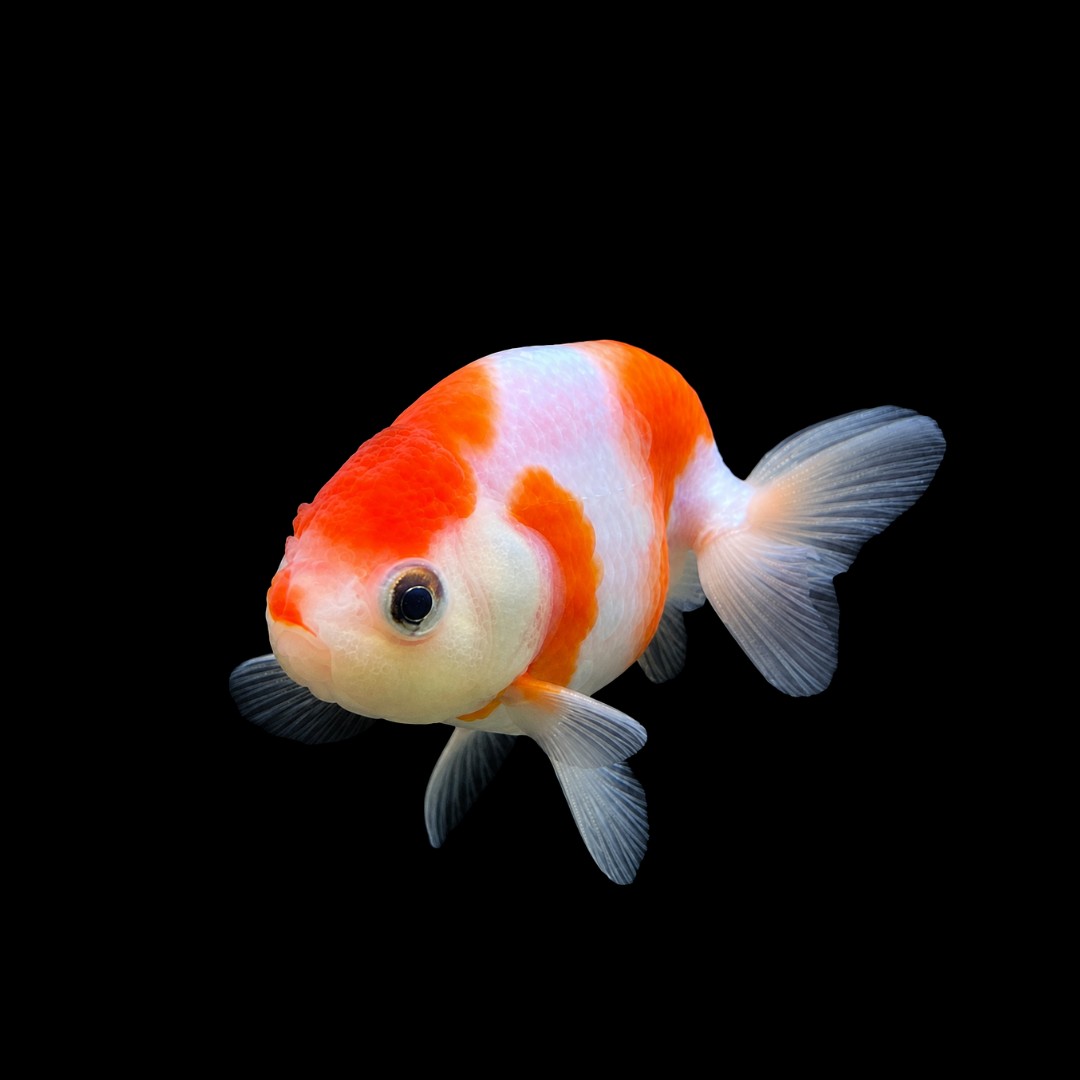
解説 / Description
桜錦は、背ビレを持たない丸みのあるらんちゅう型の体型に、赤と白を基調とした更紗模様とモザイク透明鱗を組み合わせた日本生まれの金魚です。透明感のある鱗と光沢を残す鱗が入り交じることで、赤の輪郭が柔らかくにじみ、名前の通り桜の花びらを思わせる淡い色彩が現れます。頭部には肉瘤が発達し、背中はなだらかな弧を描くため、上見では全身の均整と尾の開き、横見では背なりと鱗の光の変化を楽しめます。泳ぎは速くないため、強い水流や素早い魚との混泳を避け、十分な水量と穏やかな環境を整えることが長期飼育の大切なポイントです。 Sakura Nishiki is a Japanese fancy goldfish combining the rounded, dorsal-finless body form of the Ranchu with a red-and-white pattern and nacreous, mosaic transparent scales. The mixture of translucent and reflective scales softens the borders of the red markings and creates a delicate coloration reminiscent of cherry blossoms. A well-developed head growth and a smooth arching back are characteristic features. From above, the overall balance and tail spread can be appreciated, while a side view highlights the back line and changing reflections of the scales. Because it is not a powerful swimmer, long-term care is best supported by ample water volume, gentle current, and tank mates that do not outcompete it for food.
基本情報 / Basic Information
| 学名 / Scientific Name | Carassius auratus (Linnaeus, 1758) |
|---|---|
| 通称 / Common Name | 桜錦、サクラニシキSakura Nishiki |
| 分類 / Family | コイ目コイ科フナ属。金魚の観賞用品種で、らんちゅう型に分類される。Order Cypriniformes, family Cyprinidae, genus Carassius. An ornamental goldfish variety with the Ranchu-type body form. |
| 英名 / English Name | Sakura Nishiki |
| 分布 / Distribution | 日本で作出された改良品種で、自然分布はない。作出の歴史は愛知県弥富地域と深く結びつき、現在は日本国内を中心に観賞魚として流通している。A domesticated ornamental variety developed in Japan and therefore without a natural wild distribution. Its history is closely associated with the Yatomi area of Aichi Prefecture, and it is distributed primarily through the ornamental fish trade. |
| 最大体長 / Max Size | 体長10~15cm程度の個体がよく見られる。系統や飼育年数、飼育環境によってはそれ以上に育つこともあり、桜錦という品種だけに限定した厳密な最大体長は定めにくい。Individuals around 10 to 15 cm are commonly seen. Some grow larger depending on lineage, age, and husbandry, and there is no single strict maximum size that applies specifically to the Sakura Nishiki variety. |
| 寿命 / Lifespan | 10年以上生きることもあるが、寿命には大きな個体差がある。水質、給餌、過密度、温度変化、病気の有無など、長期的な飼育管理によって大きく左右される。Sakura Nishiki can live for more than 10 years, although lifespan varies widely among individuals. Long-term water quality, feeding, stocking density, temperature stability, and disease management all influence longevity. |
飼育環境 / Aquarium Environment
| 水槽サイズ / Tank Size | 1匹でも60cm規格水槽以上をひとつの目安とし、長期飼育では60cmワイド水槽や90cm規格水槽など、底面積と水量に余裕のある環境が扱いやすい。複数飼育では90cm規格水槽以上も検討したい。らんちゅう系の飼育では20~30cm程度の浅めの水深が用いられることもあるが、室内水槽では水深だけにこだわらず、十分な総水量と横方向の遊泳スペースを確保することが重要。Even for a single fish, a standard 60 cm aquarium is a useful starting point, while a 60 cm wide or standard 90 cm aquarium offers more comfortable floor area and water volume for long-term care. For groups, a standard 90 cm aquarium or larger may be appropriate. Ranchu-type goldfish are sometimes kept at relatively shallow depths of about 20 to 30 cm, but in an indoor aquarium the priority should be adequate total water volume and horizontal swimming space rather than depth alone. |
|---|---|
| 水温 / Temperature | 18~28℃程度を飼育可能域の目安とし、日常管理では急変を避けることを最優先する。高水温では溶存酸素量が低下しやすいため、28℃付近ではエアレーションを強化し、30℃を超える状態が長く続かないようにする。 A practical care range is about 18 to 28°C, with avoidance of sudden temperature shifts taking priority. Because dissolved oxygen declines as water warms, increase aeration near the upper end of the range and avoid prolonged exposure above 30°C. |
| 水質 / Water Quality | 中性~弱アルカリ性を中心に、pH7.0~8.0程度をひとつの目安とする。アンモニアと亜硝酸は検出されない状態を保ち、硝酸塩も過度に蓄積させない。金魚は排泄量が多いため、十分な生物ろ過と定期的な部分換水を行い、水質測定や汚れ方に応じて換水量を調整する。Neutral to mildly alkaline water is suitable, with pH around 7.0 to 8.0 as a practical guideline. Ammonia and nitrite should remain undetectable, and excessive nitrate accumulation should be avoided. Because goldfish produce a substantial waste load, use adequate biological filtration and regular partial water changes, adjusting the amount according to measured water quality and actual waste buildup. |
| レイアウト / Layout | 広い遊泳スペースを確保し、強い水流を避ける。スポンジフィルターなどで穏やかな流れを作り、吐出口が強い場合は壁面へ向けるなどして分散させる。底床は清掃しやすいベアタンク、または口や肉瘤を傷つけにくい滑らかな細粒砂が向く。尖った石や狭い隙間のある装飾は、肉瘤やヒレの擦過傷につながるため避けたい。Provide open horizontal swimming space and avoid strong current. Sponge filtration or a diffused outlet can create a gentler flow. A bare-bottom setup is easy to clean, while smooth fine sand is another option that is less likely to injure the mouth or head growth. Avoid sharp rocks and tight gaps that could cause abrasions to the head growth or fins. |
| 注意点 / Precautions | 背ビレがなく体高のある体型は、速い泳ぎや急な方向転換を得意としない。強い水流、過密飼育、急激な水温変化、餌の与え過ぎは体力消耗や消化不良、転覆症状につながりやすいため避ける。頭部の肉瘤が大きい個体では視野が狭くなることがあるため、餌が行き渡っているか個体ごとに確認する。The dorsal-finless, deep-bodied form is not suited to fast swimming or abrupt maneuvering. Avoid strong flow, crowding, sudden temperature shifts, and overfeeding, all of which can contribute to exhaustion, digestive problems, and buoyancy disorders. Individuals with heavy head growth may have reduced vision, so confirm that each fish is actually finding and eating its food. |
餌と給餌 / Feeding
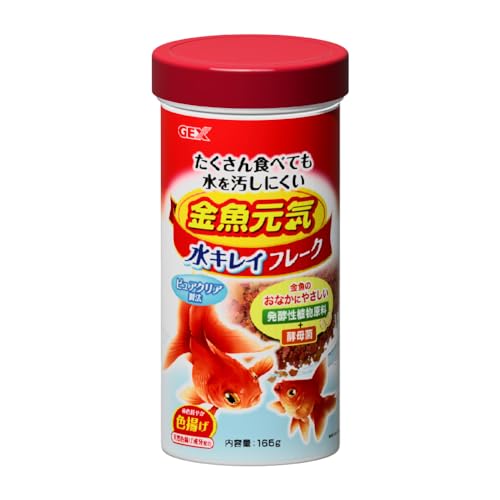
| 餌の種類 / Diet | 主食には消化性のよい金魚用の沈下性人工飼料が向く。補助的に冷凍赤虫などの動物質、湯通ししたほうれん草やズッキーニなどの植物質を組み合わせると食性に幅を持たせられる。体色や肉瘤の発達を意識する場合でも、高タンパク・高脂肪の餌だけに偏らず、季節と水温に合わせて量を調整する。A digestible sinking pellet formulated for goldfish is well suited as the staple diet. Frozen bloodworms and blanched vegetables such as spinach or zucchini can be used as occasional supplements. Even when encouraging body condition, head growth, or coloration, avoid relying exclusively on rich high-protein or high-fat foods, and adjust the amount to season and water temperature. |
|---|---|
| 給餌のポイント / Feeding Tips | 金魚は明瞭な胃を持たない無胃魚で、一度に大量に与えるより、食べ切れる少量を複数回に分けるほうが管理しやすい。食べ残しが出ない量を基本とし、体調や水温に合わせて増減する。泳ぎの遅い桜錦では沈下性飼料を使うと餌を追う負担を抑えやすく、水面で空気を飲み込む機会も減らしやすい。低水温期は消化や活動が低下するため、魚の状態を見ながら給餌量を控える。Goldfish are agastric fish without a distinct stomach, so several small portions are generally easier to manage than a single large meal. Feed only what is consumed without leftovers and adjust the amount according to temperature and condition. For the slower-swimming Sakura Nishiki, sinking food can reduce the effort needed to chase food and may also reduce opportunities to gulp air at the surface. As water temperature falls, digestion and activity slow, so feeding should be reduced according to the fish’s condition. |
性格と混泳 / Temperament and Tank Mates
| 性格 / Temperament | 基本的には穏やかで、他魚を積極的に攻撃するタイプではない。人の気配に慣れると餌を求めて寄ってくる個体も多い。一方で、らんちゅう型特有の泳ぎの遅さがあり、餌取り競争では不利になりやすい。Generally peaceful and not inclined to attack other fish. Many individuals become accustomed to people and approach at feeding time. However, the slow swimming style typical of Ranchu-type goldfish makes them poor competitors when food is contested. |
|---|---|
| 混泳の相性 / Compatibility | 同程度の大きさで泳ぎの速さが近い、らんちゅう、江戸錦などの丸手の金魚が合わせやすい。和金やコメットのように泳ぎが速く餌取りの強い品種との混泳では、桜錦が十分に食べられないことがある。極端な体格差がある個体同士も避け、給餌時に全個体が食べられているか確認する。Tank mates are easiest to manage when they are similar in size and swimming ability, such as Ranchu or Edo Nishiki and other rounded fancy goldfish. Fast varieties such as Common Goldfish or Comets may outcompete Sakura Nishiki for food. Avoid extreme size differences and observe every fish during feeding to ensure equal access. |
病気と対策 / Diseases and Prevention
| かかりやすい病気 / Common Diseases | 丸みの強い改良金魚では、転覆などの浮力異常に注意が必要。こうした症状は浮き袋の形状や位置、消化管の膨満、感染症など複数の要因で起こり得るため、消化不良だけを原因と決めつけないことが大切。また、一般的な金魚と同様に白点病、尾ぐされ病、細菌性感染症が問題になることがある。肉瘤が大きい個体では、擦り傷をきっかけに頭部へ炎症が生じることもある。Rounded fancy goldfish require particular attention to buoyancy disorders such as abnormal floating or rolling. These signs can have several causes, including swim bladder conformation or position, gastrointestinal distension, and infection, so they should not automatically be attributed to indigestion alone. As with other goldfish, white spot disease, fin rot, and bacterial infections may also occur. Individuals with large head growth can also develop inflammation after abrasions. |
|---|---|
| 対策と予防 / Prevention | 予防の基本は、アンモニアと亜硝酸が検出されない成熟したろ過環境、定期的な換水、急変の少ない水温、食べ残しを出さない給餌である。転覆症状が出た場合は、いったん給餌を控え、水温と水質、腹部や排泄の状態、他の症状の有無を確認して原因を切り分ける。塩水浴や薬浴が必要になる場合もあるが、原因によって適切な対応は異なるため、改善が乏しい場合や全身症状がある場合は魚病に詳しい専門家へ相談する。Prevention begins with mature filtration that keeps ammonia and nitrite undetectable, regular water changes, stable temperature, and feeding that does not leave excess food. If buoyancy problems appear, temporarily reduce feeding and assess temperature, water quality, abdominal and fecal condition, and any other symptoms to narrow down the cause. Salt treatment or medication may sometimes be appropriate, but the correct response depends on the underlying problem; persistent cases or fish showing systemic signs should be evaluated by someone experienced in fish health. |
増やし方(繁殖) / Breeding
| 雌雄の判別 / Sexing | 桜錦だけに特有の決定的な外見差は乏しい。一般的な金魚と同様、繁殖期の雄では鰓蓋や胸ビレ前縁に白い追星が現れやすく、雌は成熟すると腹部がふっくらする傾向がある。若魚や繁殖期以外では外見だけでの判別は難しい。There is no single external feature unique to Sakura Nishiki that reliably separates the sexes. As in goldfish generally, breeding males often develop small white breeding tubercles on the gill covers and leading edges of the pectoral fins, while mature females tend to become fuller through the abdomen. Juveniles and fish outside the breeding season can be difficult to sex by appearance alone. |
|---|---|
| 繁殖形態 / Reproduction | 卵生。春の水温上昇などをきっかけに雄が雌を追尾し、水草や産卵床などへ粘着性の卵を産み付ける。親魚は卵を保護せず食べてしまうため、採卵後は親魚または産卵床を分けて管理する。Egg-laying. Rising spring temperatures commonly stimulate males to chase females, which release adhesive eggs onto aquatic plants or spawning media. The parents do not guard the eggs and may eat them, so the adults or the egg-laden spawning media should be separated after spawning. |
| 繁殖のポイント / Breeding Tips | 親魚は体型、尾、肉瘤、紅白模様、モザイク透明鱗のバランスを見て選ぶ。モザイク透明鱗同士を交配しても、仔魚がすべて同じ鱗質になるわけではない。古典的な鱗型の遺伝モデルでは、モザイク透明鱗が約50%、普通鱗が約25%、透明鱗が約25%に分離するとされる。ただし、実際の見た目は体色や体型など他の形質にも左右されるため、桜錦らしい個体を残すには多数の稚魚から継続的に選別する必要がある。Select broodstock for overall body form, tail, head growth, red-and-white pattern, and the balance of nacreous scales. Crossing two nacreous fish does not produce offspring with a uniform scale type. In the classical scale-type inheritance model, approximately 50% nacreous, 25% metallic, and 25% matt offspring are expected. Actual appearance is also influenced by other traits such as coloration and body form, so repeated selection from a large number of fry is needed to retain the Sakura Nishiki phenotype. |
雑学と豆知識 / Trivia and Fun Facts
| 1. 江戸錦を改良する試みから生まれた金魚 / 1. Born from an attempt to improve Edo Nishiki | 桜錦の物語は、最初から「桜色の新品種を作ろう」と始まったわけではありません。愛知県弥富の深見養魚場で、肉瘤の発達が弱かった江戸錦に、肉瘤の優れたらんちゅうの血を重ねる試みが行われました。その過程で、江戸錦に見られる浅葱色や黒が抜け、赤と白の更紗模様とモザイク透明鱗を持つ個体が現れます。当初は規格外と見られた表現型でしたが、春の桜を思わせる独特の色彩に価値が見いだされ、長い選別と交配によって固定化が進められました。1996年には正式な新品種として認定され、現在では弥富金魚を代表する存在のひとつになっています。The story of Sakura Nishiki did not begin with a plan to create a cherry-blossom-colored fish. At Fukami Fish Farm in Yatomi, Aichi Prefecture, Ranchu with strong head growth were crossed into Edo Nishiki lines whose head growth was considered insufficient. During that process, individuals appeared in which the blue-gray and black coloration of Edo Nishiki had disappeared, leaving red-and-white markings over nacreous scales. What was initially outside the expected standard was recognized for its distinctive springlike beauty. Years of selection and crossing followed, and in 1996 Sakura Nishiki was formally recognized as a new goldfish variety. It has since become one of the fish strongly associated with the Yatomi goldfish tradition. |
|---|---|
| 2. 「桜色」は色素だけではなく、光の構造から生まれる / 2. The “cherry-blossom” color is created by both pigment and structure | 桜錦の柔らかな発色は、単に赤い色素が薄いから生まれるものではありません。金魚の鱗や皮膚には、光を反射する虹色素胞があり、その内部にはグアニン結晶が並んでいます。普通鱗では反射層が広く発達しますが、モザイク透明鱗では反射する部分と透ける部分が入り交じります。そのため、赤や白の色素が透過光と反射光の両方の影響を受け、境界が水彩画のように柔らかく見えます。桜錦の色は「赤と白」という二色だけでなく、色素細胞、透明度、光の反射が重なって完成する光学的な表現でもあるのです。The soft coloration of Sakura Nishiki is not simply the result of weak red pigment. Goldfish skin and scales contain reflective iridophores, whose intracellular guanine crystals reflect light. Metallic scales have a broad reflective layer, whereas nacreous scales contain a mosaic of reflective and more transparent areas. Red and white pigments are therefore seen through a mixture of transmitted and reflected light, giving the color boundaries a watercolor-like softness. The Sakura Nishiki appearance is thus an optical result of pigment, transparency, and structural reflection working together. |
| 3. モザイク透明鱗は交配しても一色に固定されない / 3. Nacreous scales continue to segregate in breeding | 桜錦の繁殖で選別が欠かせない理由のひとつが、モザイク透明鱗の遺伝です。古典的な鱗型の遺伝モデルでは、モザイク透明鱗は普通鱗側と透明鱗側の遺伝要素を一つずつ持つヘテロ接合として扱われます。そのため、モザイク透明鱗同士を交配しても、次世代がすべて同じ鱗質になるわけではありません。普通鱗、モザイク透明鱗、透明鱗が分離して現れるため、親が整った桜錦でも同じ表現型の仔だけを得ることはできず、体型や色柄とあわせて継続的な選別が必要になります。One reason selection is essential in Sakura Nishiki breeding is the inheritance of nacreous scales. In the classical scale-type model, the nacreous condition is treated as a heterozygous state carrying one metallic-scale and one matt-scale factor. Crossing two nacreous fish therefore does not produce offspring with a uniform scale type. Metallic, nacreous, and matt fish segregate in the next generation, so even well-formed Sakura Nishiki parents do not produce only identical offspring. Repeated selection for body form, scale type, and pattern remains necessary. |
| 4. 学名の「auratus」は「金色の」を意味する / 4. The species name “auratus” means “gilded” or “golden” | 金魚の学名はCarassius auratusです。属名Carassiusはユーラシアでフナ類を指す呼称をラテン語化したものとされ、種小名auratusには「金色の」「金で飾られた」という意味があります。桜錦そのものは赤と白を主役とする品種ですが、その学名には、金魚という生物が長い品種改良の歴史の中で「金色の魚」として捉えられてきた名残を見ることができます。The scientific name of the goldfish is Carassius auratus. The genus name Carassius is regarded as a Latinized form of Eurasian names used for crucian carp, while the species epithet auratus means “gilded” or “golden.” Sakura Nishiki itself is dominated by red and white, but its scientific name still preserves the older association of goldfish with a “golden fish” developed through a long history of selective breeding. |
| 5. 上見と横見で、同じ魚の印象が変わる / 5. Top view and side view reveal different qualities | らんちゅう文化では、浅い鉢やタライを使って上から魚を見る「上見」が重視されてきました。桜錦でも、上見では背幅、尾筒の太さ、左右の均整、肉瘤、尾の開き、そして水面を滑るような泳ぎがよく分かります。一方、ガラス水槽で横から見ると、背ビレのない滑らかな背なりと、モザイク透明鱗が光を受けて変化する様子がはっきりします。上見は造形の均整を、横見は立体的な色彩と輪郭を引き出すため、同じ一匹でも観賞方向を変えるだけで別の魅力が現れます。Traditional Ranchu culture places great emphasis on viewing fish from above in shallow bowls or tubs. In Sakura Nishiki, this top view reveals body width, caudal peduncle strength, left-right balance, head growth, tail spread, and the quality of movement across the water surface. A side view through aquarium glass, however, makes the smooth dorsal contour and changing reflections of the nacreous scales much more obvious. Top view emphasizes structural balance, while side view emphasizes three-dimensional color and outline, allowing the same fish to show two distinct forms of beauty. |
| 6. 「桜」の名は後の金魚にも広がった / 6. The “Sakura” naming style spread to later goldfish varieties | 現在の金魚流通では、桜琉金や桜東錦など、赤と白を主体としたモザイク透明鱗の品種にも「桜」の名が使われています。品種ごとの作出経緯は異なりますが、「桜」という言葉は、黒や浅葱色を目立たせず、紅白と透明感を楽しむ色彩表現を示す呼び名として定着しています。桜錦の名称も、こうした日本的な色の捉え方を象徴するものといえます。In the modern goldfish trade, the name “Sakura” is also used for varieties such as Sakura Ryukin and Sakura Azuma Nishiki that emphasize red-and-white nacreous coloration. Their breeding histories are not all the same, but “Sakura” has become a familiar way to describe a color expression in which red, white, and translucency are emphasized while black and blue-gray are reduced. The name Sakura Nishiki is one expression of this distinctly Japanese way of describing color. |
まとめ / Conclusion
桜錦は、らんちゅうの丸みある体型と肉瘤に、紅白の更紗模様とモザイク透明鱗の柔らかな輝きを重ねた、日本ならではの金魚です。泳ぎの速さではなく、背なり、尾の開き、頭部の造形、光の中でにじむように見える色彩をゆっくり味わう魚であり、上見と横見のどちらでも異なる美しさを見せてくれます。 Sakura Nishiki is a distinctly Japanese fancy goldfish that combines the rounded Ranchu body and head growth with red-and-white markings and the soft glow of nacreous scales. Its appeal is not speed but the slow appreciation of the back line, tail spread, head form, and watercolor-like color as light moves across the body. Both top and side views reveal a different aspect of its beauty.
十分な水量、穏やかな水流、安定した水質、食べ残しを出さない給餌を基本に、季節や成長に合わせて状態を見ながら管理することが大切です。一匹ごとに異なる紅白の模様と鱗の輝き、成長とともに変化する体つきを落ち着いて楽しめることが、桜錦を長く飼う大きな魅力です。 Good long-term care is built around ample water volume, gentle current, stable water quality, and feeding that does not leave excess food, with adjustments made as the fish grows and the seasons change. The individual red-and-white pattern, changing scale reflections, and gradual development of body form are among the lasting pleasures of keeping Sakura Nishiki.

気になる道具や飼い方を見つけてみませんか?
 アイのアクアグッズ案内海水魚初心者の必需品|水槽・人工海水・比重計・水質検査道具の特徴や使い方、選ぶときのポイントをアイが紹介します。記事はコチラ →
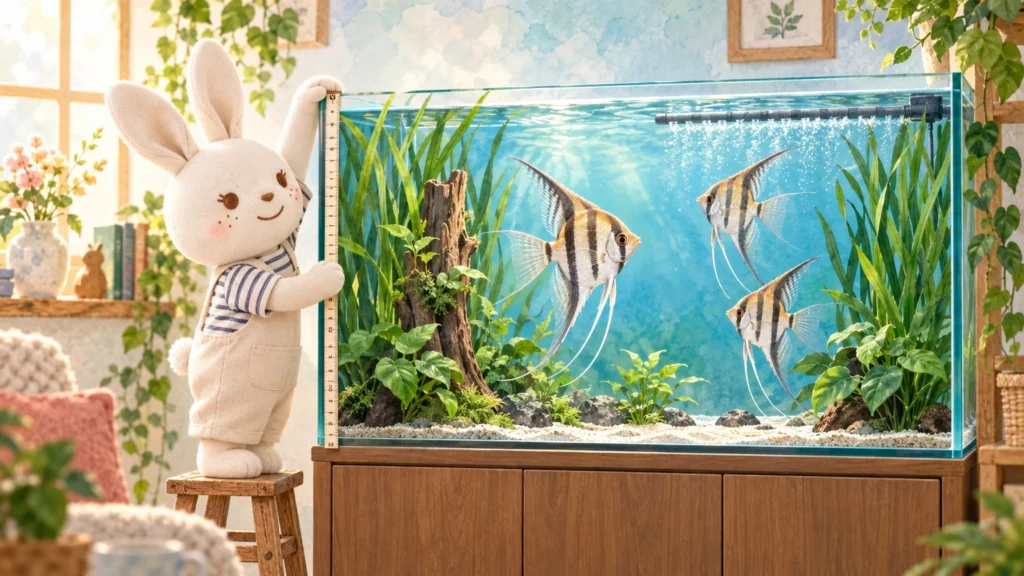 アイのアクアグッズ案内エンゼルフィッシュの飼育用品|高さのある水槽・ろ過・水草・餌の選び方道具の特徴や使い方、選ぶときのポイントをアイが紹介します。記事はコチラ →
さまざまな飼育テーマをご紹介。リンク先の記事には広告・商品紹介が含まれます。
案内・紹介記事一覧へ →分布マップ
桜錦(Carassius auratus)は日本で作出された観賞用の改良品種で、自然分布はありません。作出の歴史は愛知県弥富地域と深く結びつき、現在は日本国内を中心に観賞魚として流通しています。
※この地図は分布・流通地域を把握するための概略表示です。桜錦には自然分布がないため、日本列島を概略範囲として表示し、作出の歴史と関係が深い愛知県弥富地域付近を代表地点として示しています。地図上のマーカーは実際の採集地点や特定の養殖施設を示すものではありません。
参考文献
-
FishBase. Carassius auratus (Linnaeus, 1758)
分類、種としての分布、生息環境、食性、産卵場所、卵生・産卵基質などの基礎生態。 -
Royal Veterinary College. Goldfish Care. Reviewed December 2024.
金魚の飼育スペース、ろ過、水質維持、急激な温度変化の回避など、家庭飼育における基本管理。 -
Petty, B. D., & Francis-Floyd, R. (2004). Pet fish care and husbandry. Veterinary Clinics of North America: Exotic Animal Practice, 7(2), 397–419. doi:10.1016/j.cvex.2004.02.003
観賞魚の飼育管理、栄養、水質管理、健康維持に関する獣医学的レビュー。 -
Merck Veterinary Manual. Management of Aquarium Fish.
観賞魚の生理、浮き袋の構造、水質と飼育環境を含む一般的な管理上の基礎事項。 -
Merck Veterinary Manual. Disorders and Diseases of Fish. Updated April 2026.
水質悪化、過密、ストレス、感染症など、観賞魚の疾病リスクと予防上の注意点。 -
Environmental and Physiological Regulation of Reproduction in the Goldfish: Gonadal Development, Maturation, and Spawning Behavior: A Review. Animals. 2026;16(5):775.
金魚の性成熟、繁殖周期、産卵行動、繁殖期の雄に現れる追星などの繁殖生理。 -
Chen, S. C. (1928). Transparency and Mottling, a Case of Mendelian Inheritance in the Goldfish Carassius auratus. Genetics, 13(5), 434–452. doi:10.1093/genetics/13.5.434
金魚の透明鱗・モザイク状の鱗質に関する古典的な遺伝研究で、繁殖時に鱗型が分離するという説明の基礎資料。




コメント