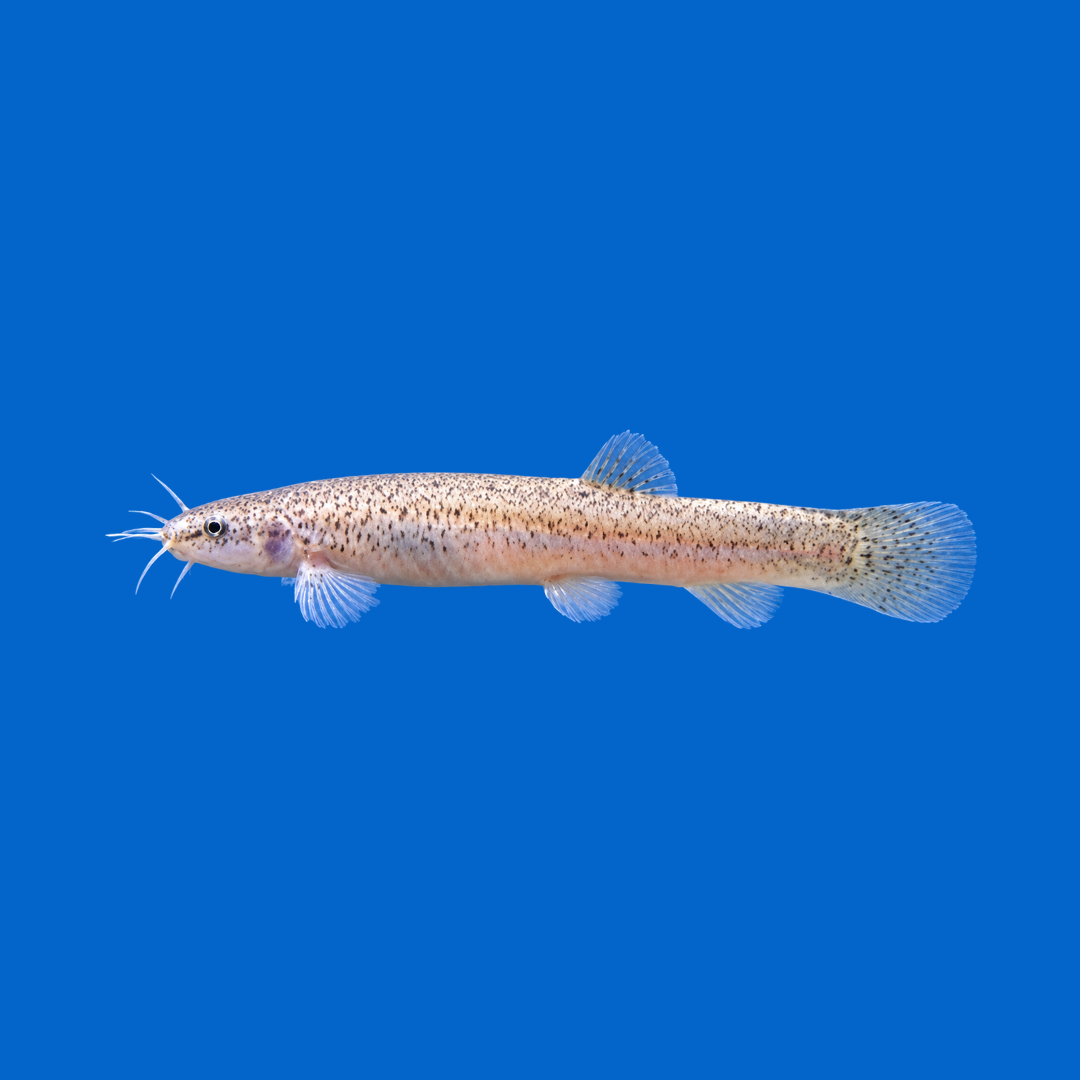
ホトケドジョウは、丸みのある頭と4対8本の口ひげが愛らしい、日本固有の小型淡水魚です。青森県を除く東北地方から近畿地方までの本州に点在し、湧水の影響を受ける細流、湿地、水田周辺の水路など、流れが緩く水温の安定した場所で暮らします。褐色の体には細かな暗色斑が散り、底に潜み続けるのではなく、水草の間を縫うように泳ぐ姿も見せます。性格は穏やかですが、高水温が続く環境や急激な水質変化には注意が必要です。夏も適切な水温と清浄な水を保つことが、長期飼育の中心になります。絶滅危惧種であり、地域ごとに異なる遺伝的系統を守る必要があるため、由来の明確な飼育下繁殖個体を選び、野外へは決して放さないことが大切です。The Hotoke loach is a small freshwater fish endemic to Japan, recognized by its rounded head and four pairs of barbels. It occurs locally on Honshu from the Tohoku region, excluding Aomori Prefecture, to the Kinki region, where it inhabits spring-fed trickles, wetlands, and gently flowing channels around rice fields. Fine dark spots scatter across its brown body, and it can often be seen weaving among aquatic plants rather than remaining hidden on the bottom. Although peaceful, it requires protection from prolonged high temperatures and abrupt changes in water quality. Maintaining an appropriate summer temperature and consistently clean water is central to long-term care. Because it is threatened and contains geographically distinct genetic lineages, keepers should obtain captive-bred fish of documented origin and must never release aquarium fish into the wild.
基本情報 / Basic Information
学名 / Scientific Name
Lefua echigonia Jordan & Richardson, 1907
通称 / Common Name
ホトケドジョウ。地域によって「ホトケ」「ダルマドジョウ」などの地方名が伝わります。Hotoke loach; Japanese eight-barbel loach. Historical regional names in Japan include “Hotoke” and “Daruma-dojo.”
分類 / Family
条鰭綱・コイ目・フクドジョウ科・ホトケドジョウ属Class Actinopterygii, order Cypriniformes, family Nemacheilidae, genus Lefua
英名 / English Name
Hotoke loach / Japanese eight-barbel loach
分布 / Distribution
日本固有種。青森県を除く東北地方から近畿地方までの本州に局地的に分布します。湧水性の細流、湿地、谷津田や水田周辺の水路などに生息します。Endemic to Japan and locally distributed on Honshu from Tohoku, excluding Aomori Prefecture, to Kinki. It inhabits spring-fed streams, wetlands, valley-bottom rice-field systems, and small agricultural channels.
最大体長 / Max Size
全長約8cm。多くの成魚は4〜6cmほどです。Approximately 8 cm in total length; many adults are about 4–6 cm.
寿命 / Lifespan
2年前後と説明されることもありますが、加古川水系の一つの生息地では、野外調査と飼育記録から少なくとも6歳以上の個体が確認されています。寿命は地域や生息環境によって異なる可能性があり、一律には定められません。The lifespan is sometimes described as approximately two years, but field surveys and rearing records from one habitat in the Kako River system confirmed individuals at least six years old. Longevity may vary with locality and habitat and cannot be represented reliably by a single fixed figure.
飼育環境 / Aquarium Environment
水槽サイズ / Tank Size
少数飼育では45cm規格水槽(約30〜35L)を目安とし、複数匹を余裕をもって飼育する場合は60cm規格水槽(約55〜65L)以上を推奨します。水量が多いほど、水温と水質の急変を抑えやすくなります。A standard 45 cm aquarium of about 30–35 L is a practical guide for a few fish. For keeping several individuals with more space, a standard 60 cm aquarium of about 55–65 L or larger is recommended. Greater water volume makes abrupt changes in temperature and water quality easier to prevent.
水温 / Temperature
日常の飼育では15〜25℃を目安に、急変のない範囲で管理します。飼育試験では25℃前後で維持された例や27℃程度まで飼育可能とする報告がありますが、冷水性の魚であり、27℃を超える高水温が続くと弱るとされています。夏は必要に応じて水槽用クーラーや室内空調を使い、急な昇温も避けてください。For routine care, use 15–25°C as a practical range and avoid abrupt changes. Rearing studies have maintained this species at around 25°C, and reports indicate that it can be kept at approximately 27°C; however, it is a cool-water fish and is reported to weaken when temperatures remain above 27°C. Use an aquarium chiller or room air conditioning when necessary in summer, and avoid sudden warming.
水質 / Water Quality
適正なpHを狭い数値範囲で示せるだけの飼育知見はありません。導入前の水質から急変させず、アンモニアと亜硝酸が検出されない、酸素を十分に含む清浄な淡水を維持します。ろ過は確保しつつ、魚が常に流れに逆らい続けるほどの強い水流は避けます。定期的な部分換水で有機物をためないことが重要です。Available husbandry evidence does not support defining a narrow ideal pH range. Avoid abrupt changes from the conditions in which the fish were previously kept, and maintain clean, well-oxygenated freshwater with no detectable ammonia or nitrite. Provide effective filtration without forcing the fish to swim continuously against strong current. Regular partial water changes help prevent organic waste from accumulating.
レイアウト / Layout
角の鋭くない細砂または小粒の砂利を薄く敷き、ウィローモスなどの水草、流木、小石で隠れ場所と流れの穏やかな場所を作ります。底砂へ深く潜り続ける魚ではないため、身を寄せられる場所と、餌を探せる開けた場所の両方を残します。水槽には隙間の少ないふたを取り付けます。Use a thin layer of smooth fine sand or small rounded gravel. Add aquatic plants such as Java moss, wood, and stones to create cover and areas of gentle flow. This species does not normally remain deeply buried in the substrate, so provide both sheltered areas and open spaces where it can forage. Fit the aquarium with a secure, closely fitting lid.
注意点 / Precautions
由来が明確な飼育下繁殖個体を選び、採集個体は避けます。野生個体の捕獲は地域の条例や保護区域の規則で禁止されている場合があるため、必ず最新の規制を確認してください。別産地の個体を混ぜたり、飼育個体を放流したりすると、地域固有の遺伝的多様性を損なうおそれがあります。水槽内では高水温、酸欠、ろ過不足、急な水合わせに特に注意します。Choose captive-bred fish with a clearly documented origin and avoid wild-caught specimens. Collection may be prohibited by local ordinances or protected-area rules, so always check current regulations. Mixing stocks from different localities or releasing captive fish can damage locally unique genetic diversity. In the aquarium, pay particular attention to heat, low oxygen, insufficient filtration, and abrupt acclimation.
餌と給餌 / Feeding
餌の種類 / Diet
雑食性です。主食には小型魚用の沈下性顆粒や細かく砕いた沈下性タブレットを用い、冷凍アカムシ、ミジンコ、ブラインシュリンプなどを副食として組み合わせます。口に入る大きさを選び、栄養が一種類に偏らないようにします。Omnivorous. Use small sinking granules or finely broken sinking tablets as the staple diet, supplemented with foods such as frozen bloodworms, daphnia, and brine shrimp. Choose food small enough to swallow and provide variety rather than relying on a single item.
給餌のポイント / Feeding Tips
1日1〜2回、数分で食べ切る少量を底まで届けます。混泳水槽では、活発な魚に餌を取られないよう、複数箇所へ分けて与えます。食べ残しは取り除き、低温期や食欲が落ちた時は量を減らします。腹部の張りや痩せを日々観察してください。Feed a small amount once or twice daily, ensuring that food reaches the bottom and is eaten within a few minutes. In community aquariums, distribute food in several places so that more active fish do not take everything. Remove leftovers, reduce portions during colder periods or reduced appetite, and observe the abdomen for bloating or weight loss.
性格と混泳 / Temperament and Tank Mates
性格 / Temperament
温和で、同種に対する強い攻撃性は通常見られません。十分な広さと隠れ場所があれば複数匹でも飼育できますが、すべての個体に餌が行き渡るよう観察します。驚くと物陰へ入るため、落ち着ける環境を整えてください。Peaceful and not normally strongly aggressive toward its own species. Several individuals can be kept together when sufficient space and cover are provided, but observe them to ensure that every fish receives food. Because startled fish retreat into cover, provide a calm environment with suitable shelter.
混泳の相性 / Compatibility
同じ低めの水温と穏やかな水流を好む、小型で温和な魚が候補です。大型魚、肉食魚、ひれをかじる魚、餌を独占する活発な魚は避けます。小型のエビや稚エビ、魚卵、仔魚は捕食されることがあります。保全目的で産地別系統を維持する場合は、他産地のホトケドジョウや近縁種と混ぜず、単独種で管理します。Suitable companions are small, peaceful fishes that also prefer cool water and gentle flow. Avoid large or predatory species, fin-nippers, and very active feeders. Tiny shrimp, juvenile shrimp, eggs, and fry may be eaten. When maintaining a locality line for conservation, keep it as a single-species group and never mix it with Hotoke loaches from other localities or with related species.
病気と対策 / Diseases and Prevention
かかりやすい病気 / Common Diseases
ホトケドジョウだけが特にかかりやすい病気について、十分な飼育知見が整理されているわけではありません。一般的な淡水魚と同様に、急な水温変化や水質悪化に伴って白点、水カビ、体表の炎症などが現れることがあります。痩せ、食欲低下、白点や綿状の付着物、赤み、呼吸の速さ、ひれを閉じる動作を早めに確認します。外見だけで病名を断定せず、行動や水質も合わせて判断してください。Husbandry evidence does not identify a well-established disease to which the Hotoke loach alone is especially susceptible. As with other freshwater fishes, abrupt temperature changes or deteriorating water quality may be followed by white spots, fungal growth, or skin inflammation. Watch for weight loss, poor appetite, white spots or cotton-like material, redness, rapid breathing, and clamped fins. Do not identify a disease from appearance alone; consider behavior and water-test results as well.
対策と予防 / Prevention
新しい個体は一定期間、別容器で観察し、その間は器具の共用を避けます。安定した水温、十分な酸素、過密を避けた飼育、定期換水が予防の基本です。異常が見られたら隔離して、まず水温と水質を確認します。急激な昇温や、根拠のない塩水浴は行わないでください。薬剤を使う場合は、製品表示を守り、ホトケドジョウへの使用可否を販売元や魚病に詳しい専門家へ確認します。Observe new fish in a separate container for a suitable period and avoid sharing equipment during that time. Stable temperature, ample oxygen, sensible stocking, and regular water changes form the basis of prevention. If abnormalities appear, isolate the fish and first check temperature and water quality. Do not use abrupt heating or an unsupported salt bath. Before using medication, follow the product label and confirm with the manufacturer or a fish-health specialist that it is suitable for the Hotoke loach.
増やし方(繁殖) / Breeding
雌雄の判別 / Sexing
平常時の外見だけで確実に判別するのは難しい魚です。成熟した雌は繁殖期に腹部が丸く大きくなり、上から見ると体幅が目立ちます。雄は比較的細身に見えますが、栄養状態でも体形が変わるため、一つの特徴だけで断定しません。Reliable sexing from ordinary external appearance is difficult. During the breeding season, a mature female develops a fuller, rounder abdomen that is especially noticeable from above. Males often appear slimmer, but body shape also varies with condition, so no single feature should be treated as conclusive.
繁殖形態 / Reproduction
卵生で、主な産卵期は春です。数尾の雄が1尾の雌を追尾し、水草や細い繊維状の産卵基質へ粘着性のある卵を産み付けます。卵は水温などの条件によって2〜3日ほどでふ化し、繁殖期には複数回産卵することがあります。親魚は卵や仔魚を保護しません。Oviparous, with the main spawning season in spring. Several males pursue one female, which deposits adhesive eggs on aquatic plants or fine fibrous spawning media. Depending on conditions such as water temperature, the eggs hatch in about two to three days, and the fish may spawn repeatedly during the breeding season. The parents provide no care for eggs or fry.
繁殖のポイント / Breeding Tips
飼育下では、水温を徐々に上げることと明るい時間を長くすることによって親魚の成熟を促し、水温18℃で自然産卵した例があります。親魚には栄養の偏らない餌を与え、繁殖水槽にはウィローモスや人工産卵藻を多めに入れます。産卵を確認したら、卵の付いた基質または親魚を別容器へ移して食卵を防ぎます。仔魚が餌を食べ始めたら、アルテミア幼生と微粒子飼料を併用して育てられます。産地系統を記録し、異なる系統は交配させません。In captivity, gradually raising the water temperature and lengthening the light period can promote maturation, and natural spawning has been recorded at 18°C. Condition the adults with a nutritionally balanced diet and provide abundant Java moss or synthetic spawning mops. Once eggs are seen, move either the egg-bearing medium or the adults to prevent egg predation. When the fry begin feeding, they can be reared with a combination of newly hatched Artemia and fine formulated feed. Record locality provenance and do not cross different geographic lines.
雑学と豆知識 / Trivia and Fun Facts
1. 八本のひげが映す暮らし / 1. Eight Barbels Shaped by Its Way of Life
ホトケドジョウの顔をよく見ると、口の周囲に4対8本のひげがあります。そのうちの一対は鼻孔の近くに位置し、水草の根元や落ち葉の間で餌を探す時の感覚器として役立ちます。和名の由来には諸説ありますが、丸みのある吻と小さな口が「仏様のような穏やかな顔」に見えるためという説がよく知られています。小さな顔立ちの中に、生息地で暮らすための道具が収まっているのです。A close look at the face reveals four pairs, or eight, barbels around the mouth. One pair lies near the nostrils, helping the fish search for food among plant roots and leaf litter. Several explanations have been proposed for the Japanese name “Hotoke,” but the best-known links its rounded snout and small mouth to the serene expression of a Buddhist figure. Its modest face carries the sensory tools needed for life in its habitat.
2. 属名は極東ロシアの川へつながる / 2. A Genus Name Linked to a Russian Far Eastern River
属名のLefuaは1888年にヘルツェンシュタインが設けた名で、模式種の産地である極東ロシアのLefu川、現在のIlistaya川にちなむとされています。ホトケドジョウそのものは日本固有種ですが、属名をたどると、ホトケドジョウ属が東アジアに分布してきた歴史の広がりが見えてきます。The genus Lefua was established by Herzenstein in 1888 and is understood to refer to the Lefu River, now the Ilistaya River, in the Russian Far East, the type locality of the genus’s type species. Although the Hotoke loach itself is endemic to Japan, the genus name points to the wider East Asian history of these loaches.
3. 一種の中に残る七つの地域史 / 3. Seven Regional Histories Within One Species
外見がよく似たホトケドジョウでも、遺伝子を調べると北陸、東北、山形、北関東、南関東、東海、近畿という7つの地域集団が認められます。山地の形成や水系の分断は、小さな魚にとって越えにくい境界でした。隔てられた集団は、それぞれの土地で長い時間を過ごし、独自の遺伝的特徴を受け継いできました。だからこそ、別産地の魚を善意で放す行為も保全にはなりません。目に見えない地域の歴史を混ぜてしまうからです。Hotoke loaches from different places can look remarkably similar, yet genetic studies recognize seven regional populations: Hokuriku, Tohoku, Yamagata, North Kanto, South Kanto, Tokai, and Kinki. Mountain building and the separation of drainage systems formed boundaries that a tiny freshwater fish could rarely cross. Isolated populations then inherited distinctive genetic features over long periods. This is why releasing fish from another locality, even with good intentions, is not conservation: it mixes regional histories that cannot be seen from appearance alone.
4. 湧水と穏やかな流れが支える暮らし / 4. A Life Supported by Springs and Gentle Flow
ホトケドジョウは、湧水の影響を受ける細流や湿地、水田周辺の小水路などに暮らします。こうした場所では、湧水が夏の水温上昇を和らげ、細い流れの中に水草や落ち葉、泥が入り組んだ多様な環境を作ります。本種に必要なのは、単に冷たい水だけではありません。急流を避けながら身を隠し、餌を探し、繁殖できる小さな環境が連続していることが大切です。水槽でも、安定した水温、穏やかな流れ、隠れ場所を一体として整える必要があります。The Hotoke loach inhabits spring-influenced trickles, wetlands, and small channels around rice fields. In such places, spring water moderates summer warming and helps create a varied mosaic of plants, leaf litter, and mud within narrow flows. The species needs more than cool water alone. It depends on connected small habitats where it can avoid strong current, take shelter, forage, and reproduce. In an aquarium, stable temperature, gentle flow, and cover should therefore be provided together.
5. 似た流れが似た姿を生んだ / 5. Similar Currents Produced Similar Shapes
東海地方のトウカイナガレホトケドジョウは、急流に適した低い体形のためナガレホトケドジョウによく似ています。ところが遺伝的にはホトケドジョウに近い系統です。近い祖先から分かれた魚が、似た急流環境への適応によって似た姿へ向かった例と考えられ、平行進化を身近に感じさせてくれます。外見だけでは系統関係を読み切れないことを教える、小さくも雄弁な魚たちです。The Tokai stream loach resembles the stream eight-barbel loach because both have a low body suited to swift water. Genetic evidence, however, places the Tokai species closer to the Hotoke loach. It is regarded as an accessible example of parallel evolution, in which related lineages independently moved toward similar forms under similar fast-flowing conditions. These small fishes vividly demonstrate that appearance alone does not always reveal evolutionary relationships.
6. 希少性を知ることが飼育の入口 / 6. Responsible Care Begins with Conservation Awareness
ホトケドジョウは環境省レッドリスト2020で絶滅危惧IB類とされ、生息地の改変、湧水の減少、水路の分断、外来生物などの影響を受けています。本種そのものに全国一律の採捕禁止が課されているわけではありませんが、自治体条例や保護区域によって捕獲が禁じられる場所があります。また、近縁のレイホクナガレホトケドジョウは2025年1月30日から2028年1月29日まで緊急指定種とされ、捕獲や譲渡などが規制されています。よく似た魚を確実に見分ける難しさも含め、野外採集ではなく来歴の明確な飼育下繁殖個体を迎えることが、魚と生息地の双方に配慮した選択です。The Hotoke loach is listed as Endangered in Japan’s Ministry of the Environment Red List 2020 and is affected by habitat alteration, declining spring flow, fragmented channels, and introduced species. The species is not subject to a single nationwide collection ban, but collection is prohibited in some areas under local ordinances or protected-area rules. Its close relative Lefua nishimurai is designated as an Emergency Endangered Species from 30 January 2025 through 29 January 2028, restricting capture, transfer, and related activities. Because closely related loaches can also be difficult to identify reliably, choosing documented captive-bred stock instead of collecting wild fish is the responsible option for both the fish and its habitat.
まとめ / Conclusion
ホトケドジョウの魅力は、穏やかに見える丸い顔つきと、水草の間を軽やかに探る仕草にあります。適度な広さの水槽に緩やかな流れと隠れ場所を設け、高水温と水質の急変を避けながら清浄で酸素の豊かな水を保つと、その繊細ながら活発な日常を落ち着いて観察できます。The appeal of the Hotoke loach lies in its serene-looking rounded face and the light, inquisitive way it explores among plants. In a suitably spacious aquarium with gentle flow and shelter, clean, oxygen-rich water, and protection from high temperatures and abrupt water-quality changes, its delicate yet active daily behavior can be observed at ease.
一匹の小さな体には、湧水と里山が育んだ暮らしだけでなく、地域ごとに受け継がれてきた長い進化の歴史も刻まれています。由来の明確な個体を選び、産地の異なる系統を混ぜず、決して野外へ放さずに生涯を支えることが、この魚を迎える飼育者にできる最も確かな配慮です。Each small body carries not only a way of life shaped by springs and traditional rural landscapes, but also a long evolutionary history inherited within its home region. Choosing fish of documented origin, keeping locality lines separate, never releasing them, and supporting them throughout their lives are the clearest forms of care a keeper can offer.
Fricke, R., Eschmeyer, W. N. & van der Laan, R. (eds.). Eschmeyer’s Catalog of Fishes: Lefua echigonia. California Academy of Sciences. 資料を開く 学名、命名者、記載年、分類上の有効性、分布。
Mihara, M. et al. 2005. Phylogeography of loaches of the genus Lefua (Balitoridae, Cypriniformes) inferred from mitochondrial DNA sequences. Zoological Science, 22(2): 157–168. DOI ホトケドジョウ属の系統関係、国内個体群の遺伝的分化、分布史。
Miyazaki, J.-I. et al. 2011. Parallel evolution in eight-barbel loaches of the genus Lefua (Balitoridae, Cypriniformes) revealed by mitochondrial and nuclear DNA phylogenies. Molecular Phylogenetics and Evolution, 60(3): 416–427. DOI ホトケドジョウ属の分子系統、地域個体群、東海地方で示された平行進化。






コメント