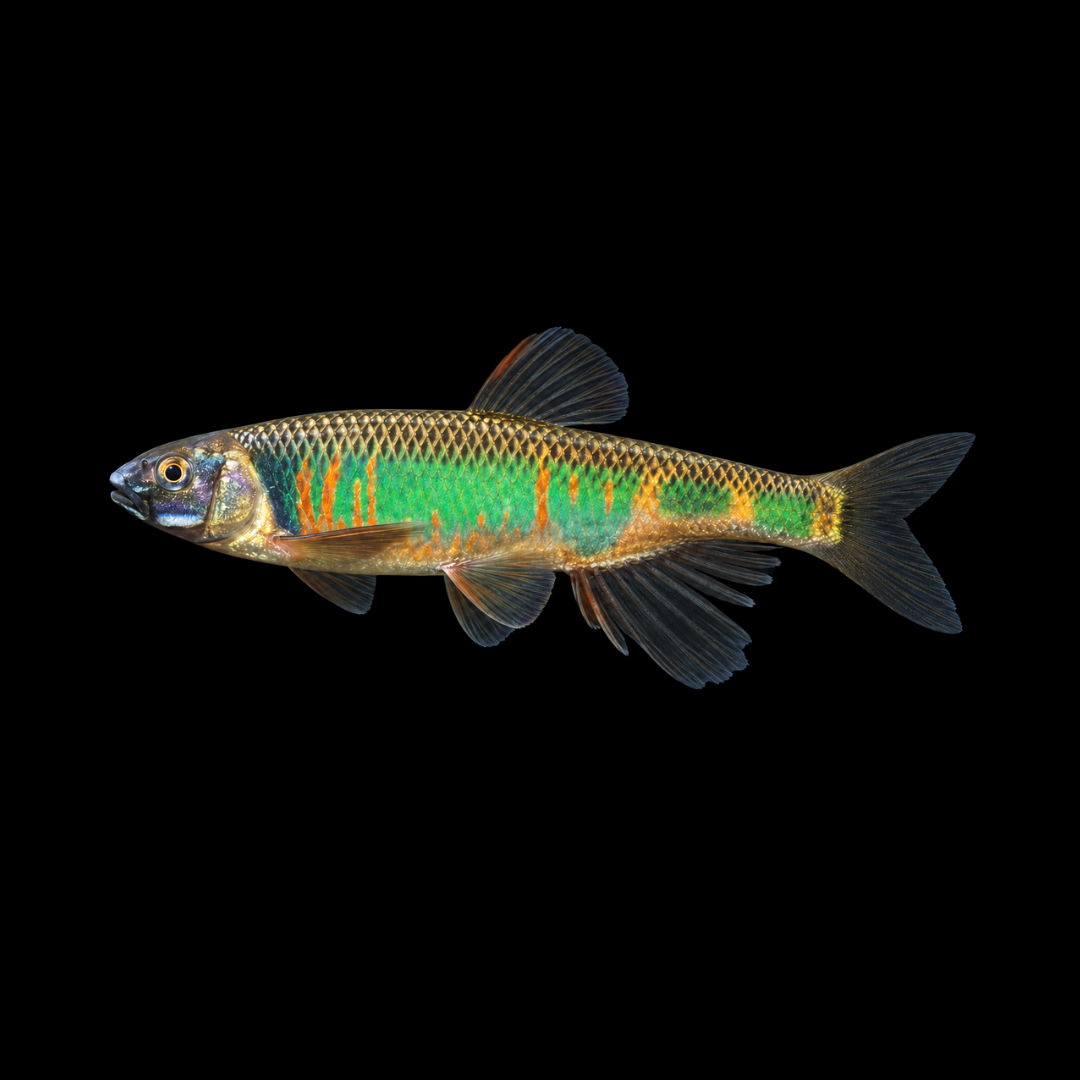
オイカワは、日本の河川中・下流域や湖沼で見られる、細身で遊泳力の高い日本産淡水魚です。普段は銀白色を基調とした端正な姿ですが、初夏から夏の繁殖期になると、成熟した雄は体側を青緑色と赤色に染め、頭部や鰭に白い追星を現します。その色彩は日本の身近な魚とは思えないほど鮮やかで、日淡水槽の主役として大きな存在感を放ちます。一方、よく泳ぎ、よく跳び、高水温時の酸欠に弱いため、広い遊泳空間、十分なろ過と酸素供給、隙間のない蓋が長期飼育の鍵になります。The pale chub is a slender, powerful-swimming freshwater fish found in the middle and lower reaches of rivers and in lakes across Japan. Its usual silver-white appearance changes dramatically during the early-summer to summer breeding season, when mature males develop vivid blue-green and red nuptial colors together with white breeding tubercles on the head and fins. This transformation makes the species a striking centerpiece in a Japanese native-fish aquarium. Because it swims vigorously, jumps readily, and is vulnerable to oxygen shortage at high temperatures, long-term care depends on ample swimming space, effective filtration and aeration, and a tightly fitted lid.
基本情報 / Basic Information
学名 / Scientific Name
Zacco platypus (Temminck & Schlegel, 1846) 分類体系によっては Opsariichthys platypus とされます。Some taxonomic systems use the combination Opsariichthys platypus.
通称 / Common Name
ヤマベ、ハヤ、ハエ、シラハエなどPale chub, freshwater minnow
分類 / Family
コイ目クセノキプリス科オイカワ属。分類体系によってはコイ科に含める場合や、ハス属 Opsariichthys とする場合があります。Order Cypriniformes, family Xenocyprididae, genus Zacco. Depending on the taxonomic system, it may be placed in Cyprinidae or in the genus Opsariichthys.
英名 / English Name
Pale chub / Freshwater minnow
分布 / Distribution
東アジアに分布し、日本のほか、朝鮮半島西岸、中国東部、ベトナム北部などで見られます。台湾にも分布しますが、遺伝的研究では人為的に移入された集団であることが示されています。日本での自然分布は北陸・関東地方以西の本州、四国瀬戸内海側、九州北部とされますが、アユ種苗などへの混入を介した移入により、現在は本来の分布域外にも広がっています。The species occurs in East Asia, including Japan, the western Korean Peninsula, eastern China, and northern Vietnam. It is also found in Taiwan, where genetic research indicates that its populations were introduced by people. In Japan, its native range is considered to include Honshu from the Hokuriku and Kanto regions westward, the Seto Inland Sea side of Shikoku, and northern Kyushu. Accidental transfer with stocked fish, including ayu seed stock, has expanded its range beyond these native areas.
最大体長 / Max Size
通常は全長12〜15cmほど。大型の雄では20cm前後に達することがあります。Usually about 12–15 cm in total length; large males may approach 20 cm.
寿命 / Lifespan
飼育下の寿命については十分な調査例がなく、一律には示せません。数年にわたって生きる魚ですが、実際の寿命は導入時の年齢や個体差、水温、酸素量、水質によって大きく変わります。Captive lifespan has not been studied well enough to give a single dependable figure. The species can live for several years, but actual longevity varies greatly with age at acquisition, individual condition, temperature, dissolved oxygen, and water quality.
飼育環境 / Aquarium Environment
水槽サイズ / Tank Size
若魚を少数で飼う場合でも60cm規格水槽(約60L)を最低限の目安とし、成魚の群泳や繁殖には90cm規格水槽(約180L)以上を推奨します。奥行きと横幅があり、直線的に泳げる水槽が適しています。Even for a small group of juveniles, a standard 60 cm aquarium of about 60 L is a practical minimum. For a group of adults or breeding, a standard 90 cm aquarium of about 180 L or larger is recommended. Prioritize length and depth that provide an uninterrupted swimming lane.
水温 / Temperature
飼育では15〜23℃前後を安定して保つのが一つの目安です。25℃を超える状態が長く続く夏場は、水温上昇と酸素不足を避けるため、早めに冷却と強めのエアレーションを行います。急激な温度変化も避けてください。Stable maintenance around 15–23°C is a practical guide. During summer, if the temperature remains above 25°C, begin cooling and increase aeration early to limit warming and oxygen shortage. Avoid abrupt temperature changes as well.
水質 / Water Quality
弱酸性〜弱アルカリ性に適応しますが、pH6.5〜7.5の中性付近を安定して保つのが基本です。アンモニアと亜硝酸は検出されない状態を維持し、十分なろ過、定期的な部分換水、強めのエアレーションで清浄かつ酸素の多い水を用意します。The species tolerates mildly acidic to mildly alkaline water, but stable conditions around pH 6.5–7.5 are a sound target. Keep ammonia and nitrite undetectable, and provide clean, oxygen-rich water through effective filtration, regular partial water changes, and vigorous aeration.
レイアウト / Layout
中央から前面に広い遊泳空間を残し、角の取れた川砂利や大磯砂、大小の石で河川の瀬を思わせる景観を作ります。流れは水槽全体が一様な激流にならないよう、泳げる流れと休める緩流部を両方設けます。石組みは崩れないよう固定し、上部はガラス蓋や細かなネットで隙間なく覆います。Leave a broad swimming area through the center and front, using smooth river gravel, rounded aquarium gravel, and stones to evoke a shallow river riffle. Create both a current for active swimming and calmer zones for rest rather than turning the entire tank into a torrent. Secure all rockwork and cover every opening with a glass lid or fine mesh.
注意点 / Precautions
飛び出しと高水温時の酸欠は特に注意が必要です。吸水口や配線まわりの小さな隙間まで塞ぎ、水面の波立ちが確保されているか毎日確認します。採集個体は寄生虫や細菌を持ち込む可能性があるため隔離観察を行い、採集地の規則や漁業権を必ず確認してください。一度飼育した個体は、在来系統の遺伝的撹乱や病原体拡散を防ぐため、採集地を含む野外へ放してはいけません。Jumping and oxygen shortage during hot weather are the principal hazards. Seal even small gaps around intake pipes and cables, and confirm daily that the surface remains well agitated. Wild-caught fish may introduce parasites or bacteria, so quarantine them and always check local collecting rules and fishery rights. Never release a captive fish into the wild, even at the collection site, because it may spread pathogens or disrupt locally adapted genetic lineages.
餌と給餌 / Feeding
餌の種類 / Diet
雑食性で、自然下では付着藻類、水生昆虫、小型甲殻類、動物プランクトンなどを利用します。飼育下では川魚用または雑食魚用の良質なフレーク・小粒顆粒を主食とし、冷凍アカムシ、ミジンコ、孵化直後のブラインシュリンプなどを副食にできます。An omnivore that consumes attached algae, aquatic insects, small crustaceans, and zooplankton in nature. In captivity, use a high-quality flake or small granule formulated for river fish or omnivores as the staple, supplemented with foods such as frozen bloodworms, daphnia, or newly hatched brine shrimp.
給餌のポイント / Feeding Tips
1日1〜2回、数分で食べ切る量を複数の場所へ少しずつ与えます。強い個体だけが餌を独占しないよう、群れ全体の食べ方と体つきを観察してください。婚姻色を楽しむ場合も、色揚げ飼料だけに偏らず、植物質を含む主食と、甲殻類由来のカロテノイドを含む副食を組み合わせます。食べ残しは早めに取り除きます。Feed once or twice daily, placing small portions in several areas and limiting the total to what the fish can finish within a few minutes. Watch how every fish feeds and develops so dominant individuals do not monopolize the food. Even when enhancing nuptial color, do not rely solely on color food; combine a staple containing plant material with occasional carotenoid-rich crustacean foods. Remove leftovers promptly.
性格と混泳 / Temperament and Tank Mates
性格 / Temperament
活発で警戒心があり、若魚や非繁殖期には群れで泳ぐ傾向があります。繁殖期の雄は縄張り意識が強くなり、追尾や体当たりを行います。狭い水槽では弱い個体が休めず、消耗することがあります。Active and alert, with juveniles and non-breeding fish tending to swim in groups. Breeding males become territorial and may chase or ram rivals. In cramped quarters, subordinate fish can be denied rest and become exhausted.
混泳の相性 / Compatibility
同程度の大きさで、冷涼かつ酸素の多い流水環境を好む日本産淡水魚が候補になります。ただし、相手の成魚サイズ、遊泳速度、食性を合わせ、十分な広さと逃げ場を確保する必要があります。小魚や稚エビは捕食される可能性があり、動きの遅い魚、長い鰭を持つ魚、極端におとなしい魚との混泳は避けます。繁殖期は雄同士の争いが増すため、過密を避け、必要に応じて隔離できる設備を用意します。Possible companions include similarly sized Japanese freshwater fishes that also favor cool, oxygen-rich, flowing water. Match adult size, swimming speed, and diet, and provide ample space and retreats. Tiny fish and shrimp may be eaten, while slow-moving, long-finned, or exceptionally timid species should be avoided. Because aggression among males rises during the breeding season, avoid crowding and prepare a way to separate individuals if necessary.
病気と対策 / Diseases and Prevention
かかりやすい病気 / Common Diseases
導入直後や水温の急変で魚が弱ったときは白点病が現れることがあり、酸素不足、水質悪化、擦れ傷が重なると、カラムナリス病、尾ぐされ、細菌性の体表炎を起こすことがあります。野生採集個体では、チョウなどの外部寄生虫や、肉眼では確認しにくい寄生生物にも注意します。Ich may appear when fish are stressed after introduction or by abrupt temperature changes. Low oxygen, deteriorating water quality, and abrasions can contribute to columnaris disease, fin rot, and bacterial skin infections. Wild-caught fish may also carry visible fish lice and less obvious parasites.
対策と予防 / Prevention
新しい個体は別容器で一定期間観察し、急な水合わせ、水温変化、過密、酸欠を避けます。水質を確認しながら、悪化する前に部分換水を行い、網やホースは隔離水槽と共用しません。異常が見られた個体は早めに隔離し、症状を確認して観賞魚用医薬品を表示どおりに使用します。薬剤、塩分、昇温には魚種や症状による適否があるため、複数の方法を自己判断で重ねないでください。Observe new fish in a separate system for an appropriate period, and avoid abrupt acclimation, temperature swings, crowding, and oxygen shortage. Monitor water quality and perform partial changes before it deteriorates, and do not share nets or siphons with the quarantine tank. Isolate affected fish promptly, identify the signs, and use approved ornamental-fish medication exactly as labeled. Because medication, salt, and raised temperature are not appropriate for every fish or condition, do not combine treatments without reliable guidance.
増やし方(繁殖) / Breeding
雌雄の判別 / Sexing
繁殖期の雄は雌より大きくなりやすく、青緑色と赤色の鮮明な婚姻色、頭部や体側・鰭の追星、長く発達した臀鰭が目立ちます。雌は色彩が比較的淡く、成熟すると腹部に丸みが出ます。非繁殖期や若魚では判別が難しい場合があります。During the breeding season, males tend to be larger and display vivid blue-green and red coloration, breeding tubercles on the head, body, and fins, and an enlarged, elongated anal fin. Females remain comparatively subdued in color and develop a fuller abdomen when ripe. Juveniles and fish outside the breeding season can be difficult to sex.
繁殖形態 / Reproduction
体外受精を行う卵生魚です。日本では主に5〜8月、岸寄りの流れが緩い平瀬にある砂礫底で産卵します。雌雄が体を寄せて放卵・放精し、沈性の卵は砂礫の間に入ります。親による保護はなく、親魚が卵を食べることもあります。An egg-laying fish with external fertilization. In Japan it spawns mainly from May to August over sand and gravel in gently flowing shallows near the bank. The pair presses together to release eggs and sperm, and the sinking eggs settle among the substrate. There is no parental care, and adults may eat the eggs.
繁殖のポイント / Breeding Tips
親魚を十分に養い、繁殖水槽では雄同士の争いを避けられる数と空間を確保します。春から夏に向かう水温と日照時間の変化を急がず再現し、90cm規格水槽(約180L)以上に清潔な丸い砂礫を敷いて、緩やかな流れと十分な酸素供給を保ちます。産卵後は親魚を分けるか、卵が入り込める砂礫で食害を減らします。23℃前後では孵化までおよそ3日が一つの目安です。仔魚が卵黄を吸収して泳ぎ始めたら、ゾウリムシなどの微小な生き餌から始め、成長に合わせて孵化直後のブラインシュリンプ、粉末飼料へ段階的に切り替えます。Condition the adults well, and provide enough space and an appropriate number of fish to limit fighting among males in the breeding aquarium. Reproduce the gradual rise in temperature and day length from spring into summer without abrupt changes. In a standard 90 cm aquarium of about 180 L or larger, provide clean rounded sand and gravel, gentle current, and ample oxygenation. After spawning, separate the adults or use substrate that allows eggs to settle beyond their reach. At around 23°C, hatching in approximately three days is a useful guide. Once the larvae absorb their yolk and begin swimming, start with tiny live foods such as infusoria, then progress to newly hatched brine shrimp and powdered prepared food as they grow.
雑学と豆知識 / Trivia and Fun Facts
1. 海を渡った標本から始まった学名の物語 / 1. A Scientific Name Born from Specimens Sent Overseas
オイカワが学術の舞台に登場したのは1846年です。日本からヨーロッパへ渡った標本をもとに、テミンクとシュレーゲルが Leuciscus platypus として記載しました。その後は Zacco platypus とされ、近年は Opsariichthys platypus とする研究や国内資料もあります。現在も分類データベースによって採用名が分かれるため、どちらかを単純に古い名として退けることはできません。ひとつの魚が複数の学名で語られる状況は、分類学が新しい証拠や分類体系に応じて見直される科学であることをよく示しています。The pale chub entered formal zoology in 1846, when Temminck and Schlegel described Japanese specimens sent to Europe as Leuciscus platypus. It was later known as Zacco platypus, while some recent studies and Japanese references use Opsariichthys platypus. Current taxonomic databases do not all adopt the same combination, so neither name can simply be dismissed as obsolete. The existence of multiple scientific names for one familiar fish illustrates how taxonomy is revised as evidence and classification systems change.
2. 赤い婚姻色は雌へのメッセージ / 2. Red Nuptial Color as a Message to Females
繁殖期の雄を彩る赤と青緑は、単なる季節の飾りではありません。雌に二匹の雄を選ばせる実験では、体の大きさや臀鰭の長さ、追星の数、青緑色の強さよりも、赤い婚姻色の発現が選択と結びつきました。魚は赤色の材料となるカロテノイドを自ら一から合成できず、餌から得なければなりません。そのため鮮やかな赤は、採餌状態や健康状態に関わる手掛かりとして働く可能性があります。水槽で見る一瞬の輝きの背後には、雌雄の選択が積み重なった長い進化の時間が流れています。The red and blue-green colors of a breeding male are more than seasonal decoration. In two-choice experiments, female preference was associated with the expression of red nuptial color rather than male size, anal-fin length, number of breeding tubercles, or the intensity of blue-green coloration. Fish must obtain carotenoids, the raw material for red pigmentation, through food rather than synthesizing them entirely on their own. Vivid red may therefore provide clues to foraging condition or health. Behind a brief flash of color in the aquarium lies a long evolutionary history shaped by mate choice.
3. 産卵の場所を知らせる砂利の音 / 3. Gravel Sounds That Reveal a Spawning Site
雌雄が砂礫底で体を寄せ、尾や臀鰭を震わせると、巻き上がった砂利がぶつかって独特の衝突音が生まれます。台湾の河川でオイカワと現地の近縁種を対象に行われた野外実験では、この音を再生すると、ほかの音よりも多くの個体が音源へ集まりました。流れの中では視界が濁り、石や水草が視線を遮りますが、音はそれらを越えて届きます。産卵の音は繁殖場所を見つける手掛かりになる一方、卵を狙う個体にも場所を知らせる可能性があり、同じ音が繁殖と捕食の双方に利用されていると考えられます。When a pair presses together over gravel and vibrates the tail and anal fin, disturbed stones collide and produce a distinctive sound. In a field experiment on pale chub and a native related species in a Taiwanese river, playback of this collision sound attracted more fish than the other sounds tested. In flowing water, suspended particles reduce visibility and stones or plants block the view, whereas sound travels beyond such obstacles. The noise may help fish locate a spawning site, but it may also reveal the site to individuals seeking eggs, suggesting that the same cue can be used for both reproduction and predation.
4. 身近な普通種にも地域ごとの歴史がある / 4. Even a Common Fish Has Regional History
オイカワは各地の川で普通に見られますが、すべての集団が同じ由来とは限りません。日本の集団には地理的な遺伝構造があり、地域によって異なる系統が育まれてきました。ところが、琵琶湖産アユなどの放流種苗に稚魚が混入したことで、本来いなかった水系への分布拡大や、在来系統との遺伝的な混合が起きたと考えられています。元の川へ戻すつもりの放流であっても、飼育中の病原体や取り違えを運ぶおそれがあります。身近な一匹を野外へ戻さないことは、その川だけが受け継いできた歴史を守る行動でもあります。Pale chub may be common in many rivers, but not every population has the same origin. Japanese populations possess geographic genetic structure shaped by their regional histories. Accidental inclusion of juveniles in stocked ayu and other seed fish is believed to have expanded the species into non-native drainages and mixed introduced lineages with local ones. Even a well-intentioned return to the collection river can carry captive pathogens or the wrong fish. Keeping aquarium fish out of the wild is therefore also an act of protecting the history unique to each watershed.
5. 川ごとに変わる呼び名 / 5. A Name That Changes from River to River
標準和名はオイカワですが、関東のヤマベ、西日本のハエやシラハエなど、土地ごとに多くの名で呼ばれてきました。アカハエやジョロウブナなど、繁殖期の雄の姿と結びついた地方名も記録されています。こうした呼び名は単なる別名の一覧ではなく、釣り人が見た季節の姿や、川魚を食卓へ迎えた暮らしの記憶を伝える言葉です。同じ魚でも土地によって名が変わることは、オイカワが長く人の生活圏に寄り添ってきた証しといえます。Oikawa is the standard Japanese name, but the fish has long been known by many regional names, including yamabe in Kanto and hae or shirahae in western Japan. Names such as akahae and jorobuna, associated with the appearance of breeding males, have also been recorded. These words are more than a list of aliases: they preserve memories of the seasonal fish seen by anglers and of river fish welcomed to the table. A name that changes from place to place reveals how closely the pale chub has lived alongside people.
6. 都市河川を映す小さな観測者 / 6. A Small Observer Reflecting Urban Rivers
オイカワは広い環境に適応するため、水域の変化を調べる研究にも使われています。河川水に含まれるDNAの断片を検出する環境DNA調査では、魚を捕らえずに分布を追うことができます。韓国の都市河川では、酵素活性やDNA損傷などを測る環境指標種として利用され、飼育実験ではナノプラスチックの蓄積に伴う生理・行動の変化が調べられました。つまり、丈夫に見える普通種の小さな変化が、人の目では気づきにくい水環境の変化を捉える手掛かりになると考えられています。Because pale chub tolerate a broad range of environments, they are also used in research on changes in aquatic ecosystems. Environmental DNA surveys can trace their distribution by detecting DNA fragments in river water without catching the fish. In a Korean urban river, the species has been used as an environmental indicator through measurements such as enzyme activity and DNA damage, while controlled exposure experiments have examined physiological and behavioral changes associated with nanoplastic accumulation. In other words, subtle changes in an apparently resilient common fish may provide clues to changes in water environments that people would otherwise miss.
まとめ / Conclusion
オイカワは、銀色の群泳と夏の雄が見せる鮮やかな婚姻色を、一年の季節変化とともに楽しめる日本の美魚です。十分な横幅の水槽、清浄で酸素の多い水、夏の冷却、確実な飛び出し対策を整えることで、本来の力強い泳ぎを落ち着いて観察できます。The pale chub is a beautiful Japanese native fish whose silver schooling and vivid summer nuptial colors can be enjoyed through the changing seasons. With a sufficiently long aquarium, clean oxygen-rich water, summer cooling, and reliable jump prevention, its naturally powerful swimming can be observed at its best.
身近な川魚でありながら、その色彩、繁殖行動、地域ごとの遺伝的な歴史には多様な背景があります。野外へ戻さない責任を守り、群れの関係や水温の移ろいまで丁寧に見つめることで、オイカワは日本の川が持つ奥深さを水槽の中で伝えてくれる存在になります。Although familiar from local rivers, its coloration, reproductive behavior, and regionally distinct genetic history have many layers. By never releasing captive fish and by attending carefully to group dynamics and seasonal temperature changes, the keeper can appreciate the pale chub as a living expression of the complexity of Japan’s rivers.
細菌性疾患・水質・酸欠・過密
Petty, B. D., Francis-Floyd, R. & Yanong, R. P. E. Bacterial Diseases of Fish. MSD Veterinary Manual, Professional Version. Updated September 2024.(参照日:2026年9月13日)






コメント