

解説Description
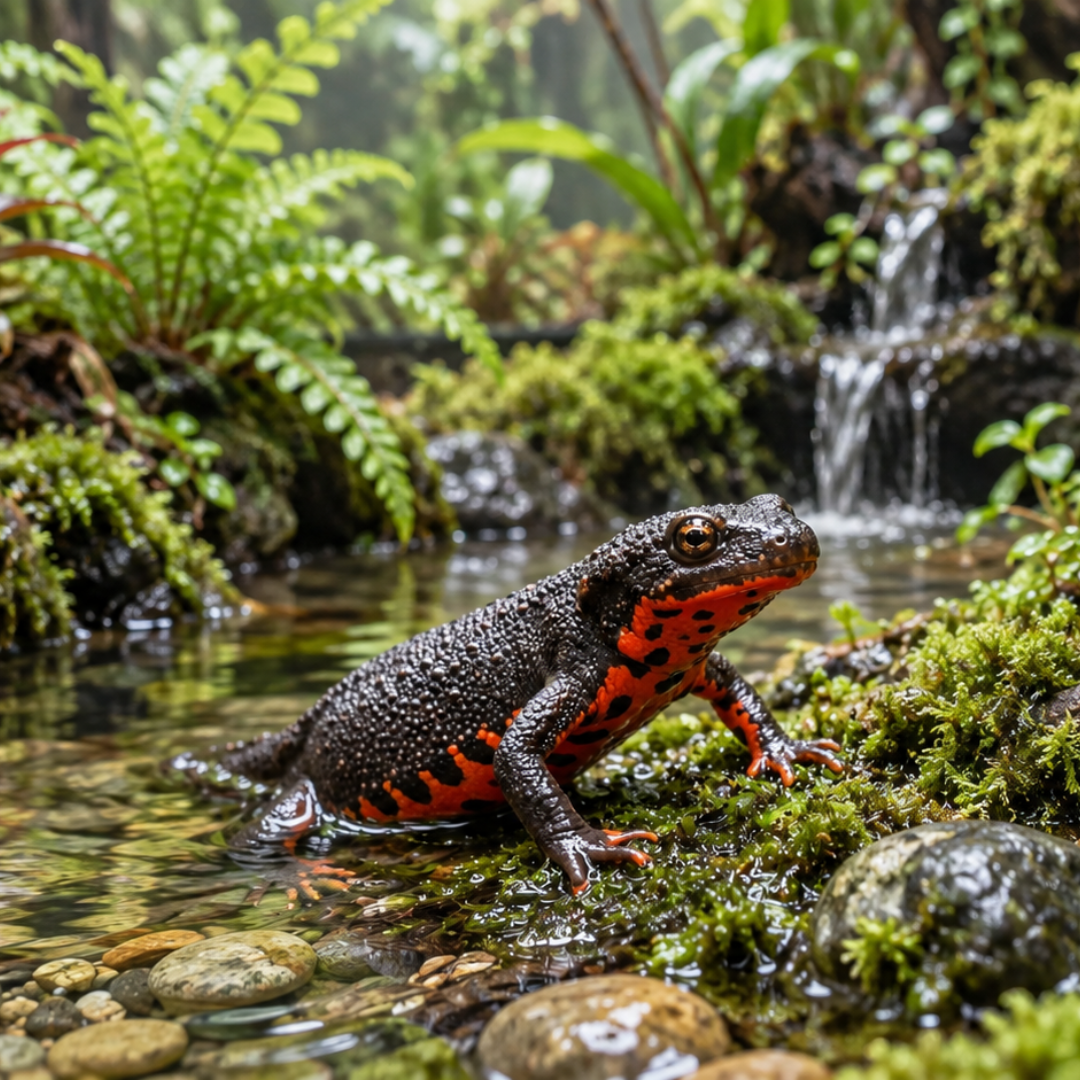
アカハライモリは、本州・四国・九州と周辺島嶼の水田、池、湿地、流れの緩い水路などに暮らす日本固有の有尾類です。黒褐色の背と、赤色から橙色の地に黒い模様が入る腹面の対比が名前の由来で、危険を感じると体を反らせて鮮やかな腹を見せ、皮膚に蓄えた毒の存在を捕食者へ知らせます。腹の模様は個体差と地域差が大きく、同じ種でありながら各地で形態・求愛行動・遺伝的構成が異なることも、本種の奥深さです。 The Japanese fire-bellied newt is a caudate amphibian endemic to Japan, occurring across Honshu, Shikoku, Kyushu, and nearby islands in rice paddies, ponds, wetlands, and gently flowing waterways. Its name comes from the striking contrast between a dark brown to nearly black back and a red to orange belly patterned with black. When threatened, it may arch its body to reveal this bright warning coloration, advertising toxins stored in its skin. Belly patterns vary markedly among individuals and regions, while morphology, courtship behavior, and genetic composition also differ geographically, giving this single named species remarkable depth and diversity.
飼育下では人の気配や給餌の時間を覚えることもあり、落ち着いた動きと表情豊かな採餌行動を長く観察できます。ただし「丈夫で飼いやすい」という評判だけで迎えるべき生き物ではありません。高温と水質悪化に弱く、脱走防止も欠かせず、適切に飼えば数十年を生きる可能性があります。地域集団の遺伝的独自性と野生個体群を守るため、由来の明らかな飼育下繁殖個体を選び、終生飼育し、いかなる理由でも野外へ放さないことが大切です。 In human care, these newts may learn the keeper’s presence and feeding schedule, offering decades of quiet behavior and expressive feeding responses to observe. Yet their reputation for hardiness should never be mistaken for a lack of needs. They are vulnerable to overheating and deteriorating water quality, require rigorous escape prevention, and can potentially live for several decades. To protect wild populations and the unique genetics of regional lineages, choose captive-bred animals of known origin, commit to lifelong care, and never release a captive newt into the wild.
基本情報Basic Information
| 学名Scientific Name | Cynops pyrrhogaster (Boie, 1826) |
|---|---|
| 通称Common Name | アカハライモリ、ニホンイモリ、アカハラJapanese fire-bellied newt, Japanese red-bellied newt |
| 分類Classification | 両生綱・有尾目(サンショウウオ目)・イモリ科・イモリ亜科・イモリ属Class Amphibia, Order Caudata (Urodela), Family Salamandridae, Subfamily Pleurodelinae, Genus Cynops |
| 英名English Name | Japanese fire-bellied newt / Japanese red-bellied newt |
| 分布Distribution | 日本固有種。本州、四国、九州および佐渡島・隠岐・五島列島などの周辺島嶼に自然分布します。北海道や本来の分布域外で見つかる個体群には、人為的に移入されたものが含まれます。Endemic to Japan and naturally distributed across Honshu, Shikoku, Kyushu, and nearby islands including Sado, the Oki Islands, and the Goto Islands. Populations found in Hokkaido or outside the native range may include human introductions. |
| 成体サイズAdult Size | 全長およそ7〜14cm。一般にオスは約7〜11cm、メスは約8〜14cmで、メスのほうが大きくなる傾向があります。地域集団や成長条件によって差があります。Approximately 7–14 cm in total length. Males are generally about 7–11 cm and females about 8–14 cm, with females tending to grow larger. Size varies among regional populations and rearing conditions. |
| 寿命Lifespan | 飼育下で20年以上生きることがあり、40年を超えた検証例も報告されています。若い個体を迎える場合は、数十年単位の終生飼育を前提にします。Individuals may live for more than 20 years in human care, and verified cases exceeding 40 years have been reported. Acquiring a young newt therefore requires a commitment measured in decades. |
飼育環境Enclosure Environment
| 飼育容器・サイズEnclosure and Size | 成体1〜2匹なら幅45cm程度をひとつの目安とし、複数飼育では60cm以上の水槽など、床面積と水量に余裕のある容器を用意します。成体は水中で過ごす時間が長いため、十分な遊泳空間に、いつでも完全に上陸できる安定した陸場を組み合わせます。壁面や配線を器用に登るので、通気を確保しつつ隙間のないフタを必ず設置します。As a practical starting point, provide an enclosure about 45 cm wide for one or two adults and a 60 cm or larger tank for a group, prioritizing generous floor area and water volume. Adults spend much of their time in water, so combine ample swimming space with a stable haul-out area where the whole body can leave the water. They climb glass, cables, and décor surprisingly well; a secure, gap-free lid with adequate ventilation is essential. |
|---|---|
| 温度Temperature | おおむね15〜23℃を目安とし、20℃前後で安定させると管理しやすくなります。長時間25℃を超える環境は避け、とくに28℃前後の高温は重いストレスや体調悪化につながるため、夏は室温管理、水槽用冷却ファンやクーラーを組み合わせます。冷却ファン使用時は蒸発による水位低下と水質濃縮にも注意します。急激な温度変化は避けてください。Aim broadly for 15–23°C, with stable conditions around 20°C being easy to manage. Avoid prolonged temperatures above 25°C; temperatures around 28°C can cause severe stress and illness. In summer, use room cooling together with an aquarium fan or chiller as needed. Fans increase evaporation, so monitor falling water levels and the concentration of dissolved waste. Avoid abrupt temperature changes. |
| 環境管理Environmental Management | カルキを中和した水を使用し、アンモニアと亜硝酸が検出されない状態を保ちます。十分に立ち上げた弱水流のろ過器を使うか、無ろ過なら少量ずつこまめに換水し、排泄物と残餌はスポイトなどで早めに除きます。ろ過器を使っていても、目安として週1回ほど全体の4分の1〜3分の1を換水し、個体数や汚れ方に応じて調整します。新しく迎えた個体は一定期間、別容器で健康状態を観察し、器具も分けます。強い水流、乾燥を招く保温球、洗剤や芳香剤の混入は避けます。Use dechlorinated water and maintain undetectable ammonia and nitrite. Either run a biologically established, low-flow filter or perform frequent small water changes in an unfiltered setup, removing feces and leftover food promptly with a siphon or pipette. Even with filtration, replace roughly one-quarter to one-third of the water about weekly and adjust to stocking and waste levels. Keep new arrivals in a separate enclosure for an observation period and use dedicated equipment. Avoid strong current, drying heat lamps, detergents, fragrances, and chemical contamination. |
| レイアウトLayout | 掃除を優先するなら底床なしでも飼育できます。底床を使う場合は、誤飲しにくい大きな丸石や管理しやすい砂などを選び、小さな砂利は避けます。水草、流木、コルクバーク、植木鉢のかけらなどで水中と陸上の両方に隠れ家を作り、尖った石や不安定な積み方は使いません。アナカリス類やウィローモスなどの水草は休息場所になり、繁殖時には産卵床にもなります。照明は植物と昼夜リズムに必要な弱〜中程度とし、直射日光は避けます。A bare-bottom setup is acceptable when easy cleaning is the priority. If substrate is used, choose large rounded stones that cannot be swallowed or an easily managed sand, and avoid small gravel. Provide underwater and terrestrial shelters with aquatic plants, wood, cork bark, or smooth pieces of clay pot. Do not use sharp stones or unstable rockwork. Plants such as waterweed and Java moss offer resting cover and can serve as egg-laying sites. Use low to moderate lighting for plants and a day-night rhythm, and keep the enclosure out of direct sunlight. |
| 注意点Precautions | 皮膚にはテトロドトキシンを含むことがあるため、必要のないハンドリングは避け、触れた後や水槽清掃後は石けんで手を洗います。傷のある手、目、口に分泌物を触れさせず、子どもや犬猫が口にしないよう管理してください。両生類の皮膚は人の皮脂や化学物質にも弱いので、移動は水で濡らしたパウダーフリー手袋や容器で行います。脱走個体は短時間で乾燥するため、フタと配線穴を毎回確認します。採集規制は自治体や場所によって異なるため必ず事前に確認し、飼育個体は産地にかかわらず野外へ放しません。The skin may contain tetrodotoxin. Avoid unnecessary handling and wash hands with soap after contact or enclosure maintenance. Keep secretions away from broken skin, eyes, and mouth, and prevent children, dogs, or cats from mouthing the animal. Amphibian skin is also vulnerable to human oils and chemicals; for necessary transfers, use a container or wet, powder-free gloves. Escapees can dehydrate quickly, so check the lid and cable openings every time. Collection rules vary by locality and site and must be checked in advance. Never release a captive individual, regardless of its stated origin. |
餌と給餌Feeding
| 餌の種類Diet | 動物食で、飼育下では細く切ったミミズ、イトミミズ、冷凍赤虫、ミジンコ、ブラインシュリンプ、適切な大きさの昆虫、イモリ用または肉食魚用の沈下性人工飼料などを利用できます。主食を一種類に固定せず、生餌・冷凍餌・栄養設計された人工飼料を組み合わせます。脂肪分の多いハニーワームなどは補助的にし、野外採集の餌は農薬や寄生虫を持ち込む可能性があるため慎重に扱います。These newts are carnivorous. Suitable foods include chopped earthworms, blackworms or tubifex from safe sources, thawed bloodworms, daphnia, brine shrimp, appropriately sized invertebrates, and sinking pellets formulated for newts or carnivorous fish. Do not rely on a single item; combine live or frozen prey with a nutritionally formulated staple. Fatty foods such as waxworms should be occasional, while wild-collected prey may introduce pesticides or parasites and should be used cautiously. |
|---|---|
| 給餌のポイントFeeding Tips | 健康な成体は週2回前後を出発点に、体型、水温、活動量に合わせて増減します。1回量は短時間で食べ切り、腹部がわずかに丸くなる程度にとどめ、残餌は回収します。幼生は少量を毎日〜1日おき、上陸後の幼体は小さな生餌を高めの頻度で与えます。複数飼育ではピンセット給餌や複数箇所への分散給餌で、痩せた個体や餌を独占する個体がいないか確認します。冬季に低温で活動が落ちたときは、消化状態を見ながら間隔を空けます。For a healthy adult, begin at roughly two feedings per week and adjust to body condition, temperature, and activity. Offer an amount consumed promptly that leaves the abdomen only slightly rounded, and remove leftovers. Feed larvae small meals daily or every other day; terrestrial juveniles need tiny live prey at a relatively high frequency. In groups, target-feed with forceps or distribute food among several stations so that timid animals are not outcompeted. During cool winter conditions, extend the interval as activity and digestion slow. |
行動と同居Behavior and Cohabitation
| 行動・性質Behavior | 成体は水生傾向が強いものの、個体や季節によって陸場も利用します。薄暗い時間に活発になりやすく、底を歩く、ゆっくり泳ぐ、植物や流木の陰で休むといった行動が中心です。餌を見つけると素早く吸い込むように捕食し、飼育者の接近を給餌と結び付けて寄ってくることもあります。危険時には体を反らせて腹を見せる警告姿勢をとることがあり、頻繁に見られる場合は強いストレス源がないか確認します。Adults are strongly aquatic but use land according to the individual and season. They often become more active in dim light, walking along the bottom, swimming slowly, and resting among plants or wood. Feeding responses can be sudden and forceful, and individuals may learn to approach when the keeper appears. When alarmed, a newt may arch to expose its warning-colored belly; if this occurs repeatedly, look for persistent sources of stress. |
|---|---|
| 同居の相性Compatibility | 体格の近い同種同士は、十分な広さ、隠れ家、給餌場所があれば同居できることが多いですが、追い回し、咬傷、痩せ、食欲低下があれば分けます。卵と幼生は成体に食べられ、幼生同士にも共食いが起こるため、繁殖時は隔離とサイズ分けが必要です。魚、エビ、カエル、他種のイモリとの混泳は、捕食、餌の競合、温度要求の違い、病原体の持ち込みがあるため推奨しません。異なる産地集団を繁殖目的で混ぜることも避けます。Similarly sized conspecifics often coexist when space, shelter, and feeding stations are ample, but separate individuals if chasing, bites, weight loss, or appetite suppression occurs. Adults eat eggs and larvae, and larvae may cannibalize one another, so breeding requires separation and size grading. Cohabitation with fish, shrimp, frogs, or other newt species is not recommended because of predation, food competition, incompatible temperatures, and pathogen transmission. Do not mix different geographic populations for breeding. |
病気と対策Diseases and Prevention
| かかりやすい病気・不調Common Diseases and Health Problems | 高温や水質悪化をきっかけに、食欲不振、体重減少、皮膚の白濁・発赤・潰瘍、水カビ状の付着、指先や尾端の損傷が起こります。腹部や全身が異常に膨れる、傾いて浮く、沈めないといった症状は、ガス貯留、腹水、感染、臓器障害など複数の原因が考えられます。異常な脱皮、反応低下、長期間の拒食にも注意します。カエルツボカビやイモリツボカビなど、外見だけでは判別できない感染症を保有する可能性もあります。Overheating and poor water quality commonly precede loss of appetite, weight loss, cloudy or reddened skin, ulcers, cottony fungal growth, and damage to toes or the tail tip. Abnormal swelling, listing at the surface, or inability to submerge may have several causes, including gas accumulation, fluid retention, infection, or internal disease. Also watch for abnormal shedding, reduced responsiveness, and prolonged refusal of food. Newts may carry infections such as amphibian chytrid fungi, including Bd and Bsal, that cannot be identified reliably by appearance alone. |
|---|---|
| 対策と予防Prevention and Care | 毎日の観察で、食欲、姿勢、浮力、皮膚、排泄、体型の変化を早く捉えます。水温を適温で安定させ、アンモニア・亜硝酸・塩素を避け、過密と残餌をなくすことが基本です。新規個体は隔離し、水槽間で網やスポイトを共用しません。不調個体は、清潔で温度の安定した別容器へ移し、飼育条件と症状の経過を記録して、両生類を診療できる獣医師へ早めに相談します。塩浴、抗菌薬、抗真菌薬は原因や濃度を誤ると皮膚や浸透圧調節を傷めるため、自己判断で行いません。死亡個体や飼育水を野外へ捨てず、地域の方法に従って衛生的に処理します。Daily observation should detect early changes in appetite, posture, buoyancy, skin, feces, and body condition. Prevention begins with keeping the water stable within the appropriate temperature range, maintaining zero ammonia and nitrite, using dechlorinated water, avoiding overcrowding, and removing food waste promptly. Quarantine newcomers and never share nets or siphons between enclosures. Move a sick animal to a clean, temperature-stable hospital container, document husbandry and symptom progression, and promptly consult a veterinarian experienced with amphibians. Salt baths, antibiotics, and antifungals can damage the skin and osmoregulation when the diagnosis or dose is wrong, so do not use them without professional direction. Never discard dead animals or enclosure water into natural habitats; dispose of them hygienically according to local guidance. |
増やし方(繁殖)Breeding
| 雌雄の判別Sexing | 成熟個体では、一般にメスのほうが大型で胴が太く、尾は剣状に緩やかに細くなります。オスは尾が上下に幅広く、先端が急に細くなる傾向があり、繁殖期には総排泄腔が明瞭に膨らみ、尾や体側に青白色から紫色の婚姻色が現れることがあります。若い個体や非繁殖期は判別が難しく、ひとつの特徴だけで断定しません。Among mature animals, females are generally larger and more robust, with a sword-shaped tail that tapers gradually. Males tend to have a deeper tail that narrows more abruptly at the tip. During the breeding season, the male’s cloaca becomes conspicuously swollen and bluish-white to violet nuptial coloration may appear along the tail and flanks. Juveniles and adults outside the breeding season can be difficult to sex, so do not rely on a single trait. |
|---|---|
| 繁殖形態Reproduction | 春を中心に繁殖し、オスはメスの前で尾を振って水流とフェロモンを送り、求愛します。オスが水底に置いた精包をメスが総排泄腔から取り込むことで体内受精が成立します。メスは水草の葉を後肢で折り畳むようにし、ゼリー層に包まれた卵を1個ずつ産み付けます。産卵数は年齢や状態で大きく変わりますが、1シーズンに数十〜200個ほどに達することがあります。卵は水温によっておよそ2〜3週間で孵化し、外鰓を持つ水生幼生を経て変態・上陸します。Breeding occurs mainly in spring. The male courts in front of the female by fanning his tail, directing waterborne pheromones toward her. Internal fertilization follows when the female picks up a spermatophore deposited by the male. Using her hind limbs, she folds a plant leaf around each jelly-coated egg. Seasonal output varies greatly with age and condition but may range from dozens to around 200 eggs. Depending on temperature, eggs hatch in roughly two to three weeks; the externally gilled aquatic larvae later metamorphose and leave the water. |
| 繁殖のポイントBreeding Tips | 健康な成体に秋から冬の穏やかな季節変化を経験させ、春に温度と日長が自然に上がる流れを作ると繁殖行動につながりやすくなります。急激な冷却や状態の悪い個体へのクーリングは行いません。柔らかな葉の水草や産卵用ストリップを多めに用意し、卵は葉ごと親から隔離します。孵化後、卵黄を吸収して泳ぎ始めた幼生にはブラインシュリンプ幼生やミジンコなど動く微小餌を少量ずつ与え、水質を保ちます。成長差が出たら共食いを防ぐためにサイズ分けします。外鰓が縮み壁面を登り始めたら、溺れない浅い水場と湿った陸地のある容器へ移し、トビムシや極小のワラジムシ、刻んだミミズなどへ移行します。上陸幼体期は乾燥、餌切れ、溺水にとくに注意が必要です。Healthy adults are more likely to breed after a gentle autumn-to-winter seasonal cycle followed by the natural rise of temperature and day length in spring. Do not abruptly chill animals or cool individuals in poor condition. Supply abundant soft-leaved plants or artificial spawning strips, and remove eggs with their leaves from the parents. Once hatchlings absorb the yolk and begin swimming, offer small amounts of moving micro-prey such as newly hatched brine shrimp or daphnia while protecting water quality. Grade larvae by size to reduce cannibalism. When the external gills shrink and juveniles begin climbing, move them to a setup with moist land and very shallow, easily exited water. Transition to springtails, tiny isopods, and finely chopped earthworm. The terrestrial juvenile stage demands particular care against drying, starvation, and drowning. |
雑学と豆知識Trivia and Fun Facts
| 1. 一種の内側に刻まれた、複数の進化史1. Multiple evolutionary histories within one species | アカハライモリには、地域ごとに深く分化した複数の遺伝系統が知られています。系統の数や境界の捉え方は、ミトコンドリアDNAと核DNAなど、解析する遺伝情報によって異なります。また、腹部の模様や求愛行動をもとに、東北、関東、中間、渥美、篠山、広島などの地方種族も提唱されてきましたが、この形態的な区分と遺伝系統は完全には一致しません。異なる系統が接する地域には交雑帯があり、その位置が長い時間をかけて移動してきた痕跡も見つかっています。「日本中にいる同じイモリ」に見えても、各地域集団は地形と気候変動の歴史をそれぞれに受け継いでいるのです。The Japanese fire-bellied newt includes several deeply differentiated regional genetic lineages. The number and boundaries of these lineages vary with the genetic evidence examined, such as mitochondrial DNA or nuclear DNA. Local races named Tohoku, Kanto, Intermediate, Atsumi, Sasayama, and Hiroshima have also been proposed from belly patterns and courtship behavior, but these morphological divisions do not align perfectly with the genetic lineages. Hybrid zones occur where lineages meet, and researchers have found genetic traces suggesting that the positions of some zones have shifted over time. Animals that appear to be the same familiar newt across Japan therefore carry distinct regional histories shaped by geography and climate change. |
|---|---|
| 2. 人には見えにくい婚姻色の輝き2. Nuptial colors extending beyond human vision | 繁殖期のオスに現れる青白色から紫色の婚姻色は、色素だけでなく、皮膚内で密度を増した虹色素胞と、そこに整列する反射小板によって生じる構造色です。分光測定では紫外線域の反射も確認されています。ただし、それが配偶者選択でどのように利用されるかは、今後さらに確かめる必要があります。尾振りによる水流、フェロモン、婚姻色が組み合わさる求愛は、静かな水中で交わされる複合的なコミュニケーションです。The bluish-white to violet nuptial sheen of breeding males is a structural color produced by an increased density of iridophores and the aligned reflective platelets within them. Spectrometry has also confirmed reflectance in the ultraviolet range. How that reflectance is used in mate choice, however, still requires further investigation. Water currents produced by tail fanning, pheromones, and nuptial color combine to form a complex courtship display in quiet water. |
| 3. 袖を振って伝える恋の化学信号3. Courtship written in chemical signals | オスの腹腺から分泌されるソデフリンは、10個のアミノ酸からなるペプチド性の性フェロモンです。その名は、袖を振って思いを伝える古い恋の表現にちなみ、脊椎動物で初めて同定されたペプチドフェロモンとして知られます。オスは尾を扇いでソデフリンをメスの鼻先へ送り、メスの追尾を促します。近縁のシリケンイモリでは配列の異なるフェロモンが使われ、わずかな分子の違いが種を識別する手がかりにもなっています。メス由来の誘引物質アイモリンも報告され、求愛は一方向ではなく、雌雄の信号交換として理解されつつあります。Sodefrin, secreted from the male’s abdominal gland, is a ten-amino-acid peptide sex pheromone. Its name alludes to an old Japanese expression in which waving one’s sleeve conveys affection, and it is known as the first peptide pheromone identified in a vertebrate. By fanning his tail, the male directs sodefrin toward the female’s snout and encourages her to follow. Closely related sword-tailed newts use pheromones with different amino-acid sequences, showing how small molecular differences can help with species recognition. A female-derived attractant called imorin has also been reported, revealing courtship as a two-way exchange of signals. |
| 4. 赤い腹が知らせる毒と、陸上の食物網4. A red-bellied warning linked to a terrestrial food web | 皮膚に蓄えられるテトロドトキシンは強力な神経毒ですが、飼育下で無毒の餌だけを与えて育てた個体では毒がほとんど検出されないことから、環境由来と考えられてきました。2026年に公表された研究では、陸棲期の幼体が食べるササラダニ類から毒が検出され、それを与えたイモリへの蓄積も示されました。小さなダニを通じて防御物質を得るという発見は、赤い警告色の背後に、土壌の微小動物までつながる「毒の食物網」があることを示します。Tetrodotoxin stored in the skin is a powerful neurotoxin. Because newts reared on non-toxic diets in captivity contain little or no detectable toxin, an environmental origin had long been suspected. Research published in 2026 detected toxin in oribatid mites eaten during the terrestrial juvenile stage and demonstrated its accumulation in newts fed those mites. The finding links the red warning belly to a “toxic food web” extending down to tiny soil arthropods. |
| 5. 生涯続く再生能力と巨大ゲノム5. Lifelong regeneration and an enormous genome | アカハライモリは四肢や尾だけでなく、顎、心筋、脊髄、網膜、水晶体など多様な組織を再生できるため、発生・再生研究の重要なモデルです。損傷部で成熟した細胞や組織が状態を変え、再び増殖して失われた構造を作る過程が研究されています。一方、有尾類は非常に大きなゲノムを持ち、本種もその例外ではありません。巨大なゲノムは解析を難しくしてきましたが、遺伝子編集や細胞解析の進歩により、成体でも高い再生能力を維持できる仕組みが少しずつ読み解かれています。The Japanese fire-bellied newt can regenerate not only limbs and tail but also structures including the jaw, heart muscle, spinal cord, retina, and lens, making it an important model for developmental and regenerative biology. Researchers investigate how mature cells and tissues near an injury change state, proliferate again, and rebuild missing structures. Salamanders also possess exceptionally large genomes, and this species is no exception. Such genome size has complicated analysis, but advances in gene editing and cellular methods are gradually revealing how adult newts retain their extensive regenerative capacity. |
| 6. 小さな体に流れる半世紀6. Half a century in a small body | 長期飼育記録を検証した研究では、40年以上生存したアカハライモリが複数確認されています。1975年にすでに成体として入手された個体が、研究で確認された2023年時点でも生存していた例もあり、実年齢が50歳を超えていた可能性があります。長寿は本種の魅力であると同時に、飼育者の生活環境の変化や、飼育を続けられなくなった場合の引き継ぎまで考える必要があることを意味します。数年楽しむペットではなく、人生の長い期間を共にする動物です。A study that verified long-term husbandry records documented several Japanese fire-bellied newts surviving for more than 40 years. Individuals acquired as adults in 1975 were still alive when examined in 2023, making an actual age above 50 years possible. Such longevity is both extraordinary and consequential: keepers should plan for changes in their own circumstances and for continuity of care if they can no longer keep the animals. This is not a short-term pet but one that may share a substantial portion of a human lifetime. |
| 7. 「井守」と地域の未来を守る飼育7. Keeping the “guardian of the well” without harming its future | イモリの名を「井守」、ヤモリを「家守」と書き分ける民間的な説明があるように、本種は古くから人の暮らしと水辺の近くにいました。江戸時代には「イモリの黒焼き」が惚れ薬として語られ、現代には実際の性フェロモン研究が重なるという興味深い文化史もあります。しかし、水田・湿地の消失、コンクリート水路、農薬、外来捕食者、採集圧によって各地の個体群は減少し、国際的にも準絶滅危惧と評価されています。さらに、別地域の個体を放すと、長い時間をかけて成立した地域固有の遺伝的特徴が交雑で失われかねません。野生へ戻すことは「自然に返す」行為ではなく、病原体と遺伝子を持ち込む放逐です。由来を記録し、飼育下繁殖を選び、最後まで水槽の内側で守ることが、身近な固有種への最も確かな敬意になります。A popular folk explanation writes “imori” as “guardian of the well,” pairing it with the gecko or “guardian of the house,” a reminder that this species has long lived beside people and water. In the Edo period, powdered “charred newt” was sold in folklore as a love potion; modern discovery of genuine sex pheromones adds an intriguing scientific echo to that history. Today, wetland loss, concrete waterways, pesticides, introduced predators, and collection pressure are reducing local populations, and the species is assessed internationally as Near Threatened. Releasing an animal from another region can also erase locally evolved genetics through interbreeding. Such a release is not a return to nature but an introduction of genes and possible pathogens. Recording provenance, choosing captive-bred stock, and keeping every animal contained for life are among the most meaningful forms of respect for this endemic species. |
まとめConclusion
アカハライモリは、赤い警告色、フェロモンを使う精緻な求愛、生涯にわたる再生能力、地域ごとに分かれた進化史を、小さな体の中に併せ持つ日本固有種です。飼育の柱は、低めで安定した温度、清浄で穏やかな水、確実な陸場とフタ、偏りのない給餌、そして日々の静かな観察です。強健さに頼るのではなく、変化を早く見つけられる環境を整えることで、本来の落ち着いた行動と長寿を引き出せます。 The Japanese fire-bellied newt is a Japanese endemic that combines vivid warning colors, intricate pheromonal courtship, lifelong regenerative ability, and deeply regional evolutionary histories in one small body. Successful care rests on cool stable temperatures, clean gently moving water, a reliable haul-out and lid, a varied diet, and quiet daily observation. Rather than relying on the animal’s reputation for hardiness, a keeper should build conditions in which subtle changes are noticed early; this is how its natural behavior and exceptional longevity can flourish.
水底をゆっくり歩く一匹の姿には、日本の里山と湿地が重ねてきた長い時間が映し出されています。数十年を共にする可能性のある命として迎え、野生動物にふさわしい節度ある距離を保ち、地域の自然へ影響を及ぼさない責任ある飼育を続けること。その積み重ねが、赤い腹の奥に受け継がれた多様な歴史を未来へつないでいきます。 A single newt walking slowly across the bottom reflects the long history of Japan’s satoyama landscapes and wetlands. Welcoming it as a life that may remain for decades, maintaining the respectful boundaries appropriate to a wild animal, and caring for it without affecting native ecosystems will help carry the diverse histories behind that red belly into the future.

気になる道具や飼い方を見つけてみませんか?
 アイのアクアグッズ案内海水魚の底砂の選び方|サンゴ砂・ライブサンドとおすすめ商品道具の特徴や使い方、選ぶときのポイントをアイが紹介します。記事はコチラ →
 アイのアクアグッズ案内ベタの一匹飼いを楽しむ|水槽・ヒーター・ふた・フィルターの選び方ベタの一匹飼いに向く水槽容量、ふたと空気層、ヒーターと水温計、弱い水流のフィルターを、コタロウとアイの会話で分かりやすく解説します。記事はコチラ →
 アイのアクアグッズ案内グッピー・プラティ・モーリーを親子で楽しむ飼育用品|水槽・稚魚保護・ろ過・餌・水草道具の特徴や使い方、選ぶときのポイントをアイが紹介します。記事はコチラ →
 アイのアクアグッズ案内アフリカンシクリッドの飼育用品|水槽・ろ過・底砂・岩組み・餌の選び方道具の特徴や使い方、選ぶときのポイントをアイが紹介します。記事はコチラ →
さまざまな飼育テーマをご紹介。リンク先の記事には広告・商品紹介が含まれます。
案内・紹介記事一覧へ →分布マップ
日本固有種で、本州、四国、九州のほか、佐渡島、隠岐、五島列島などの周辺島嶼に自然分布します。
この地図は分布地域全体を示す概略表示です。マーカーは表示範囲の代表地点であり、実際の採集地点や個体群の所在地を示すものではありません。
参考文献
分類・分布・生息環境
- Frost, D. R. Amphibian Species of the World: an Online Reference, Version 6.2. American Museum of Natural History. “Cynops pyrrhogaster (Boie, 1826).” 参照先
- AmphibiaWeb. “Cynops pyrrhogaster.” University of California, Berkeley. 参照先
- 国立環境研究所 生物多様性領域「侵入生物データベース:アカハライモリ」 参照先
- Tominaga, A., Matsui, M., Yoshikawa, N., Nishikawa, K., Hayashi, T., Misawa, Y., Tanabe, S. and Ota, H. (2013). “Phylogeny and historical demography of Cynops pyrrhogaster (Amphibia: Urodela): Taxonomic relationships and distributional changes associated with climatic oscillations.” Molecular Phylogenetics and Evolution, 66(3), 654–667. DOI
- 田和康太・中西康介・村上大介・金井亮介・沢田裕一(2015)「中山間部の湿田におけるアカハライモリCynops pyrrhogasterの生息環境選択とその季節的変化」『保全生態学研究』20(2), 119–130. DOI
飼育条件・繁殖
- Poole, V. A. and Grow, S. (eds.) (2012). Amphibian Husbandry Resource Guide, Edition 2.0. Association of Zoos and Aquariums Amphibian Taxon Advisory Group. PDF
- Kikuyama, S., Toyoda, F., Ohmiya, Y., Matsuda, K., Tanaka, S. and Hayashi, H. (1995). “Sodefrin: A female-attracting peptide pheromone in newt cloacal glands.” Science, 267(5204), 1643–1645. DOI
- Shiroma, H., Tokuda, T., Tokuda, A., Kamimura, R., Takenaka, S. and Tominaga, A. (2023). “Long-Term Rearing of Two Cynops Species and Fertility of Old Cynops ensicauda popei (Amphibia: Urodela).” Current Herpetology, 42(2), 210–218. DOI
病気・衛生管理・注意点
- Pessier, A. P. and Mendelson III, J. R. (eds.) (2017). A Manual for Control of Infectious Diseases in Amphibian Survival Assurance Colonies and Reintroduction Programs, Version 2.0. IUCN/SSC Conservation Breeding Specialist Group. PDF
- Kawahara, G., Takayama, Y., Sugiyama, M., Ikadai, H. and Hashimoto, O. (2022). “Dermocystid infection in Japanese fire-bellied newt, Cynops pyrrhogaster.” Journal of Veterinary Medical Science, 84(10), 1410–1416. DOI
- Nakazawa, Y. et al. (2026). “Oribatid Mites Supply Tetrodotoxin to Poisonous Newts.” Journal of Natural Products, 89(7). DOI




コメント