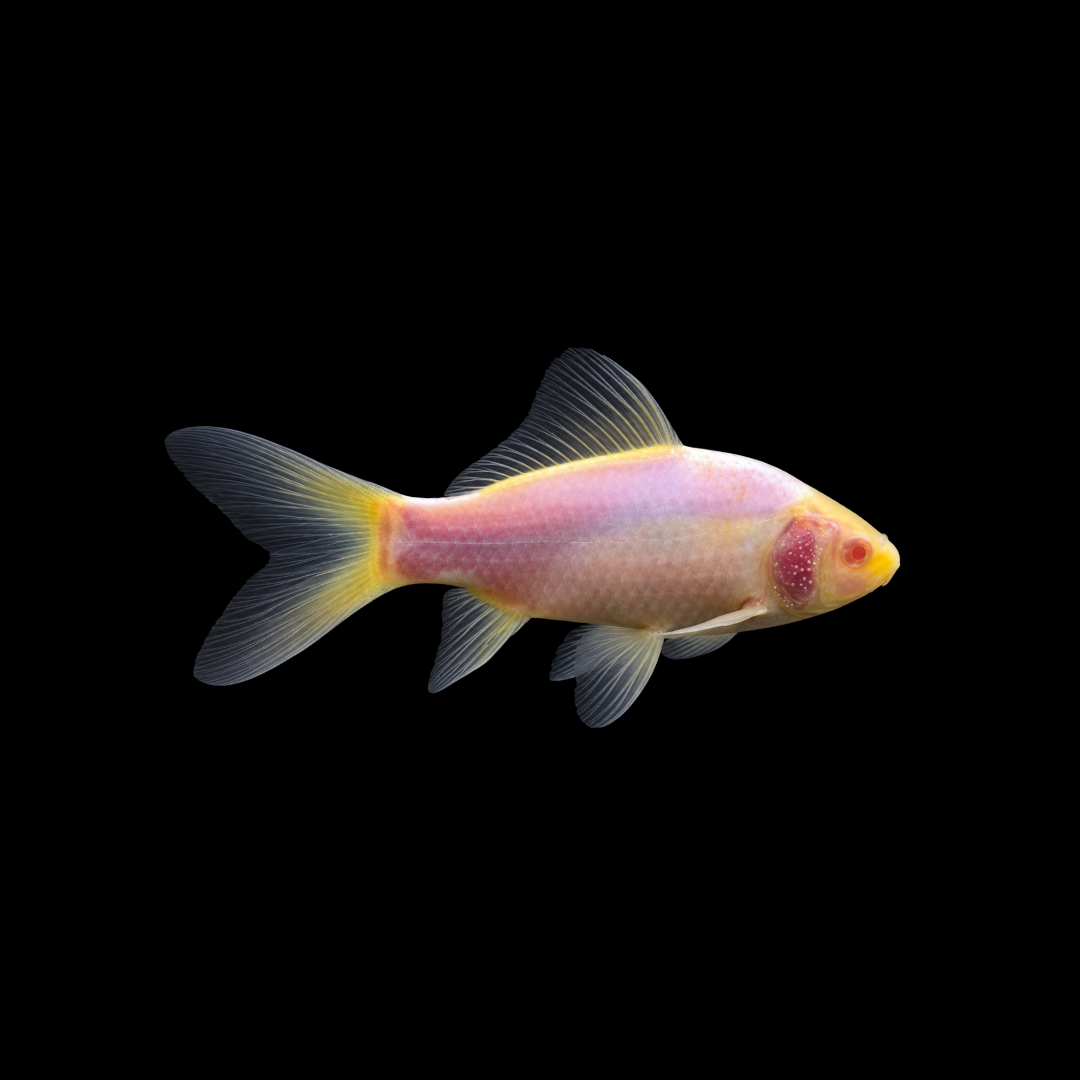
アルビノ朱文金は、朱文金の細長い和金型の体と単尾系の長い尾を受け継ぎながら、メラニン色素が著しく少ないため赤みを帯びた眼と白色から淡黄・淡橙色の体色を見せる金魚です。通常の朱文金では黒色素を含むキャリコ模様が大きな魅力になりますが、アルビノ個体では黒色が失われ、赤・黄系の色素や鱗の反射による白銀色の光沢が前面に現れます。外見は繊細でも、基本的な飼育生理は同じ長物金魚であり、十分な水量、強いろ過、安定した水質、広い遊泳空間が長期飼育の中心になります。アルビノ金魚ではoca2遺伝子群とメラニン形成の関係が研究されていますが、市場でアルビノ朱文金として流通するすべての個体について同一の遺伝子変異が確認されているわけではありません。そのため、外見上のアルビノ形質と、特定の遺伝子型を区別して理解することが大切です。Albino Shubunkin is a long-bodied goldfish that retains the streamlined Wakin-type form and single elongated tail of the Shubunkin while showing pinkish-red eyes and a white to pale yellow or orange body because melanin pigmentation is greatly reduced. In ordinary Shubunkins, black pigment is an important part of the calico pattern; in albino fish, the loss of black pigment allows red and yellow pigments and the silvery structural reflection of the scales to stand out. Despite its delicate appearance, its basic husbandry remains that of an active, long-bodied goldfish: ample water volume, strong filtration, stable water quality and generous swimming space are essential. Research in albino goldfish has linked oca2 genes to melanin formation, but not every commercially sold Albino Shubunkin has been genetically confirmed to carry the same mutation. It is therefore important to distinguish the visible albino phenotype from a specifically verified genotype.
基本情報 / Basic Information
学名 / Scientific Name
Carassius auratus
通称 / Common Name
アルビノ朱文金、赤目朱文金など。流通名は販売者によって異なる場合があります。Albino Shubunkin, Red-eyed Shubunkin. Trade names may vary among sellers.
分類 / Family
コイ目・コイ科・フナ属。金魚の改良品種で、朱文金のアルビノ表現型として扱われます。Order Cypriniformes, family Cyprinidae, genus Carassius. It is a selectively bred goldfish form treated in the hobby as an albino phenotype of the Shubunkin.
英名 / English Name
Albino Shubunkin Goldfish
分布 / Distribution
改良品種のため固有の自然分布はありません。金魚は東アジアで長い家畜化・品種改良の歴史を持ち、朱文金は日本で作出されました。アルビノ朱文金は国内繁殖個体のほか、海外で養殖された個体が観賞魚として流通することがあります。As a selectively bred ornamental form, it has no natural distribution of its own. Goldfish have a long history of domestication and selective breeding in East Asia, and the Shubunkin was developed in Japan. Albino Shubunkins in the aquarium trade may be domestically bred or imported from overseas breeders.
最大体長 / Max Size
アルビノ朱文金だけを対象にした最大体長の統計は乏しいものの、朱文金を含む長物金魚では25~30cm前後、良好な環境ではそれ以上に成長することがあります。小さな幼魚の販売サイズを成魚サイズと考えないことが重要です。Reliable maximum-size data specific to Albino Shubunkins are limited, but long-bodied goldfish such as Shubunkins commonly reach around 25–30 cm and can grow larger under favorable conditions. The small size of juveniles at retail should not be mistaken for adult size.
寿命 / Lifespan
アルビノ朱文金固有の寿命統計は確認されていません。金魚全般では10~15年以上が一つの目安で、良好な環境では20年以上生きる例もあります。アルビノだから必ず短命になると断定できる根拠はありません。No robust lifespan statistics are available specifically for Albino Shubunkins. Goldfish in general are often kept for 10–15 years or longer, and some live beyond 20 years under excellent conditions. There is no sound basis for assuming that every albino individual must have a shorter lifespan.
飼育環境 / Aquarium Environment
水槽サイズ / Tank Size
幼魚の一時的な飼育には60cm規格水槽を利用できますが、朱文金は活発に泳ぎ大型化するため、成魚では90cm規格水槽(約180L)以上を目安にし、複数飼育では120cm水槽や屋外池など、さらに余裕のある環境が適します。45cm水槽は長期飼育用としては小さく、成長に合わせた早めのサイズアップが必要です。A standard 60 cm aquarium can be used temporarily for juveniles, but Shubunkins are active swimmers that grow large. For adults, a standard 90 cm aquarium of roughly 180 L or larger is a practical baseline, while groups are better suited to a 120 cm tank, a large pond or similarly spacious housing. A 45 cm tank is too small for long-term adult care and should be upgraded well before the fish outgrows it.
水温 / Temperature
18~24℃前後を安定して維持すると飼育しやすく、急激な温度変化を避けます。朱文金は低温にも比較的強い金魚ですが、水槽飼育では極端な高温や短時間での温度変動を避けることが重要です。夏季は水温上昇と溶存酸素低下に注意します。A stable temperature of roughly 18–24°C is suitable for routine aquarium care, with sudden temperature changes avoided. Shubunkins are relatively tolerant of cool water, but extreme heat and rapid fluctuations should be prevented in aquaria. During summer, pay particular attention to rising water temperature and falling dissolved oxygen.
水質 / Water Quality
中性~弱アルカリ性を中心に、pH6.5~8.0程度の安定した水を目安とします。アンモニアと亜硝酸は0mg/Lを維持し、硝酸塩の蓄積も抑えます。金魚は排泄量が多いため、余裕のある生物ろ過とエアレーションを用い、水質検査の結果を見ながら週1回25~33%程度の換水を基本に調整します。水道水を使用する場合は塩素・クロラミンに対応したカルキ抜きを使用します。Aim for stable neutral to mildly alkaline water, roughly pH 6.5–8.0. Ammonia and nitrite should remain at 0 mg/L, and nitrate accumulation should be controlled. Because goldfish produce substantial waste, use generously sized biological filtration and aeration, and adjust water changes according to test results; a weekly change of about 25–33% is a useful starting point. When using tap water, treat it with a conditioner appropriate for chlorine and chloramine.
レイアウト / Layout
中央に広い遊泳スペースを残し、底床を使う場合は口に入れても傷つきにくい細かな砂や丸みのある砂利を選びます。マツモやアナカリスなど丈夫な水草は利用できますが、ついばまれたり抜かれたりすることがあります。流木や石は鋭い角を避け、追尾や驚いた際に体をぶつけにくい配置にします。アルビノ個体では眼の色素が乏しいため、直射日光や強すぎる照明を避け、浮草や遮光できる場所を用意すると落ち着きやすくなります。Leave a broad central swimming area. If substrate is used, choose fine sand or smoothly rounded gravel that is unlikely to injure the mouth. Hardy plants such as hornwort and Egeria can be used, although goldfish may nibble or uproot them. Avoid sharp wood or stones and arrange décor so fish are less likely to collide with it during chasing or sudden movement. Because albino fish have little ocular pigment, avoiding direct sunlight and excessively intense lighting and providing shaded areas or floating plants is a prudent husbandry approach.
注意点 / Precautions
最大の注意点は、販売時の小ささに合わせて水槽を決めないことです。長物金魚は成長すると遊泳量と排泄量が大きく増えます。過密飼育を避け、ろ過能力と水量に余裕を持たせます。アルビノでは視覚機能や光への反応に系統差があると考えられるため、餌を見つけにくい個体がいないか観察し、強い照明下で常に逃避する場合は照度を下げます。飛び出し防止のためフタも使用します。The most important precaution is not to size the aquarium according to the fish’s small retail size. As long-bodied goldfish mature, their swimming activity and waste production increase substantially. Avoid overcrowding and provide generous water volume and filtration capacity. Visual function and responses to light may vary among albino strains, so watch for individuals that have difficulty locating food or continually avoid bright areas, and reduce lighting when appropriate. A secure lid also helps prevent accidental jumping.
餌と給餌 / Feeding
餌の種類 / Diet
金魚用の総合栄養ペレットを主食にし、補助的に冷凍・乾燥赤虫、ミジンコ、ブラインシュリンプ、加熱または柔らかくした植物質の餌などを組み合わせます。成長期は適切なタンパク質を確保しつつ、単一の高タンパク餌だけに偏らせません。色揚げ成分を含む餌では赤や橙の色調が強く見えることがありますが、メラニン欠損そのものを餌で回復させることはできません。Use a nutritionally complete goldfish pellet as the staple diet, supplemented with foods such as frozen or dried bloodworms, daphnia, brine shrimp and softened or blanched vegetable matter. Growing fish benefit from adequate protein, but the diet should not rely exclusively on rich, high-protein foods. Color-enhancing feeds may intensify visible red or orange tones, but they cannot restore melanin that is absent because of the albino phenotype.
給餌のポイント / Feeding Tips
1日1~2回を基本に、短時間で食べ切れる少量を与えます。水温が高く活動量がある時期は状態を見ながら回数を増やせますが、食べ残しを出さないことを優先します。アルビノ個体で餌への反応が鈍い場合は、照明を少し落として落ち着かせ、餌を同じ場所に落とすなど学習しやすい給餌方法にすると取りこぼしを減らせます。体型、便、水質、季節によって量を調整します。Feed small portions once or twice daily as a general routine, offering only what can be consumed promptly. During warmer, more active periods, feeding frequency can be increased if water quality and body condition remain good, but avoiding leftovers is the priority. If an albino individual is slow to find food, slightly dimming the light and feeding consistently in the same location can make feeding easier to learn. Adjust quantity according to body condition, feces, water quality and season.
性格と混泳 / Temperament and Tank Mates
性格 / Temperament
基本的には温和で人にも慣れやすい金魚ですが、長物らしく遊泳力が高く、餌への反応も活発です。繁殖期にはオスがメスを長時間追尾するため、狭い水槽ではメスが消耗することがあります。アルビノだから性格が特別に攻撃的、または臆病になると一律には言えません。It is generally peaceful and often becomes accustomed to people, but like other long-bodied goldfish it is an active swimmer and an enthusiastic feeder. During the breeding season, males may chase females persistently, which can exhaust females in cramped quarters. Albinism alone does not justify assuming that every individual will be unusually aggressive or timid.
混泳の相性 / Compatibility
和金、コメット、通常の朱文金など、泳力と給餌速度が近い単尾・長物金魚との混泳が合わせやすい組み合わせです。らんちゅう、ピンポンパール、出目金など泳ぎが遅い丸物金魚とは、餌取り競争や接触の面で不利が出ることがあります。小型魚は誤って口に入る可能性があり、熱帯性の魚とは適温も異なるため、金魚同士を基本に考えるのが安全です。The best companions are similarly fast single-tailed goldfish such as Common Goldfish, Comets and ordinary Shubunkins. Slow fancy varieties such as Ranchu, Pearlscale and Telescope Goldfish may be disadvantaged during feeding or by physical contact. Very small fish may be swallowed accidentally, and tropical species often require different temperatures, so a goldfish-focused community is generally the safest approach.
病気と対策 / Diseases and Prevention
かかりやすい病気 / Common Diseases
アルビノ朱文金だけに特有の代表的疾病が確立しているわけではなく、金魚一般と同様に白点病、細菌性の尾ぐされ・体表炎症、寄生虫症、消化不良や浮力異常などに注意します。「松かさ」は単一の病名というより、体液バランスの異常や全身状態悪化に伴って鱗が立つ症状として現れるため、原因の切り分けが必要です。No major disease is established as unique to Albino Shubunkins. As with other goldfish, watch for ich, bacterial fin or skin infections, external parasites, digestive problems and buoyancy disorders. “Dropsy” or pineconing is better regarded as a clinical sign associated with systemic illness or fluid imbalance rather than one single disease, so identifying the underlying cause is important.
対策と予防 / Prevention
予防の中心は、アンモニア・亜硝酸を0に保つこと、過密を避けること、急変のない換水を行うこと、新規導入魚を別容器で観察することです。異常が出たらまず水温・pH・アンモニア・亜硝酸などを確認し、病魚を必要に応じて隔離します。塩水浴や魚病薬は症状によって適否が異なるため万能策として常用せず、原因を推定したうえで観賞魚用製品の表示用量に従います。アルビノ個体だから薬に必ず弱いという一律の根拠は乏しく、体色よりも魚の状態と水質を基準に判断します。Prevention centers on keeping ammonia and nitrite at zero, avoiding overcrowding, making water changes without abrupt parameter shifts and observing newly acquired fish separately before introduction. When illness appears, first check temperature, pH, ammonia and nitrite, and isolate affected fish when necessary. Salt baths and medications are not universal remedies; their usefulness depends on the condition, so treatment should follow a reasoned diagnosis and the labeled dose of an aquarium-fish product. There is little basis for assuming that every albino goldfish is inherently intolerant of medication; decisions should be guided by the fish’s condition and water quality rather than color alone.
増やし方(繁殖) / Breeding
雌雄の判別 / Sexing
繁殖期のオスはエラぶたや胸びれ前縁に白い追星が現れやすく、メスを追尾します。メスは成熟すると腹部がふっくらし、排泄孔がやや突出して見えることがあります。ただし幼魚や非繁殖期は外見だけでの判別が難しく、複数の特徴を合わせて判断します。During the breeding season, males commonly develop small white breeding tubercles on the gill covers and leading rays of the pectoral fins and actively chase females. Mature females often become fuller in the abdomen and may show a slightly more prominent vent. Juveniles and fish outside the breeding season can be difficult to sex reliably, so several characteristics should be considered together.
繁殖形態 / Reproduction
卵生で、春から初夏にかけて水温上昇をきっかけに産卵しやすくなります。オスがメスを追尾し、メスが水草や産卵床に粘着性の卵を放ち、オスが放精して受精します。親魚は卵を食べるため、採卵後は親魚を別容器へ移すか、産卵床を育成容器へ移します。It is an egg-laying fish that commonly spawns from spring into early summer as water temperatures rise. Males chase females, which scatter adhesive eggs among plants or spawning mops while males release milt. Because adult goldfish readily eat their own eggs, move the parents after spawning or transfer the egg-covered spawning material to a separate rearing container.
繁殖のポイント / Breeding Tips
繁殖水温は18~22℃前後から扱いやすく、受精卵は水温に左右されながら数日で孵化します。孵化直後の仔魚は卵黄を吸収しながら壁面や産卵床に付着し、その後に自由遊泳を始めます。自由遊泳を確認してから、微細な稚魚用飼料や孵化直後のブラインシュリンプなどを少量ずつ与えます。稚魚期は過密と水質悪化が最大の失敗要因になりやすいため、弱いエアレーション、十分な生物ろ過、こまめな残餌除去を行います。アルビノ形質は古くから劣性遺伝として報告されていますが、現代の金魚研究では重複したoca2遺伝子の関与が示されており、単純な一遺伝子モデルだけで市販系統すべての分離比を断定しない方が安全です。アルビノ親と通常色親を交配する場合も、通常色親が保因しているか、系統の遺伝背景がどうなっているかで子の表現型は変わります。Breeding is readily managed around 18–22°C, and fertilized eggs hatch after several days depending on temperature. Newly hatched larvae remain attached to surfaces while absorbing their yolk reserves, then begin free swimming. Once free swimming is established, offer very fine fry food or newly hatched brine shrimp in small portions. Overcrowding and deteriorating water quality are major causes of fry losses, so use gentle aeration, adequate biological filtration and frequent removal of uneaten food. Albinism in goldfish has long been described as recessive, while modern genetic work also demonstrates involvement of duplicated oca2 genes. For that reason, it is safer not to assume that every commercial strain will follow a simple single-gene segregation ratio. Offspring from an albino and a normally colored parent can vary depending on whether the normal parent carries relevant alleles and on the genetic background of the strain.
雑学と豆知識 / Trivia and Fun Facts
1. 朱文金は江戸品種ではなく、近代日本で生まれた / 1. The Shubunkin is a modern Japanese creation, not an Edo-period variety
朱文金の来歴をたどると、一般に秋山吉五郎が1900年前後に三色出目金系統と和金・緋鮒系統を交配して作出した品種とされています。江戸時代にはすでに多彩な金魚文化が花開いていましたが、朱文金そのものの成立はそれより後です。透明鱗を交えた青みのある地色に赤や黒が散る姿は、当時としても新鮮な表現で、のちに海外へ渡ってロンドン朱文金やブリストル朱文金など地域ごとの選抜系統へ発展しました。Historical accounts generally credit Yoshigoro Akiyama with developing the Shubunkin around 1900 by crossing calico telescope-eye stock with Wakin or red crucian-type goldfish. Japan already had a rich goldfish culture during the Edo period, but the Shubunkin itself appeared later. Its nacreous, bluish background scattered with red and black was a striking color expression and later inspired regional strains overseas, including London and Bristol Shubunkins.
2. 「赤い眼」は血管そのものが赤いのではなく、色素が少ないため内部色が見えやすい / 2. Red eyes result from reduced pigment making internal coloration more visible
アルビノの眼が赤く見えるのは、虹彩や網膜色素上皮などのメラニンが少なく、眼の内部にある血液由来の色が透けて見えやすくなるためです。通常の黒い眼ではメラニンが光を吸収して内部構造を目立たなくします。アルビノではこの遮光機能が弱くなるため、光の感じ方や視覚機能に影響が出る可能性があります。ただし、実際の反応には個体差や系統差があり、「アルビノなら必ずほとんど見えない」と考えるのは行き過ぎです。Albino eyes appear pink or red because melanin is greatly reduced in structures such as the iris and retinal pigment epithelium, allowing blood-associated coloration inside the eye to show through more clearly. In a normally dark eye, melanin absorbs light and masks much of this internal appearance. Reduced pigmentation can affect light handling and visual function, but the degree varies among individuals and strains; it is an overstatement to assume that every albino goldfish is nearly blind.
3. アルビノ金魚研究ではoca2が重要な鍵になった / 3. oca2 became a key gene in modern research on albino goldfish
2020年に発表された金魚の形態多様性研究では、アルビノ系統でoca2遺伝子の変異がアルビノ形質の有力な原因として示されました。さらに2022年の研究では、金魚がもつ2つのoca2ホメオログが体表と眼のメラニン形成を分担していることが実験的に示され、アルビノ表現型との因果関係がより明確になりました。金魚はゲノム重複の歴史を持つため、ヒトのように単純に「OCA2が1つ壊れれば同じ結果」と説明できない点が、この魚の遺伝学の面白さでもあります。A 2020 study of morphological diversity in goldfish identified mutations in oca2 as strong candidates underlying albino strains. Work published in 2022 went further by experimentally demonstrating that two goldfish oca2 homeologs contribute differently to melanin formation in the body surface and pupils, strengthening the causal link to the albino phenotype. Because goldfish experienced genome duplication, their pigment genetics cannot always be reduced to the simple idea that disruption of one single OCA2 copy produces the same outcome in every strain.
4. 「白い金魚」と「アルビノ」は同じ意味ではない / 4. A white goldfish is not automatically an albino goldfish
金魚には、メラニンを欠くアルビノ以外にも、成長に伴う褪色、赤色素の少ない白勝ち個体、透明鱗・モザイク透明鱗の組み合わせなど、白く見える仕組みが複数あります。そのため体が白いだけではアルビノとは判断できません。赤みを帯びた眼は重要な外見的手掛かりですが、繁殖用の系統として遺伝型を重視する場合は、親魚の記録や交配履歴まで確認する方が確実です。Goldfish can look white for many reasons other than albinism, including age-related color loss, reduced red pigmentation and combinations of transparent or nacreous scales. A pale or white body by itself therefore does not prove albinism. Pinkish-red eyes are an important visible clue, but breeders who need genetic certainty should also examine parentage records and breeding history rather than relying on appearance alone.
5. 日本への輸入では水産輸入防疫の対象になる / 5. Importation into Japan is subject to aquatic-animal quarantine rules
日本ではフナ属魚類に金魚が含まれ、生きた金魚を対象国・地域から輸入する場合は、水産資源保護法に基づく水産輸入防疫の手続きが関係します。2026年6月9日の制度見直し後も金魚は対象水産動物として明記されており、輸入許可申請や輸出国政府機関が発行する検査証明書などが求められる場合があります。一方、魚類の販売そのものは、動物愛護管理法における第一種動物取扱業の登録対象である哺乳類・鳥類・爬虫類には含まれません。法規は改正されるため、実際の輸入時には農林水産省と動物検疫所の最新条件を確認する必要があります。In Japan, goldfish are included within the genus Carassius for aquatic-animal import quarantine. Importing live goldfish from relevant countries or regions can therefore require procedures under the Fisheries Resources Protection Act. Following the system revision of June 9, 2026, goldfish remain explicitly listed as target aquatic animals, and import permission applications and health certificates issued by the exporting country’s government authority may be required. By contrast, fish sales themselves are not included in the mammal, bird and reptile categories covered by registration as a Type I Animal Handling Business under Japan’s Animal Welfare and Management Act. Because legal requirements can change, importers should always confirm the latest conditions with Japan’s Ministry of Agriculture, Forestry and Fisheries and the Animal Quarantine Service.
6. 流通名は遺伝学上の系統名とは限らない / 6. A trade name is not necessarily a genetically defined strain name
観賞魚の流通では、生産者・輸入業者から卸売業者を経て専門店や通販へ渡り、最終的に飼育者の手に届くのが一般的です。その途中で使われる「アルビノ朱文金」という名称は、見た目を示す販売名として使われることがあり、すべてが同じ血統・同じ遺伝子変異で固定された単一系統とは限りません。価格もサイズ、尾形、体型、色の残り方、親魚の系統、国内産・輸入などで変動するため、一定の相場だけで品質を判断しない方がよいでしょう。In the ornamental-fish trade, fish commonly move from breeders or importers to wholesalers, then to specialty shops or online retailers before reaching aquarists. The label “Albino Shubunkin” may function as a descriptive trade name, so not every fish sold under it necessarily belongs to one genetically fixed lineage with the identical mutation. Price also varies with size, tail quality, body shape, residual color, parentage and domestic or imported origin, so a single price range is a poor substitute for evaluating the fish itself.
まとめ / Conclusion
アルビノ朱文金の魅力は、朱文金らしい軽快な泳ぎと、黒色素を欠くことで生まれる赤い眼、乳白色から淡い暖色の体色が同時に楽しめるところにあります。見た目の繊細さだけを理由に特別扱いしすぎる必要はありませんが、強い光を避ける工夫と、餌をきちんと見つけられているかの観察は丁寧に行いたいポイントです。The appeal of the Albino Shubunkin lies in the combination of the lively swimming style of a Shubunkin with pink-red eyes and a milky white to softly warm body color created by the loss of black pigment. Its delicate appearance does not mean it needs completely different husbandry, but thoughtful lighting and careful observation of how well each fish finds food are worthwhile.
そして長く付き合ううえで最も大切なのは、アルビノという希少性よりも、長物金魚としての本来の大きさと活動量を尊重することです。成長後を見越した広い水槽や池、十分なろ過、安定した水質を用意できれば、淡い体色が水中をゆったり横切る独特の存在感を、年月をかけて楽しむことができます。For long-term care, the most important point is not the rarity of albinism but respect for the adult size and activity level of a long-bodied goldfish. With a spacious aquarium or pond, strong filtration and stable water quality planned for mature size, the fish can develop into a distinctive, graceful presence whose pale coloration can be enjoyed for many years.
Kobayashi, M., Iwata, E. & Sorensen, P. W. (2026). Environmental and Physiological Regulation of Reproduction in the Goldfish: Gonadal Development, Maturation, and Spawning Behavior: A Review.
Li, I.-J., Chang, C.-J., Liu, S.-C., Abe, G. & Ota, K. G. (2015). Postembryonic staging of wild-type goldfish, with brief reference to skeletal systems.






コメント