

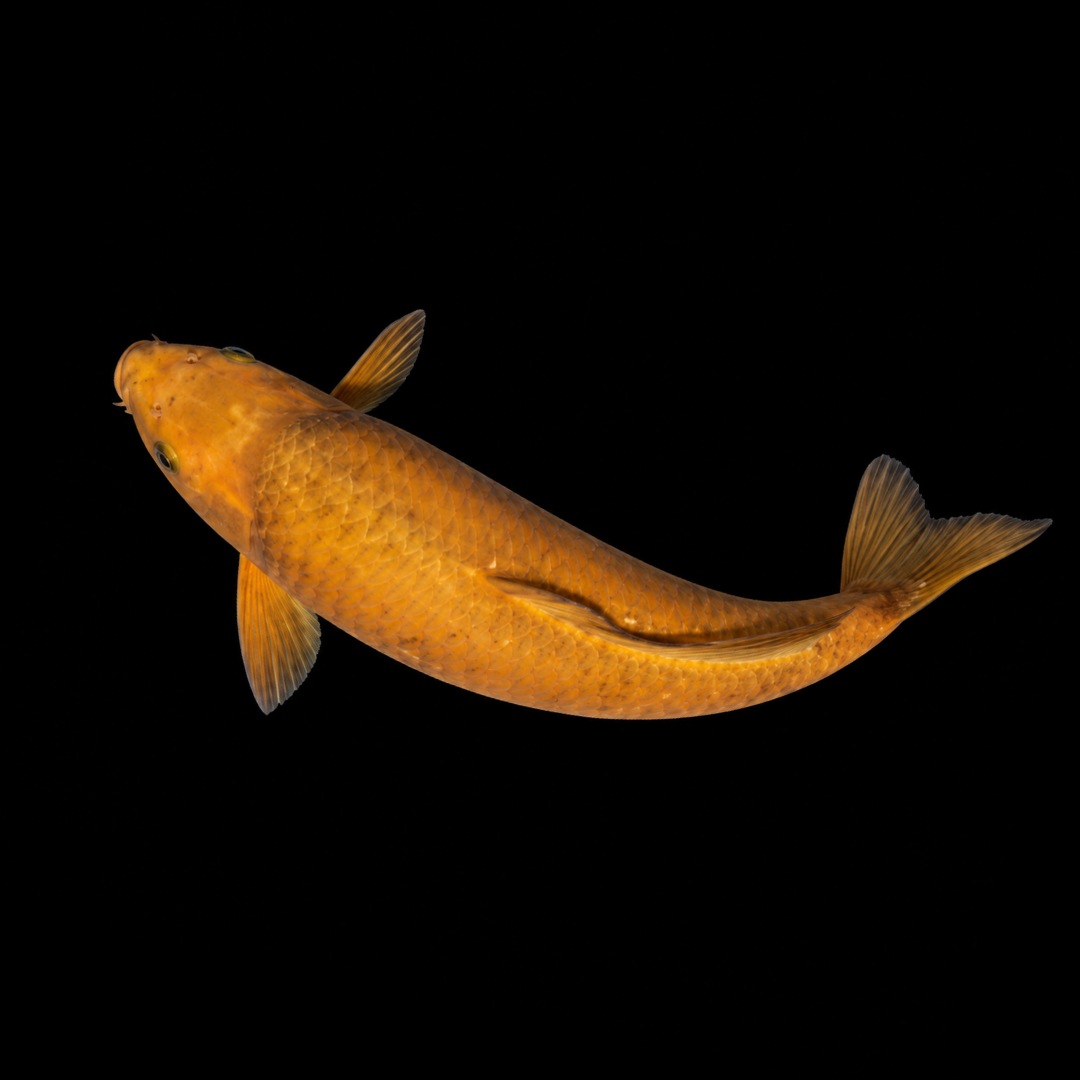
解説 / Description
茶鯉(ちゃごい)は、全身が落ち着いた茶褐色に包まれた単色の錦鯉です。華やかな斑紋ではなく、太く伸びやかな体型、均一な地肌、鱗の輪郭を引き立てる覆輪の美しさが見どころです。一般に温和で人に慣れやすいとされ、給餌時にいち早く寄ってくる姿も親しまれています。一方、成長すると80cmを超えることもある大型魚で、一般的な室内水槽では終生飼育できません。十分な水量、強力なろ過、豊富な酸素、ゆとりある遊泳空間を備えた池で飼育することが基本です。 Chagoi is a solid-colored nishikigoi covered in calm shades of tea brown. Rather than bold markings, it is appreciated for its broad, flowing body, even ground color, and the fukurin that defines the scales. It is generally regarded as gentle and easy to accustom to people, and is often among the first koi to approach at feeding time. Chagoi may exceed 80 cm as an adult and cannot be kept for life in an ordinary indoor aquarium. A pond with ample water volume, powerful filtration, abundant oxygen, and generous swimming space is the basis of suitable care.
基本情報 / Basic Information
| 学名 / Scientific Name | Cyprinus carpio Linnaeus, 1758 |
|---|---|
| 通称 / Common Name | 茶鯉、チャゴイChagoi, tea-colored koi |
| 分類 / Family | コイ目コイ科コイ属。コイを観賞用に選抜した錦鯉の一品種です。非金属光沢の単色系に属し、品評会団体の区分では「無地もの」または変わり鯉の単色系として扱われます。Order Cypriniformes, family Cyprinidae, genus Cyprinus. It is an ornamental variety of common carp and belongs to the non-metallic, solid-colored group. Depending on the show organization, it may be classified as Mujimono or among the solid-colored Kawarigoi. |
| 英名 / English Name | Chagoi, Tea-colored koi |
| 分布 / Distribution | 日本で発展した錦鯉の品種で、現在は観賞魚として世界各地で飼育されています。種としてのコイはユーラシアの一部を自然分布域とし、人為的な移植によって世界の広い地域に定着しています。A nishikigoi variety developed in Japan and now kept worldwide as an ornamental fish. The common carp as a species is native to parts of Eurasia and has become established widely through human introduction. |
| 最大体長 / Max Size | 個体差はありますが、良好な環境では80〜90cmほどに達することがあり、100cmを超える個体も知られています。ただし、すべての茶鯉が大型化するわけではありません。最終的な大きさは、遺伝的な素質に加え、給餌、水量、水質、飼育密度などに左右されます。Size varies among individuals, but Chagoi may reach about 80–90 cm under good conditions, and individuals exceeding 100 cm are known. Not every Chagoi becomes exceptionally large. Final size depends on genetic potential as well as feeding, water volume, water quality, and stocking density. |
| 寿命 / Lifespan | 飼育下では20〜40年ほどが目安とされる長寿の魚です。ただし、茶鯉だけを対象にした十分な寿命統計はなく、飼育環境や個体差によって大きく変わります。極端な長寿例は、一般的な飼育目安とは分けて考える必要があります。Koi are long-lived fish, with roughly 20–40 years often used as a captive-care reference. Robust lifespan statistics specific to Chagoi are not available, and longevity varies greatly with husbandry and the individual. Exceptional longevity claims should not be treated as a normal expectation. |
飼育環境 / Aquarium Environment
| 水槽サイズ / Tank Size | 成魚は数千L以上の屋外池で飼育するのが基本です。必要な水量は、個体数、魚体サイズ、池の形、ろ過能力によって変わるため、一律の最低値だけでは判断できません。複数個体を長期飼育する場合は、10,000L規模以上の池と低い飼育密度が管理しやすい目安になります。120cmワイド水槽でも成魚の終生飼育には小さく、当歳魚の短期育成や隔離用途に限られます。Adults should normally be kept in an outdoor pond holding several thousand liters or more. Required volume varies with fish number, body size, pond shape, and filtration capacity, so one universal minimum cannot define suitable care. For long-term care of several koi, a pond on the scale of 10,000 L or more with a low stocking density is a more manageable reference. Even a 120 cm wide-format aquarium is too small for lifelong adult care and should be limited to short-term juvenile holding or quarantine. |
|---|---|
| 水温 / Temperature | 日常管理の目安は15〜25℃で、成長期の給餌は20〜25℃前後で安定していると行いやすくなります。季節変化には比較的適応しますが、急変は避けてください。低水温時は代謝と消化が落ちるため、水温に合わせて給餌量を減らします。 A useful routine range is 15–25°C, with growth-season feeding easiest to manage around a stable 20–25°C. Chagoi can adapt to seasonal change, but abrupt shifts should be avoided. Metabolism and digestion slow in cold water, so feeding must be reduced as temperature falls. |
| 水質 / Water Quality | pH 6.5〜8.5を目安に、数値そのものだけでなく日内変動を小さく保ちます。アンモニアと亜硝酸は検出されない状態を維持し、溶存酸素は6mg/L以上を目標にします。十分な能力を持つ生物ろ過と物理ろ過を組み合わせ、定期的な部分換水や管理された差し水で硝酸塩と溶存有機物の蓄積を抑えます。水道水を使う場合は、塩素やクロラミンを適切に中和してください。Aim for pH 6.5–8.5 and keep daily fluctuation small rather than focusing only on a single reading. Keep ammonia and nitrite undetectable and target dissolved oxygen of at least 6 mg/L. Combine adequately sized biological and mechanical filtration, and use regular partial water changes or a controlled trickle exchange to limit nitrate and dissolved organic buildup. When using tap water, neutralize chlorine or chloramine appropriately. |
| レイアウト / Layout | 広い遊泳面積と十分な水深を確保し、魚体を傷つける尖った石や狭い隙間は避けます。底排水、沈殿槽やドラムフィルターなどの物理ろ過、生物ろ過、常時稼働のエアレーションを組み合わせると管理しやすくなります。夏の過昇温を防ぐ日陰と、飛び出しやサギ・猫などから守る対策も必要です。Provide broad swimming space and adequate depth, avoiding sharp stones and tight gaps that can injure the body. Maintenance is easier with bottom drainage, mechanical filtration such as a settlement chamber or drum filter, biological filtration, and continuous aeration. Shade against summer overheating and protection from jumping, herons, cats, and other predators are also important. |
| 注意点 / Precautions | 成長後の大きさを見越して池とろ過能力を準備し、過密飼育を避けます。新しい個体は既存の池へ直接入れず、別設備で健康状態を観察してから合流させてください。網、タモ、容器の共用は病原体を広げるため、洗浄・消毒・十分な乾燥を徹底します。飼育魚を河川や湖沼へ放流してはいけません。Plan the pond and filtration for adult size and avoid crowding. Do not place a new fish directly into the established pond; observe it in a separate system before introduction. Nets, bowls, and other shared equipment can spread pathogens, so clean, disinfect, and dry them thoroughly. Never release captive koi into rivers or lakes. |
餌と給餌 / Feeding
| 餌の種類 / Diet | 雑食性です。主食には錦鯉用の総合栄養ペレットを用い、魚体サイズと水温に合う粒径・配合を選びます。成長期には成長用飼料、低水温期にはメーカーが対応水温を明示した消化しやすい飼料を選びます。野菜や水生無脊椎動物などは補助的な餌にとどめ、栄養の偏りと水の汚れを防ぎます。Chagoi is omnivorous. Use a complete koi pellet as the staple, selecting pellet size and formulation for the fish and water temperature. Growth feed may be used during the growing season, while cooler conditions call for an easily digested product whose manufacturer specifies use at that temperature. Vegetables and aquatic invertebrates should remain occasional supplements to avoid nutritional imbalance and water fouling. |
|---|---|
| 給餌のポイント / Feeding Tips | 水温、魚の体調、ろ過能力を見ながら、3〜5分で食べ切れる量を少しずつ与えます。暖かい成長期は1日の適量を2〜4回に分け、低水温時は回数と量を減らします。水温が10℃前後を下回る時期は、魚の動きと使用飼料の表示を確認し、給餌を大幅に控えるか休止します。食べ残しは回収し、急な食欲低下が見られたら水質と健康状態を確認してください。Adjust feeding to water temperature, fish condition, and filter capacity, offering small amounts that are finished within about 3–5 minutes. During the warm growing season, divide the appropriate daily ration into two to four meals; reduce both amount and frequency as the water cools. Around or below 10°C, check the fish’s activity and the feed manufacturer’s directions, then greatly restrict or stop feeding. Remove leftovers, and check water quality and health if appetite drops suddenly. |
性格と混泳 / Temperament and Tank Mates
| 性格 / Temperament | 茶鯉は一般に温和で、食欲が旺盛、人に慣れやすい品種として知られています。手から餌を受け取る個体もいますが、こうした性質には個体差があり、すべての茶鯉に当てはまるわけではありません。毎日同じ場所で静かに給餌し、驚かせないことが、警戒心を和らげる助けになります。Chagoi is generally known as a gentle, food-motivated variety that readily becomes accustomed to people. Some individuals take food from the hand, but temperament varies and these traits do not apply equally to every Chagoi. Quiet feeding in the same place each day, without startling the fish, can help reduce wariness. |
|---|---|
| 混泳の相性 / Compatibility | 同程度の大きさの錦鯉とは良好に混泳できます。金魚との同居も不可能ではありませんが、体格差、給餌競争、病原体の持ち込み、必要水量の違いに注意が必要です。口に入る小魚やエビは捕食される可能性があり、熱帯性の魚、攻撃的な魚、ヒレをかじる魚との混泳は避けます。大型個体が餌場を独占しないよう、複数箇所へ分けて給餌してください。It usually mixes well with similarly sized koi. Cohabitation with goldfish is possible, but size differences, feeding competition, pathogen introduction, and different space requirements must be considered. Small fish or shrimp that fit in the mouth may be eaten, and tropical, aggressive, or fin-nipping species should be avoided. Feed at several points so that a large individual cannot monopolize the food. |
病気と対策 / Diseases and Prevention
| かかりやすい病気 / Common Diseases | 茶鯉だけに特有の病気は知られていませんが、錦鯉としてコイヘルペスウイルス病(KHV)、コイ浮腫ウイルス病、エロモナス属細菌などによる赤斑や潰瘍、白点病、ギロダクチルスやダクチロギルスなどの寄生虫症に注意が必要です。体表の充血や潰瘍、過剰な粘液、鰓の異常、動きの鈍化、体をこすりつける動作、急な食欲低下は見逃せない徴候です。No disease is known to be unique to Chagoi, but as koi it can be affected by koi herpesvirus disease, carp edema virus disease, reddening or ulcers associated with Aeromonas and other bacteria, white spot disease, and parasites such as Gyrodactylus and Dactylogyrus. Redness or ulcers, excess mucus, abnormal gills, lethargy, flashing against surfaces, and sudden appetite loss are important warning signs. |
|---|---|
| 対策と予防 / Prevention | 予防の基本は、アンモニアと亜硝酸を蓄積させない成熟したろ過、十分な酸素、適正な飼育密度、急変のない水温とpHです。導入魚の隔離観察、器具の消毒、信頼できる販売元の利用によって、病原体を持ち込むリスクを下げます。異常が見られたら、まず隔離して水質を測定し、体表や鰓の検査ができる魚類診療の専門家へ相談してください。病名を推測したまま塩や抗菌薬を一律に投与したり、専門知識なしに患部を処置したりすると、かえって悪化させる危険があります。大量死や鰓の退色・びらんなどからKHVが疑われる場合は、魚の移動を止め、自治体の水産担当部署へ確認します。Prevention begins with mature filtration that prevents ammonia and nitrite from accumulating, abundant oxygen, appropriate stocking density, and stable temperature and pH. Quarantine new fish, disinfect equipment, and buy from reputable sources to reduce the risk of introducing pathogens. If abnormalities appear, first isolate the fish, test the water, and consult an aquatic veterinarian or fish-health professional who can examine the skin and gills. Blanket use of salt or antimicrobials without a diagnosis, or treating lesions without appropriate expertise, can make the condition worse. If mass mortality, pale gills, or gill erosion raises suspicion of KHV, stop moving fish and contact the relevant local fisheries authority. |
増やし方(繁殖) / Breeding
| 雌雄の判別 / Sexing | 成熟した雌は繁殖期に腹部がふっくらし、生殖孔が大きく丸みを帯びる傾向があります。雄は体つきが比較的すっきりし、胸鰭の前縁や鰓蓋に白い追星が現れることがあります。ただし若魚や繁殖期以外では外見だけの判別は難しく、単独の特徴で断定しないことが大切です。A mature female often develops a fuller abdomen and a larger, rounder vent in the breeding season. Males tend to be slimmer and may develop white breeding tubercles on the leading edge of the pectoral fins and on the gill covers. Visual sexing is difficult in young fish and outside the breeding season, so no single feature should be treated as conclusive. |
|---|---|
| 繁殖形態 / Reproduction | 卵生で、通常は複数の雄が雌を追尾し、水草や産卵ブラシなどに粘着性の卵を産みつけます。温帯域では主に春から初夏、水温が15〜20℃ほどへ上昇する時期に繁殖行動が起こりやすくなります。親魚は卵や仔魚を保護せず、産卵後に卵を食べることがあります。Chagoi is egg-laying and polygamous: several males commonly chase a female as she deposits adhesive eggs on plants or spawning brushes. In temperate regions, spawning generally occurs from spring into early summer as water rises to roughly 15–20°C. The parents do not guard the eggs or fry and may eat the eggs after spawning. |
| 繁殖のポイント / Breeding Tips | 十分に成熟し健康な親魚を選び、広い繁殖池に産卵ブラシを用意します。激しい追尾で雌が傷つくことがあるため、逃げ場を確保し、状態を観察します。産卵を確認したら親魚を別の池へ移し、卵には穏やかな通水と十分な酸素を与えます。孵化後は微細な初期餌料から段階的に切り替えます。茶褐色、体型、覆輪、成長性は複数の遺伝要因と環境の影響を受けるため、茶鯉同士を交配してもすべての仔が親と同じ品質になるとは限りません。Select mature, healthy broodfish and provide spawning brushes in a roomy breeding pond. Vigorous chasing can injure the female, so include escape space and monitor the fish. Once spawning is complete, move the adults away and provide the eggs with gentle water movement and abundant oxygen. After hatching, begin with suitably fine first foods and increase food size gradually. Tea-brown color, body shape, fukurin, and growth are influenced by multiple genetic and environmental factors, so even a Chagoi-to-Chagoi pairing will not produce uniformly parent-quality offspring. |
雑学と豆知識 / Trivia and Fun Facts
| 1. 茶色一色だからこそ見える美 / 1. Beauty revealed by a single color | 紅白や三色のような大胆な模様を持たない茶鯉では、体型と地肌が鑑賞の中心になります。頭から尾筒まで色むらが少なく、鱗が規則正しく並び、鱗の周囲に覆輪が現れると、泳ぐたびに細かな網目が光を受けて動きます。若魚では控えめだった表情が、成長して鱗が大きくなるにつれて深まる点も、長く育てる魅力です。Without the bold patterning of Kohaku or tricolored koi, a Chagoi’s body form and skin become the focus of appreciation. When the color remains even from head to tail tube, the scales align neatly, and fukurin develops around them, a fine netlike texture moves through the light as the fish swims. The effect may be subtle in a juvenile and become richer as the scales enlarge with age, adding to the appeal of long-term care. |
|---|---|
| 2. 「ポンド・テイマー」と呼ばれる理由 / 2. Why aquarists call it a “pond tamer” | 海外の愛好家の間では、人に慣れやすい茶鯉を「ポンド・テイマー」と呼ぶことがあります。一尾が落ち着いて水面へ出ると、ほかの鯉も給餌場所へ集まりやすくなるという飼育者の経験から生まれた呼び名です。ただし、これは愛好家の間で使われる表現であり、茶鯉が必ず群れを率いることを示す科学用語ではありません。旺盛な食欲と、人に慣れやすいとされる性質への親しみが、この呼び名に表れています。Among international koi keepers, a people-friendly Chagoi is sometimes called a “pond tamer.” The nickname grew from keepers’ observations that when one fish calmly rises to feed, other koi may gather more readily. It is an enthusiast’s expression, not a scientific term showing that every Chagoi will lead its group. The name reflects affection for the variety’s strong appetite and reputation for becoming accustomed to people. |
| 3. 色を作るのは一つの遺伝子ではない / 3. One gene does not make the color | 錦鯉の体色は、複数の色素細胞の分布と働きが組み合わさって生まれます。研究では、錦鯉の色素細胞の発生にmitfa遺伝子が関わることが示されています。ただし、この研究は茶鯉の茶褐色を直接調べたものではなく、茶鯉の色を一つの遺伝子だけで説明することはできません。つまり、均一に見える一色にも、複数の遺伝要因と育成環境が関わっていると考えるのが適切です。Koi body color arises from the combined distribution and activity of several types of pigment cells. Research has shown that the mitfa gene is involved in pigment-cell development in koi. That study did not directly investigate the brown color of Chagoi, however, and one gene alone cannot explain the variety’s coloration. In practical terms, even a color that appears uniform reflects multiple genetic influences together with the rearing environment. |
| 4. 大きくなる素質と「大きくする飼育」は別物 / 4. Growth potential and growth husbandry are different | 茶鯉は大型化しやすい品種として評価されていますが、血統だけで最終的な大きさが決まるわけではありません。十分な水量、低い飼育密度、豊富な酸素、安定した水質、消化できる範囲の給餌がそろって初めて、遺伝的な素質を生かせます。大量給餌だけで成長を急がせると、ろ過能力を超えて水質が悪化し、かえって健康を損ないます。Chagoi is valued for its potential to grow large, but bloodline alone does not determine final size. Genetic potential can be supported only when ample water volume, low stocking density, abundant oxygen, stable water quality, and digestible feeding work together. Trying to force growth through heavy feeding alone can exceed filtration capacity, degrade water quality, and harm the fish. |
| 5. 錦鯉の歴史を支える新潟の風土 / 5. Niigata’s landscape behind nishikigoi history | 錦鯉の歴史は、新潟県小千谷市と長岡市の一部にあたる旧二十村郷で、約200年前に食用のマゴイから生まれた色変わりの個体を観賞用に飼育したことに始まるとされています。山間地では、田の用水を蓄える池がコイの飼育にも利用され、暮らしの中で選抜と品種改良が重ねられてきました。茶鯉の落ち着いた色は華やかな品種の対極に見えますが、体型、肌、鱗という錦鯉の基本的な美しさを素直に味わえる存在です。Nishikigoi history is said to have begun about 200 years ago in the former Nijumurago area, now parts of Ojiya and Nagaoka in Niigata Prefecture, when color variants arising among common carp raised for food were kept for ornament. In this mountain region, ponds storing water for rice fields were also used to raise carp, allowing selection and breeding to develop within everyday life. Chagoi’s quiet color may seem the opposite of showier varieties, yet it presents the fundamental beauty of koi body, skin, and scales with unusual clarity. |
まとめ / Conclusion
茶鯉は、落ち着いた茶褐色、整った覆輪、堂々とした体型を、年月をかけて育てる錦鯉です。人に慣れやすいとされる温和な性格も魅力ですが、長く健康に飼うには、大型魚にふさわしい水量、十分なろ過と酸素、過密を避けた管理が欠かせません。 Chagoi is a nishikigoi whose calm tea-brown color, orderly fukurin, and imposing body are developed over many years. Its reputation for a gentle, people-friendly temperament adds to its appeal, but long-term health depends on water volume suited to a large fish, adequate filtration and oxygen, and uncrowded care.
派手な模様に頼らないからこそ、一枚ずつの鱗、滑らかな泳ぎ、給餌者へ近づく仕草までが個性として映ります。十分な環境を整えて長く向き合うことで、茶鯉は群れの中に穏やかな存在感をもたらし、成長を見守る楽しみを深めてくれます。 Because it does not rely on dramatic markings, every scale, each smooth movement, and the gesture of approaching a familiar keeper becomes part of its character. With suitable surroundings and years of thoughtful care, Chagoi brings a calm presence to the group and deepens the pleasure of watching a fish mature.

気になる道具や飼い方を見つけてみませんか?
 アイのアクアグッズ案内エンゼルフィッシュの飼育用品|高さのある水槽・ろ過・水草・餌の選び方道具の特徴や使い方、選ぶときのポイントをアイが紹介します。記事はコチラ →
 アイのアクアグッズ案内水草の肥料の選び方|底床用・液肥・メネデールの使い分け道具の特徴や使い方、選ぶときのポイントをアイが紹介します。記事はコチラ →
 アイのアクアグッズ案内海水魚初心者の必需品|水槽・人工海水・比重計・水質検査道具の特徴や使い方、選ぶときのポイントをアイが紹介します。記事はコチラ →
 アイのアクアグッズ案内ローチの仲間に合わせる飼育用品|クーリー・流水性・ボーシャの水槽と底砂道具の特徴や使い方、選ぶときのポイントをアイが紹介します。記事はコチラ →
さまざまな飼育テーマをご紹介。リンク先の記事には広告・商品紹介が含まれます。
案内・紹介記事一覧へ →分布マップ
茶鯉は日本で発展した錦鯉の品種で、現在は観賞魚として世界各地で飼育されています。種としてのコイは、ユーラシアの一部を自然分布域とします。
この地図は分布を示す概略表示です。マーカーは茶鯉を含む錦鯉の発展地域である新潟県中越地方の参考地点を示したもので、実際の採集地点ではありません。
参考文献
-
全日本愛鱗会(Zen Nippon Airinkai)「無地もの(むじもの)」
茶鯉を非金属光沢の単色系として位置づける品種分類。 -
Froese, R. and Pauly, D. (eds.). FishBase. “Cyprinus carpio, Common carp.”
分類、自然分布、最大体長、生息環境、食性、繁殖形態および繁殖水温。 -
Food and Agriculture Organization of the United Nations. “Cultured Aquatic Species Information Programme: Cyprinus carpio.”
コイの生息環境、生態、食性、繁殖および養殖管理の基礎情報。 -
Woynarovich, A., Bueno, P. B., Altan, Ö., Jeney, Z., Reantaso, M., Xinhua, Y. and van Anrooy, R. 2011. “Better Management Practices for Carp Production in Central and Eastern Europe, the Caucasus and Central Asia.” FAO Fisheries and Aquaculture Technical Paper No. 566.
水温、pH、溶存酸素、アンモニア・亜硝酸、給餌、飼育密度、検疫および防疫管理。 -
農林水産省「コイヘルペスウイルス病に関するQ&A」
KHVの対象魚、症状、感染経路、治療法の有無および国内でのまん延防止措置。 -
Swaminathan, T. R. et al. 2016. “Emergence of carp edema virus in cultured ornamental koi carp, Cyprinus carpio koi, in India.” Journal of General Virology, 97(12), 3392–3399. doi:10.1099/jgv.0.000649.
錦鯉におけるコイ浮腫ウイルス感染と、鰓病変を含む臨床所見。




コメント