

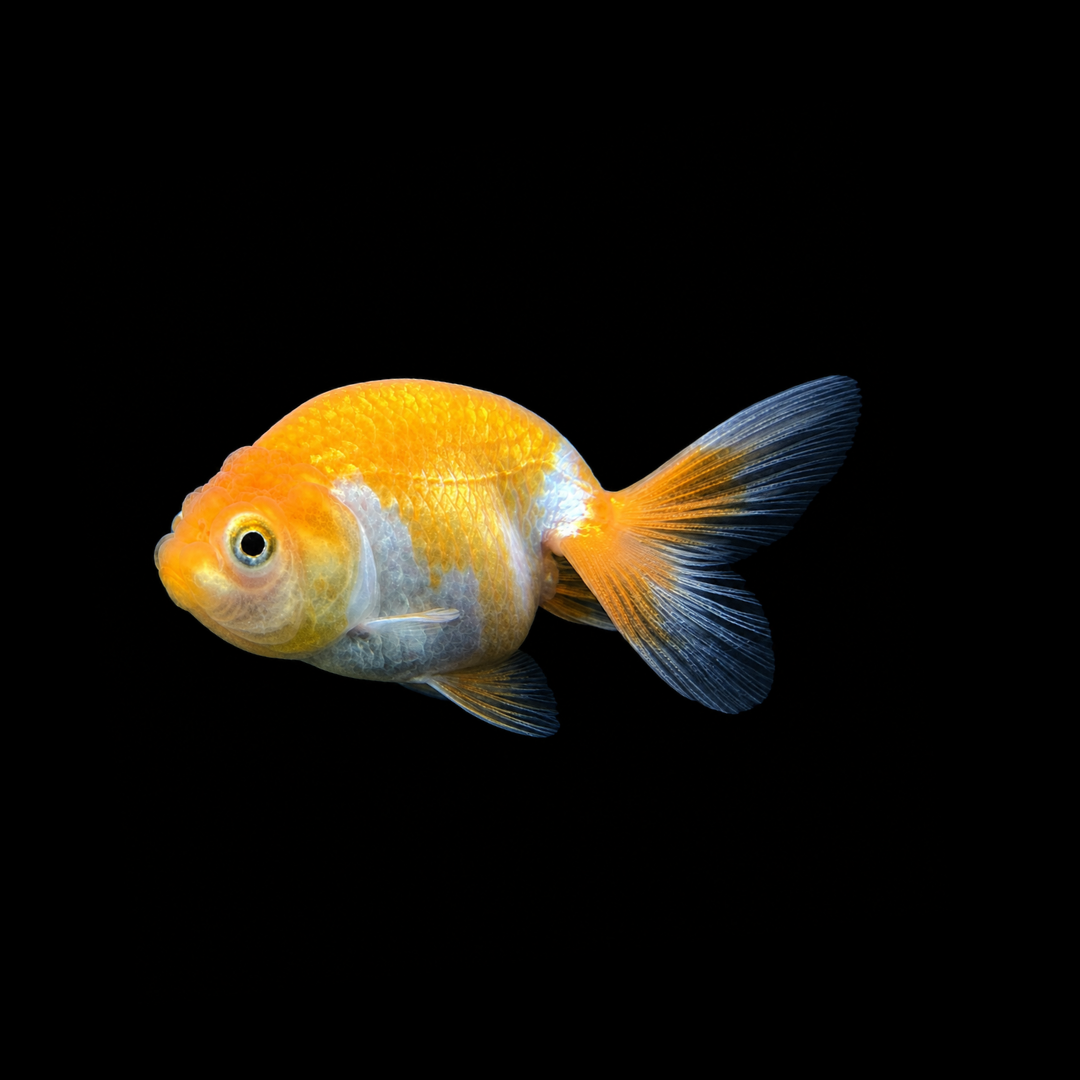
解説 / Description
浜松らんちゅうは、静岡県浜松市周辺で長く育成されてきた、地域色の濃いらんちゅうです。背びれを持たず、滑らかな背なり、太い尾筒、左右に張る尾、頭部に発達する肉瘤、とりわけ口先の左右へ張り出すフンタンが大きな見どころです。日本のらんちゅうでは、水面上から泳ぎと体型を鑑賞する「上見」が重視され、浜松でもその美意識を軸に育成と品評の文化が培われてきました。浜名湖周辺では古くから養鰻などの水産養殖が発達しており、浅い池や水管理に習熟した地域的な土壌の中で、らんちゅうの育成文化も発展してきました。水流、水深、給餌、水換え、日照などを魚の状態に合わせて整えながら、その体型と泳ぎを育てていく奥深い金魚です。 Hamamatsu Ranchu are a regionally distinctive form of ranchu long raised around Hamamatsu in Shizuoka Prefecture. They lack a dorsal fin and are valued for a smooth back line, a thick caudal peduncle, a well-spread tail, and prominent head growth, especially the funtan beside the snout. In Japanese ranchu culture, the fish are traditionally appreciated from above, allowing body balance and swimming motion to be judged together, and Hamamatsu developed a strong culture of breeding and showing around this top-view aesthetic. The Lake Hamana region also has a long history of aquaculture, including eel farming, creating a local tradition of working with shallow ponds and careful water management alongside the development of ranchu culture. Their characteristic form and movement are best maintained by adjusting current, water depth, feeding, water changes, and light to the condition of the fish.
基本情報 / Basic Information
| 学名 / Scientific Name | Carassius auratus(キンギョの改良品種。浜松らんちゅうは独立した生物種ではなく、らんちゅうの地域的・育成文化的な系統呼称) |
|---|---|
| 通称 / Common Name | 浜松らんちゅう、らんちゅう、蘭鋳、蘭虫Hamamatsu Ranchu, Ranchu, Japanese Ranchu |
| 分類 / Family | コイ目コイ科フナ属。キンギョの改良品種Order Cypriniformes, family Cyprinidae, genus Carassius; a domesticated variety of goldfish |
| 英名 / English Name | Ranchu Goldfish / Japanese Ranchu |
| 分布 / Distribution | 野生分布を持つ品種ではありません。日本国内で継代飼育され、特に静岡県浜松市周辺は歴史的な育成拠点として知られています。現在は国内外で飼育されています。This domesticated variety has no natural wild distribution. It has been maintained through captive breeding in Japan, with the Hamamatsu area of Shizuoka Prefecture historically recognized as an important center of ranchu culture. Ranchu are now kept in Japan and many other countries. |
| 最大体長 / Max Size | 浜松らんちゅう固有の統一的な最大体長は定められていません。飼育下では体長そのものよりも、太身、背なり、尾筒、尾形を含む全体の調和が重視されます。There is no single standardized maximum size specific to Hamamatsu Ranchu. In cultured fish, overall balance, body mass, back line, caudal peduncle, and tail form are generally considered more important than length alone. |
| 寿命 / Lifespan | 浜松らんちゅうに限定した統一的な寿命データはありません。長期飼育には、水質の安定、過度な肥満や消化不良の回避、季節に応じた給餌管理が重要です。There is no standardized lifespan dataset specific to Hamamatsu Ranchu. Long-term maintenance depends heavily on stable water quality, avoiding excessive feeding and digestive stress, and adjusting husbandry to seasonal temperature changes. |
飼育環境 / Aquarium Environment
| 水槽サイズ / Tank Size | 伝統的な屋外育成では、幅80cm×奥行50cm程度以上の浅いプラ舟やタタキ池が用いられ、1匹あたり20〜30L程度の水量が一つの経験的な目安とされています。規格水槽で考える場合も、60cm規格水槽や90cm規格水槽のように底面積を確保できる容器を選び、総水量だけでなく飼育数、換水量、ろ過能力のバランスを見ます。らんちゅうの育成では高さより底面積が重視され、水深20〜30cm程度の浅い環境がよく用いられます。Traditional outdoor culture commonly uses shallow tubs or concrete ponds around 80 × 50 cm or larger, with roughly 20–30 L per fish used as an empirical management reference. When standard aquariums are used, tanks with adequate floor area, such as common 60 cm or 90 cm formats, should be chosen with stocking level, water changes, and filtration capacity considered together rather than relying on total volume alone. Ranchu culture generally places greater emphasis on floor area than tank height, and shallow water of around 20–30 cm is widely used in traditional growing methods. |
|---|---|
| 水温 / Temperature | 春から夏の育成では20〜28℃程度が一つの目安です。繁殖期の管理や卵の発生には20℃台前半がよく用いられますが、発生速度は水温によって変わります。冬季は水温の低下に合わせて給餌量を減らし、伝統的な屋外越冬では10℃前後を目安に給餌を控える、または停止する管理が行われます。いずれの時期も急激な温度変化は避けます。 Around 20–28°C is a useful reference range during active spring and summer growth. Temperatures in the low 20s Celsius are commonly used for breeding and egg development, although developmental speed changes with temperature. As water cools in winter, feeding is reduced, and traditional outdoor overwintering often involves greatly restricting or stopping food around 10°C depending on the fish and conditions. Sudden temperature changes should be avoided in all seasons. |
| 水質 / Water Quality | 強いろ過水流を作ることより、清浄で安定した水を保つことが重要です。食欲が旺盛で排泄量も多いため、残餌や糞を溜めず、飼育密度と給餌量に合わせて換水します。育成現場では30〜50%程度の換水を週に複数回行う例もありますが、固定された回数ではなく、水の状態を見て調整します。少量の新水を連続的に加える「かけ流し」も、急変を避けながら水を更新する方法の一つです。Maintaining clean, stable water is more important than creating strong filtration current. Ranchu feed actively and produce substantial waste, so uneaten food and feces should not be allowed to accumulate, and water changes should be adjusted to stocking density and feeding. Some growing systems replace roughly 30–50% of the water several times per week, but this is a husbandry example rather than a fixed schedule. A slow continuous inflow of fresh water is another method used to renew water while limiting abrupt changes. |
| レイアウト / Layout | 底砂を敷かないベアタンクが管理しやすく、糞や残餌をすぐ確認できます。ろ過はスポンジフィルターや投げ込み式フィルターなど、穏やかなエアレーション主体の方式が向きます。強い水流を作る大型ポンプは避け、屋外では日照を活かしつつ、水温の上がり過ぎや酸欠を防げるよう遮光とエアレーションを調整します。A bare-bottom setup is easy to maintain because feces and uneaten food can be spotted and removed quickly. Gentle sponge filters or air-driven box filters are well suited to ranchu. Strong pumps that create persistent current should be avoided. Outdoors, sunlight can be used to support traditional green-water culture, but shade and aeration must be adjusted to prevent overheating and oxygen shortage. |
| 注意点 / Precautions | 背びれを持たない体型は、一般的な金魚に比べて遊泳時の安定性や効率で不利になるため、強い水流を常時当てないようにします。また、年齢や導入元の異なる魚を混ぜることや、網・バケツなどを複数の飼育群で共用することは、病原体を持ち込む経路になり得ます。品評会向けの育成では群を分けて管理することが多く、器具も可能な範囲で分けます。移動時は体表の粘膜を傷めないよう、網で強く擦らないことも大切です。The dorsal-finless body form is less efficient and stable in swimming than that of more streamlined goldfish, so persistent strong current should be avoided. Mixing fish from different age groups or sources, or sharing nets and buckets between groups, can also transfer pathogens. Show-oriented systems therefore often keep groups separate and use dedicated equipment where practical. During handling, avoid rough netting that can damage the protective mucus layer. |
餌と給餌 / Feeding
| 餌の種類 / Diet | 成長期はらんちゅう用の人工飼料を基本に、冷凍赤虫などを組み合わせます。稚魚は孵化後、卵黄の栄養を使い切って遊泳・摂餌を始める段階から、ブラインシュリンプ幼生などの小さな生餌を与えます。青水を初期育成に併用する方法もあります。秋は色揚げを意識した飼料を使うことがあります。During active growth, formulated ranchu feed can be used as the staple diet, supplemented with foods such as frozen bloodworms. After hatching, fry are offered suitably small live food such as Artemia nauplii once they have used their yolk reserve and begin active feeding. Green water may also be used as part of early rearing. Color-enhancing feed is sometimes incorporated in autumn. |
|---|---|
| 給餌のポイント / Feeding Tips | 金魚は胃を持たないコイ科魚類で、少量を複数回に分ける給餌が管理しやすい魚です。春〜夏は魚の状態と水温を見ながら1日数回に分け、残餌が出ない量を与えます。水温が下がるにつれて摂餌量も落ちるため、秋から冬は給餌量と回数を減らし、低水温でほとんど活動しない屋外越冬では給餌を止めることがあります。回数や時刻を固定するより、食欲、糞、水温、水質を見ながら調整します。Goldfish are stomachless cyprinids, so husbandry is generally easier when food is divided into several small meals rather than one large feeding. In spring and summer, feeding can be split into several portions according to appetite and temperature while avoiding leftovers. As water cools, intake falls, so both amount and frequency are reduced; food may be stopped during cold outdoor overwintering when the fish are largely inactive. Feeding should be adjusted to appetite, feces, temperature, and water quality rather than fixed to a rigid clock schedule. |
性格と混泳 / Temperament and Tank Mates
| 性格 / Temperament | 基本的には温和で、他魚を積極的に攻撃するタイプではありません。ただし遊泳は俊敏ではなく、給餌競争では速く泳ぐ魚に遅れやすいため、静かな環境で同程度の泳力を持つ個体と飼う方が安定します。Ranchu are generally peaceful and are not typically aggressive toward other fish. Their swimming ability is limited, however, and they can easily lose feeding competition to faster fish. They are best kept in a calm environment with tank mates of similar swimming ability. |
|---|---|
| 混泳の相性 / Compatibility | らんちゅう同士、または泳ぎの遅い丸手の金魚との混泳が比較的向きます。和金やコメットなど俊敏な金魚、強い水流を好む魚、餌を素早く奪う魚との組み合わせは不利になりやすいです。品評会を視野に入れる育成では、年齢や系統ごとに分けて単独管理するのが基本で、当歳魚と二歳以上の魚の混泳は避けます。Ranchu are most compatible with other ranchu or similarly slow-swimming fancy goldfish. Fast varieties such as common goldfish and comets, fish that prefer strong current, or aggressive feeders can place ranchu at a disadvantage. For show-oriented culture, fish are usually separated by age and group, and first-year fish should not be mixed casually with older stock. |
病気と対策 / Diseases and Prevention
| かかりやすい病気 / Common Diseases | 金魚では、寄生虫症や細菌性疾患など一般的な魚病に注意が必要です。らんちゅうでは転覆や沈み込みなどの浮力異常が見られることもあります。「松かさ病」と呼ばれる鱗の逆立ちは単一の病原体だけを示す病名ではなく、腹水や全身状態の悪化に伴って現れる症状として扱う方が適切です。また、肉瘤が過度に発達した個体では、目を覆って視界を妨げたり、まれに正常な遊泳や呼吸の妨げになったりすることがあります。As with other goldfish, ranchu can be affected by common parasitic and bacterial diseases. Buoyancy abnormalities such as floating, rolling, or sinking may also occur. The pineconed appearance often called “dropsy” is better understood as a clinical sign associated with fluid accumulation or systemic illness rather than a single disease with one cause. In some individuals, excessive wen growth may obscure the eyes and, in severe cases, interfere with normal swimming or respiration. |
|---|---|
| 対策と予防 / Prevention | 予防の基本は、強い水流を避け、残餌と糞を溜めず、急激な水温・水質変化を起こさないことです。過密飼育と過剰給餌を避け、換水を計画的に行います。年齢群ごとに器具を分ける、移動時に体表を擦らない、異常個体を早めに隔離するなど、感染経路と物理的ストレスを減らす管理が重要です。Prevention centers on avoiding strong current, removing waste and leftovers, and preventing abrupt changes in temperature or water chemistry. Overstocking and overfeeding should be avoided, and water changes should be planned around the fish load. Separate equipment for different age groups, gentle handling, and early isolation of abnormal fish help reduce both infectious exposure and physical stress. |
増やし方(繁殖) / Breeding
| 雌雄の判別 / Sexing | 繁殖期のオスは、エラ蓋や胸びれに白い突起状の「追星」が現れるため判別しやすくなります。メスは成熟すると腹部に張りが出る傾向がありますが、体型差だけでの断定は避け、追星や繁殖行動を合わせて判断します。During the breeding season, males become easier to identify because small white breeding tubercles appear on the gill covers and pectoral fins. Mature females often become fuller in the abdomen, but body shape alone is not definitive, so sexing is best based on several signs together, including tubercles and spawning behavior. |
|---|---|
| 繁殖形態 / Reproduction | 卵生です。金魚の繁殖周期は季節的な水温変化や日長の影響を受け、温帯では春の水温上昇に伴って成熟・産卵が進みます。性成熟は1〜2歳でも起こり得るため、繁殖に用いる親魚を3〜5歳に限定する必要はなく、年齢よりも成熟度と健康状態を見て選びます。自然産卵ではメス1匹に複数のオスを組み合わせることがあります。孵化までの日数は水温に左右され、20℃台では数日が目安です。Ranchu are egg layers. The goldfish reproductive cycle is influenced by seasonal temperature and day-length cues, with maturation and spawning progressing as water warms in spring in temperate climates. Goldfish can reach sexual maturity at roughly one to two years of age, so broodstock need not be restricted to three- to five-year-old fish; maturity and condition are more important than age alone. Natural spawning groups may pair one female with more than one male. Hatching time varies with temperature and is generally measured in days in the low-to-mid 20s Celsius. |
| 繁殖のポイント / Breeding Tips | 孵化直後の針子は遊泳力と捕食力が弱いため、卵黄の栄養を使い切って摂餌を始めたら、ブラインシュリンプ幼生などの小さな餌を切らさないようにします。青水を併用する育成法もあります。成長後は尾の開き、背なり、尾芯、親骨、尾筒、体の曲がりなどを繰り返し確認し、段階的に選別します。望ましい形質を残すため近親交配が用いられることもありますが、世代を重ねるほど遺伝的多様性が低下し、近交退化のリスクが高まるため、血統管理には慎重さが必要です。Newly hatched fry are weak swimmers and inefficient feeders, so once the yolk reserve is depleted and active feeding begins, suitably small food such as Artemia nauplii should be kept available. Green water may also be used in early rearing. As juveniles grow, breeders repeatedly evaluate tail opening, back line, central tail axis, outer tail rays, caudal peduncle, and body alignment, selecting fish in stages. Close breeding may be used to retain desirable traits, but repeated inbreeding reduces genetic diversity and increases the risk of inbreeding depression, so pedigree management requires care. |
雑学と豆知識 / Trivia and Fun Facts
| 1. 浜松で育った「上見」の文化 / 1. A Top-View Culture Refined in Hamamatsu | らんちゅうの美しさは、横から見たシルエットだけでは語れません。日本では陶器鉢や木桶、浅い池で飼う歴史の中から、水面越しに魚を見下ろす「上見」という鑑賞法が発達しました。上から見ると、背びれのない滑らかな背中、左右に張る尾、太い尾筒、そして泳ぐたびに生まれる体のうねりが一つの造形として見えてきます。浜松の品評会文化では、この上見の総合美が徹底して磨かれました。背びれをなくした姿は泳ぎの合理性という点では不利ですが、その不利ささえ、独特の重厚さと泳ぎの味わいへ変えてきたところに、らんちゅう改良の面白さがあります。Ranchu cannot be understood fully from the side. In Japan, a long tradition of keeping goldfish in ceramic bowls, wooden tubs, and shallow ponds encouraged appreciation from above. From that viewpoint, the smooth finless back, the tail spreading to either side, the thick caudal peduncle, and the rolling motion of the body become one continuous composition. Hamamatsu’s show culture refined this top-view aesthetic to an exceptional degree. Losing the dorsal fin is hydrodynamically disadvantageous, yet breeders transformed that very limitation into the heavy, distinctive movement that defines the ranchu silhouette. |
|---|---|
| 2. 養鰻の町が金魚の育成地になった理由 / 2. How an Eel-Farming Region Became a Ranchu Center | 浜松のらんちゅう文化を考えるうえでは、浜名湖周辺で養鰻をはじめとする水産養殖が早くから発達していた地域背景も見逃せません。魚を浅い池で育て、水の状態を細かく管理する仕事が身近にあった地域で、らんちゅうもまた浅い飼育容器、水換え、日照、青水などを重視する独自の育成文化を深めていきました。ただし、養鰻の技術がそのままらんちゅう飼育へ移されたと単純に言い切るより、水産養殖に習熟した地域的な土壌が両者を支えたと見る方が自然です。昭和15年(1940年)に結成された日本らんちう連盟には浜松錦友会が参加しており、浜松が戦前から全国的ならんちゅう文化の一角を担っていたことが確認できます。The history of Hamamatsu Ranchu is also connected to a region where aquaculture, including eel farming around Lake Hamana, had developed early. In a community accustomed to raising fish in ponds and managing water closely, ranchu culture likewise refined methods emphasizing shallow containers, water renewal, sunlight, and green water. It is more accurate, however, to view this as a shared regional foundation in aquaculture rather than to claim that eel-farming techniques were simply transferred unchanged to ranchu. The Hamamatsu Kinyukai participated in the Japan Ranchu Federation formed in 1940, confirming that Hamamatsu was already part of the national ranchu culture before the Second World War. |
| 3. フンタン、尾皿、尾芯――形を読むための言葉 / 3. Funtan, Ozara, and Oshin: A Vocabulary for Reading Form | らんちゅう愛好家の会話には、体の各部を細かく見分けるための独特な言葉が数多く登場します。口先の左右へ張り出す肉瘤は「フンタン」、尾の根元で鱗が重なる面は「尾皿」、尾の中心線は「尾芯」、外側を支える太い条は「親骨」と呼ばれます。これらは単なる専門用語ではなく、成長後の姿を見越して若魚を評価するための観察点でもあります。愛好家の評価では、広く整った尾皿や真っ直ぐな尾芯は、成長後の尾形を考えるうえで重要な要素とされます。こうした言葉を知ると、らんちゅうが単に「頭の大きな金魚」ではなく、全身のつながりを細かく見て育てられてきたことが分かります。Ranchu breeders use a remarkably detailed vocabulary for reading body structure. The cheek-like head growth beside the snout is called funtan, the scale-covered area at the tail base is the ozara, the central tail axis is the oshin, and the strong outer rays are the oyabone. These terms are more than jargon; they are landmarks used when evaluating young fish with their later development in mind. Within ranchu judging tradition, a broad, well-formed tail base and a straight central tail axis are regarded as important elements of future tail form. Learning this vocabulary reveals how ranchu have been bred by looking closely at the relationship among all parts of the body, not simply at the size of the head growth. |
| 4. 青水は「緑色の汚れた水」ではない / 4. Green Water Is Not Simply Dirty Water | 初めて見ると、青水は水槽管理に失敗した水のように見えるかもしれません。しかし伝統的ならんちゅう育成では、植物性プランクトンが増えた青水を飼育環境の一部として利用してきました。水中の微小生物が補助的な餌になり、光合成によって水中の酸素や栄養塩の動きにも影響します。一方で、青水そのものが肉瘤や赤色を直接発達させるとまでは確認されていないため、色や体づくりへの効果を単純な因果関係として捉えない方が適切です。濃くなり過ぎると夜間や高水温時の酸欠につながることもあるため、日照、濃度、エアレーションを合わせて管理します。To an inexperienced eye, green water may look like neglected aquarium water, yet traditional ranchu culture has long used phytoplankton-rich water as part of the rearing environment. Suspended microorganisms can provide supplementary food, while photosynthesis affects oxygen and nutrient dynamics in the water. It is less certain, however, that green water itself directly produces stronger red coloration or more head growth, so these effects should not be presented as simple cause and effect. Overly dense green water can also contribute to oxygen problems, especially at night or in hot weather, making light, density, and aeration important parts of management. |
| 5. 品評会の順位が相撲番付なのはなぜか / 5. Why Ranchu Show Rankings Resemble Sumo Rankings | 日本らんちう協会の品評会では、優等賞の最上位が「東大関」、次いで「西大関」「立行司」、さらに2尾の「取締」と続き、その下にも「東西関脇」「東西小結」など番付を思わせる呼称が並びます。数字だけで順位を示さず、相撲番付に通じる名称を使うところに、日本のらんちゅう文化らしい伝統が残っています。審査では頭や尾だけを切り離して見るのではなく、総体の姿とバランス、太さ、鱗の並びや色艶などを含めて評価します。個々の部位を競うのではなく、一匹として調和しているかを見る考え方が、こうした独特の格付けとよく似合っています。At shows held under Japan Ranchu Association rules, the highest award is East Ozeki, followed by West Ozeki and Tate-Gyoji, with two Torishimari positions completing the top five; further ranks include East and West Sekiwake and East and West Komusubi. Using titles reminiscent of sumo rankings rather than simple numbers preserves a distinctly Japanese show tradition. Judging is not based on the head or tail alone: the overall form and balance, body strength, scale alignment, and color quality are considered together. The ranking system suits an aesthetic that values the fish as a coordinated whole rather than as a collection of separate features. |
| 6. 数万の卵から数匹を残す「選別」の世界 / 6. The World of Selection: From Tens of Thousands of Eggs to a Few Fish | 品評会を目指すらんちゅう繁殖では、産まれた魚をすべて同じように育てるわけではありません。尾の開き、背骨、尾芯、尾筒、左右の対称性などを成長段階ごとに確認し、何度も選別を重ねます。大規模な繁殖では非常に多くの卵や稚魚を扱うこともありますが、産卵数や最終的に「会用」として残る割合は親魚や繁殖規模によって変わるため、「数万の卵から数匹」を固定された歩留まりと考えるのは適切ではありません。重要なのは、候補が段階的に絞られていくことと、幼い時の姿だけでは将来を完全には読めないことです。そこに、経験に裏打ちされた観察眼が求められます。Show-oriented ranchu breeding does not raise every hatchling in the same way to adulthood. Tail opening, spinal alignment, central tail axis, caudal peduncle, and left-right symmetry are checked repeatedly as the fish grow, with selection carried out in several stages. Large breeding programs may handle very large numbers of eggs and fry, but spawning numbers and the proportion that ultimately remain as show candidates vary with broodstock and scale, so “tens of thousands of eggs to a few fish” should not be treated as a fixed yield. The important point is that candidates are narrowed repeatedly and that juvenile appearance cannot perfectly predict the adult fish, which is why experienced observation is so highly valued. |
| 7. 新水を「刺激」として使う飼育思想 / 7. Using Fresh Water as a Growth Stimulus | らんちゅう育成では、水換えは単なる掃除ではなく、給餌量の多い魚を良好な水で育てるための重要な管理作業です。愛好家の間では、新しい水を入れた後に魚の動きや食欲が変わることを「新水の刺激」と表現し、頻繁に換水する育成法も行われてきました。ただし、新水そのものが成長を直接促進すると一律に言い切ることはできません。確実に言えるのは、排泄物や溶存有機物の蓄積を抑え、水質を適切に維持することが成長期の管理に欠かせないという点です。「かけ流し」も、急激な全換水を避けながら水を継続的に更新する一つの方法として理解すると分かりやすいでしょう。In ranchu culture, water changes are more than cleaning; they are an important way to maintain good water quality in fish that are being fed heavily for growth. Breeders sometimes describe changes in activity or appetite after water renewal as the “stimulus” of fresh water, and frequent water-changing methods have a long history in ranchu culture. It is not justified, however, to claim that fresh water itself directly guarantees faster growth. What is clear is that limiting the accumulation of waste and dissolved organic matter is essential during active growth. Continuous flow-through should therefore be understood as one method of renewing water gradually without the abrupt change of a complete replacement. |
まとめ / Conclusion
浜松らんちゅうの魅力は、背びれのない滑らかな背なり、発達したフンタン、張りのある尾と、それらが泳ぎの中で一つにつながって見えるところにあります。浅い水深やこまめな水管理、青水を取り入れる育成法、成長段階に応じた給餌と選別など、浜松で受け継がれてきた飼育文化は、この上見の美しさを支えてきました。形を追うだけでなく、健康状態を崩さないよう日々の変化を読むことが大切です。 The appeal of Hamamatsu Ranchu lies in the way the smooth dorsal-finless back, developed funtan, and well-spread tail come together in motion when viewed from above. Husbandry traditions associated with Hamamatsu—including shallow-water culture, close water management, the use of green water, feeding adjusted to growth, and repeated selection—have supported this top-view aesthetic. Form should never be pursued separately from health, making careful observation of daily changes essential.
穏やかな水流を保ち、季節と魚の状態に合わせて餌と水換えを調整しながら、泳ぎ、体表、尾の張りを丁寧に見ていくと、一匹ごとの違いが少しずつ見えてきます。上から眺める姿の美しさと、成長に伴って変化していく過程の両方を味わえることが、浜松らんちゅうと長く付き合う魅力です。 With gentle current, feeding and water changes adjusted to season and condition, and close attention to swimming, skin, and tail carriage, the individuality of each fish gradually becomes clearer. The lasting appeal of Hamamatsu Ranchu lies both in the beauty of the fish viewed from above and in watching that form change as the fish develops.

気になる道具や飼い方を見つけてみませんか?
 アイのアクアグッズ案内バクテリアって、結局なんなんだ? タマスとアイのボトル探究ロック好きのカバ・タマスが初登場。サイクル、ベストバイオ、バイコムのボトルから、菌の役割と保存の工夫、二本組の歴史をアイと探ります。記事はコチラ →
 アイのアクアグッズ案内水槽用浄水器の選び方|水換えを楽にするタイプとROの違い道具の特徴や使い方、選ぶときのポイントをアイが紹介します。記事はコチラ →
さまざまな飼育テーマをご紹介。リンク先の記事には広告・商品紹介が含まれます。
案内・紹介記事一覧へ →分布マップ
浜松らんちゅうは野生分布を持つ品種ではなく、日本国内で継代飼育されてきた金魚です。 特に静岡県浜松市周辺は歴史的な育成拠点として知られるため、下の地図では浜松市と浜名湖周辺を概略的に表示しています。
※この地図は浜松らんちゅうの自然分布や個別の採集地点を示すものではなく、記事中で歴史的な育成拠点として挙げられている浜松市周辺を示した概略図です。マーカーは表示上の代表地点であり、実際の採集地点・養殖場・飼育施設の所在地を示すものではありません。
参考文献
-
分類・分布・生息環境Froese, R. & Pauly, D. (eds.). Carassius auratus (Linnaeus, 1758). FishBase. https://fishbase.org/summary/Carassius-auratus.html
-
分類・改良品種の背景Chen, D., Zhang, Q., Tang, W., et al. (2020). The evolutionary origin and domestication history of goldfish (Carassius auratus). Proceedings of the National Academy of Sciences, 117(47), 29775–29785. https://doi.org/10.1073/pnas.2005545117
-
飼育条件・形態上の注意点Blake, R. W., Li, J. & Chan, K. H. S. (2009). Swimming in four goldfish Carassius auratus morphotypes: understanding functional design and performance employing artificially selected forms. Journal of Fish Biology, 75, 591–617. https://doi.org/10.1111/j.1095-8649.2009.02309.x
-
飼育条件・給餌McVay, J. A. & Kaan, H. W. (1940). The Digestive Tract of Carassius auratus. The Biological Bulletin, 78(1), 53–67. https://doi.org/10.2307/1537800
-
繁殖・季節変化Kobayashi, M., Iwata, E. & Sorensen, P. W. (2026). Environmental and Physiological Regulation of Reproduction in the Goldfish: Gonadal Development, Maturation, and Spawning Behavior: A Review. Animals, 16(5), 775. https://doi.org/10.3390/ani16050775
-
繁殖・卵発生・初期育成Motta, J. H. S., Glória, L. S., Radael, M. C., Mattos, D. C., Cardoso, L. D. & Vidal-Júnior, M. V. (2023). Effect of temperature on embryonic development and first exogenous feeding of goldfish Carassius auratus (Linnaeus, 1758). Brazilian Journal of Biology, 83, e270943. https://doi.org/10.1590/1519-6984.270943
-
飼育条件・水質管理・隔離・バイオセキュリティPetty, B. D., Francis-Floyd, R. & Yanong, R. P. E. Management of Aquarium Fish. Merck Veterinary Manual. Updated June 2026. Merck Veterinary Manual
-
病気・寄生虫症Merck Veterinary Manual. Parasitic Diseases of Fish. Merck Veterinary Manual
-
病気・細菌性疾患・予防Petty, B. D., Francis-Floyd, R. & Yanong, R. P. E. Bacterial Diseases of Fish. Merck Veterinary Manual. Updated September 2024. Merck Veterinary Manual




コメント