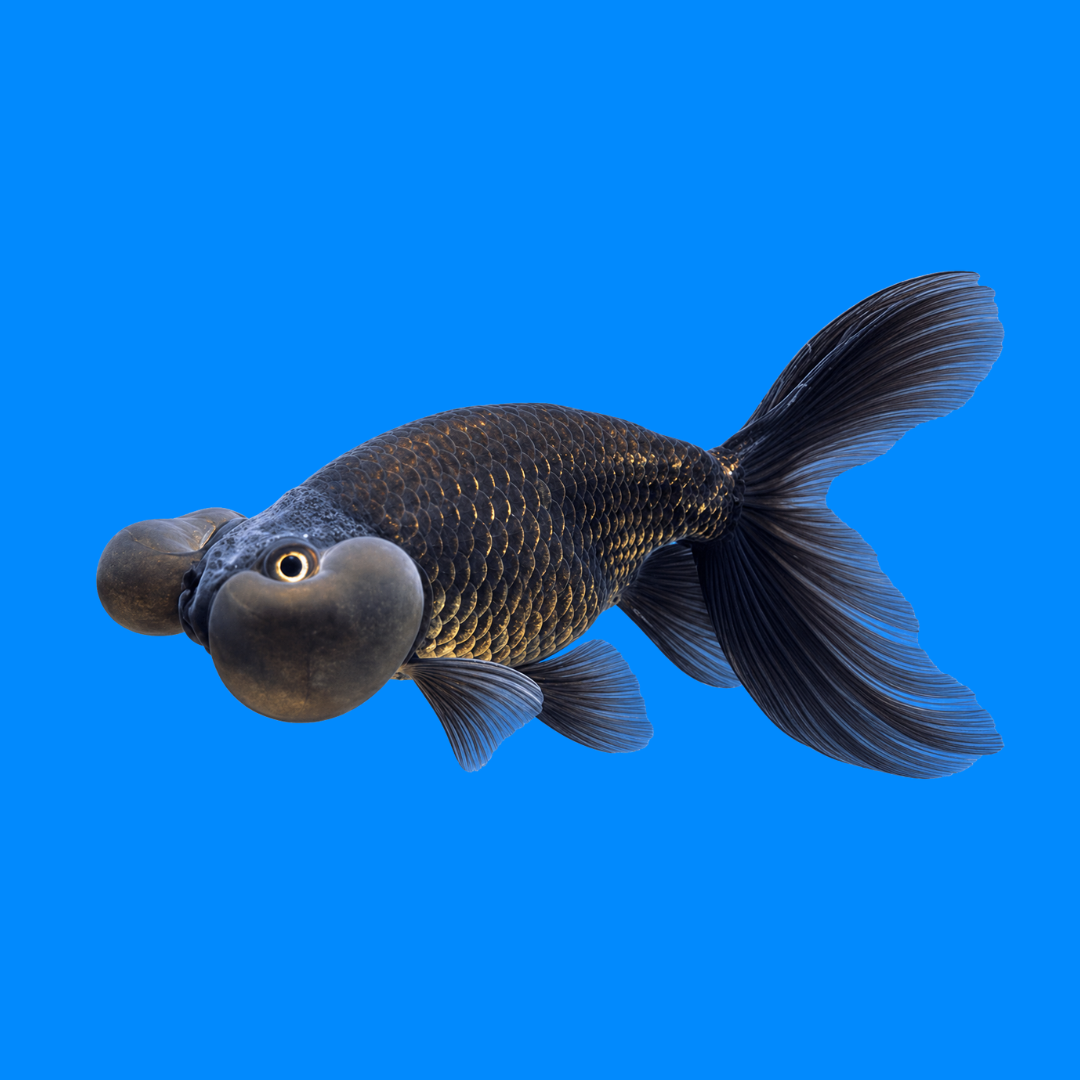
黒水泡眼は、中国で作出された金魚「水泡眼」の黒色タイプです。両眼の下に揺れる大きな水泡、上向きの眼、背びれを欠く滑らかな背なりという水泡眼ならではの姿に、全身を覆う濃い黒色が重なります。黒色は個体の遺伝的背景や成長、飼育環境によって変化しやすく、成長とともに色が薄くなる個体もいるため、漆黒を長く保つことは水泡を美しく育てることと並ぶ大きな魅力であり難しさでもあります。泳ぎはゆっくりで視界にも制限があるため、一般的な金魚と同じ感覚で飼うのではなく、水泡を傷つけない安全な設備、穏やかな水流、競争の少ない給餌環境を整えることが重要です。The Black Bubble Eye is a black color form of the Bubble Eye goldfish, a fancy variety developed in China. It combines the breed’s distinctive fluid-filled sacs beneath the eyes, upward-directed eyes, and smooth dorsal-finless back with a deep dark body color. Black coloration can change with genetics, growth, and husbandry, and some individuals fade as they mature, so maintaining an intense black appearance can be as challenging as keeping the delicate eye sacs in good condition. Because these fish are slow swimmers with restricted vision, they require a safer and calmer setup than more typical goldfish, with protected filtration, gentle current, and feeding conditions that minimize competition.
基本情報 / Basic Information
学名 / Scientific Name
Carassius auratus
通称 / Common Name
黒水泡眼、黒水泡、バブルアイBlack Bubble Eye, Black Bubble-Eye Goldfish, Bubble Eye Goldfish
分類 / Family
コイ目・コイ科・フナ属に属するキンギョの改良品種Order Cypriniformes, family Cyprinidae, genus Carassius; a domesticated fancy variety of goldfish
英名 / English Name
Black Bubble Eye Goldfish
分布 / Distribution
自然分布を持たない改良品種。水泡眼は中国で成立し、現在は日本を含む世界各地で観賞魚として飼育・流通しています。A domesticated variety with no natural wild distribution. The Bubble Eye was developed in China and is now kept and traded as an ornamental fish in Japan and many other regions.
最大体長 / Max Size
一般に全長10〜15cm前後。系統や飼育条件によってはさらに大きく育つことがあります。Commonly around 10–15 cm in total length, although some individuals may grow larger depending on strain and husbandry.
寿命 / Lifespan
5〜10年程度がひとつの目安です。安定した水質と安全な飼育環境を長く維持できれば、それ以上生きる例もあります。About 5–10 years is a practical general estimate. Individuals may live longer when stable water quality and a safe environment are maintained over the long term.
飼育環境 / Aquarium Environment
水槽サイズ / Tank Size
成魚1匹なら60cm規格水槽(約55〜60Lクラス)を実用上の目安とし、複数飼育では90cm規格水槽以上を推奨します。体長だけでなく、金魚特有の排泄量と水泡をぶつけずに向きを変えられる余裕を考えて水量を確保します。For one adult, a standard 60 cm aquarium of roughly 55–60 L is a practical starting point; for multiple fish, a standard 90 cm aquarium or larger is recommended. Volume should account not only for body size but also for goldfish waste production and enough open space for the eye sacs to turn safely.
水温 / Temperature
18〜24℃前後を安定して維持するのが扱いやすい範囲です。16〜25℃程度には対応できますが、短時間の急変を避け、夏の高水温では酸欠にも注意します。A stable range of about 18–24°C is convenient for routine care. They can tolerate roughly 16–25°C, but rapid temperature changes should be avoided, and high summer temperatures require extra attention to oxygen levels.
水質 / Water Quality
中性付近を中心に、pH6.5〜7.5程度を目安として急変を避けます。アンモニアと亜硝酸は検出されない状態を維持し、硝酸塩の蓄積を抑えるため定期的に部分換水します。金魚は排泄量が多いため、ろ過の成熟と水量の余裕が重要です。Keep the water stable around neutral, with roughly pH 6.5–7.5 as a practical target. Ammonia and nitrite should remain undetectable, and regular partial water changes should limit nitrate accumulation. Because goldfish produce substantial waste, mature biological filtration and adequate water volume are essential.
レイアウト / Layout
最優先は水泡の保護です。尖った石、枝の張った流木、硬い人工水草などは避け、ベアタンクか、角のない細かな砂を薄く敷く構成が安全です。ろ過はスポンジフィルターのような穏やかな方式が扱いやすく、ポンプ式フィルターを使う場合は吸水口を目の細かいスポンジで覆います。遊泳空間を広く残しつつ、すべての設備に水泡が引っ掛からないことを確認します。Protecting the eye sacs is the first priority. Avoid sharp rocks, branching driftwood, and rigid artificial plants; a bare-bottom tank or a thin layer of smooth fine sand is safer. Gentle filtration such as a sponge filter is easy to manage, and powered filter intakes should be covered with fine sponge. Leave broad open swimming space and make sure the sacs cannot snag on any equipment.
注意点 / Precautions
水泡は薄く、擦過や吸い込みで傷つくことがあります。魚を移動させるときは網で追い回さず、可能なら容器ごと水中ですくう方法が安全です。強い水流や過密飼育も避けます。また、黒い体色は遺伝だけでなく成長や環境の影響を受けるため、暗色の背景と適切な照明は見え方や生理的な体色反応に役立つことがありますが、黒色を永久に固定できる方法ではありません。The sacs are thin and may be injured by abrasion or suction. When moving the fish, avoid chasing it with a net; if possible, guide it into a container while submerged. Strong current and overcrowding should also be avoided. Black coloration is influenced by genetics, maturation, and environment, so a dark background and appropriate lighting may support appearance and physiological color responses, but they cannot permanently guarantee black pigmentation.
餌と給餌 / Feeding
餌の種類 / Diet
金魚用の高品質な沈下性ペレットを主食にします。補助的に、消化しやすい植物質の餌やミジンコ、赤虫などを少量取り入れることもできます。浮上性の餌は、水面で空気を飲み込みやすい個体では控えめにします。Use a high-quality sinking goldfish pellet as the staple diet. Small amounts of easily digested vegetable foods, daphnia, or bloodworms can be offered as supplements. Floating foods are best limited for individuals that tend to gulp air at the surface.
給餌のポイント / Feeding Tips
視界と遊泳力にハンディがあるため、1日2〜3回に分け、確実に見つけられる場所へ少量ずつ沈めます。数分で食べ切れる量を基本にし、残餌は回収します。混泳時は黒水泡眼が実際に食べられているかを個体ごとに確認し、必要ならスポイトや給餌ピンセットで狙った位置へ餌を落とします。Because vision and swimming ability are limited, divide feeding into two or three small meals a day and place food where the fish can reliably locate it. Offer only what can be consumed within a few minutes and remove leftovers. In community setups, confirm that each Black Bubble Eye is actually eating; targeted feeding with a pipette or feeding tongs can help when necessary.
性格と混泳 / Temperament and Tank Mates
性格 / Temperament
基本的には温和で、他魚を積極的に追い回すタイプではありません。一方で背びれがなく、水泡による抵抗も大きいため泳ぎは遅く、上向きの眼と大きな水泡のため餌を見つける動作にも時間がかかります。性格そのものより、身体構造による不利を考慮した飼育が必要です。They are generally peaceful and do not actively chase other fish. However, the absence of a dorsal fin and the drag created by the sacs make them slow swimmers, while upward-facing eyes and large sacs can make locating food more difficult. Husbandry should therefore focus less on aggression and more on compensating for their physical disadvantages.
混泳の相性 / Compatibility
もっとも安全なのは水泡眼同士です。頂天眼、出目金、蝶尾など比較的ゆっくり泳ぐ金魚と合わせる場合も、餌の競争や水泡への接触が起きないかを慎重に観察します。和金、コメットなど俊敏な金魚との混泳は、給餌競争で不利になりやすいため避けたほうが安全です。水泡をつつく魚や、小型甲殻類を含む行動の読みにくい相手との同居も推奨しません。The safest companions are other Bubble Eyes. If kept with relatively slow fancy goldfish such as Celestial Eyes, Telescope Eyes, or Butterfly Tails, carefully monitor food competition and contact with the sacs. Fast varieties such as Common Goldfish or Comets are best avoided because Bubble Eyes are easily outcompeted for food. Tank mates that peck at the sacs, or whose behavior toward them is unpredictable, are also unsuitable.
病気と対策 / Diseases and Prevention
かかりやすい病気 / Common Diseases
水泡の擦り傷や破裂に続く細菌感染、尾ぐされ病などの外傷関連トラブルに注意が必要です。体型の影響もあり、消化不良や浮力異常が見られる個体もいます。白点病など一般的な金魚の感染症にもかかるため、水泡だけでなくヒレ、体表、呼吸、泳ぎ方、食欲を日常的に観察します。Watch for bacterial infection following abrasions or ruptures of the sacs, as well as fin rot and other injury-related problems. Some individuals may also show digestive or buoyancy disorders associated with fancy-goldfish body shape. They remain susceptible to common goldfish diseases such as ich, so routine observation should include the fins, skin, breathing, swimming posture, and appetite as well as the sacs.
対策と予防 / Prevention
尖った物と無防備な吸水口を排除し、アンモニア・亜硝酸を検出させない水質管理を徹底することが最も重要です。水泡を傷つけた場合は清潔で穏やかな隔離環境に移し、傷口と全身状態を毎日確認します。塩水浴や観賞魚用薬を使う場合は、症状に合った方法と製品表示を守り、改善しない場合や潰瘍・出血・著しい呼吸異常がある場合は魚類を診療できる獣医師へ相談します。The most important prevention is to remove sharp objects and unprotected intakes while maintaining water in which ammonia and nitrite remain undetectable. If a sac is injured, move the fish to a clean, calm isolation setup and check the wound and overall condition daily. If salt treatment or aquarium medication is used, follow an appropriate method and the product label; seek a veterinarian experienced with fish if the condition fails to improve or if ulcers, bleeding, or marked respiratory distress develop.
増やし方(繁殖) / Breeding
雌雄の判別 / Sexing
繁殖期のオスは、えらぶたや胸びれの前縁に白い追星が現れることがあり、判別の有力な手掛かりになります。成熟したメスは腹部に丸みが出やすく、総排泄孔がやや大きく見えることがありますが、季節外は外見だけでの判別が難しい個体も少なくありません。During the breeding season, males may develop white breeding tubercles on the gill covers and leading edges of the pectoral fins, providing a useful clue. Mature females often become fuller through the abdomen and may show a slightly larger vent, but visual sexing can be difficult outside the breeding season.
繁殖形態 / Reproduction
卵生で、金魚に共通するばらまき型の産卵を行います。オスがメスを追尾し、水草や産卵床などに粘着性の卵が付着します。親魚は卵を食べるため、産卵後は親魚と卵を分けて管理します。They are egg-layers and reproduce by the typical goldfish egg-scattering method. Males chase females, and adhesive eggs attach to plants or spawning media. Because adults may eat the eggs, the parents should be separated from the eggs after spawning.
繁殖のポイント / Breeding Tips
親魚の水泡を傷つけないよう、硬い産卵材ではなく柔らかな産卵モップなどを使い、追尾時にぶつかる障害物を置かないことが大切です。稚魚は孵化直後から大きな水泡を持つわけではなく、成長とともに眼下の袋が発達していきます。繁殖では左右の水泡のバランス、滑らかな背なり、健全な遊泳と摂餌を重視し、極端な形質だけを追わないことが長期的な健康維持につながります。Use soft spawning media such as spawning mops and remove hard obstacles so the adults do not damage their sacs during chasing. Fry do not hatch with fully developed eye sacs; the characteristic pouches develop later as they grow. When selecting breeding stock, consider balanced sacs, a smooth back, and healthy swimming and feeding rather than pursuing extreme morphology alone.
雑学と豆知識 / Trivia and Fun Facts
1. 黒水泡眼は「別の魚種」ではなく、水泡眼の黒色タイプ / 1. A black color form, not a separate species
黒水泡眼という名前から独立した魚種のように思えることがありますが、分類学的には一般の水泡眼と同じキンギョ、つまり Carassius auratus の改良品種です。違いの中心は体色で、黒色素胞が強く目立つ個体が選ばれて流通しています。金魚の黒は成長に伴って変わることがあり、購入時の漆黒が一生そのまま続くとは限りません。この不安定さこそ、黒水泡眼を育てる面白さである一方、色だけで健康状態を判断してはいけない理由でもあります。Despite the name, the Black Bubble Eye is not a separate species. Taxonomically it is the same domesticated goldfish, Carassius auratus, as other Bubble Eyes, with the main distinction being its dark coloration. Individuals with strongly expressed melanophores are selected for the trade. Black pigmentation in goldfish can change as the fish matures, so a jet-black juvenile may not remain identical throughout life. That instability is part of the appeal of raising the variety, but it also means body color alone should never be used as a measure of health.
2. 日本に姿を見せたのは昭和33年 / 2. Introduced to Japan in 1958
水泡眼は中国で作出された品種で、日本への渡来は1958年(昭和33年)とされています。現在では日本の金魚文化にすっかり溶け込んでいますが、国内での歴史は和金や琉金に比べるとかなり新しい部類です。左右の水泡がよくそろい、背中の線が滑らかな個体が高く評価される点には、日本の金魚観賞で重んじられてきた「形の整い」を見る美意識も重なっています。The Bubble Eye was developed in China and is generally recorded as having reached Japan in 1958. It is now firmly established in Japanese goldfish culture, yet its domestic history is relatively recent compared with long-established varieties such as the Common Goldfish and Ryukin. The preference for evenly matched sacs and a smooth back also fits the Japanese tradition of appreciating balance and clean body lines in fancy goldfish.
3. あの水泡は、生まれた瞬間から完成しているわけではない / 3. The sacs develop after hatching
水泡眼の稚魚は、孵化した直後から大きな袋をぶら下げているわけではありません。若い時期には普通の金魚に近い顔つきで、成長とともに眼の下の袋が発達し、数か月をかけて水泡眼らしい姿が現れてきます。完成した姿だけを見ると奇抜な形質ですが、育成過程を追うと、その特徴が徐々に形成されていく発生のドラマを観察できる品種でもあります。Bubble Eye fry do not hatch carrying large sacs. Early juveniles look much more like ordinary goldfish, and the pouches beneath the eyes enlarge gradually as the fish develops, becoming clearly characteristic over the following months. The adult form may look extraordinary, but following juveniles reveals a gradual developmental process in which the defining feature emerges step by step.
4. 背びれがないことは、見た目だけの違いではない / 4. The missing dorsal fin changes how the fish swims
水泡眼の標準的な体型では背びれを欠きます。背びれは魚が姿勢を安定させるうえで重要な役割を持つため、水泡眼は直線的に素早く泳ぐよりも、体をゆっくり使いながら進む泳ぎ方になりやすく、さらに大きな水泡が水の抵抗を増やします。このため「おとなしい魚」と見える場面の一部は性格ではなく、身体構造からくる運動能力の違いです。強い水流を避けることは快適さだけでなく、無駄な消耗を減らす意味があります。Standard Bubble Eyes lack a dorsal fin. Because the dorsal fin contributes to stability during swimming, these fish tend to move more slowly and with greater body motion than streamlined goldfish, while the large sacs add extra drag. Some behavior that looks simply calm is therefore a consequence of body structure rather than temperament alone. Avoiding strong current reduces unnecessary effort as well as making the aquarium more comfortable.
5. 水泡の液体は、細胞培養研究にも使える可能性が示された / 5. Sac fluid has been studied as a cell-culture supplement
2009年、名古屋大学を中心とする研究グループは、水泡眼の袋から得られる液体に魚類細胞の増殖を促進する活性があることを報告しました。メダカやゼブラフィッシュ由来の細胞で増殖促進が確認され、採取後も水泡内の液体が数か月で再び満たされ、再採取した液体にも同様の活性が見られたとされています。観賞のために固定された特異な形態が、のちに細胞生物学の研究対象として新しい意味を持ったという、金魚史の中でも非常に興味深い例です。In 2009, a research group centered at Nagoya University reported that fluid collected from Bubble Eye sacs could promote the growth of fish cells in culture. Growth-promoting effects were observed in cells derived from medaka and zebrafish, and the sacs refilled within a few months after sampling; newly collected fluid showed similar activity. It is a striking example of a trait originally fixed for ornamental purposes later gaining a very different meaning in cell-biological research.
6. 「黒を濃くする環境」と「黒を固定する遺伝」は同じではない / 6. Enhancing appearance is not the same as genetically fixing black color
暗い背景や十分な照明の下では、魚が周囲に合わせて色素胞を広げる生理的な体色反応により、黒が深く見えることがあります。しかし、成長に伴う恒久的な退色まで環境だけで完全に止められるわけではありません。健康な黒水泡眼を育てるうえでは、黒さを追うために極端な照明や高水温を与えるより、安定した水質、適切な光周期、栄養、ストレスの少なさを優先する方が理にかなっています。Against a dark background and under suitable lighting, physiological pigment-cell responses can make a fish appear darker. That is not the same as permanently preventing genetically or developmentally driven fading. For long-term health, stable water quality, a sensible light cycle, balanced nutrition, and low stress are more important than using extreme lighting or elevated temperature in an attempt to force deeper coloration.
7. 美しい形ほど、飼育者側の配慮が問われる / 7. Its beauty also raises welfare responsibilities
大きな水泡、上向きの眼、背びれの欠如は、水泡眼を唯一無二の金魚にしている一方で、視界、遊泳、外傷リスクの面で明確な不利も生みます。近年は海外の動物福祉団体から、こうした極端な形質を持つ金魚の繁殖そのものを問題視する声もあります。すでに飼育している個体に対してできる最も現実的な配慮は、単に何も置かない水槽にすることではなく、安全を確保しながら穏やかな刺激と生活の選択肢を残すことです。水泡を傷つけない柔らかな環境、落ち着ける照明、適切な仲間、確実に餌へアクセスできる工夫を重ねることが、この品種と長く付き合うための基本になります。The large sacs, upward-facing eyes, and lack of a dorsal fin make the Bubble Eye unique, but they also create clear disadvantages in vision, swimming, and injury risk. In recent years, animal-welfare organizations outside Japan have questioned the deliberate breeding of goldfish with such extreme traits. For fish already in our care, the most practical response is not merely to keep them in an empty tank, but to combine physical safety with gentle stimulation and meaningful choices: soft surroundings that protect the sacs, calm lighting, suitable companions, and reliable access to food. Those adjustments form the basis of responsible long-term care.
8. 良い個体を見るときは「水泡の大きさ」だけを見ない / 8. Quality is more than sac size
黒水泡眼を選ぶとき、つい目が行くのは巨大な水泡と漆黒の体色です。しかし長く飼う視点では、左右の水泡が無理なくそろっていること、背なりが滑らかなこと、尾が素直に開くこと、そして何より自力で安定して泳ぎ、餌を食べられることが重要です。極端に大きな水泡は迫力がありますが、大きさそのものが健康の指標ではありません。美しさと日常動作の両方を見て選ぶと、その個体本来の魅力をより長く楽しめます。When choosing a Black Bubble Eye, the enormous sacs and deep black color naturally draw attention first. For long-term keeping, however, it is more important that the sacs are reasonably balanced, the back is smooth, the tail opens normally, and above all that the fish can swim steadily and feed on its own. Extremely large sacs may look dramatic, but size alone is not a measure of health. Selecting for both appearance and everyday function gives the fish a better chance to display its character for years.
まとめ / Conclusion
黒水泡眼の魅力は、漆黒の体色と柔らかく揺れる水泡が生み出す、ほかの金魚にはない静かな存在感にあります。その姿を健やかに保つ鍵は、黒さだけを追い求めることではなく、水泡を守る滑らかな環境、穏やかな水流、安定した水質、そして確実に餌へたどり着ける飼育設計を積み重ねることです。The appeal of the Black Bubble Eye lies in the quiet presence created by its deep coloration and gently swaying sacs, a combination unlike that of any other goldfish. Keeping that appearance healthy depends less on chasing the darkest possible color and more on building a safe environment with smooth surfaces, gentle flow, stable water quality, and reliable access to food.
身体構造ゆえに多くの配慮を必要とする魚ですが、その分、飼育者が環境の細部まで読み取り、魚の動きに合わせて工夫する楽しさがあります。ゆっくりと泳ぎ、左右の水泡を揺らしながら餌を探す姿を安心して見守れる水槽が整ったとき、黒水泡眼は単なる珍しい金魚ではなく、長い時間をかけて向き合う価値のある一匹として強い印象を残してくれます。This fish demands unusual attention because of its body structure, but that same need makes careful observation and thoughtful aquarium design especially rewarding. When the aquarium allows it to swim slowly, move its sacs safely, and search for food without struggle, the Black Bubble Eye becomes more than a curious fancy goldfish; it becomes an individual whose presence grows more compelling over years of attentive care.






コメント