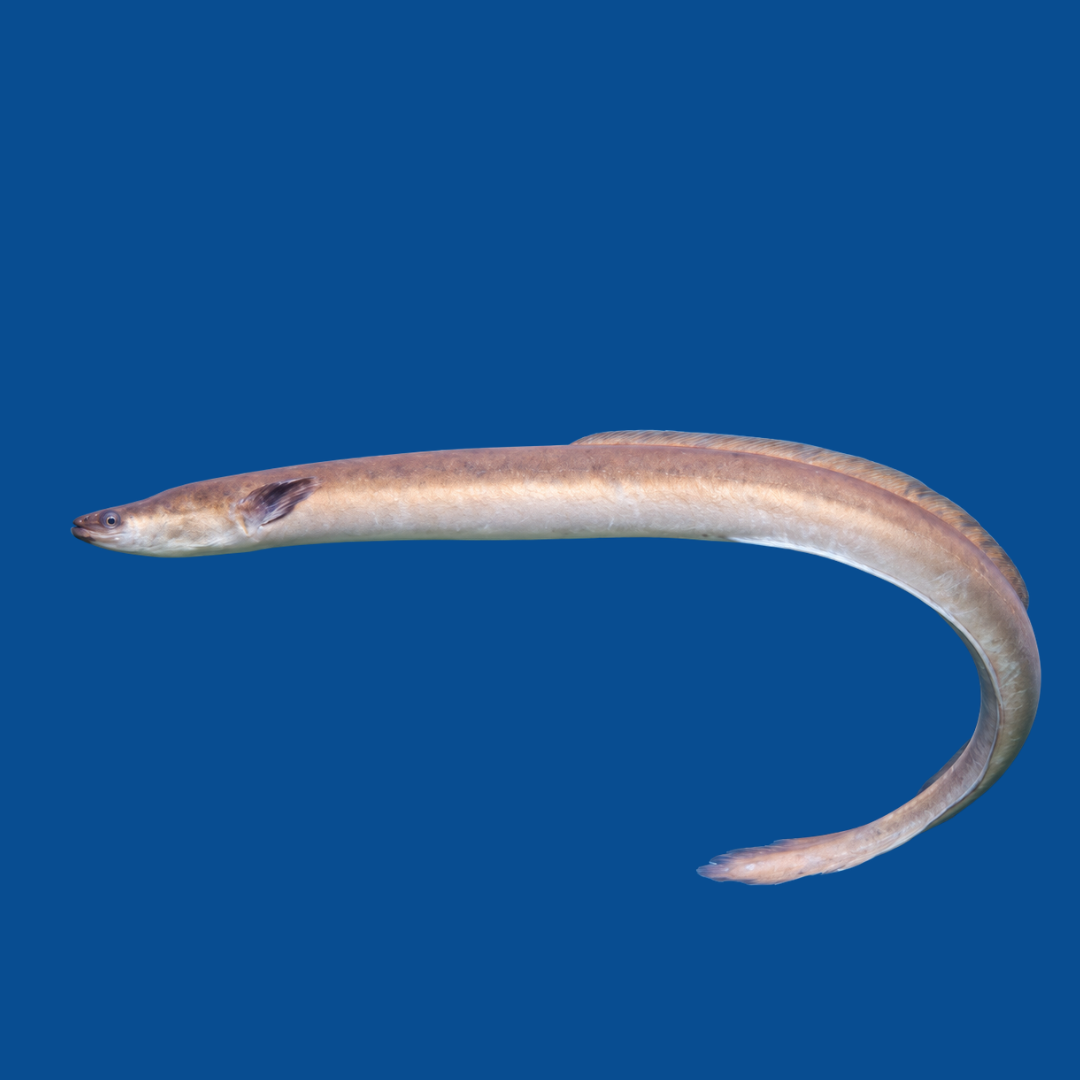
ニホンウナギは、細長くしなやかな体と、粘液に覆われた皮膚をもつウナギ科の魚です。海で生まれ、河川・湖沼・河口・沿岸域で長い成長期を過ごしたのち、西マリアナ海嶺付近へ産卵回遊する降河回遊魚として知られます。黄褐色の若魚は日中に岩陰や管の中で休み、暗くなると優れた嗅覚を頼りに餌を探します。観察するほど奥深い魚ですが、大型になり、力が強く、わずかな隙間からも抜け出します。そのため、飼育には大型水槽と厳重なふたが欠かせません。また、国際自然保護連合のレッドリストでは絶滅危惧種(EN)と評価されています。入手時には流通経路が明確な個体を選び、終生飼育を前提に迎える必要があります。The Japanese eel is a member of the freshwater eel family, recognized by its long, flexible body and mucus-coated skin. It is a catadromous fish: it is born in the ocean, spends a prolonged growth phase in rivers, lakes, estuaries, or coastal waters, and later migrates to a spawning area near the West Mariana Ridge. Yellow-stage eels usually rest among rocks or inside tubes during the day and emerge after dark to locate food with a highly developed sense of smell. This is a fascinating species to observe, but it grows large, is remarkably strong, and can escape through very small openings. A large aquarium and a tightly secured lid are therefore essential. Because the species is assessed as Endangered (EN) on the IUCN Red List, keepers should obtain animals from a clearly documented legal source and commit to lifelong care.
基本情報 / Basic Information
学名 / Scientific Name
Anguilla japonica Temminck & Schlegel, 1846
通称 / Common Name
ウナギ、ジャポニカ種Japanese eel
分類 / Family
ウナギ目・ウナギ科・ウナギ属Order Anguilliformes, family Anguillidae, genus Anguilla
英名 / English Name
Japanese eel
分布 / Distribution
日本、中国、朝鮮半島、台湾からフィリピン北部にかけての東アジア。成長期には河川・湖沼・河口・沿岸域に生息し、産卵場は西マリアナ海嶺付近と考えられています。East Asia from Japan, China, the Korean Peninsula, and Taiwan to the northern Philippines. During the growth phase it occupies rivers, lakes, estuaries, and coastal habitats; its spawning area is considered to lie near the West Mariana Ridge.
最大体長 / Max Size
全長最大約150cm。一般には数十cmですが、雌は1mを超えることがあります。Up to about 150 cm in total length. Most individuals are several tens of centimeters long, but females can exceed 1 m.
寿命 / Lifespan
自然下で産卵回遊に入る銀ウナギの推定年齢は4~17年で、雌の平均は約8年と報告されています。これは寿命そのものではなく、産卵回遊を始めた時点の年齢です。飼育下の寿命を一律に示せる十分な資料はありませんが、飼育を始める際は10年以上の長期管理を視野に入れる必要があります。Wild silver eels beginning their spawning migration have been estimated at 4–17 years old, with females averaging about 8 years. These figures describe age at the start of the spawning migration rather than total lifespan. There is insufficient evidence for a single standard lifespan in captivity, so prospective keepers should be prepared for management lasting more than a decade.
飼育環境 / Aquarium Environment
水槽サイズ / Tank Size
終生飼育を考える場合は、120×60×60cm程度の120cmワイド水槽(公称約430L)を最低限の出発点とし、成長に応じて150×60×60cm(公称約540L)から180×60×60cm(公称約650L)以上の大型水槽へ移行します。最大級の個体には、体長に合わせたさらに大きな設備が必要です。90×45×45cmの90cm規格水槽(公称約180L)は、小型の若魚を一時的に飼育する場合に限られます。For lifelong care, a 120 × 60 × 60 cm wide aquarium with a nominal volume of about 430 L should be treated only as the minimum starting point. As the eel grows, it should be moved to a 150 × 60 × 60 cm aquarium of about 540 L, a 180 × 60 × 60 cm aquarium of about 650 L, or a larger system. Exceptionally large individuals require still more space appropriate to their length. A standard 90 × 45 × 45 cm aquarium of about 180 L is suitable only as temporary housing for a small juvenile.
水温 / Temperature
20~26℃を飼育の目安とし、急変を避けて安定させます。低温では活動と食欲が落ち、高水温では酸欠と水質悪化が進みやすいため、水温にかかわらず十分な曝気とろ過を確保してください。Use 20–26°C as a husbandry guideline and avoid abrupt changes. Activity and appetite decline in cooler water, while warm water increases the risk of oxygen depletion and rapid deterioration of water quality. Adequate aeration and filtration are important at all temperatures.
水質 / Water Quality
急変の少ない中性付近の淡水を基本とします。幅広い塩分環境を利用できる魚ですが、飼育中に淡水と汽水を頻繁に切り替える必要はありません。アンモニアと亜硝酸は検出されない状態を保ち、硝酸塩の蓄積を定期的な換水で抑えます。Stable freshwater near neutral is a suitable baseline. Although the species can use habitats across a broad salinity range, routine switching between freshwater and brackish water is unnecessary. Ammonia and nitrite should remain undetectable, while regular water changes should prevent excessive nitrate accumulation.
レイアウト / Layout
底面積と遊泳空間を広く取り、体を完全に収められる太い塩化ビニル管、安定した流木、角のない岩組みなどで暗い隠れ家を用意します。底床は細かな砂、または清掃しやすいベアタンクが適します。石や流木は、個体が下へ潜り込んでも崩れないように固定し、吸水口には保護カバーを取り付けます。Prioritize floor area and open swimming space, and provide dark shelters large enough to hold the entire eel, such as wide PVC pipes, securely positioned driftwood, or smooth rockwork. Fine sand or an easy-to-clean bare bottom is suitable. Secure all rocks and wood so that they cannot collapse if the eel burrows underneath them, and protect filter intakes with guards.
注意点 / Precautions
最大の注意点は脱走です。重みのあるふたを確実に固定し、コード穴、配管穴、ふたの角など、見つけた隙間はすべて塞ぎます。体表の粘液と皮膚を傷つけないよう素手で追い回さず、移動には水ごと収容できる容器を使います。大食で排泄量も多いため、能力に余裕のあるろ過と十分な曝気を用意し、水質検査の結果に応じて定期的に換水します。絶滅危惧種であることを踏まえ、流通経路が明確な個体だけを入手し、飼えなくなっても河川や池へ放流してはいけません。Escape prevention is the foremost concern. Secure a heavy lid and close every opening around cables, plumbing, and corners. Avoid chasing or gripping the eel with bare hands, which can damage its mucus layer and skin; transfer it in a water-filled container whenever possible. Its heavy feeding and waste production demand oversized filtration and adequate aeration, with regular water changes guided by water-quality testing. Given its conservation status, obtain only specimens from a clearly documented source, and never release an unwanted eel into a river, pond, or other natural waterway.
餌と給餌 / Feeding
餌の種類 / Diet
沈下性の肉食魚用ペレットやウナギ用配合飼料を主食とし、補助的に冷凍アカムシ、ミミズ、イサザアミ、エビ、魚の切り身などを与えます。生き餌だけに偏らせず、栄養が調整された人工飼料へ慣らすことが大切です。野外で採集した生き餌は、寄生虫や有害物質を持ち込むおそれがあるため避けます。Use sinking carnivore pellets or formulated eel feed as the staple diet, supplemented with frozen bloodworms, earthworms, mysid shrimp, shrimp, or pieces of fish. Do not rely exclusively on live food; gradually condition the eel to accept a nutritionally balanced prepared diet. Avoid live food collected from the wild because it may introduce parasites or harmful substances.
給餌のポイント / Feeding Tips
照明を落とした夕方から夜に、数分で食べ切れる少量から与えます。給餌回数は一律に決めず、成長段階、体格、水温、腹部の状態を見ながら調整してください。ピンセットで隠れ家の入口へ沈めると餌付きやすくなります。食べ残しは速やかに回収し、腹部が不自然に膨れるほど与えてはいけません。新しい餌への切り替えは、好物に少量ずつ混ぜて段階的に行います。Feed in the evening after the lights are dimmed, beginning with a small amount that can be consumed within a few minutes. Do not apply a fixed feeding frequency to every animal; adjust it according to life stage, body size, temperature, and abdominal condition. Placing food at the shelter entrance with feeding tongs often improves acceptance. Remove leftovers promptly and do not feed until the abdomen becomes unnaturally swollen. Introduce new foods gradually by mixing small amounts with familiar favorites.
性格と混泳 / Temperament and Tank Mates
性格 / Temperament
基本的には夜行性で臆病ですが、口に入る動物を捕食する機会的な肉食魚です。日中は隠れていても、環境に慣れると給餌時に活発な姿を見せます。同種間では大きさの差や隠れ家不足をきっかけに噛み合うことがあり、単独飼育が安全です。The Japanese eel is primarily nocturnal and shy, yet it is an opportunistic predator that will consume animals small enough to swallow. Although it normally hides by day, an acclimated animal often becomes active at feeding time. Size differences or competition for shelters can lead to biting between eels, making solitary housing the safest approach.
混泳の相性 / Compatibility
原則として単独飼育を推奨します。小魚、エビ、カニは捕食対象になり、細長い魚や底生魚は夜間に襲われる可能性があります。同程度以上の大きさで温和な中層魚との混泳例はありますが、大型水槽、十分な隠れ家、個体ごとの給餌が必要で、安全は保証できません。攻撃性の強い魚や、ウナギの粘膜を傷つける吸い付き型の魚とは組み合わせないでください。Solitary care is recommended. Small fish, shrimp, and crabs may be eaten, while slender or bottom-dwelling fish can be attacked at night. Cohabitation with peaceful midwater fish of equal or greater size is sometimes attempted, but requires a very large aquarium, abundant shelters, and individual feeding, and safety cannot be guaranteed. Avoid aggressive species and suction-feeding fish that may damage the eel’s mucus-coated skin.
病気と対策 / Diseases and Prevention
かかりやすい病気 / Common Diseases
白点病、水カビ病、細菌性の皮膚炎や鰭基部の発赤、外部寄生虫などが問題になります。体表の白濁、過剰な粘液、擦り付け、食欲低下、浮上呼吸、傷の赤みは不調の兆候です。飛び出しや岩への擦れで生じた傷から二次感染することもあります。Potential problems include white spot disease, water mold, bacterial dermatitis or reddening around the fin bases, and external parasites. Cloudy skin, excessive mucus, flashing, loss of appetite, surface breathing, or reddened wounds can indicate illness. Abrasions caused by escape attempts or rough decor may also develop secondary infections.
対策と予防 / Prevention
新規個体は別水槽で状態を観察し、急な水温・水質変化を避けます。ろ過能力、溶存酸素、換水、食べ残しの除去を徹底し、皮膚を傷つける尖った装飾を使わないことが予防の基本です。ウナギ類は薬剤への反応が魚種や状態で異なるため、自己判断で高濃度の塩や薬を投入せず、水生動物を診療できる獣医師や魚病に詳しい専門家へ相談し、隔離容器で正確な水量を測って治療します。Observe new arrivals in a separate quarantine aquarium and avoid abrupt changes in temperature or water chemistry. Prevention depends on adequate filtration and dissolved oxygen, regular water changes, prompt removal of leftovers, and the exclusion of sharp decor that can injure the skin. Because medication tolerance can vary among eels and with the animal’s condition, do not add concentrated salt or medication indiscriminately. Consult an aquatic veterinarian or fish-health specialist and treat in a quarantine container of accurately measured volume.
増やし方(繁殖) / Breeding
雌雄の判別 / Sexing
成長期の外見だけで確実に判別することは困難です。一般に雌は雄より大型になり、天然の雄は比較的小型のまま成熟する傾向がありますが、体長だけで性別を断定することはできません。確実な判定には、研究・生産施設で用いられる専門的な検査が必要です。Reliable visual sexing during the growth phase is difficult. Females generally grow larger, while wild males tend to mature at a smaller size, but length alone cannot establish sex. Reliable determination requires specialized examination of the kind used in research or production facilities.
繁殖形態 / Reproduction
海洋で産卵する卵生の降河回遊魚です。成熟した銀ウナギは西マリアナ海嶺付近へ回遊し、水深約150~200m、水温約25℃の海中で浮遊性の卵を産むと考えられています。孵化した仔魚は柳の葉のように透明なレプトケファルスとなり、海流に運ばれながらシラスウナギへ変態します。This is an egg-laying, catadromous fish that reproduces in the open ocean. Mature silver eels migrate toward the West Mariana Ridge and are thought to release pelagic eggs at depths of approximately 150–200 m in water near 25°C. The hatchlings become transparent, willow-leaf-shaped leptocephalus larvae that drift with ocean currents before transforming into glass eels.
繁殖のポイント / Breeding Tips
家庭水槽での繁殖は現実的ではありません。飼育下では通常、自然に成熟・産卵せず、研究・種苗生産施設でも親魚の成熟誘導、採卵と受精、海水中での仔魚管理、特殊な初期飼料が必要です。2010年に完全養殖が達成された後も、大量生産に向けた生残率とコストの改善が続けられています。Breeding in a home aquarium is not practical. Captive eels generally do not mature and spawn spontaneously, and even research or seed-production facilities require induced maturation of broodstock, controlled egg collection and fertilization, marine larval rearing, and specialized first-feeding diets. Although a closed life cycle was achieved in 2010, efforts to improve survival and reduce the cost of mass production continue.
雑学と豆知識 / Trivia and Fun Facts
1. 海から川へ、そして再び海へ / 1. From Ocean to River and Back Again
ニホンウナギの一生は、私たちの身近な川ではなく、グアム島の西方にある西マリアナ海嶺付近から始まります。孵化した仔魚は北赤道海流と黒潮に運ばれ、数千kmを旅して東アジアの沿岸へ到達します。そこで透明なシラスウナギから色づいた若魚へ変わり、川を上る個体もいれば、河口や沿岸に残る個体もいます。かつては淡水域で成長する魚と考えられていましたが、耳石という内耳の硬い組織に残るストロンチウムとカルシウムの比率を調べることで、海水・汽水域で成長する「海ウナギ」もいることが分かりました。つまり、その生活史は一本の川だけでは完結せず、河川、河口、沿岸、外洋のつながりに支えられています。The Japanese eel’s life begins not in a familiar river but near the West Mariana Ridge, west of Guam. Its larvae ride the North Equatorial Current and the Kuroshio for thousands of kilometers before reaching East Asian coasts. There, transparent glass eels become pigmented juveniles; some enter rivers, while others remain in estuaries or coastal waters. The species was once thought to grow principally in freshwater, but analyses of strontium-to-calcium ratios recorded in otoliths—hard structures in the inner ear—have shown that some individuals grow in marine or brackish habitats as “sea eels.” In other words, its life history is not completed within a single river but depends on connections among rivers, estuaries, coasts, and the open ocean.
2. 葉のような仔魚が細長いウナギになるまで / 2. From Leaf-Shaped Larva to Slender Eel
孵化直後のニホンウナギは、成魚を小さくした姿ではありません。レプトケファルスと呼ばれる仔魚は、柳の葉のように薄く透明で、海中を漂う生活に適した形をしています。沿岸へ近づくころに体を縮めながら円筒形へ変態し、ガラスのように透き通ったシラスウナギになります。その後、黒く色づくクロコを経て黄ウナギへ成長し、産卵回遊の前には目が大きくなり、体側が銀色を帯びる銀ウナギへ変わります。同じ個体が環境と役割に合わせて何度も姿を変えることも、ウナギの生活史が長く謎に包まれてきた理由の一つです。A newly hatched Japanese eel is not a miniature adult. Its leptocephalus larva is thin, transparent, and shaped like a willow leaf—an ideal form for drifting through the ocean. Near the coast it metamorphoses, becoming shorter and cylindrical, into the glass-like stage known as a glass eel. It then develops dark pigmentation as an elver before growing into a yellow eel. Before the spawning migration, the eyes enlarge and the body becomes silvery. These repeated changes in the same animal as its habitat and role shift are among the reasons the eel’s life cycle remained mysterious for so long.
3. ぬめりは鎧であり、呼吸を助ける水の膜 / 3. Mucus as Armor and a Moist Respiratory Layer
ウナギのぬめりは、捕まえにくくするだけのものではありません。体表を覆う粘液は摩擦や微生物から皮膚を守り、皮膚呼吸に必要な湿り気を保つ働きをします。この能力により、湿った夜間には水際の短い陸上区間を移動することさえあります。ただし、空気中で長時間安全に過ごせるという意味ではありません。乾燥や高温、落下は致命的になり得るため、水槽から出た個体は濡れた手や柔らかな網でこすらず、水を張った容器へ静かに誘導することが大切です。An eel’s slime does far more than make it difficult to grasp. The mucus layer protects the skin from friction and microbes and retains the moisture needed for cutaneous respiration. This ability can even permit short overland movements near the water’s edge on damp nights. It does not, however, make prolonged exposure to air safe. Drying, heat, or injury from a fall can be fatal, so an escaped eel should be guided gently into a water-filled container without rubbing it with hands or a coarse net.
4. 月のない夜に続いてきた産卵場探し / 4. The Search for a Spawning Ground in Moonless Seas
産卵場の発見は、一度の航海で成し遂げられたものではありません。研究者たちは、仔魚が小さいほど生まれた場所に近いはずだと考え、より小さな仔魚を追うことで何十年もかけて候補海域を絞り込みました。やがて西マリアナ海嶺付近で孵化直後の仔魚、そして天然卵が見つかり、産卵が新月に近い時期、水深約150~200mの海中で行われることが示されました。それでも野生個体の産卵行動そのものは直接観察されておらず、よく知られた魚の一生にも、まだ謎が残っています。The spawning area was not discovered on a single voyage. Researchers reasoned that the smallest larvae would be closest to their birthplace and spent decades narrowing the candidate area by searching for progressively younger larvae. Newly hatched larvae and then wild eggs were eventually found near the West Mariana Ridge, indicating spawning near the new moon at roughly 150–200 m depth. Yet the spawning behavior of wild Japanese eels has still not been directly observed. Even the life of this familiar fish retains unanswered questions.
5. 学名に残る「ウナギ」と日本の記録 / 5. An Eel Name and a Record of Japan
属名Anguillaはラテン語で「ウナギ」を意味し、種小名japonicaは「日本の」を表します。テミンクとシュレーゲルは、日本から集められた標本を扱った「日本動物誌」の魚類編で、1846年に本種を記載しました。この学名には、江戸時代の日本で得られた標本や情報が、分類学を通じて世界へ共有された歴史が残されています。The genus name Anguilla is Latin for “eel,” while japonica means “of Japan.” Temminck and Schlegel described the species in 1846 in the fish volume of Fauna Japonica, which was based on specimens obtained from Japan. The scientific name preserves a history in which specimens and information gathered in Edo-period Japan were shared internationally through taxonomy.
6. 食文化の身近さと、野生資源の遠さ / 6. A Familiar Food with a Far-Ranging Wild Life
ニホンウナギは日本の食文化に古くから深く結びついてきましたが、現在の養殖も多くは天然のシラスウナギを育てる方式で、卵から次世代の親までを人工環境でつなぐ完全養殖とは異なります。水産研究・教育機構は2010年に世界で初めてニホンウナギの完全養殖に成功しましたが、安定した大量生産にはなお課題が残ります。水槽の中の一尾を大切に飼うことは、はるかな外洋から沿岸へたどり着いた野生資源の重みを知ることでもあります。流通経路が明確な個体を選び、決して自然へ放さないという判断が、飼育個体と野生個体群の双方を守ります。The Japanese eel has long been deeply connected with Japanese food culture, but most eel farming still raises wild-caught glass eels and is different from closed-cycle culture, in which the full life cycle from egg to the next generation of broodstock is completed in captivity. The Japan Fisheries Research and Education Agency achieved the world’s first closed-cycle culture of the Japanese eel in 2010, but stable mass production remains difficult. Caring responsibly for one aquarium specimen means recognizing the value of a wild resource that traveled from the distant ocean to the coast. Choosing an animal from a clearly documented source and never releasing it into nature help protect both captive animals and wild populations.
まとめ / Conclusion
ニホンウナギは、暗い隠れ家から静かに現れる夜の姿と、海と川を数千km規模でつなぐ生活史をあわせもつ魚です。環境に慣れた個体が給餌を待つ様子には親しみがありますが、やがて大型になり、強い力でわずかな隙間からも抜け出します。広い水槽、厳重なふた、清浄で酸素に富む水を長期にわたって維持できることが、迎える前の大切な条件です。The Japanese eel combines the quiet sight of a nocturnal animal emerging from its shelter with a life history linking river and ocean across thousands of kilometers. An acclimated individual waiting for food can appear endearingly familiar, yet it will grow large and can use its strength to escape through very small openings. The essential prerequisites are the long-term capacity to provide a spacious aquarium, a tightly secured lid, and clean, oxygen-rich water.
流通経路が明確な個体を選び、単独飼育を基本として、10年以上に及ぶ可能性のある飼育に備えることが大切です。身近な食文化の魚という印象だけで捉えず、一尾の行動と成長を丁寧に見守ることで、ニホンウナギが備える生命力と不思議さを実感できます。It is important to choose an animal from a clearly documented source, plan primarily for solitary housing, and prepare for care that may extend beyond a decade. By looking beyond its familiar image as a food fish and observing one animal’s behavior and growth with care, a keeper can appreciate the resilience and mystery of the Japanese eel.
Hakoyama, H., Faulks, L., Kodama, S., Okamoto, C., Fujimori, H. & Sekino, M.(2024). “Japanese Eel, Anguilla japonica.” Current Status of International Fishery Stocks in 2023. Fisheries Agency of Japan and Japan Fisheries Research and Education Agency. 主な対応範囲:分布、生息環境、生活史、食性、成長、産卵海域
Food and Agriculture Organization of the United Nations(FAO)(2009). “Anguilla japonica.” Cultured Aquatic Species Fact Sheets. Text by Xie, J.; edited and compiled by Crespi, V. & New, M. 主な対応範囲:飼育水温、給餌、隔離と取扱い、養殖下でみられる主要な疾病
Tsukamoto, K., Chow, S., Otake, T., Kurogi, H., Mochioka, N., Miller, M. J., Aoyama, J., Kimura, S., Watanabe, S., Yoshinaga, T., Shinoda, A., Kuroki, M., Oya, M., Watanabe, T., Hata, K., Ijiri, S., Kazeto, Y., Nomura, K. & Tanaka, H.(2011). “Oceanic spawning ecology of freshwater eels in the western North Pacific.” Nature Communications, 2, 179. DOI: 10.1038/ncomms1174. 主な対応範囲:西マリアナ海嶺付近の産卵場、産卵時期、産卵水深、卵と仔魚
Pike, C., Kaifu, K., Crook, V., Jacoby, D. & Gollock, M.(2020). “Anguilla japonica.” The IUCN Red List of Threatened Species 2020, e.T166184A176493270. 主な対応範囲:絶滅危惧(EN)の評価、分布、個体群への脅威、保全上の注意






コメント