

解説 / Description
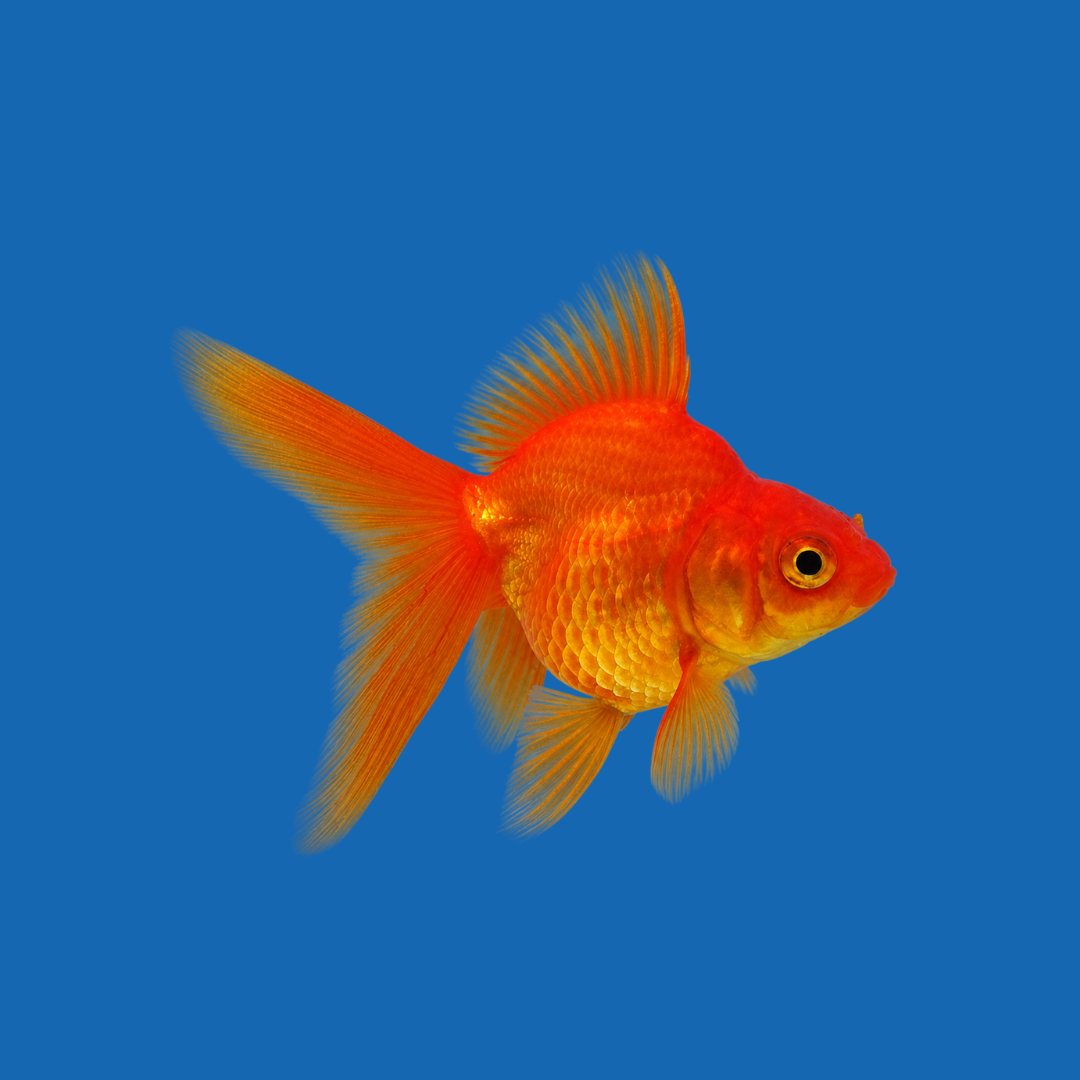
飯田琉金は、長野県飯田地方で生産される琉金の銘柄で、濃く鮮やかな赤色を持つ個体がよく知られています。琉金らしい高い体高、頭部の後方から大きく盛り上がる背なり、丸みのある腹部、優雅に広がる尾鰭が調和した姿は、横から眺めたときに特に見映えします。全身が赤く染まる素赤系のほか、白地に濃い赤が入る更紗系も流通しており、赤と白のコントラストも大きな魅力です。基本的には丈夫な金魚ですが、琉金のような丸い体型では浮力のトラブルがみられることがあります。強い水流や過密飼育を避け、安定した水質と適量の給餌を保つことが長期飼育の基本です。 Iida Ryukin is a regional trade name for Ryukin goldfish produced in the Iida area of Nagano Prefecture, Japan. It is well known for individuals with deep, vivid red coloration. Its appeal comes from the classic Ryukin silhouette: a deep body, a strongly arched back rising behind the head, a rounded abdomen, and an elegant divided tail that is particularly striking when viewed from the side. Solid-red fish are common in the trade, while red-and-white sarasa individuals are also valued for their strong contrast. Ryukin are generally hardy, but deep-bodied fancy goldfish can develop buoyancy problems. Gentle water flow, appropriate stocking density, stable water quality, and measured feeding are therefore important for long-term care.
基本情報 / Basic Information
| 学名 / Scientific Name | Carassius auratus |
|---|---|
| 通称 / Common Name | 飯田琉金、飯田産琉金Iida Ryukin |
| 分類 / Family | コイ目コイ科フナ属のキンギョ。飯田琉金は琉金の地域銘柄であり、独立した分類群ではありません。Order Cypriniformes, family Cyprinidae, genus Carassius. Iida Ryukin is a regional trade designation of Ryukin goldfish rather than a separate taxonomic group. |
| 英名 / English Name | Iida Ryukin |
| 分布 / Distribution | 観賞用品種の地域銘柄であり、飯田琉金そのものに自然分布はありません。長野県飯田地方で生産され、日本国内の観賞魚流通で扱われています。As a regional designation for a domesticated ornamental variety, Iida Ryukin has no natural wild distribution of its own. It is produced in the Iida region of Nagano Prefecture and distributed through the Japanese ornamental-fish trade. |
| 最大体長 / Max Size | 飼育下では全長15〜20cm前後がひとつの目安です。尾鰭を含む全長は個体差が大きく、系統や飼育期間、飼育環境によってこれを超えることもあります。Around 15–20 cm in total length is a practical guide for aquarium-kept adults. Total length, especially when the tail is included, varies considerably with the individual, lineage, age, and rearing conditions, and some fish may exceed this range. |
| 寿命 / Lifespan | 適切な環境では10年以上生きる個体もいます。寿命には個体差があり、水質、給餌、飼育密度など長期的な管理状態に大きく左右されます。Some goldfish live for more than 10 years under suitable conditions. Lifespan varies widely and is strongly influenced by long-term water quality, feeding, stocking density, and general husbandry. |
飼育環境 / Aquarium Environment
| 水槽サイズ / Tank Size | 若魚1匹からでも60cm規格水槽(公称約60L)以上を目安とし、成魚や複数飼育では90cm規格水槽(公称約180L)以上を選ぶと、水量と遊泳スペースを確保しやすくなります。水槽の大きさは現在の体長だけでなく、成長後の体格と濾過能力を見越して決めてください。Even for a single juvenile, a standard 60 cm aquarium with a nominal volume of about 60 L is a practical starting point. For adults or multiple fish, a standard 90 cm aquarium of about 180 L or larger makes it easier to provide adequate water volume and swimming space. Choose tank size with adult body size and filtration capacity in mind, not only the fish’s size at purchase. |
|---|---|
| 水温 / Temperature | 16〜24℃前後を目安に、急激な水温変化を避けて管理します。金魚はより広い温度域にも耐えますが、水温が低い時期は活動と消化が緩やかになるため、状態を見ながら給餌量を減らします。 A range of about 16–24°C is a practical guide, with rapid temperature changes avoided. Goldfish tolerate a broader range, but activity and digestion slow in cooler water, so feeding should be reduced according to the fish’s condition. |
| 水質 / Water Quality | pH6.5〜7.5程度の弱酸性〜弱アルカリ性を目安に、アンモニアと亜硝酸は検出されない状態を維持します。金魚は排泄量が多いため、十分に成熟した生物濾過と定期的な換水が重要です。極端に軟らかく緩衝力の低い水ではpHが不安定になりやすいので注意します。Aim for mildly acidic to mildly alkaline water around pH 6.5–7.5, with ammonia and nitrite kept undetectable. Goldfish produce substantial waste, so mature biological filtration and regular water changes are essential. Extremely soft, poorly buffered water can allow unstable pH and should be managed carefully. |
| レイアウト / Layout | 長い尾鰭を傷めないよう、角の尖った石や狭い隙間のある装飾は避けます。底床はベアタンク、または誤飲しにくく清掃しやすい砂利が扱いやすいでしょう。濃い色の背景や底面は赤とのコントラストを取りやすく、落ち着いた鑑賞環境を作れます。水草は食害されることを前提に、丈夫な種類を固定して使うか、植栽部分を保護すると維持しやすくなります。Avoid sharp rocks, narrow gaps, and rough decorations that can damage the long fins. A bare-bottom setup or easy-to-clean gravel that is difficult to swallow is practical. Dark backgrounds and substrates can provide clear visual contrast with the red coloration and create a calm display. Live plants may be eaten, so choose robust species, secure them firmly, or protect planted areas. |
| 注意点 / Precautions | 琉金は丸い体型と大きな尾鰭のため、和金やコメットほど強い水流を得意としません。濾過能力は確保しつつ、吐出口を壁面に向けるなどして流れを分散させます。新しい個体はすぐに本水槽へ入れず、別容器で状態を観察してから合流させると、寄生虫や感染症を持ち込むリスクを減らせます。浮き上がる、沈んだままになる、姿勢が傾くといった変化が続く場合は、水質、水温、給餌、外傷や感染の有無を順に確認します。Because of their deep body and large fins, Ryukin are less suited to strong currents than streamlined goldfish such as common goldfish or comets. Maintain adequate filtration while diffusing the return flow. Newly acquired fish should be observed separately before introduction to reduce the risk of introducing parasites or infectious disease. If persistent floating, sinking, tilting, or loss of balance occurs, check water quality, temperature, feeding, injuries, and signs of infection in a systematic way. |
餌と給餌 / Feeding
| 餌の種類 / Diet | 金魚用の高品質な沈下性ペレットを主食にし、冷凍赤虫、ミジンコなどを補助的に与えます。赤系の体色を維持したい場合は、カロテノイド源を配合した色揚げ飼料も利用できます。色揚げ飼料だけに偏らず、魚の消化状態と水温を見ながら餌の種類と量を調整します。Use a high-quality sinking goldfish pellet as the staple diet, supplemented with foods such as frozen bloodworms and daphnia. Color-enhancing diets containing carotenoid sources can be used to support red coloration. Do not rely on color food alone; adjust both food type and quantity according to digestion, water temperature, and overall condition. |
|---|---|
| 給餌のポイント / Feeding Tips | 一度に大量に与えず、飼育温度と魚の状態に応じて、短時間で食べ切れる量を1日1〜2回程度に分けて与えます。低水温時や動きが鈍い時は量を控え、排泄や腹部の状態も観察します。水面で空気を取り込みやすい個体では沈下性飼料が扱いやすく、空気の飲み込みを減らす方法の一つになります。体色は餌だけで決まるものではなく、遺伝的背景や健康状態、飼育環境なども関係します。Avoid large meals. Depending on water temperature and the fish’s condition, offer modest portions once or twice a day that can be eaten promptly. Reduce feeding in cool water or when activity declines, and observe feces and abdominal condition. Sinking food is useful for fish that take in air at the surface and can reduce aerophagia. Body color is not determined by diet alone; genetic background, health, and rearing conditions also contribute. |
性格と混泳 / Temperament and Tank Mates
| 性格 / Temperament | 基本的には温和で人にも慣れやすく、給餌時には飼育者の姿を追うようになる個体も少なくありません。活発に底をついばむ一方、長いヒレと丸い体型のため遊泳速度は速くなく、落ち着いた環境を好みます。Generally peaceful and quick to become accustomed to people, many individuals learn to approach their keeper at feeding time. They actively forage along the bottom, but their rounded body and large fins make them slower swimmers that do best in a relatively calm environment. |
|---|---|
| 混泳の相性 / Compatibility | 同程度の遊泳力を持つ琉金、オランダ獅子頭、東錦などの丸物金魚との混泳が向いています。和金やコメットのように泳ぎが速い品種と一緒にすると餌競争で不利になることがあります。小型熱帯魚は水温条件が合いにくく、口に入る大きさなら捕食される可能性もあるため、基本的には金魚同士でまとめるのが安全です。They are best kept with fancy goldfish of similar swimming ability, such as other Ryukin, Oranda, and Azuma Nishiki types. Fast varieties such as common goldfish and comets may outcompete them for food. Small tropical fish often require different temperature conditions and may also be swallowed if small enough, so a goldfish-focused community is usually safest. |
病気と対策 / Diseases and Prevention
| かかりやすい病気 / Common Diseases | 丸物金魚でよく問題になるのは、一般に転覆病と呼ばれる浮力・姿勢の異常です。単一の原因で起こる病気ではなく、空気の取り込み、消化状態、浮き袋や内臓の異常など、複数の要因が関係することがあります。そのほか、白点病、尾ぐされ病、エラの寄生虫、イカリムシ、細菌性感染症などにも注意します。Deep-bodied fancy goldfish commonly develop buoyancy and posture problems often referred to as “swim bladder disease.” This is not a single disease with one cause; air intake, digestive condition, and abnormalities of the gas bladder or other internal organs may all be involved. Other concerns include ich, fin rot, gill parasites, anchor worms, and bacterial infections. |
|---|---|
| 対策と予防 / Prevention | 予防の基本は、過密を避け、アンモニアと亜硝酸が検出されない水質を維持し、急な水温変化と過剰給餌を防ぐことです。新規導入魚は別容器で観察してから本水槽へ合流させます。浮力異常が見られた場合は、まず水質と水温、直前の給餌内容を確認し、餌との関係が疑われる時は一時的に給餌を控えます。充血、鱗の逆立ち、潰瘍、呼吸異常などを伴う場合は感染症なども含めた判断が必要になるため、可能であれば観賞魚の診療に対応する獣医師へ相談します。Prevention begins with avoiding overcrowding, maintaining water in which ammonia and nitrite remain undetectable, preventing rapid temperature changes, and avoiding excessive feeding. Observe new fish separately before introducing them to the main aquarium. When buoyancy problems appear, first check water quality, temperature, and recent feeding. If food appears to be involved, feeding can be reduced or withheld temporarily. Reddening, raised scales, ulcers, or abnormal breathing require consideration of infectious and other internal disease, and consultation with a veterinarian experienced with aquarium fish is preferable when available. |
増やし方(繁殖) / Breeding
| 雌雄の判別 / Sexing | 成熟したオスは繁殖期になると、エラ蓋や胸鰭の前縁に白い追星が現れることがあります。メスは抱卵すると腹部がふっくらし、左右から見て丸みが増します。ただし繁殖期以外の外見だけで確実に判別するのは難しく、体型だけで性別を断定しない方が安全です。Mature males may develop small white breeding tubercles on the gill covers and leading rays of the pectoral fins during the spawning season. Females often become noticeably fuller in the abdomen when carrying eggs. Outside the breeding season, however, reliable sexing by appearance alone can be difficult, so body shape should not be treated as definitive. |
|---|---|
| 繁殖形態 / Reproduction | 卵生で、春から初夏にかけて水温が上がる時期に繁殖行動が活発になります。オスがメスを追尾し、水草や産卵床などに粘着性の卵を産み付けます。親魚は卵を食べるため、採卵後は親魚と卵を分けて管理します。They are egg-layers, with spawning activity commonly increasing from spring into early summer as temperatures rise. Males chase females, which scatter adhesive eggs onto plants or spawning media. Because adults will eat the eggs, the parents should be separated from the spawn after laying. |
| 繁殖のポイント / Breeding Tips | 健康な親魚を十分に成熟させ、産卵用の別水槽に人工産卵藻や柔らかい水草を用意します。孵化後の稚魚は口が非常に小さいため、初期はインフゾリアなどの微小な餌から始め、成長に合わせてブラインシュリンプ幼生や細かな人工飼料へ切り替えます。親魚の色や体型がそのまま子に再現されるとは限らないため、飯田琉金らしい特徴を残すには、親魚の選定と成長過程での選別が重要になります。Condition healthy, mature broodstock and prepare a separate spawning aquarium with soft plants or artificial spawning mops. Newly hatched fry have very small mouths, so begin with microscopic foods such as infusoria, then progress to newly hatched brine shrimp and finely powdered prepared foods as they grow. The parents’ color and body shape are not reproduced identically in every offspring, so careful broodstock selection and selection during juvenile growth are important when preserving Iida Ryukin characteristics. |
雑学と豆知識 / Trivia and Fun Facts
| 1. 「琉金」という名前に残る旅の記憶 / 1. The Journey Preserved in the Name “Ryukin” | 琉金という名前は、その姿ではなく日本へ渡ってきた道筋を記憶しています。江戸時代、中国から琉球を経由して日本にもたらされたことから「琉金」と呼ばれるようになったと伝えられています。現在では日本を代表する金魚の一つですが、その名をたどると、東アジアの交易と人の往来の中で観賞魚が運ばれ、各地で選抜されてきた歴史が見えてきます。飯田琉金もまた、その長い改良史の上に生まれた地域ブランドと考えると、単なる色違いの金魚ではない奥行きが感じられます。The name Ryukin preserves a memory of travel rather than describing the fish’s shape. The variety is traditionally said to have reached Japan from China through the Ryukyu Islands during the Edo period, which gave rise to its Japanese name. Today it is one of the country’s most recognizable goldfish forms, yet its name still hints at the movement of ornamental fish through East Asian trade networks. Iida Ryukin represents a later regional chapter in that much longer history of selective breeding. |
|---|---|
| 2. 飯田琉金を象徴する「猩々」の赤 / 2. The Deep Red Associated with Iida Ryukin | 飯田琉金が知られる最大の理由は、やはり赤の濃さです。特に全身が濃い赤で覆われる素赤系は「猩々」と呼ばれ、飯田地方産の銘柄を語るうえで象徴的な存在になっています。更紗では、その赤が白地と隣り合うことで境界がくっきり見え、同じ赤でも素赤とは異なる華やかさを見せます。ただし、飯田産であればすべて同じ濃さになるわけではなく、個体差や成長段階も大きいため、購入時は産地名だけでなく実際の色、体型、ヒレの状態まで観察したいところです。The feature most strongly associated with Iida Ryukin is the depth of its red coloration. Solid-red individuals are especially emblematic of the regional brand, while sarasa fish gain a different kind of brilliance from the contrast between deep red patches and clean white areas. Even so, not every fish from the region develops identical color. Individual genetics, age, condition, and rearing history all matter, so the actual color, body shape, and fin condition are more informative than the origin label alone. |
| 3. 赤い体色は「色揚げ餌だけ」で作られるわけではない / 3. Red Color Is Not Created by Color Food Alone | 金魚では、体色に遺伝的背景、色素細胞、餌に含まれる色素成分、背景色など複数の要因が関わることが研究されています。一方、飯田琉金の濃い赤について、飯田地方の紫外線や水質といった個別の環境要因がどの程度寄与するのかを、飯田琉金そのものを対象に直接検証した研究は確認できません。そのため、飯田琉金の赤を一つの環境要因だけで説明するのではなく、銘柄として選抜・育成されてきた特徴として捉えるのが適切です。Research on goldfish shows that body color is influenced by multiple factors, including genetic background, pigment cells, dietary pigments, and background color. However, direct studies on Iida Ryukin that quantify how specific local factors such as ultraviolet exposure or water quality contribute to its deep red coloration could not be confirmed. It is therefore more accurate not to attribute the Iida red to a single environmental factor, but to regard it as a characteristic maintained through the selection and rearing of this regional trade line. |
| 4. 水槽の背景色でも「見える赤」は変わる / 4. Background Color Can Change How Red Appears | 金魚では、白や黒などの背景色によって体色調節に関わる反応が変化することが研究されています。ただし、黒い背景にすれば赤色そのものが必ず濃くなる、と単純に言い切れるものではありません。鑑賞上は、黒や濃紺などの背景を使うと赤や白との明暗差が生まれ、同じ個体でも色彩の印象が変わります。背景色は「色を作る方法」というより、魚の体色調節と見え方の両方に関わる環境要素として考えると分かりやすいでしょう。Studies in goldfish show that physiological responses involved in body-color regulation change with white, black, and other background conditions. This does not mean that a black background will automatically make red pigment itself permanently deeper. From a viewing standpoint, however, black or dark blue backgrounds create stronger contrast with red and white areas, so the same fish can look different. Background color is best understood as an environmental factor affecting both color regulation and visual appearance, rather than as a simple method for “creating” color. |
| 5. 金魚は「胃」を持たない無胃魚 / 5. Goldfish Are Stomachless Fish | 金魚は解剖学的な胃を持たない無胃魚で、食物は主に腸管で消化されます。ただし、「胃がないから常に餌を与える必要がある」という意味ではありません。水槽では食べ残しや過剰な排泄が水質悪化につながるため、魚の状態と水温に合わせて少量ずつ与え、食べ残しを出さない管理が重要です。琉金では浮力のトラブルもみられるため、食欲の強さだけを給餌量の基準にしない方が安全です。Goldfish are anatomically stomachless fish, with digestion occurring mainly along the intestine. This does not mean that they need to be fed continuously. In an aquarium, uneaten food and excessive waste can quickly degrade water quality, so small portions should be adjusted to temperature and condition and should not be left uneaten. Because Ryukin can also develop buoyancy problems, appetite alone should not determine how much food is offered. |
| 6. 金属光沢を作るのは色素だけではない / 6. Metallic Shine Is More Than Pigment | 金魚の美しさは、赤や黒などの色素だけでできているわけではありません。鱗や皮膚にある虹色素胞には光を反射する構造があり、グアニンを主成分とする結晶が金属的な光沢に関わります。普通鱗と透明鱗ではこの反射の現れ方が異なるため、同じ赤や白でも見た目の質感が変わります。金魚の体色は、色素そのものと光を反射する構造が重なって見えていると考えると、その多彩さを理解しやすくなります。Goldfish beauty is produced by more than red, black, or other pigments. Iridophores in the skin and scales contain reflective structures, including guanine-based crystals, that contribute to metallic shine. The way this reflection appears differs between normal and transparent scale types, so even similar red or white areas can have a different visual texture. Goldfish coloration is therefore easier to understand as a combination of pigments and light-reflecting structures. |
まとめ / Conclusion
飯田琉金の魅力は、ひと目で印象に残る濃い赤と、琉金らしい丸く堂々とした体型が一体になっていることにあります。素赤では体全体の力強い発色を、更紗では白地との鮮明な対比を楽しめるため、同じ飯田琉金でも一匹ごとに見どころが異なります。ゆっくりと尾を広げて泳ぐ姿は華やかでありながら落ち着きがあり、長く付き合うほど体型や色の変化まで楽しめる金魚です。 The appeal of Iida Ryukin lies in the combination of deep red coloration and the bold, rounded form that defines the Ryukin. Solid-red fish display a powerful, uniform presence, while sarasa individuals offer vivid contrast between red and white, giving each fish its own character. Their slow, sweeping movement is both elegant and substantial, and long-term keepers can enjoy watching not only their behavior but also the gradual development of body shape and color.
十分な水量、穏やかな水流、安定した水質、適量の餌という基本を保つことで、飯田琉金は長期飼育しやすくなります。濃い赤だけに注目するのではなく、安定した泳ぎ、無理のない体つき、傷みのないヒレまで含めて健康に育てることが、その個体が持つ美しさを自然に引き出すことにつながります。 Providing ample water volume, gentle flow, stable water quality, and measured feeding makes long-term care of Iida Ryukin more reliable. Rather than focusing on deep red color alone, aim for stable swimming, a sound body condition, and undamaged fins. Keeping the whole fish healthy is the most natural way to bring out the beauty of each individual.
気になる道具や飼い方を見つけてみませんか?
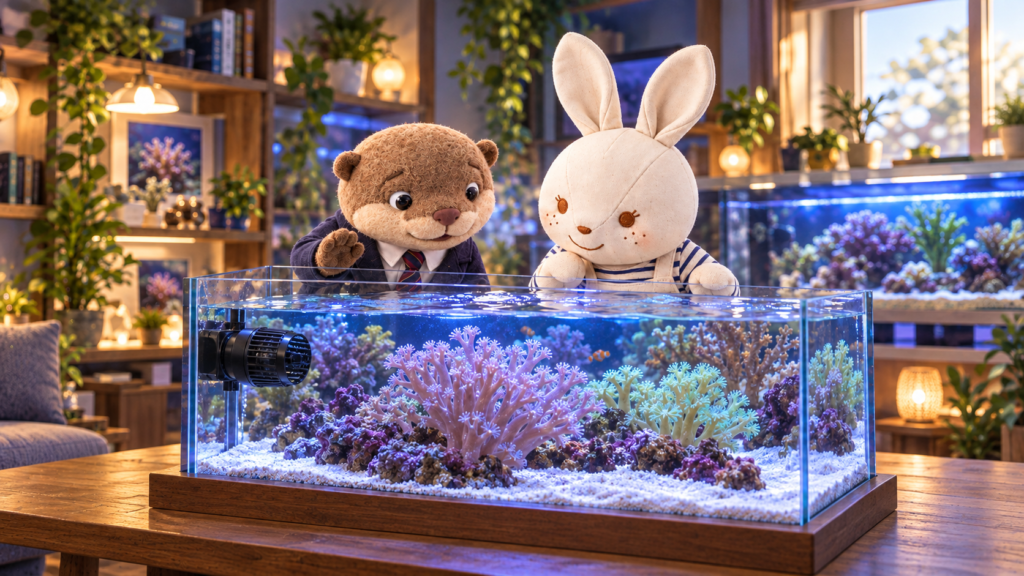 アイのアクアグッズ案内水槽の中に波がある!? コタロウと探る、サンゴがゆらゆら揺れる秘密道具の特徴や使い方、選ぶときのポイントをアイが紹介します。記事はコチラ →
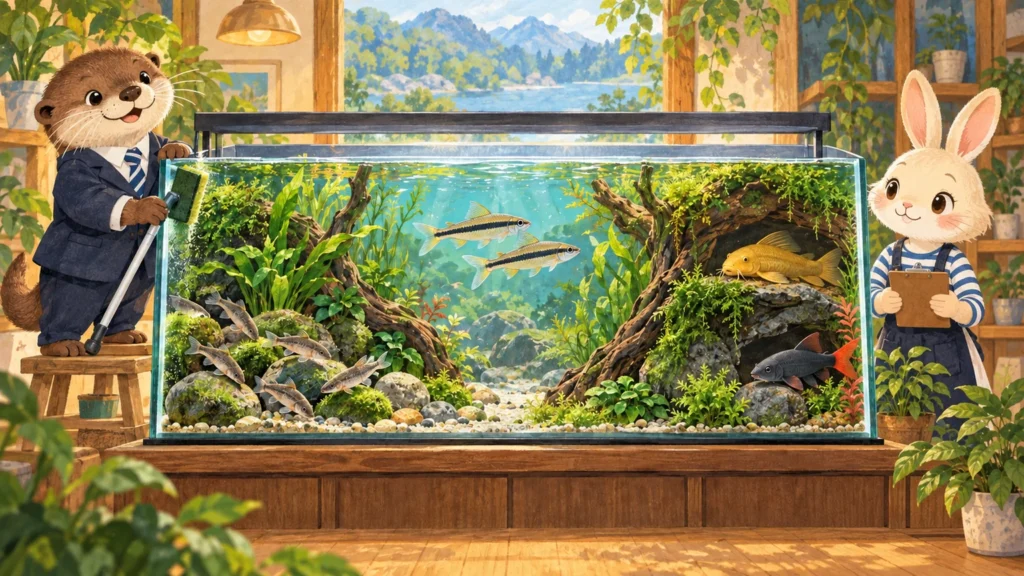 アイのアクアグッズ案内コケを食べるコイの仲間に合わせる飼育用品|フライングフォックス・アルジイーター・ガラ道具の特徴や使い方、選ぶときのポイントをアイが紹介します。記事はコチラ →
さまざまな飼育テーマをご紹介。リンク先の記事には広告・商品紹介が含まれます。
案内・紹介記事一覧へ →分布マップ
飯田琉金は自然分布を持つ野生魚ではなく、長野県飯田地方で生産される観賞用の地域銘柄です。下の地図では、生産地域である飯田地方とその周辺を概略的に表示しています。
※この地図は記事の分布情報をもとにした概略表示です。マーカーは飯田地方を示すための代表地点であり、実際の採集地点・養殖場・生産者所在地を示すものではありません。
参考文献
-
琉金の名称由来と、日本で親しまれてきた品種としての基本的な位置づけ。
-
学名、コイ目・コイ科・フナ属という分類、自然分布、生息環境、体長、繁殖期の産卵場所、粘着性の卵などの基礎生物学。
-
金魚の体長、寿命、生息環境、温度変化や水質への耐性、pH、食性などの生態情報。
-
水槽容量、水温、pH、アンモニア・亜硝酸などの水質管理、濾過、水流、レイアウト、給餌、ファンシーゴールドフィッシュへの沈下性飼料の使用。
-
コイ科魚類の特徴と、琉金を含むファンシーゴールドフィッシュで起こりやすい空気の取り込みに関連した浮力調節の問題、沈下性飼料による対策。
-
水質、栄養、清掃・衛生管理、検疫を中心とした観賞魚の疾病予防と、新規導入魚を別水槽で管理する考え方。
-
白点病、鰓や体表の単生類、イカリムシなど、淡水観賞魚で問題となる主要な寄生虫性疾患とその徴候。
-
Aeromonas、Pseudomonas、Flavobacteriumなどによる細菌性疾患と、水質悪化、過密、温度変化、輸送や取扱いのストレスが発症リスクに関わること。




コメント