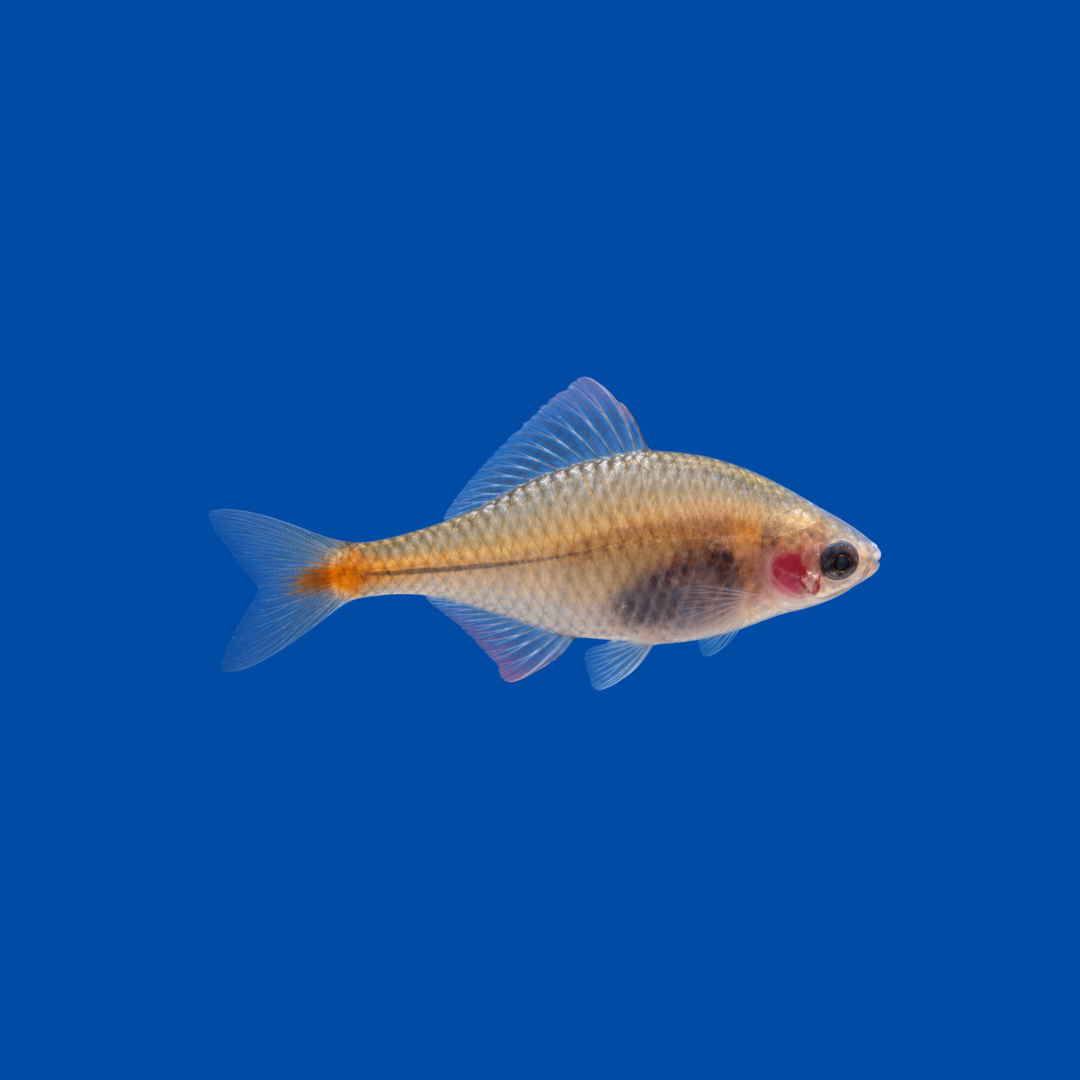
透明鱗タイリクバラタナゴは、遺伝的な透明鱗変異を示すタイリクバラタナゴです。銀色の反射を生む虹彩胞が著しく少ないため、眼と腹膜は黒っぽく見え、体全体は透けるような光沢を帯びます。えらの赤も鰓蓋越しに目立ち、繁殖期のオスは赤から橙色の婚姻色を鮮やかにまといます。透明鱗は、メラニン色素を欠くアルビノとは異なる形質です。普通鱗個体との比較研究では、成長と繁殖に明確な差は認められていません。温和な小型魚ですが、日本では外来種として定着し、在来のニッポンバラタナゴと交雑します。野外へは決して放さず、閉鎖された飼育環境で終生管理することが欠かせません。The transparent-scaled rosy bitterling is a rosy bitterling that expresses a hereditary transparent-scale mutation. Its reflective iridophores are greatly reduced, giving the eyes and peritoneum a dark appearance and the body a translucent sheen. The red gills are also conspicuous through the opercula, while breeding males display vivid red-to-orange nuptial coloration. This trait is distinct from albinism, which involves a loss of melanin. A comparative study found no clear difference in growth or reproduction between transparent-scaled and normally scaled fish. Although peaceful and small, this fish is introduced in Japan and can hybridize with the native Japanese rosy bitterling. It must never be released and requires lifelong care in a closed aquarium.
基本情報 / Basic Information
学名 / Scientific Name
Rhodeus ocellatus (Kner, 1866)。亜種として扱う場合は、Rhodeus ocellatus ocellatusと表記されます。. When treated at subspecies rank, it is written as Rhodeus ocellatus ocellatus.
通称 / Common Name
透明鱗タイリクバラタナゴTransparent-scaled rosy bitterling
分類 / Family
コイ目タナゴ科バラタナゴ属。分類体系によってはコイ科タナゴ亜科として扱われます。Order Cypriniformes, family Acheilognathidae, genus Rhodeus. Some classifications place bitterlings in the family Cyprinidae as the subfamily Acheilognathinae.
アジア大陸東部の揚子江水系を中心に自然分布します。日本へは1942年に持ち込まれたとされ、その後、各地へ分布を広げました。透明鱗個体は、主として観賞用の飼育個体として維持されています。The species is native mainly to the Yangtze River system and surrounding areas of eastern continental Asia. It is considered to have been introduced to Japan in 1942 and subsequently spread to many regions. Transparent-scaled fish are maintained mainly in captivity for ornamental purposes.
最大体長 / Max Size
全長6~8cmほどが目安です。文献上は最大標準体長9.2cmの記録がありますが、一般的な個体はこれより小型です。Usually about 6–8 cm in total length. A maximum standard length of 9.2 cm has been reported, although most individuals are smaller.
寿命 / Lifespan
飼育下の寿命については、信頼できる統一的な数値が定まっていません。寿命は個体差や飼育環境に左右されます。No well-established, reliable figure is available for lifespan in captivity. Longevity varies with the individual and its husbandry conditions.
飼育環境 / Aquarium Environment
水槽サイズ / Tank Size
少数飼育なら45cm規格水槽(約35~40L)から可能ですが、6~10匹ほどの群れをゆとりをもって飼うなら60cm規格水槽(約60L)以上がおすすめです。繁殖用の二枚貝を入れる場合も、底面積と水量に余裕のある60cm規格水槽以上が管理しやすくなります。A 45 cm standard aquarium of roughly 35–40 L can house a small group, but a 60 cm standard aquarium of about 60 L or larger is recommended for a group of six to ten fish. A 60 cm or larger tank also provides more bottom area and stable water volume when a breeding mussel is used.
水温 / Temperature
日常管理の目安は18~24℃です。急激な水温変化と、高水温時の酸欠を避けます。室温がこの範囲から大きく外れない屋内水槽では、必ずしも加温を必要としません。A practical routine range is 18–24°C. Avoid sudden temperature changes and oxygen depletion during hot weather. Heating is not always necessary in an indoor aquarium if room temperature does not move far outside this range.
水質 / Water Quality
中性前後の淡水を基本とします。特定の数値に合わせることより、水質の急変を避け、十分な溶存酸素を保ち、アンモニアと亜硝酸が検出されない状態を維持することが重要です。強い水流は必要ありません。Use freshwater close to neutral pH. Avoiding rapid changes, maintaining adequate dissolved oxygen, and keeping ammonia and nitrite undetectable are more important than targeting an exact value. A strong current is unnecessary.
レイアウト / Layout
中央に群れが泳げる空間を残し、背面や両側に水草、流木、丸みのある石を配置して隠れ場所をつくります。底床には細かな砂または角のない小粒砂利が適します。飛び出しを防ぐため、ふたも用意します。二枚貝を使う場合は、貝が潜れる細砂を部分的に敷きます。Leave open swimming space in the center and provide cover with plants, driftwood, and smooth stones along the back and sides. Fine sand or rounded fine gravel is suitable, and a secure lid helps prevent fish from jumping out. When keeping a mussel, provide an area of fine sand into which it can burrow.
注意点 / Precautions
タイリクバラタナゴは日本で重点対策外来種に位置づけられ、在来のニッポンバラタナゴと交雑します。生体、卵、稚魚、繁殖に使った二枚貝を河川や池、水路へ絶対に放さず、譲渡先も終生飼育できる相手に限ります。野外採集のタナゴ類とは混ぜず、飼育器具も分けると安全です。地域の条例によって飼育や放流などが規制される場合があるため、入手前に飼育地の最新ルールを確認してください。二枚貝も採集や移動が規制される種・地域があり、長期飼育が難しいため、適法な養殖個体を信頼できる販売元から入手します。The rosy bitterling is designated a priority invasive alien species for control in Japan and can hybridize with the native Japanese rosy bitterling. Never release adults, eggs, fry, or mussels used for breeding into rivers, ponds, or canals, and rehome fish only to someone able to provide lifelong care. Do not mix them with wild-caught bitterlings, and ideally keep equipment separate. Local ordinances may regulate keeping or release, so check the latest rules where the aquarium is located before obtaining the fish. Collection or movement of freshwater mussels may also be regulated, and they are difficult to maintain; obtain legally cultured stock from a reliable source.
餌と給餌 / Feeding
餌の種類 / Diet
雑食性で、小型魚用の微粒またはフレーク状人工飼料を主食にできます。冷凍赤虫、ミジンコ、ブラインシュリンプ、植物質を含む飼料を補助的に与えると、栄養の偏りを抑えられます。Omnivorous. Fine granules or flakes formulated for small fish can be used as the staple diet. Supplementing with frozen bloodworms, daphnia, brine shrimp, and foods containing plant matter helps provide nutritional variety.
給餌のポイント / Feeding Tips
1日1~2回、1~2分で食べ切る少量を与えます。口が小さいため粒の大きさを合わせ、痩せた個体や臆病な個体にも行き渡るよう複数箇所へ分散してください。食べ残しは早めに取り除き、高水温期と越冬中の低活動時は食欲に合わせて量を減らします。Feed one or two small meals daily, offering only what is consumed within one to two minutes. Match particle size to the small mouth and distribute food in several places so shy or thin individuals can feed. Remove leftovers promptly and reduce portions during hot weather or cold periods when activity declines.
性格と混泳 / Temperament and Tank Mates
性格 / Temperament
基本的には温和で、複数でまとまって泳ぎます。繁殖期のオスは二枚貝の周囲になわばりをつくり、同種を追うことがあります。追い回しが続く場合は、隠れ場所を増やすか、個体数や水槽の広さを見直します。Generally peaceful and inclined to swim in groups. During the breeding season, males may defend an area around a mussel and chase other bitterlings. If persistent chasing occurs, add more cover or reconsider the group size and available tank space.
混泳の相性 / Compatibility
水温や水質の条件が合うメダカ、温和な小型魚、ドジョウ類などが混泳候補になります。ただし、相性には個体差があるため、導入後の追尾や餌の行き渡り方を観察してください。大型魚、肉食魚、ひれをかじる魚、餌を独占する活発な魚は避けます。在来タナゴ類や由来不明のタナゴとは、交雑や病原体の移動を防ぐため混泳させません。Possible tank mates include medaka, peaceful small fish, and loaches with matching temperature and water requirements. Individual compatibility varies, so watch for chasing and make sure every fish can feed. Avoid large predators, fin-nippers, and highly competitive feeders. Never mix this fish with native or unidentified bitterlings because of the risks of hybridization and disease transfer.
病気と対策 / Diseases and Prevention
かかりやすい病気 / Common Diseases
透明鱗系統に固有の疾病傾向は確立されていません。飼育下では観賞魚一般と同じく、水温の急変や水質悪化をきっかけに、白点病、尾ぐされ病などの細菌性疾患、水カビ病を発症することがあります。野外採集魚や二枚貝の導入時は、寄生虫や病原体の持ち込みにも注意します。No disease tendency unique to the transparent-scaled form has been established. As with other aquarium fish, sudden temperature changes or deteriorating water quality may contribute to ich, bacterial disease such as fin rot, or fungal infection. Wild-caught fish and mussels can also introduce parasites or pathogens.
対策と予防 / Prevention
新しい魚は別容器で健康状態を観察してから導入し、過密を避け、週1回を目安に水量の4分の1から3分の1を換水します。ろ過を安定させ、温度合わせと水合わせを丁寧に行うことが基本です。病魚は早期に隔離してください。魚病薬や塩分は二枚貝に有害となる場合があるため、治療は二枚貝のいない別容器で行い、症状が不明なときは魚病に詳しい専門店や獣医師へ相談します。Observe new fish in a separate container before introduction, avoid crowding, and change roughly one-quarter to one-third of the water each week. Maintain mature filtration and acclimate fish carefully to temperature and water chemistry. Isolate sick fish promptly. Because medications and salt may harm freshwater mussels, treat fish in a separate mussel-free container and consult an aquatic veterinarian or experienced specialist when the diagnosis is uncertain.
増やし方(繁殖) / Breeding
雌雄の判別 / Sexing
成熟したオスは体高が高く、繁殖期には赤から橙色の婚姻色が濃くなります。メスは腹部がふくらみ、腹側から長い管状の産卵管を伸ばします。産卵管の基部が赤みを帯びることも識別の手がかりです。非繁殖期や若魚では判別が難しくなります。Mature males have a deeper body and develop intense red-to-orange nuptial coloration during the breeding season. Females become fuller and extend a long, tubular ovipositor from the ventral surface; a reddish base to the ovipositor can also aid identification. Sexing juveniles or fish outside the breeding season is more difficult.
繁殖形態 / Reproduction
繁殖期は主に3~9月で、生きた淡水産二枚貝の鰓内へ産卵する卵生魚です。メスは出水管から産卵管を差し込み、電球形の卵を産みます。続いてオスが入水管付近で放精し、貝が吸い込む水流によって精子が卵へ届きます。胚と仔魚は貝の中で育ち、水温などの条件によりますが、およそ3週間から1か月後に遊泳できる稚魚として外へ出ます。The breeding season is mainly from March to September. The female deposits bulb-shaped eggs inside the gills of a living freshwater mussel by inserting her ovipositor through its exhalant siphon. The male then releases sperm near the inhalant siphon, and the mussel’s water current carries it to the eggs. Embryos and larvae develop inside the mussel and, depending on temperature and other conditions, emerge as free-swimming fry after roughly three weeks to one month.
繁殖のポイント / Breeding Tips
繁殖には、本種が産卵に利用できる健康な淡水産二枚貝が必要です。適合する養殖個体を専門店から入手し、貝が潜れる細砂を用意します。二枚貝は水中の植物プランクトンなどを濾し取って食べます。水が透明に見えても餌が十分とは限らないため、グリーンウォーターを利用するなど、貝にも計画的な給餌と休養が必要です。稚魚が出てくる時期には、親魚とは別の育成容器で貝を管理すると、食害を防ぎやすくなります。貝から出た稚魚には、ごく細かな初期飼料を与え、成長に合わせてブラインシュリンプ幼生などへ切り替えます。透明鱗形質は、性別と関係しない一対の遺伝子によって支配される劣性形質と考えられているため、系統維持では親魚の来歴を記録します。魚体を圧迫する人工授精は損傷の危険があり、十分な知識と設備を持つ経験者向けです。Breeding requires a healthy freshwater mussel that this species can use as a host. Obtain a compatible, cultured mussel from a specialist and provide fine sand for burrowing. Mussels filter phytoplankton and other suspended food from the water. Clear-looking water does not necessarily contain enough food, so planned feeding and recovery, including the careful use of green water, are also necessary for the mussel. As the time for fry to emerge approaches, keeping the mussel in a separate rearing container away from the adults helps reduce predation. Feed newly emerged fry very fine first foods, progressing to newly hatched brine shrimp as they grow. The transparent-scale trait is considered a sex-independent recessive trait controlled by a single gene pair, so keep accurate records of the parent stock when maintaining the line. Artificial stripping and fertilization can injure the fish and should be attempted only by experienced keepers with appropriate knowledge and equipment.
雑学と豆知識 / Trivia and Fun Facts
1. 透明なのに黒い瞳を持つ理由 / 1. Why a Transparent Fish Has Dark Eyes
透明鱗と聞くと、すべての色素が失われた姿を想像しがちですが、この魚で著しく少ないのは、グアニン結晶で光を反射する虹彩胞です。鱗、虹彩、眼球内の脈絡膜、腹膜にある銀色の反射層が乏しいため、眼と腹部は黒っぽく、体全体は透けるような光沢を帯びて見えます。えらの赤が頬紅のように目立つのも、この銀色の覆いが少ないためです。メラニンそのものを欠くアルビノとは、見た目だけでなく細胞学的な成り立ちも異なります。The word transparent may suggest that all pigment has disappeared, but the cells greatly reduced in this fish are iridophores, which reflect light with guanine crystals. Because the silvery reflective layers in the scales, iris, choroid, and peritoneum are sparse, the eyes and abdomen look dark while the body has a translucent sheen. The red gills also appear especially conspicuous because little of this silvery covering remains. The trait differs from albinism, in which melanin is absent or greatly reduced, both in its appearance and in its cellular basis.
2. 見た目を伝える一対の劣性遺伝子 / 2. A Recessive Gene Pair Behind the Appearance
1998年に報告された普通鱗個体との交配実験では、透明鱗形質は性別に左右されず、一対の遺伝子によって支配される劣性形質と考えられました。つまり、この遺伝様式に従えば、透明鱗に関わる遺伝子を片方だけ受け継いだ個体は、外見が普通鱗でも次世代へ形質を伝えることがあります。キンギョの透明鱗よりも単純な遺伝様式を示すため、観賞魚としてだけでなく、発生学や遺伝学の研究に使える遺伝的な目印としても注目されてきました。Crosses with normally scaled fish reported in 1998 indicated that the transparent-scale trait is recessive, independent of sex, and probably controlled by a single gene pair. Under this inheritance model, a fish carrying only one copy can look normally scaled while passing the trait to its offspring. Because this pattern is simpler than transparent-scale inheritance in goldfish, the variant has attracted attention not only as an ornamental fish but also as a genetic marker for developmental and genetic research.
3. 二枚貝の中で始まる命 / 3. A Life That Begins Inside a Mussel
タナゴ類の繁殖は、生きた二枚貝を舞台に進みます。長い産卵管を伸ばしたメスが卵を貝の鰓へ届け、オスの精子は貝自身が呼吸と摂食のために吸い込む水流に乗って卵へ向かいます。孵化した仔魚は卵黄を使い切り、自力で泳げるまで貝の中にとどまります。水槽の底で静かにしている一個の貝が、実は次の世代を守る育児室になっているという、魚と無脊椎動物が結びついた珍しい繁殖戦略です。Bitterling reproduction unfolds inside a living mussel. A female extends her long ovipositor to deliver eggs into the gills, while the male’s sperm rides the water current that the mussel draws in to breathe and feed. The hatched larvae remain inside until their yolk is consumed and they can swim independently. A mussel resting quietly on the aquarium floor may thus be serving as a nursery for the next generation, an unusual reproductive strategy linking a fish with an invertebrate host.
4. 胚が見せる「前方宙返り」 / 4. The Embryo’s Front Flip
二枚貝の内部では、絶えず水が流れています。タイリクバラタナゴの胚は、その流れによって外へ押し出されないよう、孵化前に卵黄の上で前方へ回転する胚転動を行い、頭を貝の奥へ向けます。孵化後には、翼や錨のように広がった卵黄嚢突起と表面の微小な突起が貝の組織へ引っかかります。近年の研究は、この動きが単なる発生途中の姿勢変化ではなく、貝の中に踏みとどまるために作り替えられた適応であることを示しています。Water flows continuously through a mussel. To avoid being flushed out, a rosy bitterling embryo performs blastokinesis before hatching, rotating forward over its yolk and directing its head deeper into the mussel. After hatching, wing- or anchor-like yolk-sac extensions and tiny surface projections catch against the host tissue. Recent research shows that this movement is not merely a change of posture during development, but a modified adaptation that helps the embryo remain securely inside its host.
5. 美しさと責任を結ぶ日本での歴史 / 5. A Japanese History Linking Beauty and Responsibility
タイリクバラタナゴは、1942年に中国大陸から輸入されたハクレンなどの種苗へ混入し、日本へ入ったと考えられています。その後、放流や魚・二枚貝の移動に伴って分布を広げ、近縁のニッポンバラタナゴとの交雑を進めました。一方、飼育下では透明鱗の個体が観賞魚として維持されています。その美しさを楽しむことと、野外へ一匹も出さないことは切り離せません。閉鎖された水槽で最後まで飼うことが、この魚と日本の淡水生態系の双方を守ります。The rosy bitterling is considered to have entered Japan in 1942 as an accidental contaminant in shipments of silver carp and other fish seed from mainland China. It later spread through stocking and the movement of fish and mussels, hybridizing with the closely related Japanese rosy bitterling. Transparent-scaled fish are meanwhile maintained in captivity for ornamental use. Enjoying their beauty cannot be separated from preventing every individual from reaching the wild. Lifelong care in a closed aquarium protects both the fish and Japan’s freshwater ecosystems.
まとめ / Conclusion
透明鱗タイリクバラタナゴは、透けるような体、黒い眼、頬紅のように目立つえら、そしてオスの鮮やかな婚姻色をあわせ持つ小型魚です。群れが落ち着ける空間と安定した水質を保ち、口に合う細かな餌を偏りなく与えることで、その色彩と行動をじっくり観察できます。The transparent-scaled rosy bitterling combines a translucent body, dark eyes, conspicuous blush-like gills, and the vivid nuptial colors of the male in a small fish. Its colors and behavior can be observed at their best when the group has calm swimming space, stable water, and a balanced variety of appropriately small foods.
二枚貝の中で始まる独特の繁殖と、劣性形質として受け継がれる透明鱗は、この魚の生物学的な奥深さを感じさせます。同時に、日本では在来のタナゴ類へ影響を及ぼす外来種でもあります。野外へ決して放さず、閉鎖された水槽で最後まで大切に飼うことが、その不思議な美しさと向き合うための大切な責任です。Its unusual reproduction inside a mussel and the recessive inheritance of its transparent scales reveal the biological depth of this fish. At the same time, it is an introduced species in Japan that affects native bitterlings. Never releasing it and providing lifelong care in a closed aquarium are essential responsibilities when keeping this remarkable fish.






コメント