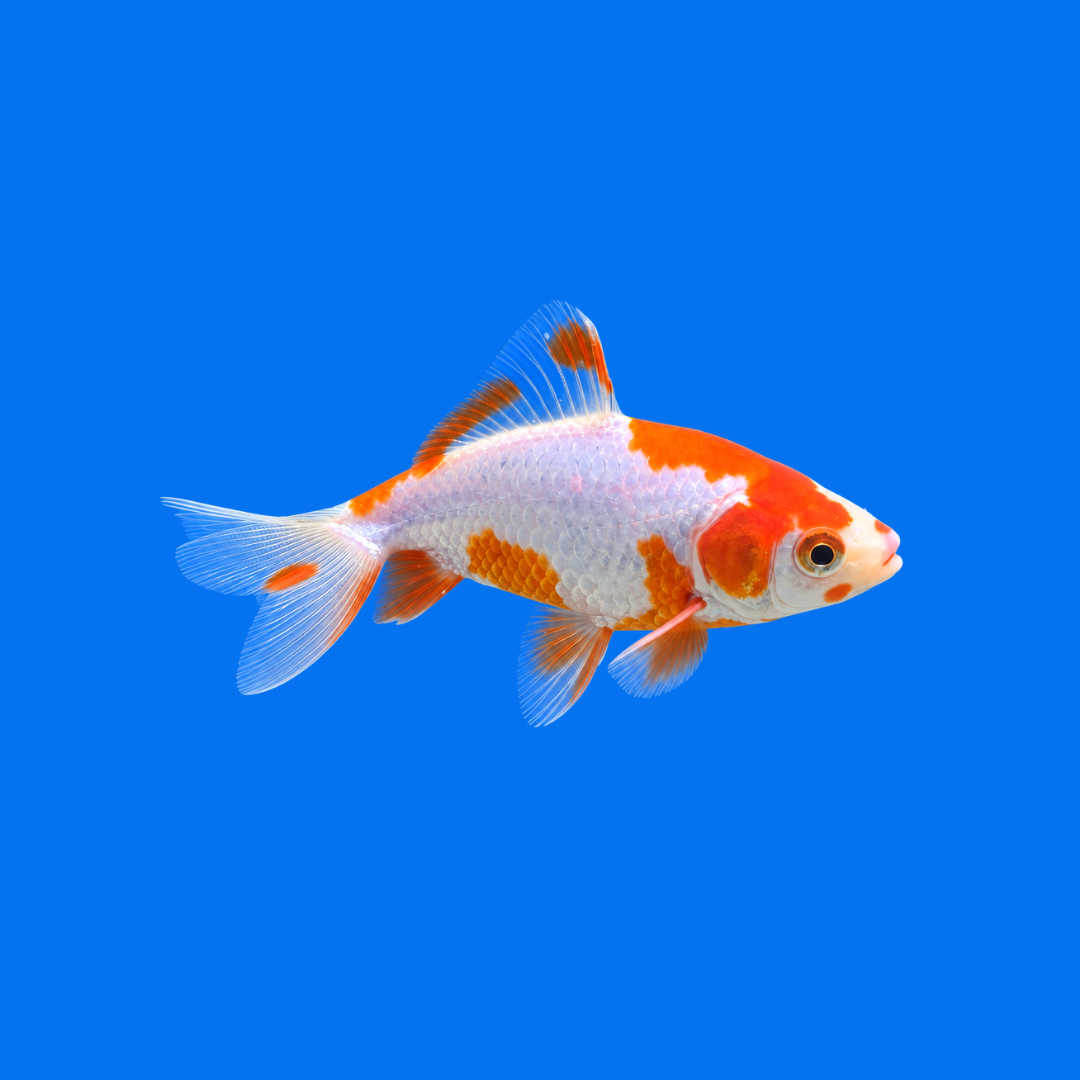
更紗和金は、すらりとした和金らしい体形に、赤と白の更紗模様が入る金魚です。活発に泳ぎ、上見でも横見でも斑紋を楽しめるため、水槽だけでなく庭池でもよく映えます。和金系らしく成長すると大きくなりやすく、長期飼育には十分な水量とろ過能力が必要です。比較的丈夫な品種ですが、排泄量が多い金魚であることに変わりはなく、水質悪化や酸欠には注意しなければなりません。成魚では15~20cmほどが一般的で、条件によっては30cm近くまで成長することもあるため、将来の体格を見越して余裕のある飼育環境を整えることが大切です。Sarasa Wakin is a goldfish variety with the streamlined body shape of a Wakin and a distinctive red-and-white sarasa pattern. It is an active swimmer, and its markings can be appreciated both from the side and from above, making it attractive in aquariums as well as outdoor ponds. Like other Wakin-type goldfish, it can become relatively large and therefore needs ample water volume and adequate filtration for long-term care. Although it is comparatively hardy, it still produces substantial waste and can suffer when water quality or oxygen levels deteriorate. Adults commonly reach about 15–20 cm, and under favorable conditions some may approach 30 cm, so the aquarium or pond should be planned with adult size in mind.
基本情報 / Basic Information
学名 / Scientific Name
Carassius auratus
通称 / Common Name
更紗和金、サラサワキンSarasa Wakin, Sarasa Wakin Goldfish
分類 / Family
コイ目・コイ科・フナ属。金魚 Carassius auratus の和金型に属する観賞用品種。Order Cypriniformes, family Cyprinidae, genus Carassius. An ornamental Wakin-type variety of the goldfish Carassius auratus.
英名 / English Name
Sarasa Wakin Goldfish
分布 / Distribution
観賞用品種のため、更紗和金そのものに自然分布はありません。金魚は中国で長く飼育・改良され、日本へ伝来した後も各地で多様な品種が育成されてきました。As a domesticated ornamental variety, Sarasa Wakin has no natural distribution of its own. Goldfish were bred and developed in China over a long period and, after reaching Japan, continued to be selectively bred into a variety of forms.
最大体長 / Max Size
通常は15~20cmほど。飼育条件や系統によっては30cm近くに達することがあります。Usually about 15–20 cm, with some individuals approaching 30 cm depending on lineage and husbandry conditions.
寿命 / Lifespan
10年以上生きることがあり、適切な飼育環境では20年以上生きる例も知られています。更紗和金だけを対象とした寿命データは限られるため、実際の寿命は個体差や飼育条件によって大きく変わります。Goldfish can live for more than 10 years, and individuals kept under suitable conditions are known to exceed 20 years. Because lifespan data specific to Sarasa Wakin are limited, actual longevity varies greatly with the individual and its husbandry.
飼育環境 / Aquarium Environment
水槽サイズ / Tank Size
成魚を水槽で長期飼育する場合は、90cm規格水槽(約180L)以上をひとつの目安とし、複数飼育では120cm規格水槽(約240L)以上や、さらに水量を確保できる庭池が向いています。必要な水量は個体の大きさ、匹数、ろ過能力によって変わるため、過密にならないよう余裕を持たせます。幼魚を小型水槽で飼い始める場合も、成長に合わせたサイズアップを前提にします。For long-term aquarium care of adults, a 90 cm standard aquarium of about 180 L or larger is a useful starting point. Groups are better suited to a 120 cm standard aquarium of about 240 L or more, or to a pond that provides still greater water volume. The space required depends on the size and number of fish and the capacity of the filtration system, so overcrowding should be avoided. A smaller juvenile setup should be regarded as temporary and enlarged as the fish grow.
水温 / Temperature
日常飼育ではおおむね10~24℃程度を目安にし、成長や繁殖を促す時期は18~24℃前後が扱いやすい温度帯です。低温には比較的強いものの、急激な水温変化や水面の凍結は避けます。また、高温になるほど水中の酸素が不足しやすいため、夏場は水温上昇と酸欠に注意します。For routine care, roughly 10–24°C is a practical range, while about 18–24°C is commonly used during periods of active growth and breeding. Wakin-type goldfish are relatively tolerant of cool water, but sudden temperature changes and freezing conditions should be avoided. Because warmer water holds less oxygen, summer heat should be managed carefully to prevent oxygen shortage.
水質 / Water Quality
中性~弱アルカリ性の安定した水質が向きます。アンモニアと亜硝酸は検出されない状態を保ち、十分なろ過とエアレーションで酸素量を確保します。金魚は排泄量が多いため、定期的な換水と底部の清掃が重要です。Stable neutral to slightly alkaline water is suitable. Ammonia and nitrite should remain undetectable, with strong filtration and aeration used to maintain oxygen levels. Because goldfish produce a large amount of waste, regular water changes and substrate cleaning are essential.
レイアウト / Layout
活発に泳ぐため、中央には広い遊泳スペースを確保します。底床や石組みを使う場合は尖ったものを避け、転倒しやすい装飾は固定します。水草を入れる場合は、かじられたり掘り返されたりすることを想定し、丈夫な種類を選ぶか、鉢植えや保護した植栽にすると管理しやすくなります。Provide a broad open swimming area because this variety is highly active. Avoid sharp substrate and rocks, and secure any decoration that could be knocked over. If live plants are used, expect some grazing and digging; hardy plants, potted specimens, or protected plantings are easier to maintain.
注意点 / Precautions
小さな金魚鉢や過密飼育は避けます。特に夏の高水温時は溶存酸素が低下しやすく、冬は急激な冷え込みが負担になります。新しい個体はすぐに本水槽へ入れず、体表や鰓の異常がないか確認しながら隔離飼育を行うと、病気の持ち込みを抑えやすくなります。Avoid small bowls and overcrowded conditions. In summer, high water temperatures can reduce dissolved oxygen, while rapid cooling in winter can cause stress. Newly acquired fish should be observed in quarantine before introduction to the main aquarium so that external and gill problems can be detected and the risk of introducing disease reduced.
餌と給餌 / Feeding
餌の種類 / Diet
金魚用の配合飼料を主食にし、植物質を含む餌や藻類、柔らかくした野菜などを補助的に与えます。赤虫などの動物質も食べるため、主食とのバランスを見ながら取り入れます。Use a formulated goldfish food as the staple diet, with plant-rich foods, algae, and softened vegetables as supplements. Animal foods such as bloodworms are also accepted and can be offered as part of a balanced feeding routine.
給餌のポイント / Feeding Tips
活動が活発な時期は、食べ切れる量を数回に分けて与えます。低水温期は消化が鈍るため、給餌量や回数を減らします。食べ残しは水質悪化につながるので、短時間で食べ切れる量を基準にし、過剰給餌を避けることが重要です。During active periods, divide the daily ration into small portions that the fish can finish promptly. In colder water, digestion slows, so reduce both the amount and frequency of feeding. Uneaten food quickly degrades water quality, making controlled portions and avoidance of overfeeding important.
性格と混泳 / Temperament and Tank Mates
性格 / Temperament
基本的には温和ですが、非常に活発で餌への反応も強い金魚です。人の気配に慣れると前面へ寄ってくる個体も多く、観察しやすい一方、遊泳力の弱い魚には餌取りで勝ってしまうことがあります。Generally peaceful, Sarasa Wakin is nevertheless very active and highly responsive to food. Many individuals learn to approach people at the front of the tank, but their strong swimming ability means they may outcompete slower fish at feeding time.
混泳の相性 / Compatibility
同程度の大きさで、遊泳力や餌を取る速さが近い金魚とは比較的合わせやすいです。和金、コメット、シュブンキンなどが候補になりますが、個体差や飼育密度も見ながら判断します。泳ぎの遅い丸手の金魚は餌を取り負けやすく、口に入るほど小さな魚やエビ類は捕食される可能性があります。必要とする水温が大きく異なる熱帯魚との混泳も避けます。It is generally easiest to keep Sarasa Wakin with goldfish of similar size, swimming ability, and feeding speed. Wakin, Comet, and Shubunkin can be suitable candidates, although individual behavior and stocking density still need to be considered. Slow-bodied fancy goldfish may lose out at feeding time, while very small fish and shrimp may be swallowed. Tropical species requiring substantially different temperatures should also be avoided.
病気と対策 / Diseases and Prevention
かかりやすい病気 / Common Diseases
水質が悪化したときや季節の変わり目には、白点病やトリコディナ症などの外部寄生虫症、尾ぐされ病などの細菌性疾患、水カビ病などが見られることがあります。特に過密飼育、酸素不足、急な水温変化は発症のきっかけになりやすいため注意が必要です。When water quality deteriorates or temperatures fluctuate between seasons, goldfish may develop white spot disease, external protozoan problems such as Trichodina, bacterial fin rot, or fungal infections such as water mold. Overcrowding, oxygen shortage, and sudden temperature changes can make such problems more likely.
対策と予防 / Prevention
予防の基本は、十分なろ過とエアレーション、定期的な換水、適正な飼育密度を保つことです。新しい魚は隔離して状態を確認し、異常が見られた個体は早めに別容器へ移して、ほかの魚への広がりを防ぎながら経過を観察します。治療が必要な場合は症状に合った観賞魚用薬を選び、薬剤の説明書に従って使用します。日頃から食欲、泳ぎ方、体表、鰭、鰓の動きを見ておくと、異常を早期に見つけやすくなります。Prevention begins with adequate filtration and aeration, regular water changes, and sensible stocking density. New fish should be quarantined and observed, and any fish showing abnormalities should be isolated promptly so its condition can be monitored while reducing the risk of spread. If treatment is needed, use an ornamental-fish medication appropriate to the symptoms and follow the product instructions. Regular observation of appetite, swimming, skin, fins, and gill movement makes early detection easier.
増やし方(繁殖) / Breeding
雌雄の判別 / Sexing
成熟した繁殖期の雄では、鰓蓋や胸鰭の前縁に白い追星が現れることがあります。雌は抱卵すると腹部が丸みを帯び、上から見たときに体幅が広く見えやすくなります。ただし若魚や繁殖期以外では判別が難しいため、複数の特徴を組み合わせて判断します。During the breeding season, mature males may develop small white breeding tubercles on the gill covers and the leading rays of the pectoral fins. Gravid females usually become rounder through the abdomen and appear broader from above. Sexing juveniles or fish outside the breeding season can be difficult, so several traits should be considered together.
繁殖形態 / Reproduction
卵生で、水草や産卵藻などに付着する粘着性の卵を産みます。春の水温上昇が繁殖のきっかけになりやすく、1回の産卵で数千粒規模の卵を産むことがあります。条件が整えば、繁殖期のあいだに複数回産卵することもあります。It is an egg-laying fish that produces adhesive eggs which stick to aquatic plants or spawning mops. Rising spring temperatures commonly act as a breeding trigger, and a female may release thousands of eggs in a spawning event. Under suitable conditions, spawning may occur more than once during the breeding season.
繁殖のポイント / Breeding Tips
自然な季節変化を利用する場合は、冬の低温期を経た親魚に春の水温上昇を感じさせ、細葉の水草や産卵藻を用意します。産卵後は親魚が卵を食べることがあるため、親魚か卵のどちらかを早めに別容器へ移します。稚魚が泳ぎ始めたらインフゾリアなどの微小な餌を与え、成長に合わせてブラインシュリンプ幼生や稚魚用粉末飼料へ切り替えます。更紗模様には個体差があるため、模様を重視して繁殖する場合は成長に合わせた選別も行われます。When breeding with natural seasonal cues, allow the adults to experience the cool period of winter and the subsequent rise in spring water temperature, and provide fine-leaved plants or spawning mops. Adults may eat the eggs, so either the parents or the eggs should be moved soon after spawning. Once the fry become free-swimming, begin with very small foods such as infusoria, then move on to newly hatched brine shrimp and powdered fry diets as they grow. Sarasa markings vary among individuals, so breeders focusing on pattern may also select juveniles as they develop.
雑学と豆知識 / Trivia and Fun Facts
1. 「更紗」という名は布の模様に由来する / 1. The name “Sarasa” comes from patterned textiles
「更紗」は、異国的な染色文様を表す言葉として日本に定着し、金魚の世界では白地に赤い模様が入る配色を表す呼び名として使われています。更紗和金も紅白の斑紋が特徴で、同じような配色でも模様の入り方には一尾ごとに個体差があります。品種として共通する紅白の美しさと、それぞれ異なる斑紋を同時に楽しめることが、更紗和金の大きな魅力です。“Sarasa” became established in Japan as a term associated with distinctive dyed textile patterns, and in goldfish it is used for red markings on a white ground. Sarasa Wakin follows this red-and-white pattern, but the placement of the markings varies from fish to fish. Its appeal lies in this combination of a recognizable color pattern and individual variation.
2. 和金らしい細長い体形と力強い泳ぎ / 2. The streamlined body and strong swimming style of Wakin
丸みの強い体形や大きく発達した鰭を持つ改良金魚が多いなか、和金は細長い体形で活発に泳ぐタイプです。更紗和金はその体形に紅白模様が加わり、池や大型水槽では伸びやかな泳ぎがよく映えます。体形、模様、泳ぎの調和を楽しめることが、和金系ならではの魅力といえるでしょう。While many fancy goldfish have rounded bodies and highly developed fins, Wakin are streamlined and active swimmers. Sarasa Wakin combines this body shape with red-and-white markings, and its movement is especially attractive in ponds and larger aquariums. The balance of body shape, pattern, and swimming style is a defining part of its appeal.
3. 金魚は日本の夏文化とともに広がった / 3. Goldfish became woven into Japanese summer culture
金魚は中国で長い飼育・改良の歴史を持ち、日本への伝来時期には諸説があります。古い記録には1502年に堺へ入ったとする記述があり、その後、江戸時代には金魚売りや観賞文化を通じて人々に親しまれるようになりました。更紗和金そのものの成立時期は明確ではありませんが、和金系の姿と紅白の配色は、現在の水槽や庭池にも日本の金魚文化を感じさせます。Goldfish have a long history of keeping and selective breeding in China, while the exact date of their arrival in Japan is not certain. Historical accounts include a record placing their arrival at Sakai in 1502, and goldfish later became familiar in everyday culture during the Edo period. The exact origin of Sarasa Wakin itself is unclear, but its Wakin form and red-and-white coloration still evoke the long tradition of goldfish keeping in Japan.
4. 模様は成長とともに変わることがある / 4. The pattern can change as the fish grows
更紗模様の見え方は、生涯まったく同じとは限りません。金魚の体色は成長や色素細胞の変化、光環境、栄養などの影響を受けるため、赤い部分の濃淡や斑紋の輪郭が変化することがあります。迎えたときの姿だけでなく、成長に伴う色柄の変化を見守れることも、更紗和金を長く飼う楽しみのひとつです。The appearance of a Sarasa pattern is not necessarily fixed for life. Goldfish coloration can change with growth, pigment-cell development, lighting, and nutrition, so the intensity and outlines of red markings may shift over time. Watching these gradual changes is one of the pleasures of keeping Sarasa Wakin over the long term.
5. 「丈夫」は「小さな容器で平気」という意味ではない / 5. “Hardy” does not mean “suited to a tiny container”
和金系は低温にも比較的強く、金魚の中では丈夫な部類に入ります。ただし、丈夫であることと、小さな容器で飼えることは別の話です。金魚は排泄量が多く、小さな容器では水質の変化や酸素不足が起こりやすくなります。十分な水量、安定したろ過、適切な酸素供給を整えることで、更紗和金の活発な泳ぎと健康を維持しやすくなります。Wakin-type goldfish tolerate cool conditions relatively well and are considered hardy, but hardiness does not mean that they are suited to small containers. Goldfish produce substantial waste, and small volumes of water are more prone to rapid water-quality changes and oxygen shortage. Ample water volume, stable filtration, and adequate oxygenation make it much easier to maintain the fish’s active behavior and health.
まとめ / Conclusion
更紗和金は、和金らしい活発な泳ぎと、紅白の斑紋に現れる個体差を楽しめる金魚です。比較的丈夫ですが、成長すると大きくなり、排泄量も多いため、十分な水量とろ過能力を備えた環境で飼うことが大切です。Sarasa Wakin combines the active swimming style of the Wakin with individual variation in its red-and-white markings. Although comparatively hardy, it can grow large and produces substantial waste, so long-term care requires ample water volume and adequate filtration.
すらりとした体形で泳ぐ姿と、一尾ごとに異なる更紗模様は、水槽でも庭池でもよく映えます。成長に合わせて余裕のある環境を整えながら長く付き合うことで、和金系ならではの力強さと紅白の華やかさをじっくり楽しめます。Its streamlined swimming form and individually patterned red-and-white coloration stand out in both aquariums and garden ponds. By providing more space as the fish grows, keepers can enjoy the strong swimming character of the Wakin together with the visual appeal of the Sarasa pattern over many years.






コメント