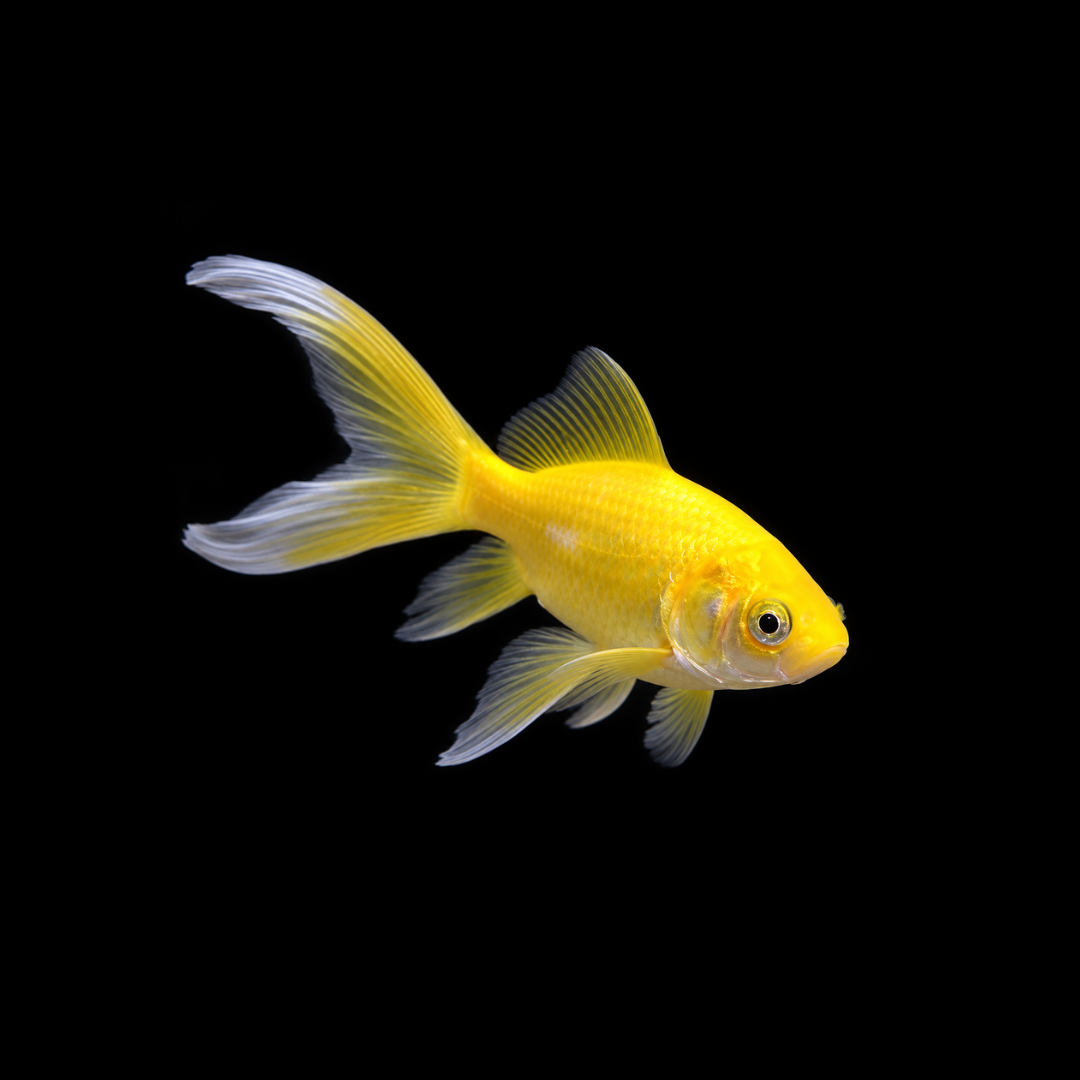
レモンコメットは、日本の観賞魚市場で流通している黄色から淡黄色のコメット系金魚です。細長い和金型の体つきと活発な泳ぎが特徴で、国内流通では長尾タイプだけでなく短尾タイプも「レモンコメット」の名称で販売されています。国内流通では名称の使われ方に幅があり、厳密な品種基準を示す名称というより、黄色系の体色を表す商業的な呼称として扱うのが適切です。販売者によって「ゴールデンコメット」を同義に扱う例や、「イエローコメット」という別表記も見られるため、購入時は名称だけでなく体色や尾の長さも確認すると分かりやすいでしょう。丈夫で活発な金魚ですが、成長すると十分な遊泳空間が必要になるため、販売時の幼魚サイズだけで水槽を選ばないことが大切です。Lemon Comet is a trade name used in the Japanese ornamental-fish market for yellow to pale-yellow comet-type goldfish. These fish have the streamlined body and active swimming style typical of single-tailed goldfish, and both long-tailed and short-tailed individuals are sold under the Lemon Comet name in Japan. In trade, the name is used flexibly rather than as a single standardized breed definition, so it is best understood as a commercial color-and-form designation. Some sellers treat Golden Comet as the same name, while Yellow Comet is also used in the market. For that reason, checking the actual coloration and tail length is more useful than relying on the label alone. Although these goldfish are hardy and active, adults need substantial swimming space, so a permanent aquarium should not be chosen only by the juvenile size seen at the time of sale.
基本情報 / Basic Information
学名 / Scientific Name
Carassius auratus
通称 / Common Name
レモンコメット。ゴールデンコメットと同義に扱われる例があり、イエローコメットの表記も見られます。名称の使い分けは販売者によって一定ではありません。Lemon Comet. Golden Comet is sometimes used synonymously, and Yellow Comet is also seen in the trade. Usage is not fully consistent among sellers.
分類 / Family
コイ目・コイ科・フナ属Order Cypriniformes, Family Cyprinidae, Genus Carassius
英名 / English Name
Lemon Comet / Lemon Comet Goldfish (trade name)
分布 / Distribution
自然分布をもつ野生品種ではなく、人為選抜された観賞用金魚です。日本では国内養魚場由来の個体が流通しており、現在は江戸川産の短尾・長尾個体が卸流通しています。弥富産の販売例もあります。金魚そのものは中国でフナ類から家畜化された観賞魚です。This is a domesticated ornamental form rather than a naturally distributed wild variety. In Japan, domestically bred fish are in circulation, and both short- and long-tailed Lemon Comets from the Edogawa area are currently listed in wholesale distribution. Yatomi-bred examples have also been sold. Goldfish as a whole were domesticated from crucian carp in China.
最大体長 / Max Size
水槽飼育では25cm程度まで成長することがあります。これはレモンコメット固有の上限値ではなく、金魚一般の飼育目安として示される大きさで、個体や飼育環境によって差があります。In aquaria, goldfish may grow to around 25 cm. This is a general husbandry reference for goldfish rather than a Lemon Comet-specific maximum, and actual size varies among individuals and environments.
寿命 / Lifespan
レモンコメットだけを対象とした寿命の目安は明確ではありません。金魚一般では6〜8年の飼育例が多く報告され、20年以上生きた例もあります。長期飼育には安定した水質と十分な飼育空間が重要です。A Lemon Comet-specific lifespan has not been clearly established. For goldfish in general, many reports describe lifespans of 6–8 years, while some individuals have lived for 20 years or more. Stable water quality and adequate space are important for long-term care.
飼育環境 / Aquarium Environment
水槽サイズ / Tank Size
成魚1匹につき少なくとも約100Lを目安とします。日本の規格水槽では、遊泳距離も確保しやすい90cm規格水槽以上をひとつの目安にすると管理しやすいでしょう。複数飼育では、成魚が1匹増えるごとに約50Lを追加する考え方が示されており、個体数に応じてさらに大きな水槽や屋外池を選びます。45〜60cm水槽は幼魚の一時飼育には使えても、成魚の長期飼育には手狭です。Allow at least about 100 L for one adult. In Japan, a 90 cm standard aquarium or larger is a practical reference because it also provides useful swimming length. Published goldfish guidance suggests adding about 50 L for each additional adult, so larger aquaria or outdoor ponds should be chosen as numbers increase. Aquaria in the 45–60 cm class may be used temporarily for juveniles but are too small for long-term adult care.
水温 / Temperature
おおむね4〜25℃を目安に飼育できます。重要なのは急激な温度変化を避けることで、夏は高水温による酸欠、冬は急な水温低下に注意します。A general husbandry range of roughly 4–25°C is suitable. Avoiding sudden temperature changes is important, with particular attention to oxygen shortage during hot weather and rapid cooling in winter.
水質 / Water Quality
pH6.0〜8.0を目安とし、アンモニアと亜硝酸は0mg/Lを維持します。金魚は排泄量が多いため、十分なろ過と酸素供給を確保し、定期的な部分換水で硝酸塩や有機物の蓄積を抑えます。Aim for pH 6.0–8.0, with ammonia and nitrite kept at 0 mg/L. Goldfish produce a substantial waste load, so strong biological filtration, adequate oxygenation, and regular partial water changes are essential.
レイアウト / Layout
遊泳スペースを広く取ったシンプルなレイアウトが向いています。底床を敷く場合は掃除しやすく、角の鋭くない素材を選びます。水草を入れることもできますが、柔らかい葉を食べたり根元を掘り返したりすることがあるため、丈夫な水草を固定して使うか、観賞池では植栽場所を分けると管理しやすくなります。A simple layout with ample open swimming space works best. If substrate is used, choose a material that is easy to clean and free of sharp edges. Live plants can be included, but goldfish may eat soft foliage or uproot plants, so tougher species should be secured or planted in protected areas of a pond.
注意点 / Precautions
過密飼育、ろ過不足、急な温度変化、高水温時の酸欠を避けます。週1回25%程度の部分換水をひとつの基準とし、水道水を使う場合は塩素・クロラミンを適切に処理します。新しい魚は可能であれば隔離観察してから合流させます。また、飼えなくなった場合でも河川、用水路、公園の池など野外へ放流してはいけません。Avoid overcrowding, inadequate filtration, rapid temperature shifts, and low oxygen during hot weather. A weekly partial water change of about 25% is a useful baseline, and tap water must be treated for chlorine and chloramine where applicable. Newly acquired fish should ideally be quarantined and observed before introduction. Never release unwanted goldfish into rivers, canals, ponds, or other natural environments.
餌と給餌 / Feeding
餌の種類 / Diet
主食には金魚用に設計された人工飼料を使います。浮上性・沈下性はいずれも使用できますが、食べ残しが出にくく、個体が無理なく食べられるものを選びます。Use a formulated food designed for goldfish as the staple diet. Both floating and sinking foods can be used; choose a type the fish can eat comfortably without leaving excess food in the aquarium.
給餌のポイント / Feeding Tips
1回に食べ切れる少量を与え、食べ残しを出さないことが基本です。水温が低い時期は代謝と食欲が落ちるため、給餌量や回数を減らします。活発に泳ぐからといって常に空腹とは限らず、与えすぎは肥満だけでなく水質悪化にも直結します。Offer small portions that can be finished promptly and avoid uneaten food. Reduce feeding frequency and quantity when the water is cold because metabolism and appetite decline. Active begging behavior does not always mean the fish needs more food, and overfeeding quickly contributes to both obesity and poor water quality.
性格と混泳 / Temperament and Tank Mates
性格 / Temperament
温和ですが非常に活発で、遊泳力が高く、餌への反応も素早い金魚です。落ち着いた丸手の金魚と比べると、水槽内を広く使ってよく泳ぐ傾向があります。Lemon Comets are peaceful but highly active, strong swimmers that respond quickly at feeding time. Compared with slower, round-bodied fancy goldfish, they tend to use more of the available swimming space.
混泳の相性 / Compatibility
同程度のサイズと遊泳力をもつ和金、コメット、朱文金などの長物金魚とは比較的合わせやすいです。一方、琉金、オランダ獅子頭、らんちゅうなど泳ぎの遅い丸手の金魚とは、給餌競争や追尾による負担が生じやすいため注意が必要です。They generally mix well with similarly sized, strong-swimming single-tailed goldfish such as common goldfish, other comets, and shubunkins. Slower fancy varieties such as ryukin, oranda, and ranchu may be disadvantaged during feeding or stressed by persistent chasing.
病気と対策 / Diseases and Prevention
かかりやすい病気 / Common Diseases
白点病をはじめ、金魚に一般的にみられる体表やヒレ、エラの疾病に注意します。体に白い点や綿状の付着物が出る、ヒレをたたむ、呼吸が速い、水面で苦しそうにする、食欲が落ちる、泳ぎ方が不自然になるといった変化は、早めに原因を確認したいサインです。Watch for white spot disease and other common goldfish conditions affecting the skin, fins, or gills. Warning signs include white spots, cotton-like growths, clamped fins, rapid breathing, gasping near the surface, reduced appetite, or abnormal swimming.
対策と予防 / Prevention
予防の中心は薬剤ではなく、水質、過密、ろ過、温度変化、給餌量の管理です。異常が出たらまず水温、アンモニア、亜硝酸、pH、酸素不足の可能性を確認し、必要に応じて病魚を隔離します。病名が不明なまま複数の薬剤を重ねて使うことは避け、症状と原因を切り分けてから治療します。Prevention depends primarily on good water quality, sensible stocking density, adequate filtration, stable temperature, and controlled feeding rather than routine medication. If a fish becomes unwell, first check temperature, ammonia, nitrite, pH, and possible oxygen shortage, and isolate the affected fish when necessary. Avoid combining multiple medications without a clear diagnosis.
増やし方(繁殖) / Breeding
雌雄の判別 / Sexing
繁殖期の雄はエラぶたや胸ビレの前縁に白い粒状の「追星」が現れることがあり、雌を追尾する行動も目立ちます。成熟した雌は腹部がふっくらしやすいものの、非繁殖期や若魚では外見だけでの判別は難しい場合があります。During the breeding season, males may develop small white breeding tubercles on the gill covers and leading edges of the pectoral fins, and they often chase females. Mature females may appear fuller in the abdomen, but visual sexing can be difficult outside the breeding season or in young fish.
繁殖形態 / Reproduction
卵生で、水草や産卵モップなどに粘着性の卵をばらまく体外受精型です。親魚は卵や孵化した仔魚を食べることがあるため、産卵後は親魚と卵を分けて管理します。They are egg-laying fish that scatter adhesive eggs onto plants, spawning mops, or similar surfaces, with external fertilization. Adults may eat both eggs and newly hatched fry, so the parents should be separated from the eggs after spawning.
繁殖のポイント / Breeding Tips
成熟魚を雄2匹に対して雌1匹程度で用意し、春を再現するように水温を急変させず約20℃へ徐々に上げると産卵を促しやすくなります。部分換水が刺激になることもあります。水草や産卵モップに卵を付着させ、産卵後は親魚を取り出します。適温では卵はおおむね3日前後で孵化し、仔魚が自由遊泳を始めてから微細な初期飼料へ切り替えます。A common breeding setup uses roughly two males for each female. Gradually raising the water temperature toward about 20°C to simulate spring can encourage spawning, and a partial water change may act as an additional trigger. Provide plants or spawning mops for the adhesive eggs, then remove the adults after spawning. Under suitable conditions, eggs may hatch in roughly three days; once the fry become free-swimming, begin feeding appropriately sized first foods.
雑学と豆知識 / Trivia and Fun Facts
1. 「レモン」は分類名ではなく、日本市場の色彩名 / 1. “Lemon” is a market color name, not a taxonomic rank
レモンコメットという名称から、独立した固定品種が世界共通で定義されているように思えますが、実際にはそう単純ではありません。日本の流通では黄色から淡黄色のコメット系金魚をまとめて「レモン」と呼ぶ例があり、別の販売者では「ゴールデン」や「イエロー」という言葉が使われます。つまり、この名前は遺伝学的な境界を示すラベルというより、見た目の魅力を伝える流通上の言葉として理解するのが自然です。購入時に尾の長さや体色の濃淡を実物で確認することが大切なのは、この名称の柔軟さに理由があります。The name Lemon Comet can sound as though it describes a globally standardized breed, but the reality is less rigid. In the Japanese trade, yellow to pale-yellow comet-type goldfish may be grouped under “Lemon,” while other sellers use terms such as “Golden” or “Yellow.” The name therefore works more like a commercial description of appearance than a precise genetic boundary. This is why checking the actual tail length and shade of yellow is more reliable than relying on the label alone.
2. コメットの名は、尾を引く彗星のイメージから / 2. The comet name evokes the trailing tail of a comet
コメットは、19世紀後半のアメリカで広まった系統として知られています。Hugo Mulerttは1883年に金魚飼育書を刊行しており、後世の資料では1880年代初頭のコメット普及に関わった人物として扱われています。一方、成立時の親魚や作出過程には歴史上の記述に差があるため、細かな系譜まで確定した事実として扱うのは慎重であるべきです。細長い体と長く伸びる尾が「Comet(彗星)」の名と結び付けられてきたことは、この金魚の姿をよく表しています。現在の日本で流通する黄色のレモンコメットについては、最初の作出者や命名者は明確には分かっていません。The Comet is generally associated with the United States in the late nineteenth century. Hugo Mulertt published a goldfish husbandry book in 1883, and later historical accounts connect him with the spread of Comets in the early 1880s. Accounts differ, however, on the exact parentage and early breeding process, so those details should not be presented as a completely settled pedigree. The long, streamlined body and extended tail fit the long-standing association with the name “Comet.” For the yellow fish now sold in Japan as Lemon Comets, the first breeder and the person who coined the Lemon Comet name are not clearly established.
3. 短尾でも「レモンコメット」として売られる理由 / 3. Why short-tailed fish can still be sold as Lemon Comets
「コメットなら長い尾」というイメージがありますが、日本の市場では短尾と長尾の両方がレモンコメットの名前で流通しています。短尾個体は見た目だけなら「黄色い和金」に近く見えることもあり、ここにも商業名の幅があります。飼育上は尾の長さそのものよりも、どちらも長物金魚らしい活発な遊泳力をもつ点が重要です。観賞性を重視するなら長尾、すっきりした体形や泳ぎの力強さを好むなら短尾というように、好みで選べる幅のある呼び名と考えると分かりやすいでしょう。Many aquarists picture a long tail when they hear “comet,” yet both short-tailed and long-tailed fish are sold in Japan as Lemon Comets. A short-tailed specimen may visually resemble a yellow common goldfish, illustrating how broad the commercial name can be. From a husbandry standpoint, both forms share the active swimming ability typical of streamlined single-tailed goldfish. Long-tailed fish may appeal to keepers who value flowing fins, while short-tailed fish offer a cleaner silhouette and a more compact, powerful swimming appearance.
金魚の歴史をたどると、単なる「色の違うフナ」ではないことが見えてきます。東アジアのフナ類から家畜化されて以降、人は体形、鱗、ヒレ、目、色彩などのわずかな変化を選び続けました。その積み重ねによって、細長いコメットと丸手のらんちゅうが同じ種に含まれるほど大きな外見差が生まれています。レモンコメットの淡い黄色も、こうした長い選抜史の延長線上にある色彩表現のひとつとして見ることができます。The history of goldfish shows that they are far more than simply “colorful crucian carp.” After domestication from East Asian crucian carp lineages, people repeatedly selected small differences in body shape, scales, fins, eyes, and coloration. Over centuries, that process produced varieties as different in appearance as a streamlined comet and a rounded ranchu while they remain members of the same species. The soft yellow coloration of Lemon Comets can be understood as one more expression created along this long history of selective breeding.
5. 江戸川・弥富など、日本の金魚産地とつながる魚 / 5. A fish connected to Japan’s traditional goldfish-producing regions
レモンコメットは海外からしか手に入らない魚ではありません。日本では江戸川産の短尾・長尾個体が現在も卸流通し、弥富産も販売された例があります。江戸川や弥富はいずれも、日本の金魚生産と関わりの深い地域です。明るい体色だけでなく、国内の金魚生産と流通の中で継続して扱われている点も、この金魚を理解するうえで興味深い背景といえます。Lemon Comets are not fish that must be obtained through overseas imports. In Japan, both short- and long-tailed fish from the Edogawa area remain in wholesale distribution, and Yatomi-bred examples have also been sold. Edogawa and Yatomi both have long associations with Japanese goldfish production. Beyond their bright coloration, their continued presence in domestic breeding and distribution is an interesting part of their background.
6. 4〜6cmで売られていても、小型魚のままではない / 6. A 4–6 cm juvenile will not remain a small fish
国内流通では4〜6cmほどの幼魚が販売される例がありますが、これは販売時のサイズにすぎません。コメット系金魚は成長すると遊泳力も排泄量も増え、幼魚向けの小型水槽では余裕がなくなります。最初から成魚の大きさを想定して水槽や池を準備すると、後から飼育設備が不足するリスクを減らせます。金魚飼育では、現在の体長だけでなく成長後に必要な空間まで考えることが大切です。Lemon Comets are sold in Japan at juvenile sizes around 4–6 cm, but that is only their size at the time of sale. As comet-type goldfish grow, their swimming activity and waste production increase, and small juvenile aquaria become inadequate. Planning around adult size from the beginning reduces the risk that the housing will become too small later. With goldfish, the space needed after growth matters more than the size seen at purchase.
7. 丈夫な金魚だからこそ、野外へ放さない / 7. Their hardiness is exactly why they must never be released
金魚は丈夫で環境への適応力が高い魚ですが、その性質は野外では生態系への影響につながるおそれがあります。日本でも、金魚を含む飼育中の水生生物を河川や池などへ放流しないよう呼びかけられています。レモンコメットを迎えるときは、成長後の大きさや寿命も考え、最後まで適切な環境で飼育できるかを確認することが大切です。Goldfish are hardy and adaptable, but those traits can contribute to ecological impacts when fish are released outside captivity. Japanese environmental guidance specifically warns against releasing kept aquatic organisms, including goldfish, into rivers, ponds, or other natural environments. Before acquiring a Lemon Comet, it is important to consider its adult size and long-term care needs and to ensure that suitable housing can be maintained throughout its life.
まとめ / Conclusion
レモンコメットは、黄色から淡黄色の明るい体色と、長物金魚らしい活発な泳ぎが印象的な金魚です。長尾と短尾の両方が流通し、販売名の使い分けには幅があります。飼育する際は名称の違いだけで判断せず、個体の尾形や状態を確認し、十分な遊泳空間とろ過、安定した水質を整えることが基本です。Lemon Comets are striking for their yellow to pale-yellow coloration and the active swimming style typical of streamlined single-tailed goldfish. Both long- and short-tailed forms are sold, and trade-name usage is not completely consistent. Rather than relying on the name alone, keepers should check the individual fish and provide generous swimming space, adequate filtration, and stable water quality.
販売時は小さくても、水槽飼育では25cm程度まで成長することがあるため、成魚を想定した飼育環境を用意することが大切です。90cm規格水槽以上をひとつの目安に、個体数に応じた水量と遊泳スペースを確保できれば、明るい体色と伸びやかな泳ぎを水槽や池で長く楽しめます。Although Lemon Comets may be small when sold, goldfish kept in aquaria can grow to around 25 cm, so housing should be planned with adult size in mind. Using a 90 cm standard aquarium or larger as a practical reference, and providing water volume and swimming space appropriate to the number of fish, allows their bright coloration and active movement to be enjoyed over the long term.
Fricke, R., Eschmeyer, W. N. & Van der Laan, R. (eds.). Eschmeyer’s Catalog of Fishes: Carassius auratus.
California Academy of Sciences. 主に支える内容:学名、コイ科・フナ属としての分類、東アジアの分布、淡水魚としての位置づけ。 Eschmeyer’s Catalog of Fishes
Froese, R. & Pauly, D. (eds.). Carassius auratus (Linnaeus, 1758). FishBase.
FishBase. 主に支える内容:河川・湖沼・池・水路などの生息環境、止水~緩流域での生態、沈水植物への産卵、観賞魚としての飼育情報。 FishBase
Watson, C. A., Hill, J. E. & Pouder, D. B. (2004). Species Profile: Koi and Goldfish. SRAC Publication No. 7201.
Southern Regional Aquaculture Center. 主に支える内容:18~24℃を中心とする飼育水温、溶存酸素、水質管理、ろ過、親魚の成熟と選抜、約20℃での産卵、粘着卵、孵化・仔魚育成、寄生虫・細菌・真菌・ウイルス性疾病。 Southern Regional Aquaculture Center
Francis-Floyd, R., Yanong, R. P. E. & Petty, B. D. Environmental Diseases of Aquatic Animals in Aquatic Systems.
MSD Veterinary Manual. Last updated June 2026. 主に支える内容:アンモニア・亜硝酸・pH・溶存酸素などの水質管理、低酸素や窒素化合物による障害、不調時に水質を確認する重要性。 MSD Veterinary Manual
Francis-Floyd, R. & Petty, B. D. Disorders and Diseases of Fish.
MSD Veterinary Manual. Last updated April 2026. 主に支える内容:水質悪化・過密・ストレスと疾病の関係、新規魚や病魚を隔離する意義、細菌・原生動物・ウイルス・真菌・寄生虫による感染症の基本的な考え方。 MSD Veterinary Manual






コメント