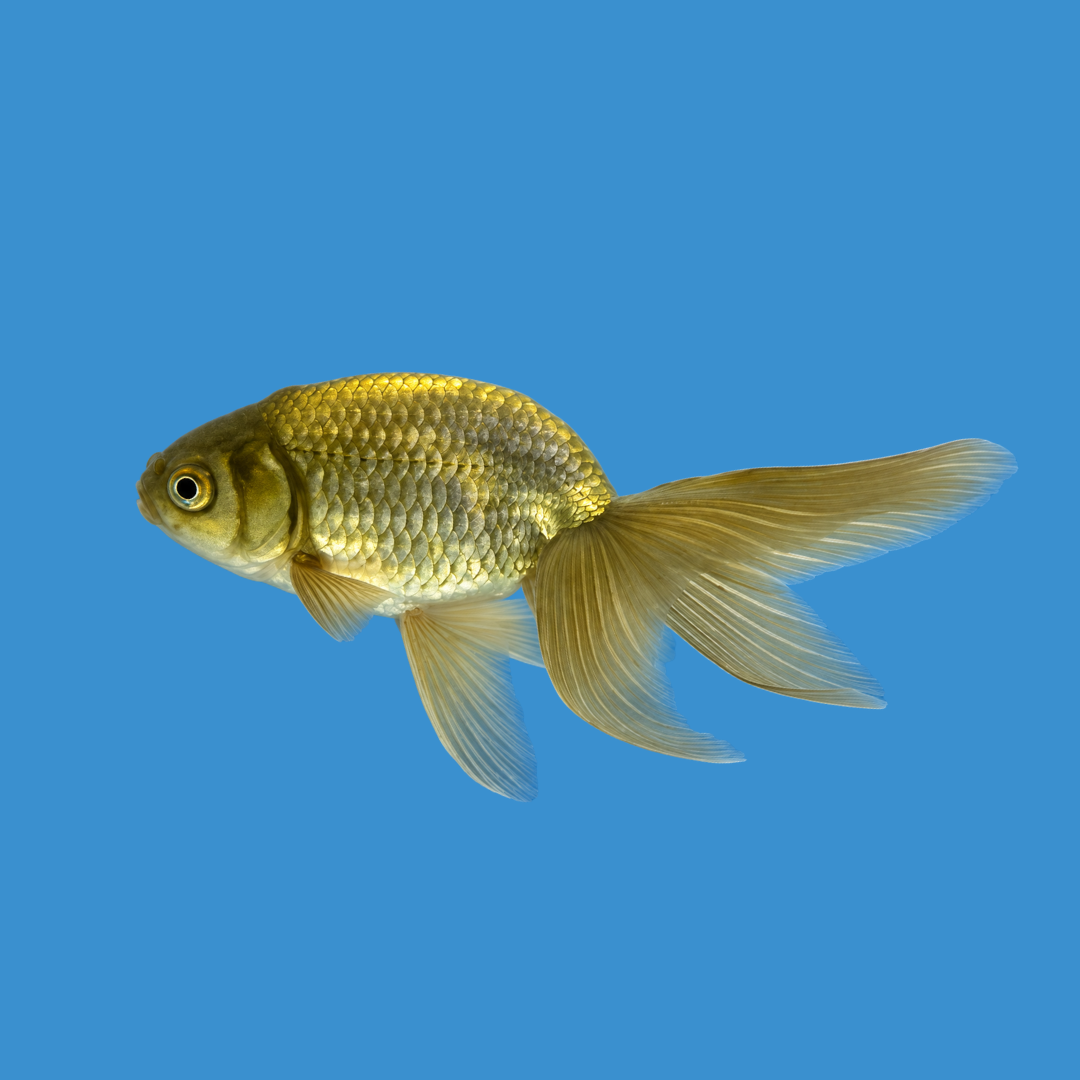
津軽錦(つがるにしき)は、青森県の津軽地方で育まれてきた日本の地金魚です。最大の特徴は、ランチュウのように背びれを持たない体型と、そこからは想像しにくいほど長く幅広い尾びれを同時に備えていること。滑らかな背の曲線から大きな尾が流れる姿は、横見でも上見でも独特の余韻を生みます。若魚の時期にはフナに近い鉄色を残す個体が多く、赤や白へ移る褪色がゆっくり進むことも津軽錦らしさの一つです。華やかな色を早く完成させる品種とは違い、年齢とともに姿や色が変わっていく過程そのものを楽しめる金魚といえるでしょう。戦時期に旧来の系統が失われたのち、長年にわたる復元育種によって再び姿を現した歴史を持ち、現在では生き物としての美しさだけでなく、津軽の金魚文化を伝える存在としても大切にされています。Tsugaru Nishiki is a traditional Japanese goldfish breed associated with the Tsugaru region of Aomori Prefecture. Its most distinctive feature is the unusual combination of a dorsal-finless body, reminiscent of Ranchu, with a long and broad caudal fin. The smooth curve of the back flowing into an expansive tail creates a distinctive silhouette from both side and top views. Many juveniles retain a dark, crucian-carp-like bronze coloration for an extended period, and their transition to red, white, or golden tones can be notably slow. Rather than reaching its visual peak quickly, this breed rewards keepers who enjoy watching body shape and coloration develop over several years. The historical strain was lost during the wartime period and later reconstructed through decades of selective breeding, giving Tsugaru Nishiki a special place not only in ornamental fishkeeping but also in the cultural history of the Tsugaru region.
コイ目・コイ科・フナ属の観賞用改良品種Order Cypriniformes, family Cyprinidae, genus Carassius; a domesticated ornamental goldfish breed
英名 / English Name
Tsugaru Nishiki Goldfish
分布 / Distribution
青森県津軽地方で育まれてきた飼育品種で、自然下に固有の野生分布を持つ魚ではありません。A domesticated breed developed in the Tsugaru region of Aomori Prefecture, Japan. It has no natural wild distribution of its own.
最大体長 / Max Size
飼育環境や測定方法によって差がありますが、30cm程度に達する例があります。三輪津軽錦保存会では、青森市での育成例として4歳の秋に30cm程度まで成長することを示しています。Size varies with husbandry and the way length is measured, but specimens can reach around 30 cm. The Miwa Tsugaru Nishiki Preservation Society describes about 30 cm by the autumn of the fourth year as a standard growth example in Aomori City.
寿命 / Lifespan
津軽錦だけを対象にした信頼できる平均寿命の資料は十分ではありません。一般的な金魚と同様に10年以上の長期飼育を前提に考え、十分な水量と安定した水質を維持することが大切です。Reliable lifespan data specific to Tsugaru Nishiki are limited. As with other goldfish, they should be regarded as a long-term commitment that can extend beyond ten years when maintained with ample water volume and stable water quality.
飼育環境 / Aquarium Environment
水槽サイズ / Tank Size
成魚をゆったり飼うなら90cm規格水槽(約150〜180L前後)を基準に考えると管理しやすく、複数の成魚を長期飼育する場合は120cm規格水槽や120cmワイド水槽など、さらに水量を確保できる環境が向きます。幼魚の一時飼育では60cm規格水槽も使えますが、成長に合わせたサイズアップが必要です。For adult fish, a standard 90 cm aquarium of roughly 150–180 L is a practical starting point. For several adults over the long term, a 120 cm standard or wide aquarium with greater water volume is preferable. A 60 cm aquarium can be used temporarily for juveniles, but an upgrade will be necessary as they grow.
水温 / Temperature
通常の水槽飼育では15〜25℃前後を目安にし、急激な温度変化を避けます。夏は28℃を大きく超える高水温と酸欠に注意してください。繁殖を目的とした伝統的な屋外飼育では、冬にかなり低い水温を経験させて季節性を持たせる方法がありますが、小型水槽で0〜6℃をそのまま再現するのは水量変動や凍結、酸欠の危険があるため、十分な設備と経験が必要です。For normal aquarium care, about 15–25°C is a practical range, with sudden temperature changes avoided. In summer, take particular care with temperatures well above 28°C and reduced dissolved oxygen. Traditional outdoor breeding practice may expose the fish to very low winter temperatures to preserve a strong seasonal cycle, but reproducing 0–6°C conditions in a small aquarium can involve risks such as freezing, oxygen depletion, and unstable water volume and should only be attempted with suitable facilities and experience.
水質 / Water Quality
津軽錦だけに固有の水質基準が確立されているわけではないため、一般的な金魚の飼育基準を目安にします。中性付近から弱アルカリ性までの安定した水を保ち、アンモニアと亜硝酸を検出しない状態を優先してください。数値を無理に合わせるより急変を避けることが重要で、換水は通常期なら週1回程度の部分換水を基本に、飼育密度や給餌量に応じて調整します。There is no well-established water-chemistry range unique to Tsugaru Nishiki, so general goldfish husbandry standards are the more appropriate guide. Keep the water stable from around neutral to mildly alkaline, with ammonia and nitrite undetectable. Avoid forcing exact numbers or sudden changes; during normal aquarium care, a weekly partial water change is a useful baseline, adjusted to stocking density and feeding load.
レイアウト / Layout
長い尾びれを傷めないよう、遊泳スペースを広く取り、角の鋭い石や複雑な流木は避けます。底床を使うなら薄く敷いた細かな砂や丸みのある砂利が扱いやすく、ベアタンクも掃除のしやすさという点で有効です。ろ過能力は高めに確保しつつ、長い尾が常にあおられるほどの強い水流は避けます。屋外容器では青水を利用した育成法もありますが、濃度、水温、溶存酸素を観察しながら管理する必要があります。Provide generous open swimming space and avoid sharp rocks or complex driftwood that could damage the long fins. If substrate is used, a thin layer of fine sand or smooth gravel is easy to manage, while a bare-bottom setup is also effective for easy cleaning. Use strong biological filtration, but avoid currents powerful enough to buffet the long tail continuously. Outdoor breeders may also use green water, although its density, temperature, and dissolved oxygen must be monitored carefully.
注意点 / Precautions
大食で排泄量も多いため、水質悪化を見逃さないことが最優先です。新しい魚は本水槽へ入れる前に別容器で隔離観察し、体表やひれ、呼吸、食欲に異常がないことを確認すると、病気を持ち込むリスクを抑えやすくなります。長い尾びれは擦れや裂けが起こりやすいため、鋭い器具や強い水流を避け、取り扱いも丁寧に行います。褪色が遅いことは品種の特徴であり、若魚が長く鉄色を残していても、それだけで健康不良とは判断しません。Because Tsugaru Nishiki eat heavily and produce substantial waste, preventing water-quality deterioration is the first priority. New fish should be observed separately before introduction to the main aquarium, with attention to the skin, fins, breathing, and appetite to reduce the risk of introducing disease. The long caudal fin can abrade or split, so avoid sharp equipment, excessive current, and rough handling. Slow color change is characteristic of the breed, and juveniles remaining dark bronze for a long period should not be considered unhealthy on that basis alone.
餌と給餌 / Feeding
餌の種類 / Diet
金魚用の良質な沈下性または緩沈下性ペレットを主食にし、赤虫、ミジンコ、ブラインシュリンプなどを補助的に与えます。植物質を含む配合飼料も取り入れ、単一の高タンパク餌だけに偏らないようにします。低水温期は消化力が落ちるため、給餌量を減らし、さらに水温が下がる時期には無理に与えません。Use a high-quality sinking or slow-sinking goldfish pellet as the staple diet, supplemented with foods such as bloodworms, daphnia, and brine shrimp. Including prepared foods with plant material helps prevent an overly protein-heavy diet. As water temperature falls, digestion slows, so feeding should be reduced and may be suspended during sufficiently cold winter conditions.
給餌のポイント / Feeding Tips
一度に大量に与えるより、数分で食べ切れる量を1日1〜2回に分けるのが基本です。成長期に体を大きくしたい場合でも、餌の量だけを増やすのではなく、換水とろ過能力をセットで考えます。腹部が不自然に膨らむ、浮き沈みが乱れる、食後に長時間動きが鈍るといった変化が見られたら、給餌量や餌の種類、水温、水質を見直してください。Rather than offering a large meal at once, provide an amount that can be consumed within a few minutes, usually once or twice daily. Even during rapid growth, increased feeding should always be matched by adequate filtration and water changes. If the abdomen becomes unusually swollen, buoyancy becomes erratic, or the fish remains sluggish for a long period after feeding, review portion size, food type, temperature, and water quality.
性格と混泳 / Temperament and Tank Mates
性格 / Temperament
金魚らしい温和さを持ち、同種間で強い縄張り争いをする魚ではありません。一方で、ランチュウ型の金魚としては比較的機敏に泳ぐ傾向があり、丈夫に育った個体は野性味を感じさせる活発な動きを見せます。繁殖期にはオスがメスを追尾するため、一時的に落ち着きがなくなることがあります。Generally peaceful and not strongly territorial, Tsugaru Nishiki nevertheless tend to be relatively agile for dorsal-finless fancy goldfish. Well-conditioned adults can show lively, almost wild-looking swimming behavior. During the breeding season, males may chase females persistently, so activity levels can increase temporarily.
混泳の相性 / Compatibility
同じ津軽錦同士、またはランチュウや江戸錦など、体型と遊泳速度が近い金魚との混泳が比較的合わせやすいです。和金、コメット、朱文金のように直線的で非常に速く泳ぐ品種と同居させると、給餌時に競り負けたり、長い尾が傷んだりする可能性があります。極端に小さい魚や、ひれをつつく性質のある魚、金魚より高水温を必要とする熱帯魚との混泳は避けるのが無難です。They are generally easiest to keep with other Tsugaru Nishiki or fancy goldfish of similar body shape and swimming speed, such as Ranchu or Edo Nishiki. Very fast, streamlined varieties such as Wakin, Comet, and Shubunkin may outcompete them at feeding time or contribute to fin damage. Avoid very small fish, known fin-nippers, and tropical species that require substantially warmer water than goldfish.
病気と対策 / Diseases and Prevention
かかりやすい病気 / Common Diseases
特定の病気だけに突出して弱い品種というより、一般的な金魚と同じく、白点病などの寄生虫性疾患、尾ぐされ症状などの細菌性トラブル、エラの異常、消化不良や浮力異常に注意します。長い尾びれは傷が入りやすく、傷口から二次的な感染が起こることもあります。水温の急変や有機物の蓄積も体調を崩すきっかけになるため、日頃の観察と水質管理が重要です。Rather than being uniquely susceptible to one disease, Tsugaru Nishiki face many of the same problems as other goldfish, including parasitic diseases such as white spot, bacterial fin deterioration, gill problems, digestive upset, and buoyancy disorders. Their long fins are easily damaged, and injured tissue can become secondarily infected. Sudden temperature changes and accumulated organic waste can also contribute to declining condition, making routine observation and water-quality management important.
対策と予防 / Prevention
予防の中心は、過密を避けること、ろ過を成熟させること、定期的な部分換水を続けること、そして新しい魚を隔離観察することです。体表、尾びれ、エラの動き、糞、食欲を毎日短時間でも確認すると、初期の変化に気づきやすくなります。治療が必要な場合は、症状を決めつけて薬を重ねるのではなく、まず水質と水温を確認し、可能であれば隔離容器で原因に合った治療を行います。Prevention centers on avoiding overcrowding, maintaining mature filtration, performing regular partial water changes, and quarantining new fish. A brief daily check of the body surface, fins, gill movement, feces, and appetite makes early abnormalities easier to detect. If treatment becomes necessary, first verify water quality and temperature rather than stacking medications based on guesswork, and use a separate treatment container when possible.
増やし方(繁殖) / Breeding
雌雄の判別 / Sexing
繁殖期のオスでは、エラぶたや胸びれの前縁に白い粒状の追星が現れるのが最も分かりやすい特徴です。成熟したメスは腹部がふっくらし、上見で左右に厚みが出ることがあります。ただし個体差が大きく、若魚では外見だけでの判別が難しいため、春の追尾行動と追星を合わせて確認すると確実性が高まります。The clearest sign in breeding males is the appearance of small white breeding tubercles on the gill covers and the leading edges of the pectoral fins. Mature females may become fuller through the abdomen and appear broader from above. Because young fish can be difficult to sex by body shape alone, spring chasing behavior together with breeding tubercles provides a more reliable guide.
繁殖形態 / Reproduction
卵生で、水草や産卵藻などに粘着性のある卵をばらまくタイプです。春に水温が上がると繁殖行動が活発になり、18〜20℃前後は産卵へ移る一つの目安になります。孵化までの日数は水温の影響を強く受け、20℃台前半では3〜5日程度が目安ですが、低水温ではさらに長くなります。親魚は卵や仔魚を食べるため、採卵後は親を分ける方法が一般的です。Tsugaru Nishiki are egg-laying scatter spawners that deposit adhesive eggs on aquatic plants or spawning mops. Breeding activity increases as water warms in spring, with around 18–20°C serving as one practical cue for the onset of spawning activity. Incubation time depends strongly on temperature; at temperatures in the low 20s °C, roughly three to five days is a useful guide, while cooler water lengthens development. Because adults will eat eggs and fry, breeders usually separate the parents after spawning.
繁殖のポイント / Breeding Tips
津軽錦らしい形質を残すには、産ませること以上に、その後の選別と系統管理が重要です。稚魚が成長したら、背びれの痕跡や背中の凹凸、尾の開き、左右差、遊泳の安定性などを上見と横見の両方から観察します。寒冷な津軽地方では、冬の低温期を経て春の産卵へつなげる管理が伝えられてきました。ただし家庭飼育で繁殖を試みる場合も、魚を急激な低温へ移すのではなく、季節変化を徐々に経験させることが前提です。保存系統を扱う場合は、外部品種を安易に交配せず、系統の来歴を確認しながら親魚を選ぶことが大切です。Preserving the characteristic Tsugaru Nishiki form depends less on simply obtaining eggs than on careful selection and lineage management afterward. As fry develop, examine them from both above and the side for traces of a dorsal fin, irregularities along the back, tail spread, asymmetry, and stable swimming. In the cold Tsugaru climate, breeders have traditionally used a low-temperature winter period followed by spring warming to establish a clear reproductive season. In home breeding, however, fish should not be moved abruptly into cold water; seasonal changes should be gradual. When working with preservation lines, avoid casual crosses with other breeds and select broodstock with attention to documented lineage.
雑学と豆知識 / Trivia and Fun Facts
1. 「背びれがないのに尾は長い」という個性 / 1. A Long Tail on a Dorsal-Finless Body
津軽錦を一目で印象づけるのは、背びれを欠いた滑らかな背中と、そこから大きく広がる長い尾びれの組み合わせです。背びれのない金魚といえばランチュウがよく知られますが、ランチュウは尾を短くまとめた姿が基本です。津軽錦はそこに長尾という別の美しさを重ねたため、横から見ると背中から尾へ続く線が非常に長く感じられます。上から眺めれば尾の幅が強調され、同じ一尾でも観賞角度によって印象が変わります。この二面性こそ、津軽錦が地金魚の中でも独自の立ち位置を持つ理由の一つです。The defining visual feature of Tsugaru Nishiki is the combination of a smooth, dorsal-finless back with a long, expansive tail. Dorsal-finless goldfish are often associated with Ranchu, but Ranchu are typically admired for a compact tail. Tsugaru Nishiki instead combines the finless back with a flowing caudal fin, making the line from the back into the tail appear unusually long from the side. Viewed from above, the breadth of the tail becomes more prominent. This change in impression between side and top views is one reason the breed occupies such a distinctive place among Japan’s regional goldfish.
2. 津軽藩の閉ざされた飼育環境が生んだ地金魚 / 2. A Regional Breed Shaped by the Tsugaru Domain
江戸時代の津軽では、金魚は誰もが気軽に飼える生き物ではありませんでした。高価な金魚は武家社会の中で大切に扱われ、中央から新しい親魚を頻繁に導入することも容易ではなかったとされます。そのため限られた個体群を何代もつなぎながら、地域の中で形質を選び続けることになりました。現代の育種学から見れば、閉鎖的な個体群には遺伝的な弱点も生じ得ますが、一方では地域固有の姿が固定される条件にもなります。津軽錦の歴史は、交通や社会制度といった人間側の事情が、一つの観賞魚の姿にまで影響した例として興味深いものです。In the Tsugaru domain during the Edo period, goldfish were not everyday pets available to everyone. Expensive ornamental fish were carefully maintained within samurai society, and obtaining new broodstock from the major population centers was not always easy. Breeders therefore continued their lines using a limited local population while selecting desirable traits over generations. From a modern genetic perspective, a closed population can create weaknesses as well as uniformity, but it can also help stabilize a distinctive regional form. The history of Tsugaru Nishiki is therefore a striking example of how transportation, social structure, and human taste can shape the appearance of an ornamental animal.
3. 戦禍で失われ、長い復元育種でよみがえった / 3. Lost in Wartime and Reconstructed Through Selective Breeding
津軽錦の旧来の系統は、第二次世界大戦期の混乱の中で途絶えたとされています。戦後に親魚を探しても、純粋な系統をそのまま残す個体は確認できませんでした。そこで1950年代末から、三輪薫氏らがランチュウと東錦を利用した復元育種に取り組みます。最初から津軽錦そっくりの魚が大量に生まれたわけではなく、背びれの有無、背の線、尾の長さと開きなどを世代ごとに選び続ける必要がありました。保存会の記録では、長期間の累代選抜を経て、1980年代には狙った形質が安定して現れる段階へ到達したとされています。現在泳いでいる津軽錦には、失われた姿を記録と育種で再構成しようとした人々の仕事が重なっています。The historical Tsugaru Nishiki lineage is considered to have disappeared amid the disruption of the Second World War, and postwar searches failed to locate fish that preserved the old strain intact. Beginning in the late 1950s, Kaoru Miwa and collaborators therefore undertook a reconstruction program using Ranchu and Azuma Nishiki. Fish matching the target form did not suddenly appear in large numbers; breeders had to select generation after generation for the absence of a dorsal fin, the smooth back line, and the desired length and spread of the tail. Preservation records describe the desired traits becoming increasingly stable by the 1980s after prolonged selective breeding. The Tsugaru Nishiki seen today thus carries the legacy of an unusually deliberate attempt to recreate a lost regional form through records, memory, and genetics.
4. 若魚の「地味さ」は、欠点ではなく時間を楽しむ入口 / 4. Slow Color Change Is Part of the Experience
津軽錦は褪色が遅いことで知られ、若いうちは長く鉄色やフナ色を残す個体があります。一般的な販売水槽では、早く赤くなった金魚のほうが目を引きやすいため、この遅さはかつて人気面で不利に働いたとも伝えられています。しかし、飼育者の目線を変えると、この性質は大きな楽しみになります。数か月ではなく数年という時間の中で、暗い地色から少しずつ褪色が進み、赤や白などの色合いが現れていく。その変化を追えるのは、早く色が仕上がる品種とは違う魅力です。津軽錦は、買った瞬間の派手さよりも、育てる時間が観賞価値を深めていく金魚といえます。Tsugaru Nishiki are known for slow color change, and young fish may retain a dark bronze or crucian-carp-like tone for a long time. In a retail aquarium, brightly colored goldfish naturally attract attention first, so this slow transformation is said to have worked against the breed’s popularity at times. For a dedicated keeper, however, the same trait becomes part of the appeal. Over months and years, the dark juvenile coloration can gradually recede as red, white, and other mature tones emerge. Tsugaru Nishiki is therefore a breed whose ornamental value often deepens through the experience of raising it rather than through immediate color alone.
5. 1935年、津軽の地金魚が学術の世界へ / 5. Recognition in the Scientific Literature in 1935
津軽地方で長く飼われてきたこの金魚は、地域の愛好文化だけにとどまらず、1935年に水産学者の松井佳一博士によって紹介され、特徴ある地方品種として広く知られるきっかけを得ました。観賞魚の品種は、生物学上の「種」とは異なり、人が選抜し固定してきた飼育系統です。それでも、どのような形質が選ばれ、どの地域で、どのような歴史を経て残ったのかを記録することには大きな意味があります。津軽錦は、趣味の世界と育種学、地域史が交差する対象として、今も興味深い存在です。This locally maintained goldfish became known beyond Tsugaru’s hobby culture when fisheries scientist Yoshiichi Matsui introduced it in scientific literature in 1935. Ornamental fish breeds are not biological species in themselves; they are domesticated lineages whose traits have been shaped and stabilized through human selection. Even so, documenting which traits were selected, where they arose, and how they were preserved is scientifically and historically valuable. Tsugaru Nishiki remains a particularly interesting case where the worlds of hobby breeding, genetics, and regional history meet.
6. 金魚ねぷたと津軽錦の結びつき / 6. The Link Between Kingyo Neputa and Tsugaru Nishiki
金魚ねぷたと津軽錦の関係は、津軽の金魚文化を語るうえでよく知られた話題です。国の多言語観光解説では、灯籠に描かれた金魚を津軽錦と説明しており、背びれがなく長い尾を持つ姿との共通点も見て取れます。一方、三輪津軽錦保存会は、金魚ねぷたが成立当初から津軽錦を直接のモデルにしたと断定することには慎重な見方を示しています。そのため、両者は地域文化の中で強く結びついて語られているものの、起源については確定した事実と伝承を分けて受け止めるのが適切です。金魚ねぷた自体は2021年12月に青森県の伝統工芸品に指定され、現在も津軽の夏を象徴する工芸品として親しまれています。The relationship between Kingyo Neputa and Tsugaru Nishiki is a familiar theme in discussions of Tsugaru’s goldfish culture. A national multilingual tourism guide identifies the goldfish depicted by the lantern as Tsugaru Nishiki, and the dorsal-finless, long-tailed silhouette does resemble the breed. The Miwa Tsugaru Nishiki Preservation Society, however, is more cautious about stating that the craft was originally created with Tsugaru Nishiki as its direct model. It is therefore best to distinguish documented present-day explanations from tradition when discussing the craft’s origin. Kingyo Neputa itself was designated a traditional craft of Aomori Prefecture in December 2021 and remains a familiar symbol of summer in the Tsugaru region.
7. 「純粋な津軽錦」を守るのは、見た目だけではない / 7. Preserving the Breed Means More Than Matching Its Appearance
背びれがなく尾が長い金魚を作るだけなら、似た形質を持つ別品種を交配する方法も考えられます。しかし、保存育種で重視されるのは、一代だけ似た魚を得ることではなく、同じ特徴が次の世代にも安定して現れることです。津軽錦の復元では、背びれの痕跡や尾の形まで細かく見ながら、何世代にもわたって選抜が続けられました。だからこそ、現在の保存では外見の美しさと同時に「どの親から、どの系統をつないだのか」という記録が重要になります。観賞魚の美しさは目で楽しむものですが、その姿を未来へ残す仕事は、意外なほど地道な記録と選択の積み重ねで成り立っています。If the only goal were to produce a goldfish without a dorsal fin and with a long tail, one could imagine crossing other breeds with similar traits. Preservation breeding, however, is not satisfied by producing a single generation that merely looks right. The important question is whether the same defining traits continue to appear reliably in later generations. During the reconstruction of Tsugaru Nishiki, breeders repeatedly selected for details such as residual dorsal-fin tissue, back contour, and tail form across many generations. For that reason, preserving the breed today depends not only on appearance but also on records of parentage and lineage. Ornamental beauty is appreciated with the eye, yet maintaining that beauty for the future requires a surprisingly patient combination of documentation and selection.
まとめ / Conclusion
津軽錦は、背びれのない滑らかな背と、長く幅広い尾びれをあわせ持つ、青森県津軽地方ゆかりの金魚です。若いうちは鉄色を長く残す個体も多く、褪色や体つきの変化を時間をかけて楽しめます。十分な水量と安定したろ過を確保し、定期的な部分換水と尾びれを傷めない遊泳空間を整えることが、健やかに育てる基本です。Tsugaru Nishiki is a goldfish associated with the Tsugaru region of Aomori Prefecture, combining a smooth dorsal-finless back with a long, broad tail. Juveniles may retain dark bronze coloration for a long period, making gradual changes in color and body form part of the experience of keeping the breed. Ample water volume, stable filtration, regular partial water changes, and open swimming space that protects the fins form the basis of long-term care.
津軽錦の魅力は、若魚の段階だけでは見えにくい部分が、飼育を続けるうちに少しずつ表れてくるところにあります。尾びれの伸びや背の曲線、ゆっくり進む褪色を観察しながら育てることで、この品種ならではの姿を長い時間軸で味わえます。急いで完成形を求めるのではなく、日々の変化を見守りながら付き合うことのできる金魚です。Much of the appeal of Tsugaru Nishiki becomes clearer over time. The tail develops, the contour of the back matures, and color change may proceed slowly, allowing the keeper to appreciate the breed on a longer timescale. Rather than demanding an immediately finished appearance, Tsugaru Nishiki rewards patient observation of the changes that emerge through continued care.
Fricke, R., Eschmeyer, W. N. & Van der Laan, R. (eds.). Eschmeyer’s Catalog of Fishes: Carassius auratus. California Academy of Sciences. 主に支える内容:学名、コイ科・フナ属としての分類、東アジアの分布、淡水魚としての位置づけ、栽培・観賞用品種の存在。 Eschmeyer’s Catalog of Fishes
Froese, R. & Pauly, D. (eds.). Carassius auratus (Linnaeus, 1758). FishBase. 主に支える内容:淡水域での生息環境、止水・緩流域への適応、pHの目安、食性、粘着卵を植物などへ産み付ける繁殖生態、飼育下での長寿性。 FishBase
Watson, C. A., Hill, J. E. & Pouder, D. B. (2004). Species Profile: Koi and Goldfish. Southern Regional Aquaculture Center, Publication No. 7201. 主に支える内容:金魚の改良品種、18〜24℃を中心とする飼育水温、水質・溶存酸素管理、ろ過と養殖環境、給餌、春季の産卵、粘着卵、親魚と卵の分離。 Southern Regional Aquaculture Center
Francis-Floyd, R., Stilwell, N. K. & Yanong, R. P. E. Introduction to Fish Health Management. University of Florida IFAS Extension. 主に支える内容:水質・栄養・衛生を基本とする疾病予防、過密やストレスの影響、日常観察、異常時にアンモニア・亜硝酸・pH・溶存酸素などを確認する考え方。 University of Florida IFAS Extension
Petty, B. D., Francis-Floyd, R. & Yanong, R. P. E. Bacterial Diseases of Fish. MSD Veterinary Manual. 主に支える内容:カラムナリス病を含む細菌性疾患、外傷・過密・低酸素・水質悪化・急な温度変化などの発症要因、診断と抗菌薬使用に関する獣医学的原則。 MSD Veterinary Manual
Petty, B. D., Francis-Floyd, R. & Yanong, R. P. E. Parasitic Diseases of Fish. MSD Veterinary Manual. 主に支える内容:白点病(Ichthyophthirius multifiliis)、イカリムシ類(Lernaea spp.)、ミズカビ類(Saprolegnia)など、観賞魚で問題となる寄生虫・水カビ性疾患の症状、感染経路、予防と治療の基本。 MSD Veterinary Manual






コメント