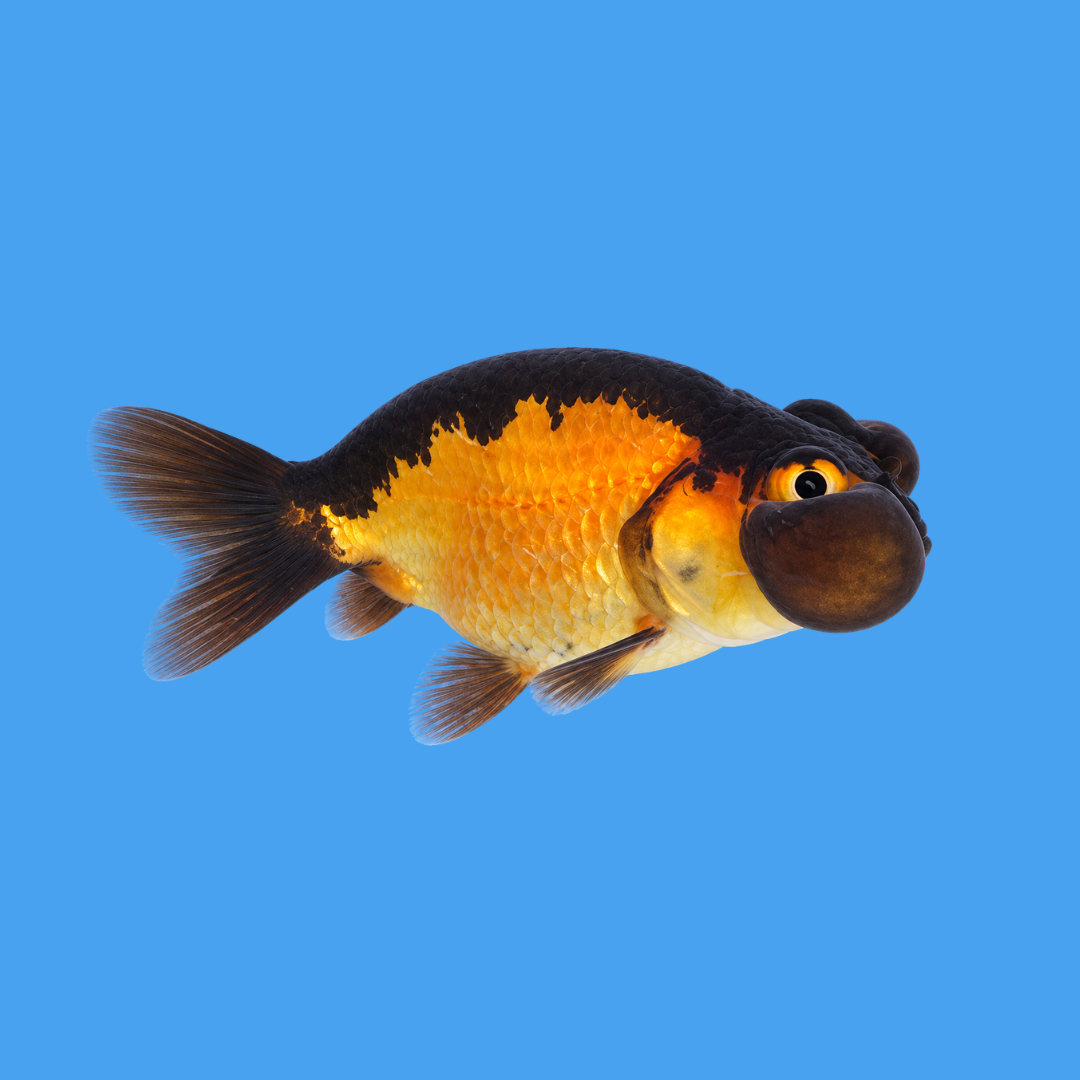
虎水泡眼は、眼の下に大きく発達する半透明の水泡と、赤色または橙色の地に黒斑が重なる虎柄を楽しむ金魚の一品種です。一般的な水泡眼と同じく背びれを欠き、丸みのある胴体と双尾を持つため、ゆっくりと身体を揺らしながら泳ぐ独特の姿を見せます。大きな水泡は非常に繊細で、視界や遊泳能力にも制約があるため、丈夫な金魚というより「安全な環境を丁寧に整えて楽しむ金魚」と考えるのが適切です。虎柄の黒色は成長や環境によって変化しやすく、同じ個体でも時間とともに印象が変わることがあります。その変化も含めて、一匹ごとの個性をじっくり観察できる点が大きな魅力です。The Tiger Bubble Eye is a fancy goldfish variety admired for its large translucent fluid-filled sacs beneath the eyes and its contrasting red or orange body color marked with black patches. Like the standard Bubble Eye, it usually lacks a dorsal fin and has a rounded body with a double tail, producing a slow and distinctive swimming style. Its eye sacs are extremely delicate, and its field of vision and swimming ability are limited, so it is best kept in a carefully designed, low-risk aquarium rather than treated like a robust general-purpose goldfish. The black areas of the tiger pattern may change as the fish grows and in response to environmental conditions, giving each individual a changing appearance over time.
コイ目・コイ科・フナ属(金魚の改良品種)Order Cypriniformes, family Cyprinidae, genus Carassius; a domesticated fancy goldfish variety
英名 / English Name
Tiger Bubble Eye Goldfish
分布 / Distribution
自然分布を持つ野生種ではなく、中国で改良された金魚の品種です。日本では国内繁殖個体のほか、中国から輸入された個体も流通します。This is a domesticated goldfish variety rather than a naturally distributed wild species. It was developed in China, and in Japan both domestically bred fish and imported Chinese stock are available.
最大体長 / Max Size
おおむね10〜15cm程度。個体差や飼育条件によって前後します。Usually around 10–15 cm, although final size varies with genetics and husbandry.
寿命 / Lifespan
目安として5〜10年程度。水質、栄養状態、水泡の損傷事故をどれだけ防げるかで大きく変わります。Approximately 5–10 years as a general guide, with longevity strongly influenced by water quality, nutrition, and prevention of injuries to the eye sacs.
飼育環境 / Aquarium Environment
水槽サイズ / Tank Size
1匹でも45〜60cm規格水槽を最低ラインの目安とし、複数飼育では60cm規格水槽以上を推奨します。体長が大きい成魚や複数匹をゆったり管理するなら、90cm規格水槽も適しています。水量そのものに加え、障害物のない広い遊泳面積を確保することが重要です。A 45–60 cm standard aquarium is a practical minimum for one fish, while a 60 cm standard tank or larger is preferable for several individuals. A 90 cm standard tank is well suited to larger adults or a small group. Open swimming space without obstacles is more important than decoration.
水温 / Temperature
16〜24℃を基本の目安とし、急変を避けます。低温から高温へ、あるいは高温から低温へ短時間で変化させないことが重要です。A general target range is 16–24°C. Avoid rapid temperature changes in either direction.
水質 / Water Quality
弱酸性〜中性付近を中心に安定させ、目安としてpH6.5〜7.4程度。アンモニアと亜硝酸は0を維持し、硝酸塩の蓄積を抑えます。水泡は水質悪化時に充血や炎症が目立ちやすいため、数値そのもの以上に急変させない管理が重要です。Keep the water stable around mildly acidic to neutral conditions, roughly pH 6.5–7.4. Ammonia and nitrite should remain at zero, and nitrate accumulation should be controlled. Stability is especially important because poor water quality can quickly lead to visible irritation or inflammation around the eye sacs.
レイアウト / Layout
最も安全なのは底砂を敷かないベアタンクです。尖った石、枝状流木、鋭い人工装飾品は避け、吸水口には細目のストレーナースポンジを装着します。ろ過は水流の穏やかなスポンジフィルターが扱いやすく、外部式や上部式を使う場合も流量を弱め、吸い込み事故を防ぐ必要があります。A bare-bottom tank is the safest layout. Avoid sharp rocks, branchy driftwood, and hard-edged ornaments, and cover filter intakes with a fine pre-filter sponge. Gentle sponge filtration is particularly suitable; if a canister or overhead filter is used, reduce flow and protect the intake from contact with the eye sacs.
注意点 / Precautions
最大の注意点は水泡の物理的損傷です。網ですくうと水泡を傷つけやすいため、移動時は水ごと受けられる容器を使う方が安全です。また強い水流、過密飼育、餌を奪うほど俊敏な魚との混泳は避けます。虎柄の黒色は成長に伴って薄くなることがあり、体色変化そのものを病気と誤認しない観察も大切です。The main risk is physical damage to the eye sacs. Nets can easily catch or tear them, so moving the fish in a container filled with water is safer. Avoid strong current, overcrowding, and fast tank mates that outcompete the fish for food. The black pigment may also fade as the fish matures, so normal color change should not automatically be mistaken for disease.
餌と給餌 / Feeding
餌の種類 / Diet
主食には消化性のよい金魚用の沈下性ペレットが向きます。補助的に冷凍赤虫などを与えられます。赤色や橙色の発色を意識する場合は、アスタキサンチンやスピルリナなどを含む色揚げ用飼料を取り入れる方法があります。A highly digestible sinking pellet formulated for goldfish is a suitable staple. Frozen bloodworms can be offered as a supplemental food. For stronger red or orange coloration, color-enhancing diets containing ingredients such as astaxanthin or spirulina may be used.
給餌のポイント / Feeding Tips
視力が弱く泳ぎも遅いため、餌を魚の目の前へ少量ずつ落とすように与えます。ベアタンクで沈下性飼料を使うと、水泡を砂利に擦りつける事故と、水面で空気を多く飲み込むリスクを同時に減らせます。一度に大量に与えるより、食べ切れる量を分けて与え、残餌は早めに取り除きます。Because vision and swimming speed are limited, drop small portions close to the fish so it can find the food easily. Using sinking pellets in a bare-bottom tank helps reduce both abrasion of the eye sacs against gravel and excessive air gulping at the surface. Feed modest portions and remove leftovers promptly.
性格と混泳 / Temperament and Tank Mates
性格 / Temperament
基本的には温和で、他魚を積極的に追い回すタイプではありません。一方で視野が狭く泳ぎが遅いため、餌を見失ったり、周囲の魚に先を越されたりしやすい繊細さがあります。Generally peaceful and not inclined to chase other fish. However, its restricted vision and slow swimming make it easy for the fish to miss food or be outcompeted.
混泳の相性 / Compatibility
最も無難なのは水泡眼同士です。頂天眼やらんちゅうなど、泳ぎが穏やかで攻撃性の低い金魚とは条件次第で混泳できます。和金、コメットなどの俊敏な品種は餌を奪いやすく、水泡を突く事故も起こり得るため避けた方が安全です。The safest companions are other Bubble Eyes. Other slow, non-aggressive fancy goldfish such as Celestial Eyes or Ranchu may work under suitable conditions. Fast varieties such as Common Goldfish or Comets are best avoided because they can dominate feeding and may accidentally strike or peck the eye sacs.
病気と対策 / Diseases and Prevention
かかりやすい病気 / Common Diseases
水泡の破裂や擦過傷に続く水カビ病、細菌性の赤斑・潰瘍症状、一般的な金魚で見られる白点病などに注意します。また丸みのある体型と遊泳特性から、消化不良や浮き袋機能の乱れを伴う転覆症状が見られることがあります。Watch for fungal growth or bacterial redness and ulceration following damage to the eye sacs, as well as common goldfish problems such as white spot disease. Because of the rounded body form and swimming characteristics, buoyancy problems associated with digestive or swim-bladder dysfunction may also occur.
対策と予防 / Prevention
まず障害物を減らし、水質を安定させ、強い水流を避けることが予防の中心です。水泡を損傷した個体は水ごと容器ですくって隔離し、清潔な飼育水で二次感染の兆候を観察します。食欲低下、充血、白濁、綿状付着物、著しい姿勢異常が続く場合は、観賞魚用薬の適応症と用法を確認し、必要に応じて魚病に詳しい専門家へ相談します。薬浴や塩水浴を行う場合も、製品表示と魚の状態を優先し、複数の薬剤を安易に併用しないことが大切です。Prevention begins with a safe, obstacle-free environment, stable water quality, and gentle flow. If an eye sac is damaged, move the fish in a water-filled container to a separate clean tank and monitor closely for secondary infection. Persistent loss of appetite, redness, cloudiness, cotton-like growth, or severe buoyancy problems should be evaluated carefully; use aquarium medications only according to their labeled indications and directions, and seek advice from an experienced aquatic animal professional when necessary.
増やし方(繁殖) / Breeding
雌雄の判別 / Sexing
成熟期には、オスのエラぶたや胸びれ前縁に追星と呼ばれる白い小突起が現れることがあります。メスは抱卵すると腹部がふっくらし、上から見たときに体幅が広く見える傾向があります。ただし若魚では判別が難しく、単独の特徴だけで断定しない方が確実です。During the breeding season, males may develop small white breeding tubercles on the gill covers and leading edge of the pectoral fins. Gravid females often become fuller through the abdomen. Sexing juveniles is difficult, and no single feature should be treated as completely definitive.
繁殖形態 / Reproduction
卵生で、春を中心に水草や産卵床へ粘着性の卵をばらまくタイプです。親魚による卵や稚魚の保護は行われず、むしろ食べてしまうため、採卵後は親魚と卵を分けて管理します。Egg-laying. During the breeding season, the fish scatter adhesive eggs onto plants or spawning media. The parents do not guard the eggs and may eat them, so adults should be separated after spawning.
繁殖のポイント / Breeding Tips
繁殖自体は一般的な金魚と同様ですが、水泡眼らしい背びれのない背なり、水泡の左右バランス、尾形、虎柄など複数の形質を同時に整えるには継代選別が必要です。稚魚の段階では水泡がまだ十分に発達していないため、成長を見ながら形態と体色の両方を長期的に選別します。虎柄の黒色は成長とともに変化しやすく、幼魚時の模様がそのまま成魚に固定されるとは限りません。Breeding follows the general pattern of other goldfish, but maintaining the desired Bubble Eye form requires selective breeding across generations for a smooth dorsal profile without a dorsal fin, balanced eye sacs, suitable tail shape, and attractive tiger coloration. Young fish may not yet show fully developed eye sacs, and the black markings can change substantially with age, so selection must continue over a long period.
雑学と豆知識 / Trivia and Fun Facts
1. 水泡眼は中国で磨かれた「形を見る金魚」 / 1. A Chinese fancy goldfish shaped by selective breeding
水泡眼は中国で長く選抜されてきた金魚の一群に属し、上向きの眼と眼下の袋状構造を持つ古いタイプから、現在のような大きな水泡と滑らかな背なりを強く求める姿へ発達してきたとされています。日本では1950年代後半から1960年代初頭に中国金魚の輸入が本格化し、水泡眼も次第に一般の愛好家へ知られるようになりました。今日では珍奇な姿だけでなく、「どれだけ左右の水泡が整い、背なりと尾形が美しくまとまっているか」を味わう、造形美の強い金魚として親しまれています。Bubble Eye goldfish belong to a long tradition of selectively bred Chinese goldfish. Earlier forms with upward-facing eyes and smaller sacs are thought to have preceded the modern fish, in which large symmetrical sacs and a smooth dorsal profile are highly valued. In Japan, imports of Chinese fancy goldfish expanded in the late 1950s and early 1960s, helping Bubble Eyes become known among hobbyists. Today they are appreciated not only for novelty, but for the balance of the sacs, back line, body, and tail.
2. 虎柄の黒は「完成色」とは限らない / 2. The black tiger pattern may continue to change
金魚の体色は成長の途中で大きく変化します。幼魚期に全身を覆っていた黒色色素が次第に抜け、赤や白が現れる退色は、金魚らしい色彩形成の重要な過程です。虎水泡眼の魅力である黒斑も例外ではなく、成長とともに薄くなったり、分布が変わったりします。つまり購入時の模様を「永久に固定されたデザイン」と考えるより、成長とともに変化する一匹の履歴として楽しむ方が、この品種の本質に近いと言えます。Goldfish coloration can change dramatically during growth. Dark juvenile pigmentation often fades as red, orange, white, and metallic areas become more visible. The black patches of a Tiger Bubble Eye are therefore not always permanent. Rather than viewing the pattern at purchase as a fixed design, it is more accurate—and often more rewarding—to see it as part of the fish’s changing life history.
3. 赤と黒を生むのは複数の色素細胞 / 3. Multiple chromatophores create the red-and-black contrast
魚類の体色は、哺乳類のように一種類の色素だけで決まるわけではありません。黒色素胞、赤色素胞、黄色素胞、虹色素胞など複数の色素細胞が重なり合って見た目の色を作ります。虎水泡眼では、とくに黒色素を担うメラノフォアと、赤や橙色に関わるエリスロフォアやザンソフォアの配置が視覚的なコントラストを生みます。近年の魚類色素研究では、メラニン形成にチロシン代謝、Wnt、MAPKなど複数のシグナル経路が関わることが示されており、金魚の模様が単純な一遺伝子だけでは説明しきれない複雑な形質であることが見えてきています。Fish color is produced by several types of chromatophores rather than by a single pigment system. Melanophores, erythrophores, xanthophores, iridophores, and other cell types interact to create visible patterns. In Tiger Bubble Eyes, the contrast between black melanophores and red or orange chromatophores is especially important. Modern pigment research in fishes has also linked melanin formation to multiple pathways, including tyrosine metabolism, Wnt signaling, and MAPK signaling, illustrating why goldfish coloration is a complex trait rather than a simple one-gene pattern.
4. 水泡の中身はただの水ではない / 4. The sacs contain biologically active fluid, not plain water
水泡眼の袋の内部は、名前から連想する「水」ではなく、体液成分を含むリンパ様の液体で満たされています。この独特の構造は研究者の関心も集め、水泡から得られる細胞や液体を魚類の免疫学研究に利用する試みが行われてきました。同じ個体から経時的にサンプルを得やすいという特徴は、観賞形質として作られた構造が思いがけず科学研究の入口にもなった例として興味深いものです。Despite the name, the sacs are not filled with ordinary water. They contain lymph-like body fluid and biologically active components. This unusual anatomy has attracted scientific interest, and researchers have explored cells and fluid obtained from the sacs as a model for fish immunology. It is a striking example of an ornamental trait unexpectedly becoming useful in biological research.
5. 美しさと福祉を両立させる飼育が重要 / 5. Husbandry must balance beauty with welfare
水泡眼の大きな水泡、背びれの欠如、狭い視野は、人の選択交配によって強調されてきた特徴です。その美しさは水泡眼ならではですが、同時に「普通の金魚なら問題にならない設備」が事故原因になる繊細さも生みました。だからこそ、尖った装飾を置かない、吸水口を保護する、強い水流を作らない、餌を確実に届けるといった工夫は、見た目を守るためだけではありません。この魚が無理なく生活できる環境を用意することそのものが、水泡眼を楽しむうえで欠かせない飼育技術です。The large sacs, absence of a dorsal fin, and restricted field of vision are traits intensified through selective breeding. They create the distinctive beauty of the Bubble Eye, but also make ordinary aquarium equipment potentially hazardous. Avoiding sharp decor, protecting filter intakes, reducing current, and delivering food where the fish can reach it are therefore not merely cosmetic precautions—they are central to keeping the fish comfortable and safe.
まとめ / Conclusion
虎水泡眼は、巨大な水泡と赤黒の虎柄という強い個性を持ちながら、その魅力を保つためには静かな水流、障害物の少ない環境、確実な給餌、安定した水質といった細かな配慮を必要とする金魚です。とくに水泡は一度の接触事故でも傷つくことがあるため、豪華な装飾を加えるより、安全な空間そのものを丁寧に作ることが美しい飼育につながります。The Tiger Bubble Eye combines dramatic eye sacs and striking red-and-black coloration with a need for very careful husbandry. Gentle flow, an obstacle-free environment, reliable feeding, and stable water quality are far more important than elaborate decoration. Because the sacs can be injured by a single accident, thoughtful simplicity is often the key to keeping this fish in good condition.
黒斑が時間とともに変化し、水泡が成長につれて大きくなっていく姿を追うことも、この品種ならではの楽しみです。扱いの難しさを理解し、魚の動きに合わせて環境を整えられる飼育者にとって、虎水泡眼は毎日の観察そのものが面白さになる、奥深い存在です。Watching the black markings shift over time and the eye sacs develop with age is part of the unique appeal of this variety. For an aquarist willing to adapt the aquarium to the fish rather than forcing the fish to adapt to the aquarium, the Tiger Bubble Eye offers a particularly rewarding kind of daily observation.
Chen, D. et al. (2020). The evolutionary origin and domestication history of goldfish (Carassius auratus). Proceedings of the National Academy of Sciences, 117(47), 29775–29785.
Komiyama, T., Kobayashi, H., Tateno, Y., Inoko, H., Gojobori, T. & Ikeo, K. (2009). An evolutionary origin and selection process of goldfish. Gene, 430(1–2), 5–11.
Blake, R. W., Li, J. & Chan, K. H. S. (2009). Swimming in four goldfish Carassius auratus morphotypes: understanding functional design and performance employing artificially selected forms. Journal of Fish Biology, 75(3), 591–617.
Kobayashi, M., Iwata, E. & Sorensen, P. W. (2026). Environmental and Physiological Regulation of Reproduction in the Goldfish: Gonadal Development, Maturation, and Spawning Behavior: A Review. Animals, 16(5), 775.






コメント