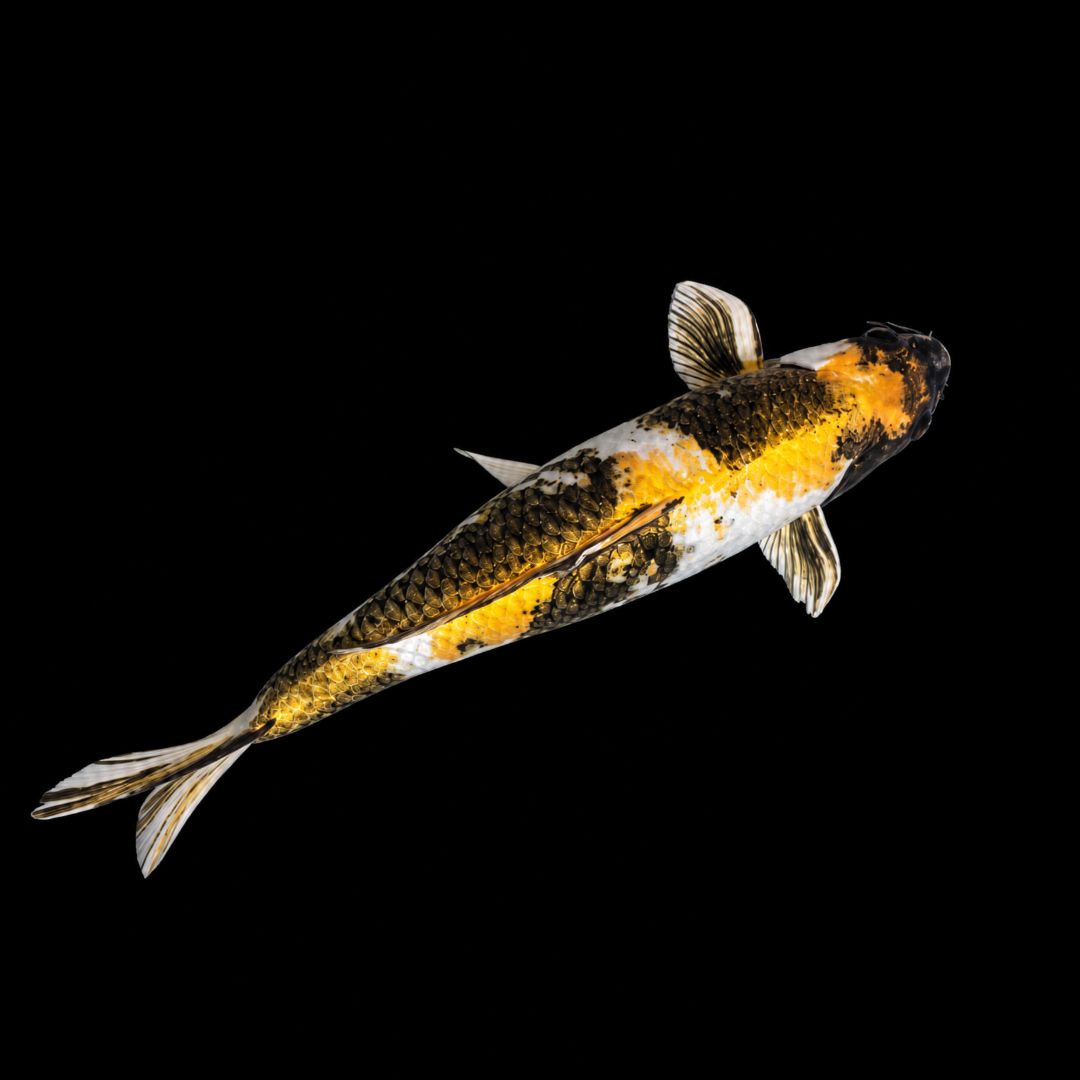
金昭和(きんしょうわ)は、昭和三色の緋、白、墨の構成に、黄金系の金属光沢を重ねた錦鯉です。品種群では「光り写り」に属し、腹側から背へ豪快に巻き上がる写り墨と、全身を覆う輝きが大きな見どころです。全身の光沢が高く、緋・白・墨の模様が明瞭で、配置のバランスがよい個体ほど高く評価されます。幼魚の模様は成長とともに印象を変えることがあるため、育っていく過程も楽しめる品種です。Kin Showa is a metallic Nishikigoi variety that combines the red, white, and black patterning of Showa Sanshoku with the luster inherited from Ogon lines. It belongs to the Hikari Utsuri group. Its chief attractions are powerful bands of sumi rising from the underside across the back and a sheen covering the entire body. Fish with strong overall luster, clearly defined red, white, and black patterning, and a well-balanced arrangement are especially valued. Because the pattern of a young fish may change in appearance as it grows, its development is also part of the appeal.
基本情報 / Basic Information
学名 / Scientific Name
Cyprinus carpio
通称 / Common Name
金昭和Kin Showa
分類 / Family
コイ目コイ科コイ属。錦鯉の品種分類では光り写りに属する。Order Cypriniformes, family Cyprinidae, genus Cyprinus. Classified as Hikari Utsuri among Nishikigoi varieties.
英名 / English Name
Kin Showa
分布 / Distribution
日本で作出・改良された観賞用のコイで、現在は世界各地で飼育される。野生分布を持つ独立種ではない。An ornamental form developed and refined in Japan and now kept worldwide. It is not a separate wild species with its own natural range.
最大体長 / Max Size
一般に60〜80cmほど。優れた血統と十分な水量、長期的な育成条件がそろうと90cmを超えることもある。Usually about 60–80 cm. Fish from large-growing lines may exceed 90 cm when given ample water volume and long-term expert care.
寿命 / Lifespan
飼育環境による差が大きいが、適切に管理された環境では20年以上生きることがある。Lifespan varies greatly with husbandry, but koi can live for more than 20 years in a properly managed environment.
飼育環境 / Aquarium Environment
水槽サイズ / Tank Size
小型の当歳魚を少数飼育する場合は、60cm規格水槽(約60L)から始めることもできるが、成長が早く排泄量も多い。体長と尾数に合わせて90cm規格水槽(約180L)や120cmワイド水槽(約240〜300L)へ早めに移し、成魚は循環濾過を備えた池または同等の大型設備での飼育を基本とする。必要な水量は尾数や濾過能力でも変わるため、固定値よりも安定した水質を保てる余裕を優先したい。A small number of young tosai may be started in a standard 60 cm aquarium of about 60 L, but koi grow quickly and produce substantial waste. Move them early to a standard 90 cm aquarium of about 180 L, a 120 cm wide aquarium of about 240–300 L, or a larger system as their size and number increase. Adults are best kept in a pond or comparably large system with recirculating filtration. Required volume also depends on stocking level and filter capacity, so adequate reserve for stable water quality matters more than a single fixed figure.
水温 / Temperature
季節に伴う低水温にも順応するが、活発な摂餌と成長には18〜25℃前後が適している。急激な水温変化を避け、夏は高水温による酸素不足を防ぐため、遮光、換水、十分なエアレーションで対処する。Koi can acclimate to seasonally cool water, while about 18–25°C is suitable for active feeding and growth. Avoid abrupt temperature changes, and use shade, water changes, and vigorous aeration to prevent oxygen shortages during hot summer conditions.
水質 / Water Quality
pHは中性付近を基本とし、数値そのものよりも急激な変動を避けることが重要。アンモニアと亜硝酸は検出されない状態を保ち、硝酸塩は定期的な換水で低く抑える。錦鯉は酸素を多く必要とするため、十分なエアレーションも欠かせない。Keep the pH near neutral and, more importantly, prevent abrupt fluctuations. Ammonia and nitrite should remain undetectable, while regular water changes should keep nitrate low. Koi have a high oxygen demand, so ample aeration is essential.
レイアウト / Layout
遊泳空間を広く取り、底は清掃しやすいベアタンクまたは滑らかな仕上げとする。角の鋭い石や流木、絡まりやすい器具は避け、吸水口には魚体を傷つけない対策を施す。底面排水と大型の物理・生物濾過、十分なエアレーション、夏季の日陰が理想的。水草は掘り返されたり食べられたりしやすい。Prioritize open swimming space and an easy-to-clean bare or smoothly finished bottom. Avoid sharp rocks, snagging décor, and unprotected intakes. Bottom drainage, substantial mechanical and biological filtration, strong aeration, and summer shade are ideal. Aquatic plants are often uprooted or eaten.
注意点 / Precautions
大型化し、排泄量と酸素消費量も多いため、過密飼育を避けて濾過能力に余裕を持たせる。新しい魚は既存魚と独立した設備で十分な期間隔離観察し、網や容器も共用しない。飛び出しを防ぎ、塩水浴や薬剤は症状、実水量、濃度を確認したうえで、専門店や魚病の専門家の助言に従って使用する。季節の変わり目には水温とpHの急変へ特に注意する。Because koi grow large and produce substantial waste while requiring ample oxygen, avoid crowding and provide generous filtration capacity. Observe new arrivals for an adequate period in a fully separate system, and do not share nets or containers. Prevent jumping, and use salt or medication only after confirming symptoms, actual water volume, and dosage, following advice from an experienced koi dealer or fish-health specialist. Watch especially for rapid temperature and pH changes between seasons.
餌と給餌 / Feeding
餌の種類 / Diet
雑食性。錦鯉用の浮上性または沈下性の配合飼料を主食とし、水温と成長段階に合う消化性や栄養設計の製品を選ぶ。補助食を与える場合も、栄養の偏りや水質悪化を避けるため少量にとどめる。色揚げ飼料は主食とのバランスを考え、過剰に与えない。Omnivorous. Use a formulated floating or sinking koi feed as the staple, choosing a product with digestibility and nutrition suited to the water temperature and growth stage. Keep supplementary foods limited to avoid nutritional imbalance and water deterioration. Color-enhancing feed should be balanced with the staple diet rather than overused.
給餌のポイント / Feeding Tips
活発な時期は、数分で食べ切る量を1日1〜3回に分け、食べ残しを出さない。水温が下がるにつれて回数と量を減らし、低水温時は消化しやすい飼料を選ぶ。8℃以下では給餌を控える。高水温時、酸欠時、体調不良時、隔離・治療中も無理に与えず、魚の動きと水質を見て調整する。During active periods, feed one to three times per day, offering only what is consumed within a few minutes. Reduce frequency and quantity as the water cools, and choose an easily digested feed at lower temperatures. Withhold food at 8°C or below. Do not force-feed during extreme heat, low oxygen, illness, quarantine, or treatment; adjust feeding to the fish’s activity and water quality.
性格と混泳 / Temperament and Tank Mates
性格 / Temperament
基本的には温和で、人にもよく慣れる。複数で穏やかに泳ぐ一方、餌場では大型個体が小型個体を押しのけることがあるため、全個体へ餌が行き渡るよう観察する。Generally peaceful and readily tamed. They usually swim calmly in groups, although larger fish may displace smaller ones at feeding time, so ensure every individual receives food.
混泳の相性 / Compatibility
同程度の大きさの錦鯉同士での飼育が基本。口に入るほど小さな魚やエビは捕食される可能性があり、動きが遅い魚、長い鰭を持つ魚、適した水温が大きく異なる魚との混泳は避ける。金魚との同居も、病原体の持ち込みや給餌競争を考慮し、十分な水量と事前の隔離観察を確保できる場合に限る。They are best kept with koi of similar size. Fish or shrimp small enough to swallow may be eaten, while slow-moving, long-finned, or temperature-incompatible species are poor companions. Housing with goldfish should be considered only where ample volume and prior quarantine can address disease introduction and feeding competition.
病気と対策 / Diseases and Prevention
かかりやすい病気 / Common Diseases
白点病、トリコディナ症、ダクチロギルスなどの鰓・体表寄生虫、穴あき病や鰭腐れなどの細菌感染症に注意する。コイヘルペスウイルス病(KHV)は、コイと錦鯉に大きな被害を与える、持続的養殖生産確保法上の特定疾病である。食欲低下、元気消失、鰓の異常、複数個体の死亡が見られた場合は、速やかに隔離し、都道府県の水産担当部署や購入した専門店へ相談する。Watch for white spot disease, Trichodina, gill and skin flukes such as Dactylogyrus, and bacterial problems including ulcers and fin rot. In Japan, koi herpesvirus disease is designated as a specific disease under the Sustainable Aquaculture Production Assurance Act because it can cause serious losses among common and ornamental carp. If appetite declines, fish become lethargic, gills appear abnormal, or several fish die, isolate affected fish promptly and contact the relevant prefectural fisheries authority or the specialist dealer from which the fish were purchased.
対策と予防 / Prevention
安定した水質、十分な酸素、適正な飼育密度、良質な餌を保ち、泳ぎ方、食欲、鰭、鰓、体表を毎日観察する。導入魚は独立した水系と器具で隔離し、購入元の衛生管理やKHV検査歴を確認する。症状だけで病原体を決めつけず、可能であれば顕微鏡検査や専門家の診断を受ける。塩や抗菌薬の予防的な常用、薬剤の安易な併用は避ける。Maintain stable water, abundant oxygen, appropriate stocking density, and good nutrition, while checking swimming, appetite, fins, gills, and skin every day. Quarantine new fish with independent water circulation and equipment, and verify the seller’s biosecurity and KHV testing history. Do not identify pathogens from symptoms alone; obtain microscopy or professional diagnosis where possible. Avoid routine preventive use of salt or antibiotics and casual combinations of medications.
増やし方(繁殖) / Breeding
雌雄の判別 / Sexing
成熟した雌は繁殖期に腹部がふっくらし、総排泄孔が丸くやや突出する傾向がある。雄は体型が比較的細く、繁殖期には鰓蓋や胸鰭に白い追星が現れることがある。ただし個体差があり、幼魚では外見だけの判別は難しい。Mature females tend to develop a fuller abdomen during the breeding season and a rounder, slightly protruding vent. Males are often slimmer and may develop white breeding tubercles on the gill covers and pectoral fins. Individual variation is considerable, however, and juveniles are difficult to sex visually.
繁殖形態 / Reproduction
卵生で体外受精。春から初夏、水温が概ね18〜24℃へ上がる頃に、雌を雄が追尾し、水草や産卵ブラシなどへ粘着性の卵を産み付ける。親魚は卵を食べるため、産卵後は親または採卵材を分ける。An egg-laying external fertilizer. From spring to early summer, as water rises to roughly 18–24°C, males chase females, which scatter adhesive eggs onto plants or spawning brushes. Adults eat the eggs, so remove either the parents or the spawning medium afterward.
繁殖のポイント / Breeding Tips
親魚には十分な広さと酸素を用意し、産卵時の激しい追尾で擦り傷を負わないよう、表面が滑らかな設備を使う。孵化後の仔魚には、口の大きさに合う生物餌や仔魚用の微細飼料を与え、成長に合わせて餌を大きくする。金昭和らしい光沢、緋、白、写り墨を備えた個体は一部に限られるため、育種では多数の稚魚を段階的に選別する。家庭では、成長後の収容能力まで考えて繁殖を計画する必要がある。Provide breeders with ample space and oxygen, using equipment with smooth surfaces to reduce abrasions during vigorous chasing. Give newly hatched fry live food or fine starter feed suited to the size of their mouths, increasing food size as they grow. Only a proportion will display the luster, red, white, and wrapping sumi expected of Kin Showa, so breeders select among many juveniles in stages. Home breeding should be planned around the space available once the young fish grow.
雑学と豆知識 / Trivia and Fun Facts
1. 「光り写り」という居場所 / 1. Its Place Among Hikari Utsuri
金昭和は、単に光る昭和三色という愛称ではありません。「錦鯉-用語」の日本農林規格はJAS 0020で、その中の用語番号2015が光り写りです。光り写りは、黒地に斑紋があり、全身が光り輝き、写り墨を持つものと定義されています。そのうち、体部全体に鱗があり、緋斑と白の斑紋を備えるものが金昭和です。昭和三色の豪快さと光り物の輝きが、正式な品種分類の中で結びついています。Kin Showa is more than an informal name for a shiny Showa. Japan’s Nishikigoi vocabulary standard is JAS 0020, in which term number 2015 denotes Hikari Utsuri. Hikari Utsuri is defined as having a black base, markings, whole-body luster, and wrapping utsuri sumi. Within that group, the fully scaled form with both red and white markings is Kin Showa. The bold character of Showa Sanshoku and the sheen of metallic koi are thus joined in the formal variety classification.
2. 二つの育種史が出会った品種 / 2. Where Two Breeding Histories Meet
錦鯉は19世紀、新潟県の二十村郷周辺で食用のマゴイに現れた色変わりを選び継ぐ文化から発展しました。やがて赤・白・黒を持つ昭和三色と、全身の金属光沢を追求した黄金系という別々の系譜が育ち、その交配から光り写りが生まれます。金昭和の一尾には、模様を磨いた歴史と光を磨いた歴史が重なって見えるのです。Nishikigoi developed in the nineteenth century around Nijumurago in Niigata, where unusual colors appearing among food carp were selectively bred. In time, two distinct traditions matured: Showa Sanshoku with red, white, and black, and Ogon lines selected for full metallic sheen. Hikari Utsuri arose when those traditions were crossed, so each Kin Showa visually carries both the history of pattern and the history of light.
3. 光沢と墨がつくる難しい均衡 / 3. A Difficult Balance of Luster and Sumi
光り写りでは、全身に強く均一な光沢があり、模様が明瞭でバランスよく配置されていることが大切です。金昭和を見るときは、まず健康的な体型と全身の輝きを確かめ、次に腹から背へ巻き上がる墨、緋と白の配置、模様の境界へ目を移すと、光り写りとしての特徴と昭和三色らしい力強さの両方を捉えやすくなります。Hikari Utsuri is valued for strong, even luster across the body together with clear, well-balanced patterning. When viewing Kin Showa, begin with sound conformation and overall sheen, then examine the sumi wrapping upward from the underside, the placement of red and white, and the pattern boundaries. This makes it easier to appreciate both its Hikari Utsuri qualities and the powerful character inherited from Showa Sanshoku.
4. 大正三色との見分け方 / 4. Telling It from Metallic Sanke
赤・白・黒の三色だけを見ると大正三色系と迷いますが、昭和系の墨は腹側から背へ帯のように巻き、頭部にも入りやすいのが特徴です。胸鰭の付け根にまとまる元黒も有力な手掛かりになります。大正三色の墨は白地の上へ飛び石状に置かれ、原則として頭部には現れません。金属光沢に目を奪われたあと、墨の出発点をたどると系統の違いが見えてきます。The shared red, white, and black palette can cause confusion with metallic Sanke, but Showa-type sumi tends to wrap upward from the underside in broad bands and commonly enters the head. Motoguro, a concentrated black marking at the base of the pectoral fins, is another strong clue. Sanke sumi is typically placed like stepping stones over a white base and normally stays off the head. After taking in the metallic glow, tracing where the black begins reveals the lineage.
5. ドイツ金昭和が見せる別の光 / 5. The Different Glow of Doitsu Kin Showa
体部の鱗がほとんどない、または背筋や側線に大きな鱗だけが並ぶドイツ鯉の特徴を受け継いだものは、ドイツ金昭和と呼ばれます。鱗の覆輪が連続する和鯉の金昭和に対し、滑らかな皮膚面へ光と模様が広がるため、同じ色彩でも印象は大きく異なります。鱗の有無は単なる外見の差ではなく、品種分類を分ける重要な特徴です。A form inheriting the Doitsu trait—having almost no body scales or only rows of large scales along the dorsal line and lateral line—is called Doitsu Kin Showa. A fully scaled Kin Showa gains texture from the repeated edging of its scales, whereas the Doitsu form spreads light and pattern across broad, smooth skin. The difference is not merely cosmetic; scale type is an important part of its formal variety classification.
6. 幼魚の「影」を将来図として読む / 6. Reading the Shadows of a Young Fish
若い金昭和では、皮膚の下に灰色の影のような墨が見えることがあります。ただし、そのすべてが将来くっきり現れるとは限らず、成長後の模様を幼魚の段階で正確に予測することはできません。今見えている模様だけでなく、頭から尾筒までの体型、左右の胸鰭、地肌の光沢にも目を向けると、変化を見守りながら育てる金昭和ならではの楽しみが見えてきます。Young Kin Showa may show gray, shadow-like sumi beneath the skin. Not every shadow will later become a crisp black marking, and the mature pattern cannot be predicted precisely from a juvenile. Looking beyond the visible pattern to the body shape from head to tail tube, the balance of the pectoral fins, and the quality of the skin reveals the distinctive pleasure of raising Kin Showa while watching it change.
まとめ / Conclusion
金昭和は、黄金系の華やかな光沢と、昭和三色から受け継いだ緋・白・写り墨が一つの魚体に重なる、力強さと明るさを併せ持つ錦鯉です。均整の取れた体型、全身を覆う輝き、腹側から力強く巻き上がる墨がそろった姿は、上見でも横見でも確かな存在感を放ちます。Kin Showa brings together the bright sheen of Ogon lines and the red, white, and wrapping sumi inherited from Showa Sanshoku, combining strength and brilliance in a single body. With sound conformation, whole-body luster, and powerful black rising from below, it has a distinctive presence from both above and the side.
その輝きを長く楽しむには、成長に見合う水量と濾過、十分な酸素、季節に応じた給餌、そして新しい魚を急いで合流させない慎重さが欠かせません。体格が整い、模様の印象が少しずつ変わっていく時間そのものが、金昭和と暮らす大きな魅力になります。Enjoying that brilliance for many years requires water volume and filtration suited to the fish’s growth, ample oxygen, seasonal feeding, and patience before introducing new fish to the group. The time spent watching the body mature and the pattern gradually change is one of the great pleasures of living with Kin Showa.
World Organisation for Animal Health, “Infection with koi herpesvirus,” Manual of Diagnostic Tests for Aquatic Animals, Chapter 2.3.6, 2022. 参照項目:KHV病の病原体、感受性宿主、臨床徴候、感染拡大防止






コメント